

Why Installing Mulch Beds Transforms Your Outdoor Space
Installing mulch beds is one of the most impactful improvements you can make to your landscape. Here’s what you need to know to get started:
Quick Guide to Installing Mulch Beds:
- Choose your mulch type – Organic (bark, straw) enriches soil but needs replacement every 1-2 years; inorganic (stone, rubber) lasts longer but doesn’t improve soil
- Calculate the amount needed – Measure your bed’s square footage and multiply by desired depth (2-3 inches is ideal)
- Prepare the bed – Remove weeds, debris, and old mulch; create clean edges; amend soil with compost if needed
- Apply mulch properly – Spread to 2-3 inch depth, keeping it 3 inches away from plant stems and tree trunks
- Water and maintain – Lightly water to settle the mulch, then refresh annually by raking and topping up as needed
After a long winter, there’s nothing more refreshing than seeing freshly mulched garden beds. Mulch does far more than just look good—it conserves moisture, suppresses weeds, protects plant roots from temperature extremes, and gradually improves your soil as organic types break down. It’s truly a gardener’s best friend.
But laying mulch isn’t as simple as dumping and spreading. Applied incorrectly, mulch can suffocate plants, promote disease, or wash away with the first heavy rain. Done right, it transforms your landscape while cutting down on maintenance time and water bills.
I’m Tommy Randall, owner of Randall Landscaping Business, and I’ve been installing mulch beds throughout Massachusetts and New Hampshire since 2006. Over nearly two decades, I’ve learned what works—and what doesn’t—when it comes to installing mulch beds that protect plants, improve curb appeal, and stand up to New England weather.
Why Mulch is a Garden Game-Changer
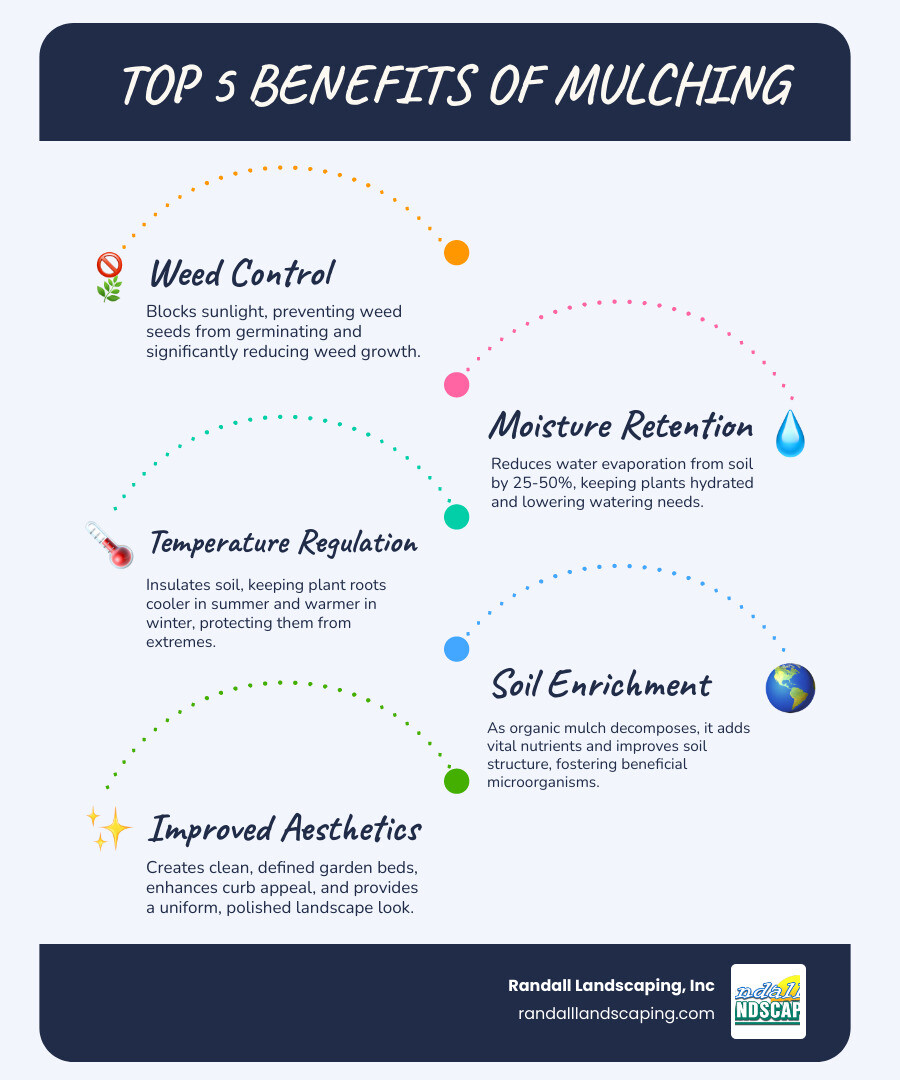
Mulch isn’t just a pretty face in the garden; it’s a hardworking partner that offers a multitude of benefits for your plants and soil, making our lives as gardeners much easier. Let’s explore why we consider mulch a true game-changer:
- Soil Health and Enrichment: Organic mulches, such as bark chips, pine needles, or shredded leaves, are truly a gift to your soil. As these materials slowly decompose, they release valuable nutrients like nitrogen, potassium, and phosphorus directly into the soil. This process enriches the soil structure, fostering a healthier environment for beneficial microorganisms and earthworms, which are crucial for vibrant plant growth. For us, maintaining good soil health is the foundation of a thriving landscape.
- Moisture Retention: One of the most significant advantages of mulch, especially in our climate, is its ability to conserve soil moisture. A good layer of mulch acts like a blanket, reducing evaporation from the soil surface. This means we water less frequently, saving precious resources and ensuring our plants have consistent access to the hydration they need. It’s an eco-friendly way to keep your garden hydrated, even during drier spells. Interested in learning more about how mulch helps keep your plants hydrated? Check out our guide on Moisture Retaining Mulch.
- Weed Suppression: Weeds are the bane of every gardener’s existence, stealing nutrients and water from our cherished plants. Mulch is an excellent natural weed deterrent. By blocking sunlight from reaching weed seeds, it significantly reduces weed germination and growth. Any weeds that do manage to sprout are often weaker and easier to pull from the loosened soil under the mulch. Find more about how this protective layer helps maintain a pristine garden in our article on Mulch for Weed Control.
- Soil Temperature Regulation: Mulch acts as an insulator, protecting plant roots from extreme temperature fluctuations. In the scorching summer months, it keeps the soil cooler, preventing roots from overheating. Conversely, in the colder seasons, it insulates the soil, protecting roots from freezing and thawing cycles that can cause frost heave and damage plants. As the University of Minnesota Extension notes, the ideal mulch needs to trap air to provide insulation and warmth, much like a winter coat.
- Erosion Prevention: Whether it’s heavy rain or strong winds, bare soil is vulnerable to erosion. A layer of mulch helps to stabilize the soil surface, preventing precious topsoil from washing or blowing away. This is particularly important on slopes or in areas prone to runoff, protecting both our landscapes and local waterways.
- Visual Appeal and Curb Appeal: Beyond its practical benefits, mulch instantly lifts the aesthetic appeal of any landscape. It creates a clean, uniform backdrop that highlights the colors and textures of your plants, making them truly pop. Mulch can define garden beds, create crisp lines between lawn and planting areas, and give your entire property a polished, well-maintained look. We often find that a fresh layer of mulch is like a fresh coat of paint for your garden, instantly boosting your home’s curb appeal.
Choosing Your Champion: A Guide to Mulch Types
Selecting the right mulch is key, as it needs to be functional, beautiful, and suited to your garden. We’ll walk you through the main types and help you pick the best one for your Merrimack Valley or Southern New Hampshire landscape.
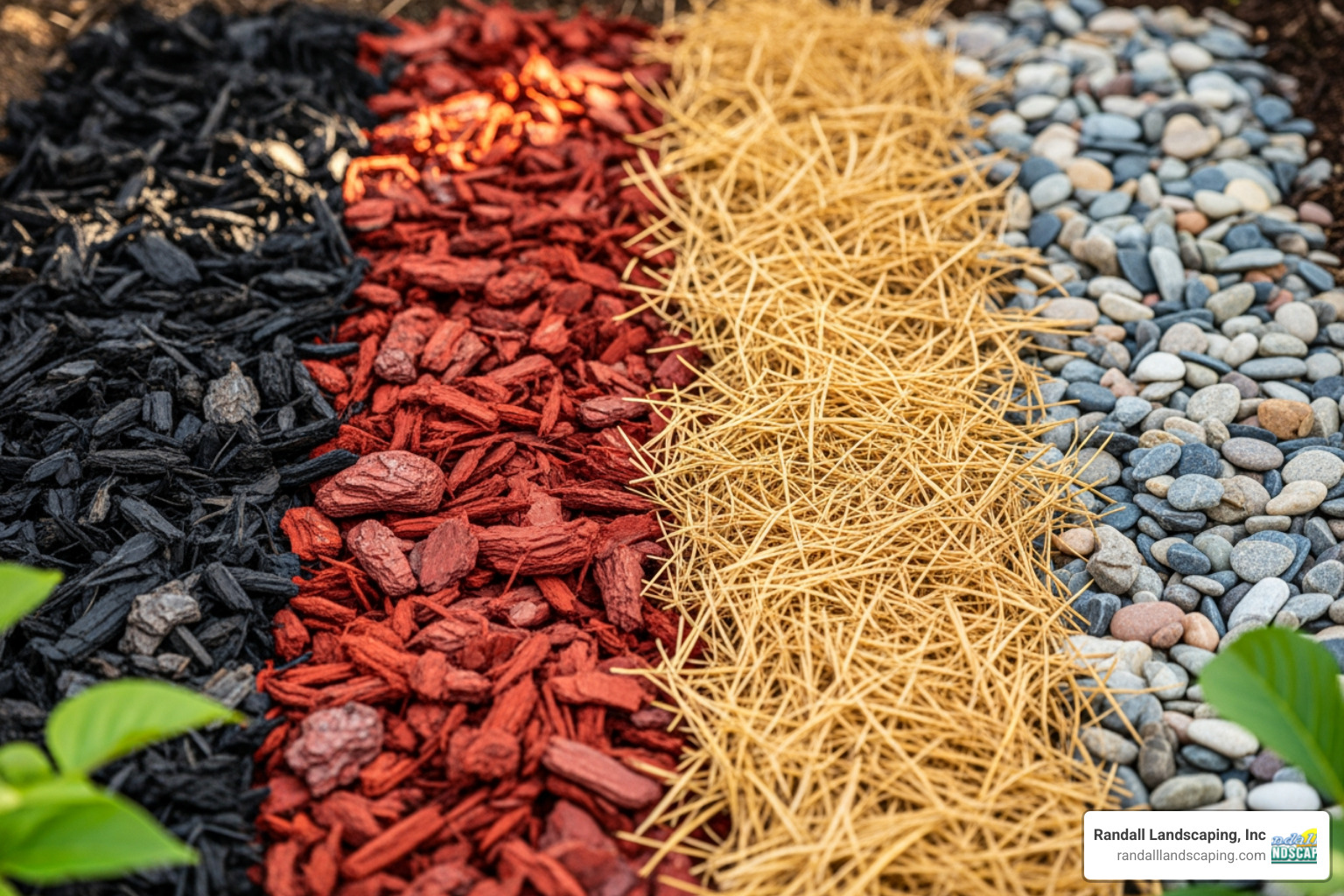
Mulches fall into two categories: organic and inorganic, each with unique characteristics for different gardening goals.
Organic Mulch: The Natural Choice
Organic mulches come from natural materials. They enrich your soil as they break down over time.
- Bark Chips (Hardwood, Cedar, Pine): A very popular choice.
- Hardwood bark is a classic with a natural look and good decomposition rate.
- Cedar and cypress bark deter some insects and decompose more slowly.
- Pine bark nuggets are decorative but can be too coarse for delicate plants.
- Pros: Adds organic matter to the soil, improves structure, and regulates temperature.
- Cons: Needs to be replenished every 1-2 years. Having to replace it more frequently can be a factor for busy homeowners.
- Pine Needles (Pine Straw): A fantastic choice for acid-loving plants like rhododendrons and azaleas. They interlock, making them less prone to blowing away.
- Pros: Long-lasting, retains moisture, and can slightly acidify the soil. They look natural and don’t compact easily.
- Cons: Not for plants that prefer alkaline soil. Can be more expensive.
- Straw (Weed-Free Straw, Salt Marsh Hay): Often used in vegetable gardens or for winter protection.
- Pros: Lightweight, insulates well, keeps produce clean, and is easy to apply and remove.
- Cons: Can blow away if not anchored and may introduce weed seeds if not certified “weed-free.”
- Leaf Litter (Shredded Leaves): A free and readily available option in the fall.
- Pros: Enriches soil, improves drainage, and is environmentally friendly.
- Cons: Can compact if not shredded, blocking water and air. Breaks down quickly and needs frequent replenishment.
Inorganic Mulch: The Long-Lasting Option
Inorganic mulches are non-living materials that don’t decompose, offering a permanent solution.
- Stone (River Rock, Pea Stone, Crushed Stone, Gravel, Marble or Brick Chips): These are durable and offer a clean, formal aesthetic.
- Pros: Extremely long-lasting, excellent for weed control, and won’t decompose. Great for high-traffic areas and pathways.
- Cons: Doesn’t add nutrients to the soil, can overheat soil for some plants, and is heavy to install.
- Rubber Mulch: Made from recycled tires, this is gaining popularity.
- Pros: Very durable, long-lasting, provides good insulation, and can repel some pests. It’s a popular choice for playgrounds. As Angi’s notes, there are various pros to rubber mulch.
- Cons: Doesn’t improve soil health, can be expensive, and some varieties are flammable. We recommend caution and proper installation, often over landscape fabric.
- Landscape Fabric/Plastic Sheeting: Not a mulch itself, but often used underneath for improved weed control.
- Pros: Provides an extra barrier against weeds.
- Cons: Can impede water and nutrient penetration. Weeds can still grow on top in debris, and it can be a hassle to remove or plant through later.
Visual and Environmental Considerations
We also consider a mulch’s appearance and environmental impact.
- Mulch Color (Black, Brown, Red): Dyed mulches are popular for their vibrant, consistent colors.
- Black mulch provides a bold contrast and absorbs heat, which can be good in cooler areas but too much for plants in full sun.
- Brown mulch offers a natural, earthy look that blends with most landscapes.
- Red mulch adds a warm, distinctive touch, great for focal points.
- When using dyed mulches, allow them to dry for 24-48 hours after application before watering to prevent color bleeding.
- Texture and Size: The mulch’s size and texture should complement your plants. Fine mulches suit small plants, while coarse nuggets are better for larger shrubs and trees.
- Complementing Your Home: We consider your home’s exterior and style when recommending mulch. The right choice can tie your landscape together, creating a harmonious space.
- Sustainable Sourcing and Eco-Friendly Mulch Options: We are committed to environmentally responsible options. Many organic mulches are byproducts or recycled materials. Choosing locally sourced mulch reduces the carbon footprint. We encourage exploring Environmental Mulch options that support responsible land management.
The Ultimate 5-Step Guide to Installing Mulch Beds
Ready to roll up your sleeves and give your garden the love it deserves? Here’s our comprehensive step-by-step guide to successfully installing mulch beds that will make your neighbors green with envy (and your plants green with health!).
Step 1: Plan and Prepare Your Project
A little planning goes a long way. Before we even think about shoveling, let’s get organized.
- Best Time to Mulch: While mulch can be applied anytime, we generally recommend mid-to-late spring. This gives the soil a chance to warm up after winter, and seasonal rains help break down organic mulches, enriching your soil. Fall is also an excellent time, especially for insulating plants from the cold and preventing frost heave in our New England winters. Mulching in fall can also free up time in the spring, which is always a bonus!
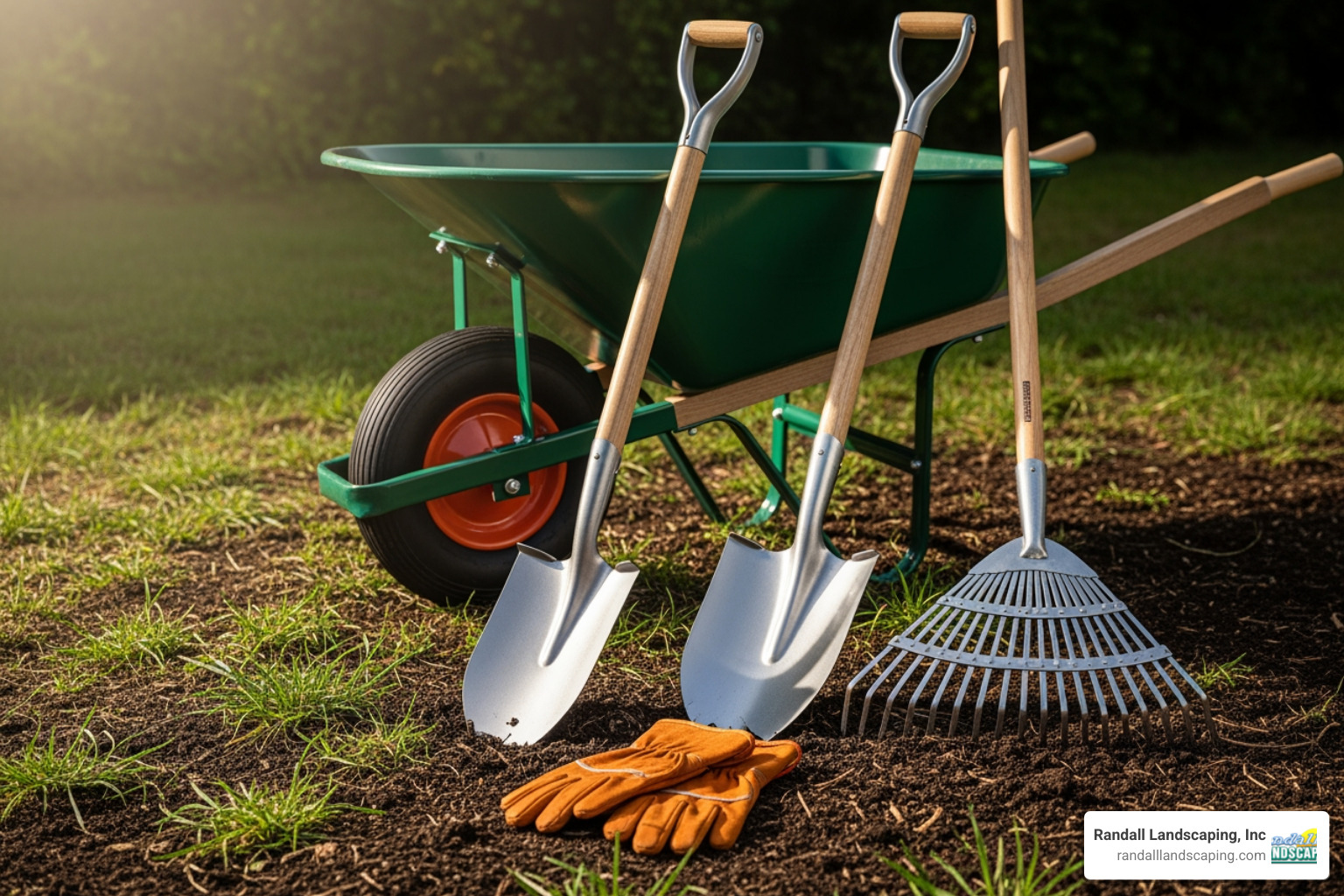
- Tools and Materials List: Gather your arsenal! You’ll need a sturdy wheelbarrow, a shovel or pitchfork (a pitchfork is great for moving bulk mulch), a garden rake (a bow rake works wonders for spreading), gardening gloves to protect your hands, and optionally, a pre-emergent herbicide for extra weed control.
- Calculating Quantity: This is where many DIYers get tripped up, but we’ve got you covered.
- Measure Your Area: Determine the square footage of your beds by multiplying their length by their width. If your beds have irregular shapes, break them down into smaller, easier-to-measure sections.
- Determine Desired Depth: Most organic mulches should be applied 2 to 4 inches thick. For finer materials, 2-3 inches is often plenty, while coarser mulches might go up to 4 inches.
- Calculate Cubic Feet: Mulch is typically sold by the cubic foot (in bags) or cubic yard (in bulk).
- For a 2-inch thick layer:
- For 2 cubic foot mulch bags: Square footage / 12 = Total bags needed.
- For 3 cubic foot mulch bags: Square footage / 18 = Total bags needed.
- For bulk mulch (in cubic yards, where 1 cubic yard = 27 cubic feet): Square footage / 128 = Total scoops needed (this is a rough estimate for commercial scoops, a more precise calculation for cubic yards is (Square Footage * Desired Depth in inches) / 324 = Cubic Yards).
- Use a Calculator: To make life even easier, we often refer clients to online tools like The Home Depot’s mulch and top soil calculator.
- Bagged vs. Bulk Mulch: For smaller projects, bagged mulch is convenient. However, for larger areas, we find that ordering bulk mulch is significantly more cost-effective, even with a delivery fee. For example, some sources indicate a 10 cubic yard delivery of basic hardwood mulch might cost around $280, whereas buying the same quantity in bags could easily exceed $300-$400. We offer competitive Mulch Delivery Cost options right here in the Merrimack Valley and Southern New Hampshire.
- Average Cost of Installation: While we provide custom quotes for our services, general internet data suggests that professional mulch installation (materials and labor) can range anywhere from $200 for a small area to over $800+ for larger or more complex projects. This is an average based on various sources and not an actual quote for Randall Landscaping’s services. We pride ourselves on transparent pricing and quality work, so for an accurate estimate for your specific project, it’s always best to contact us directly.
Step 2: Prepare the Garden Bed for Installing Mulch Beds
This step is crucial for the long-term success of your mulch beds. Don’t skip it!
- Clearing Debris and Old Mulch: We always start with a clean slate. This means removing any leaves, sticks, fallen branches, and other debris. If there’s old mulch, and it’s matted, moldy, or excessively thick (over 2 inches), we recommend removing it. If it’s just a thin, well-decomposed layer, we can often mulch right over it.
- Thorough Weeding: This is non-negotiable. Mulch suppresses weeds, but it won’t kill existing ones. We carefully pull out all weeds, making sure to get the roots. For new beds, we might even use an organic method like layering newspaper (5-6 sheets thick, black ink only) covered with compost over existing vegetation to smother it over fall and winter. For tougher weed situations, a pre-emergent herbicide can be applied before watering the bed to help prevent new weed seeds from sprouting.
- Creating a Defined Edge: A crisp edge between your lawn and garden bed makes all the difference for a polished look. We use a spade to cut a clean, defined line along the perimeter of the bed. This trench, typically 3-4 inches deep, helps contain the mulch and prevents grass from creeping into your beds. For a more permanent solution, consider adding bricks or stones to line the edge. For professional results and seamless transitions, explore our Mulch and Edging Services.
- Amending Soil with Compost: For new beds or those that need a boost, we recommend enriching the soil. Spread a 2 to 3-inch layer of organic matter or compost over the bed and work it into the top 6-12 inches of soil with a garden fork. For existing beds with plants, we carefully incorporate a couple of inches of compost into the top layer of soil, being mindful not to disturb delicate roots. Always avoid piling compost directly against plant stems.
- Leveling and Smoothing: After clearing and amending, we use a rake to level and smooth the soil surface. This ensures an even application of mulch.
- Watering the Soil Before Application: If your beds are dry, we give them a good watering before applying mulch. Mulch helps seal in moisture, so we want to ensure there’s moisture to seal in!
Step 3: The Art of Application for Installing Mulch Beds
Now for the fun part: spreading that beautiful mulch!
- Transporting Mulch: We use a wheelbarrow to move mulch from the delivery pile to the garden beds. Instead of dumping large piles directly onto plants, we create small mounds throughout the bed, ensuring we don’t damage any existing vegetation.
- Spreading Technique: Using a rake (a bow rake is our favorite for this) or gloved hands, we spread the mulch evenly across the bed. We aim for a consistent layer that covers all the soil.
- Recommended Depth: This is critical! We apply mulch to a depth of 2 to 4 inches. If it’s too thin (less than 2 inches), weeds can still push through. If it’s too thick (more than 4 inches), it can suffocate plants by preventing water and oxygen from reaching the roots, and it can harbor pests. For most organic mulches, 2 to 3 inches is ideal, the finer the material, the thinner the layer needed.
- Proper Spacing Around Plants: When applying mulch around plants and trees, we are meticulous about creating a buffer zone. We keep the mulch about three inches away from the base of plants and tree trunks. This prevents moisture from being trapped against the stem, which can lead to rot, disease, and even create a cozy home for pests.
- Avoiding Harmful Mulch Volcanoes: We’ve all seen them—those conical piles of mulch mounded high against tree trunks. We call these “mulch volcanoes,” and they are a big no-no! They can suffocate the tree’s roots, encourage pests, and lead to bark rot. Always ensure a flat, even layer of mulch that extends to the tree’s drip line, but never touches the trunk. For more on this, check out avoiding no mulch volcanos!.
- Watering After Application: Once all the mulch is spread, we give the beds a light watering. This helps settle the mulch, anchors lighter materials, and ensures optimal soil moisture retention.
Step 4: Special Considerations for Your Garden
Every garden is unique, and sometimes, a one-size-fits-all approach just doesn’t cut it. Here are some special tips for various garden scenarios.
- Best Mulch for Vegetable Garden: Vegetable gardens have specific needs. Since we often turn the soil every year in vegetable patches, heavy wood bark mulches can be cumbersome. Instead, we recommend lighter organic mulches like grass clippings (ensure they are herbicide-free), straw, or shredded leaves. These break down more quickly, enriching the soil for next season’s crops, and are easier to work into the soil.
- Mulching Between Rows: In vegetable gardens, we strategically add mulch between rows of plants. This not only suppresses weeds but also helps retain moisture and keeps fruits clean during heavy rainfalls by absorbing raindrops instead of allowing them to splash dirt onto your produce.
- Mulching New vs. Established Beds:
- New Beds: For brand new beds, the preparation (clearing, weeding, amending soil) is extensive. Once prepped, we apply mulch evenly as described in Step 3.
- Established Beds: For beds with existing plants, we focus on careful weeding, gently amending the soil with compost around plants, and then applying a fresh layer of mulch. We’re always careful not to pile mulch against existing plant stems or disturb established roots.
- Mulching on Slopes: Slopes can be tricky, as lighter mulches tend to wash away. For these areas, we opt for heavier materials like interlocking wood chips, shredded bark, or even stone. These materials are less likely to migrate with rain or wind, providing better stability and erosion control.
Step 5: Maintain Your Mulch for Lasting Beauty
Mulch isn’t a “set it and forget it” solution, but a little maintenance goes a long way in keeping your beds looking pristine and performing optimally.
- Common Mistakes to Avoid:
- Too Thick: Over-mulching (more than 4 inches) can suffocate plants, prevent water and air from reaching roots, and create an environment for fungal diseases or pests.
- Too Thin: A layer less than 2 inches won’t effectively suppress weeds or retain moisture.
- Against Stems/Trunks: As we discussed, “mulch volcanoes” and mulch touching plant stems can lead to rot, disease, and pest infestations.
- Raking to Refresh Color and Prevent Compaction: Over time, mulch can become compacted, forming a crust that repels water. We periodically fluff or gently rake the mulch, especially after heavy rains, to improve air circulation and allow water to penetrate. This also helps refresh its color and appearance.
- Topping Up Faded Mulch: Organic mulches will naturally fade in color due to sun exposure. Instead of removing all the old mulch, we often add a thin (1-2 inch) layer of fresh mulch on top to brighten things up and maintain the desired depth. This is also a great way to replenish nutrients.
- Spot Weeding: Despite mulch’s best efforts, a few stubborn weeds might still poke through. We advise pulling them promptly by hand before they establish deep roots or go to seed.
- When to Replace vs. Top Up: Organic mulches typically need to be replenished every 1-2 years as they decompose. If your existing mulch layer is still healthy, not matted, and less than an inch thick, simply top-dressing is fine. However, if the old mulch is moldy, severely compacted, or has become a home for pests, it’s best to remove it before applying fresh material. For comprehensive assistance, our Garden Bed Mulching services are always available.
Frequently Asked Questions about Mulch Installation
How much does professional mulch installation cost?
Costs vary widely based on location, mulch type, and project size. Based on general online data, homeowners might expect to pay anywhere from $200 to over $800+ for materials and professional installation, depending on area size and mulch type. This is an average based on various sources and not an actual quote for Randall Landscaping’s services. For an accurate estimate, it’s best to contact a local professional. More info about Mulch Installation Services Near Me.
Can I put new mulch over old mulch?
Yes, you can top-dress old mulch if the existing layer is less than an inch thick and mostly decomposed. However, if the old mulch is matted, moldy, or over 2 inches deep, it’s best to remove it to ensure water and air can reach the soil.
Will mulch attract termites or other pests?
While any organic material can offer shelter to pests, mulch does not inherently attract them. To be safe, always keep mulch of any kind at least 6 inches away from your home’s foundation to discourage pests from finding a bridge to your house.
Conclusion: Enjoy Your Healthy, Beautiful Garden
We hope this extensive guide has empowered you with the knowledge and confidence to tackle installing mulch beds in your own landscape. The benefits are undeniable: from healthier plants and richer soil to significant reductions in weeding and watering, a well-mulched garden is easier to maintain and more beautiful to behold. It truly is one of the best investments you can make in your outdoor space.
For homeowners in the Merrimack Valley and Southern New Hampshire looking for professional results without the back-breaking work, Randall Landscaping, Inc. offers expert services. We handle everything from precise bed preparation and edging to efficient mulch delivery and application, ensuring your landscape looks its best.
Ready to transform your landscape and enjoy the lasting beauty of perfectly mulched beds? Explore our comprehensive Landscape Mulch Installation services to get started!