The Commercial Landscape Bidding Advantage: Higher Profits, Stable Income
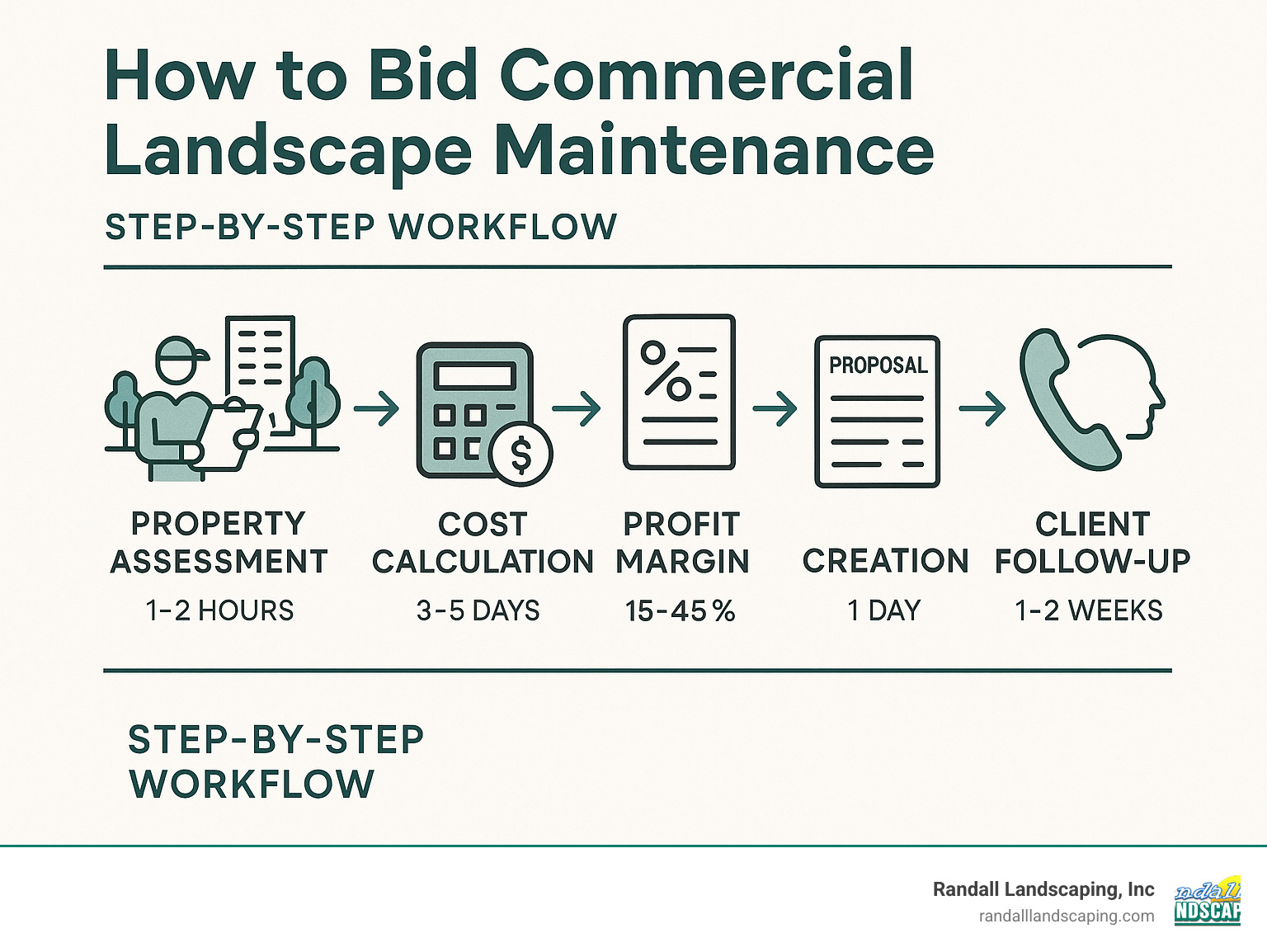
How to bid commercial landscape maintenance effectively comes down to a systematic process that combines accurate measurements, proper cost analysis, and professional presentation. Here’s a quick overview for those looking to get started:
- Scope Assessment: Visit the property to measure square footage and identify all service areas
- Cost Calculation: Add up labor hours (at $45-50/hr), materials, equipment fees, and overhead costs
- Profit Margin: Apply a 15-45% profit margin based on project complexity and competition
- Professional Proposal: Create a detailed, branded proposal with clear terms and service schedule
- Follow-up: Contact the prospect within 1-2 weeks of submission to address questions
Commercial landscape maintenance contracts represent a significant opportunity for lawn care professionals looking to grow their business. These contracts typically offer higher revenue per client, more consistent work schedules, and longer-term relationships compared to residential accounts.
While the bidding process may seem complex, a structured approach can help you win profitable contracts while avoiding the common pitfall of underbidding that squeezes your margins.
“Landing a large commercial account is at the top of many landscapers’ wish lists,” and for good reason. Commercial contracts can provide reliable, recurring revenue that helps stabilize your business throughout the season and from year to year.
I’m Tommy Randall, owner of Randall Landscaping, Inc., and with nearly two decades of experience in the landscaping industry, I’ve refined my approach to how to bid commercial landscape maintenance projects to maximize profitability while delivering exceptional value to clients.
Quick how to bid commercial landscape maintenance definitions:
– commercial grounds maintenance
– how much does commercial landscaping cost per square foot
– what is commercial landscaping
Commercial Landscape Maintenance Contracts Explained
Let’s talk about what makes commercial landscape contracts unique before we jump into the bidding process. These contracts are formal agreements between your landscaping business and commercial property owners or managers, creating a roadmap for ongoing care of business properties.
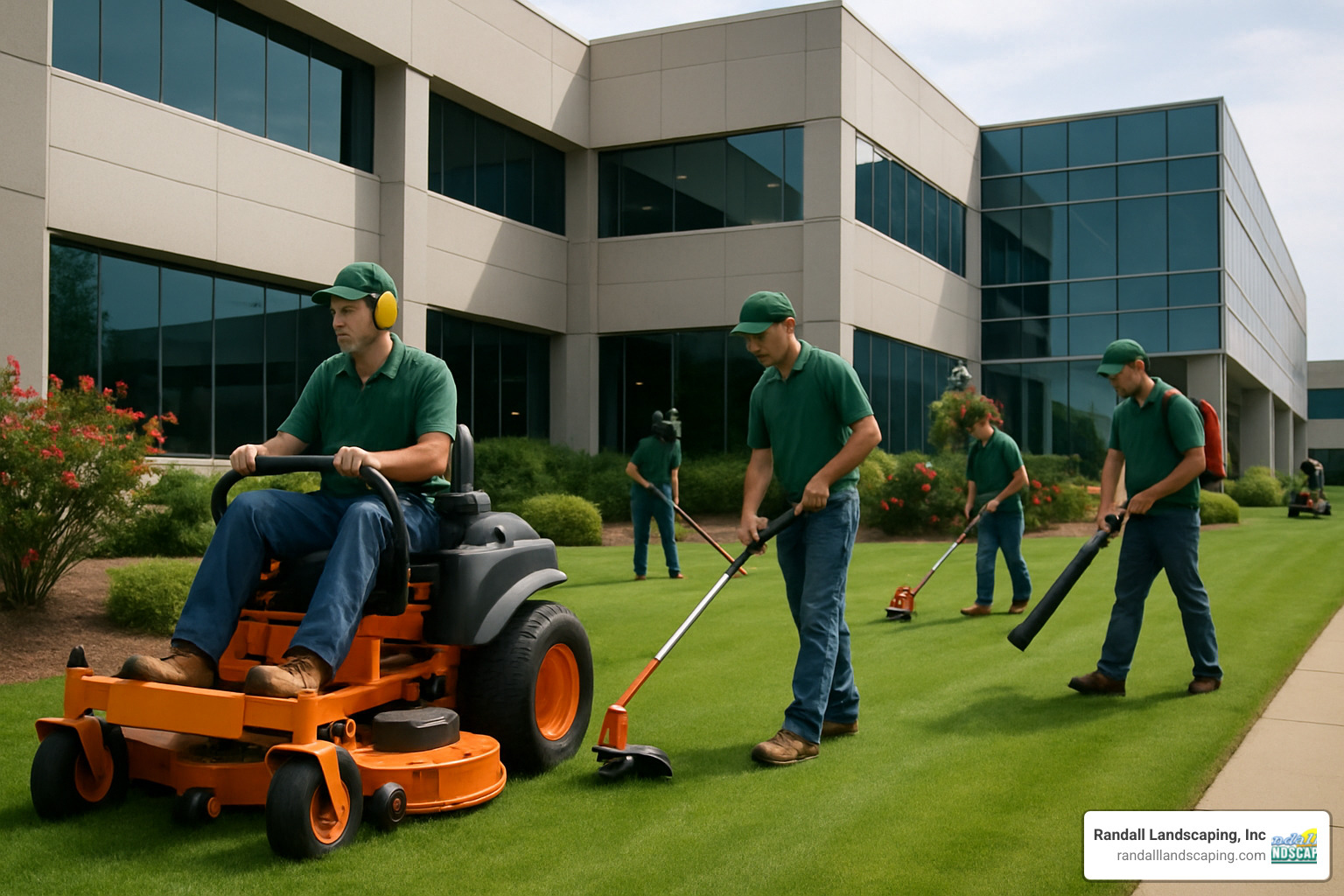
Commercial contracts are quite different from residential ones in several important ways. For starters, you’re dealing with much larger properties that need more extensive services – from mowing vast lawns to maintaining complex irrigation systems. This typically requires heavier-duty equipment and stricter safety protocols.
Instead of chatting with homeowners over coffee, you’ll likely be meeting with property managers who oversee multiple sites and have specific budget constraints. As one property manager told me, “When I review landscape maintenance bids, I’m looking for professionalism, attention to detail, and a contractor who understands the unique needs of commercial properties.”
One of the biggest perks of commercial contracts is their duration. While residential clients might hire you season-to-season, commercial contracts typically span one to three years, giving you consistent, reliable income. This predictability can be a game-changer for your business planning.
Commercial contracts also require more detailed paperwork – something many landscapers aren’t thrilled about, but it’s absolutely necessary. These documents protect both you and your client when questions or issues arise.
What’s Included in a Commercial Landscape Maintenance Contract?
A solid commercial landscape maintenance contract should include:

Comprehensive contact information for both parties is essential – you’d be surprised how often this basic detail gets overlooked. Your contract should clearly outline the service period and frequency, detailing exactly when your crews will be on-site.
The scope of work section is where you’ll get specific about services provided – mowing, edging, fertilization, and anything else included in your agreement. Be crystal clear about what’s covered and what’s not. Many disputes arise from misunderstandings about service boundaries.
Details about worker hours and equipment help set client expectations about crew size and the tools you’ll be using. The pricing structure should leave no questions about costs, payment schedule, and terms.
Don’t forget to include liability clauses to protect both parties if something goes wrong. If you’re applying chemicals, include details about pesticide application schedules and products. Finally, attach proof of insurance coverage and certifications – this isn’t just paperwork, it’s peace of mind for your client.
Commercial clients value clarity and thoroughness. By being comprehensive in your contract, you set clear expectations from day one and minimize potential headaches down the road. A good contract protects everyone involved and forms the foundation of a successful long-term relationship.
For more detailed information about the services typically included in landscape maintenance, check out our Landscape Maintenance Services page.
Prospecting & Pre-Bid Preparation
Finding and winning profitable commercial landscape maintenance contracts doesn’t happen by accident. The groundwork you lay before calculating a single number can make all the difference between landing lucrative contracts and wasting time on proposals that go nowhere.
Finding Commercial Landscape Opportunities
The hunt for quality commercial clients requires strategy and persistence. Property managers are often your golden ticket to steady commercial work. These professionals frequently oversee multiple properties and can become a consistent source of referrals once they trust your services.
Building your network strategically pays dividends in this industry. Consider joining organizations like CREW (Commercial Real Estate Women) and BOMA (Building Owners and Managers Association), where you’ll meet decision-makers who control landscaping budgets for multiple properties. The connections you make at these industry gatherings often lead to opportunities that never appear in public bid listings.
Don’t overlook the power of your existing client relationships. Your current customers—even residential ones—often have connections to commercial properties through their workplaces or business networks. A simple conversation can uncover these hidden opportunities.
Timing matters tremendously in commercial bidding. Most seasonal maintenance contracts are put out for bid between February and March, while year-round contracts are typically solicited in January or October. Marking these RFP timelines on your calendar helps ensure you don’t miss crucial bidding windows.
For those interested in stable, long-term work, government contracts can be particularly valuable. Check sam.gov federal bid opportunities regularly to find public landscaping contracts that might fit your company’s capabilities.
Pre-Bid Preparation Checklist
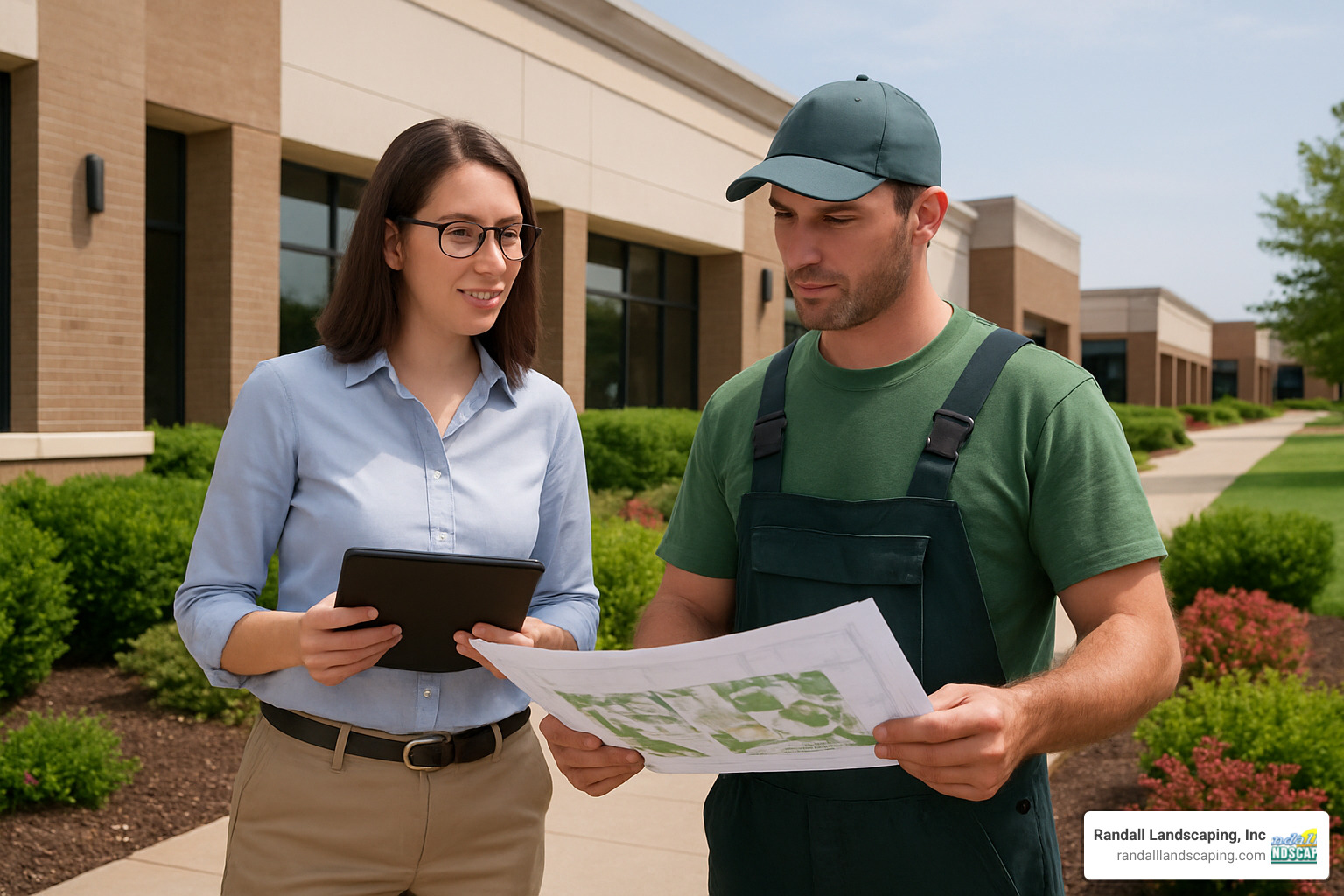
Before submitting any commercial landscape maintenance bid, thorough preparation is essential. Always conduct a comprehensive site visit to understand exactly what you’re bidding on. Walking the property gives you insights no satellite image or property description can provide. Take detailed photos, note potential challenges, and document everything you observe.
Licensing and insurance verification isn’t just a formality—it’s a necessity. Commercial clients typically require at least $1 million in general liability coverage, and many properties need specialized pesticide or fertilizer licenses depending on the services you’ll provide. Having these credentials ready prevents last-minute scrambling that could cost you the contract.
Be brutally honest about your equipment and labor capacity. As industry veteran Adam Sylvester wisely notes, “Stretching yourself too much is a mistake because you underestimate how much tools and equipment you need to do just one more thing.” Taking on a contract that exceeds your current capabilities can damage your reputation and profitability.
Understanding your competition gives you a strategic advantage. Research who else might be bidding and their typical approach to similar properties. This intelligence helps you position your proposal competitively without unnecessarily cutting into your profit margins.
Sustainable Practices as a Competitive Edge
More and more commercial clients are prioritizing environmental responsibility in their vendor selection. Highlighting your sustainable practices can set your bid apart from competitors who focus solely on price. Water conservation strategies, organic fertilization options, native plant expertise, and reduced-emissions equipment all signal to potential clients that you’re thinking beyond the basics.
At Randall Landscaping, we’ve finded that our commitment to environmentally responsible maintenance has opened doors with forward-thinking commercial clients throughout the Merrimack Valley and Southern New Hampshire. These sustainable approaches not only help win contracts but often lead to stronger client relationships based on shared values.
Thorough preparation isn’t just about checking boxes—it’s about positioning your company as the obvious choice for a property’s landscape maintenance needs. When you arrive at a bid meeting having clearly done your homework, you immediately stand apart from competitors who took a more casual approach to the opportunity.
How to Bid Commercial Landscape Maintenance: Step-by-Step Blueprint
Now that you understand the basics of commercial landscape maintenance contracts and have completed your pre-bid preparation, it’s time to dive into the actual bidding process. Here’s our proven step-by-step blueprint for creating accurate, profitable bids.
How to Bid Commercial Landscape Maintenance — On-Site Walkthrough
The on-site walkthrough is perhaps the most critical part of the bidding process. This is where you gather all the data needed to create an accurate bid.
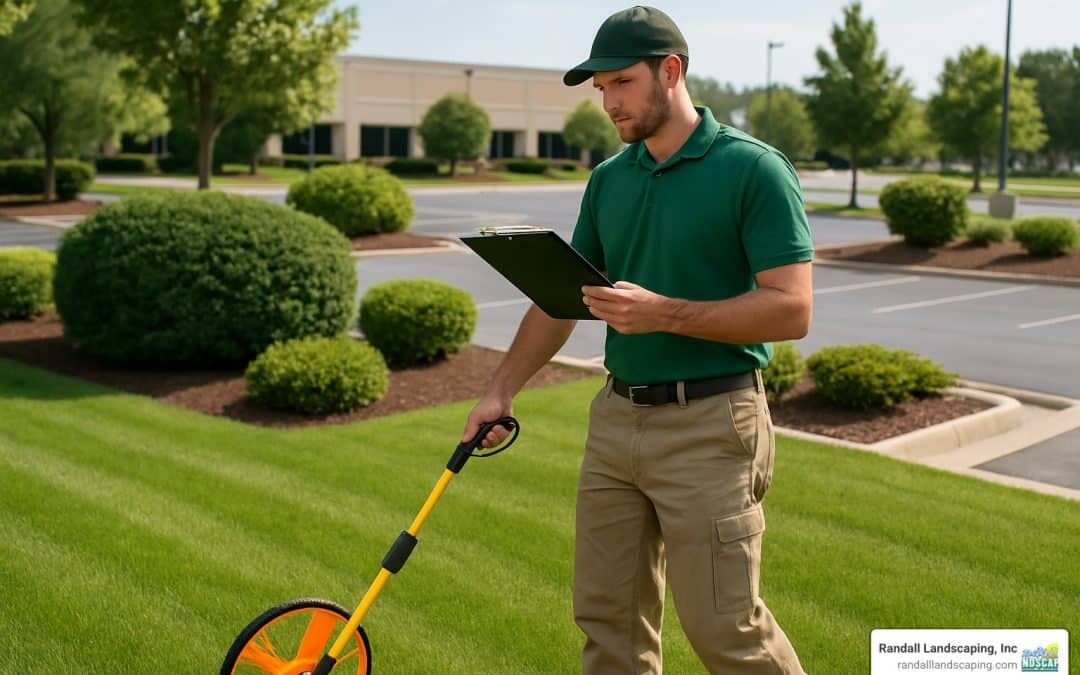
Walking a commercial property with a measuring wheel and clipboard in hand might not seem glamorous, but it’s where successful bids are born. Start by measuring all turf areas, planting beds, and hardscape features that will require maintenance. For larger properties, aerial measurement tools or even Google Maps can help with initial estimates before you verify on-site.
As you walk the property, keep an eye out for challenges and obstacles that might slow down your crew. That steep hill behind the office building? It might require special equipment or double the mowing time. The narrow passage between buildings? Your standard riding mower won’t fit there.
“The walkthrough is where you make your money or lose it,” one of our project managers often reminds new team members. “Miss something here, and you’ll either have to eat the cost or have an uncomfortable conversation with the client later.”
Don’t forget to document existing conditions with plenty of photos. That dying oak tree or crumbling retaining wall should be noted before you take responsibility for the property. In our New England climate, it’s also essential to assess seasonal requirements – spring cleanup, summer mowing frequency, fall leaf removal, and possibly winter snow management all factor into your annual maintenance plan.
Finally, examine any irrigation systems and water features carefully. These can be maintenance time-sinks if they’re aging or poorly designed, and you’ll want to account for that in your bid.
How to Bid Commercial Landscape Maintenance — Pricing Formula
After gathering all necessary information, it’s time to crunch the numbers. Our tried-and-true formula looks like this:
(Hours × Burdened Labor Rate) + Materials + Equipment + Overhead + Profit Margin = Total Bid Price
Let’s break this down with real-world application:
Your labor costs form the foundation of your bid. Estimate how many hours each visit will require, then multiply by your burdened labor rate – typically $45-50 per hour for commercial work. This isn’t just what you pay your workers, but includes taxes, benefits, and other employee-related expenses.
Next, calculate your materials costs. Will you be applying fertilizer quarterly? Refreshing mulch annually? Adding seasonal color changes? Get actual quotes from suppliers rather than ballparking these expenses – material costs can fluctuate significantly.
Your equipment fees should account for the wear and tear on your mowers, trimmers, blowers, and trucks. This isn’t just about gas; it’s about eventually replacing that $10,000 commercial mower that’s running 40 hours a week.
Don’t forget to include overhead – those office expenses, insurance premiums, and administrative costs that keep your business running. A practical approach is calculating your weekly overhead, dividing by average weekly hours, then multiplying by the estimated project hours.
Finally, apply your profit margin of 15-45%. Why such a range? Because not all jobs are created equal. You might accept a lower margin on a prestigious property that could lead to referrals, while a difficult-to-service property with high risk might warrant a higher margin.
Here’s a practical example: For a commercial property requiring 30 hours of maintenance per month:
– Labor: 30 hours × $45/hour = $1,350
– Materials: $450 per month
– Equipment fee: $300 per month
– Overhead: ($200 weekly overhead ÷ 40 hours) × 30 hours = $150
– Subtotal: $2,250
– Profit margin (30%): $675
– Total monthly bid: $2,925
Note: These are average costs based on internet data and not actual costs for Randall Landscaping. Actual prices can range widely from $1,500 to $9,000 per month depending on property size, location, and specific requirements.
In the Merrimack Valley and Southern New Hampshire where we operate, we also consider regional factors like local wage rates, our notoriously unpredictable New England weather patterns, and specific municipal regulations that might affect our work.
| Cost Component | Percentage of Total Bid | Example Amount (Monthly) |
|---|---|---|
| Labor | 40-50% | $1,350 |
| Materials | 15-20% | $450 |
| Equipment | 10-15% | $300 |
| Overhead | 5-10% | $150 |
| Profit Margin | 15-45% | $675 |
| Total | 100% | $2,925 |
Stand-Out Proposals, Follow-Up & Client Retention
The best bid in the world won’t win you a contract if it’s presented poorly. Creating a stand-out proposal and following up effectively are essential skills for winning commercial landscape maintenance contracts.
Creating Professional Proposals
First impressions matter enormously in commercial landscaping. Your proposal is often the first formal document a potential client sees from your company, so make it count!
We’ve found that professional-looking proposals with branded elements instantly lift your company above competitors who send basic estimates on plain paper. Create a template that includes your logo, contact information, and consistent design elements throughout. This small touch signals to clients that you run a professional operation.
Highlight what makes you special. Every landscaping company claims to be “reliable” and “professional,” so dig deeper. Maybe your team has specialized training for commercial properties, or perhaps you use cutting-edge sustainable practices that save water and reduce chemical use. In the Merrimack Valley and Southern NH, our local knowledge of regional plant species and weather patterns gives us an edge worth highlighting.
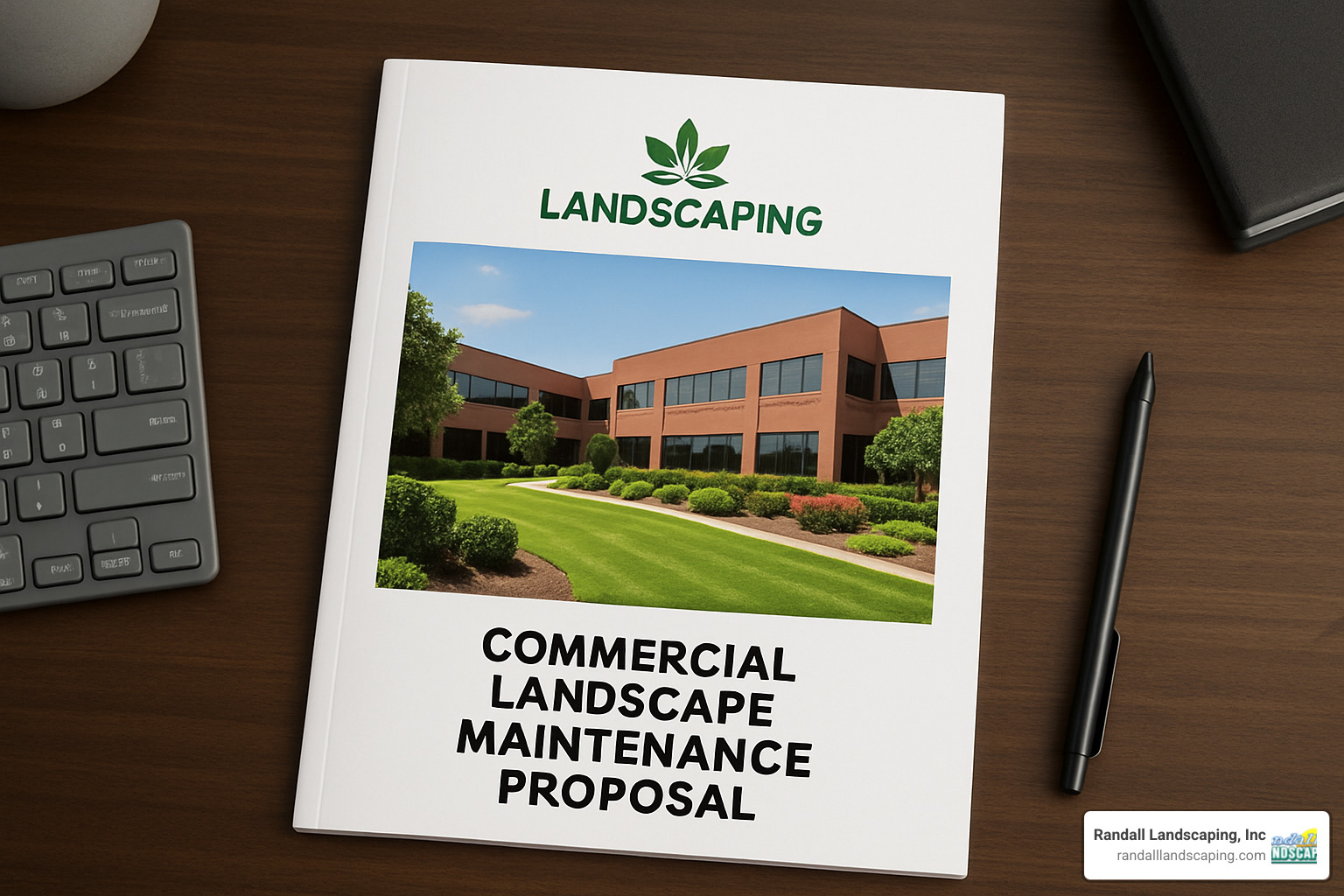
One strategy that’s worked wonders for us is offering tiered options in our proposals. Rather than a single take-it-or-leave-it price, we present three packages: Basic (essential maintenance only), Standard (comprehensive care plus seasonal color), and Premium (all-inclusive with improvements and priority scheduling). This approach gives clients choice while keeping them within your ecosystem.
Visual elements make your proposals more engaging and persuasive. Include before-and-after photos of similar properties you’ve transformed, or conceptual drawings of proposed improvements. These visuals help clients envision the results you’ll deliver.
Make signing easy with digital delivery and e-signature services like DocuSign. Commercial clients appreciate this streamlined, professional approach that saves them time and hassle.
For more guidance on developing compelling unique selling points that make your proposals irresistible, check out this Unique selling points guide.
Effective Follow-Up Strategies
You’d be shocked how many landscape contractors lose potential contracts simply by failing to follow up properly. I’ve personally won several major accounts simply because I was the only bidder who followed up consistently!
Start with a thank-you email immediately after submitting your proposal. This confirms receipt and invites any initial questions. It’s a small gesture that demonstrates your attentiveness.
Within 3-5 business days, make your first real follow-up call or email. Ask if they’ve had a chance to review the proposal and if they have any questions. This gentle nudge often moves your proposal to the top of their review pile.
If you haven’t heard back after 7-10 days, it’s time for your second follow-up. This time, add value to the conversation by sharing a relevant case study or suggesting an adjustment based on new information. This approach positions you as a thoughtful partner rather than just another vendor.
“I’ve won contracts months after the initial bid simply because I stayed in touch professionally while their chosen contractor underperformed,” shares one of our account managers. “Persistence pays off, but there’s a fine line between being persistent and being annoying.”
Even if you don’t win immediately, add promising prospects to your marketing list. Send them occasional updates, seasonal tips, or company news. When their current contractor inevitably disappoints them, you’ll be top of mind.
Client Retention Strategies
Winning the contract is just the beginning of what should be a long-term relationship. How to bid commercial landscape maintenance effectively includes planning for client retention from day one.
Clear communication is the foundation of client retention. Designate a single point of contact for each commercial client and establish regular check-ins. This consistency builds trust and prevents issues from falling through the cracks.
Track your performance rigorously using measurable KPIs like response time to requests, completion of scheduled maintenance, and client satisfaction ratings. What gets measured gets managed, and clients appreciate seeing concrete evidence of your commitment to excellence.
Client feedback is gold—actively seek it through both formal surveys and casual conversations. When a client mentions even a minor concern, address it immediately. This responsiveness often turns a potential complaint into a testimonial about your exceptional service.
Technology is your friend in client retention. Good CRM and scheduling software ensure consistent service delivery and communication. Many of our commercial clients appreciate the ability to log in to a client portal to see maintenance schedules, submit requests, or review service history.
Be proactive about renewals by starting the conversation 60-90 days before contract expiration. Highlight the value you’ve delivered and propose improvements for the next term. This approach positions you as a forward-thinking partner invested in their property’s ongoing success.
In commercial landscape maintenance, your reputation is everything. One satisfied commercial client can lead to multiple referrals, creating a snowball effect of growth for your business. Every interaction is an opportunity to strengthen that reputation and build relationships that last for years.
Frequently Asked Questions about Commercial Landscape Bidding
What should be included in a commercial maintenance contract?
When it comes to commercial landscape maintenance contracts, thoroughness is your best friend. A well-crafted contract protects both you and your client while setting clear expectations from day one.
Your contract should clearly specify the length of the agreement – whether it’s a one-year term or a multi-year arrangement with automatic renewal options. This gives both parties security and planning ability.
The detailed service list forms the heart of your contract. Spell out exactly what you’ll be doing: mowing at what height and frequency, edging walkways and beds, weeding schedules, when fertilization happens, pruning timelines, leaf removal periods, irrigation system checks, and seasonal color rotations. If you’re in New England like us, you might also include snow removal services for winter months.
Visit frequency should be crystal clear – will your crew be there weekly during growing season? Bi-weekly in slower periods? Create a calendar that clients can count on.
As for payment terms, I’ve found that monthly billing works well for most commercial clients, but some prefer quarterly. Be sure to outline accepted payment methods and whether you offer any early payment incentives (we provide a small discount for annual prepayment at Randall Landscaping).
Always include a reasonable cancellation policy – typically 30 days’ written notice works well for both parties. And never forget comprehensive liability and insurance clauses that protect everyone involved.
“A detailed contract isn’t about lack of trust,” as I often tell new clients. “It’s about making sure we’re on the same page from day one.”
How do I calculate labor and equipment costs accurately?
Accurate cost calculation can make the difference between a profitable commercial contract and one that drains your resources. Let’s break down how to get this right.
For labor costs, start with diligent time tracking on similar properties. There’s simply no substitute for real-world data. One of our crews might maintain a 2-acre commercial property in 6 hours, but factors like obstacles, slopes, and access points can dramatically change that time requirement.
When calculating your burdened wage rate, your actual cost per employee hour goes far beyond their base wage. A landscaper earning $20/hour typically costs your business $30-35/hour after adding payroll taxes, workers’ comp insurance, health benefits, paid time off, and training expenses. Forgetting these “invisible” costs is one of the quickest ways to underbid and lose money.
For equipment costs, think comprehensively. Calculate annual depreciation by dividing the purchase price (minus any salvage value) by its expected useful life. Add operational costs like fuel, regular maintenance, unexpected repairs, and storage fees. Don’t forget the opportunity cost of having your capital tied up in machinery rather than invested elsewhere.
I’ve found that charging equipment as a separate line item works better than trying to bury it in labor rates. This transparency helps clients understand the true value they’re receiving and protects your margins when fuel prices inevitably fluctuate.
How can technology streamline my bidding process?
Technology has revolutionized how we approach commercial landscape bidding. The right tech tools can save time, improve accuracy, and give you a competitive edge.
Aerial measurement apps have been game-changers for our team at Randall Landscaping. Instead of spending hours with measuring wheels, we can now get accurate property dimensions using satellite or drone imagery. This technology has cut our measurement time by 75% while improving accuracy.
Specialized estimating software helps calculate labor, materials, and equipment costs based on property specifications. These programs can store your cost data, crew production rates, and material prices, making bid creation much faster and more consistent.
E-signature platforms like DocuSign have dramatically shortened our contract turnaround time. Clients can review and sign proposals electronically from anywhere, eliminating delays caused by physical paperwork.
A good Customer Relationship Management (CRM) system keeps all client interactions, follow-ups, and contract renewals organized. We’ve found this particularly valuable for tracking our communication with property managers who often oversee multiple properties.
Mobile data collection tools allow our estimators to record site conditions, take photos, and make notes during the initial walkthrough using tablets. This information syncs directly to our office systems, eliminating duplicate data entry and reducing errors.
“The best technology investments pay for themselves quickly,” as our operations manager likes to say. For us serving the Merrimack Valley and Southern New Hampshire area, these tools have improved our bidding accuracy while freeing up time to focus on delivering exceptional service.
Conclusion
Winning profitable commercial landscape maintenance contracts isn’t about luck—it’s about mastering a proven process that sets you up for success. Throughout this guide, we’ve walked through the essential steps of how to bid commercial landscape maintenance projects that build your business rather than drain your resources.
The journey to becoming skilled at commercial bidding takes time, but the rewards are substantial. Commercial contracts create the backbone of stability that many landscape businesses struggle to achieve with residential work alone.
Successful commercial bidding is built on relationships as much as numbers. As you implement these strategies, focus on building genuine connections with property managers and decision-makers. These relationships often lead to contract renewals, referrals, and long-term partnerships that become increasingly valuable over time.
Your bidding process should evolve as your business grows. What works when you’re maintaining 10 commercial properties might need refinement when you’re handling 50. Stay flexible and continue learning from both your successes and the contracts that didn’t pan out.
At Randall Landscaping, we’ve found that our most successful commercial relationships started with thorough preparation, continued with transparent communication, and flourished through consistent service delivery. Our commitment to 100% reliability has become our calling card throughout the Merrimack Valley and Southern New Hampshire.
The commercial landscape maintenance world rewards precision, professionalism, and persistence. By applying the principles outlined in this guide—from detailed property assessments to polished proposals and thoughtful follow-up—you position yourself to win contracts that other landscapers might miss.
Most importantly, every bid is a learning opportunity. Whether you win or lose, each proposal helps refine your process and brings you closer to mastery of how to bid commercial landscape maintenance projects that truly benefit your bottom line.
For those looking to explore commercial landscaping opportunities further, we invite you to learn more about our approach to Commercial Landscaping. While the bidding process may seem complex at first, the stability and profitability of commercial accounts make the learning curve well worth navigating.