Why Sealing Driveway Pavers Protects Your Investment
Sealing driveway pavers is essential for protecting your investment and maintaining curb appeal. Here’s what you need to know:
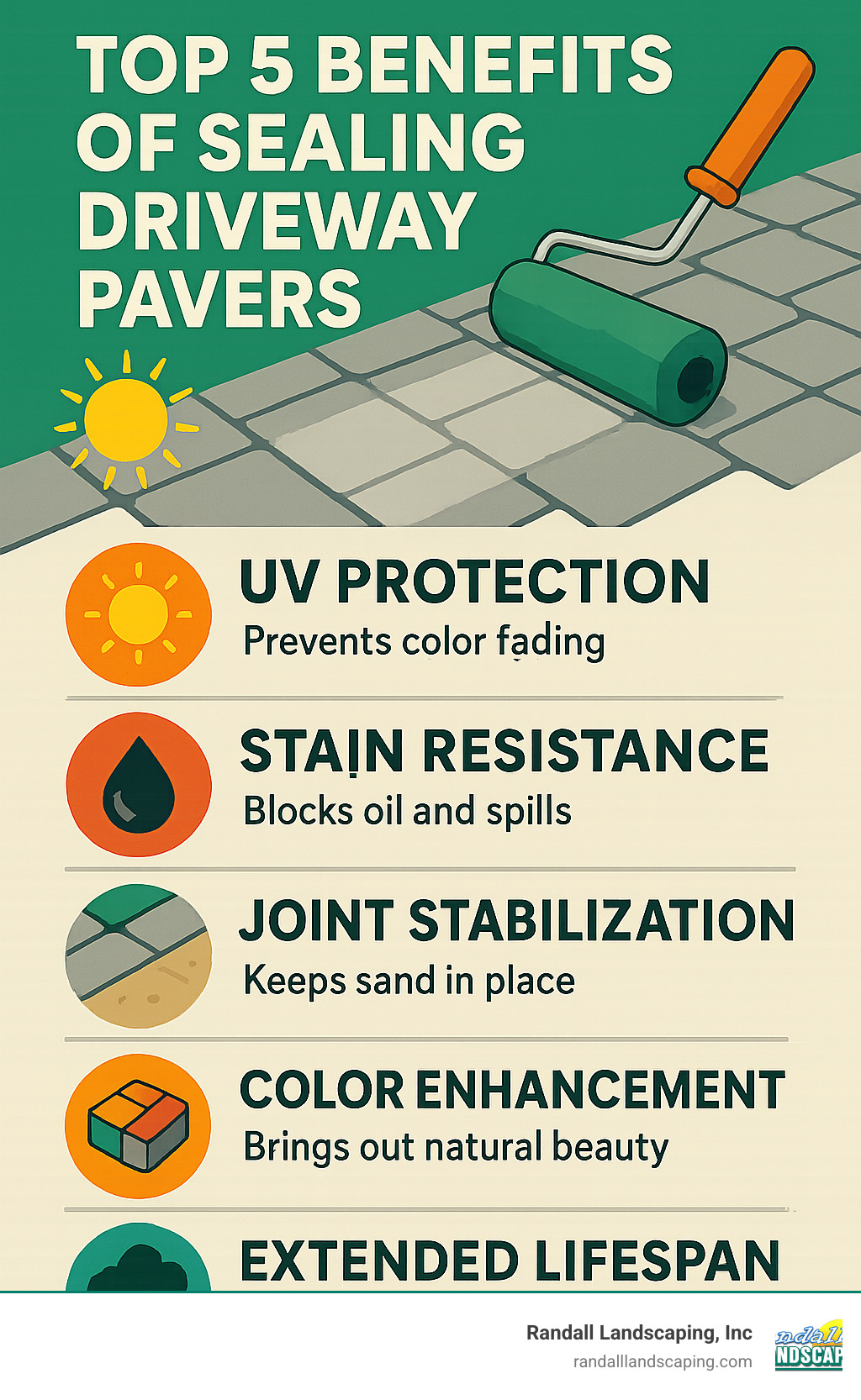
Key Benefits:
- UV Protection – Prevents color fading from sun exposure
- Stain Resistance – Blocks oil, grease, and other spills
- Joint Stabilization – Keeps sand in place and prevents weeds
- Improved Appearance – Brings out natural colors or adds wet-look shine
- Extended Lifespan – Protects against weather damage and wear
When to Seal:
- New pavers: Wait 60-90 days after installation
- Existing pavers: Every 3-5 years or when showing wear
- Best conditions: 50-90°F, dry weather, no rain for 24+ hours
Your beautiful paver driveway faces constant assault from the elements. UV rays fade colors over time. Oil spills from cars create permanent stains. Freeze-thaw cycles can cause damage. Joint sand washes away, letting weeds take root.
The good news? Sealing creates a protective barrier that stops these problems before they start.
I’m Tommy Randall, owner of Randall Landscaping Business, and I’ve been installing and maintaining hardscapes throughout Massachusetts and New Hampshire since 2006. Over nearly two decades, I’ve seen how proper sealing driveway pavers can double their lifespan while keeping them looking like new.
Why Sealing Your Driveway is a Smart Investment
Your paver driveway faces a daily assault from sun, winter weather, and vehicle traffic. Without protection, even high-quality pavers will show their age. Sealing driveway pavers is a smart investment in your home’s protection and beauty.
Protection from the elements is the biggest reason to seal your pavers. UV rays fade vibrant colors, leaving your driveway looking washed out. A quality sealer acts like sunscreen, blocking damaging rays and keeping colors rich.
Stain resistance is also crucial. Unsealed pavers absorb oil, grease, and other spills like a sponge, leading to permanent stains. A sealer creates a barrier, giving you time to clean up spills before they set in.
Improved aesthetics is the most immediately noticeable benefit. Sealing deepens colors and adds a richness that makes your driveway look new. Some sealers create a subtle wet-look finish that adds sophistication and curb appeal.
A well-maintained, sealed driveway boosts increased property value and creates a positive first impression for potential buyers, signaling a well-cared-for home.
Joint sand stabilization solves the frustrating problem of disappearing sand and weeds. Quality sealers harden the sand in the joints, locking it in place. This prevents weed growth and moss from taking hold, keeping your driveway looking neat.
Sealing also leads to easier cleaning, as dirt washes away more readily. It provides mold and mildew resistance, which is a bonus in humid climates.
For homeowners looking to improve their outdoor spaces beyond just the driveway, our comprehensive Hardscaping Services can help create a cohesive, beautiful landscape design.
The Pros and Cons of Sealing Pavers
Like any home improvement decision, sealing pavers has both advantages and considerations to weigh.
The pros include clear protection that extends your driveway’s life, improved color, easier maintenance, and better structural integrity from stabilized joint sand.
The cons involve the upfront cost of materials or professional labor and the need for reapplication every few years. Additionally, improper application can result in a slippery surface, highlighting the importance of correct technique.
The key is understanding that sealing driveway pavers is an investment in both immediate beauty and long-term protection. When done right, the benefits far outweigh the considerations, giving you years of improved curb appeal and easier maintenance.
Choosing Your Armor: A Guide to Paver Sealer Types and Finishes
Choosing a paver sealer is about finding the right protection and look for your driveway. Sealing driveway pavers isn’t a one-size-fits-all solution; the best choice depends on your paver type, desired look, and local climate considerations. Understanding the basics makes the decision much simpler.
| Feature | Water-Based Sealers | Solvent-Based Sealers |
|---|---|---|
| Appearance | More natural look, true to color, matte/satin finishes | Wet-look, tends to darken surface, high-gloss finishes |
| VOCs (Volatile Organic Compounds) | Generally lower, more eco-friendly, less odor | Generally higher, stronger odors, environmental concerns |
| Application | Easier to apply, less prone to bubbling/streaking | Can be more challenging, sensitive to temperature |
| Cleanup | Easy with water | Requires solvents (mineral spirits, xylene) |
| Durability | Good, often 2-3 years, better joint sand stabilization | Can be longer lasting (4-5 years), but gloss may fade |
When sealing driveway pavers, choosing a breathable sealer is crucial – especially for concrete pavers. This allows moisture to escape naturally, preventing issues like efflorescence (that chalky white residue that can appear on pavers). You don’t want to trap moisture under your sealer!
For more information on professional installation, check out our Driveway Pavers Installation Services.
Sealer Base: Water-Based vs. Solvent-Based
Your first choice is between water-based sealers and solvent-based sealers.
Water-based sealers are user-friendly, with low VOCs (fewer fumes) and easy cleanup using just water. They provide a natural look, are more breathable (letting moisture escape), and offer excellent joint sand stabilization to prevent weeds and erosion.
Solvent-based sealers deliver a dramatic wet look with significant color improvement and a high gloss finish. They are known for superior durability, often lasting longer than water-based alternatives. However, they have higher VOCs, require solvents for cleanup, and can be more difficult to apply.
Your choice depends on whether you prefer an easy-to-apply, natural finish or a more dramatic, long-lasting wet look.
Sealer Finish: From Natural to High Gloss
After choosing a base, select your finish to customize your driveway’s appearance.
- A natural look finish or matte finish offers invisible protection, preserving the original look of your pavers.
- A satin finish or semi-gloss provides a subtle sheen that deepens colors for a sophisticated appearance.
- A high-gloss finish creates a vibrant wet look with rich colors and a reflective surface.
That high-gloss finishes can be more slippery when wet. In climates like ours in Massachusetts and New Hampshire, adding an anti-slip additive is a wise precaution for high-gloss applications. The finish you choose impacts your home’s aesthetic, so consider your style and preferences carefully.
The Ultimate DIY Guide for Sealing Driveway Pavers
Sealing your pavers yourself is a rewarding DIY project that can save you money. This guide will walk you through it step-by-step.
- What tools are needed for sealing concrete pavers?
- What is the process for sealing concrete pavers?
- What are the ideal weather conditions for sealing pavers?
- How do I prepare pavers before sealing?
The ideal weather for sealing driveway pavers is dry, with temperatures between 50°F and 90°F, low humidity, and no rain in the forecast for at least 24 hours. Avoid applying sealer in extreme heat (over 90°F), as it can dry too quickly and cause an uneven, hazy finish.
Here are the essential tools you’ll need:
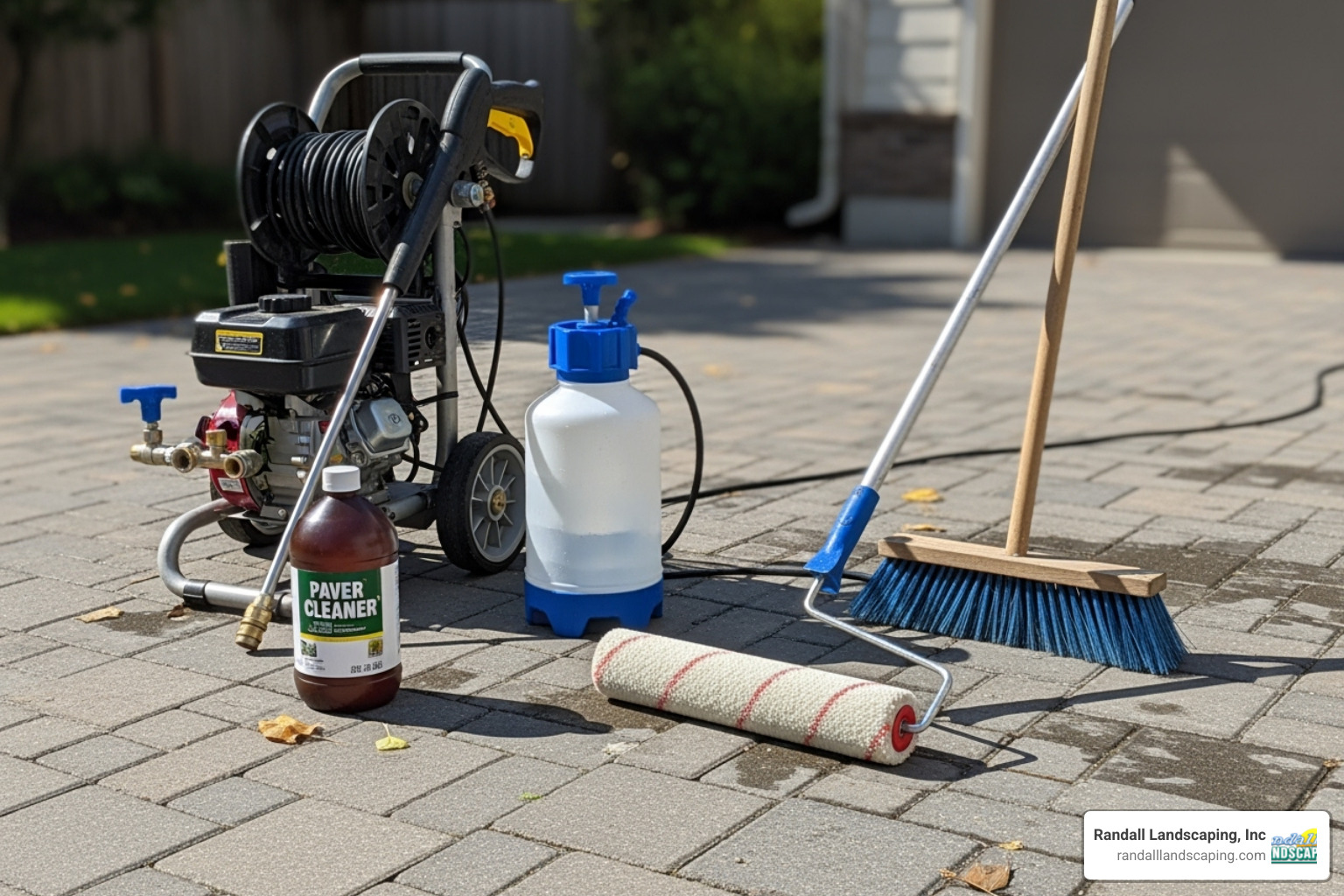
- Stiff broom or leaf blower
- Pressure washer (can be rented from a local hardware store)
- Weed removal tools
- Paver cleaner (specialized cleaners are best for tough stains)
- Pump sprayer (low-pressure sprayer for even application)
- Paint roller with extension pole (or a squeegee)
- Gloves and safety goggles
- Buckets and sponges
- Painter’s tape or plastic sheeting (to protect adjacent surfaces)
- Patience!
Step 1: Preparing for Sealing Driveway Pavers
Proper preparation is the most crucial step for a successful finish. Rushing this stage can lead to poor adhesion, uneven coating, or premature wear.
- Clear the Area: First, remove any furniture, planters, or other obstacles from your driveway. Sweep or use a leaf blower to clear all loose debris, dirt, and leaves.
- Remove Weeds and Moss: Dig out any weeds or moss growing between the pavers. For stubborn growth, a weed killer can be applied a few days prior.
- Clean the Pavers Thoroughly:
- For general dirt, scrub with soap, water, and a stiff-bristle broom.
- For tough stains like oil or rust, use a dedicated paver cleaner, following the product instructions.
- Efflorescence: If you see a whitish, dusty buildup, that’s efflorescence. It needs to be removed before sealing. Use a dedicated efflorescence cleaner, which not only cleans but also opens the pores of the paver surface for better sealant penetration.
- Pressure Washing: A pressure washer provides a deep clean. Use a fanned nozzle at a 30° angle, about 12 inches from the surface, being careful not to damage the pavers or blow out joint sand. Rinse the entire area thoroughly.
- Check and Refill Joint Sand: Inspect the joints for any missing sand. If needed, sweep in new joint sand (polymeric sand is excellent for this), compact it, and remove any excess from the paver surfaces.
- Allow Complete Drying: The pavers must be completely dry before sealing. This can take anywhere from a few hours to 24-48 hours, depending on weather and sun exposure. Sealing over a damp surface can trap moisture, causing a white, hazy appearance (blushing) that is difficult to fix.
This thorough preparation ensures the sealer adheres properly. If you’re looking for professional help with your hardscaping, our team handles Driveway Pavers in Andover, MA and surrounding areas.
Step 2: The Application Process
Before you begin, apply the sealer to a small, inconspicuous test spot to see how it looks once dry. This is especially important when using a new product or finish.
- Safety First: Always wear protective gear, including gloves and safety goggles.
- Choose Your Application Method:
- Pump Sprayer: This is often preferred for even coverage and good penetration into joints.
- Roller: A paint roller can also be used, but be careful not to pull sand from the joints.
- Apply the Sealer Evenly:
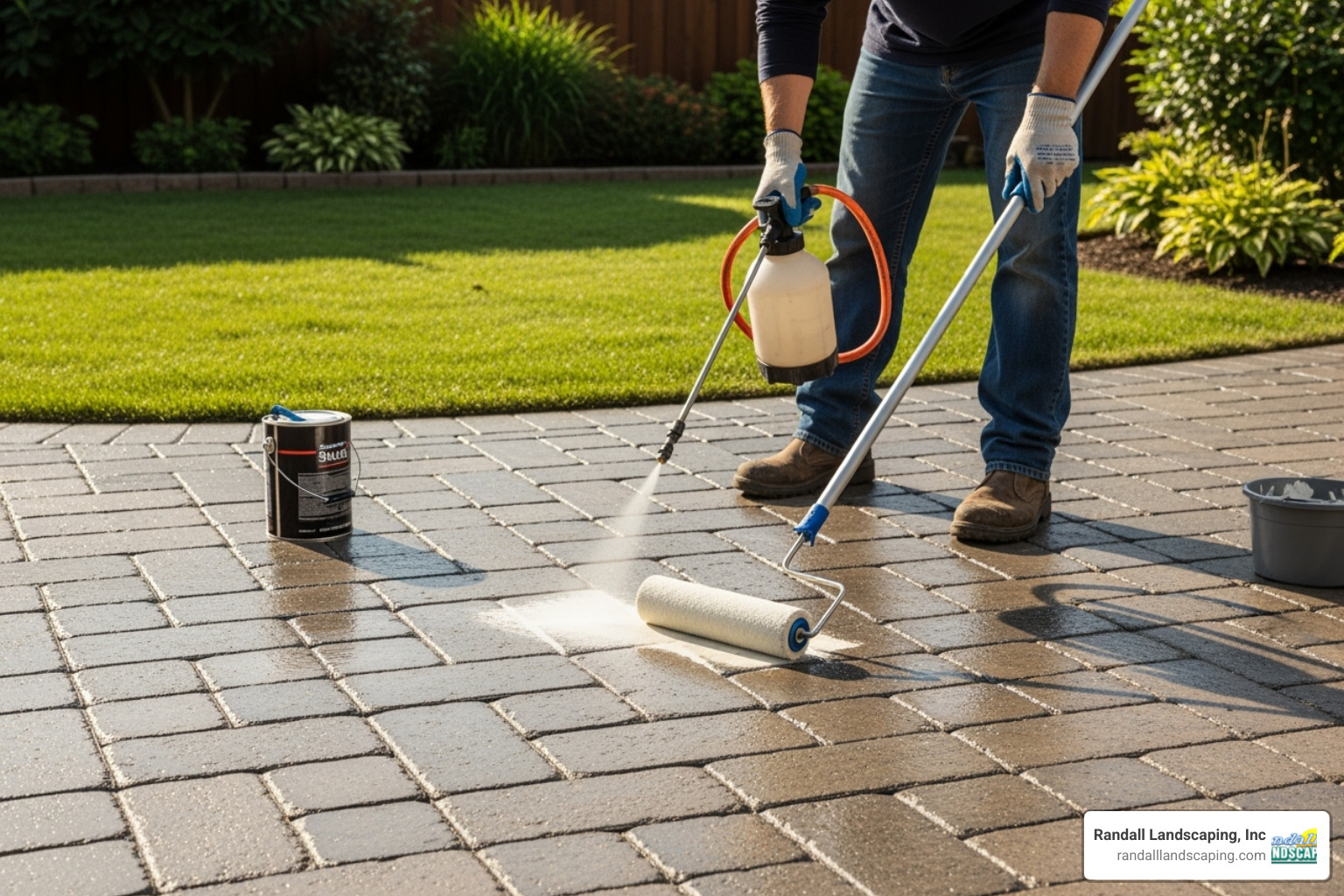
*   Work in manageable sections (e.g., 60-100 sq. ft.) to maintain a wet edge and prevent the sealer from drying too quickly.
*   Apply a generous, even coat, ensuring the pavers and joint sand are saturated.
*   Use a roller or squeegee to spread out any puddles to avoid shiny spots.
*   Always overlap with the previously sealed wet edge to prevent lines. For vertical surfaces, work from the top down.
- Second Coat (Optional, but Recommended): Many manufacturers recommend a second, lighter coat for improved protection and a more uniform finish. Allow the first coat to dry to the touch (usually 2-3 hours) before applying the second.
- Protect Adjacent Surfaces: Use painter’s tape or plastic sheeting to cover any areas you don’t want sealer on, such as siding or landscaping.
- Allow Adequate Drying and Curing Time: Follow the manufacturer’s instructions for drying and curing times. Generally, allow 2-3 hours before light foot traffic for water-based sealers (longer for solvent-based) and at least 24-72 hours before allowing vehicle traffic. During this period, protect the surface from debris, water, and rain, as moisture can ruin the finish.
Your driveway pavers are now protected and looking fantastic.
Paver Sealing FAQs: Timing, Costs, and Professional Help
Homeowners often have questions about sealing driveway pavers, especially concerning timing, costs, and whether to DIY or hire a pro. Here are some straight answers to these common concerns.
If you’re in our service area and need hands-on help, our team handles Driveway Pavers in North Andover, MA and all surrounding communities.
When is the right time to seal new pavers?
Patience is key when sealing a new driveway. New concrete pavers go through a process called efflorescence, where natural salts create a white, chalky residue on the surface. Sealing too early traps this moisture and salt, which can cause a permanent white haze.
Most manufacturers recommend a waiting period of 30 to 90 days after installation before sealing driveway pavers. This allows the pavers to cure fully and for efflorescence to dissipate. While breathable sealers offer more flexibility, waiting is always the safest bet for a clear finish.
How often should pavers be resealed and how long does it last?
While the general guideline is to reseal every 3-5 years, the actual resealing frequency depends on several factors. Climate impact (heavy sun and freeze-thaw cycles), high traffic levels, and sealer quality all affect the sealer’s lifespan.
You’ll know it’s time to reseal when you see signs of wear, such as fading color, stains soaking in, or water no longer beading on the surface.
What is the cost of sealing pavers?
The cost of sealing driveway pavers varies depending on your approach and project specifics.
Please note: The following are average costs based on internet data and not actual costs for Randall Landscaping. For a precise quote custom to your project, please contact us directly.
For the DIY route, material costs for a typical driveway might be $100-$250, depending on the square footage and sealer type. You’ll also need to factor in supplies like cleaners and sprayers.
Professional services include labor, which changes the equation. Based on industry data, professional paver sealing typically ranges from $1.00 to $6.00+ per square foot. The higher end reflects specialized sealers, extensive preparation, or complex projects.
Cost factors that influence pricing include your driveway’s size, its current condition, the type of sealer chosen, and your location.
Can I DIY or should I hire a professional for sealing driveway pavers?
This is a personal decision with valid points for both sides.
DIY: The project is feasible for many homeowners, offering significant cost savings and the satisfaction of doing it yourself. However, it is a labor-intensive project that requires a full weekend or more. The potential risks of DIY include application errors like streaking or hazing, which can be costly and frustrating to fix.
Hiring a Professional: The professional benefits include expertise, proper equipment for a flawless finish, and access to commercial-grade products. A pro offers guaranteed results and saves you valuable time and effort. For large or complex projects, or for homeowners who want peace of mind, hiring a professional often provides better long-term value.
Protect Your Investment with Professional Paver Sealing
Your driveway pavers represent more than just a beautiful entrance to your home – they’re a significant investment that deserves proper protection. Throughout this guide, we’ve explored how sealing driveway pavers transforms them from merely functional surfaces into durable, stunning features that improve your property’s curb appeal for years to come.
The benefits are clear: UV protection prevents costly color fading, stain resistance keeps oil spills and grease from becoming permanent eyesores, and joint stabilization stops weeds from taking over while keeping your pavers firmly in place. When you factor in the extended lifespan and easier maintenance that sealing provides, it becomes obvious why this isn’t just maintenance – it’s smart investment protection.
Whether you decide to tackle the project yourself with a pump sprayer and protective gear, or prefer the peace of mind that comes with professional expertise, the key is taking action before weather damage and everyday wear take their toll.
At Randall Landscaping, we’ve spent nearly two decades perfecting our craft throughout the Merrimack Valley and Southern New Hampshire. We understand the unique challenges our New England climate presents – from harsh winter freeze-thaw cycles to intense summer UV exposure. Our team combines this local expertise with a commitment to quality work and 100% reliability, ensuring every project meets our high standards for customer satisfaction.
When you choose professional paver sealing, you’re not just getting better equipment and premium sealers – you’re getting the confidence that comes with guaranteed results. We’ve seen too many well-intentioned DIY projects that required costly fixes due to improper preparation or application mistakes.
Don’t let your beautiful driveway pavers lose their luster or suffer preventable damage. The investment you made in quality hardscaping deserves the protection that proper sealing provides. Your future self (and your wallet) will thank you when your pavers still look stunning years down the road.
Ready to give your driveway the protection it deserves? Contact us for your Driveway Pavers project and let our experienced team help you preserve the beauty and longevity of your outdoor investment.