

Introduction: Your Dream Backyard Awaits
Patio design build transforms your backyard from underused space into a true extension of your home. Whether you’re dreaming of al fresco dinners, a cozy fire pit for cool evenings, or simply a peaceful spot for morning coffee, the right patio delivers year-round value and enjoyment.
Quick Answer: What is Patio Design Build?
Patio design build is a complete process that includes:
- Planning – Defining purpose, location, size, and budget for your outdoor space
- Designing – Selecting materials (stone, pavers, concrete), features (fire pits, kitchens, shade), and layout
- Building – Site preparation, foundation laying, material installation, and finishing touches
- Enhancing – Adding furniture, lighting, plants, and accessories for comfort and style
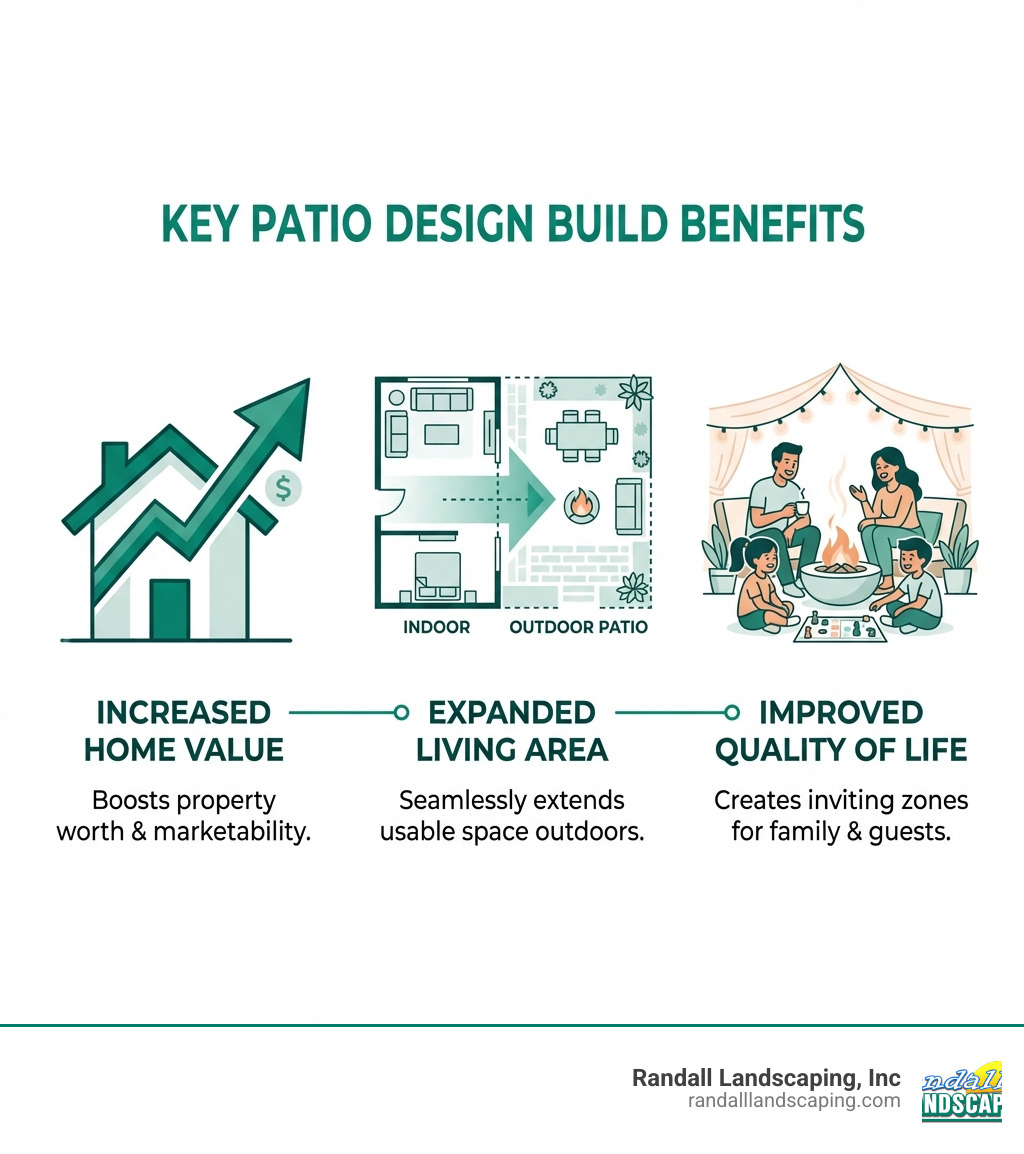
Key Benefits:
- Expands your living space outdoors
- Increases property value significantly
- Creates dedicated zones for dining, relaxing, and entertaining
- Offers year-round usability with proper planning
Taking full advantage of your backyard by creating an inviting outdoor space can make even a tiny home feel big. As one industry expert notes, “A well-designed patio is more than just a place to put furniture—it’s an extension of your living space that can transform your outdoor experience.” From small 12×12-foot intimate spaces to expansive 20×20+ multi-zone layouts, patios are consistently one of the best investments for improving both your backyard design and your daily quality of life, with many outdoor projects providing a strong return on investment.
But where do you start? How do you choose the right materials, ensure proper drainage, and create a space that truly fits your lifestyle?
This guide walks you through every phase of the patio design build process—from initial planning and material selection to construction fundamentals and long-term maintenance. You’ll learn how to avoid common pitfalls, make smart budget decisions, and create an outdoor oasis that serves your family for decades.
I’m Tommy Randall, owner of Randall Landscaping, Inc., and I’ve been designing and building custom patios across Massachusetts and Southern New Hampshire since 2006. Over nearly two decades, I’ve helped hundreds of homeowners transform their backyards with professional patio design build services that blend functionality, durability, and aesthetic appeal.
Let’s explore how you can create your perfect outdoor living space.
Quick patio design build definitions:
Phase 1: Planning Your Perfect Patio
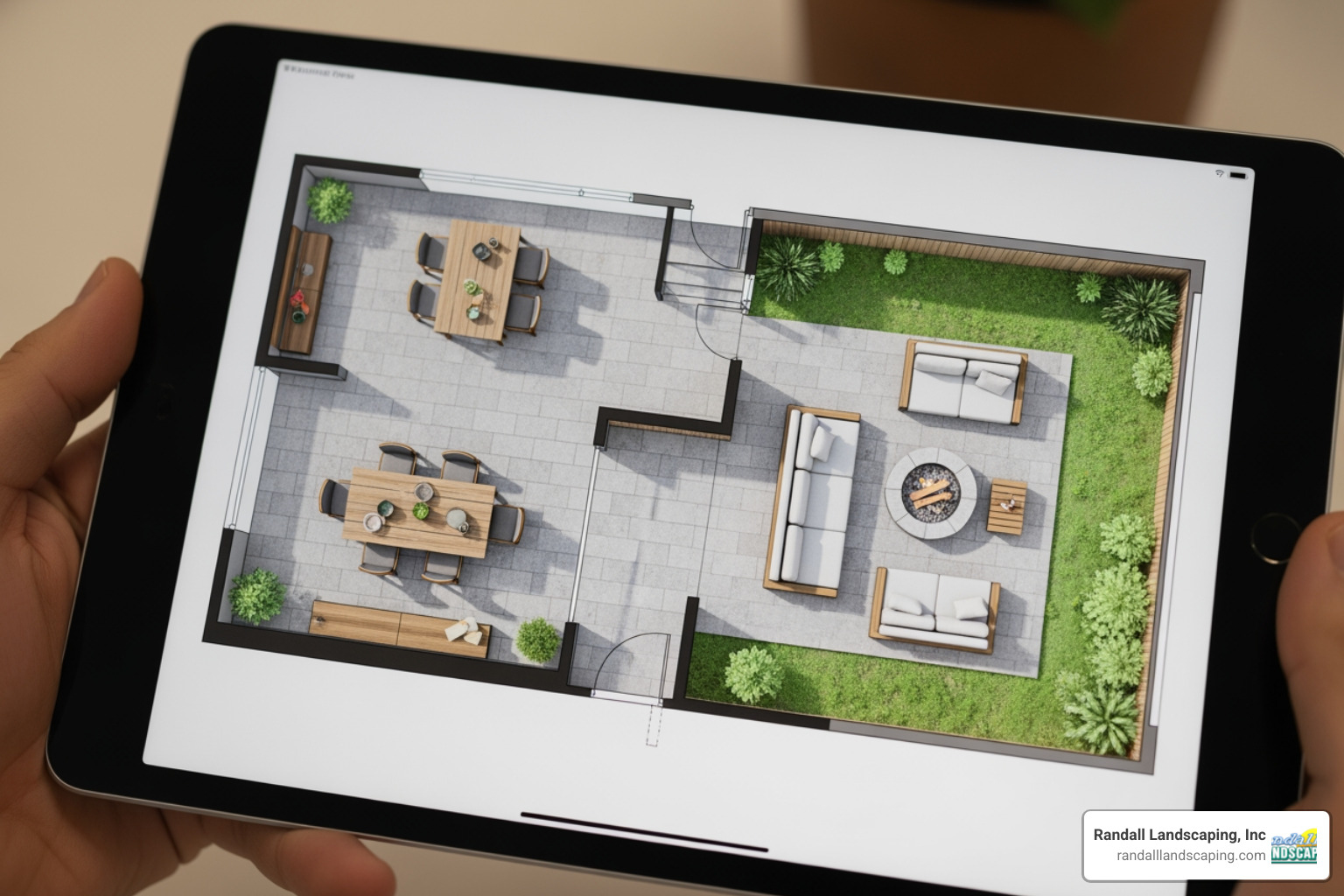
Every successful patio design build project begins with thorough planning. We understand that you have a vision for your outdoor space, and our role is to help you bring it to life, matching your lifestyle, aspirations, and budget. This initial phase involves defining the patio’s purpose, setting a realistic budget, and utilizing advanced tools like 3D patio plans to visualize your dream.
Essential Steps for Your Patio Design Build Project
Before we even think about breaking ground, we consider several critical factors. These steps ensure your patio is not just beautiful, but also functional, sustainable, and perfectly integrated into your home and landscape.
- Define Your Patio’s Purpose: What will your patio primarily be used for? Is it an entertainer’s hub for summer BBQs, a quiet retreat for morning coffee, a family zone for kids to play, or a sophisticated outdoor dining area? Clearly defining its purpose from day one will guide all subsequent design decisions, from size to features. For instance, an outdoor kitchen needs proximity to your indoor kitchen for ease of entertaining.
- Choosing the Ideal Location: The “where” is just as important as the “what.” When selecting a location for your patio, we consider several key factors:
- Proximity to the House: An adjacent patio often serves as a natural extension of your indoor living space, making it convenient for dining and entertaining. A detached patio further in the yard can offer a more secluded retreat.
- Sun Exposure: We observe the sun’s path throughout the day and year to understand light conditions. Do you want a sun-drenched spot for lounging or a shaded area for cool relaxation? We also consider seasonal changes, like tree canopies that provide shade in summer but allow sun in winter.
- Privacy Needs: How much privacy do you desire from neighbors? We can strategize with screen plantings, pergolas, or sitting walls to create secluded zones.
- Views: Do you want to highlight a beautiful garden feature or create a new focal point? We design to improve existing views or create new ones from your seating areas.
- Drainage Considerations: This is crucial. We always avoid planning a patio in a low spot on your property where water might pool. Proper grading and drainage solutions are integrated into the design to prevent water issues and direct runoff away from your home. We’ll dive deeper into this in Phase 3.
- Determining the Right Size and Shape: The size and shape of your patio directly impact its functionality and aesthetic.
- Size: Most patios range from 12×12 feet for small, intimate spaces to over 20×20 feet for multi-zone layouts that accommodate various activities. We help you determine the appropriate size based on your intended use and the number of people you wish to comfortably seat.
- Shape: Do you prefer clean, straight lines and rectangular shapes, or unique curvilinear designs that flow with your landscape? The shape should complement your home’s architecture and existing landscape. For example, angled designs can be used to match home architecture.
- Budgeting for Your Dream Patio: Setting a realistic budget early on is paramount. This will influence material choices, features, and whether certain elements can be DIYed or require professional installation. We’ll provide transparent estimates to help you plan your investment.
- Utilizing 3D Patio Plans: We leverage 3D patio plans to help you visualize the design in reality. This powerful tool allows us to identify potential layout issues, experiment with different materials and features, and get a true feel for the space before construction even begins. It’s an invaluable step in ensuring the final product is exactly what you desire.
For more information on how we can help you with your patio project, explore our Patio Design services.
Popular Patio Layouts and Planning Your Vision
Once we’ve ironed out the essential steps, it’s time to think about how your patio will be laid out. We specialize in creating custom designs custom to your space, needs, and personal style, offering multiple layout options so you can choose what works best for you.
Here are some popular layout options that we can adapt to your specific backyard in the Merrimack Valley and Southern New Hampshire:
- The Entertainer’s Hub: This layout focuses on hosting and dining. It typically includes an outdoor kitchen or grill station, a spacious dining area, and perhaps a bar. We ensure easy access to your indoor kitchen for convenience.
- The Relaxation Retreat: Designed for unwinding, this layout often features a cozy fire pit or fireplace, comfortable lounge seating, and perhaps a water feature for soothing ambiance. It’s a perfect spot to kick back and read or gather around a bonfire.
- The Family Zone: This layout accommodates various family activities, potentially including a dedicated play area for children, ample seating for adults, and perhaps built-in planters for gardening.
- Multi-Zone Layouts: For larger spaces, we often divide the patio into distinct zones for different activities. For example, a dining area near the house and a lounging area with a fire pit further out. Using furniture, planters, and even changes in material can effectively define these areas, creating a more functional and visually interesting space.
Adapting Layouts to Your Needs: We believe a “collected” look, with mixed textures, colors, and materials, feels more natural and curated than matching everything. We’ll show you how to incorporate existing elements like arbors, retaining walls, or water features into your new patio design, ensuring it harmonizes with your home and landscape.
Budgeting Tips and Considerations: We understand that cost is a significant factor. When planning your layout and features, we’ll discuss:
- Material Costs: Different materials have varying price points, which we’ll cover in the next phase.
- Features: Adding an outdoor kitchen or fireplace will naturally increase the budget, but these can also significantly improve your lifestyle and property value.
- Permits: We’ll help you steer any local permit requirements in your town (e.g., Andover, Salem, Atkinson) regarding structural height or yard coverage.
- Professional vs. DIY: While some small elements can be DIY, we recommend professional installation for complex designs or when working with materials like concrete to ensure longevity and proper construction.
Phase 2: Choosing Your Materials and Features
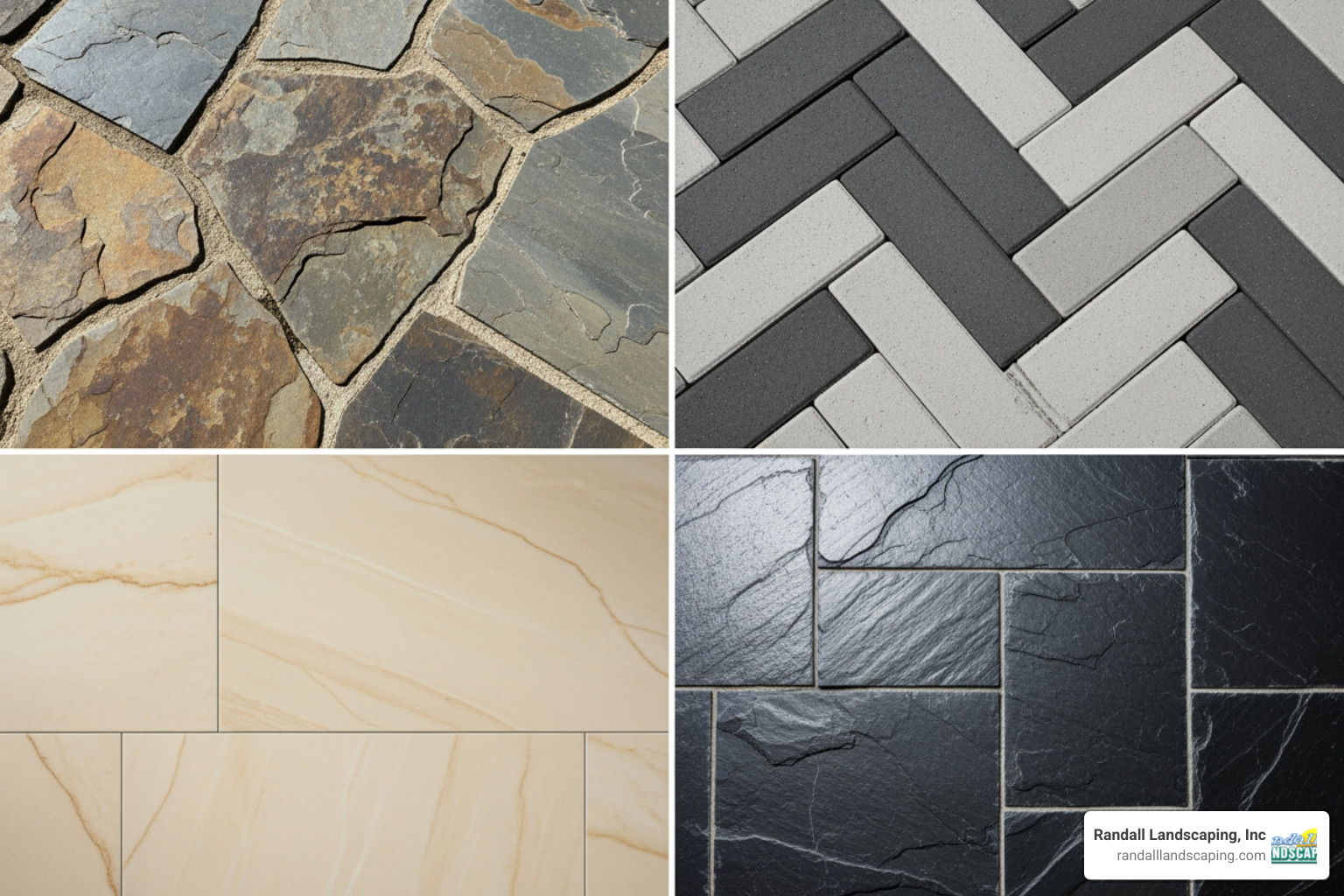
Now that we have a clear vision and layout, the next exciting step in your patio design build journey is selecting the right materials and incorporating functional features. These choices will define your patio’s aesthetic, durability, maintenance needs, and overall budget.
Comparing Patio Flooring Materials
The flooring material you choose is the foundation of your patio’s look and feel. Each option offers unique benefits and considerations. When making this choice, we consider the desired look, durability, maintenance, and budget. View our Hardscape Products to see some of the options we offer.
Here’s a comparison of popular patio flooring materials:
| Material | Cost (Internet Average per sq ft, Installed)* | Durability | Maintenance | Aesthetics |
|---|---|---|---|---|
| Natural Stone | $15 – $50+ | Very High | Low to Moderate: May require periodic sealing and joint weeding. | Timeless, unique, and high-end with natural variations. |
| Porcelain Tiles | $10 – $40+ | Very High | Very Low: Non-porous, resistant to stains, scratches, and fading. | Modern and sleek with a wide variety of styles that can mimic wood or stone. |
| Concrete Pavers | $8 – $30+ | High | Low to Moderate: May need sealing, joint sand replenishment, and weeding. | Highly versatile with endless colors, shapes, and patterns. |
| Gravel | $4 – $15+ | Moderate | Moderate: Requires regular raking, weeding, and replenishment to maintain appearance. | Casual and rustic, offering a distinct texture and sound. |
*Disclaimer: These are average costs based on internet data and are for informational purposes only. They do not represent actual costs for Randall Landscaping. Actual project costs will vary based on size, materials, site conditions, and features.