
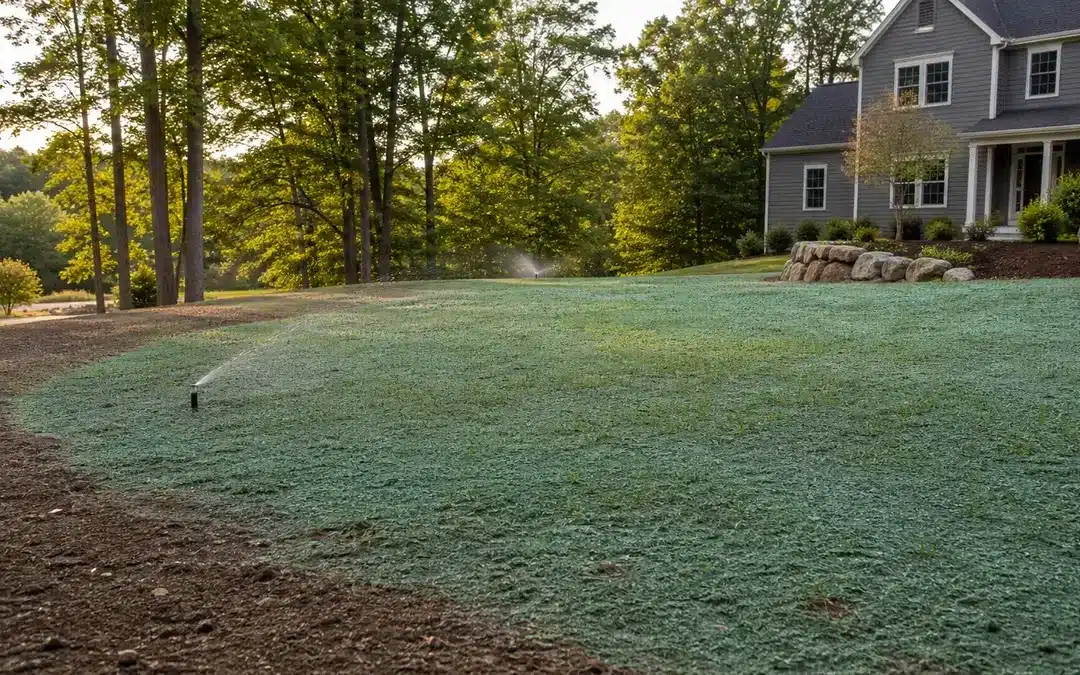
The best time to hydroseed a new lawn in Southern New Hampshire is usually late summer, after the strongest heat has eased and while enough growing time remains before a hard frost. Spring is the second-best window when soil is workable and irrigation is ready. A successful schedule depends on temperature, moisture, weed pressure, soil preparation, and establishment time—not the calendar alone.
Spring or late summer: the quick comparison
University of New Hampshire Extension identifies late summer as the preferred seeding and lawn-renovation period in New Hampshire, with spring as the second choice. The same guidance says cool-season turf grows best with air temperatures around 65–75°F and soil temperatures around 55–65°F. Read the university’s New Hampshire turf timing guidance.
| Window | Why it can work | Main constraint | Decision cue |
|---|---|---|---|
| Late summer | Cooling air, warm soil, and lower annual-weed pressure support establishment | The lawn still needs adequate growth before a hard frost | Preferred when heat has broken and irrigation can keep the seedbed moist |
| Spring | Cool air and seasonal moisture can support germination | Wet soil, weed competition, and approaching summer heat can narrow the window | Workable when the soil is firm enough to prepare and watering is available |
| Midsummer | Warm soil can speed germination | Heat and rapid drying increase irrigation demand and stress on young grass | Proceed only with reliable coverage and a favorable forecast |
| Late fall | Cool conditions may look favorable | Too little establishment time before a hard frost | Pause if the young stand cannot develop before winter |
Why late summer is usually the strongest window
Late summer aligns three useful conditions for a New Hampshire lawn: warm soil, cooler air, and less pressure from many annual weeds. UNH Extension notes that lawn renovation and overseeding often perform better after the heat breaks in August and September. It also advises allowing a young lawn roughly six to eight weeks of growth before the first hard frost. See UNH Extension’s local lawn establishment and seasonal guidance.
That does not make every late-summer day a green light. A hot, dry forecast can still create a demanding watering schedule. A steep or sunny site may dry much faster than a level yard with afternoon shade. The better choice is a favorable weather window inside the season, not a date selected months in advance regardless of conditions.
When spring hydroseeding makes sense
Spring can be a practical second choice when the project cannot wait until late summer. The soil must be dry and firm enough for proper grading and preparation. Starting on saturated ground can create compaction, ruts, and an uneven seedbed. The project also needs time to establish before summer heat increases water demand.
Spring weed pressure deserves attention. Products designed to prevent seed germination can also interfere with new grass seed, so any lawn-treatment history should be discussed before hydroseeding. Do not guess about compatibility; follow the product label and the installation plan.
Why midsummer and late fall need more caution
Midsummer hydroseeding can face rapid surface drying, especially on slopes, along pavement, and in open windy areas. The work may still be possible when irrigation coverage is dependable, but the margin for missed watering is smaller.
Late fall creates the opposite problem. Cooler weather reduces drying, but a young lawn may run out of establishment time before hard frost. A slurry applied successfully is not the same as a lawn established successfully. If the forecast and expected germination period leave too little growing time, waiting for spring is the safer scheduling decision.
Use a go-or-pause checklist
Before choosing an installation date, check the conditions that control establishment:
- Soil readiness: Is the ground workable rather than saturated, frozen, or severely compacted?
- Temperature window: Are cool-season grass conditions favorable, without an immediate heat spike or hard-frost risk?
- Water coverage: Can every zone—including slopes and paved edges—be kept evenly moist?
- Drainage: Will water soak in instead of pooling or carrying the application downhill?
- Site preparation: Have grading, debris removal, soil testing, and needed amendments been addressed before seed is applied?
- Treatment history: Could a recent weed-control product interfere with germination?
- Daily oversight: Who will inspect moisture and adjust for rain, wind, sun, and shade during establishment?
Pause the project if irrigation is not ready, the soil cannot be prepared without damage, or the forecast leaves no reasonable establishment window. Correcting those constraints before installation protects the investment better than forcing a date.
Match the schedule to the Southern New Hampshire site
A calendar recommendation should be refined at the property. A sunny bank in Salem may need a different watering strategy than a shaded, level yard. Soil drainage, slope, access, and the seed mix all affect how quickly the lawn can establish. Randall Landscaping’s new-lawn hydroseeding service covers homes, businesses, and contractor projects throughout Southern New Hampshire and the Merrimack Valley, including difficult hillsides and banks.
If you are comparing spring and late-summer dates, start with the condition of the site and work backward from the likely heat or frost constraint. Then use the first-month hydroseeding aftercare plan to assign watering, traffic control, and mowing checks before the application is scheduled.
Choose a weather window, not just a month
Late summer is generally the best time to hydroseed in New Hampshire, and spring is the next reasonable option. The final decision should still reflect current soil condition, forecast, irrigation, and the time available for roots to establish. To review the timing and preparation needs for your property, request a hydroseeding estimate from Randall Landscaping.