

Transform Your Outdoor Space with Natural Stone Beauty
Building a flagstone walkway creates a durable, attractive path that adds natural charm to any landscape. This timeless hardscaping feature combines beauty with function, offering a non-slip surface that complements both formal and rustic garden designs.
Quick Overview: Building a Flagstone Walkway
- Plan – Mark your path width (minimum 3 feet) and layout
- Excavate – Dig 5-6 inches deep, removing sod and debris
- Base – Install landscape fabric, 4 inches gravel, 2 inches sand
- Lay – Set flagstones with consistent gaps, level each piece
- Fill – Add joint material (sand, polymeric sand, or mortar)
Unlike concrete or brick alternatives, flagstone offers best natural beauty. Each stone brings unique colors and textures that weather beautifully over time. The irregular shapes create an organic feel that flows with your landscape rather than dominating it.
Why flagstone walkways are worth the effort:
- Naturally slip-resistant surface
- Excellent drainage between stones
- Minimal maintenance once installed
- Increases property value significantly
- Lasts decades with proper installation
The installation process requires patience and physical effort, but the results speak for themselves. With proper planning and technique, you can create a professional-looking walkway that rivals expensive contractor work.
I’m Tommy Randall, owner of Randall Landscaping, and I’ve been building a flagstone walkway installations throughout Massachusetts and New Hampshire since 2006. My team has completed hundreds of stone walkway projects, and I’ve learned the techniques that separate amateur attempts from professional results.
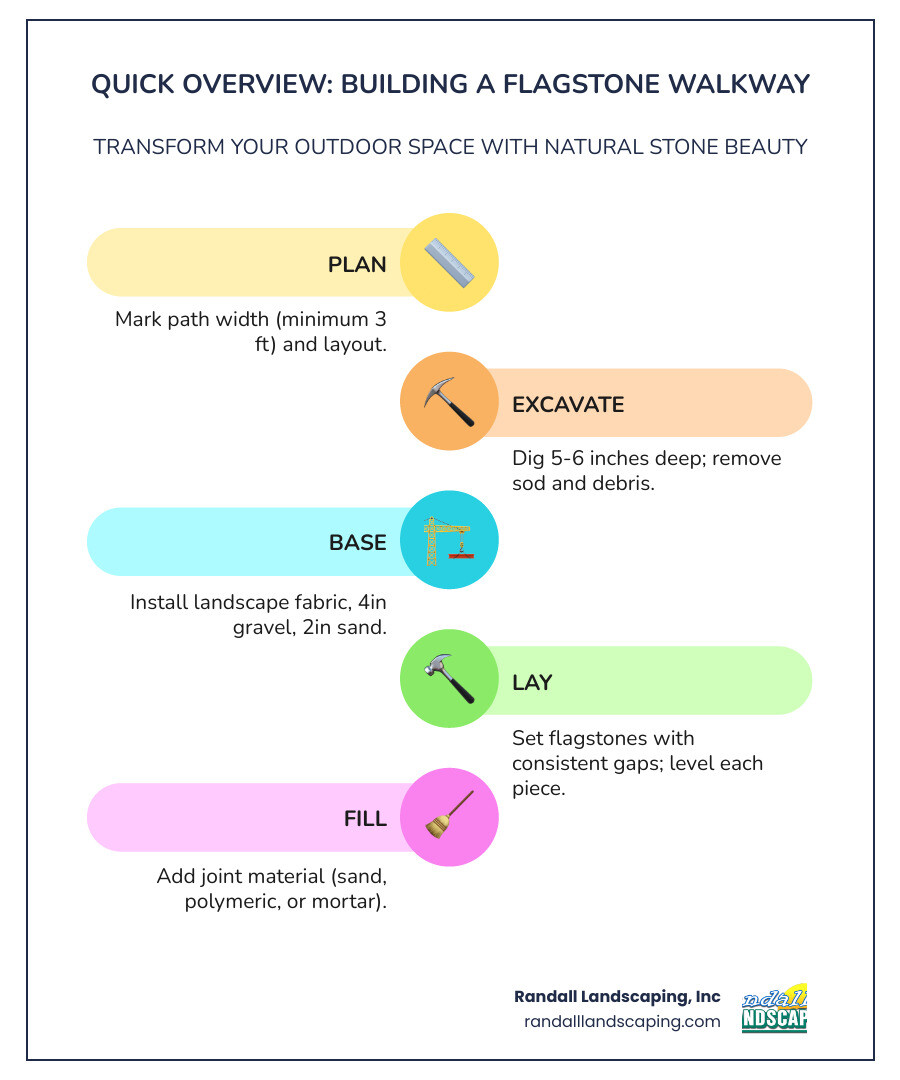
Building a flagstone walkway terms simplified:
Why Choose a Flagstone Walkway?
A flagstone walkway transforms an ordinary entrance into something special. Unlike uniform concrete, it offers a natural beauty that looks carved by nature itself. This visual interest complements any landscape style, from cozy cottages to sleek modern designs.
You’re investing in something that lasts. These natural stones were formed over millions of years and can handle any weather. Properly installed flagstone walkways last for decades without the cracking or fading common with other materials.
The maintenance is refreshingly simple. A flagstone path mainly requires occasional sweeping. If you choose a dry-laid installation (without mortar), you might need to add joint material every few years, but that’s about it.
Flagstone breathes. The gaps between stones allow rainwater to soak into the ground, which prevents puddles, reduces erosion, and helps your garden. This permeability also means fewer slippery surfaces when wet.
Here’s how flagstone compares to other common options:
| Feature | Flagstone | Concrete | Brick |
|---|---|---|---|
| Cost | Higher material & labor | Lower material & labor | Moderate material & labor |
| Durability | Excellent, long-lasting, weather-resistant | Good, but prone to cracking over time | Good, but can chip and loosen |
| Appearance | Natural, organic, unique, rustic to formal | Uniform, modern, can be stamped/colored | Classic, traditional, uniform |
| Maintenance | Low, occasional sweeping | Moderate, cleaning, crack repair | Moderate, cleaning, weed growth, resetting |
| Drainage | Excellent (permeable joints) | Poor (impermeable surface) | Moderate (permeable joints) |
If you’re considering a complete outdoor makeover, flagstone walkways pair beautifully with other hardscaping features. Check out our Hardscaping services to see how we can transform your entire outdoor space.
Choosing the Right Type of Flagstone
“Flagstone” is a family name for large, flat stones used for paving. Each type brings its own personality to your walkway.
- Sandstone: Comes in warm, earthy colors (browns, reds, grays) with a natural texture. It’s a popular and affordable choice.
- Slate: Offers a sophisticated, smooth look in darker shades like gray, blue, and green. It’s very dense and durable.
- Limestone: Features light, airy tones of creamy white and soft gray that brighten up shaded areas.
- Quartzite: Often has a sparkling, crystalline surface in colors from gold to silver. It’s extremely hard and durable.
Stone thickness matters. For most walkways with a proper base, stones that are 1.5 to 2 inches thick are ideal. For less stable soil or extra durability, choose stones up to 3 inches thick. Thinner stones can crack, while thicker ones can be unnecessarily heavy.
Buy local when possible. Local stone complements your region’s landscape and makes it easier to find matching pieces for future repairs or expansions. For specific guidance on bluestone, see our guide on How to Install a Bluestone Walkway.
Understanding the Cost of a Flagstone Walkway
Building a flagstone walkway is an investment that adds significant beauty and property value.
For a DIY project, your main expense is materials. Flagstone typically runs $25 to $28 per square foot. You’ll also need to budget for gravel, sand, landscape fabric, joint filler, and potential tool rentals.
Professional installation offers expertise and efficiency. Based on internet data, professional installation ranges from $15 to $27 per square foot for basic projects. However, complex designs, difficult terrain, or premium materials can push costs to $80 or more per square foot. These are average costs from internet data and not actual costs for Randall Landscaping.
Several factors influence your final cost: exotic or thicker stones, curved vs. straight paths, and site accessibility all affect the price. Your choice of joint filler also matters, with basic sand being the cheapest and mortar being the most expensive.
While flagstone costs more upfront than concrete, it lasts much longer and adds significant curb appeal. For broader cost perspectives, you might find How Much Do Flagstone Patios Cost? helpful. A beautiful walkway often inspires other improvements, like those seen in our Patio Design services.
Gearing Up: Tools & Materials You’ll Need
Proper preparation is key to building a flagstone walkway. Having the right tools and materials on hand before you start makes the project smoother and more enjoyable, preventing mid-project trips to the supply store.
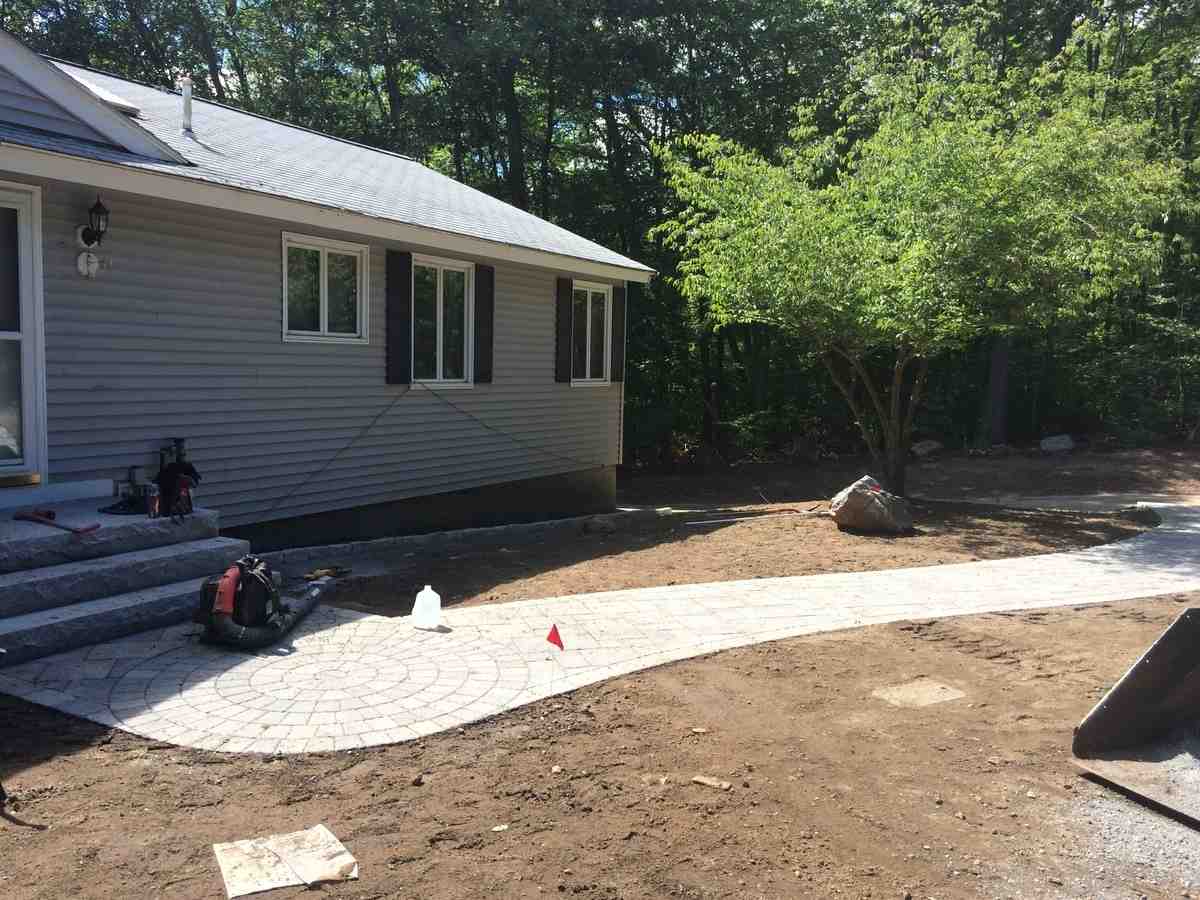
Most of these tools are standard equipment, and others can be rented. Here’s what you’ll need.
Essential Tools
- Shovel & Rake: For digging, moving soil, and leveling base materials.
- Wheelbarrow: Essential for moving heavy stones, gravel, and sand.
- Hand Tamper: Crucial for compacting the soil and base layers to prevent settling.
- Level (4-6 ft): To ensure the path has the correct slope and individual stones are even.
- Rubber Mallet: For setting stones firmly into the sand bed without cracking them.
- Tape Measure: For accurate layout and spacing.
- Marking Paint or Garden Hose: To outline your path’s shape before digging.
- Chisel & Hammer: For splitting or shaping stones for a custom fit.
- Safety Glasses & Gloves: Protect yourself, especially when cutting stone.
- Utility Knife & Broom: For cutting landscape fabric and sweeping joint filler.
Necessary Materials
- Flagstones: Calculate your square footage and add 10% extra for cuts and breakage.
- Crushed Stone/Gravel (3/4-inch): Forms the stable, draining base layer.
- Leveling Sand (Masonry Sand): Creates the adjustable bed for setting each stone.
- Landscape Fabric: A weed barrier that still allows water to drain.
- Edging (Optional): Steel, plastic, or stone edging contains base materials and defines the path.
- Joint Filler: Choose from basic masonry sand, weed-resistant polymeric sand, permanent mortar, or natural-looking decomposed granite.
The Blueprint: A Guide to Building a Flagstone Walkway
With your tools and materials ready, it’s time to start building a flagstone walkway. This process is a labor of love, but careful work in each step ensures a beautiful, long-lasting result. Taking time to plan and prepare the base is the most critical part of the project. For more inspiration, you can check out resources like How to Build a Stone Path for Your Garden.
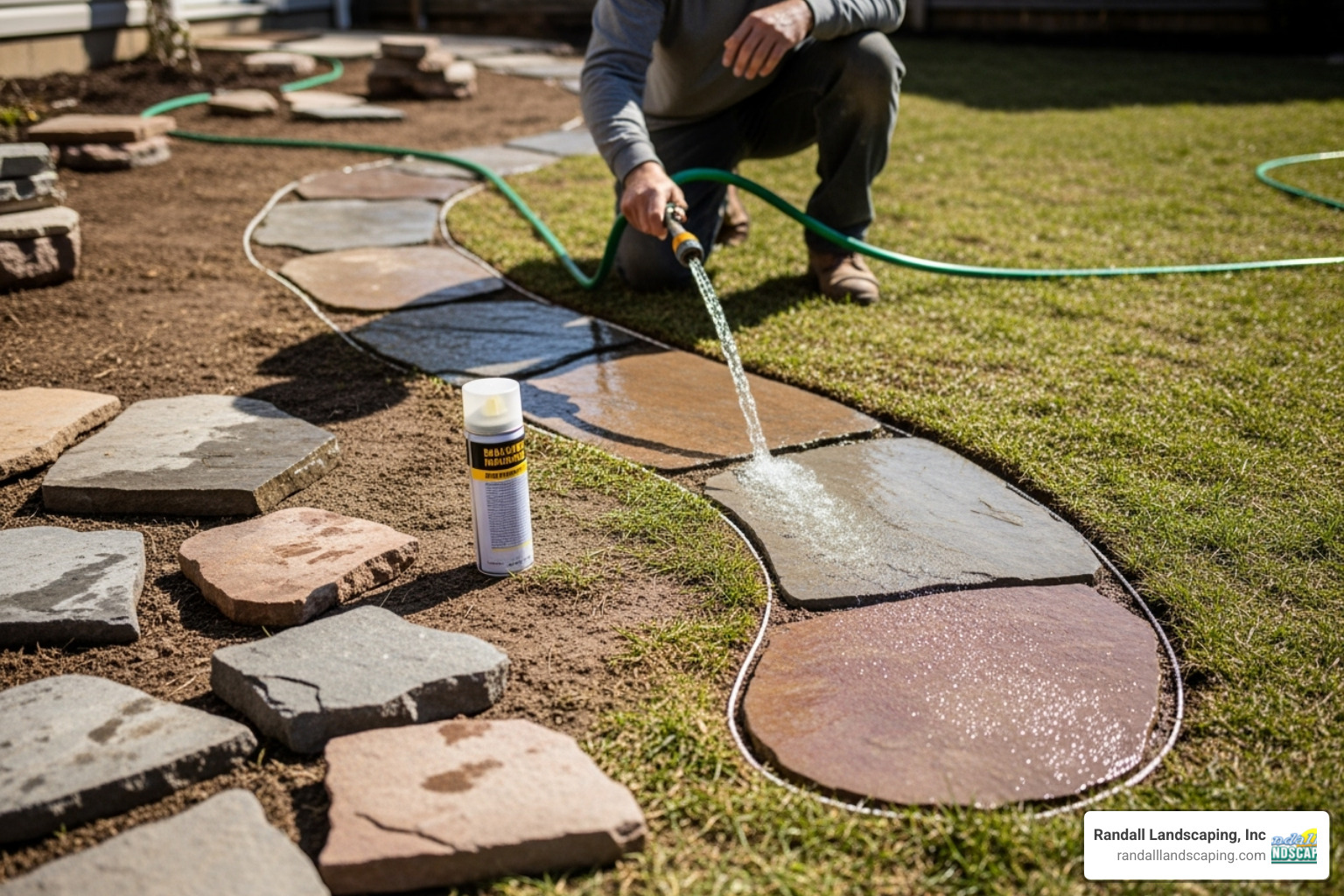
Step 1: Planning and Laying Out Your Path
- Determine Path Width: Plan for a path at least 3 feet wide for one person, or 4-5 feet for two people to walk side-by-side.
- Choose Path Shape: Straight paths feel formal, while winding paths create a more natural, organic look. Choose what best fits your home’s style.
- Mark the Area: Use a garden hose to lay out the shape. Once you are happy with the flow, use marking paint to create a clear boundary for digging.
- Consider Landscape Features: Plan your route to work with existing trees, slopes, and flower beds. Our team handles these challenges regularly in projects like Walkway Installation in Andover, MA.
Step 2: Excavation and Site Preparation
This is the most physically demanding part, but it’s critical for a stable walkway.
- Set Excavation Depth: Dig down 4 to 6 inches to accommodate a 4-inch gravel base and a 1-2 inch sand layer. This ensures the finished stones sit flush with the surrounding ground.
- Remove Sod and Soil: Clear everything within your marked area, including grass, roots, and rocks. The bottom of the trench should be relatively smooth.
- Level the Trench: Ensure the trench is level from side to side. You can create a slight slope along the path’s length (away from your house) for drainage.
- Tamp the Soil: Use a hand tamper to compact the exposed soil. This creates a solid foundation and prevents future settling, a step shown in guides like DIY Flagstone Path Step 1 – Excavate Area.
Step 3: Building a Stable Base
A proper base is what separates amateur work from professional, long-lasting results.
- Install Landscape Fabric: Lay landscape fabric over the entire excavated area, overlapping seams by at least 4 inches. This blocks weeds while allowing drainage.
- Add Gravel Base Layer: Spread 4 inches of 3/4-inch crushed stone evenly over the fabric. Rake it smooth and compact it thoroughly with the hand tamper.
- Add Leveling Sand Layer: Spread 1 to 2 inches of masonry sand over the compacted gravel. This layer allows for fine adjustments when setting the stones.
- Ensure Proper Drainage: Create a subtle crown (a slight hump) down the center of the sand bed to encourage water to run off the sides.
- Compact the Sand: Lightly tamp the sand to create a firm bed. A well-compacted base is the key to a walkway that lasts for decades. For projects needing more support, our Retaining Walls services can help.
The Main Event: Laying and Finishing Your Walkway
This is where your walkway truly takes shape. After preparing the base, you can finally start setting the stones and see your vision come to life.
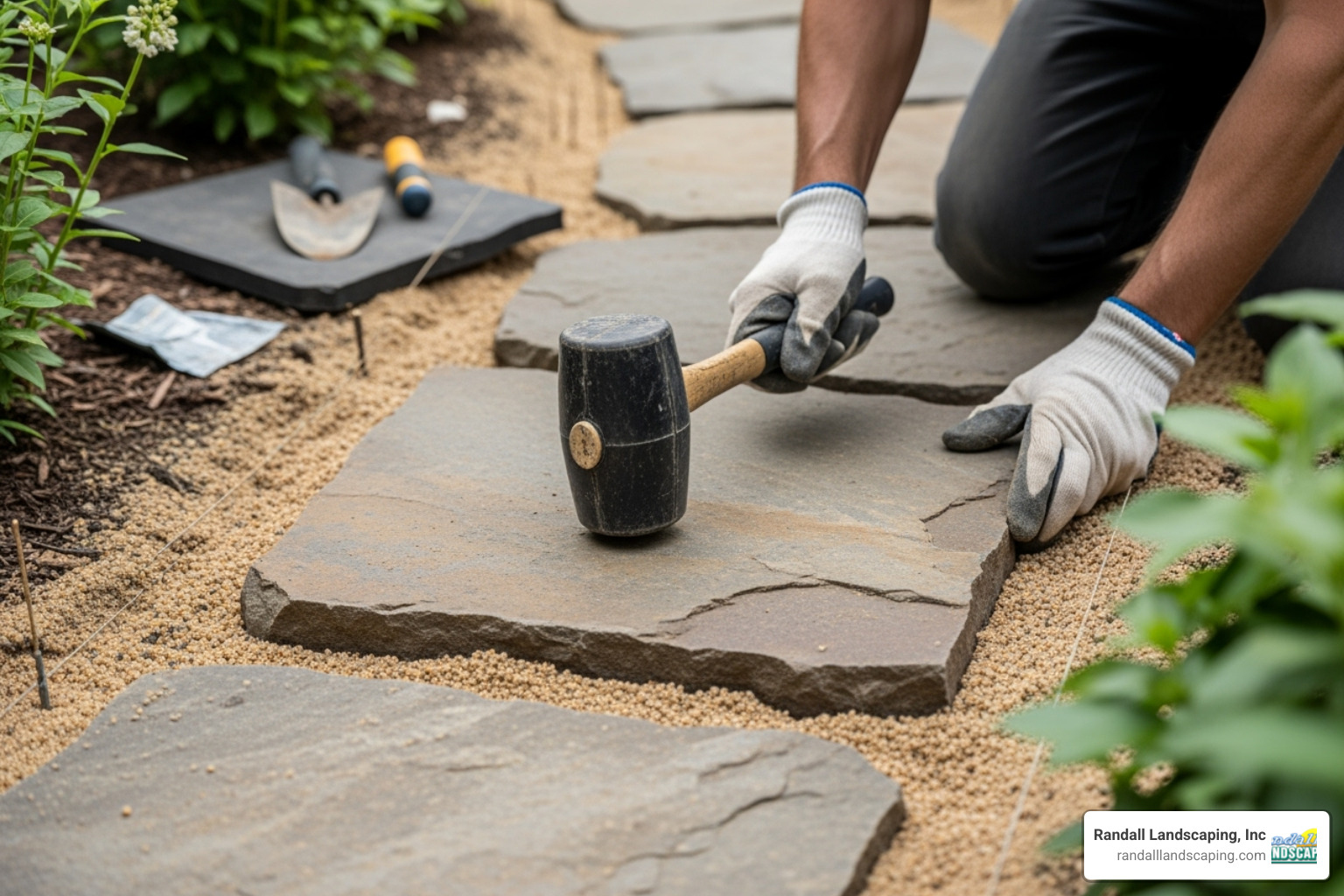
How to properly set flagstones for your walkway
Think of this as solving a large puzzle. Finding the right spot for each stone is part of the satisfaction of building a flagstone walkway.
- Start with Large Stones: Place your largest stones first to act as anchors for your design. Position them along the edges or in the center.
- Create a Natural Puzzle: Arrange stones with a consistent gap of about 1-2 inches. Move pieces around until you find a fit that looks organic and feels right.
- Set Each Stone: Use a rubber mallet to gently twist and tap each stone into the sand bed until it’s firmly seated.
- Check for Levelness: Use your level on each stone. It should be even with adjacent stones and have a slight pitch for drainage. Add or remove sand underneath as needed.
- Test for Stability: Step on each stone to ensure it doesn’t wobble. If it does, lift it, adjust the sand, and reset it until it feels rock-solid.
How to fill the gaps for a professional finish
Filling the joints turns individual stones into a cohesive walkway. Your choice of filler affects the look and maintenance.
- Sand (Dry-Set): For a simple, permeable finish, sweep masonry sand into the joints and mist with water to settle it. This method is inexpensive but may require occasional weeding and refilling.
- Polymeric Sand: This sand blend includes polymers that harden when wet, creating strong joints that resist weeds and washout. It costs more but offers better stability.
- Mortar (Wet-Set): This provides the most permanent, rigid walkway. It eliminates weeds but is less forgiving of ground movement and harder to repair.
- Decomposed Granite: This fine aggregate can be swept into joints and compacted for a firm, natural-looking surface. Learn more about Decomposed Granite Walkway Installation.
Tips for building a flagstone walkway on tricky terrain
Real-world landscapes often present challenges. Here’s how to handle them.
- Working with Slopes: On gentle slopes, adjust the base layers to follow the contour. For steeper inclines, build shallow steps using large, level flagstones as treads.
- Building Around Tree Roots: Never cut large tree roots. Instead, curve the walkway around them. You can fit smaller or custom-cut stones around roots without resting the stone directly on them.
- Cutting Stones to Fit: To shape a stone, score a cut line with a chisel and hammer. Prop the stone over an edge and strike firmly along the line to break it. Always wear safety glasses. This allows for a tight, professional fit in any space.
For complex terrain, consider professional help. Our team handles specialized projects like Walkway Installation in Boxford, MA, where expert techniques are required.
Frequently Asked Questions about Building a Flagstone Walkway
After years of helping homeowners in the Merrimack Valley, I’ve found that a few key questions always come up. Answering them is crucial because building a flagstone walkway is an investment you want to get right the first time.
What is the best base for a flagstone walkway?
The best base is a three-layer system that ensures stability and longevity. Start with properly compacted native soil at the bottom of your trench. On top of that, add a 4-6 inch layer of compacted crushed stone or gravel for structural support and drainage. Finish with a 1-2 inch layer of leveling sand, which creates a bed to make precise adjustments and set each stone perfectly. This system prevents shifting, sinking, and weed growth.
How thick should flagstone be for a walkway?
For a standard walkway with a solid base, flagstones should be at least 1.5 to 2 inches thick. This provides enough durability for regular foot traffic. If you plan to have wider gaps between stones or if your ground is less stable, choosing stones that are 2 to 3 inches thick is a wise investment to prevent cracking under pressure.
Can I just lay flagstone on top of dirt?
No. Laying flagstone directly on dirt will create an unstable and unsafe walkway. Soil expands and contracts with moisture and temperature changes, causing the stones to shift, sink, and wobble over time. This creates dangerous tripping hazards and an unsightly, uneven path. A proper base of gravel and sand is essential for a safe, durable, and beautiful walkway that lasts.
Conclusion
Completing a building a flagstone walkway project is deeply satisfying. The effort results in a beautiful, durable path that adds lasting value and charm to your home, welcoming family and friends for generations.
Your new walkway will reward you for years to come. Unlike manufactured materials, flagstone weathers naturally, developing a rich character that only improves with age. This investment in time and materials pays dividends in curb appeal and increased property value.
While a rewarding DIY project, building a flagstone walkway requires significant effort and proper technique to ensure a professional, long-lasting result. The difference often lies in the experience needed to handle challenging terrain and prepare a flawless base.
If you’re considering professional installation for your home in the Merrimack Valley or Southern New Hampshire, our team at Randall Landscaping has been creating stunning stone walkways since 2006. We understand our regional climate and build paths designed to withstand New England weather.
Whether you build it yourself or work with our team, a flagstone walkway is an investment in your home’s beauty and functionality. Ready to take the next step? Learn more about our Walkway Installation Services.