

Why Choose a Decomposed Granite Walkway?
Decomposed granite walkway installation offers homeowners a natural, cost-effective solution for creating beautiful pathways that improve any landscape. This versatile material provides excellent drainage, requires minimal maintenance, and creates a firm yet permeable surface that’s both functional and aesthetically pleasing.
Quick Installation Overview:
- Excavate 4-6 inches deep with slight slope for drainage
- Install edging to contain the DG material
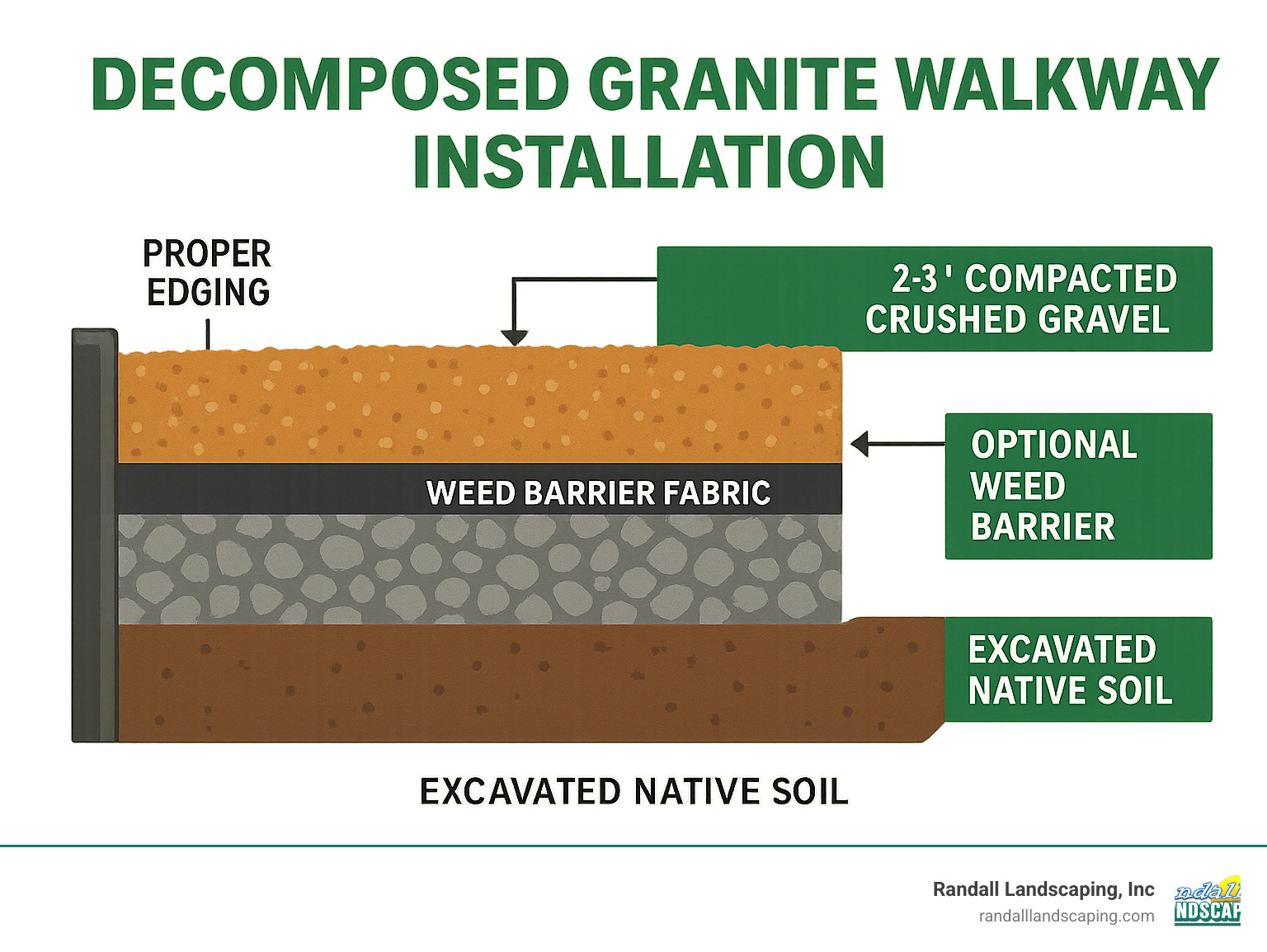
- Add base layer of 2-3 inches crushed gravel and compact
- Spread DG in thin layers, moistening and compacting each layer
- Final compaction and light watering to cure the surface
Decomposed granite walkways are particularly attractive because they blend seamlessly with natural landscapes while offering superior permeability compared to concrete or pavers. The material compacts to form a stable surface that allows water to pass through, preventing erosion and reducing runoff. When properly installed with appropriate base preparation and compaction techniques, DG pathways can last up to 10 years with minimal upkeep.
The installation process is relatively straightforward for DIY enthusiasts, requiring basic tools and materials that are readily available. However, success depends heavily on proper excavation depth, thorough compaction of each layer, and appropriate drainage considerations.
As Tommy Randall, owner of Randall Landscaping Business, I’ve overseen countless decomposed granite walkway installation projects throughout Massachusetts and New Hampshire since 2006, helping homeowners create durable pathways that complement their outdoor spaces. My experience has shown that attention to detail during the base preparation and compaction phases is crucial for long-term success.
Decomposed granite (DG) is a natural product formed from the weathering of granite rock, resulting in small, angular particles that compact incredibly well. This makes it an excellent choice for pathways, patios, and even driveways. We often recommend DG because it’s a versatile, sustainable, and beautiful option for enhancing outdoor spaces. It’s a fantastic choice for heavy foot traffic, offering both durability and permeability, and is often considered a great natural alternative to pavement.
Compared to other landscaping materials, DG is generally more affordable, making it a cost-effective option for creating pathways that require minimal maintenance. When properly installed and compacted, it forms a solid and stable surface that’s also water-resistant. Plus, decomposed granite is relatively easy to install on your own, making it a popular DIY project for many homeowners.
Planning Your Project: Materials, Tools, and Costs
Before we dig in (pun intended!), let’s get our ducks in a row. Planning is the cornerstone of any successful decomposed granite walkway installation. This includes understanding the types of DG, gathering materials and tools, and building a realistic budget. If you’re new to the material, a quick primer on what DG is can help: Decomposed granite is a weathered, granular form of granite that compacts into a firm, permeable surface.
Understanding Decomposed Granite (DG) Types
Not all decomposed granite is created equal. Choosing the right type for your use, soil, and climate will determine longevity and maintenance.
| Type of DG | Durability | Cost | Maintenance | Best Use Cases |
|---|---|---|---|---|
| Natural DG (no binder) | Good for light to moderate foot traffic; may track slightly | Lower | Occasional raking and periodic top-ups | Garden paths, informal walkways, low-slope areas |
| Stabilized DG (with organic/polymer binder) | High durability; more resistant to erosion and rutting | Medium to higher | Minimal; spot repairs as needed | Heavier foot traffic, gentle slopes, ADA-conscious paths when properly installed |
| Resin-/polymer-coated DG | Very high surface hardness and cohesion | Highest | Low; repairs require matching product | High-traffic areas, ramps, or spots with occasional light wheels/carts |
Tip: In freeze–thaw climates like the Merrimack Valley and Southern NH, stabilized DG typically performs better over time thanks to added cohesion and reduced washout.
Essential Materials and Tools
Materials:
- Decomposed Granite (DG) – natural or stabilized per your needs
- Crushed gravel base (3/4 inch minus or similar)
- Landscape edging (steel, aluminum, composite, or wood)
- Weed barrier fabric (optional, site-dependent)
- Landscape staples and edging stakes
Tools:
- Shovel and wheelbarrow
- Steel rake and landscape rake
- Hand tamper or plate compactor
- Level, tape measure, string line
- Garden hose with spray nozzle
- Safety gear (gloves, eye/ear protection)
Budgeting for Your Walkway
All pricing below is based on publicly available internet data as of 2025 and provided only as general averages for planning. These are not quotes and not the pricing of Randall Landscaping, Inc. Costs vary by supplier, location, and project conditions.
- How to estimate quantity: Volume (cubic yards) = Length (ft) × Width (ft) × Depth (ft) ÷ 27. Example: A 30 ft × 3 ft path with 3 inches of DG (0.25 ft) = 30 × 3 × 0.25 = 22.5 cu ft ≈ 0.83 cu yd. Add 10–15% for compaction and waste.
- DG material (natural): Approximately $30–$90 per cubic yard on many listings; premium colors or specialty blends can run $120–$250+ per cubic yard.
- Stabilized DG: Often $80–$180 per cubic yard; branded or resin-blended products can exceed $250–$450+ per cubic yard.
- Crushed gravel base: Roughly $20–$60 per ton; specialty aggregates may be $80–$180+ per ton.
- Edging: Composite or plastic edging can be $0.50–$3.00 per linear foot; steel/aluminum edging generally $2.00–$8.00 per linear foot; architectural or heavy-duty options can exceed $10–$20+ per linear foot.
- Landscape fabric: About $0.15–$0.50 per square foot for typical rolls; professional-grade products can run $0.60–$1.20+ per square foot.
- Equipment rental: A plate compactor typically rents for $50–$120 per day; higher-end or weekend rates can range $150–$250+ per day.
- Professional installation: Internet sources commonly show installed DG paths from around $10–$35 per square foot depending on prep, edging, and stabilization; complex sites, premium materials, or intricate layouts can push $50–$75+ per square foot.
For larger or more complex projects, our team can help with scope, scheduling, and coordination. Learn more: Landscape Project Management.
Why Choose a Decomposed Granite Walkway?
Decomposed granite walkway installation offers homeowners a natural, cost-effective solution for creating beautiful pathways that improve any landscape. This versatile material provides excellent drainage, requires minimal maintenance, and creates a firm yet permeable surface that’s both functional and aesthetically pleasing.
Quick Installation Overview:
- Excavate 4-6 inches deep with slight slope for drainage
- Install edging to contain the DG material
- Add base layer of 2-3 inches crushed gravel and compact
- Spread DG in thin layers, moistening and compacting each layer
- Final compaction and light watering to cure the surface
Decomposed granite walkways are particularly attractive because they blend seamlessly with natural landscapes while offering superior permeability compared to concrete or pavers. The material compacts to form a stable surface that allows water to pass through, preventing erosion and reducing runoff. When properly installed with appropriate base preparation and compaction techniques, DG pathways can last up to 10 years with minimal upkeep.
The installation process is relatively straightforward for DIY enthusiasts, requiring basic tools and materials that are readily available. However, success depends heavily on proper excavation depth, thorough compaction of each layer, and appropriate drainage considerations.
As Tommy Randall, owner of Randall Landscaping Business, I’ve overseen countless decomposed granite walkway installation projects throughout Massachusetts and New Hampshire since 2006, helping homeowners create durable pathways that complement their outdoor spaces. My experience has shown that attention to detail during the base preparation and compaction phases is crucial for long-term success.
Decomposed granite (DG) is a natural product formed from the weathering of granite rock, resulting in small, angular particles that compact incredibly well. This makes it an excellent choice for pathways, patios, and even driveways. We often recommend DG because it’s a versatile, sustainable, and beautiful option for enhancing outdoor spaces. It’s a fantastic choice for heavy foot traffic, offering both durability and permeability, and is often considered a great natural alternative to pavement.
Compared to other landscaping materials, DG is generally more affordable, making it a cost-effective option for creating pathways that require minimal maintenance. When properly installed and compacted, it forms a solid and stable surface that’s also water-resistant. Plus, decomposed granite is relatively easy to install on your own, making it a popular DIY project for many homeowners.
For those considering a beautiful, natural-looking pathway, DG presents numerous benefits:
- Natural Aesthetic: DG comes in a variety of natural colors, such as brown, red, gold, gray, green, and tan, allowing it to blend seamlessly with your existing landscape. This natural appearance is a key reason many homeowners choose it over more artificial-looking materials.
- Permeable Surface: One of DG’s greatest advantages is its permeability. It allows water to seep through, reducing runoff, preventing puddles, and replenishing groundwater. Learn more about permeable surfacing: Permeable paving.
- Cost-Effective: While costs vary, DG is typically more affordable than paving stones, concrete, or asphalt, offering a budget-friendly solution for extensive pathways.
- DIY-Friendly: As we’ll detail, the installation process is straightforward enough for most handy homeowners to tackle themselves, saving on labor costs.
- Durability & Stability: When properly compacted, DG forms a very firm and stable surface that can withstand considerable foot traffic and even light vehicle use (especially stabilized DG).
- Low Maintenance: Once installed, DG pathways require minimal upkeep, primarily occasional raking and topping up as needed.
In our New England climate, we often recommend stabilized DG on slopes or in high-traffic areas to improve cohesion during freeze–thaw cycles and heavy rains. For flatter garden paths, natural DG provides an organic look with simple maintenance. With either option, thoughtful base preparation, proper edging, and attention to drainage make the difference between a path that looks great for one season and one that performs for years.
More info about Hardscaping Services
Planning Your Project: Materials, Tools, and Costs
Before we start digging, thorough planning is essential for a successful decomposed granite walkway installation. This involves understanding the different types of DG, gathering the right materials and tools, and creating a realistic budget.
Understanding Decomposed Granite (DG) Types
The type of DG you choose will significantly impact the durability and maintenance of your walkway.
| Type of DG | Durability | Cost | Maintenance | Best Use Cases |
|---|---|---|---|---|
| Natural DG | Good for light–moderate foot traffic | Lower | Occasional raking/topping | Informal garden paths, low slopes |
| Stabilized DG | High; resists erosion and rutting | Medium–higher | Low–moderate | Heavier use, gentle slopes, improved accessibility |
| Resin-/polymer-coated DG | Very high | Highest | Low, but specialized repairs | High-traffic areas; precise edges and ramps |
Essential Materials and Tools
- Edging options: Steel/aluminum (clean lines and durability), composite/plastic (budget-friendly curves), or timber (natural look). For installation guidance, see: More info about landscape edging.
- Weed barrier fabric: Useful where weed pressure is high or in sandy soils; avoid blocking needed drainage. Learn about fabric types: professional-grade landscape fabric.
- Base rock: 2–3 inches of compacted crushed gravel (3/4 inch minus or similar) under the DG.
- Tools: Shovel, wheelbarrow, rakes, hand tamper or plate compactor, level, string line, hose with spray nozzle, and safety gear.
The Step-by-Step Decomposed Granite Walkway Installation Process
1) Excavation and Site Preparation
- Mark your pathway with stakes and string or marking paint.
- Excavate 4–6 inches below finished grade, maintaining a slight slope (about 1–2%) to shed water away from structures.
- Remove all organic material (roots, turf, topsoil clumps) and soft pockets.
- Compact the native subgrade to create a firm, uniform base.
2) Install Edging and Optional Weed Barrier
- Install steel, aluminum, composite, or wood edging, set flush to the planned finished height. Anchor every 2–4 feet or per manufacturer recommendations.
- Where appropriate, lay weed barrier fabric, overlapping seams by 6 inches and pinning with landscape staples. Ensure fabric does not bridge across low spots or impede designed drainage.
3) Add and Compact the Base Layer
- Spread 2–3 inches of crushed gravel base. Rake to shape the path and maintain the intended slope.
- Lightly moisten and compact with a plate compactor (or hand tamper on small areas) until firm and level. The base should not shift underfoot.
4) Spread and Compact the DG
- Add DG in 1-inch lifts. Lightly mist each lift to activate fines (and binder if using stabilized DG).
- Compact thoroughly after each lift. Repeat lifts until you reach the top, finishing just below the edging cap.
- Final pass: Smooth-rake, lightly mist, and compact the surface to a firm, even finish.
Finishing Touches and Long-Term Maintenance
- Curing: After final compaction, lightly spray the surface and let it set for 24–48 hours before regular use (longer for stabilized products if the manufacturer suggests).
- Routine care: Sweep or rake minor displacement back into place. Top up thin areas as needed. Control weeds promptly.
- Drainage check: After a significant rain, verify that water sheds evenly without rills or puddles; adjust grading or add top-up material if needed.
- Winter: Shovel with a plastic blade where possible and use gentle ice-melt products compatible with your edging and DG type.
Common Mistakes to Avoid
- Excavating too shallow, which leads to edge spillover and rutting.
- Skipping or under-compacting the base layer.
- Laying DG too thick at once; always install in thin, compacted lifts.
- Neglecting slope and drainage, causing washouts or ponding.
- Overfilling above edging, which encourages tracking and scatter.
Frequently Asked Questions about DG Walkways
- How deep should a decomposed granite pathway be?
A total depth of 4–6 inches is recommended: 2–3 inches of compacted base plus 2–3 inches of compacted DG. - Can decomposed granite be used for pathways with heavy foot traffic?
Yes—stabilized DG holds up best. The added binders create a tougher, more cohesive surface for frequent use. - How does decomposed granite drainage work?
DG is a permeable surface that allows water to pass through into the base and soil, reducing runoff. For background on permeable systems, see Permeable paving and the EPA’s overview of permeable pavement benefits: https://www.epa.gov/soakuptherain/soak-rain-permeable-pavement.
Your Perfect Walkway Awaits
A DG walkway adds natural beauty and function to your property. With thoughtful planning and careful installation, you’ll enjoy a durable, low-maintenance surface for years to come. If you’d prefer a professional touch in the Merrimack Valley and Southern New Hampshire—including Amesbury, Andover, Atkinson, Boxford, Dracut, Georgetown, North Andover, North Reading, Pelham, Salem, Windham, Methuen, Lawrence, and Plaistow—Randall Landscaping, Inc. is ready to help. Explore our expert Walkway Installation Services.