

Securing Your Success: What Are Commercial Snow Plowing Contracts?
A commercial snow plowing contract is a legally binding agreement between a property owner (like a business or HOA) and a snow removal company. It defines the snow and ice management services to be provided, offering clarity, predictability, and risk management for both parties.
These contracts are crucial for ensuring commercial properties remain safe and accessible for employees, customers, and residents. Snow removal can be unpredictable, and the real threat often comes from ice, not just snow. A solid contract manages these challenges, providing financial security for the service provider and ensuring business continuity for the property owner, protecting them from potential slip-and-fall incidents.
I’m Tommy Randall, owner of Randall Landscaping Business. With nearly two decades of experience, I’ve helped countless businesses secure reliable commercial snow plowing contracts to keep their properties safe all winter.
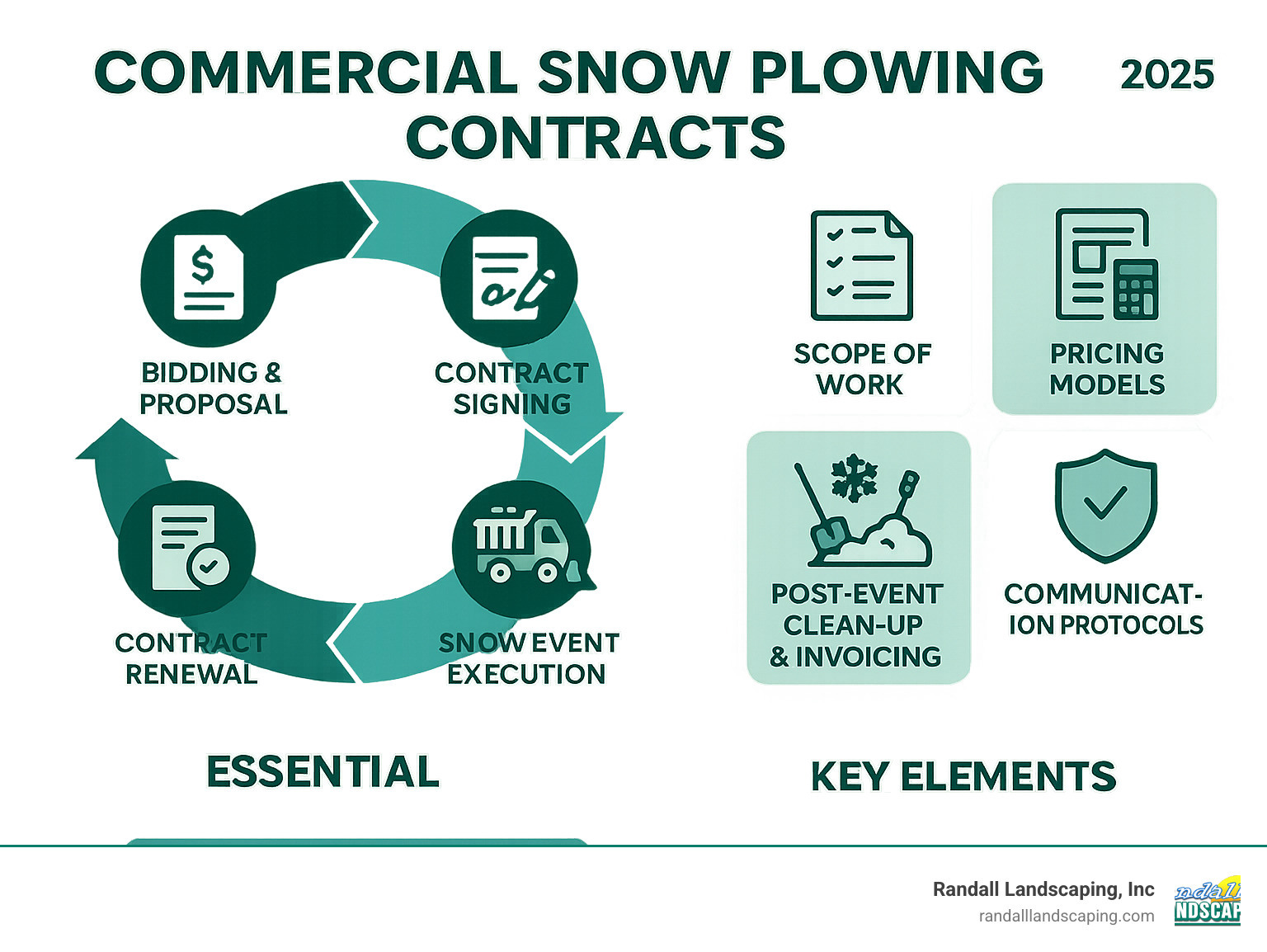
Essential commercial snow plowing contracts terms:
Decoding the Anatomy of a Snow Removal Contract
A commercial snow plowing contract is the roadmap for a stress-free winter. This document outlines the scope of work, sets clear service level agreements (SLAs), and provides legal protection. For us, a well-defined contract means we know your expectations and can deploy our teams efficiently. For you, it brings predictability and peace of mind by setting clear expectations upfront.
If you’re looking to understand how these contracts integrate with broader property care, we have more info about commercial landscape maintenance contracts that might interest you!
What is a ‘Snow Event’ and How to Define It
A critical element in any contract is the definition of a “snow event”—the trigger for our services. This is an agreed-upon amount of snow accumulation that qualifies for removal.
A common trigger is 2 inches of snow, but this is customizable. A busy retail center might require service at 1 inch, while a less critical site might opt for a 3-inch threshold. We can also set up tiered pricing for different depths (e.g., 1-3 inches, 3-5 inches). Since ice storms are often more dangerous than snow, contracts must also define ice storm triggers and de-icing protocols. The contract should also specify communication protocols for how and when we are notified to ensure a prompt response.
Common Services to Include
A comprehensive contract covers more than just plowing to ensure safety and accessibility across your property.
Here are the essential services we typically include:
- Plowing Parking Lots: Clearing large parking areas for vehicle traffic. We specify where to put the snow, whether snow banking (piling on-site) or snow hauling (removing off-site).
- Shoveling Sidewalks and Walkways: Clearing main pathways, entryways, and emergency exits is critical for pedestrian safety.
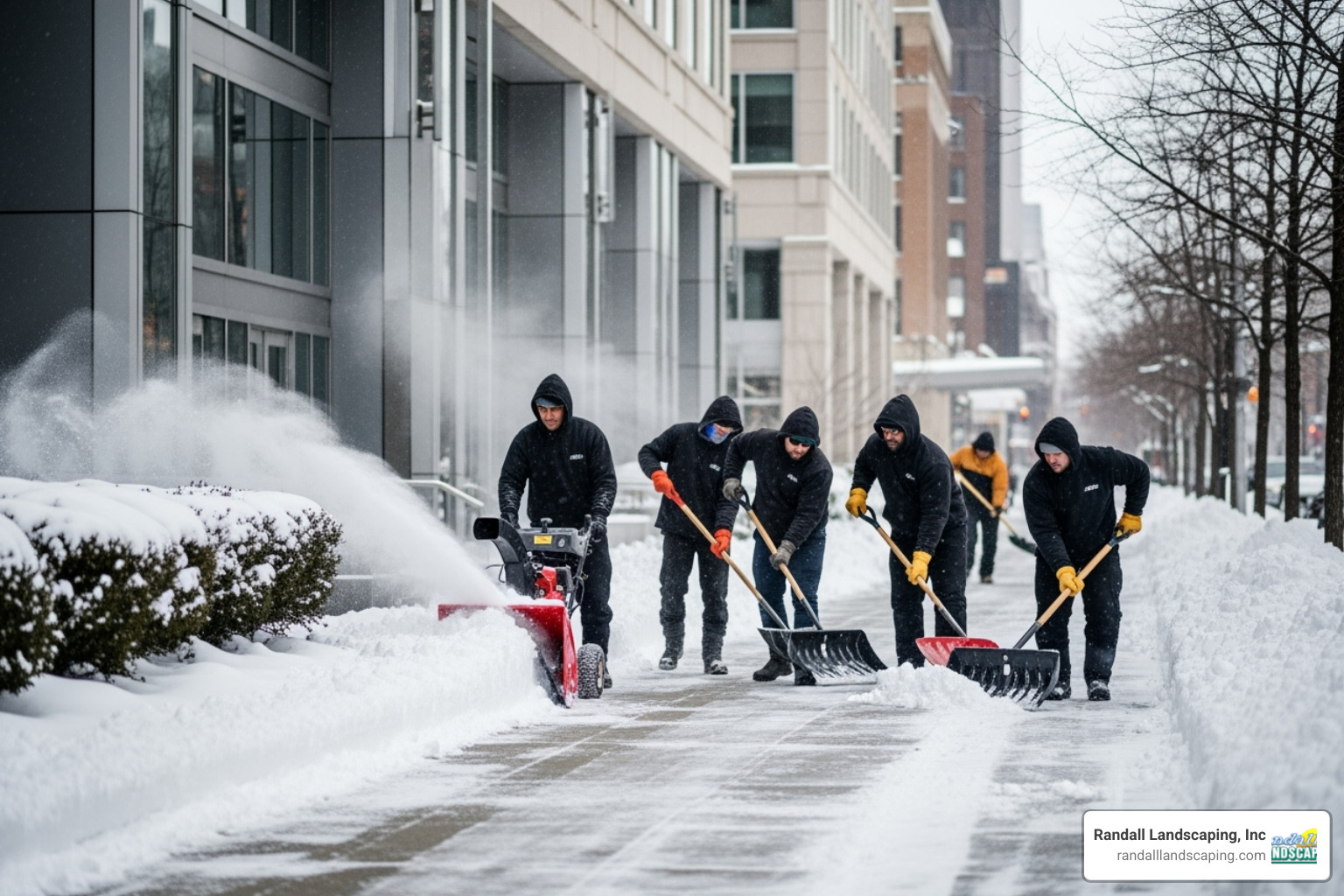
- De-icing Services: Combating slippery ice through pre-treatment with liquid de-icers or post-storm application of salt or other ice melt products.
- Snow Hauling and Relocation: For properties with limited space, we can efficiently haul snow off-site.
- Pre-treatment Applications: Applying de-icing agents before a storm makes subsequent removal easier and more effective.
- Emergency Services: We can include provisions for emergency call-outs outside of standard triggers for unexpected blizzards or refreezes.
Key Clauses for Watertight Commercial Snow Plowing Contracts
A well-drafted contract is your best defense against misunderstandings. Here are key clauses we always include:
- Parties Involved: Full legal names and contact information for the property owner and the contractor.
- Contract Term: The start and end dates of the agreement, often covering a single winter season or multiple years for stability.
- Property Map/Description: A detailed map outlining all areas to be serviced, including parking lots, sidewalks, and loading docks. This prevents confusion and ensures thorough coverage.
- Payment Terms: Defines the payment structure (per-push, per-event, or seasonal flat fee), schedule, and any retainer or additional charges.
- Insurance and Liability: Specifies the types and amounts of insurance each party must maintain (e.g., Commercial General Liability, Commercial Auto, Workers’ Compensation) and outlines responsibility for potential damages.
- Indemnification Clause: Protects one party from liability for the other’s actions or negligence.
- Termination Conditions: States the conditions under which either party can end the contract, including notice periods and any fees.
For those interested in specific examples, you can find a standard form contract for ice melters included that showcases the level of precision involved.
Understanding the Different Types of Commercial Snow Plowing Contracts
Every property has unique needs and a budget, which is why we offer different commercial snow plowing contracts. Finding the right fit is key to keeping your property safe and accessible all winter.
Here’s a quick look at how the common contract types stack up:
| Contract Type | Cost Predictability (Client) | Service Level | Risk (Client) | Risk (Contractor) |
|---|---|---|---|---|
| Per-Push / Per-Event | Low (depends on snowfall) | Responsive, on-demand | Higher budget risk | Higher revenue risk (low snowfall) |
| Seasonal (Fixed-Fee) | High (fixed annual cost) | Consistent, defined | Lower budget risk, but pays regardless of snow | Higher operational risk (heavy snowfall) |
| Full-Service (All-Inclusive) | Very High (fixed cost, comprehensive) | Highest, proactive, comprehensive | Lowest budget risk, highest peace of mind | Highest operational risk, highest initial investment |
Per-Push or Per-Event Contracts
This is a “pay-as-you-go” option. With a per-push contract, you pay a set fee each time we clear your property. A per-event contract means you pay when a specific “snow event” (e.g., 2 inches of snow) is triggered. The upside is you only pay when it snows, potentially saving money in a mild winter. However, costs can add up in a snowy winter, making budgeting difficult. This contract can be a good fit for tight budgets or areas with unpredictable snowfall.
Seasonal (Fixed-Fee) Contracts
A popular choice, a seasonal contract means you pay one flat price for the entire winter, no matter how much it snows. This offers excellent budget predictability and makes you a priority client, ensuring reliable service. The only downside is you pay the same amount in a mild winter. For us, it offers stable revenue but carries the weather risk. To balance this, these commercial snow plowing contracts often include a snowfall cap, with a clear plan for charges if we exceed it. We offer these reliable contracts in areas like Lawrence, MA.
Full-Service or All-Inclusive Contracts
For the ultimate peace of mind, this “Cadillac plan” covers virtually all snow and ice events for a single fee. It includes extensive de-icing, proactive pre-treatment, and snow hauling. This option provides the highest level of service, ensuring your property is always safe and accessible. It’s ideal for critical properties that cannot afford downtime, like hospitals or large retail centers. While it’s the highest upfront investment, it offers the lowest budget risk and greatest peace of mind.
How to Price, Bid, and Win Profitable Contracts
Landing profitable commercial snow plowing contracts requires more than just the right equipment; it’s about accurate cost calculation and presenting yourself as a reliable partner. The foundation of a successful bid is understanding your market and what makes your service valuable—be it reliability, superior equipment, or guaranteed response times.
If you’re looking to understand how bidding principles apply across different services, check out our guide on How to Bid Commercial Landscape Maintenance.
Factors That Influence Pricing

When preparing a bid, we look at many details that affect the price of commercial snow plowing contracts.
- Property size and complexity: A simple, rectangular lot is easier to clear than one with tight corners and obstacles like light poles or landscaped islands.
- Desired level of service: A “bare pavement” standard by 6 AM requires more aggressive de-icing and resources than a more flexible service level.
- Surface types: Asphalt, concrete, and decorative pavers require different equipment and de-icing products, which can affect cost.
- Snow storage and hauling needs: If snow must be hauled off-site, the cost increases due to additional labor, trucks, and disposal fees.
- Geographic location and average snowfall: Local labor rates, fuel costs, and historical snowfall data are crucial for pricing seasonal contracts accurately.
How to Price and Bid on Commercial Snow Plowing Contracts
Creating accurate bids requires calculating all costs to avoid underbidding.
- Overhead: This includes insurance (a major expense in this industry), equipment maintenance, fuel, and administrative costs.
- Labor costs: Based on internet data, snow removal workers average around $17 per hour, but this varies. You must also factor in overtime and workers’ compensation.
- Equipment costs: Hourly rates can range from $75 to $300+ depending on the equipment, according to industry data. Don’t forget to budget for significant wear and tear.
- Material costs: The price of salt and de-icer fluctuates. Premium products cost more but are more effective.
- Profit margin: After calculating all costs, an appropriate profit margin ensures your business remains sustainable.
When we present a professional proposal, it’s detailed, clear, and customized, demonstrating our reliability and expertise.
Finding and Securing the Best Clients
The best contracts come from building relationships with the right clients.
- Target high-priority properties: Hospitals, retail complexes, and office buildings value reliability and are often willing to pay for it.
- Network with property managers: They often oversee multiple properties and can be a source of several contracts. Organizations like the Building Owners and Managers Association are great for networking.
- Respond to RFPs: Larger properties and government entities issue formal requests for proposals (RFPs) that can lead to substantial, long-term contracts.
- Pursue government contracts: Federal opportunities are on SAM.gov, while state and local governments have their own portals. These can provide stable, multi-year revenue.
The key is to demonstrate you are a reliable partner whose service protects their business operations.
Managing Risk and Maximizing Efficiency
Managing a snow removal operation involves navigating risks and maximizing efficiency. At Randall Landscaping, our promise of quality work and 100% reliability is built into our operational procedures to ensure your property is safe and accessible, no matter the weather.
Insurance, Liability, and Risk Mitigation
Managing liability, especially from potential slip-and-fall claims, is essential. Our risk management strategy includes:
- Comprehensive Insurance: We maintain extensive Commercial General Liability (CGL) and Commercial Auto policies custom for snow and ice management.
- Clear Contracts: Our commercial snow plowing contracts include clear indemnification clauses that define responsibilities, protecting both parties.
- Meticulous Documentation: We log everything after each event: weather conditions, service times, equipment used, and materials applied. This detailed record, like this sample daily log for snow and ice contractors, is invaluable if a claim arises.
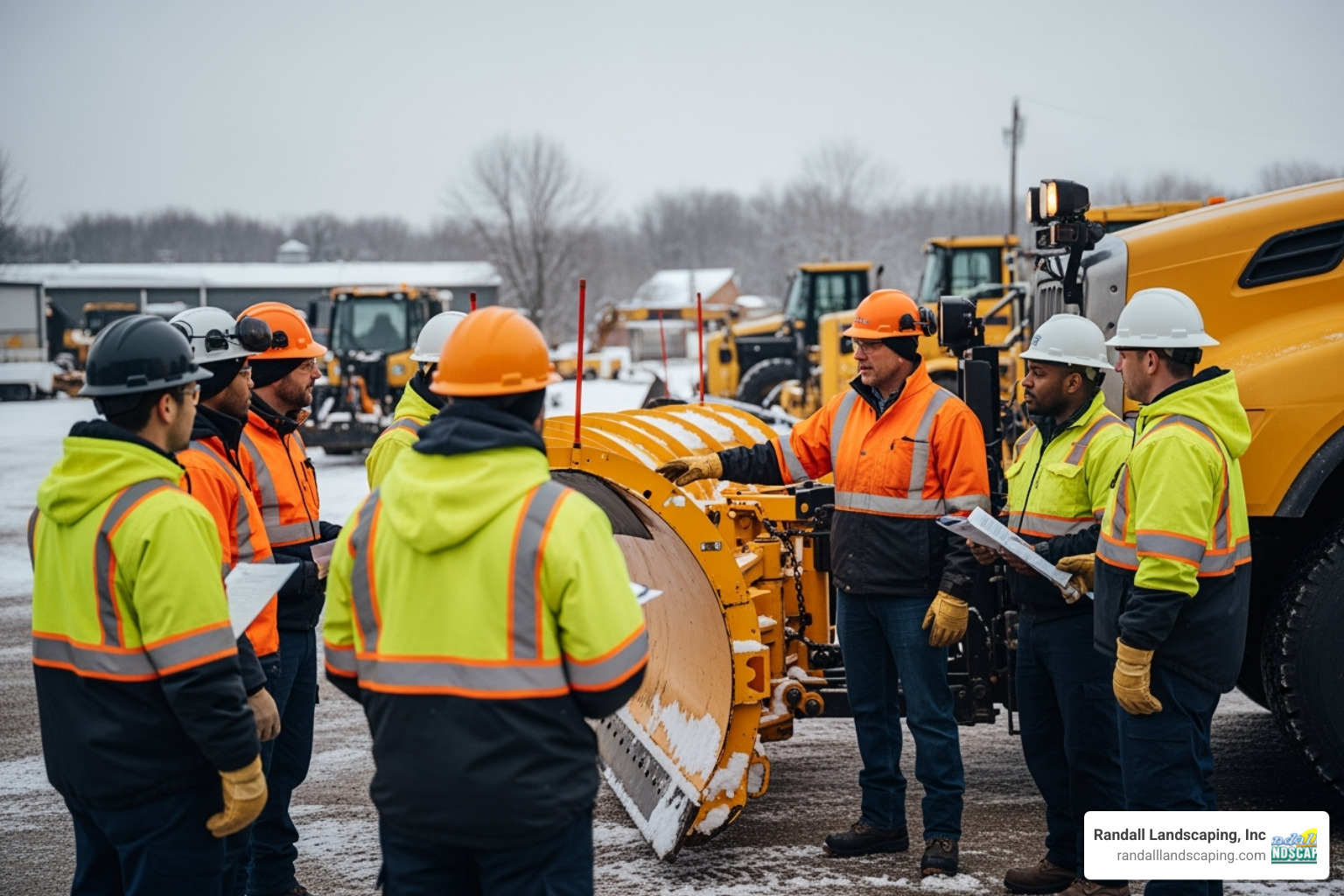
- Safety Training: Our crews receive regular training on safe equipment operation, proper de-icing application, and hazard identification to reduce incidents.
Leveraging Technology and Operations
Modern tools significantly boost our efficiency and responsiveness.
- GPS Tracking: We use GPS on all equipment for real-time fleet management, route optimization, and service verification.
- Advanced Weather Monitoring: We subscribe to services providing hyper-local forecasts, allowing us to anticipate storms and pre-treat surfaces effectively.
- Client Communication Portals: These portals keep you informed with service updates, weather alerts, and post-event reports.
- Pre-Season Maintenance: All equipment undergoes rigorous checks before winter to minimize breakdowns during critical snow events, upholding our promise of 100% reliability.
Our focus on efficiency allows us to deliver top-tier service for commercial snow plowing contracts in all our service areas, including Andover, MA.
Frequently Asked Questions about Commercial Snow Plowing Contracts
When considering commercial snow plowing contracts, questions are natural. Here are answers to the most common ones we’ve heard over nearly two decades serving the Merrimack Valley and Southern New Hampshire.
How much should I charge for a commercial snow plowing contract?
There’s no simple answer, as pricing depends on property size, service level, and contract type. The following are internet-based estimates only and not actual costs for Randall Landscaping, as every property is unique.
- Hourly work can range from $50 to $150+ per hour for a plow truck, with larger equipment like loaders commanding $150 to $400+ per hour.
- Per-push or per-event rates might start at $75 to $200 for small lots but can easily be $500 to $2,000+ for larger properties. Complex sites can reach $3,000 to $8,000+ per event.
- Seasonal contracts vary widely. A small property might be $500 to $2,000, while larger facilities could range from $5,000 to $15,000+. Major commercial complexes or multi-site contracts can be $20,000 to $60,000+.
We calculate your costs based on your specific needs to ensure fair, transparent pricing.
How do commercial snow removal contracts differ from residential ones?
Commercial and residential snow removal are worlds apart.
- Liability: The stakes are much higher at commercial properties, where a slip-and-fall incident can have serious legal and financial consequences.
- Service Level: Commercial contracts often require 24/7 operations and rapid response times to ensure safety and accessibility for customers and employees.
- Equipment: Commercial jobs demand heavy-duty plows, loaders, and salt spreaders to clear large lots, not just a pickup truck for a driveway.
- Scope & Duration: The scope is more complex (loading docks, fire lanes, etc.), and contracts are often multi-year agreements, providing stability for both parties.
What is the most profitable type of snow removal contract?
From our experience, seasonal and full-service contracts are typically the most profitable and sustainable. They provide predictable revenue, unlike per-push contracts that fluctuate with the weather. This steady cash flow allows us to invest in better equipment and retain skilled crews. This model also boosts operational efficiency, as we can optimize routes and staffing in advance. The stable, long-term client relationships built on these contracts are invaluable, leading to renewals and referrals. While per-event contracts can be lucrative in heavy snow years, the consistency of seasonal contracts generally provides the best long-term value for everyone.
Conclusion
We’ve covered the essentials of commercial snow plowing contracts, from defining a “snow event” to understanding different pricing models. It’s clear that a strong, detailed agreement is the foundation for a safe and predictable winter season.
A well-crafted contract is a win-win. For a property manager, it provides peace of mind with budget predictability and the assurance of a safe, accessible property. For us, the snow removal experts, it brings clarity, allowing us to deploy resources efficiently and deliver on our promise of quality and 100% reliability.
If your business in the Merrimack Valley or Southern New Hampshire needs a trusted winter partner, Randall Landscaping, Inc. is here to help with expert Commercial Snow Plowing services. Let’s work together to make this winter a success!