

Why Creating Mulch Beds Transforms Your Outdoor Space
Creating mulch beds is a fast, rewarding way to transform your yard. A well-designed mulch bed boosts curb appeal, suppresses weeds, and gives your plants a healthy foundation. The benefits go far beyond aesthetics: mulch conserves moisture, insulates soil from temperature extremes, and prevents erosion. As organic mulch breaks down, it enriches your soil with nutrients.
Here’s a quick overview of the process:
- Clear the ground of existing grass and weeds.
- Define clean edges for a professional look.
- Prepare the soil by loosening it and adding compost.
- Apply a 2-4 inch layer of mulch, keeping it away from plant stems.
- Maintain your beds by refreshing mulch annually.
Research shows that bare soil loses about five times as much sediment as mulched soil, making mulch beds essential for erosion control.
I’m Tommy Randall, and since 2006, I’ve been creating mulch beds for homeowners throughout Massachusetts and Southern New Hampshire. At Randall Landscaping, I’ve learned that lasting results require the right balance of planning, technique, and quality materials.
Handy creating mulch beds terms:
The “Why”: Unpacking the Benefits of a Mulch Bed
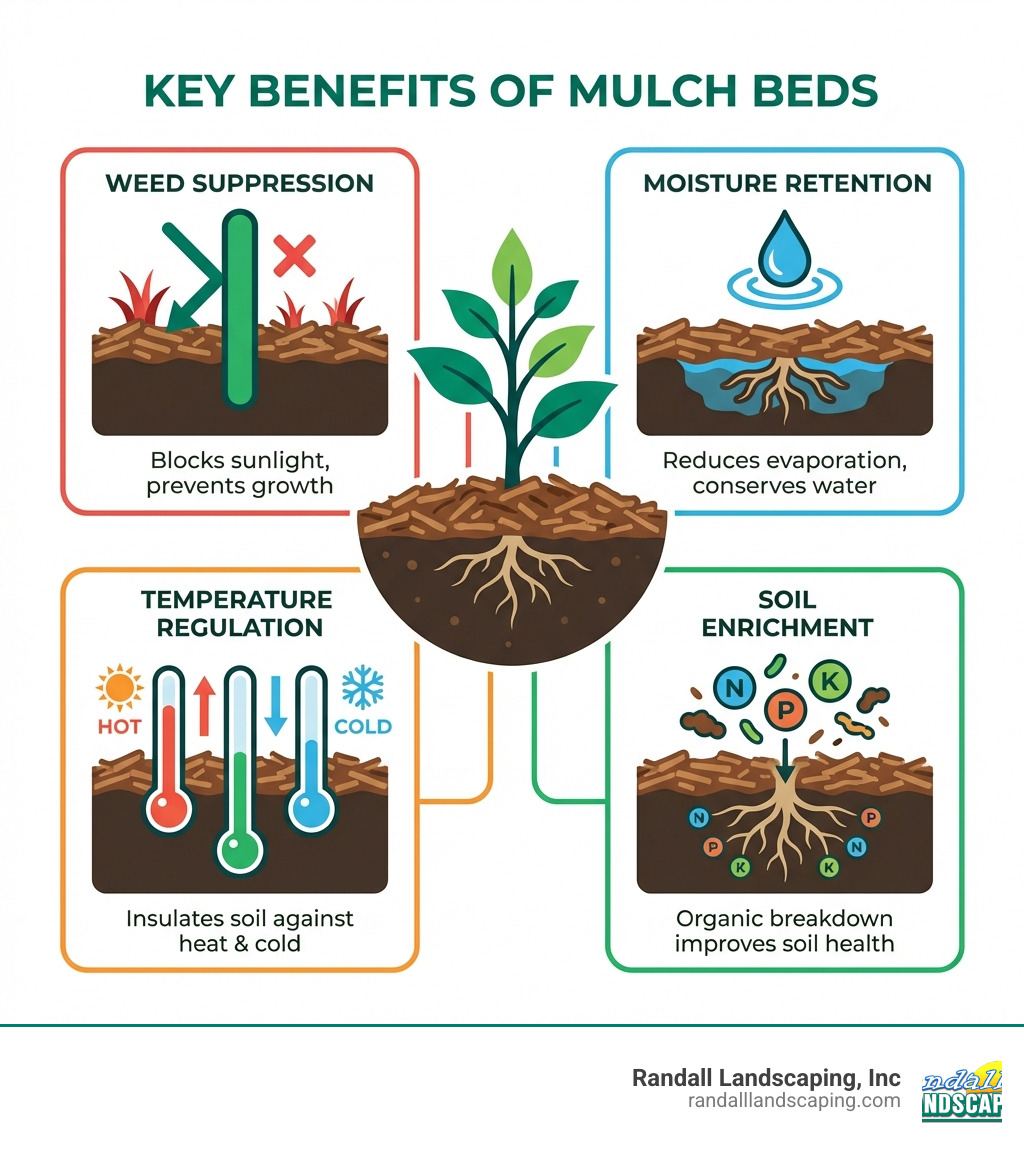
Creating mulch beds isn’t just about looks; it’s a fundamental practice for a healthy garden. Mulch acts as a protective blanket for your soil, offering numerous advantages.
Let’s explore the key benefits:
- Soil Moisture Retention: Mulch reduces water evaporation from the soil, meaning you’ll water less often. This is especially helpful during the hot, dry spells common in the Merrimack Valley and Southern New Hampshire.
- Weed Suppression: By blocking sunlight, mulch prevents most weed seeds from germinating and smothers existing ones, saving you time and effort.
- Soil Temperature Moderation: It acts as an insulator, protecting plant roots from extreme summer heat and winter cold, which is crucial in our New England climate.
- Erosion Control: Mulch provides a physical barrier that prevents wind and rain from washing away your valuable topsoil. Studies show mulched soil loses far less sediment than bare soil.
- Nutrient Enrichment: As organic mulches decompose, they release valuable nutrients into the soil, improving its structure and feeding your plants and beneficial soil organisms.
- Aesthetic Appeal: A freshly mulched bed provides a clean, uniform backdrop that makes plants pop and gives your landscape a polished look, boosting your home’s curb appeal.
For more detailed insights into how mulching can benefit your garden, explore our guide on Garden Bed Mulching.
Planning and Preparation: Your Blueprint for Success
Before spreading any mulch, careful planning is the blueprint for success. First, choose a location that complements your landscape. Next, design the bed shape; use a garden hose to outline natural curves on your lawn, then mark the final shape with spray paint. Finally, perform a sunlight assessment to determine which plants will thrive in the area. Gathering your tools and materials beforehand will make the process much smoother.
Gathering Your Tools and Materials
Having the right equipment is essential for creating mulch beds efficiently. Here’s a list of what you’ll need:
- Shovel or Spade: For digging, removing sod, and edging.
- Garden Rake: For clearing debris, leveling soil, and spreading mulch.
- Wheelbarrow: For transporting materials like sod, compost, and mulch.
- Pitchfork: Ideal for moving bulk mulch from a pile to your wheelbarrow.
- Edging Tool: A half-moon edger or sharp spade creates crisp bed edges.
- Gloves: To protect your hands.
- Mulch & Compost: The key ingredients for your new bed.
- Optional: Garden hose, spray paint, or stakes for outlining; landscape fabric and a utility knife.
When sourcing mulch, our Mulch Delivery Services for the Manchester Area and throughout the Merrimack Valley and Southern New Hampshire offer a convenient option. Bulk delivery is often more cost-effective for larger projects. Learn more about Mulch Delivery Cost.
Step-by-Step: Creating Mulch Beds from Scratch
With the planning done and tools gathered, it’s time to get your hands dirty. Follow these steps to build beautiful mulch beds.
Step 1: Clear the Ground and Remove Vegetation
Starting with a clean slate is critical to prevent future weed problems. You have a few options for clearing the ground:
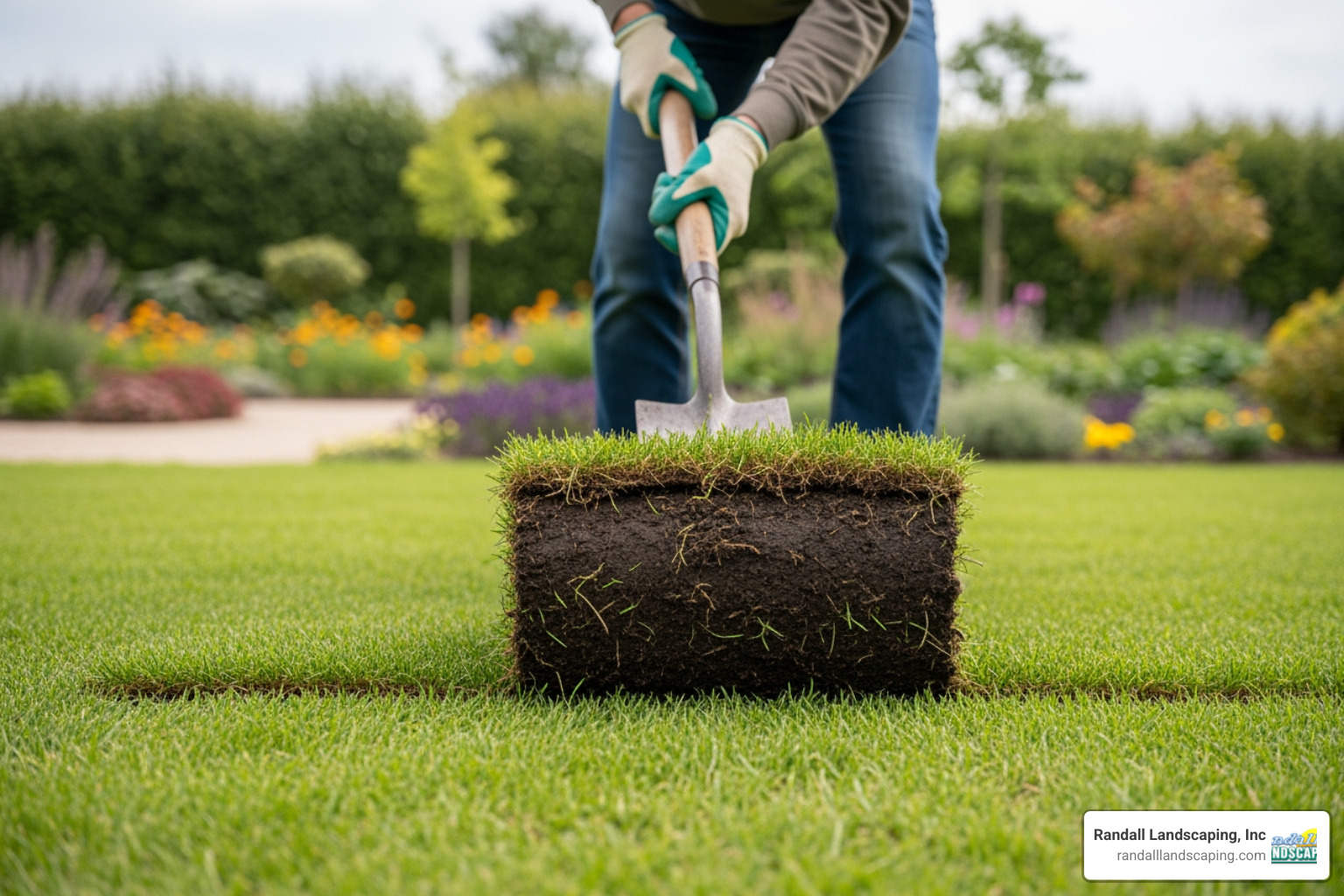
- Manual Sod Removal: For immediate results, use a sharp spade to cut and lift sections of sod. We recommend excavating 4-6 inches of sod and soil to create a solid base for the new bed.
- Smothering with Cardboard (The “No-Dig” Approach): For a less labor-intensive method, lay down overlapping layers of plain cardboard over the area. Wet it thoroughly to start the decomposition process, which smothers the grass and weeds underneath while enriching the soil.
- Natural Weed-Killing Methods: Before mulching, pull all visible weeds. For persistent ones, you can use natural methods like horticultural vinegar, but be careful around desirable plants. Explore effective natural weed-killing methods for more ideas.
This upfront effort will save you hours of weeding later. For more tips, see our guide on Mulch for Weed Control.
Step 2: Define the Edge for a Crisp, Professional Look
A well-defined edge gives your mulch bed a polished, professional finish and separates it from the lawn.
- Trenching with a Spade: A classic method is to use a spade or half-moon edger to cut a 3-4 inch deep trench along the bed’s outline. This natural barrier helps contain mulch and stop grass from creeping in.
- Installing Physical Edging: For a more permanent border, install plastic, metal, stone, or brick edging. Ensure the top is flush with the lawn to allow for easy mowing and prevent tripping hazards.
A defined edge minimizes maintenance and boosts aesthetic appeal. For professional help, our team offers Mulch and Edging Services in communities across MA and NH, including Andover, Dracut, Salem, and Windham.
Step 3: Prepare the Soil for Healthy Plants
Good soil is the foundation for healthy plants. Preparing it properly is key to a thriving garden.
- Loosen and Aerate the Soil: After clearing the bed, use a garden fork or tiller to loosen compacted soil to a depth of at least 12 inches. This improves aeration and water penetration, helping roots grow easily.
- Add Compost: Spread a 2-3 inch layer of high-quality compost over the loosened soil. Mix it into the top 6-8 inches to enrich the soil with organic matter and nutrients, giving your plants a great start.
Properly prepared soil ensures better drainage, moisture retention, and robust plant growth. This step is as crucial for a garden bed as it is for a New Lawn Installation.
The Finishing Touch: Choosing and Applying Your Mulch
With your bed shaped, cleared, and the soil prepared, it’s time for the grand finale: adding the mulch. This completes the look and locks in all your hard work.
Organic vs. Inorganic: What’s the Right Mulch for You?
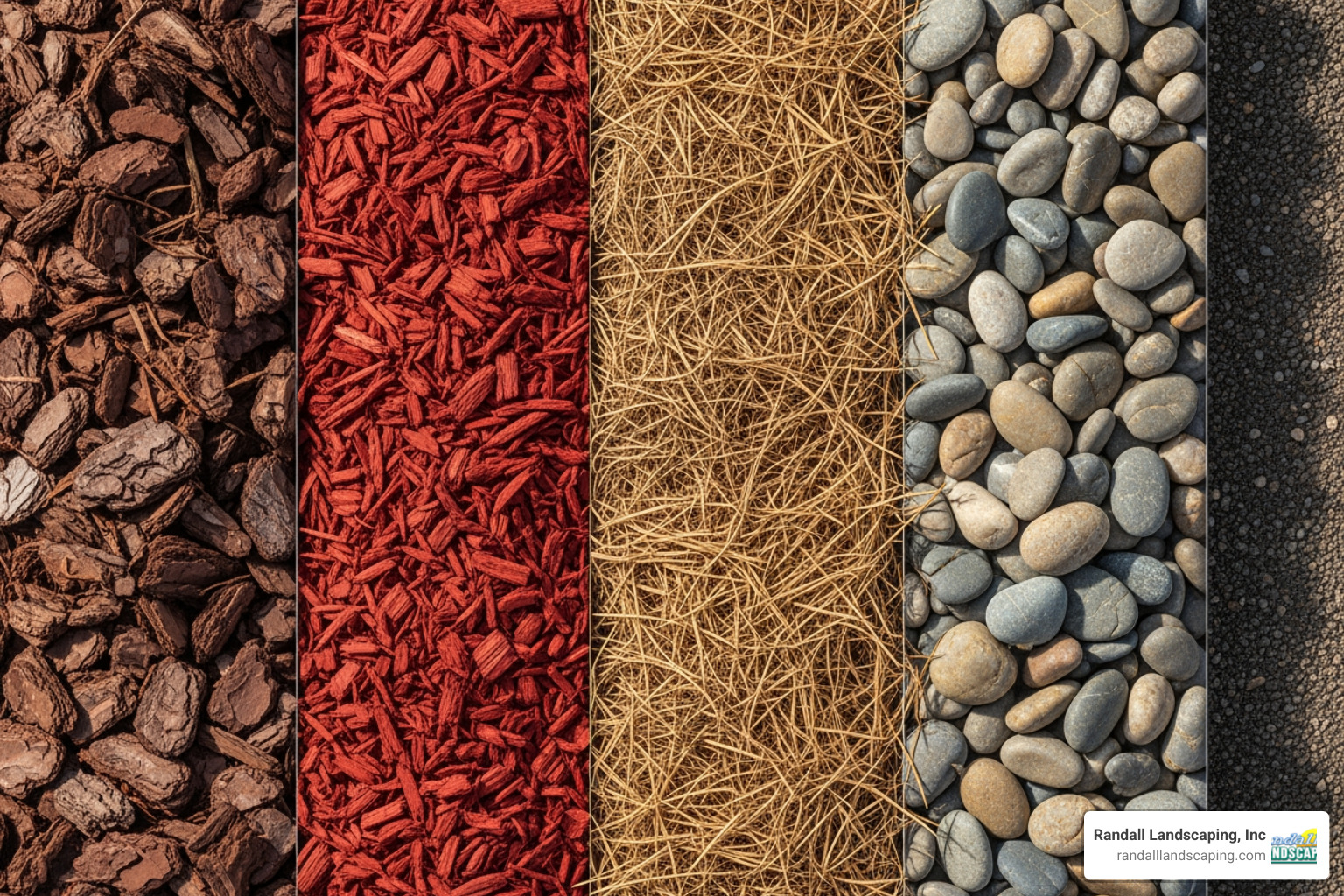
Mulch falls into two main categories: organic and inorganic. Each has unique characteristics for different garden styles.
| Feature | Organic Mulch | Inorganic Mulch |
|---|---|---|
| Pros | – Enriches soil as it decomposes | – Long-lasting, doesn’t need frequent replacement |
| – Improves soil structure and fertility | – Excellent for weed suppression and moisture retention | |
| – Encourages beneficial soil organisms | – Non-combustible (good for fire-prone areas) | |
| – Moderates soil temperature effectively | – Variety of colors and textures for aesthetic appeal | |
| – Often more natural appearance | – Doesn’t attract insects or decompose | |
| Cons | – Decomposes over time, requiring replenishment (typically annually) | – Does not add nutrients or improve soil structure |
| – Can attract some insects (e.g., termites if in contact with wood structures) | – Can absorb and radiate heat, potentially stressing some plants | |
| – May compact, reducing air and water penetration if not loosened | – Can be costly to install initially | |
| – Can harbor weed seeds if not properly sourced | – Can be difficult to remove if you want to change your design | |
| Best For | – Flower beds, vegetable gardens, around trees and shrubs, improving poor soil | – Permanent landscape features, pathways, rock gardens, areas with drainage needs |
| – Areas where soil health and fertility are priorities | – Low-maintenance areas, contemporary designs | |
| Examples | – Wood chips (cedar, pine, hardwood), shredded bark, pine straw, compost, grass clippings, shredded leaves | – River rock, pea stone, crushed stone, lava rock, rubber mulch |
- Organic Mulch Benefits: Derived from natural materials, these mulches decompose to release nutrients, improving soil structure and feeding plants. They are ideal for flower beds and vegetable gardens where soil health is a priority. Common types include hemlock blend, chocolate brown, and black mulch.
- Inorganic Mulch Benefits: Made from non-living materials like stone or rubber, these mulches don’t decompose and last much longer. They are excellent for permanent features, pathways, and rock gardens but do not contribute to soil fertility.
The choice depends on your goals, aesthetic preferences, and plant needs. For more environmentally conscious options, explore our Eco-Friendly Mulch Options.
How Much Mulch Do I Need and What is the Proper Depth?
Calculating the right amount of mulch is key. A good rule of thumb is that one cubic yard of mulch covers about 100 square feet at a 3-inch depth.
Use this formula to calculate your needs:
Total Square Footage of Bed x Desired Depth (in inches) ÷ 324 = Total Cubic Yards Needed
For example, a 200 sq ft bed at a 3-inch depth needs about 1.85 cubic yards, so you’d order 2.
The recommended depth is generally 2-4 inches.
- 3 to 4 inches: Ideal for most wood chips and shredded bark for excellent weed suppression and moisture retention.
- 1 to 2 inches: Better for heavy clay soils to prevent excess moisture and root rot.
- Up to 4 inches: Can be used on sandy, fast-draining soils to maximize water retention.
- 2 inches: Generally sufficient for perennials and annuals.
These are general guidelines; always consider your soil type and plant needs. For more expert advice, we often refer to resources like The Morton Arboretum.
Proper Mulch Application: Avoiding Common Mistakes
Proper application is crucial to avoid plant disease and pests. Here’s how to do it right:
- Spread Mulch Evenly: Use a rake to spread mulch to a consistent depth of 2-4 inches across the bed.
- Avoiding “Volcano Mulching”: This is a common and harmful mistake. Never pile mulch against tree trunks or shrub stems. This traps moisture and causes rot. Instead, create a “donut hole” by keeping mulch a few inches away from the base of all plants, leaving the root flare of trees visible.
- Water After Application: Lightly water the mulch after spreading it. This helps it settle and prevents it from blowing away.
For larger properties, our Mulch Installation (Blowing) services offer an efficient way to apply mulch uniformly, saving you time and effort.
Long-Term Care and Troubleshooting
Creating mulch beds is an ongoing relationship with your landscape. Regular maintenance keeps your beds healthy and attractive.
- Seasonal Maintenance: Replenish organic mulch annually to maintain a 2-4 inch depth, as it decomposes over time. Spring is a great time to do this for a fresh look.
- Weed Control: Pull any weeds that manage to poke through the mulch promptly. It’s much easier to remove them when they are small.
- Compaction: Occasionally use a rake to fluff up compacted mulch, which ensures air and water can still reach the soil.
- Fungal Growth: Harmless fungi are a natural part of decomposition. If you find unsightly growth, simply rake it into the mulch to break it up.
The Great Debate: To Use Landscape Fabric or Not?
Whether to use landscape fabric under mulch is a common question. Here are the pros and cons:
Pros of Landscape Fabric:
- Provides an extra barrier against weeds when first installed.
- Separates inorganic mulches (like stone) from the soil, preventing them from sinking.
Cons of Landscape Fabric:
- Suffocating Soil: It prevents organic mulch from breaking down and enriching the soil, defeating one of its main purposes.
- Weeds Still Grow: Weed seeds can land on top and root into the fabric, making them very difficult to remove.
- Becomes Unsightly: Over time, the fabric can become exposed and tattered.
- Hinders Water/Air: It can block water and air from reaching the soil, especially as it clogs over time.
In our experience, we advise against landscape fabric for beds with organic mulch. A thick layer of mulch is a better, more natural solution for weed control.
An Alternative Method: Creating Mulch Beds with Sheet Mulching
For a “no-dig” approach over an existing lawn, sheet mulching (or lasagna gardening) is an excellent, eco-friendly option that builds healthy soil over time.
Here’s a simplified overview:
- Mow: Cut the existing grass or weeds as low as possible.
- Layer Cardboard: Cover the area with overlapping, plain cardboard (tape removed). Wet it thoroughly to create a weed barrier.
- Add Organic Layers: Alternate 2-inch layers of “green” materials (like grass clippings or compost) and “brown” materials (like dry leaves or straw) until the pile is 18-36 inches high.
- Top with Mulch: Finish with a 2-4 inch layer of your preferred organic mulch.
The beauty of sheet mulching is that it builds healthy soil from the ground up. However, it requires patience, as it can take six months or more to decompose before planting. Fall is an ideal time to start a sheet-mulched bed. For a comprehensive guide, check out how to Create New Garden Beds with Sheet Composting and Sheet Mulch.
Frequently Asked Questions about Creating Mulch Beds
We often get questions from homeowners in places like Londonderry, Pelham, and Windham, NH, or Andover, Dracut, and Tewksbury, MA, about creating mulch beds. Here are some of the most common inquiries:
What is the best time of year to create a new mulch bed?
Spring and fall are ideal.
- Spring: Milder temperatures are perfect for digging. Mulching in spring helps retain moisture for the coming summer and suppresses weeds for the growing season.
- Fall: Cooler weather makes the work easier. Preparing beds in the fall allows the soil to settle over winter, making it ready for spring planting. It’s also the perfect time to start a sheet-mulched bed.
How deep should a new mulch bed be?
This involves two measurements:
- Excavation Depth: When removing sod, excavate 4-6 inches deep to create space for amendments and mulch.
- Mulch Layer Depth: Apply a 2-4 inch layer of mulch for optimal weed suppression and moisture retention.
Can I just put mulch directly over existing grass?
We do not recommend this. Grass will likely grow through the mulch, creating a weed problem. The proper no-dig method is sheet mulching (described in the previous section), which uses cardboard to effectively smother the grass before you add organic layers and mulch. This ensures the grass won’t re-emerge.
Conclusion: Enjoy Your Lush New Landscape
Creating mulch beds is a rewarding project that significantly lifts the beauty and health of your outdoor space. From the initial planning and soil preparation to selecting the perfect mulch and applying it correctly, each step contributes to a landscape that not only looks stunning but also thrives. You’ll enjoy the benefits of reduced weeding, less watering, and healthier plants, all while boosting your home’s curb appeal.
We hope this guide empowers you to tackle your next landscaping project with confidence. There’s immense satisfaction in changing a patch of lawn into a lush, vibrant garden.
For a flawless finish without the hard work, the experts at Randall Landscaping provide professional landscape design and installation services throughout the Merrimack Valley and Southern New Hampshire, including Amesbury, Andover, Atkinson, Boxford, Bradford, Derry, Dracut, Georgetown, Haverhill, Lawrence, Londonderry, Methuen, North Andover, North Reading, Pelham, Plaistow, Salem, Tewksbury, Windham, and surrounding communities. We’re here to help you achieve the garden of your dreams.
Ready to transform your yard? Transform your yard with our expert Garden Bed Mulching services.