
Why Understanding Grass Installation Costs Matters for Your Dream Lawn
Real Grass (Sod/Turf) Cost Breakdown
When planning your dream lawn, understanding the cost of grass per square metre is crucial for budgeting your project properly. Real grass installation through sod gives you that instant green carpet effect, but the total investment involves much more than just buying rolls of turf.
What is the average cost of grass per square metre for materials?
The sod itself – that beautiful green carpet you’re dreaming of – typically costs between $3.20 and $8.00 per square metre for standard varieties. But here’s where it gets interesting: premium grass types can push that number up to $24.00 per square metre or even higher.
Why such a wide range? Think of it like shopping for a car. You’ve got your reliable everyday options and your luxury models. Budget-friendly turf varieties like basic fescue blends sit at the lower end, while premium options like specialty zoysia or St. Augustine command higher prices.
Most sod farms sell their product by the pallet, and understanding pallet pricing helps you budget more accurately. A typical pallet covers about 37 to 47 square metres and costs anywhere from $120 to $377 depending on the grass type and quality. That works out to roughly the same per-square-metre cost I mentioned earlier.
The grass species makes a huge difference in pricing. Perennial ryegrass tends to be more affordable and establishes quickly, while zoysia varieties cost significantly more but offer superior durability and lower maintenance needs once established.
How much are professional installation and site preparation?
Here’s where many homeowners experience sticker shock. Professional installation typically adds $10.75 to $21.50 per square metre to your project cost, with complex installations potentially reaching $64.00 per square metre or more.
But before a single piece of sod touches the ground, your site needs proper preparation. This critical step often costs $10.75 per square metre at minimum, and can easily climb to $32.00 per square metre or higher for challenging sites.
Proper site preparation involves removing existing grass or weeds, grading the area for proper drainage, and adding quality topsoil. This isn’t just digging up your old lawn – it’s creating the foundation that determines whether your new grass thrives or struggles.
Soil removal and leveling requires specialized equipment and expertise. We’ve seen too many DIY attempts where inadequate preparation led to patchy, unhealthy lawns within months. Quality topsoil application gives your new grass the nutrient-rich environment it needs to develop strong roots quickly.
Waste disposal is another factor many forget about. All that old grass, rocks, and debris has to go somewhere, and hauling it away adds to your total investment.
What other expenses affect the total price?
Several additional factors can influence your final cost of grass per square metre, and understanding them helps prevent budget surprises.
Delivery fees typically range from $50 to $400 depending on your location and order size. For smaller projects, this delivery cost can significantly impact your per-square-metre price. Project size matters too – very small areas might face minimum order requirements, while larger projects sometimes benefit from slight volume discounts.
Yard accessibility plays a bigger role than most people realize. If our crew can back a truck right up to your lawn area, installation goes smoothly. But if we need to carry heavy sod rolls through narrow gates or around obstacles, that extra labor time increases costs.
Equipment rental becomes a consideration if you’re thinking about DIY installation. Renting a sod cutter, rototiller, and other necessary tools can cost several hundred dollars, and that’s before considering the physical effort involved.
The choice between DIY and professional installation involves more than just labor costs. While going the DIY route saves on installation fees, mistakes in preparation or laying technique can result in an unhealthy lawn that needs expensive repairs later. Professional installation costs more upfront but typically delivers better long-term results and peace of mind.
Key Factors That Influence the Cost of Grass Per Square Metre
Understanding the base costs is a great start, but several key factors can dramatically shift the cost of grass per square metre for your specific project. Think of it like buying a car – the base model has one price, but choosing premium features, a different engine, or shopping in a different city changes everything.
How does the type or species of grass affect its cost?
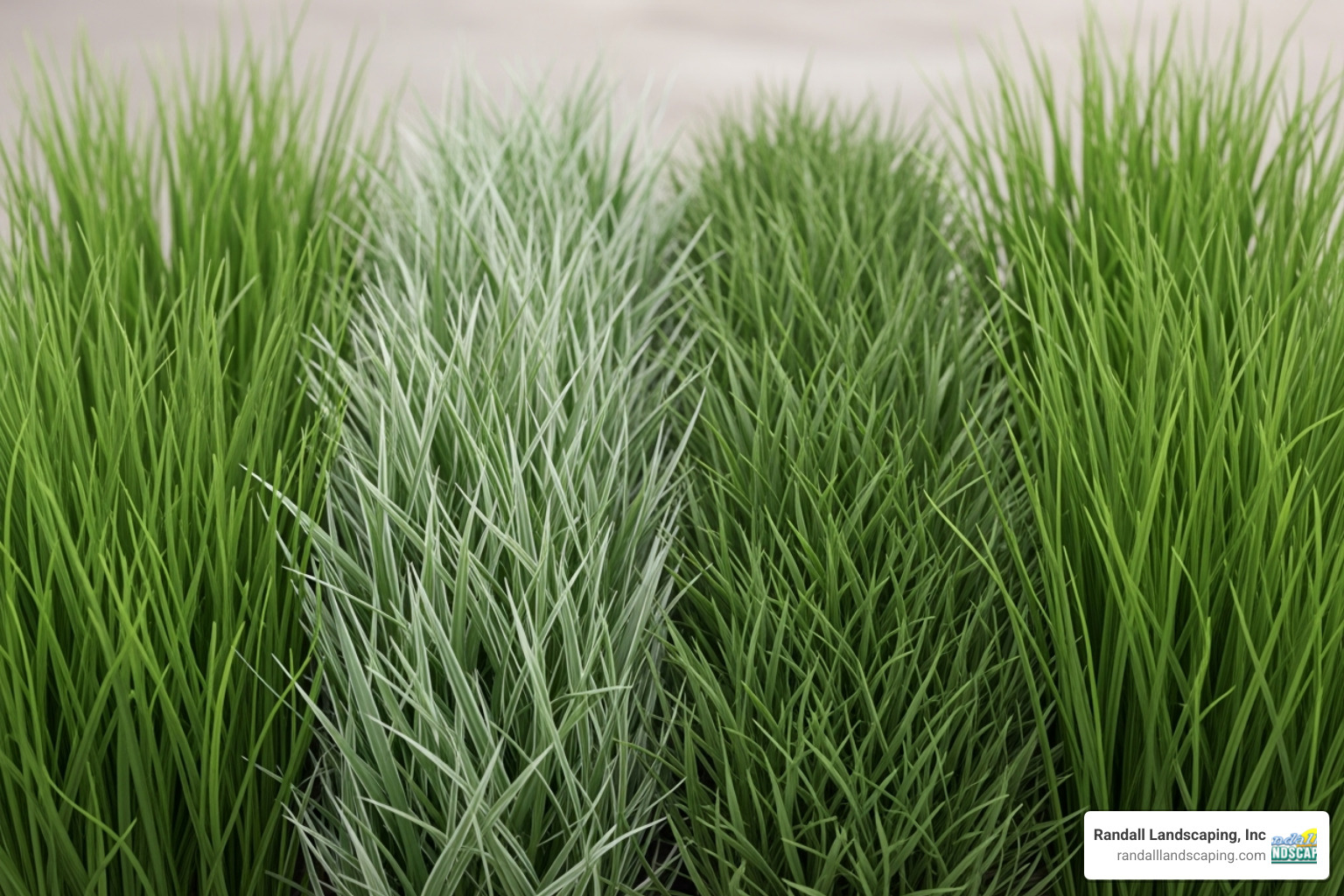
Not all grass is created equal, and their price tags definitely reflect that reality. Different grass species have varying growth requirements, climate preferences, and market demand – all of which directly influence the cost of grass per square metre.
Premium grass varieties like Zoysia and St. Augustine typically cost significantly more than common options like centipede grass. Why? Some species are simply more challenging to grow, require specific growing conditions, or are in higher demand because of their superior looks or performance.
When we’re selecting grass species for our clients, several factors come into play that affect both upfront and long-term costs. Climate suitability is huge – here in the Merrimack Valley and Southern New Hampshire, cool-season grasses like perennial ryegrass, fescue varieties, and Kentucky bluegrass are your best bet. These grasses love our climate and will thrive through our winters. Trying to save money on a warm-season grass that can’t handle New England weather? That’s a costly mistake waiting to happen.
Durability and traffic tolerance also matter for your wallet. If your lawn needs to handle kids playing soccer, dogs running around, or regular entertaining, you’ll want a tougher grass variety. Yes, it might cost a bit more upfront, but it’ll save you money on repairs and replacements down the road.
Don’t forget about maintenance needs either. Some grasses are thirsty and need constant watering, while others require frequent mowing or are magnets for pests and diseases. These ongoing costs add up over time, even if they don’t directly affect your initial material costs.
How does location affect the cost of grass per square metre?
Your zip code absolutely influences the cost of grass per square metre. Just like everything else, the cost of living, labor rates, and transportation costs vary dramatically across different regions.
For our clients throughout the Merrimack Valley – including Amesbury, Andover, Boxford, Georgetown, North Andover, North Reading, Methuen, and Lawrence – and Southern New Hampshire communities like Atkinson, Dracut, Pelham, Salem, Windham, and Plaistow, several location-specific factors come into play.
Proximity to turf farms is a big one. The closer you are to where the sod is grown, the lower your transportation costs will be. It’s simple math – less distance means less fuel and time for delivery trucks.
Regional demand can also push prices up or down. When everyone in the area decides spring is the perfect time for a new lawn (and they’re not wrong!), increased demand can affect pricing. Local labor rates vary significantly by region too, which directly impacts the installation portion of your project cost.
Even climate and soil conditions play a role. Our regional climate and common soil types influence which grass varieties are readily available and how much site preparation is typically needed.
How do lawn size and condition impact the price?
The size and current state of your lawn are probably the biggest factors affecting your final cost of grass per square metre. It’s where you’ll see the most dramatic price differences between projects.
Economies of scale generally work in your favor with larger projects. When you’re sodding a bigger area, you might see slightly lower per-square-metre costs for materials since suppliers often offer bulk discounts. However, don’t expect labor costs to drop proportionally – larger projects still require more time and might need heavy machinery or complex logistics.
Ground condition is where costs can really vary. Is your yard a nice, level patch of dirt ready for sod? Or are we looking at a rocky, uneven mess that needs serious work? The more preparation needed – removing old turf, clearing debris, leveling, adding new topsoil – the higher your overall investment will be.
Slope and obstacles add complexity and time to any installation. Installing sod on a steep slope is more challenging and labor-intensive than working on flat ground. Similarly, working around lots of trees, garden beds, or existing structures means more careful cutting and fitting. Our team handles these challenges regularly, but they do add to the time and skill required.
Existing lawn removal is another cost factor many homeowners don’t initially consider. If you have an old, unhealthy lawn that needs to come out first, this adds to your site preparation costs. It’s definitely worth the investment to prevent problems with your new turf, but it’s important to budget for it upfront.
Real Grass vs. Other Lawn Alternatives: A Cost Overview
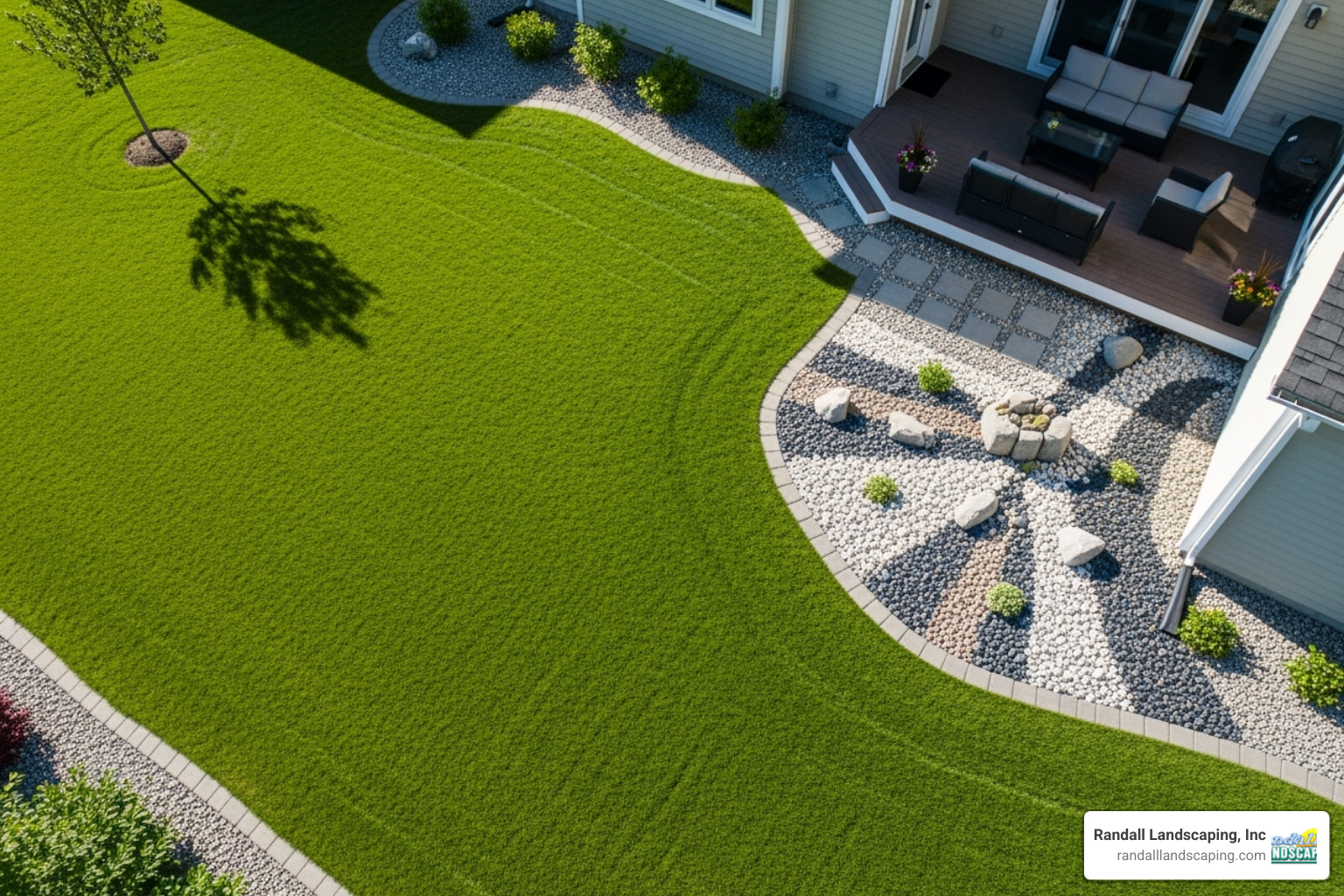
Here at Randall Landscaping, our heart is truly in creating those beautiful, vibrant real grass lawns. They’re just so natural and inviting! However, we completely understand that as a homeowner, you want to explore all your options. So, let’s take a straightforward look at how the cost of grass per square metre for real turf stacks up against some other common lawn alternatives. We’ll consider both the initial installation and what you might spend over the long haul.
How does the upfront cost of real grass compare to other common lawn alternatives?
When you first start thinking about a new lawn, the upfront investment is usually the first thing on your mind. Let’s lay out the initial costs for various ground covers. These are general market averages based on internet data, and they are not specific quotes from Randall Landscaping. Our focus is always on delivering top-notch real grass lawn installations.
| Lawn Alternative | Material Cost per m² (Average Range) | Installation Cost per m² (Labor, Average Range) | Total Installed Cost per m² (Average) |
|---|---|---|---|
| Real Grass (Sod) | $3.23 – $8.07 | $10.76 – $21.53 | $37.67 |
| Grass Seed | $0.54 – $2.69 | $0.00 – $5.00 (DIY to basic professional) | $0.54 – $7.50 (Highly variable) |
| Hydroseeding | (Material & Labor Combined) | $5.38 – $10.76 | $5.38 – $10.76 (Combined) |
| Artificial Turf | $16.68 – $73.73 | $37.13 – $129.17 | $161.46 – $204.51 |
Note: Pricing is included for informational purposes only, based on internet averages. Randall Landscaping specializes in real grass lawn installation.
Let’s break down these options a little more:
- Real Grass (Sod): As we’ve discussed, sod gives you that instant “wow!” factor. The higher upfront cost of grass per square metre for sod reflects the care involved in growing it, harvesting it, and then getting it perfectly laid in your yard for that immediate lush look. It’s like buying a ready-made masterpiece for your landscape.
- Grass Seed: This is definitely the budget-friendly choice when it comes to material costs alone. However, patience is key here! You’ll need to carefully water, protect it from foot traffic (and maybe even curious critters) for weeks, or even months, while it sprouts and establishes. Many homeowners take on seeding as a DIY project, but professional seeding can add to your labor costs.
- Hydroseeding: Imagine a special blend of grass seed, mulch, fertilizer, and water sprayed onto your ground. It’s usually faster than traditional seeding and generally less expensive than sod, making it a popular choice for larger areas. The cost you see often includes both the materials and the application work.
- Artificial Turf: This option typically has the highest initial cost of grass per square metre. We’re talking about prices that can sometimes go well over $215.00 per square metre once installed! This higher price tag comes from the specialized synthetic materials, the complex manufacturing process, and the need for a really strong, well-prepared base layer underneath.
What are the long-term costs and benefits?
The real cost of grass per square metre isn’t just about what you pay on day one. It’s also about what you’ll spend to keep your lawn looking great over the years. This is where the comparison between real grass and alternatives gets really interesting!
Let’s look at the long haul:
- Real Grass (Natural Lawn):
- Maintenance: A living lawn needs ongoing love and care. If you opt for professional services like mowing, fertilizing, aeration, and weed control, annual costs can range anywhere from $1,500 to $6,000. If you’re a DIY enthusiast, your out-of-pocket costs will be lower, but you’ll invest a good amount of your own time and effort.
- Watering: Depending on where you live and the type of grass you choose, watering can be a notable expense, especially during dry spells.
- Fertilizer & Pest Control: To keep your lawn healthy and green, regular feeding and occasional treatments for pests or diseases are usually necessary.
- Lifespan: The best part? With proper care, a natural lawn can truly last indefinitely. It’s a vibrant, living part of your home’s landscape that grows and changes with the seasons.
- Benefits: Real grass does so much more than just look good! It offers amazing environmental benefits like cooling your property, purifying the air, reducing noise, and providing a home for beneficial insects. Plus, it significantly boosts your property value and curb appeal in a way that artificial options often can’t match.
- Artificial Turf:
- Maintenance: This is where artificial turf really shines for some homeowners. Its ongoing maintenance costs are significantly lower, usually just $250 to $350 annually. This typically covers occasional brushing, rinsing, and topping up the infill material. The big draw is: no mowing, no watering, no fertilizing, and no weeding!
- Lifespan: Artificial turf generally lasts about 15 to 20 years, though some premium varieties might claim up to 30 years with very light use. After that, it needs to be completely replaced, which means another major installation cost down the road.
- Drawbacks: It’s not all sunshine and rainbows, though. Artificial turf can get incredibly hot in direct sunlight, making it uncomfortable for bare feet or pets. It also doesn’t offer the environmental perks of natural grass, like supporting local wildlife or helping to cool your surroundings. Some sources even suggest that artificial grass could potentially lower a home’s property value by about 5%, which is definitely something to think about if you plan to sell in the future.
The choice comes down to your priorities: Do you prefer the instant beauty and lower upfront costs of real grass, with its ongoing but rewarding maintenance? Or are you willing to make a higher initial investment for the promise of virtually zero hands-on maintenance with artificial turf? For us, at Randall Landscaping, the natural beauty, environmental advantages, and proven boost to property value that real grass provides make it the clear winner every time.
Frequently Asked Questions about Grass Costs
When homeowners start researching lawn installation, certain questions about the cost of grass per square metre come up again and again. After nearly two decades in the landscaping business, I’ve heard these questions countless times – and I’m happy to share what I’ve learned.
How much does one pallet of sod typically cost?
Understanding pallet pricing helps you budget for your project, especially since most sod farms sell by the pallet rather than by individual square metres. The cost depends on both the size of the pallet and the type of grass you choose.
Most suppliers offer three standard pallet sizes. A 399 square foot pallet (about 37 square metres) typically runs $120–$300, though premium varieties can cost up to $900 or more. The 452 square foot pallets (roughly 42 square metres) usually cost $135–$340, with high-end options reaching $1,000+. For the largest 503 square foot pallets (about 47 square metres), expect to pay $150–$377 for standard grass, with premium varieties potentially costing $1,100 or more.
These prices cover just the sod material – no delivery or installation included. The beauty of buying by the pallet is that you often get slight bulk discounts compared to smaller quantities. Just make sure you measure your area carefully so you don’t end up with too much or too little sod!
Note: All prices are market averages from online sources and not actual costs for Randall Landscaping.
Where can you buy good quality turf?
Finding quality turf is like finding a good restaurant – you want fresh, healthy product from a reputable source. Local turf farms are often your best bet because the sod is typically the freshest, and you can actually see what you’re buying before it gets delivered. Many farms specialize in grass varieties that thrive in your specific region.
Garden centers and home improvement stores offer convenience, especially for smaller projects. The trade-off is that the sod might have been sitting around longer, so check that it looks vibrant and feels moist, not dry or yellowing.
Landscaping suppliers that sell to professionals often have excellent quality since their reputation depends on it. They might also offer better prices for larger quantities.
Some turf farms now offer online ordering with delivery, which can be convenient but means you’re buying sight unseen. When you work with professional landscapers like Randall Landscaping, we handle all the sourcing for you. We’ve built relationships with reliable suppliers over the years, so we know where to get the freshest, highest-quality sod for our climate here in the Merrimack Valley and Southern New Hampshire.
Quality sod should have a vibrant green color, minimal brown patches, and strong, white roots. If it feels squishy or has a sour smell, that’s a red flag.
Is real grass a cost-effective choice in the long run?
This is probably the most important question you can ask about the cost of grass per square metre. While the upfront investment might seem significant, real grass often proves to be incredibly cost-effective over time.
Let’s think about it this way: yes, natural grass requires ongoing maintenance like mowing, watering, and occasional fertilizing. These costs can add up to $1,500–$6,000 annually if you hire professionals, or significantly less if you handle some tasks yourself. But here’s what many people don’t consider – a well-maintained natural lawn can last indefinitely. You’re not looking at a replacement cost every 15-20 years like you would with artificial alternatives.
The water usage concern is real, but modern irrigation systems and drought-resistant grass varieties have made natural lawns much more efficient. Plus, real grass actually contributes to the local water cycle and helps cool your property naturally.
Perhaps most importantly, real grass adds genuine value to your property. A lush, healthy lawn significantly improves curb appeal and can increase your home’s value. Some studies suggest that artificial alternatives might actually decrease property value by around 5%, which is a hidden cost that many homeowners don’t factor into their calculations.
When you add up the indefinite lifespan, the positive environmental impact, and the proven property value benefits, real grass offers a compelling long-term value that’s hard to beat. That’s why we’re so passionate about helping homeowners create beautiful, natural lawns that will serve them well for decades to come.
Get a Perfect Lawn Without the Guesswork
After diving deep into all the factors that influence the cost of grass per square metre, you might feel like you’ve just assembled a complex puzzle. And honestly, that’s exactly what it is! Every piece matters – from choosing the right grass species for our New England climate to understanding how your yard’s unique conditions affect the final investment.
The beauty of understanding these costs upfront is that it takes the guesswork out of your lawn project. You’re no longer wondering why one quote seems dramatically different from another, or why your neighbor’s lawn cost significantly more (or less) than you expected yours would.
The key takeaway? While the cost of grass per square metre for materials might seem straightforward at first glance, the real investment encompasses so much more. Professional site preparation, quality installation, and long-term maintenance all contribute to the value you’re creating in your outdoor space.
Think of it this way: you’re not just buying grass – you’re investing in your property’s curb appeal, your family’s outdoor enjoyment, and the environmental benefits that come with a healthy, natural lawn. That’s a pretty significant return on investment when you consider how much time you’ll spend enjoying your outdoor space over the years.
For homeowners in the Merrimack Valley and Southern New Hampshire, Randall Landscaping provides reliable, high-quality lawn solutions. We’ve been helping families transform their outdoor spaces since 2006, and we understand that every lawn project is unique. Our team handles everything from the initial assessment to the final cleanup, ensuring your investment yields a beautiful, healthy lawn that you’ll love for years to come.
The truth is, there’s no substitute for a professional assessment of your specific situation. While this guide gives you the knowledge to ask the right questions and understand the process, getting an accurate quote requires looking at your actual yard, soil conditions, and individual needs.
Don’t let the complexities of lawn installation deter you from achieving your outdoor vision. Let our expertise guide you through the process, and you’ll have that dream lawn without any of the guesswork.
Get a precise quote for your new lawn installation