

Why Stone Walkways Transform Your Property’s First Impression
Stone walkways are one of the most impactful ways to improve your home’s curb appeal. From rustic flagstone paths to sleek modern pavers, the right walkway design can dramatically transform your outdoor space and create a lasting first impression.
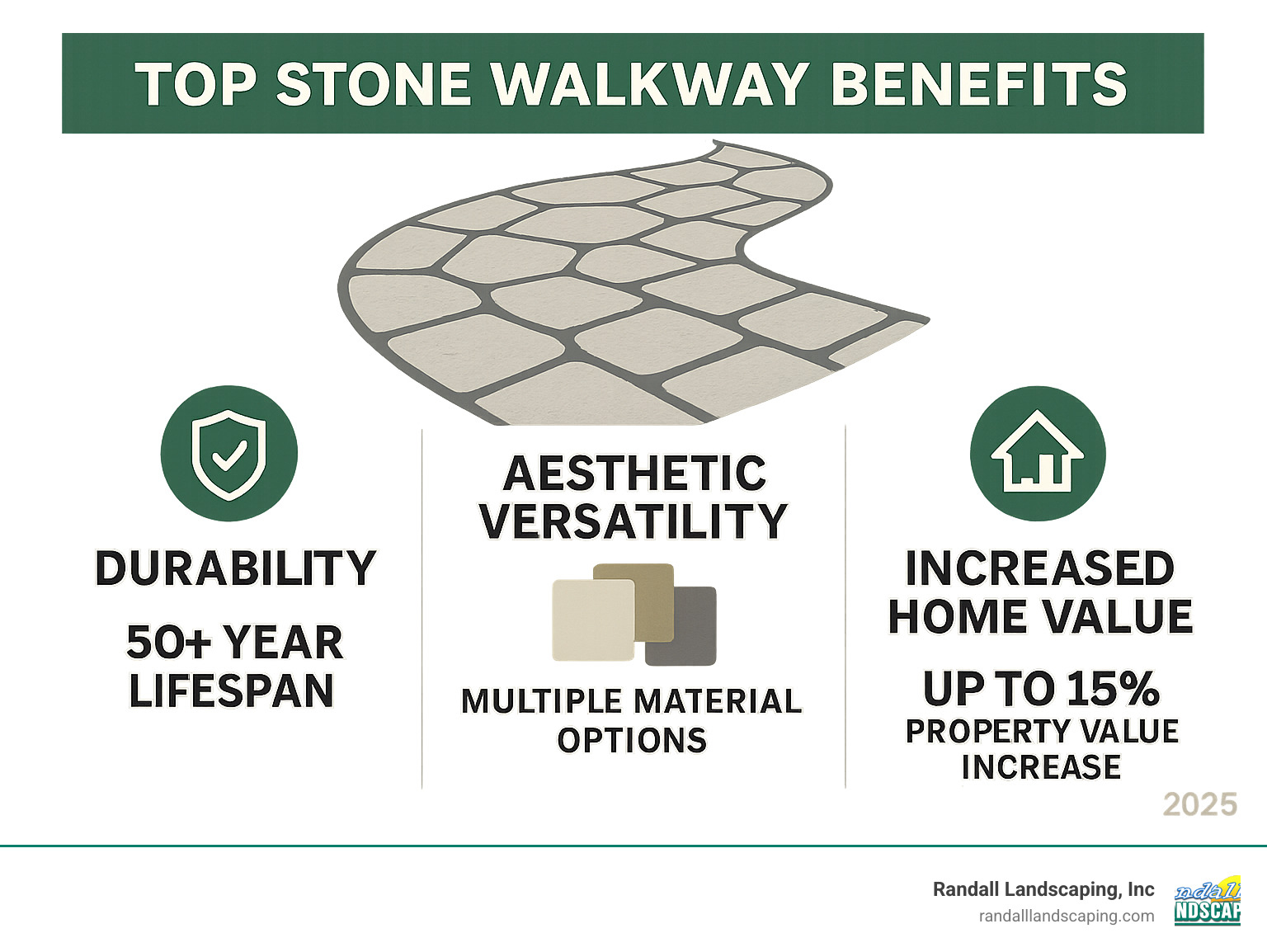
Top Stone Walkway Benefits:
- Durability: Last 50+ years with minimal maintenance.
- Weather Resistance: Handle freeze-thaw cycles without cracking.
- Property Value: Increase home value by up to 15%.
- Design Flexibility: Available in countless styles and materials.
- Low Maintenance: Simple cleaning keeps them looking great.
The cost of stone walkways ranges from $2.50 to $15+ per square foot depending on materials and complexity, with installation typically taking 2-4 days. These are industry average costs for informational purposes and do not reflect final pricing from Randall Landscaping.
Popular stone walkway materials include:
- Flagstone (natural, irregular shapes)
- Concrete pavers (uniform, modern)
- Bluestone (durable, classic)
- Stepping stones (budget-friendly, charming)
As Tommy Randall, owner of Randall Landscaping, I’ve seen how the right stone walkways transform a property’s character and value. With nearly two decades of experience, we’ve helped hundreds of homeowners in Massachusetts and New Hampshire create beautiful, lasting outdoor spaces.
Why a Stone Walkway is a Lasting Investment
When you invest in a stone walkway, you’re creating a permanent feature built to last for generations. Here in New England, our walkways are designed to handle harsh weather, from scorching summers to brutal freeze-thaw cycles that destroy other materials. While concrete might buckle and asphalt may crumble, properly installed stone performs year after year. The secret lies in both the material and the installation. High-quality natural stone and engineered pavers are incredibly dense, resisting the expansion and contraction that causes damage.
This durability makes stone a smart financial choice. These walkways offer timeless beauty that never goes out of style and can significantly boost your property value. A well-designed stone walkway provides immediate curb appeal and improves safety with excellent traction and stability, giving you peace of mind in wet or icy conditions. The combination of exceptional durability, weather resistance, and low maintenance needs makes stone our go-to choice.
For more details on how stone features can transform your entire outdoor space, check out our hardscaping services.
Enhancing Your Property’s Aesthetic
A stone walkway transforms your outdoor space from ordinary to extraordinary. Natural stone offers an incredible range of natural textures and color variations, from warm sandstone to cool bluestone, ensuring a perfect match for your home’s architecture. Your walkway becomes a focal point, guiding visitors through your property and connecting outdoor spaces seamlessly. Imagine a path flowing naturally from your driveway to your front door, or leading to one of our custom outdoor patios, creating a cohesive and intentional design.
Durability and Longevity Compared to Other Materials
When choosing materials, stone walkways consistently outperform other options in long-term value. Natural stone’s resistance to cracking comes from its density and the way individual stones can move slightly without compromising the walkway. While gravel paths don’t crack, they require constant maintenance. Over time, a stone walkway will likely outlast several rounds of concrete repairs or gravel replacements. Modern pavers also feature color longevity technology, ensuring your walkway won’t fade under the summer sun.
| Feature | Stone Walkways | Concrete Walkways | Gravel Walkways |
|---|---|---|---|
| Lifespan | 50+ years, often indefinitely | 25-50 years | 5-10 years with maintenance |
| Maintenance Needs | Minimal – occasional cleaning, optional sealing | Low – cleaning, occasional joint sand replacement | High – regular raking, weeding, refilling |
| Cost Over Time | Higher upfront, excellent long-term value | Mid-range upfront, moderate long-term costs | Low upfront, high ongoing maintenance costs |
| Resistance to Cracking | Excellent – individual stones flex independently | Good – engineered for durability but can crack | Excellent – loose material doesn’t crack |
A Foundation of Style: Popular Materials for Stone Walkways

The material you choose for your stone walkway sets the entire tone for your outdoor space. Natural stone offers authentic, one-of-a-kind character, while manufactured pavers provide uniformity and precision. We prioritize local stone sourcing when possible to reduce costs and complement the regional landscape. Today’s quality pavers also maintain their color longevity for decades, protecting your investment.
Flagstone: The Rustic and Natural Choice
Flagstone is a timeless favorite, known for its flat, irregular shapes and natural cleft surface that create authentic texture.
- Bluestone: A dense, durable stone with stunning blue-gray hues that suit both formal and casual settings.
- Sandstone: Offers a warmer palette of tans, reds, and browns for a cozy, earthy feel.
- Quartzite: An incredibly hard stone, often with a subtle shimmer that catches the light.
For walkways with regular foot traffic, we recommend flagstone that is 2 to 3 inches thick for optimal stability and a natural look.
Pavers: For Uniformity and Modern Design
For clean lines and consistent patterns, pavers are a perfect match. Modern concrete pavers can mimic weathered brick or aged stone while offering incredible durability and a wide color selection. Classic brick pavers bring timeless appeal, ideal for traditional homes. The interlocking design of pavers creates a flexible surface that resists cracking from freeze-thaw cycles, allowing for simple running bond patterns or intricate herringbone designs. If you’re considering extending this look, our Driveway Pavers service can create a cohesive design.
Stepping Stones: Simple, Charming, and Cost-Effective
Stepping stones offer a delightful, informal approach to stone walkways that is both budget-friendly and DIY-friendly. Their beauty lies in their flexibility. You can set them in grass for a path that blends with your lawn—large geometric slabs like 24″ x 24″ bluestone squares create a sophisticated route you can mow right over. For a more naturalistic feel, set natural free-form slabs in mulch or gravel, adding river rock accents or low-growing plants between the stones. For more inspiration, check out these inexpensive walkway ideas.
Designing Your Dream Path: Creative Ideas and Popular Trends

Designing your perfect stone walkway starts with how it will be used. A main entrance path needs different planning than a quiet garden path. Straight paths create clean, formal routes, while curved walkways offer a more relaxed, meandering feel. Walkway width is also crucial. We recommend at least 4 to 5 feet for a main entrance so two people can walk side-by-side, while secondary paths can be narrower at around 3 feet. You can choose a formal design with symmetry and precision or an informal design that accepts natural, organic shapes.
The Rustic Meandering Path
A rustic meandering path uses irregular flagstone to create a walkway that seems to emerge naturally from the landscape. The path gently curves, inviting you to slow down and enjoy the journey. We often integrate low-growing plants between stones, like fragrant thyme or colorful sedum, to add living color. For a cleaner look, mulch filler or river rock accents between the stones create a neat, finished appearance with a naturalistic feel.
The Formal and Neat Entrance
For a strong first impression, a formal and neat entrance walkway uses cut stone or geometric pavers in symmetrical layouts. The precision creates clean lines that guide the eye to your front door. Brick edging is a classic finishing touch that defines the path’s borders. This style works especially well when it connects to other hardscape elements, a service we provide with our Patio Design and Construction to create a cohesive outdoor living area.
Modern Stepping Stone Walkways

The modern approach to stone walkways accepts bold simplicity. We’re seeing more homeowners choose large format slabs—like 24″ x 24″ or larger—to make a dramatic statement. This minimalist aesthetic relies on precise spacing to create rhythm and flow. A popular technique is setting these large slabs directly into a lawn, creating grass joints that feel fresh and contemporary. The key is perfectly level installation and consistent spacing for a sophisticated path that feels effortless and timeless.
Installation, Cost, and Care: What to Expect
Planning your stone walkway involves deciding between professional installation and DIY, setting a budget, and establishing a timeline. While a simple stepping stone path can be a DIY project, complex paver or flagstone work benefits from professional expertise to ensure proper excavation, base layers, and drainage. A typical professional installation takes 2-4 days. Once installed, your walkway requires minimal care.
The Stone Walkway Installation Process
A durable stone walkway is all about the foundation. Shortcuts in preparation lead to problems later.
- Excavation: We dig down about 5 inches for most walkways, removing debris and compacting the soil to prevent settling.
- Landscape Fabric: This barrier prevents weeds from pushing through the path.
- Gravel Base: A 4-inch layer of compacted gravel provides a stable, well-draining foundation.
- Sand Layer: A 2-inch sand layer creates a smooth, level bed for the stones.
- Laying the Stones: Each stone is carefully set to be level and stable, whether fitting irregular flagstone or setting uniform pavers.
- Edging: Paver restraints (plastic or metal edging) are installed to keep the walkway from spreading over time.
- Joint Material: We fill the gaps between stones with a material like polymeric sand, which hardens to resist weeds and erosion.
For DIY projects, online tools can help you estimate quantities. Use this calculator to estimate materials for your walkway.
Cost Considerations for Your Stone Walkway
The total cost of a stone walkway depends on materials, project size, and labor.
- Material Costs: These vary widely. Simple stepping stones might run $2.50 to $3.50 per square foot, while premium natural stone or specialty pavers can be $10 to $30+ per square foot.
- Labor Costs: Professional installation is a significant part of the budget, but it saves you substantial time and physical effort.
- Project Complexity: Curved paths with intricate patterns cost more than simple, straight walkways.
- Site Preparation: Slopes, poor drainage, or rocky soil may require extra work and increase costs.
Choosing locally available stone often provides the best value. Please note: These are industry average costs for informational purposes and do not reflect final pricing from Randall Landscaping.
Maintenance Tips for Lasting Stone Walkways
Stone walkways require very little maintenance to look beautiful for decades.
- Regular Sweeping: Remove leaves and debris to prevent stains and weed growth.
- Gentle Washing: Use a garden hose and mild soap. Avoid high-pressure washing on the joints.
- Weed Prevention: Pull weeds as soon as you spot them.
- Stain Removal: Act fast on spills. Different stains require different cleaning agents.
- Joint Maintenance: Occasionally sweep in fresh sand to fill any gaps, especially if you didn’t use polymeric sand.
- Sealing: Sealing is optional but can improve color and add stain protection. It needs reapplication every 3-5 years.
If you notice drainage issues, our team also provides Repair Retaining Walls services.
Frequently Asked Questions about Stone Walkways
How wide should a stone walkway be?
The ideal width depends on its use. For a secondary garden path, 3 feet wide is sufficient for single-file walking. For a main entrance walkway, we recommend 4 to 5 feet wide. This allows two people to walk side-by-side comfortably and creates a more generous, welcoming impression.
How long does a professionally installed stone walkway last?
A professionally installed natural stone walkway can last 50 years or more. The longevity comes from the inherent durability of the stone and a proper installation process that includes a solid base and quality materials. Modern pavers are also engineered for extreme durability and color retention, making a stone walkway a true long-term investment.
Can you install a stone walkway on a slope?
Yes. Installing walkways on slopes requires expertise but often yields stunning results. For gentle slopes, the path can follow the natural grade of the land. For steeper slopes, we incorporate stone slab steps into the design. This ensures a safe, level walking surface, prevents erosion, and adds a beautiful architectural feature to your landscape.
Transform Your Landscape with a Professional Touch
A well-designed stone walkway is more than a path—it’s a permanent, beautiful feature that improves your entire property. Whether you prefer rustic flagstone or modern pavers, the right design boosts curb appeal and adds real value. It provides a safe, stable journey for family and guests, guiding them through your landscape.
While the result looks effortless, the installation requires expertise. Proper excavation, base materials, and grading are critical for a walkway that lasts for decades. The team at Randall Landscaping, Inc. brings nearly two decades of experience and 100% reliability to every project in the Merrimack Valley and Southern New Hampshire. We build walkways designed to withstand New England’s weather, ensuring your project is completed on time and on budget.
Ready to create your perfect path? Contact us for your Walkway Installation Services and let’s start planning your dream walkway today.