
What Are the Most Common Flagstone Colors and Names?
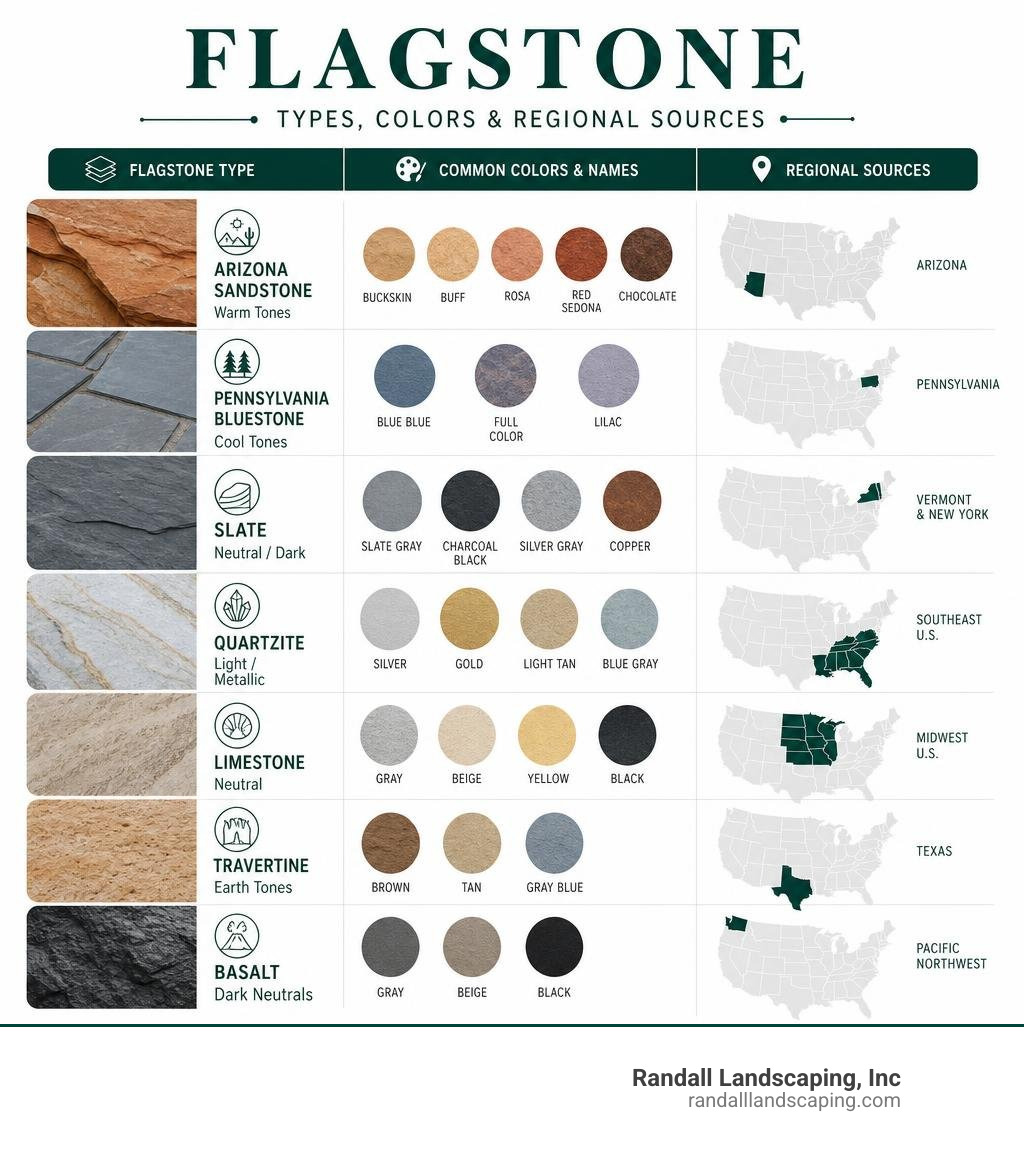
Flagstone colors and names vary widely depending on the type of stone and where it was quarried. Here is a quick reference to the most common options:
| Flagstone Type | Common Colors | Color Names |
|---|---|---|
| Arizona Sandstone | Warm tones | Buckskin, Buff, Rosa, Red Sedona, Chocolate |
| Pennsylvania Bluestone | Cool tones | Blue Blue, Full Color, Lilac |
| Slate | Neutral/dark | Slate Gray, Charcoal Black, Silver Gray, Copper |
| Quartzite | Light/metallic | Silver, Gold, Light Tan, Blue Gray |
| Limestone | Neutral | Gray, Beige, Yellow, Black |
| Travertine | Earth tones | Brown, Tan, Gray Blue |
| Basalt | Dark neutrals | Gray, Beige, Black |
These are the main categories. Each stone type comes in several named shades, and no two pieces look exactly alike.
Flagstone is a natural material formed over millions of years. Its color comes from minerals inside the rock — iron oxide creates reds, oranges, and browns; carbon produces blacks and grays; quartz gives white and ivory tones. That’s why colors vary so much from one quarry to the next.
Whether you’re planning a patio, walkway, or outdoor living space, picking the right stone color makes a big difference in how the finished project looks and feels.
I’m Tommy Randall, owner of Randall Landscaping, Inc., and with nearly 20 years of hands-on hardscape installation across Massachusetts and New Hampshire, I’ve helped hundreds of homeowners navigate flagstone colors and names to find the perfect fit for their property. In this guide, I’ll walk you through everything you need to know to make a confident choice.
Understanding Flagstone Colors and Names by Stone Type

To truly appreciate the sheer variety of flagstone colors and names, we first have to look at the geology of natural stone. Flagstone isn’t actually a single type of rock. Instead, it is a generic, catch-all landscaping term used to describe flat slabs of sedimentary or metamorphic rock that naturally split along flat planes.
Because these stones are formed over millions of years under varying levels of heat, pressure, and mineral exposure, their physical makeup is incredibly diverse. The minerals present during the stone’s formation dictate its final color, texture, and durability:
- Iron Oxide: This mineral acts as nature’s paintbrush, leaving behind warm splashes of red, orange, rust, yellow, and deep brown. It generally rates a respectable 5 to 6 on the Mohs hardness scale.
- Carbon: When organic material carbonizes within the stone, it yields moody, sophisticated shades of black, charcoal, and dark gray. These stones typically have a Mohs hardness of 3 to 4.
- Quartz and Feldspar: These minerals create bright, clean backdrops of white, ivory, and light gray. Boasting a Mohs hardness of 7, quartz-heavy stones are exceptionally durable.
- Mica: If you notice your stones glittering in the New England sunshine, you have mica to thank. It produces shiny silver, bronze, and golden flecks, though it is quite soft (Mohs hardness of 2 to 3).
- Chlorite: This mineral infuses the stone with earthy, natural green tones.
When choosing a stone for your backyard, matching the mineral composition to your design goals is key. If you are looking for design ideas, you can explore the Flagstone Color Chart & Inspiration – Landscaping Network to see how these geological variations translate into stunning real-world outdoor spaces.
Popular Sandstone and Arizona Flagstone Colors and Names
Sandstone is a classic sedimentary rock formed by layers of sand compacted over eons. It is highly valued for its natural, slip-resistant texture and its ability to stay relatively cool under the summer sun. When we talk about sandstone in the landscaping industry, Arizona sandstone is often the star of the show. In fact, the town of Ash Fork, Arizona, is widely celebrated as the “Flagstone Capital of the World.”
Because of its desert origins, Arizona flagstone brings an undeniable warmth to any landscape design. Here are the most popular sandstone and Arizona flagstone colors and names you will encounter:
- Arizona Buckskin: A gorgeous, classic light tan and buff color with subtle gold undertones. It is incredibly popular because of its neutral palette, which blends seamlessly into almost any landscape.
- Arizona Buff: Creamy golden and warm yellow tones dominate this variety. It reflects light beautifully and is excellent for brightening up shaded patio corners.
- Arizona Rosa: Featuring soft, pastel pinks, peaches, and rose tones, this stone adds a unique, warm warmth to garden pathways.
- Red Sedona: Named after the famous red rocks of Sedona, this stone is a deep, rich, dramatic terracotta red. It makes a bold statement and contrasts beautifully against vibrant green lawns.
- Arizona Chocolate: A rarer, premium variety characterized by deep bronze, chocolate brown, and dark tan tones. It offers a rustic, sophisticated look that pairs exceptionally well with wooden structures.
While these desert stones are breathtaking, they are naturally more porous than other stone types. For homeowners choosing Natural Stone | Flagstone | Irregular Flagstone , we always emphasize the importance of selecting high-density sandstone slabs and sealing them properly to withstand our local New England weather.
Classic Bluestone, Slate, and Quartzite Flagstone Colors and Names
For our climate here in the Merrimack Valley and Southern New Hampshire, we frequently turn to denser, highly durable metamorphic and sedimentary stones. These stones are built to handle the intense freeze-thaw cycles of our northern winters without flaking or cracking.
- Pennsylvania Bluestone: This is the undisputed king of hardscaping in the Northeast. Quarried in the mountains of Pennsylvania and New York, bluestone is an incredibly dense, tough sandstone. It is available in three primary color profiles:
- Select Blue (Blue-Blue): A highly uniform, clean, cool blue-gray. It is perfect for modern, formal, or contemporary designs.
- Full Color: A gorgeous, variegated mix of blues, grays, greens, tans, rusts, and purples. It is highly popular for traditional and rustic designs because of its natural warmth and character.
- Lilac: A unique variation featuring rich, warm purplish and plum undertones mixed with gray.
- Slate: A metamorphic rock layered with clay-like minerals. It is known for its sleek, layered texture and rich, deep colors.
- Slate Gray: A highly functional, classic mid-tone gray that hides dirt exceptionally well.
- Charcoal Black (Black Knight Slate): A dramatic, dark, sophisticated charcoal-to-black stone that provides an elegant contrast against bright green grass or white house trim.
- Copper Slate: A striking blend of silver-gray base tones accented by rich, metallic rust and copper veins.
- Quartzite: If you want a stone that is nearly indestructible, quartzite is the answer. It is a metamorphosed sandstone with a glossy, smooth, yet naturally slip-resistant surface.
- Silver Quartzite / Steel Gray: A bright, shimmering silver-gray that sparkles in the sunlight due to its high mica and quartz content.
- Gold Quartzite: Features light tans, golds, and warm sand tones with a metallic sheen.
If you are planning to add a classic, durable walkway to your home, learning How to Install a Bluestone Walkway is a great place to start understanding how these dense stones are handled and laid for maximum longevity.
How Regional Sourcing and Geology Affect Flagstone Colors
One of the most fascinating aspects of natural stone is how closely tied it is to its geographical origin. Because shipping heavy stone across the country is expensive, the regional availability of certain flagstone colors and names heavily influences local design trends.
Here in the Northeast—including our service areas like Andover, MA, and Windham, NH—Pennsylvania Bluestone reigns supreme. Because it is quarried relatively nearby in the Appalachian region, shipping costs are manageable, and the stone is perfectly adapted to our local climate. Its dense, tightly packed structure resists water absorption, meaning it won’t split or spall when the moisture inside the stone freezes during a cold January night.
In contrast, if you travel to the Southwest, you will see a dominant landscape of warm Arizona sandstones. These desert stones are beautiful, but they are far more porous. If you install a soft Arizona sandstone patio next to a saltwater pool in Massachusetts without sealing it, the combination of winter freeze-thaw cycles and salt or chlorine can cause the stone to slowly degrade and flake over time.
To see how these regional stones compare in density, porosity, and climate suitability, you can review this Types of Flagstone Comparison Chart – Landscaping Network . It highlights why choosing a stone that matches your local environment is just as important as choosing one that matches your color preferences.
Design Guide: Choosing and Combining Flagstone Colors for Patios and Walkways

Designing an outdoor living space is all about balance. The right flagstone color should complement your home’s existing architecture, coordinate with your siding, and blend naturally with your surrounding landscape plants.
Here are our favorite design tips for choosing and combining flagstone colors:
- Coordinate with Architectural Style:
- Modern and Contemporary: If your home has clean lines, black trim, or modern siding (common in newer developments in Salem, NH, or North Andover, MA), opt for cool, uniform tones. Pennsylvania Select Blue, Charcoal Slate, or Silver Quartzite create a sleek, sophisticated look.
- Traditional, Colonial, and Rustic: For classic New England colonials or rustic homes (like those tucked away in Boxford or Georgetown, MA), Pennsylvania Full Color Bluestone is a match made in heaven. Its earthy brown, rust, and blue tones echo the natural colors of our local forests and stone walls.
- Pair Warm and Cool Tones: To prevent your patio from looking flat or washed out, we love using contrasting borders. For example, laying a warm Sandstone Beige or Pennsylvania Full Color patio and framing it with a sharp, cool Charcoal Black slate border creates a beautiful frame that defines the outdoor room.
- Brighten Shaded Areas: If you have a heavily wooded backyard or a walkway that sits in the shadow of mature trees (very common in towns like Atkinson and Plaistow, NH), avoid dark charcoal or dark brown stones. They will make the space feel gloomy. Instead, opt for bright, light-reflecting colors like Arizona Buff, Ivory Quartzite, or light gray limestone to cheer up the path.
- The Impact of Grout and Joint Color: Don’t overlook the color of the material between the stones! Whether you are building a dry-laid walkway with polymeric sand or a wet-laid patio with mortar, the joint color matters:
- Contrasting Joints: Using light gray sand between dark charcoal stones makes the individual shapes of the irregular stones pop, creating a bold mosaic look.
- Matching Joints: Using a color-matched sand or mortar creates a smooth, seamless, expansive look that makes small patios feel much larger.
If you are ready to start planning a path through your garden, our detailed guide on Building a Flagstone Walkway offers excellent layout inspiration and practical design steps to get your project moving in the right direction.
Cost and Maintenance Considerations for Different Flagstone Colors
When budgeting for a hardscape project, it is helpful to understand how material choices impact the bottom line. Please note that the following pricing figures are average costs based on national internet data and do not represent actual pricing for Randall Landscaping, Inc.
Natural stone prices fluctuate based on rarity, thickness, and how far the stone must travel from the quarry. Here is an overview of average material costs compared to their long-term durability:
| Flagstone Type | Average Material Cost (per sq. ft.)* | Typical Cost Range (per sq. ft.)* | Durability & Climate Fit |
|---|---|---|---|
| Arizona Sandstone | $3 – $8 | $3 – $25+ | Moderate; needs sealing in cold climates |
| PA Bluestone | $7 – $15 | $6 – $50+ | Excellent; highly resistant to freeze-thaw |
| Slate | $6 – $14 | $5 – $45+ | High; split-resistant but can scratch |
| Quartzite | $5 – $12 | $5 – $40+ | Outstanding; practically scratch-proof and non-slip |
| Travertine | $8 – $16 | $7 – $55+ | Moderate to High; stays cool but porous |
Professional installation typically adds an average of $10 to $15 per square foot, with a full project range of $10 to $45+ per square foot depending on site preparation, excavation, and whether the stone is dry-laid or set in mortar.
Maintenance Tips to Preserve Your Flagstone’s Color
Natural flagstone is incredibly long-lasting—often lasting 50 years or more—but preserving its original beauty requires a little bit of care:
- Seal Every 2 to 3 Years: Applying a high-quality, breathable natural stone sealer is the single best thing you can do for your patio. Sealing protects the stone from oil spills, grill grease, and organic stains (like fallen leaves or bird droppings). It also protects the stone from water penetration, which is the primary cause of cracking during winter freeze-thaw cycles.
- Avoid Harsh Chemicals: Never use acidic cleaners (like vinegar or bleach) on natural stone, especially limestone or travertine, as they can etch the surface and permanently ruin the color. Stick to mild dish soap, warm water, and a soft-bristle brush.
- Prevent Efflorescence: Efflorescence is that powdery white salt residue that sometimes rises to the surface of concrete or stone. It occurs when water dissolves natural salts within the stone or soil and evaporates on the surface. To prevent this, ensure your hardscape contractor installs a proper gravel subbase with excellent drainage.
- Ditch the Rock Salt: During our icy winters in Dracut, Methuen, or Lawrence, MA, never throw standard rock salt (sodium chloride) onto your flagstone. It can eat away at the stone, causing pitting and scaling. Instead, use calcium magnesium acetate (CMA), which is much gentler on natural stone and surrounding lawn grass.
Investing in professional design and installation ensures your stone is laid correctly from day one. You can learn more about our comprehensive hardscape construction options by visiting our main Hardscaping service page.
Frequently Asked Questions About Flagstone Colors
What are the most popular flagstone colors for hot climates?
In hot, sunny climates, light-colored flagstones like Arizona Buff, Ivory/Tan Quartzite, and White Limestone are the most popular choices. These lighter shades have high solar reflectance, meaning they bounce sunlight away rather than absorbing it. This keeps the stone cool underfoot, making them perfect for pool decks and barefoot-friendly patios.
Does flagstone color fade over time?
Yes, natural stone can experience minor color fading or weathering over decades of direct exposure to intense UV sunlight and heavy rain. This is particularly true for dyed concrete pavers, but natural stone holds its color remarkably well. To minimize fading and keep your stone looking rich and vibrant, we recommend applying a UV-resistant penetrating sealer every few years.
How do I choose a grout color to match my flagstone?
When choosing a joint color (whether using polymeric sand or wet-set mortar), decide if you want the joints to stand out or blend in. If you want a cohesive, modern, and spacious look, choose a sand color that closely matches the dominant tone of your flagstone (such as gray sand for gray slate). If you want to highlight the unique, organic shapes of irregular flagstone, choose a contrasting color (such as dark charcoal sand against light tan sandstone).
Conclusion
Choosing the perfect flagstone colors and names for your outdoor space is an exciting journey that blends natural history, design, and practical functionality. Whether you fall in love with the cool, reliable elegance of Pennsylvania Bluestone or the sparkling, durable nature of Silver Quartzite, your choice will shape the beauty of your home for decades to come.
At Randall Landscaping, Inc., we pride ourselves on delivering 100% reliable, high-quality hardscaping services to homeowners throughout the Merrimack Valley and Southern New Hampshire. We proudly serve communities including Amesbury, Andover, Atkinson, Boxford, Dracut, Georgetown, North Andover, North Reading, Pelham, Salem, Windham, Methuen, Lawrence, and Plaistow.
If you are ready to transform your backyard with a custom-designed flagstone patio or walkway, we are here to help you select the perfect stone and install it to the highest professional standards. Contact us today to explore our Patio Design Services and let’s bring your outdoor living dreams to life!