
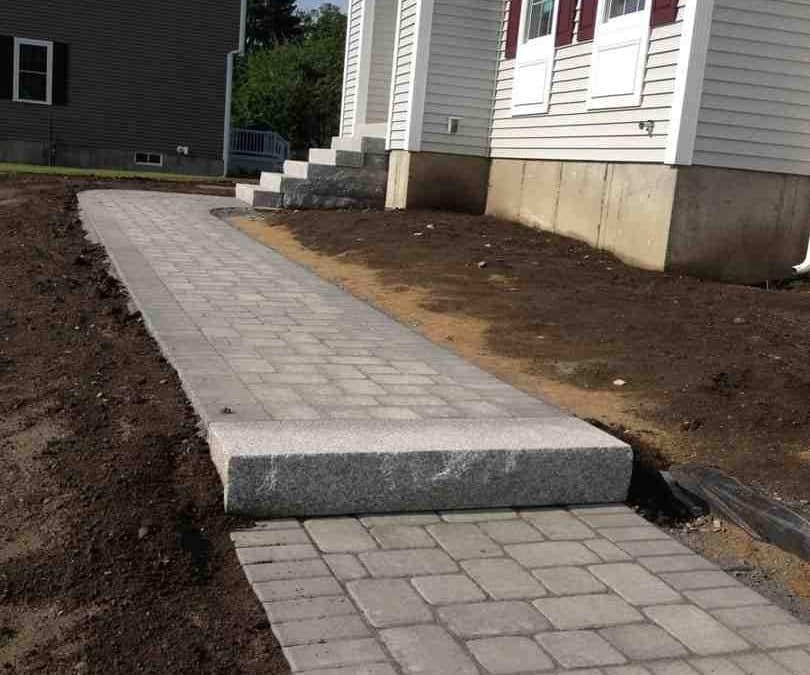
Why Laying a Paver Walkway Transforms Your Property
If you want to lay a paver walkway, you’ll need to follow these essential steps:
- Plan and mark your walkway path (36-48 inches wide is standard)
- Excavate 7-8 inches deep to accommodate base layers
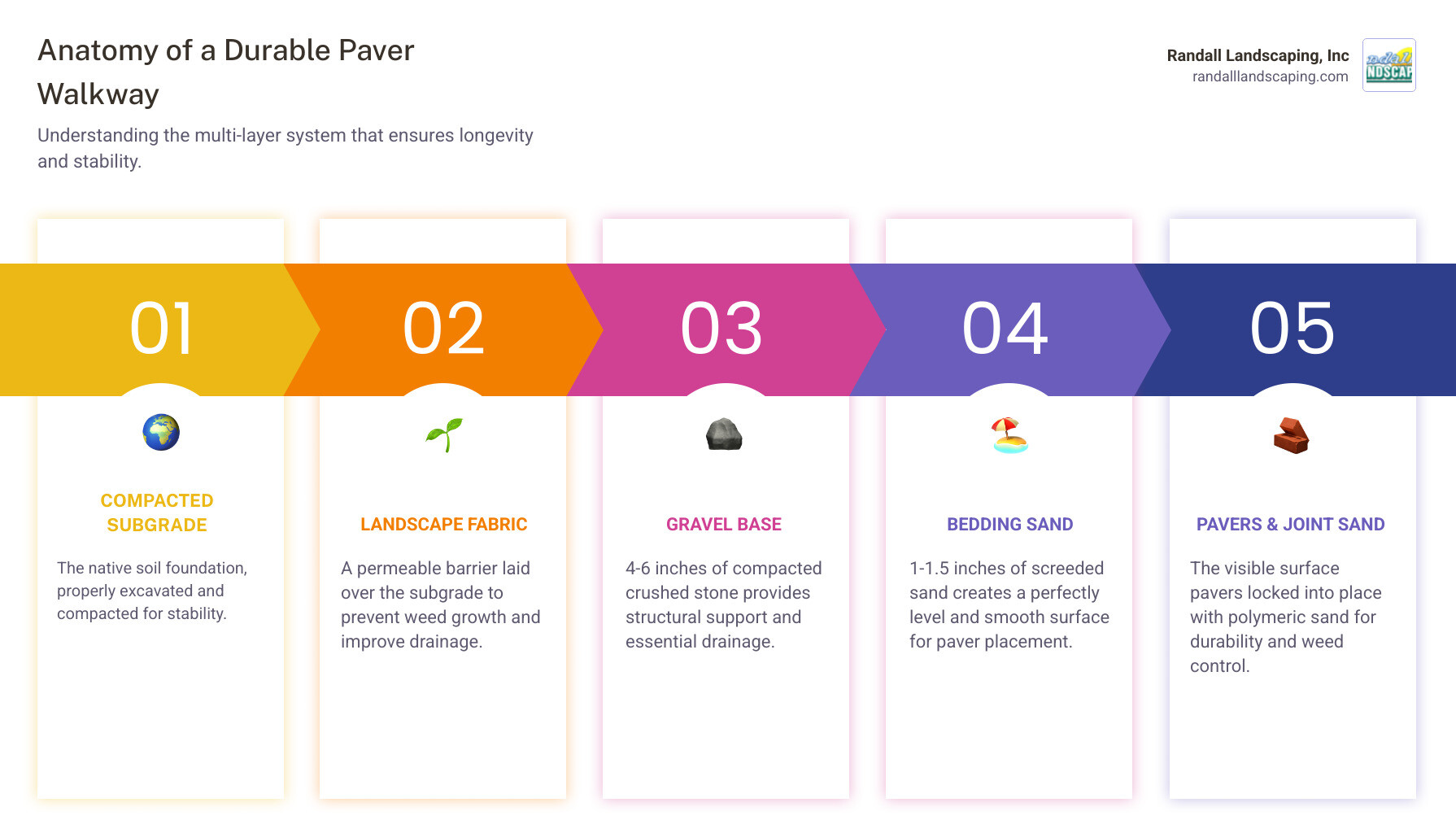
- Install landscape fabric to prevent weed growth
- Add and compact 4-6 inches of gravel base in layers
- Spread 1-1.5 inches of leveling sand and screed smooth
- Lay pavers in your chosen pattern with 1/4-inch joints
- Install edge restraints to prevent shifting
- Fill joints with polymeric sand and activate with water
A paver walkway does more than connect your driveway to your front door. It’s a system of carefully layered materials working together—landscape fabric lines the excavation, compacted gravel provides drainage, sand creates a level bed, and the pavers themselves lock into place with joint sand. The success or failure of your walkway depends largely on how well you compact each layer. Loose dirt or gravel will cause sections to sink over time.
This isn’t a simple weekend project. It’s physically demanding work that requires precision, heavy lifting, and the right tools. But here’s the good news: with proper planning and execution, you can complete a DIY paver walkway in just a few days and save hundreds—even thousands—of dollars compared to hiring a contractor.
Most homeowners can tackle this as an intermediate-level project. The materials are inexpensive and readily available (you can even find quality concrete pavers for around $1 each at stores like Lowe’s). According to internet data, the average cost ranges from $4 to $25 per square foot for materials and installation, but DIY projects using basic pavers fall on the lower end of that spectrum.
I’m Tommy Randall, owner of Randall Landscaping, and I’ve been installing custom walkways and hardscapes throughout Massachusetts and Southern New Hampshire since 2006. After nearly two decades of hands-on experience helping homeowners lay a paver walkway that lasts, I’ve learned which techniques work and which shortcuts lead to costly repairs down the road.
Lay a paver walkway vocab explained:
Planning Your Design and Choosing Materials
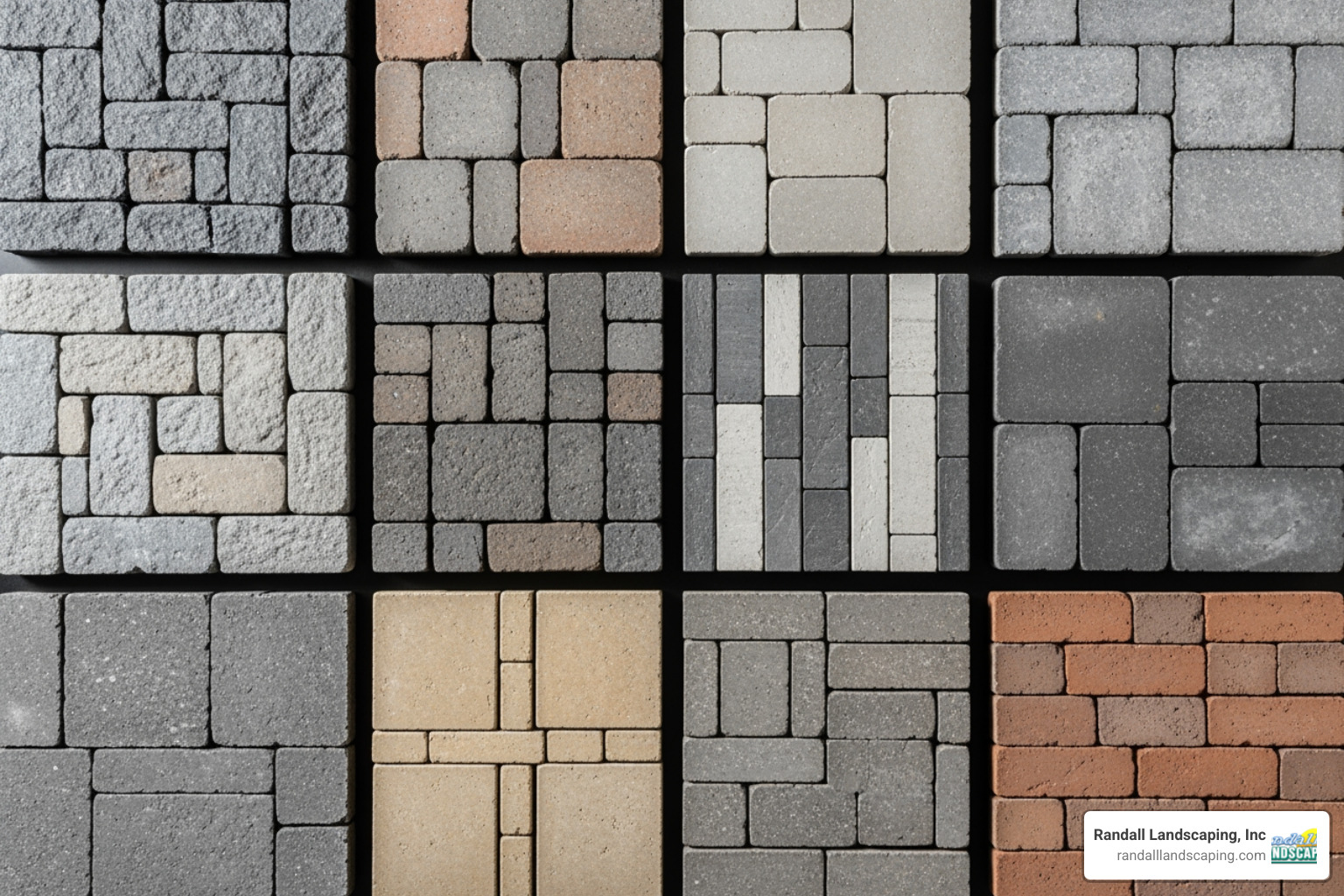
Before we pick up a shovel, we need to talk about the “look.” The beauty of choosing to lay a paver walkway is the sheer variety of styles available. You aren’t just stuck with gray rectangles; you can choose from cobblestone-style, modern sleek textures, or traditional brick-style pavers.
Choosing the Right Pattern
The pattern you choose affects both the aesthetics and the difficulty of the installation.
- Running Bond: This is the classic “staggered” look. It’s the easiest for DIYers because it requires fewer cuts.
- Herringbone: This 45- or 90-degree interlocking pattern is incredibly strong and beautiful but requires a lot of precise cutting at the edges.
- Basketweave: This pattern uses pairs of pavers laid at right angles to each other. It’s great for a vintage, traditional feel.
Material Comparison
When deciding between materials, consider your budget and the architecture of your home. Many of our clients in Andover and North Andover prefer the uniformity of concrete pavers, while those in more rural areas like Boxford often lean toward natural stone.
| Feature | Concrete Pavers | Natural Stone (Flagstone/Bluestone) |
|---|---|---|
| Cost | Budget-friendly ($1-$5 per unit) | Premium pricing |
| Installation | Easier (uniform shapes) | Difficult (irregular shapes) |
| Durability | High (engineered for strength) | High (natural) |
| Maintenance | Low (easy to replace one) | Moderate |
For more specialized information, you can explore our Hardscaping services to see how different materials look in local New England landscapes.
Budgeting for Your Project
How much does it really cost to lay a paver walkway? Based on internet data, average costs for a professional installation typically range from $4 to $35 per square foot. However, for a DIY project, you can find Lowe’s $1 concrete pavers that keep your material costs very low. On the high end, if you choose premium natural stones and complex patterns, your costs could exceed $75 per square foot.
How to Prepare the Ground to Lay a Paver Walkway
Preparation is 90% of the job. If you rush this part, your beautiful new path will look like a roller coaster after the first New Hampshire winter.
Marking and Excavation
Start by using marking spray paint to outline your path. If you want a 36-inch wide walk, mark it at 40 inches to allow room for the edge restraints. Next comes the “back-breaking” part: excavation. You need to dig down about 8 inches deep. This depth allows for 4-6 inches of gravel, 1 inch of sand, and the thickness of the paver itself.
Soil Leveling and Compaction
Once you’ve cleared the dirt, you must level the subgrade (the soil at the bottom). We always recommend using a plate compactor—even on the bare soil. Loose dirt is the enemy of a flat walkway.
Drainage and Slope
In areas like Dracut and Methuen, where we get plenty of rain and snow, drainage is vital. Your walkway must slope away from your house or other structures at a rate of 1/8 to 1/4 inch per foot. This prevents water from pooling and damaging your foundation. For a deeper dive into the technicalities, check out our Walkway installation guide or this This Old House guide to walkways.
Landscape Fabric
Before adding any stone, lay down a layer of woven landscape fabric. This acts as a “bridge,” preventing the heavy gravel base from sinking into the soft soil over time. It also provides an extra layer of weed prevention, which every homeowner appreciates.
Installing the Base and Bedding Layers
Now that the hole is dug and the fabric is down, it’s time to build the foundation.
The Gravel Base
We typically use a ¾-inch processed stone or “road base.” Spread the gravel in 2-inch increments. After each layer, use a plate compactor to tamp it down until it’s rock-hard. Some DIYers prefer limestone screening because it compacts exceptionally well, creating a very stable surface.
The Sand Bed
Once your gravel base is 4-6 inches thick and perfectly sloped, it’s time for the bedding sand. This layer shouldn’t be more than 1 inch thick. Its job is to provide a “seat” for the pavers, not to act as a structural base.
Screeding for a Smooth Surface
To get the sand perfectly flat, we use a technique called “screeding.”
- Place two long poles or pieces of 1-inch electrical conduit on top of the gravel.
- Pour sand between them.
- Use a straight 2×4 board (a screed board) and pull it across the pipes.
- This leaves you with a perfectly level 1-inch bed of sand.
For more tips on what makes a great foundation, see our article on the Base for flagstone walkway.
Step-by-Step Guide to Placing Pavers
With the sand bed ready, you are finally ready to lay a paver walkway! This is the most rewarding part because you finally see the change.
Best Practices to Lay a Paver Walkway
Always start from a straight edge, like a porch or a driveway. Use string lines stretched between stakes to keep your rows perfectly straight.
- Set, Don’t Slide: Place each paver straight down into the sand. If you slide it, you’ll disturb the sand bed and end up with an uneven surface.
- Tapping it In: Use a rubber mallet to gently tap each stone. You want them to be snug against each other.
- Spacing: Most modern pavers have small “nubs” on the sides to create a 1/8 to 1/4-inch joint. If yours don’t, you can use plastic paver spikes as temporary spacers.
How to Lay a Paver Walkway Around Curves
Curves add elegance to a landscape, but they require a bit more skill. To create a curve, you’ll need to cut your pavers.
- Lay your full pavers as far as they will go.
- Use a flexible piece of garden hose or edging to mark the curve across the pavers.
- Use a circular saw or an angle grinder equipped with diamond-tip saw blades.
- Safety First: Always wear eye protection and a dust mask when cutting concrete.
For more advanced layout ideas, our Stone walkway contractors guide 2025 has some great inspiration for complex designs.
Finishing with Edging and Polymeric Sand
Your pavers are down, but if you stopped now, the first person to walk on the edge would send the stones sliding into the grass.
Edge Restraints
Install flexible plastic paver edging along the entire perimeter. Secure it with 10-inch or 12-inch steel spikes every 12 inches. This “locks” the pavers in a frame so they can’t shift outward.
The Magic of Polymeric Sand
Polymeric sand is a special blend of sand and binders. When it gets wet, it hardens like glue, keeping weeds out and pavers in.
- Make sure the pavers are completely dry.
- Pour the sand over the walkway and use a push broom to sweep it into the joints.
- Run the plate compactor over the pavers one last time to vibrate the sand deep into the cracks.
- Sweep off any excess sand from the surface (this is important—excess sand will stain the pavers).
- Use a hose with a misting nozzle to lightly wet the joints. Don’t flood them; you just want to activate the polymers.
For a guide on keeping your pavers looking brand new, see our Sealing driveway pavers guide.
Maintenance and Repairing Uneven Paths
Even the best-laid paths can settle over time, especially with the freeze-thaw cycles we experience in the Merrimack Valley.
Repairing Sinking Pavers
If a section sinks, don’t worry—it’s an easy fix.
- Pry up the sunken pavers with a screwdriver.
- Add a little more leveling paver sand to the area.
- Screed it flat, replace the pavers, and tap them down with your mallet.
- Re-apply polymeric sand.
Accessibility and Safety
If you are building a walkway for wheelchair access, ensure it is at least 36 inches wide (48 inches is better) and has a 60-inch turnaround area. The surface should be as smooth as possible to prevent tripping hazards.
If your walkway is part of a larger sloped yard, you might need to integrate steps or a small wall. Our Complete retaining wall repair guide can help if you encounter issues with existing structures during your build.
Frequently Asked Questions
How long does it take to install a paver walkway?
For an intermediate DIYer, a standard 20-foot walkway usually takes about 2 to 3 days. Day one is for excavation and base prep (the hardest part!), day two is for laying pavers and cutting, and day three is for edging and sand activation.
Do I need a permit to build a walkway?
In most parts of the Merrimack Valley and Southern NH, a simple paver walkway doesn’t require a permit. However, if you live in a historic district (like parts of Salem, NH or Lawrence, MA) or if your walkway is part of a larger construction project, always check with your local building department first.
How do I prevent weeds from growing between pavers?
The best defense is a good offense. Using a high-quality polymeric sand and ensuring your base is properly compacted will stop 95% of weeds. For the stubborn few that remain, a quick spray of weed killer or a vinegar-water solution usually does the trick.
Conclusion
Building your own path is a fantastic way to add value and beauty to your home. Whether you’re in Pelham, Windham, or Georgetown, a well-installed walkway is a feature you’ll enjoy for decades.
However, we know that not everyone has the time or the desire for “back-breaking” labor. If you’d rather spend your weekend relaxing while the pros handle the heavy lifting, Randall Landscaping, Inc is here to help. We pride ourselves on 100% reliability and top-tier quality for all our neighbors in the Merrimack Valley and Southern New Hampshire.
Ready to transform your yard? Check out our Paver Walkway Contractors Ultimate Guide for more professional insights, or contact us today for a consultation!