

Why Installing a Paver Walkway with Steps Transforms Your Property

How to install paver walkway with steps requires careful planning and execution. Here’s the essential process at a glance:
Quick Installation Overview:
- Plan and Design – Measure your path, calculate step dimensions (typically 6-7 inches per riser), and mark the layout.
- Excavate – Dig 6-8 inches deep plus paver thickness for the walkway, creating flat terraces for each step.
- Build the Base – Install landscape fabric, add 4-6 inches of compacted gravel in 2-inch lifts, then add 1 inch of leveling sand.
- Construct Steps – Set riser blocks at each elevation change using landscape adhesive, backfilling and compacting behind them.
- Lay Pavers – Place walkway pavers from a fixed edge, then install tread pavers on each step with a slight overlap.
- Secure and Finish – Install edge restraints, sweep polymeric sand into joints, compact, and activate with water.
A paver walkway with integrated steps does more than connect two points; it creates a safe, beautiful path that handles elevation changes gracefully while boosting curb appeal and property value.
While the project involves excavation, step construction, and paver installation, it’s an achievable DIY project with the right approach. The key lies in proper base preparation—a compacted gravel foundation is 80% of the job’s success.
Integrating steps requires understanding a few critical concepts. Every 6-7 inches of vertical difference typically requires one step. You’ll need to excavate flat terraces for stable risers and ensure proper drainage with a 1/8 to 1/4 inch per foot slope away from your home.
I’m Tommy Randall, owner of Randall Landscaping Business. Since 2006, I’ve been designing and installing hardscapes, including paver walkways and steps, throughout Massachusetts and New Hampshire. I know where DIYers succeed and struggle when learning how to install paver walkway with steps.
This guide walks you through every stage, from planning and material gathering to laying pavers and finishing. You’ll understand not just what to do, but why each step is crucial for long-term durability.
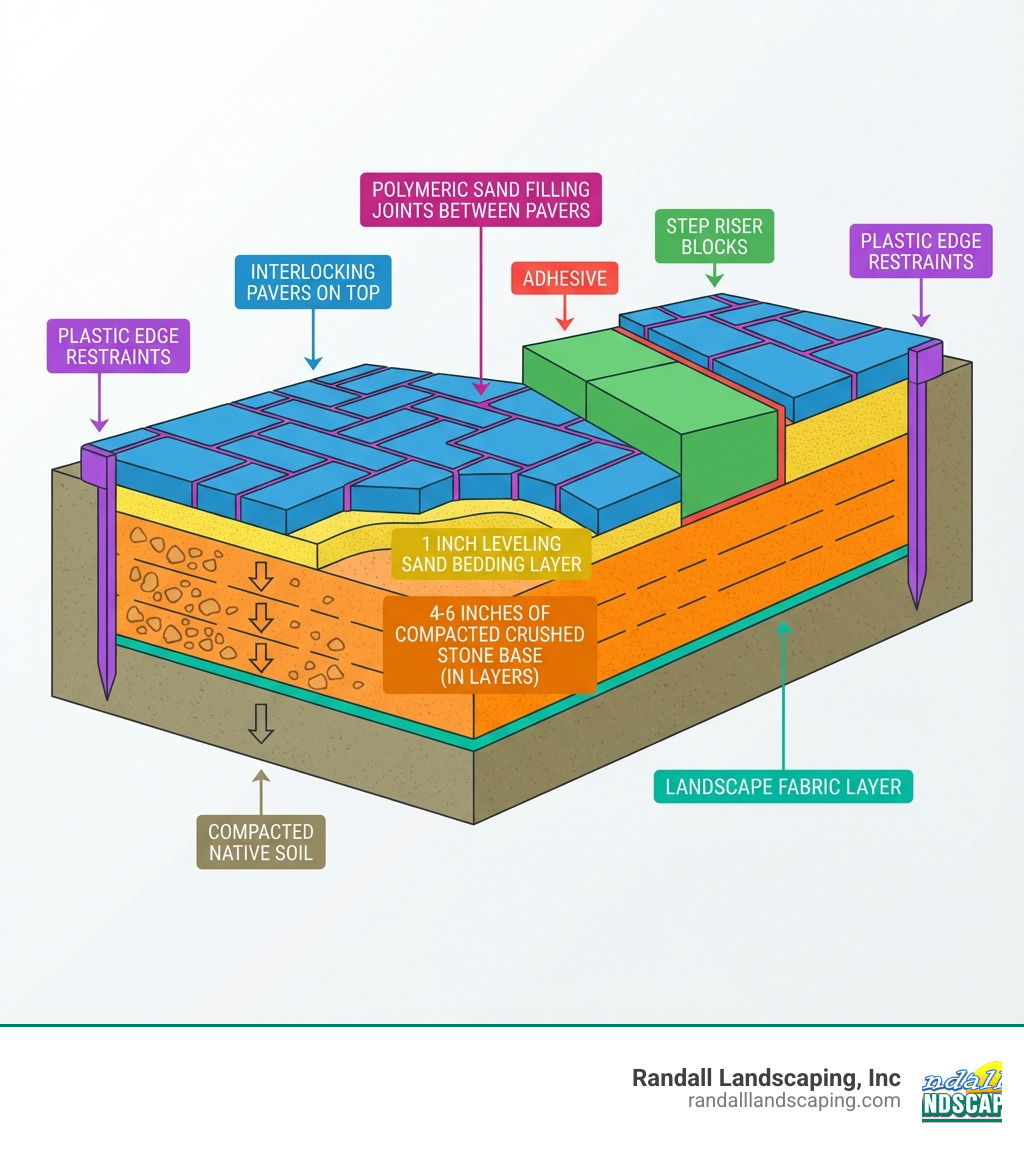
Glossary for how to install paver walkway with steps:
Step 1: Planning, Design, and Gathering Materials
A solid plan is the foundation of a successful project. The planning and design phase for how to install paver walkway with steps ensures your walkway is both beautiful and functional, covering everything from the path’s flow to step dimensions and materials.
Designing Your Walkway and Steps
First, map the path layout using a garden hose or marking paint to visualize the flow. Gentle curves often require fewer difficult cuts than sharp angles. Next, tackle the elevation changes by measuring the total rise (vertical height) and run (horizontal distance) with a string line and level. As a rule of thumb, every 6-7 inches of vertical rise requires one step riser. For a 13-inch rise, you would plan for two steps.
Calculate individual step dimensions, aiming for a consistent riser height (vertical part) and tread depth (horizontal part) for safety. A common riser height is around 6.5 inches. Also, ensure proper drainage by planning a minimum slope of 1-2% (about 1/8 inch per foot) away from your home and other structures.
For aesthetics, consider paver patterns like Herringbone, Running Bond, or Pinwheel to complement your home’s style. Once your design is final, make a critical safety check: call 811. Before any digging in Massachusetts or New Hampshire, call 811 to have underground utility lines marked to prevent accidents and costly repairs.
For more detailed planning and expert guidance on your landscape design, explore More info about our Landscape Design Installation services.
Essential Tools and Materials
Having the right tools and materials is paramount to a smooth installation. Here’s a comprehensive list of what you’ll need:
Tools:
- Shovel: For excavation and moving materials.
- Wheelbarrow: To transport pavers, gravel, and sand.
- Tape measure: For precise measurements.
- Level (4-foot straight board): To ensure everything is perfectly level and sloped correctly.
- Stakes and string line: For marking out the path and maintaining straight lines.
- Rubber mallet: To tap pavers into place without damaging them.
- Hand tamper: For compacting smaller areas.
- Plate compactor (rental): Essential for thoroughly compacting the base layers.
- Circular saw with diamond blade: For making straight cuts on pavers.
- Safety glasses and gloves: Always prioritize personal safety.
- Broom: For sweeping sand into joints.
- Garden hose with spray nozzle: For activating polymeric sand and cleanup.
- Utility knife: For cutting landscape fabric.
- Leaf blower (optional): For removing excess polymeric sand.
Materials:
- Pavers: Choose your desired style, color, and size. Basic concrete pavers can be inexpensive, sometimes as low as $1-2 each.
- Step blocks or retaining wall blocks: To form the risers of your steps.
- Crushed stone/gravel base (3/4 minus aggregate): The foundation for stability and drainage.
- Leveling paver sand: A fine sand for the bedding layer beneath pavers.
- Landscape fabric (woven): To separate the base from the soil and suppress weeds.
- Plastic edge restraints: To hold pavers firmly in place.
- Landscape block adhesive: To secure step blocks together.
- Polymeric sand: A special sand that hardens when wet, locking pavers in place and preventing weeds.
When purchasing materials, we recommend adding about 10% extra for pavers to account for cuts, mistakes, or future repairs.
Step 2: Excavation and Base Preparation
This is the most critical part of how to install paver walkway with steps. A well-prepared base is 80% of the job, preventing the walkway from settling, shifting, or heaving. This foundation must withstand foot traffic and harsh New England weather.
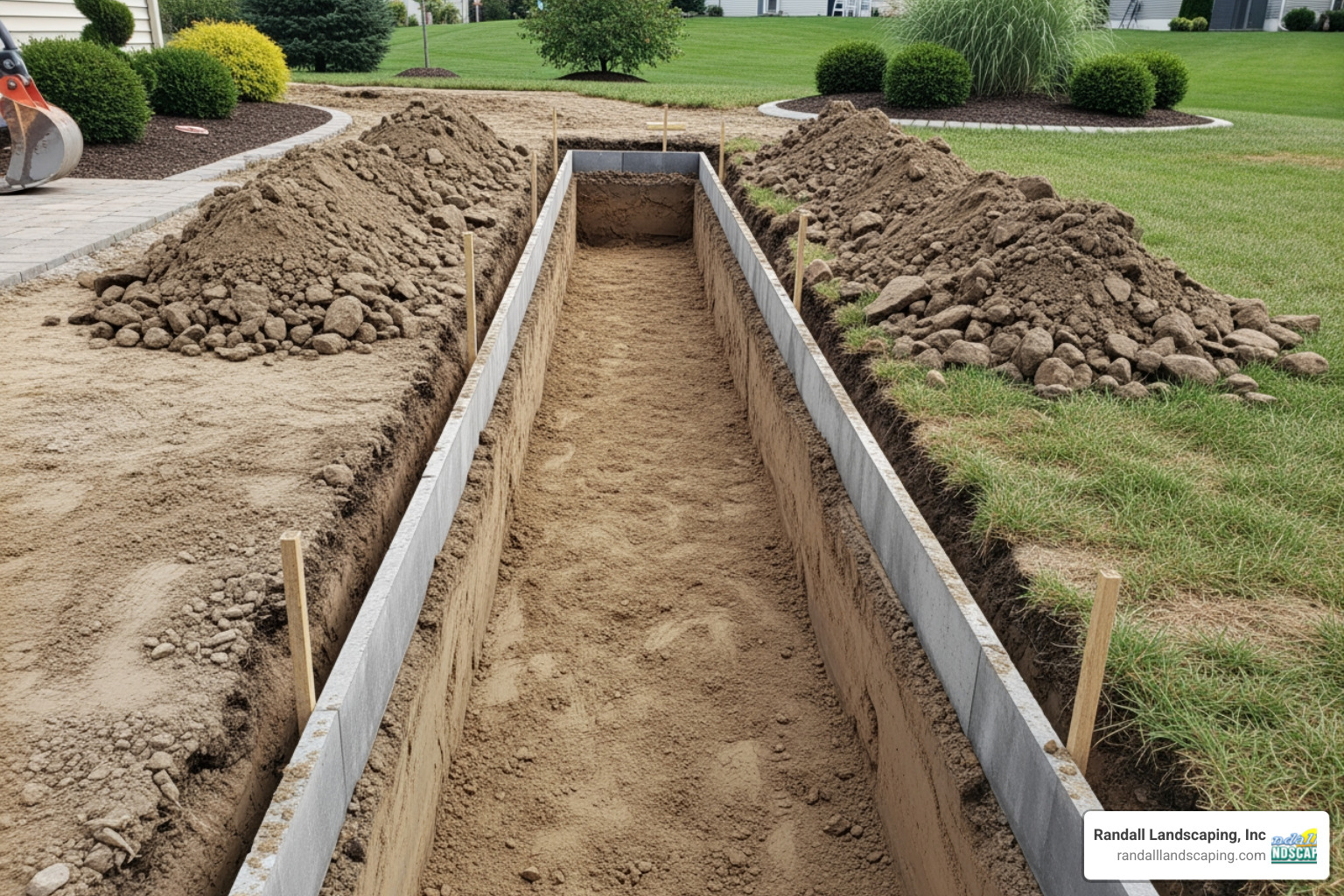
Proper Excavation for the Walkway and Steps
With utilities marked, use marking paint and string lines to outline your walkway. The excavation depth is crucial: dig down 6-8 inches, plus the thickness of your paver. For a 2-inch paver, this means an 8-10 inch total depth. For each step, excavate a flat terrace at least two paver lengths deep to create a stable base for the riser.
Remove all soil and sod, keeping the trench edges straight. Ensure a consistent depth, then level and compact the subgrade (the native soil at the bottom) with a hand tamper or plate compactor to prevent future settling.
If you’re unsure about tackling excavation, our team at Randall Landscaping offers expert services. You can Explore our Walkway Installation Services to see how we can help.
Creating a Stable, Compacted Base
With the subgrade compacted, it’s time to build the supporting layers.
- Laying Landscape Fabric: Lay woven landscape fabric across the excavated area, overlapping seams by 4-6 inches. This prevents the gravel base from mixing with the soil and acts as a weed barrier.
- Adding the Gravel Base: Spread 4-6 inches of crushed stone over the fabric. For maximum density, add the gravel in 2-inch lifts (layers), compacting each lift thoroughly with a plate compactor before adding the next. This rock-hard layer should follow your planned drainage slope.
- Creating the Sand Bedding Layer: Prepare the 1-inch sand bedding layer, which cushions the pavers. Lay two parallel 1/2-inch PVC pipes on the gravel base. Spread leveling sand over them, then use a straight 2×4 board to “screed” the sand, dragging it along the pipes to create a perfectly smooth surface. Carefully remove the pipes, fill the voids with sand, and avoid walking on the prepared bed.
Step 3: How to Install Paver Walkway with Steps
With the base prepared, it’s time to lay the pavers and build the steps. This is where artistry meets engineering in how to install paver walkway with steps.
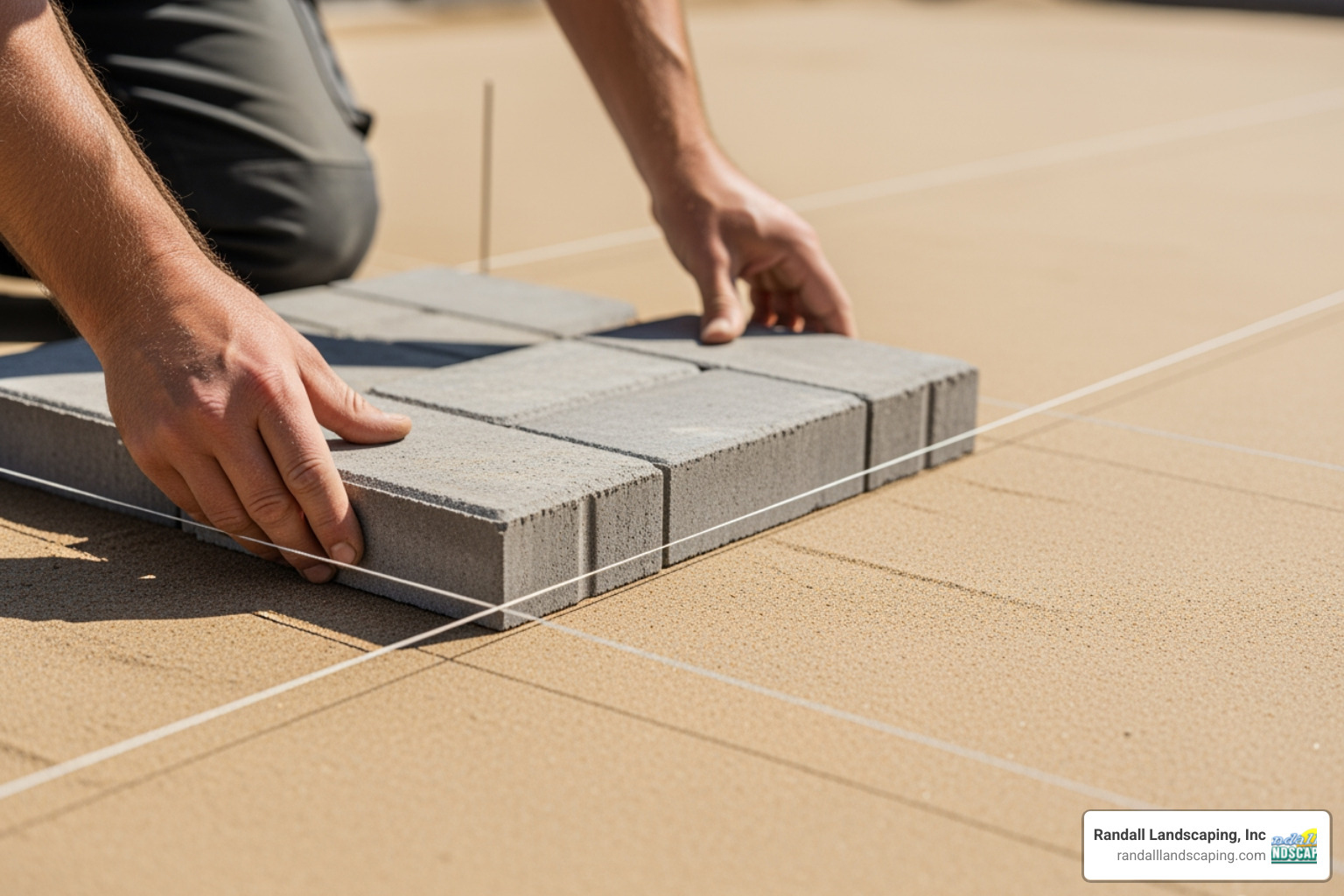
Laying and Leveling the Walkway Pavers
Start laying pavers from a fixed edge, like a house or driveway, using string lines to maintain straightness. Gently set pavers straight down onto the sand bed—do not slide them. Leave a small, consistent gap (about 1/8 inch) between pavers for jointing sand. Work from pavers you’ve already laid to avoid disturbing the sand bed.
Check for levelness with a long level. If a paver is too high, tap it with a rubber mallet. If it’s too low, lift it and add a small amount of sand underneath. For edges and curves, cut pavers to fit using a circular saw with a diamond blade, always wearing safety glasses.
If you’re looking for professional assistance, our team can help. Check out our Professional Paver Walkway Installation Services.
How to Install Paver Walkway with Steps: Building and Integration
Seamlessly integrating steps is a key part of the project. Now we’ll build the risers on the terraces we excavated.
- Building Step Risers: Construct risers with concrete or retaining wall blocks on the compacted gravel base. Use landscape block adhesive between blocks and courses for a strong bond. Stagger the joints for added strength and ensure each course is perfectly level and plumb.
- Backfilling and Compacting: As you build the risers, backfill the area behind them with crushed stone and compact it thoroughly. This supports the riser and forms the base for the tread pavers.
- Laying Tread Pavers: Prepare the sand bedding and lay the tread pavers. Ensure they are level, have a slight forward slope for drainage, and a slight overlap over the riser below for safety and aesthetics. Set them firmly with a rubber mallet.
Repeat this process for each step, maintaining consistent riser heights and tread depths. For larger elevation changes, Our Retaining Walls services can help with larger elevation changes.
Securing the Edges
To prevent pavers from shifting due to freeze-thaw cycles, securing the edges is a must. Install hard plastic edge restraints along the walkway’s perimeter by digging a shallow trench, setting the restraint snugly against the pavers, and securing it with 8-10 inch landscaping spikes hammered into the base. Backfill soil against the outside of the edging to hide it for a clean finish. For more details, you can find information on plastic edge restraints at home improvement stores.
Step 4: Finishing Touches and Long-Term Maintenance
The final touches will lock everything in place and ensure your how to install paver walkway with steps project stands the test of time.
How to Install Paver Walkway with Steps: Jointing and Sealing
This stage is critical for the stability of your paver system. Polymeric sand acts as a binder, preventing weeds and sand washout.
- Ensure Pavers Are Dry: Pavers must be completely dry to prevent a hazy finish on the surface.
- Spread Polymeric Sand: Evenly spread the sand over the entire walkway and steps.
- Sweep Sand into Joints: Use a stiff broom to sweep the sand into every joint until they are completely filled.
- Compact Pavers Again: Run a plate compactor over the surface to vibrate the sand deep into the joints and settle the pavers. Sweep more sand into any joints that have settled.
- Blow Excess Sand Off Surfaces: This is a crucial step. Use a leaf blower to remove all excess sand from paver surfaces to prevent a permanent white haze.
- Mist with Water: Lightly mist the surface with a garden hose on a fine spray setting to activate the sand without washing it out. Follow the product’s instructions for watering.
- Curing Time: Allow the sand to cure for 24-48 hours, keeping the area free from traffic and moisture.
Integrating Landscape Lighting
A paver walkway with steps is safer and more impactful with integrated lighting. During base preparation, you can lay conduit beneath the pavers to run low-voltage wires later. Step lights can be installed into risers for safety, while path lights improve ambiance. Plan for lighting early to avoid disrupting the finished project. For more ideas and professional installation, Learn about our Landscape Lighting options.
Post-Installation Care and Maintenance
To keep your new walkway looking fantastic, follow these maintenance tips:
- Regular Sweeping: Sweep away dirt and debris to prevent organic matter from accumulating in joints.
- Cleaning Spills Immediately: Clean spills promptly to prevent staining.
- Topping Off Joint Sand: Annually inspect joints and top off any eroded areas with fresh polymeric sand.
- Sealing the Pavers: Seal your pavers every 3-5 years to protect them from UV damage, improve color, and resist stains.
- Repairing Settled Pavers: If a paver settles, carefully remove it, adjust the sand bedding underneath, reset it, and reapply polymeric sand to the joints.
For comprehensive care, We offer comprehensive Landscape Maintenance Services throughout Massachusetts and Southern New Hampshire.
Frequently Asked Questions
What is the most common mistake when installing a paver walkway?
The most common mistake is improper base preparation. Rushing the excavation and compaction leads to an uncompacted or shallow base, which causes sinking, shifting, and an uneven surface. The base is 80% of the job. Properly excavating and compacting 4-6 inches of gravel in 2-inch lifts is essential for a long-lasting result.
How do you ensure the steps are safe and stable?
Step safety and stability come from these key practices:
- Solid Base: Build each step riser on its own solid, compacted gravel base.
- Landscape Adhesive: Use strong adhesive to bond riser blocks together and stagger the joints for integrity.
- Consistent Dimensions: Maintain consistent riser heights and tread depths to prevent tripping hazards.
- Proper Overlap: Ensure tread pavers have a slight, consistent overlap over the riser below.
- Backfilling: Thoroughly backfill and compact crushed stone behind the risers for robust support.
What is the average cost to install a paver walkway with steps?
Costs vary based on project size, paver type, terrain, and whether it’s a DIY or professional job.
For a DIY project, material costs are manageable. Basic concrete pavers can cost anywhere from $1 to $20+ per square foot, making it a low-cost endeavor compared to professional installation.
For professional installation, costs are higher due to labor and equipment. Industry averages typically range from $20 to $50+ per square foot for a paver walkway, with steps adding to the cost. Please note that these are average costs based on internet data and not actual costs for Randall Landscaping. We recommend contacting us directly for a personalized quote for your project in Massachusetts or New Hampshire.
Conclusion: Your New Path Awaits
Learning how to install paver walkway with steps is a rewarding project that combines practical skills with creative design. The result is a durable, beautiful, and functional addition to your home that improves curb appeal, increases property value, and provides the satisfaction of a DIY job well done. A paver walkway with integrated steps transforms an ordinary landscape into an extraordinary one.
While the DIY route offers cost savings, professional expertise is invaluable for a flawless installation that withstands time and weather. The Randall Landscaping, Inc. team has provided expert hardscaping and walkway construction throughout Massachusetts and Southern New Hampshire for nearly two decades, focusing on quality work and 100% reliability.
If you’re ready to transform your property with a stunning paver walkway and steps but prefer to leave the heavy lifting to the experts, we’re here to help. For a professional consultation, explore our Paver Walkway Contractors Ultimate Guide or contact us today to discuss your vision. Your new path awaits!