Can You Really Install Sod Over Existing Lawn?
Installing sod over existing lawn is one of the most common shortcuts homeowners consider — and one of the most common reasons new sod fails.
Here’s the quick answer:
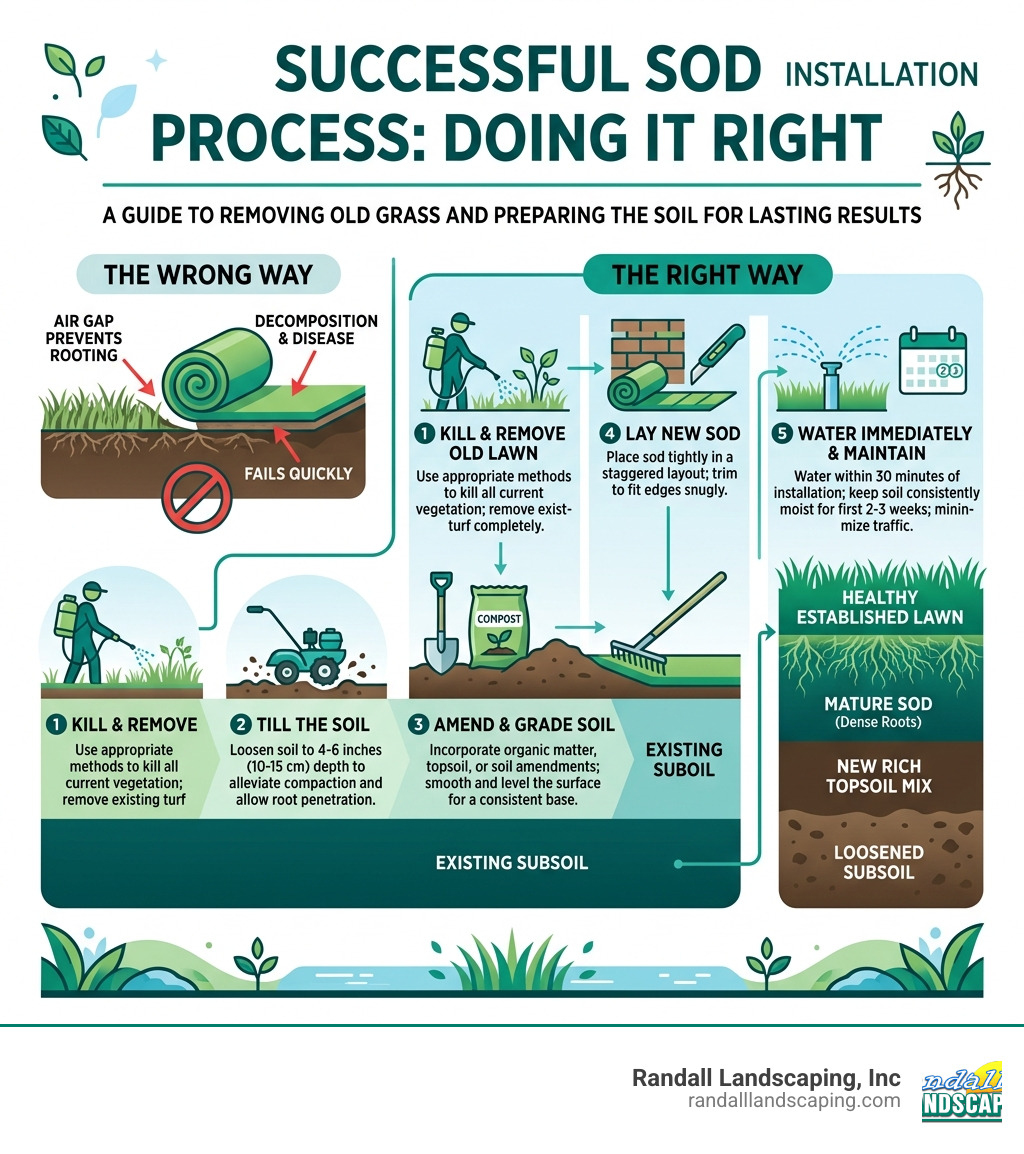
No, you should not lay sod directly over existing grass. New sod roots need direct contact with bare soil to establish. Laying sod over old turf creates an air gap that prevents rooting, causes decomposition, and leads to a dead lawn within weeks.
The right way to install new sod:
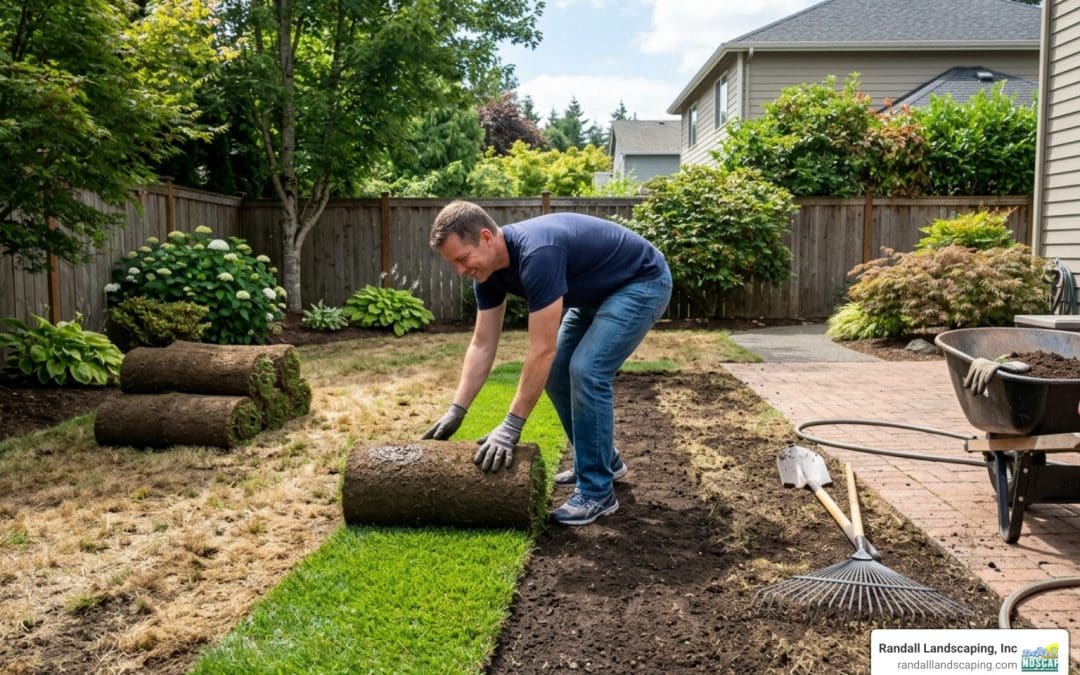
- Kill and fully remove the existing grass
- Till the soil to a depth of 4-6 inches
- Amend and grade the soil with compost and topsoil
- Lay sod in a staggered brick pattern
- Water immediately and keep moist for the first two weeks
It’s more work upfront — but it’s the only approach that actually lasts.
As a busy homeowner, it’s tempting to skip steps and hope for the best. But the reality is: one missed step in sod installation can cost you the entire project. As one landscaping expert put it, laying sod over existing grass is like slapping paint on a rusted engine — it might look fine for a moment, but the underlying problem will surface fast.
I’m Tommy Randall, owner of Randall Landscaping, Inc., and with nearly two decades of experience helping Southern NH and Massachusetts homeowners install sod over existing lawn the right way, I’ve seen what works — and what fails. Let’s walk you through everything you need to know.
Handy install sod over existing lawn terms:
Why You Shouldn’t Install Sod Over Existing Lawn
We get it. You’re looking at your yard in Andover or Dracut, and the idea of digging up every square inch of the old turf feels like a Herculean task. You might think, “Why not just throw the new green stuff on top of the old green stuff?”
Unfortunately, sodding lawn isn’t like laying a new carpet over an old one. In nature, roots need a clear, unobstructed path to the nutrients and moisture found deep in the earth. When you try to install sod over existing lawn without removal, you’re essentially placing a barrier between the new grass and its life support system.
According to Landscape Management, you should never “double up” on sod. The existing grass acts like a sponge initially, but as it dies off, it creates an air gap. This gap prevents the new roots from reaching the soil. Without that “anchor,” the new sod will quickly dry out, turn a crispy brown, and eventually die.
Common Failures When You Install Sod Over Existing Lawn
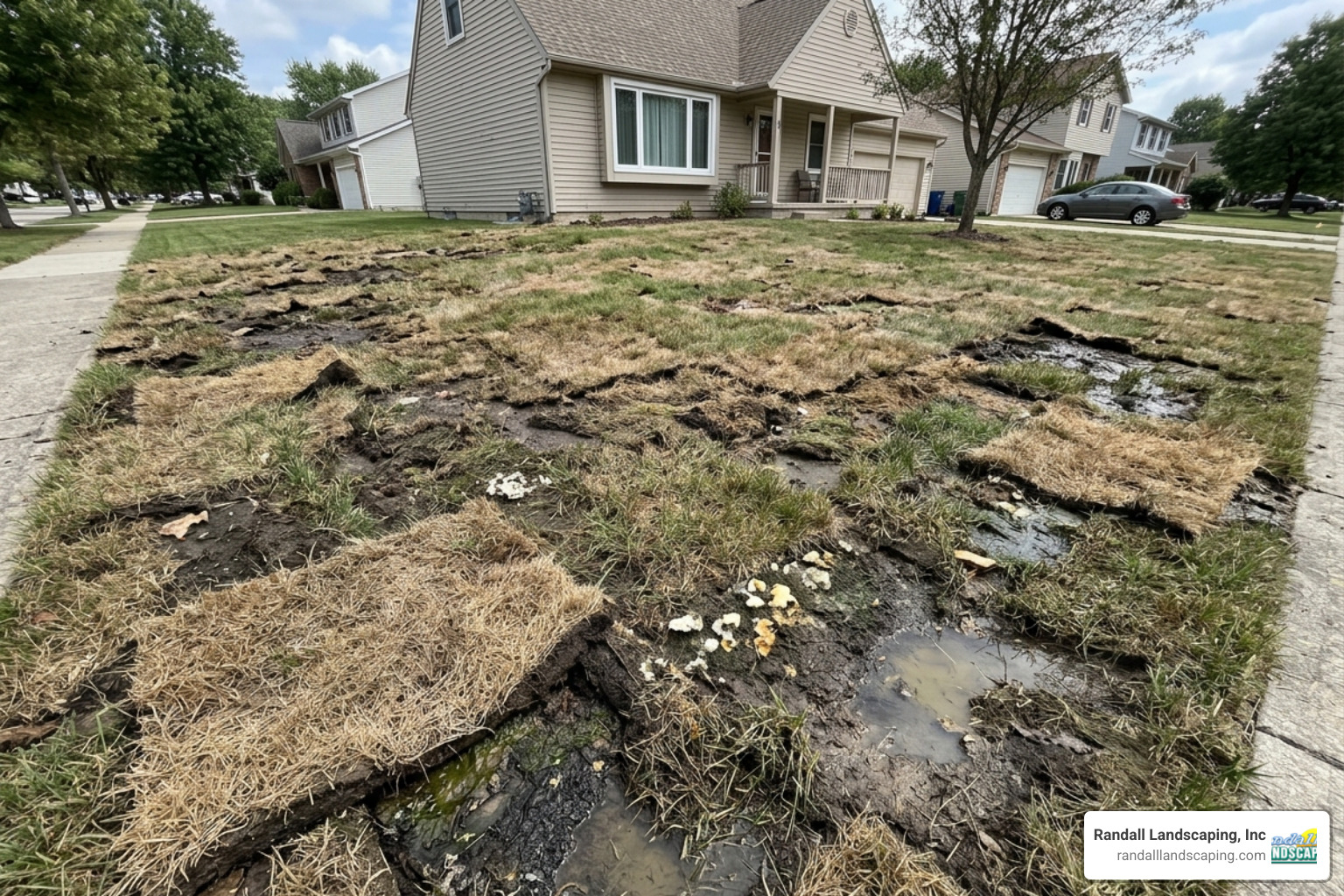
If the lack of root penetration doesn’t kill your new investment, the chemistry of decay will. When you smother an old lawn with new sod, the old vegetation begins to rot. This process is known as anaerobic decomposition.
As the old grass breaks down without oxygen, it releases toxic gases like methane. These gases are trapped under the new layer of sod, effectively suffocating the young, tender roots. Additionally, this layer of rotting organic matter can become slimy and water-repellent, leading to major drainage issues. Instead of the water soaking into the ground to feed the roots, it sits in that middle layer, inviting fungus and disease.
As noted by GardenerBible, even if a few roots manage to poke through, the surface will be incredibly uneven. As the old grass decomposes at different rates, your lawn will develop lumps, dips, and soft spots that make it a nightmare to mow and a hazard for kids running around the yard.
Can You Install Sod Over Existing Lawn Sprouts or Seed?
We often hear from homeowners in the Merrimack Valley who tried to seed their yard, saw a few sprouts, and then decided they wanted the “instant” look of sod instead. Is it okay to lay sod over young grass or a recently seeded area?
Technically, very young sprouts and straw are less of a barrier than a thick, established mat of turf. Some believe they will simply decompose and provide nutrients. However, we still advise against it. Even thin layers of straw or young grass can interfere with that crucial soil-to-root contact.
Furthermore, you have to consider the elevation. Sod isn’t just grass; it comes with about an inch of its own soil. If you don’t remove the existing material, you’ll likely end up with a lawn that sits significantly higher than your driveways, walkways, and patio edges. This creates a tripping hazard and looks unprofessional. For a truly real grass installation near me, starting with a clean slate is non-negotiable.
Recommended Process for Removing Old Grass
To get that lush, golf-course look in Salem or Windham, you have to do the “dirty work” first. Removing the old grass is the most labor-intensive part of the project, but it’s the foundation of your success. There are three main ways to tackle this:
- Motorized Sod Cutter: This is the gold standard. It’s a heavy-duty machine that slices under the grass roots, allowing you to roll up the old turf like a rug.
- Herbicide (Glyphosate): You can spray the lawn with a non-selective herbicide. This kills everything to the root, but you still have to rake away the dead debris and wait for the chemicals to dissipate.
- Manual Removal: For very small patches, you can use a grape hoe or a spade. Be prepared for a workout!
For most professional sod installation near me inquiries, we recommend the sod cutter for its efficiency and clean results.
Comparing Grass Removal Methods
| Method | Speed | Labor Intensity | Wait Time | Best For |
|---|---|---|---|---|
| Sod Cutter | Very Fast | Moderate (Machine heavy) | None | Large lawns, instant prep |
| Herbicide | Slow | Low | 2-3 Weeks | Weed-heavy lawns |
| Manual | Very Slow | Extremely High | None | Small repairs, tight corners |
| Solarization | Extremely Slow | Low | 2-3 Months | Organic-only projects |
While herbicide is easier on the back, it requires patience. You typically need to wait 10 to 14 days for the grass to fully die, and sometimes a second application is needed for stubborn weeds. According to The Spruce, a motorized sod cutter is the fastest way to get to bare soil, usually taking only 2-3 hours for a 1,000 square foot area.
Estimated Costs for Removal and Installation
Budgeting for a new lawn can be tricky. You aren’t just paying for the grass; you’re paying for the prep, the soil, and the labor.
Please note: The following cost ranges are average estimates based on internet data and do not reflect actual pricing for Randall Landscaping, Inc. For a precise quote, please contact us directly.
- Sod Cost: Expect to pay between $0.35 and $0.85 per square foot for the sod itself. For high-end, specialty blends, this can climb as high as $2.55 per square foot.
- Removal and Hauling: Professional removal typically costs between $0.50 and $1.50 per square foot. However, if the site has difficult access or heavy debris, costs can reach $4.50 per square foot.
- Equipment Rental: If you’re going the DIY route, a motorized sod cutter rental in our region usually runs between $80 and $150 per day.
For a standard 1,000 square foot lawn, you might see total project costs (materials and labor) ranging from $1,500 to over $4,500 depending on the complexity of the site. You can find more details on our Sod Installation Price page.
Essential Soil Preparation and Topsoil Requirements
Once the old grass is gone, you’re left with bare dirt—but you aren’t ready for sod just yet. Most soil in the Merrimack Valley is either too sandy or too compacted from years of foot traffic.
We recommend tilling the soil to a depth of 4-6 inches. This breaks up compaction and allows oxygen to reach the future root zone. This is also the perfect time to perform a soil test. Turf grass thrives in a pH range of 6.0 to 7.0. If your soil is too acidic (common in our area due to pine needles and oak leaves), you’ll need to add lime. If it’s too alkaline, sulfur is the answer.
For a successful new lawn installation, the soil needs to be “fluffy” enough for roots to penetrate but firm enough to support the weight of the sod.
Adding Topsoil and Amendments
Rarely is the existing “fill” soil under an old lawn good enough for new sod. We suggest adding a layer of quality topsoil and organic amendments.
- Compost: Adding 2-3 inches of high-quality compost (about 2-3 cubic yards per 1,000 sq ft) provides a slow-release nutrient boost.
- Topsoil: You should aim for a final depth of 4-6 inches of quality topsoil. If your yard is currently mostly sand or rocks, you’ll need to bring in fresh loam.
- Starter Fertilizer: Use a fertilizer high in phosphorus (the middle number on the bag, like an 18-24-12 blend). Phosphorus is essential for root development.
Properly amending the soil ensures that when you search for grass sod installation near me, the results you get stay green for years, not just weeks.
Grading and Leveling for Success
Before the first roll of sod touches the ground, your yard needs to be as smooth as a pool table. We use landscape rakes to remove any lingering rocks, roots, or clumps of dirt.
Grading is critical for drainage. You want the ground to slope away from your home’s foundation at a rate of about 1-2%. If you have low spots, water will pool there and drown your new sod. Once the yard is graded, we recommend a light rolling with a water-filled roller. This settles the soil just enough to reveal any hidden dips without compacting it so much that roots can’t grow. This meticulous prep is what sets our lawn installations apart.
Step-by-Step Guide to Successful Sod Installation
The big day has arrived! Your sod should be delivered and installed on the same day. Sod is a living, breathing plant that is “in shock” after being cut away from its home at the farm. In the heat of a New Hampshire summer, sod can begin to ferment and die in the middle of a pallet in as little as 24 hours.
When we how to plant a lawn from sod, we follow these steps:
- Start with a Straight Edge: Lay the first row along a straight line, like a driveway or a fence.
- The Brick Pattern: Stagger the seams of the second row so they don’t align with the first row—just like laying bricks. This prevents water from creating “channels” and eroding the soil underneath.
- Tight Seams: Butt the edges of the sod tightly against each other. Do not overlap them, and do not leave gaps. Gaps will dry out and turn brown.
- Cutting to Fit: Use a sharp serrated knife, a machete, or even an old linoleum knife to trim pieces around irrigation heads, trees, and curved flower beds.
- Rolling: Once the sod is down, roll the entire area with a water roller. This pushes the roots into the soil and eliminates air pockets.
Immediate Watering and Establishment
If you remember only one thing from this guide, let it be this: Water the sod within 30 minutes of laying the first piece. Don’t wait until the whole yard is finished.
For the first week, your goal is to keep the sod and the soil underneath it consistently moist. We recommend watering 2-3 times a day in short bursts. A good way to check is the “tuna can test”: place an empty tuna can in the yard; when it’s full, you’ve applied about an inch of water.
Around day 10, perform the “tug test.” Gently try to lift a corner of the sod. If you feel resistance, congratulations! The roots are beginning to anchor into your topsoil.
Post-Installation Maintenance
Once the sod is rooted (usually 2-3 weeks), you can begin to transition to a normal maintenance schedule.
- Mowing: Wait until the grass is about 3-4 inches tall. Set your mower to its highest setting—you never want to remove more than one-third of the grass blade at once. Ensure your blades are razor-sharp to avoid tearing the new plants.
- Traffic: Keep the kids and the dogs off the new lawn for at least 3 weeks. Heavy foot traffic can create ruts in the soft, wet soil and tear the young roots.
- Fertilizing: Your starter fertilizer will last about a month. After that, follow a standard seasonal fertilization program to keep the lawn thick and healthy. Check out our grass sod installation guide 2025 for more long-term care tips.
Frequently Asked Questions about Sodding
When is the best time of year to lay sod?
In the Merrimack Valley and Southern NH, Fall is the absolute best time. The air is cooler, which reduces stress on the grass, but the soil is still warm enough to encourage rapid root growth. Spring is the second-best option, provided you can beat the summer heat. We generally advise against installing sod in the middle of July or August unless you have a high-end automatic irrigation system and a very flexible schedule for watering.
What tools are essential for removing grass and laying sod?
If you’re tackling this as a DIY project, you’ll need:
- A motorized sod cutter (rental)
- A rototiller (for soil prep)
- A landscape rake (for leveling)
- A sharp serrated knife or machete
- A water-filled lawn roller
- Plenty of garden hoses and high-quality sprinklers
As This Old House suggests, having a few extra pairs of hands is also essential—sod is heavy, and the clock is ticking the moment it arrives!
Is it better to DIY or hire professionals?
This depends on your budget and your physical stamina. Installing sod over existing lawn (the right way, by removing the old grass) is back-breaking work. One pallet of sod can weigh over 2,000 pounds!
Hiring a professional sod installation team like ours at Randall Landscaping ensures the job is done right the first time. We have the heavy machinery to handle the removal and grading quickly, and our relationships with local sod farms mean you get the freshest turf possible. Plus, we offer a reliability guarantee that’s hard to beat.
Conclusion
A beautiful, lush lawn is the crown jewel of any home in North Andover, Boxford, or Plaistow. While the temptation to take a shortcut and install sod over existing lawn is strong, we hope this guide has shown you why the “long way” is actually the only way to get lasting results.
Proper preparation—killing the old grass, tilling the soil, and adding quality amendments—is 90% of the battle. When you invest in your soil, your sod will reward you with deep roots and a vibrant green color that lasts for years.
At Randall Landscaping, Inc., we pride ourselves on quality work and 100% reliability. Whether you need a full new lawn installation or just some expert advice on your next project in the Merrimack Valley or Southern New Hampshire, we’re here to help. Ready to transform your yard? Give us a call, and let’s get that “green carpet” started the right way!