
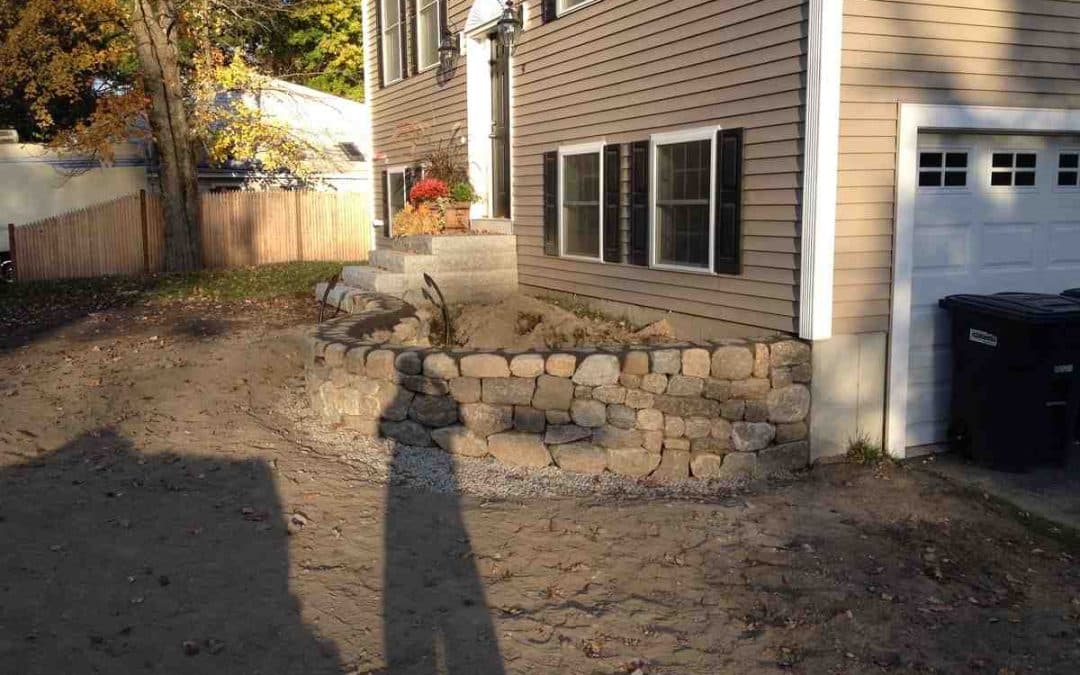
Why a Retaining Wall is Your Front Yard’s Best Friend
A front yard retaining wall is more than just a structural element; it’s a powerful tool to transform your home’s exterior. These versatile features offer both practical solutions and significant aesthetic upgrades, helping your property stand out. Whether you’re dealing with a challenging slope or simply looking to boost curb appeal, a well-designed retaining wall can redefine your landscape.
Here’s why a front yard retaining wall can be a game-changer for your home:
- Improves Curb Appeal: It creates visual interest, defines spaces, and adds architectural beauty, making a strong first impression.
- Manages Slopes & Erosion: It prevents soil from washing away, stabilizing your yard and protecting your property.
- Improves Drainage: It directs water flow effectively, preventing runoff issues and protecting your home’s foundation.
- Creates Usable Space: It transforms sloped, unusable areas into flat, functional terraces for gardens, pathways, or outdoor living.
- Increases Property Value: It’s a key landscaping feature that significantly boosts your home’s market appeal and resale value.
I’m Tommy Randall, owner of Randall Landscaping. With nearly two decades of experience, our team specializes in designing and installing beautiful, functional front yard retaining walls that transform outdoor spaces in the Merrimack Valley and Southern New Hampshire.
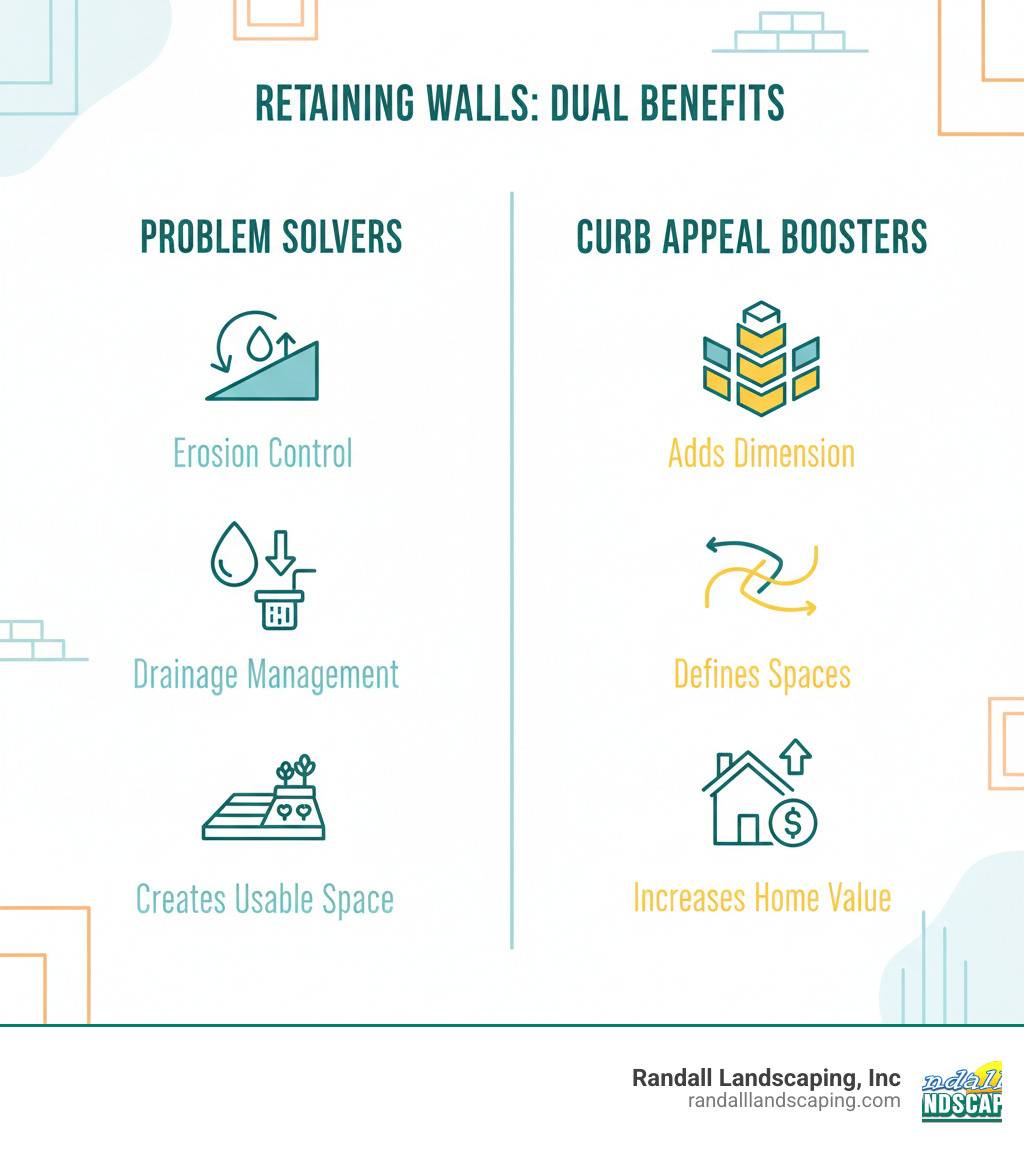
A front yard retaining wall serves as both a problem-solver and an aesthetic improver. First and foremost, it’s a champion of curb appeal. A well-designed wall adds dimension and architectural interest, making your home instantly more inviting. As Shari Leubner of Cornerstone Mortgage notes, “Curb appeal is the first thing that’s going to attract a buyer in any price range,” and landscaping is a huge part of that first impression.
Beyond looks, these walls are incredibly functional. For sloped yards, their primary role is erosion control. A retaining wall acts as a sturdy barrier, preventing valuable topsoil from washing away during heavy New England rains. This is crucial in areas with clay/loam soils that are prone to erosion.
Another key benefit is improved drainage. A properly built wall incorporates drainage systems to direct water away safely, protecting both the wall and your home’s foundation from damage. Finally, retaining walls are masters of space creation. They can turn a steep, unusable incline into flat, functional areas for terraced gardens, landscape beds, or even a front patio. As a core hardscaping element, they add structure and purpose to your outdoor space.
A professionally installed landscape, including a front yard retaining wall, can offer an impressive average return on investment of 100% to 200%, making it a smart investment in your home’s value.
Choosing the Right Material for Your Wall
When planning your front yard retaining wall, choosing the right material is a key decision that impacts aesthetics, durability, and cost. At Randall Landscaping, we help you select high-quality materials that will look amazing and withstand our New England weather.
Here’s a quick look at some popular retaining wall materials:
| Material | Aesthetics | Durability | Average Cost Per Sq. Ft. (Installed) | Maintenance Level |
|---|---|---|---|---|
| Natural Stone | Rustic, neat, timeless, organic | Excellent | $40 – $250+ | Low to Medium |
| Concrete Blocks | Versatile, modern to traditional, uniform | Very Good | $25 – $100+ | Low |
| Poured Concrete | Modern, minimalist, custom shapes | Excellent | $30 – $150+ | Low |
| Timber/Wood | Rustic, natural, informal | Moderate | $20 – $50+ | Medium to High |
| Corten Steel | Industrial, modern, weathered patina | Excellent | $50 – $150+ | Low |
Please note: These cost numbers are general averages found online and are not quotes from Randall Landscaping. Your final cost will vary based on project specifics, location in MA or Southern NH, and site accessibility.
A Closer Look at Popular Materials
Let’s explore what each material offers for your front yard retaining wall.
Natural Stone

For a timeless, organic look that blends with nature, natural stone (like fieldstone, flagstone, or granite) is best. It’s incredibly durable and can last for generations. Natural stone is typically a higher-end option due to material costs and the skilled masonry required for installation, but the investment pays off in lasting, unique beauty.
Concrete Blocks
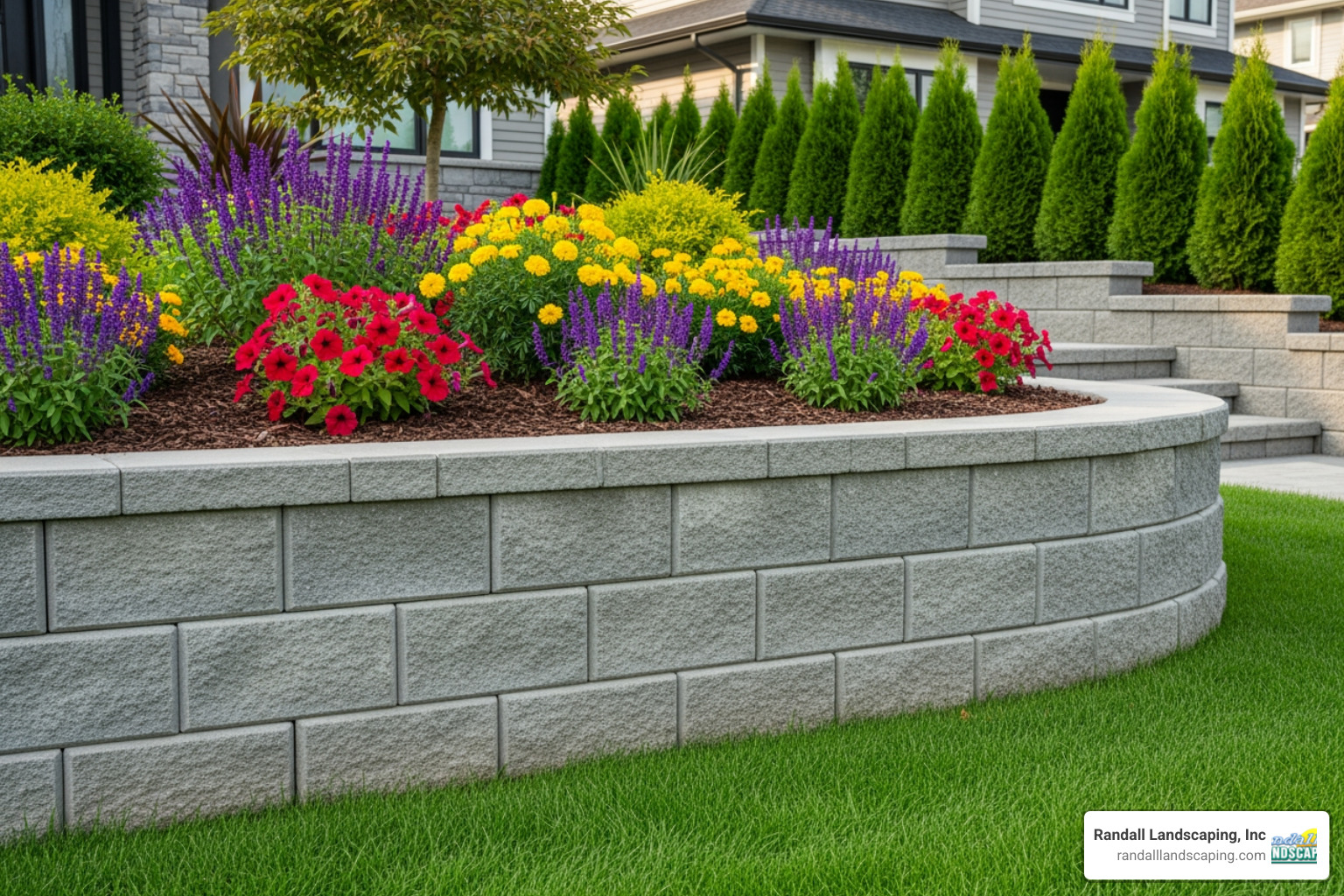
Concrete blocks, especially interlocking varieties, are a versatile and popular choice. Available in many colors, textures, and styles, they can create any look from sleek modern to classic traditional. They are very durable, low-maintenance, and a great option for many projects. Brands like Techo-Bloc offer excellent collections for a cohesive design.
Poured Concrete
For ultimate strength and clean, modern lines, poured concrete is an excellent choice. It can be formed into any custom curve or shape, making it perfect for unique designs. While extremely durable and low-maintenance, the installation process is more involved and can be costly, requiring specialized forms and labor.
Timber Walls
If you love a rustic, natural feel, timber walls built from treated lumber are a great option. They can be a more budget-friendly choice, especially for smaller walls. However, wood won’t last as long as stone or concrete. Proper installation with good drainage and strong anchors is critical to maximize its lifespan in the New England climate.
Corten Steel
For a unique, modern statement, Corten steel (or weathered steel) develops a stable, rust-like patina over time. This protective layer offers an industrial-chic look that is incredibly strong, long-lasting, and low-maintenance. It’s perfect for creating sleek lines or flowing curves in a contemporary landscape.
Budgeting for Your Retaining Wall
We understand the importance of balancing beauty and budget. For a more cost-effective front yard retaining wall, treated pine lumber and interlocking concrete blocks are excellent choices. Their modular design and lower material cost can often reduce overall project expenses. For more info about hardscaping services that fit your budget, we’re always here to discuss your options.
The final price of a retaining wall can vary significantly, with average installation costs ranging from $25 to $250+ per square foot. Key factors influencing the cost include:
- Material Choice: Natural stone is generally more expensive than timber or concrete blocks.
- Wall Size: Taller and longer walls require more material, labor, and engineering.
- Site Accessibility: Difficult-to-access sites can increase labor costs.
- Labor & Permits: The cost reflects skilled labor and any required municipal permits.
While it’s a significant undertaking, a retaining wall is a smart, long-term investment that boosts your home’s value and enjoyment.
Creative Design Ideas for Your Front Yard Retaining Wall
A front yard retaining wall doesn’t have to be just a functional barrier; it can be a stunning centerpiece for your landscape. We love helping clients in areas like Salem, NH, or Andover, MA, find innovative ways to blend these structures beautifully into their outdoor spaces.
Terraced Gardens for Dramatic Effect
If your front yard has a slope, tiered or terraced retaining walls are a game-changer. Instead of one tall wall, a series of shorter walls creates multiple, level planting beds. This turns a tricky incline into a lush, layered garden, adding incredible depth and visual interest to your landscape. For more landscape design ideas using multi-level elements, we have plenty of inspiration.
Go with the Flow: Curved vs. Straight Walls
The shape of your front yard retaining wall dramatically impacts your yard’s feel.
- Curved Walls: Often called serpentine walls, these create a soft, natural, and organic look. They are wonderful for mimicking the landscape’s contours and guiding pathways.
- Straight Walls: For a more formal, structured, or modern aesthetic, straight lines and sharp angles are perfect. They define spaces with crisp precision and offer a striking contrast to softer plantings.
The best choice depends on your property’s needs and your personal style.
More Than a Wall: Incorporating Features
Lift your front yard retaining wall by integrating other features to boost its function and beauty:
- Built-in Seating: A low wall around a patio can double as a permanent bench for casual seating.
- Integrated Planters: Build planter pockets or a top-level bed directly into the wall to create a living piece of art.
- Address Numbers & Mailbox Surrounds: Seamlessly incorporate house numbers or a matching stone surround for your mailbox for a cohesive look.
- Low-Voltage Lighting: Add subtle lighting to highlight the wall’s texture, illuminate pathways, and create a warm, inviting glow at night.
- Water Features: For extra elegance, integrate a small waterfall or fountain to create a soothing and unique focal point.
Landscaping and Plant Choices
The plants you choose are just as important as the wall itself. We focus on plants that thrive in our local climate and improve the wall’s design.
- Spilling Plants: Soften hard lines with plants that cascade over the edge, like Creeping Phlox, Thyme, or Sedum.
- Upright Plants: Add height and structure with plants like Boxwoods, ornamental grasses, or narrow evergreens.
- Color and Texture: Play with contrast. A dark gray wall pops with bright green foliage, while a rustic stone wall is softened by lavender or sage.
- Finishing Touches: A fresh layer of mulch installation retains moisture and gives a polished look, while a new lawn installation can complete a major yard change.
Planning and Building Your Wall
Building a beautiful and lasting front yard retaining wall requires careful planning and precision. At Randall Landscaping, we know a strong wall starts long before the first block is laid, with a meticulous plan that respects the science behind the structure.
Planning Your Front Yard Retaining Wall Project
A solid plan is the blueprint for success. We take every step seriously to ensure your project is built to last:
- Layout Planning: We carefully mark out the wall’s location, using stakes and string lines to help you visualize the final placement, whether straight or curved.
- Slope Measurement: We measure the slope to determine the necessary wall height and assess if a terraced design is the best approach.
- Calling 811 (Dig Safe): This is a non-negotiable first step in Massachusetts and New Hampshire to locate and mark all underground utility lines, ensuring everyone’s safety.
- Foundation Preparation: A strong wall needs a strong start. We excavate a trench, compact the soil, and install a solid, level base of granular material. Burying the first course and creating a compacted base are key to a long-lasting wall.
- Drainage Considerations: To prevent water buildup—a leading cause of wall failure—we design a robust drainage system. This includes permeable gravel backfill, perforated drain pipes, and landscape fabric to keep the system from clogging. For more details on proper construction, this guide is a great resource: How to Build a Retaining Wall.
Navigating Permits and Regulations
Building a front yard retaining wall often involves navigating local rules, and we’re here to help guide you through the process.
Every town in the Merrimack Valley and Southern New Hampshire has its own local building codes and wall height restrictions. Typically, a permit is required for any wall over 3 to 4 feet tall. If your home is part of an HOA, they may have additional rules on materials or aesthetics.
We also ensure the wall is built within your property lines to maintain good neighborly relations. For taller walls (often over 4 feet), engineering requirements like professionally stamped plans may be necessary to guarantee structural integrity. We’ll help you steer these requirements to ensure your project is fully compliant and worry-free.
Frequently Asked Questions about Front Yard Retaining Walls
We love talking with homeowners about their front yard retaining wall projects. Over the years, we’ve noticed the same questions pop up again and again. Here are the answers to the top three.
How high can I build a retaining wall before needing a permit?
There’s no single answer, as it varies by town. As a general rule, most municipalities require a permit for retaining walls over 3 to 4 feet high. However, communities from North Reading, MA, to Pelham, NH, have their own specific codes. Some may have stricter limits or additional rules if the wall is near a property line or public right-of-way.
We always recommend checking with your local building department before starting. For any wall over 4 feet, you will almost certainly need a permit and professionally engineered drawings to ensure it is built safely. We can help you steer these requirements and handle the permit process.
What is the best way to ensure proper drainage for my wall?
Proper drainage is the single most important factor in a retaining wall’s longevity. Water buildup (hydrostatic pressure) is the leading cause of wall failure. A proper drainage system is non-negotiable.
The best system for a front yard retaining wall involves three key components:
- Gravel Backfill: A layer of coarse gravel is placed directly behind the wall to allow water to flow freely downwards.
- Perforated Drain Pipe: At the base of the gravel, a perforated pipe collects the water and channels it away from the wall’s foundation, exiting at the ends of the wall or into a larger drainage system.
- Landscape Fabric: This fabric is placed between the gravel and the native soil to act as a filter, preventing soil from clogging the gravel and pipe over time.
When these elements work together, water is managed effectively, ensuring your wall remains stable for decades.
Can I build a retaining wall myself?
The answer is: it depends on the scale of the project. For a small, decorative front yard retaining wall—under 3 feet tall on level ground, using interlocking concrete blocks—a skilled DIYer can often tackle the job. These blocks are designed to be user-friendly.
However, for any wall that is taller than 3 feet, holds back a significant slope, involves complex curves, or requires major excavation, we strongly recommend hiring professionals. The risks of a poorly built structural wall are significant, including collapse, property damage, and safety hazards.
Our team at Randall Landscaping has the experience, equipment, and engineering knowledge to ensure your wall is not only beautiful but structurally sound. An investment in professional installation is an investment in peace of mind.
Transform Your Front Yard with a Custom Retaining Wall
Your front yard makes the first impression, and a front yard retaining wall can be the defining feature that sets your property apart. It’s an opportunity to create something beautiful and functional that you’ll be proud of every time you pull into your driveway.
A well-built wall combines practical benefits like erosion control and usable space with aesthetic improvements that boost curb appeal and significantly increase your property value. It’s a long-term investment in your home.
At Randall Landscaping, we’ve been changing front yards throughout the Merrimack Valley and Southern New Hampshire for nearly two decades. Our reputation is built on quality work and 100% reliability—a promise we keep on every project. We treat your home with the care and respect it deserves.
Whether you envision the timeless look of natural stone, the versatility of concrete blocks, or a dramatic terraced garden, our team has the expertise to bring your vision to life. We handle all the technical details, from calling 811 to navigating local permits, so you can enjoy the process.
Ready to start your journey toward a more beautiful, functional front yard? Contact us for a professional retaining wall consultation today. Let’s work together to create a plan that fits your vision and budget, building something beautiful and enduring that you’ll love for years to come.