Hydroseeding Site Preparation: How to Get Your Yard Ready in Southern New Hampshire
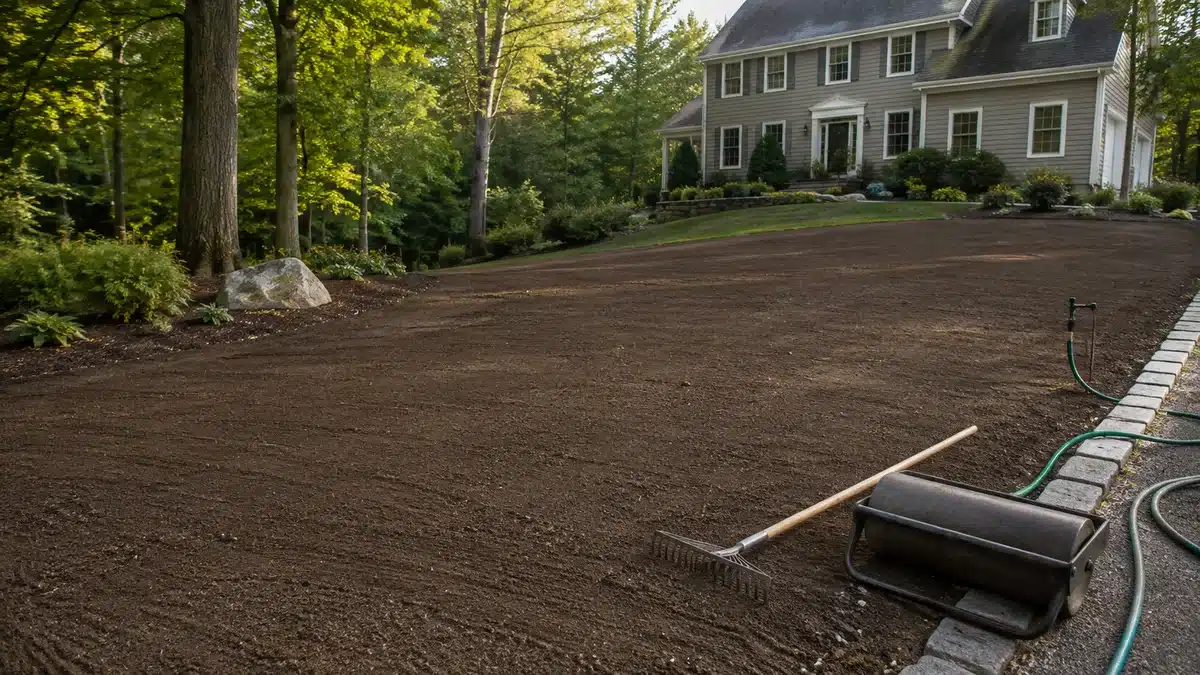
Hydroseeding site preparation should leave a yard properly graded, free of construction debris and large stones, firm enough to resist rutting, and loose enough at the surface to accept seed. Before application day, resolve drainage problems, confirm the intended lawn grade, address soil-test findings, and make sure irrigation can reach every area. Hydroseed is an efficient way to establish turf, but it cannot correct a poor base after the slurry is applied.
Is the yard ready for hydroseeding?
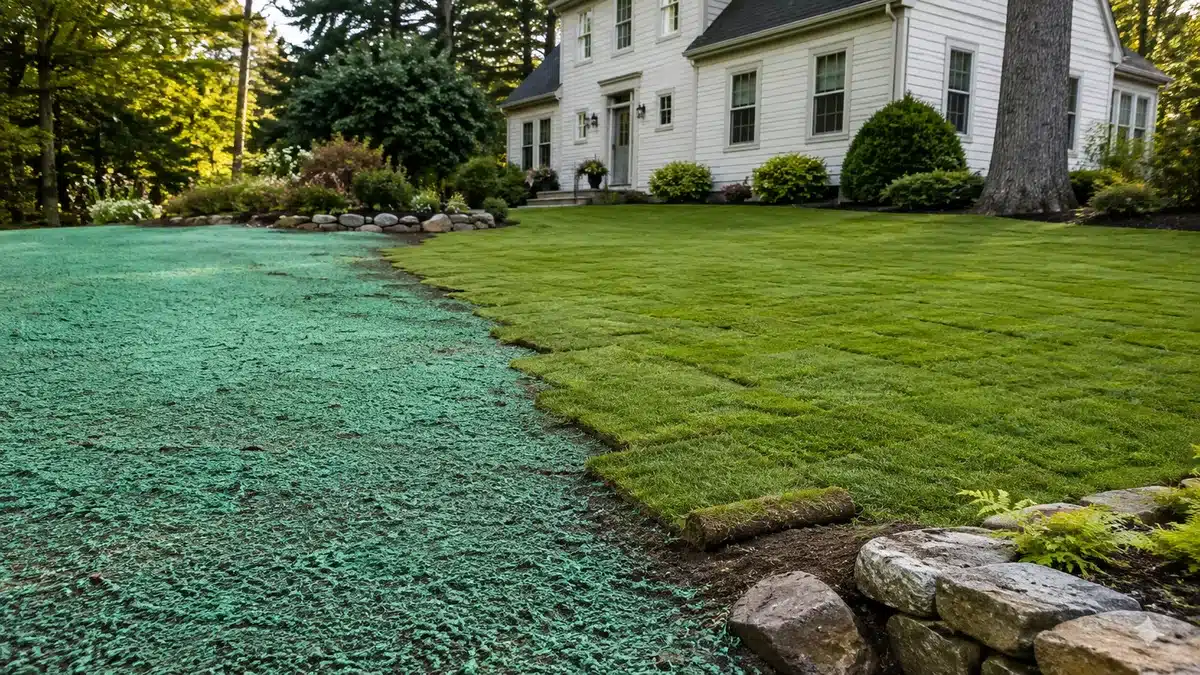
Randall Landscaping applies seed, fertilizer, mulch, and tackifier as a slurry over a properly prepared area. Its hydroseeding service for Southern New Hampshire can cover broad lawns, hillsides, banks, and irregular spaces, but each site still needs a stable seedbed and a workable watering plan.
| Site condition | Ready signal | Resolve before application |
|---|---|---|
| Drainage | Water moves away from structures and does not collect in low spots | Standing water, active erosion channels, or runoff that crosses the future lawn |
| Grade | The planned contours are complete and the surface is smooth enough for even application | Unfinished utility work, abrupt depressions, or ruts that will need heavy equipment |
| Soil | Soil-test recommendations have been reviewed and the surface is workable | Unknown pH or fertility, severe compaction, buried debris, or unsuitable fill |
| Seedbed | Large stones and debris are removed; the surface is lightly textured and settled | A fluffy base that will sink, a hard sealed crust, or loose material that washes downhill |
| Water | Gentle coverage reaches sun, shade, slopes, and edges independently | Dry zones, high-pressure spray, or runoff before the full area can be moistened |
| Access | The crew can reach the work area without crossing freshly finished surfaces | Blocked gates, stored materials, active construction, or vehicles in the application path |
Start with the future use of the lawn
Preparation begins with a decision, not a rake. Identify where people will walk, where snow will be stored, how downspouts discharge, where play or service traffic is expected, and whether adjoining beds or hardscape are final. These uses influence grade, soil correction, edge details, and the seed mix chosen for the property.
Identify irrigation heads, septic components, drainage outlets, and objects that must remain visible. Before digging or grading, confirm who will notify Dig Safe at 811 and arrange utility marking. In New Hampshire and Massachusetts, allow at least 72 hours, excluding weekends and legal holidays. Privately owned lines may need a separate locator; do not assume the utility marks identify everything underground. If other construction is unfinished, decide whether it will send equipment across the seedbed. Heavy traffic after final grading can recompact the soil and force the same work to be done twice.
Correct drainage and compaction before the final grade
A new lawn should not be used to hide a water problem. Watch the property during or after rain. Note ponding, water moving toward the foundation, concentrated flow from a downspout, and rills on a bank. The correction might involve grading, drainage work, or changing where water enters the lawn; the important point is to complete it before hydroseeding locks in the surface.
Compaction can be just as limiting. A dense layer may prevent water from soaking in even when the top looks loose. University of New Hampshire Extension recommends evaluating drainage and compaction, testing soil, removing debris, and creating a smooth, firm seedbed during lawn establishment. Its New Hampshire lawn-establishment guide also explains why soil correction belongs ahead of seeding rather than after germination.
Use a soil test to direct amendments
Appearance alone cannot reliably identify soil pH or nutrient needs. Sample the area early enough to review the results before final preparation. That lets the installation plan respond to the site instead of applying a generic amendment package.
Keep the recommendation and note where samples came from. A recently filled area, an older lawn section, and a disturbed construction zone may not behave the same way. If one part of the yard is clearly different, treating it as a separate planning zone can produce a more useful result than blending everything into one sample.
Confirm how existing grass and weeds will be handled before application. Tell the installer about any herbicide or weed-and-feed product already used, and check its label for the required wait before seeding. UNH Extension warns that some products can suppress new grass; a cleared-looking yard is not necessarily ready to seed.
Build the grade, then finish the seedbed
Rough grading establishes the major contours and drainage pattern. Final preparation removes remaining stones and debris, smooths small irregularities, and creates a surface that accepts the hydroseed mixture without deep ruts or loose pockets.
The goal is a firm base with a lightly worked surface, not powder, mud, or a hard crust. Walk the area before application. If normal footsteps sink deeply, rain or watering may cause additional settling. If water beads and runs immediately, the surface may be too sealed or compacted. Both conditions deserve correction before the crew arrives.
Plan water coverage before choosing the date
Test the irrigation setup on the prepared geometry, including sunny banks, narrow side yards, edges near pavement, and shaded areas that dry more slowly. Strong spray can move mulch or create channels, while missed zones can dry between watering cycles.
Timing matters too. The best hydroseeding window still depends on workable soil, a favorable forecast, and reliable irrigation. A calendar opening is not a reason to apply over saturated ground or immediately before a washout-producing storm.
Clarify the homeowner-installer handoff
Before installation, confirm who owns each remaining task:
- Property owner: approve the finished grade, remove movable obstacles, identify sensitive areas, and confirm water access.
- Site contractor: complete any agreed drainage, soil, or grading work and leave the seedbed in the specified condition.
- Hydroseeding crew: verify access, review the application area, apply the specified mixture, and explain the immediate care plan.
- Aftercare lead: inspect moisture, adjust for rain and drying conditions, restrict traffic, and document problems.
This handoff prevents the most common ambiguity: assuming someone else will correct a low spot, remove stones, move materials, or set up sprinklers on application day.
Installation-day readiness checklist
- The lawn boundary and final contours are approved.
- Drainage corrections and disruptive construction are complete.
- Soil-test recommendations have been reviewed.
- Existing vegetation is addressed and any product-label wait before seeding is satisfied.
- Large stones, roots, trash, and construction debris are removed.
- The surface is smooth, settled, and lightly textured.
- Equipment access and gates are clear.
- Sprinklers or hoses can reach every watering zone gently.
- People, pets, deliveries, and vehicles can be kept off the area.
- The person responsible for first-month hydroseeding aftercare has the instructions and schedule.
Pause when the base is not ready
Delay application if the soil is saturated or frozen, drainage is unresolved, active construction will cross the lawn, the grade is still disputed, irrigation cannot cover the area, or the forecast creates an unreasonable washout risk. A short delay protects the preparation already completed and avoids treating a visible symptom after germination.
For a site-specific preparation and installation plan in Southern New Hampshire or the Merrimack Valley, request a hydroseeding estimate from Randall Landscaping.
Featured image: AI-generated illustration, not a photograph of a Randall Landscaping project.