
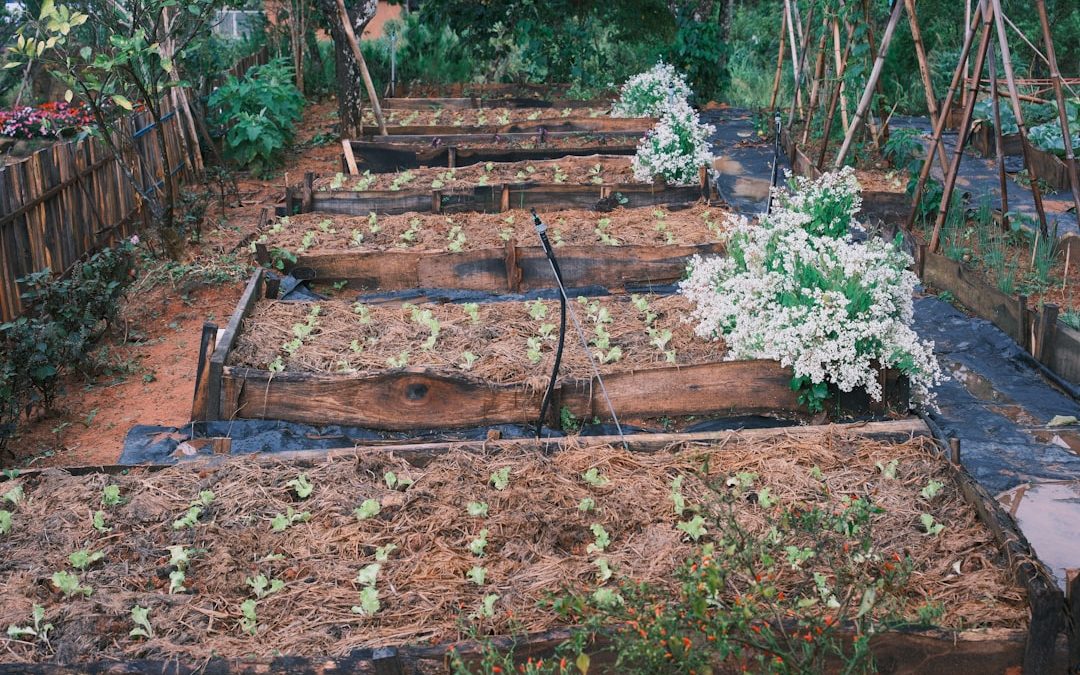
What is Mulch and Why is it a Gardener’s Best Friend?
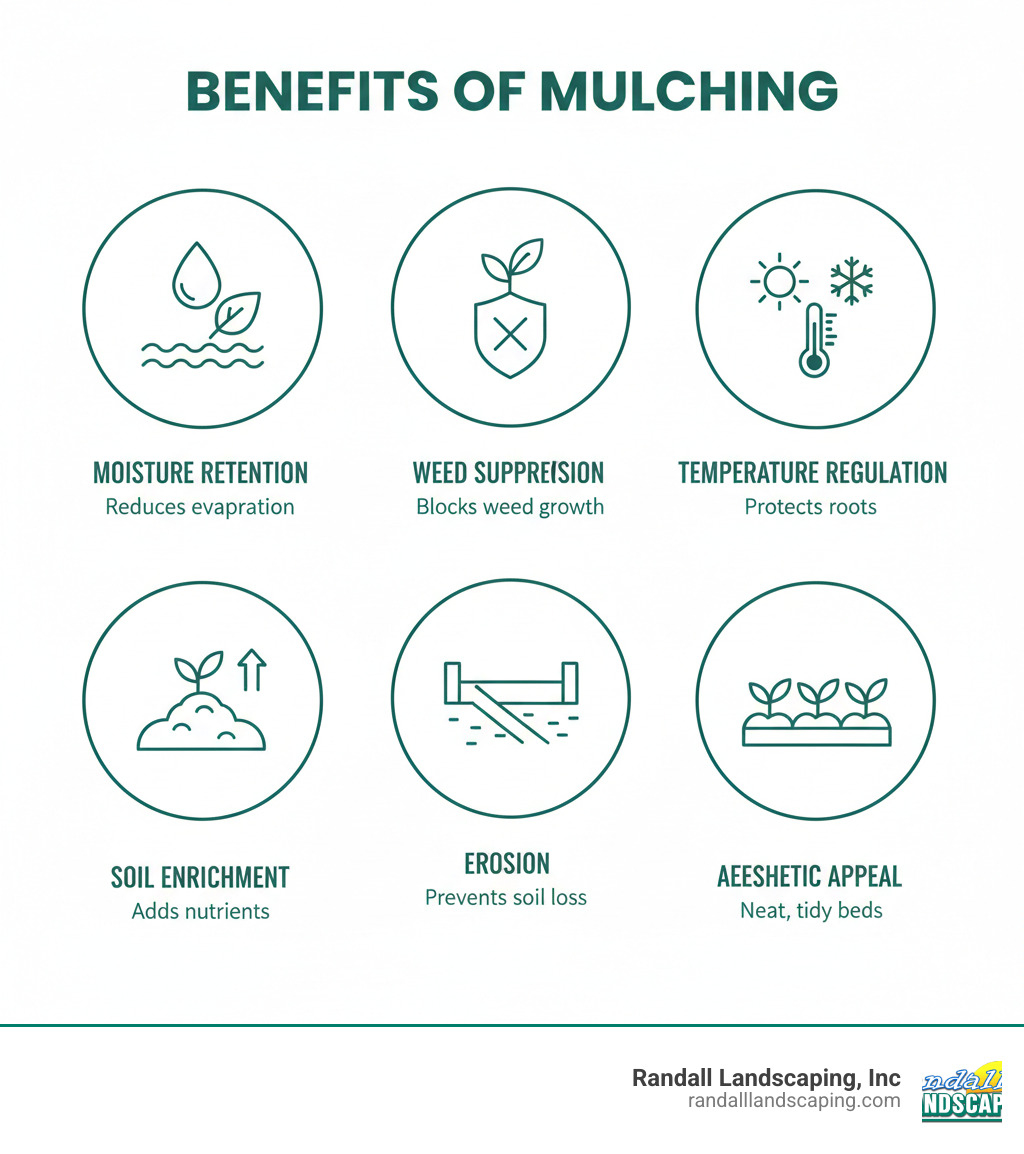
Garden bed mulching is the practice of applying a protective layer of material—usually 2 to 4 inches thick—over the soil surface around your plants. Here’s what it does for your garden:
- Suppresses weeds by blocking sunlight and preventing weed seed germination
- Retains moisture by reducing evaporation from the soil surface
- Regulates soil temperature, keeping roots cooler in summer and warmer in winter
- Prevents erosion and soil compaction from heavy rain
- Enriches soil as organic mulches break down and add nutrients
- Improves appearance by giving beds a neat, finished look
If you’ve ever spent a beautiful Saturday pulling weeds or dragging out hoses to water wilting plants, you know how much time garden maintenance can take. Mulch is one of the simplest ways to cut down on both of those chores while actually improving your soil’s health.
As one experienced gardener puts it: “Mulching is a tedious process but always well worth the effort.” And it’s true—a few hours spent mulching in spring can save you countless hours of weeding and watering throughout the growing season.
I’m Tommy Randall, owner of Randall Landscaping Business, and I’ve been helping homeowners in Massachusetts and New Hampshire create beautiful, low-maintenance outdoor spaces since 2006. Our team specializes in professional garden bed mulching using bark mulch blowing techniques that provide even coverage and long-lasting results. Let’s walk through everything you need to know to make mulching work for your landscape.
Choosing the Right Mulch: Organic, Inorganic, and Sourcing Options

Walk into any garden center and you’ll face an overwhelming wall of mulch options. Bags labeled “premium hardwood,” piles of colorful stone, rolls of landscape fabric—it’s enough to make your head spin. But here’s the good news: choosing the right mulch doesn’t have to be complicated once you understand the two main categories and what they offer.
The decision really comes down to your goals. Are you looking to feed your soil and create a thriving ecosystem underground? Or do you need a permanent, decorative solution for a pathway or around your home’s foundation? Maybe you’re working on a budget and want to know how to get quality mulch without breaking the bank. Let’s break it all down, and if you’re curious about sustainable choices, our guide to Eco-Friendly Mulch Options can help you make earth-friendly decisions.
Organic Mulches: Feeding Your Soil
Here’s where garden bed mulching truly becomes an investment in your landscape’s future. Organic mulches are made from natural materials that were once living—think wood, leaves, straw, and plant matter. The magic happens slowly, over months and years, as these materials break down and transform into rich, dark organic matter that feeds your soil.
This decomposition process isn’t just about adding nutrients (though that’s certainly a benefit). As organic mulch breaks down, it improves your soil’s structure, making it more crumbly and easier for roots to penetrate. It creates a buffet for earthworms and beneficial microorganisms that do the real work of building healthy soil. Water infiltrates better. The soil holds onto moisture longer. Your plants develop stronger, deeper root systems.
Wood chips and bark mulch are the workhorses of the organic mulch world. They’re attractive, readily available, and decompose slowly enough that you won’t need to replace them every few months. A good layer of bark mulch can last anywhere from one to three years, making it ideal for perennial beds, around trees, and in shrub borders. One thing to watch for: freshly chipped wood can temporarily tie up nitrogen as it breaks down, though this is usually minor if you’re applying it on top of the soil rather than mixing it in.
Shredded leaves are probably the most underrated mulch material out there. They’re free, they’re everywhere in fall, and they’re absolute gold for your soil. Run them through a mulching mower or shredder first—whole leaves can mat together like wet newspaper and prevent water from reaching the soil. Shredded leaves break down relatively quickly, which means more frequent replenishment but also faster soil improvement.
Pine needles have a loyal following, especially in areas where pine trees are abundant. They’re lightweight, they interlock nicely so they don’t blow away in the wind, and they’re slow to decompose. There’s an old myth that pine needles will make your soil too acidic—in reality, their effect on soil pH is minimal and rarely a concern.
Straw (not hay—that’s full of seeds that will sprout into weeds) is a favorite for vegetable gardens. It’s light, easy to spread, and provides excellent insulation for plant roots. For more details on mulching your veggie beds, check out our guide to the Best Mulch for Vegetable Garden. Straw breaks down within a season, which works perfectly since most vegetable gardens get turned over annually anyway.
Grass clippings from your lawn can work as mulch if you apply them in thin layers—no more than an inch at a time. They decompose quickly and add nitrogen to the soil. Just make sure you’re not using clippings from a lawn that’s been treated with herbicides, or you might accidentally harm your garden plants.
The trade-off with organic mulches is simple: they need to be replenished as they break down. But that’s not really a drawback—it’s the whole point. As the University of Missouri Extension puts it, “Organic mulches feed the soil” and create ideal conditions for the soil organisms that keep your garden healthy.
Inorganic Mulches: Long-Lasting Coverage
On the other end of the spectrum, inorganic mulches don’t break down. They’re permanent fixtures chosen for their decorative qualities, longevity, and ability to suppress weeds without any ongoing maintenance.
Gravel and stones are the most common inorganic options. They work beautifully for pathways, around foundations, or in xeriscaped areas with drought-tolerant plants. They’ll never need replacing, and they provide excellent drainage. The downside? They absorb heat during the day and radiate it back at night, which can stress heat-sensitive plants. And if you ever decide to change your landscape design, moving tons of rock is no small task.
Landscape fabric is often sold as the ultimate weed barrier, and it does work—at least initially. This woven or spun material goes directly on the soil, then gets covered with a decorative layer of bark or stone. Water and air can pass through, but weed seeds can’t germinate. Over time, though, organic matter accumulates on top of the fabric, creating a layer where weeds can grow anyway. And the fabric can make it harder for beneficial organisms to move between the soil layers.
Plastic sheeting is occasionally used in vegetable gardens to warm the soil and suppress weeds, but it’s impermeable to both water and air. This can create problems with soil health and isn’t something we generally recommend for ornamental beds.
Rubber mulch made from recycled tires has gained some popularity, but we don’t recommend it for most garden beds. It doesn’t improve soil, it can leach chemicals, and it often has an unpleasant odor. Save the rubber for playgrounds where its cushioning properties are actually beneficial.
The University of Illinois Extension points out the fundamental problem with inorganic mulches: “no nutritional benefit, potential to leach toxins”. For most garden beds, organic mulches are simply the better choice.
Sourcing Your Mulch: Buy or Make Your Own
Once you’ve decided what type of mulch you want, the next question is where to get it. The answer depends on the size of your project and how much time you want to invest.
Buying mulch is the straightforward option. For small jobs or touch-ups, bagged mulch from your local garden center is convenient—you can toss a few bags in your car and be done with it. But do the math before you buy. Those bags can cost well over $100 per cubic yard when you add up all the individual purchases.
For larger areas, bulk mulch makes much more sense financially. Average costs for bulk mulch delivered typically range from $30 to $120+ per cubic yard, based on internet data (not Randall Landscaping pricing). The price varies depending on the type of mulch, how much you order, and how far it needs to be delivered. We offer convenient Mulch Delivery Cost services throughout the Merrimack Valley and Southern NH to make the process as easy as possible.
Making your own mulch is the ultimate budget-friendly and environmentally conscious option. Those bags of leaves that everyone else drags to the curb? That’s free mulch waiting to happen. Run them through a mulching mower or shredder, and you’ve got one of the best soil amendments available. Grass clippings from an untreated lawn work too—just let them dry a bit or apply them thinly to prevent matting.
But here’s the secret that savvy gardeners know: free arborist chips. Tree service companies need somewhere to dump the chips from their jobs, and many will deliver a truckload to your property for free. These chips are fresh, usually a mix of wood and leaves, and they make excellent mulch. You can find them through services like Chip Drop or by calling local arborists directly. We’ve put together a complete guide on How to get free wood chips for mulch if you want to go this route.
The best mulch for your garden is the one that matches your goals, your budget, and the needs of your specific plants. For most garden beds, you can’t go wrong with organic options that improve your soil while they protect it.
The Art of Application: A Step-by-Step Guide to Garden Bed Mulching
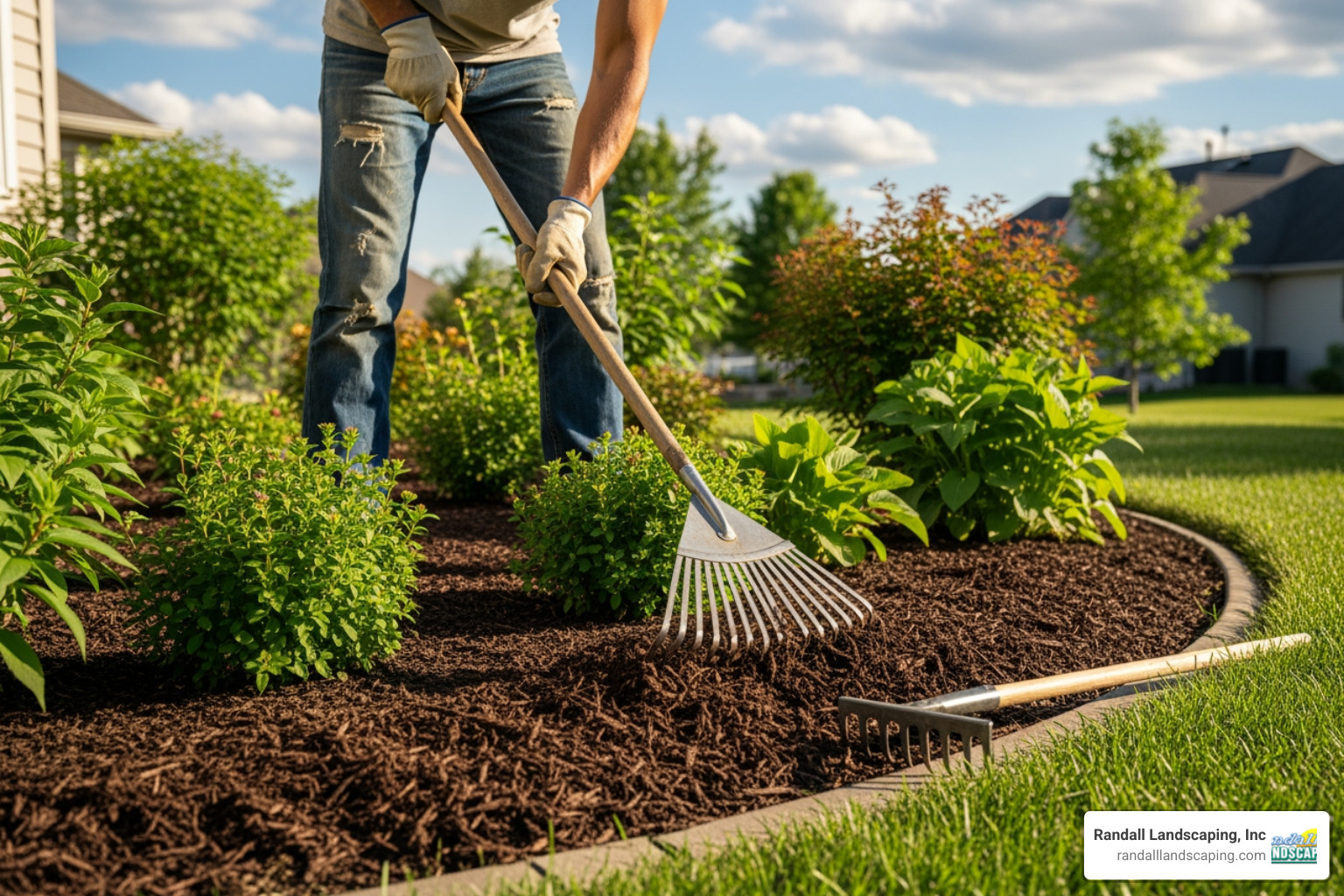
You’ve chosen the perfect mulch for your garden, and now comes the fun part—actually putting it down. But here’s the thing: how you apply mulch matters just as much as what type you choose. Apply it correctly, and you’ll see healthier plants, fewer weeds, and better moisture retention. Apply it incorrectly, and you might actually harm your plants or create pest problems.
After nearly two decades of professional garden bed mulching throughout the Merrimack Valley and Southern NH, our team at Randall Landscaping has learned what works and what doesn’t. Let me walk you through the techniques that will give you professional results. For a deeper dive into the entire process, check out our Mulch Installations Complete Guide.
When is the Best Time to Mulch?
Your calendar matters more than you might think when it comes to mulching. While you technically can mulch anytime the ground isn’t frozen solid, there are two seasons when mulching delivers the biggest bang for your buck.
Spring mulching is when most homeowners refresh their beds, and for good reason. We typically recommend applying mulch in early to mid-spring, once the soil has warmed up but before those aggressive annual weeds wake up and start their takeover. This timing lets you get ahead of the weeds, blocking sunlight before they can germinate and establish themselves.
Spring mulching is also your best defense against summer drought—that layer of mulch acts like a blanket, keeping precious moisture in the soil during those hot July and August days we experience here in New England. Plus, it stabilizes soil temperatures, protecting tender new growth from those surprise late-spring cold snaps. If you’re planning to add slow-release fertilizer, sprinkle it over the soil surface before you lay down the mulch.
Fall mulching is the unsung hero of the mulching calendar. When you apply mulch after the first hard frost, once the ground is cold and perennials are completely dormant, you’re giving your plants an insulating blanket for winter. This protection prevents freeze-thaw cycles from heaving shallow-rooted plants right out of the ground—something I’ve seen ruin many a perennial bed. Fall mulching also shields bare soil from erosion caused by winter rains and winds. Just don’t jump the gun—mulching too early in fall can trap warmth in the soil and prevent plants from properly hardening off for winter. For a complete seasonal refresh that includes crisp edges and fresh mulch, explore our Mulch and Edging Services.
Proper Technique for Garden Bed Mulching
Now let’s get into the actual application. This is where many well-intentioned gardeners go wrong, so pay attention to these three critical steps.
Step 1: Weed and prep the bed. Before a single wood chip hits the ground, we make sure the area is thoroughly weeded. Think of it this way—mulch suppresses new weeds from germinating, but it won’t kill established weeds that are already growing. Those persistent weeds will just push right through your nice new mulch layer. For beds with particularly aggressive weeds, we sometimes lay down a base layer of cardboard or several sheets of newspaper (black ink only, no glossy pages) before applying the organic mulch. This biodegradable barrier smothers existing weeds while eventually breaking down to feed the soil.
Step 2: Apply a 2-4 inch layer. This is the Goldilocks zone for mulch depth—not too thick, not too thin, but just right. A layer between two and four inches deep typically suppresses weeds, retains moisture, and regulates soil temperature without creating problems. Coarser materials like larger wood chips can go toward the 4-inch end of that range, while finer materials like shredded leaves or compost work better at 2 to 3 inches. Too thin won’t be effective; too thick can actually prevent water and air from reaching the soil, suffocating your plant roots. And trust me, suffocated roots are not happy roots.
Step 3: The “Donut” Method. This is absolutely crucial, especially for trees and shrubs. We always keep mulch pulled back from plant stems and tree trunks. For smaller perennials and annuals, maintain about 2-3 inches of clear space around the base. For woody plants like shrubs and trees, create what we call a “mulch donut”—a ring of mulch with a clear space of 6 to 12 inches (or even more for mature trees) around the trunk.
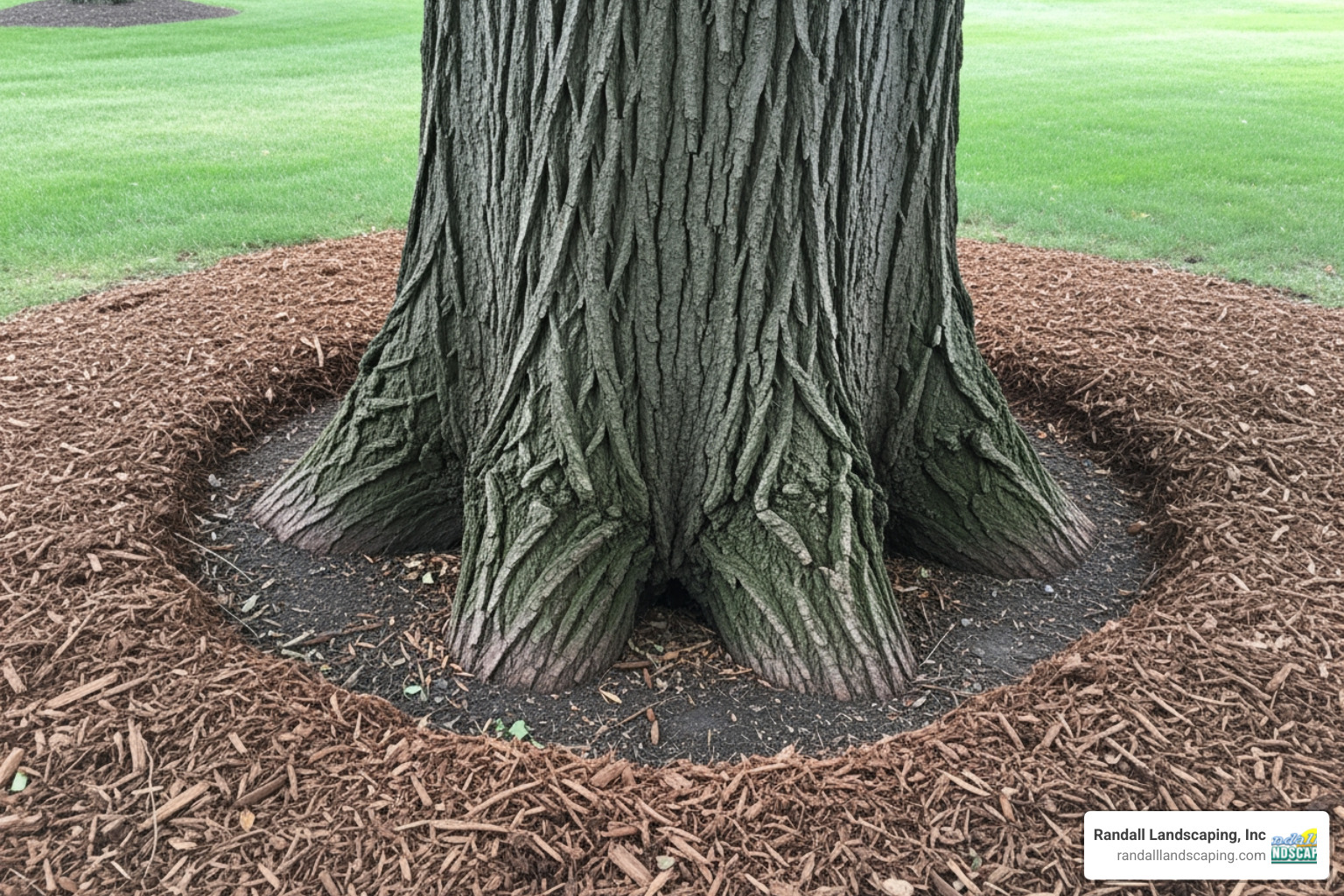
This prevents moisture from accumulating against the trunk or stem, which invites rot, fungal diseases, and provides a cozy home for pests that love to munch on softened bark. For trees specifically, follow the “bare to the flare” rule—the root flare (where the trunk widens as it meets the ground) should always be visible and exposed. Nothing should ever be piled above the tree’s flare. I can’t tell you how many trees I’ve seen damaged or killed by well-meaning homeowners who piled mulch up against the trunk like a volcano.
Advanced Garden Bed Mulching for Different Plant Types
Not all plants appreciate the same mulching approach, and tailoring your technique to different garden areas will give you the best results.
Vegetable gardens benefit most from finer organic materials like compost, shredded leaves, or straw. These materials break down quickly, constantly enriching the soil with nutrients that hungry annual crops devour. When you’re direct-sowing seeds, either apply just a very light dusting of mulch or wait until seedlings have emerged a few inches before mulching more heavily—you don’t want to accidentally bury your baby lettuce seedlings. For more detailed guidance on mulching your edibles, check out our article on the Best Mulch for Vegetable Garden.
Perennial beds do well with a consistent layer of bark mulch or wood chips. These materials look polished and professional while breaking down slowly enough that you won’t need to replenish them multiple times per season. Just keep the mulch pulled back from the crowns of your perennials—those growing points where stems emerge from the soil—to prevent crown rot.
Trees and shrubs thrive with wood chips or bark mulch applied in that donut pattern we discussed. For newly planted trees especially, mulching out to the drip line (the outermost reach of the branches) is ideal because that’s where most of the active feeder roots live. These roots are doing the heavy lifting when it comes to water and nutrient uptake, so keeping them protected and moist makes a real difference in plant health.
If you’re in our service area and want professional results without the backbreaking work, our team provides expert Mulch Installation North Andover MA services, ensuring the right mulch is chosen and applied for your specific landscape needs.
Mulching Do’s, Don’ts, and Common Questions
Even with the best intentions, mulching can go wrong. I’ve seen my share of well-meaning gardeners create problems they never anticipated—from suffocated trees to unexpected pest invasions. Let’s talk about how to avoid these pitfalls and when mulch might not be your best friend.
Key Mistakes to Avoid
Over-mulching is probably the most common mistake we see. More isn’t always better! When mulch exceeds 4 inches thick, water struggles to penetrate down to the roots. Your plants can actually be thirsty while sitting under what looks like plenty of moisture. That thick blanket also starves the soil of oxygen, creating an environment where beneficial microorganisms can’t thrive and roots literally suffocate.
Then there are the dreaded “mulch volcanoes.” You’ve probably seen these—mulch piled high against tree trunks like little brown mountains. They might look tidy, but they’re silently killing trees all across the country. When mulch sits against bark, it keeps that area constantly moist. The bark softens and begins to rot, opening the door to diseases and insect damage. Even worse, roots start growing up into the mulch instead of down into the soil, eventually circling and strangling the tree from the outside in.
We always follow the “bare to the flare” rule—the point where your tree trunk widens at ground level should always be visible and mulch-free. Rutgers University has documented extensive research on Problems With Over-Mulching Trees and Shrubs, and their findings are sobering.
Piling mulch against your home’s foundation is another recipe for trouble. Mulch holds moisture, and moisture against your foundation can damage building materials over time. Even more concerning, it creates a convenient highway for termites to march right into your home. We always leave several inches of clearance between mulch and any structure.
While mulch generally helps with pest control, excessively thick or constantly wet mulch can become a pest habitat itself. Slugs and snails love damp, dark hiding places, and poorly managed garden bed mulching can provide exactly that. We keep an eye on moisture levels, especially in shady areas that don’t dry out quickly.
Is Mulch Always a Good Idea?
Here’s where I might surprise you—no, mulch isn’t always the answer.
Plants that dislike mulch do exist, and they’re usually ones that evolved in dry, rocky environments. Succulents are the obvious example—they’re built to survive drought and hate having their roots constantly moist. Mediterranean herbs like lavender and rosemary feel the same way. These plants want their soil to dry out between waterings, and mulch works directly against that preference. For these sun-lovers, a thin layer of gravel or no mulch at all is often the better choice.
Cautious situations also call for restraint. If you’re dealing with poorly drained soil—that heavy clay that stays wet for days after rain—adding mulch can make things worse. The soil needs to breathe and dry out, not be covered with a moisture-retaining blanket. In these cases, we focus first on improving drainage through soil amendments before considering mulch.
If you’re battling a slug and snail infestation, thick organic mulch might be feeding the problem rather than solving it. These pests thrive in the cool, moist environment under mulch. Sometimes a thinner layer or a switch to coarser material makes sense until you get the pest situation under control.
Direct-sowing seeds is another time to hold off. Seeds need direct contact with soil and can’t push through inches of mulch. Either wait until your seedlings are a few inches tall, or use just a whisper-thin layer of fine material that won’t block their emergence.
What’s the Difference Between Mulch and Compost?
This question comes up constantly, and I understand why—they can look similar, and sometimes they’re even the same material at different stages!
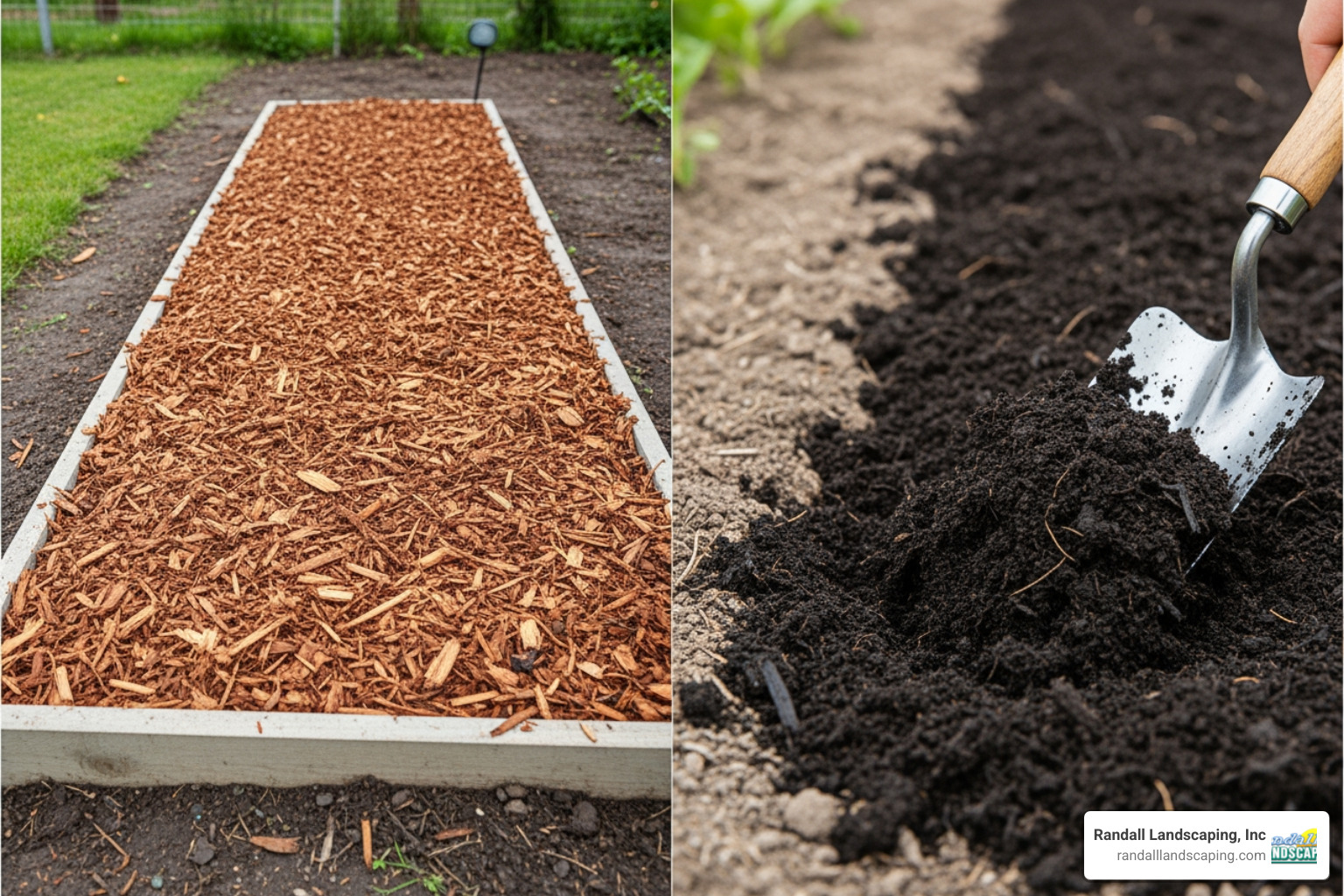
Mulch is applied to the top layer of soil to help control weeds, retain moisture, and regulate temperature, whereas compost is broken down over time, provides essential nutrients, and enriches soil structure.
Think of it this way: mulch is a protective blanket, while compost is a nutritious meal. Mulch sits on top of your soil, doing its job right there on the surface—blocking weeds, holding in moisture, keeping temperatures steady. It might eventually break down and feed your soil, but that’s a slow side benefit, not its main purpose.
Compost, on the other hand, has already gone through the decomposition process. It’s rich, dark, and full of nutrients that plants can use immediately. Its job is to be mixed into your soil, improving structure, drainage, and fertility. It’s an active ingredient, not a passive protector.
Here’s where it gets interesting—they work beautifully together. Many gardeners, including our team at Randall Landscaping, often spread a layer of finished compost right on top of beds as mulch. It performs all the traditional mulching functions while simultaneously feeding the soil. And over time, your organic mulches will decompose and essentially become compost, naturally enriching what’s underneath. As noted on Martha Stewart’s blog, “Mulch and compost are not the same. They are both used to help the soil, but they have different applications and benefits.”
The bottom line? Understanding these distinctions helps you use both materials more effectively in your landscape. When you know what each one does best, you can make smarter choices about where and when to use them.
Conclusion: Achieve a Healthier, More Beautiful Garden
We’ve covered a lot of ground together—from understanding what mulch is and how it works, to choosing the right materials, applying them correctly, and avoiding common pitfalls. If there’s one thing I hope you take away from this guide, it’s that garden bed mulching isn’t just another gardening chore. It’s an investment in your landscape’s future.
Think about it: less time spent weeding means more time enjoying your garden. Healthier soil translates directly into thriving plants that are more resilient to drought, pests, and disease. A well-mulched garden bed looks polished and professional, giving your entire property that finished, cared-for appearance that makes you proud to pull into your driveway.
Mulching is truly a cornerstone of any successful landscape maintenance plan. Whether you’re maintaining a small flower bed or managing extensive property landscaping, the principles remain the same: protect the soil, conserve water, suppress weeds, and let nature do the heavy lifting.
Here in the Merrimack Valley and Southern New Hampshire, we understand the unique challenges our climate presents—the wet springs, the hot summers, the freezing winters. That’s exactly why proper mulching techniques matter so much in our region. At Randall Landscaping, we’ve been helping homeowners and businesses achieve beautiful, low-maintenance landscapes since 2006, and we’ve seen how transformative a professional mulching job can be.
If you’re ready to give your garden the protection and polish it deserves, we’d love to help. Our team brings quality workmanship and 100% reliability to every project, whether it’s a small residential garden refresh or a comprehensive commercial landscape overhaul. We use professional-grade bark mulch blowing equipment for even coverage and long-lasting results that you simply can’t achieve with a wheelbarrow and rake.
Ready to transform your garden beds and enjoy all the benefits we’ve discussed? Contact us for professional Garden Bed Mulching services today. Let’s work together to create the healthy, beautiful landscape you’ve been dreaming of—with a lot less work for you.