How to get commercial landscaping contracts often puzzles many entrepreneurs eager to enter this thriving industry. Quickly navigating the competitive world of commercial landscaping requires a few key strategies:
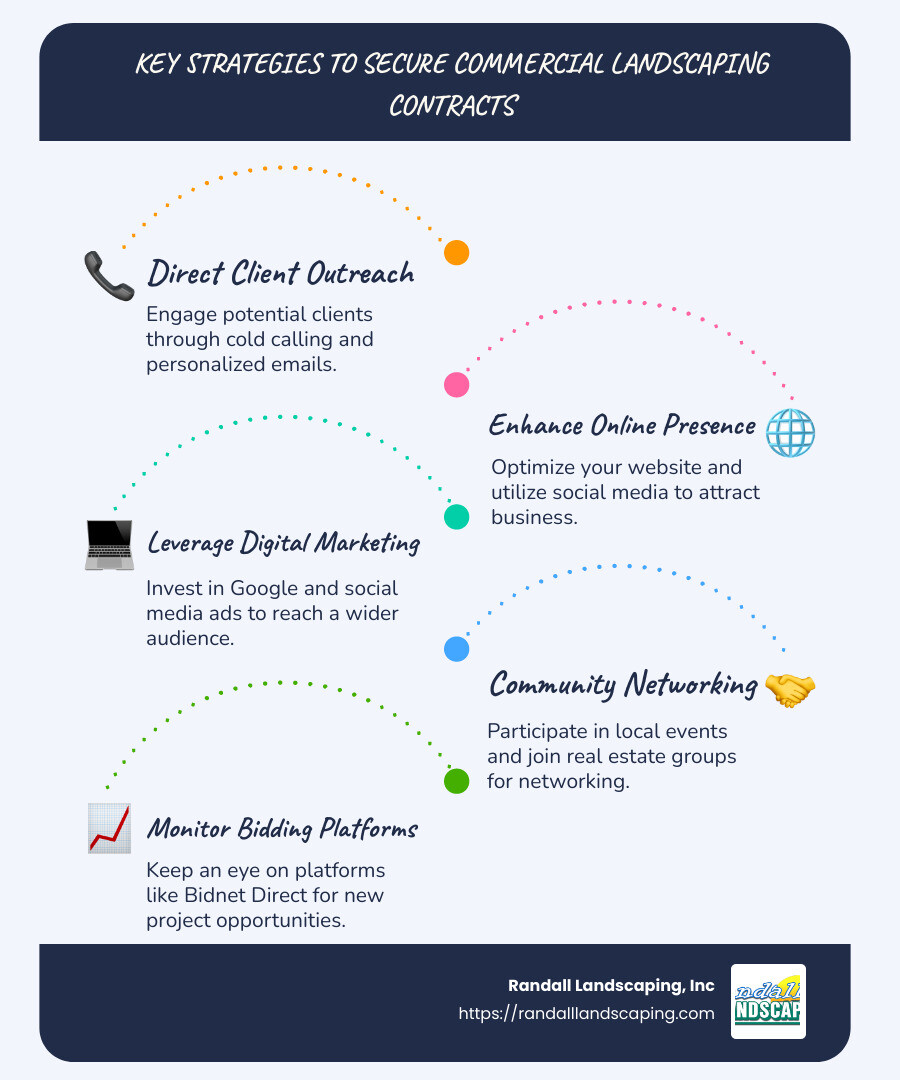
- Reach out directly to potential clients through methods like cold calling and email marketing.
- Boost your online presence to attract businesses searching for landscaping services.
- Dive into digital marketing via paid Google and social media ads.
- Network within the community at local events and through real estate groups.
- Monitor landscaping bids on platforms like Bidnet Direct for government projects.
In a sector marked by an impressive 5.1% annual growth from 2016 to 2021, it’s essential for businesses to stand out. Success begins with a proactive approach—connecting with property managers and business owners to showcase the unique value your landscaping company can deliver. Digital marketing, strategic bidding, and robust relationship-building form the backbone of a successful strategy in landing those coveted commercial contracts.
Greetings from Tommy Randall, owner of Randall Landscaping. With over 18 years of dedicated experience in Massachusetts and New Hampshire, I’ve honed expertise in how to get commercial landscaping contracts. This article shares strategies I’ve seen work best in boosting our business and yours. To explore the intricacies of capturing commercial clients, let’s dig into what makes this market tick.
Simple how to get commercial landscaping contracts glossary:
– commercial landscape maintenance services
– commercial lawn care
– commercial grounds maintenance
Understanding the Commercial Landscaping Market
The commercial landscaping market is a different beast compared to residential landscaping. Understanding these differences is key to success.
Residential vs. Commercial: A Different Game
Residential landscaping focuses on individual homeowners. It’s often about aesthetics and personal preferences. On the other hand, commercial landscaping is all about functionality and business needs. Companies look for more than just a pretty lawn; they want efficient, sustainable, and low-maintenance solutions.
In commercial projects, the stakes are higher. Contracts are larger, involving sprawling campuses, office parks, or retail centers. This means bigger budgets but also more complex requirements.
Shifting Mindsets: From Homeowners to Businesses
To thrive in commercial landscaping, you need to shift your mindset. Homeowners may value creativity and personal style, but businesses prioritize reliability, cost-effectiveness, and compliance with regulations.
Communication is also different. While residential clients might want detailed explanations, commercial clients appreciate concise, professional proposals that highlight your capability to handle large projects.
Profit Margins: Bigger Risks, Bigger Rewards
The profit margins in commercial landscaping can be attractive. While residential projects often have a profit margin of 10-20%, commercial contracts can see margins as high as 30% or more.
However, these margins come with challenges. Commercial clients may have longer payment cycles, and losing a large contract can significantly impact your revenue stream. As Delany advises, avoid being too dependent on a single account. Diversifying your client base is key to maintaining financial stability.

Conclusion
Understanding these nuances helps in crafting strategies to capture and retain commercial contracts. By recognizing the differences between residential and commercial landscaping, adjusting your approach, and managing your profit margins wisely, you can position your business for sustained growth in this lucrative market.
Next, we will explore how to get commercial landscaping contracts through effective cold calling, email marketing, and digital marketing strategies.
How to Get Commercial Landscaping Contracts
Landing commercial landscaping contracts can be a game-changer for your business. Let’s explore two key strategies: cold calling and email marketing.
Cold Calling Strategies
Cold calling is a powerful tool, but it’s all about strategy. Here’s how to make it work:
-
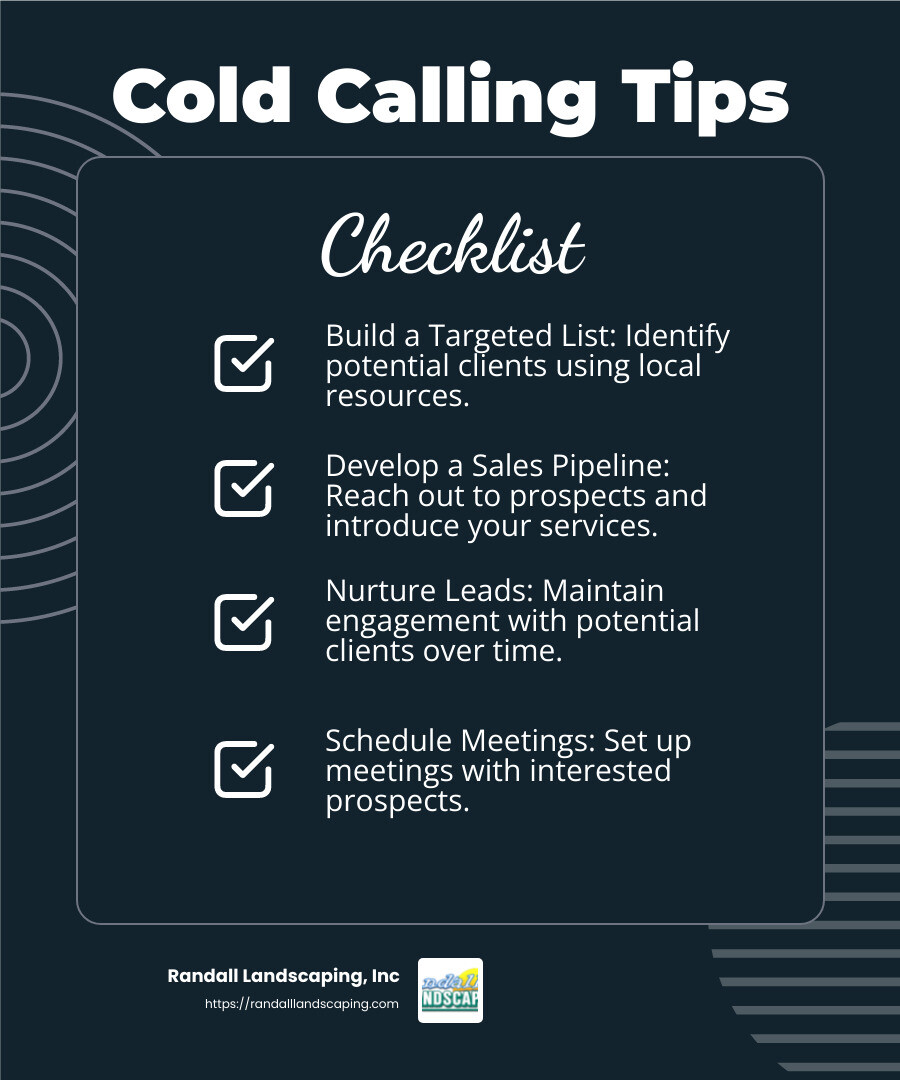
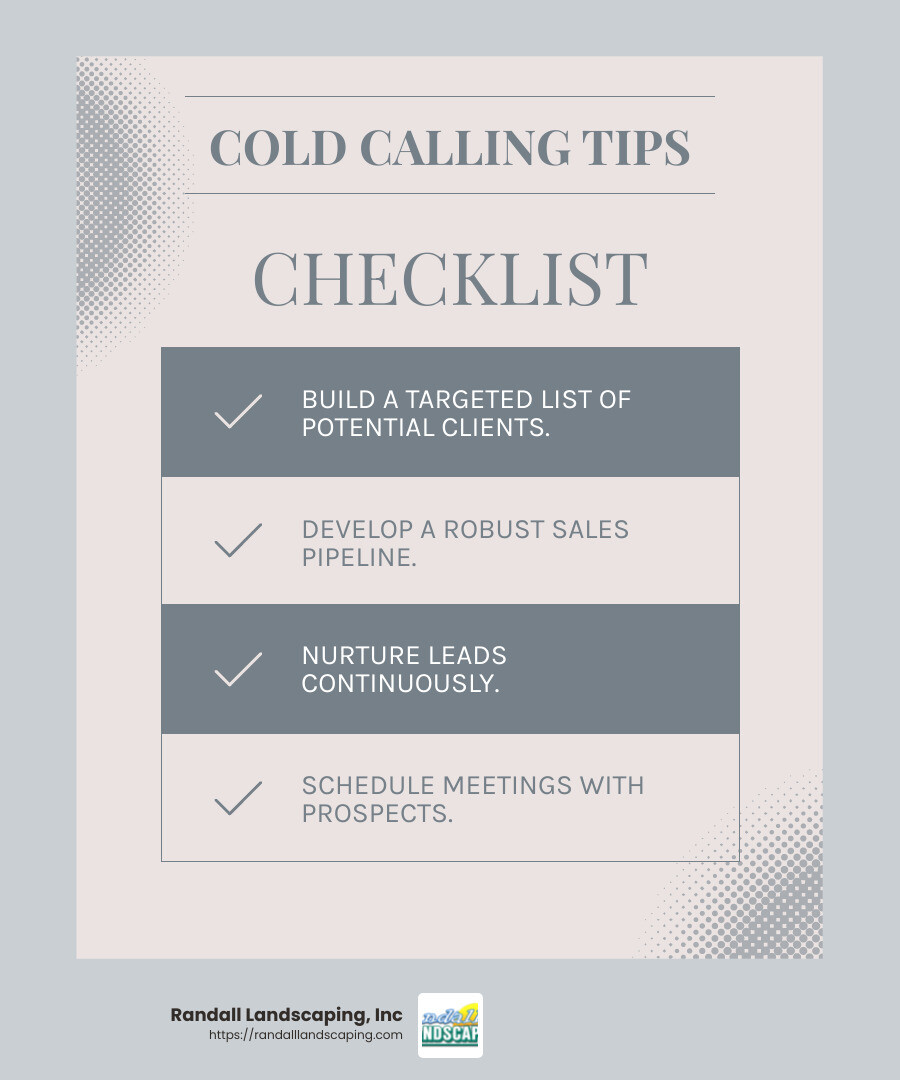
Build a Targeted List: Start with a focused list of potential clients in your area. Use commercial property lists or attend local networking events to gather information.
-
Develop a Sales Pipeline: Have your sales reps reach out to prospects. Introduce your company and highlight the value you offer. It’s a numbers game. The more calls you make, the higher your chances of success.
-
Nurture Leads: Not every prospect will be ready to sign a contract immediately. Stay in touch and provide valuable information until they’re ready to negotiate. This continuous engagement is crucial for converting leads into clients.
-
Schedule Meetings: Once a prospect shows interest, set up a meeting to present your proposal. Your goal is to showcase how you can meet their needs better than anyone else.
Email Marketing Techniques
Email marketing is a tried-and-true method for capturing leads, but it requires careful planning:
-
Lead Capture: Create a lead capture form on your website. Ask questions that help you qualify leads, such as their budget or service needs. This ensures you’re attracting the right prospects.
-
Qualifying Leads: Once you have leads, your sales team should finalize the qualification process. This step ensures sales reps only engage with prospects likely to convert.
-
Targeted Traffic: Drive targeted traffic to your website. Use SEO and online ads to attract businesses looking for landscaping services. The more specific your targeting, the better your results.
-
Nurture with Emails: Send periodic emails with valuable content. Keep your business top of mind and provide information that helps prospects see the value in your services.
Boosting Your Online Presence with Digital Marketing
Having a strong online presence is essential. Most businesses start their search for services online. Here’s how you can stand out:
-
Optimize Your Website: Ensure your website is user-friendly and clearly outlines your services. Make it easy for visitors to contact you or request a consultation.
-
Search Engine Optimization (SEO): Use keywords related to your services, like “commercial landscaping,” to improve your search engine rankings.
-
Paid Advertising: Consider using Google Ads and social media ads to reach more potential clients. These platforms allow you to target specific audiences who are actively searching for landscaping services.
By focusing on these strategies, you can effectively capture and convert leads, securing valuable contracts that will help your business grow. Next, we’ll discuss how to build relationships with potential clients through networking and community involvement.
Building Relationships with Potential Clients
Building relationships is key to securing commercial landscaping contracts. Engaging with potential clients through networking events, community involvement, and real estate groups can set you apart in the competitive landscaping industry.
Networking Events
Attending networking events is a valuable way to connect with potential clients. These gatherings provide a platform to meet decision-makers face-to-face. As Delany puts it, “Build your sphere of influence, and the world gets much smaller.” Participating in local Chamber of Commerce meetings or CEO forums can help you establish these connections.
Here’s a tip: when attending an event, bring business cards and a clear pitch about your services. Follow up with attendees afterward to turn a casual meeting into a potential business opportunity.
Community Involvement
Being active in your community not only boosts your company’s visibility but also builds trust with potential clients. Engaging in local events or sponsoring community projects can showcase your commitment to the area. This involvement helps potential clients see you as a reliable and invested partner for their landscaping needs.
For example, participating in local clean-up drives or offering your services for community parks can demonstrate your expertise and dedication. This can lead to warm referrals and open doors to new business opportunities.
Real Estate Groups
Joining real estate groups is another effective strategy. Organizations like Building Owners and Managers Association (BOMA) International and Commercial Real Estate Women (CREW) can connect you with property managers and other key players in the industry. These groups often host events where you can network and learn more about potential clients’ needs.
As Durden suggests, these groups provide direct access to decision-makers, making it easier to establish relationships and secure contracts. Being part of such organizations not only helps you stay informed about industry trends but also positions you as a knowledgeable and trusted expert.
By focusing on building relationships, you can create a network of contacts that will help you secure more commercial landscaping contracts. Next, we’ll explore effective bidding and proposal strategies to further increase your chances of success.
Bidding and Proposal Strategies
Securing commercial landscaping contracts often hinges on effective bidding and proposal strategies. Understanding the nuances of the bidding process, profit margins, and essential contract clauses can set your business apart.
Bidding Process
The bidding process for commercial landscaping is different from residential projects. Commercial clients are typically more focused on cost-effectiveness. As Schill notes, “Most commercial accounts are chasing the bottom dollar.” To stand out, you need a precise understanding of your business expenses and the specific requirements of each project.
-
Field Measurements: Start by taking accurate field measurements. Knowing the details of the landscape helps in providing a realistic and competitive bid.
-
Man-Hours Calculation: Estimate the number of man-hours required for the job. This helps in determining labor costs, a significant component of your bid.
-
Client Expectations: Understand the client’s expectations and project specifications. This ensures you meet their needs and avoid costly misunderstandings.
-
Proposal Presentation: Present your proposal clearly and professionally. Highlight your expertise and past successful projects to build confidence.
Profit Margins
Profit margins are crucial in determining the competitiveness of your bid. Delany advises considering several factors when deciding on your profit margin:
-
Competitive Landscape: Research how many competitors are bidding and their usual pricing strategies. This can inform your own pricing decisions.
-
Company Needs: Assess your current financial position. If you need new equipment or additional staff, factor these costs into your bid.
-
Upsell Opportunities: Consider potential upsell opportunities with the client. If you can offer additional services, it might justify a higher bid.
-
Client Relationship: If the bid is a result of a warm referral or a well-established relationship, you might have more flexibility with your pricing.
Contract Clauses
Including specific clauses in your contracts can protect your business and ensure smooth project execution. Delany emphasizes the importance of clauses that address payment issues.
-
Work-Pause Clause: Include a clause that allows you to pause work if payments are delayed. This protects you from financial strain and encourages timely payments from clients.
-
Scope of Work: Clearly define the scope of work to prevent scope creep, which can erode profit margins.
-
Termination Conditions: Outline conditions under which either party can terminate the contract. This provides clarity and reduces potential disputes.
By mastering the bidding process, calculating appropriate profit margins, and including essential contract clauses, you can improve your chances of winning commercial landscaping contracts. Next, we’ll explore how expanding your reach and services can further grow your business.
Expanding Your Reach and Services
To grow your commercial landscaping business, you must expand your reach and services. This means increasing your service areas, exploring new territories, and scaling your operations effectively.
Service Areas
Start by evaluating your current service areas. Are there neighboring towns or cities with potential clients you haven’t reached yet? For instance, if you’re based in Amesbury, consider expanding to nearby locations like Andover, Boxford, or North Reading. Identifying gaps in your current service map can open doors to new opportunities.
Exploring New Territories
Venturing into new territories requires strategic planning. Research the demand for landscaping services in areas like Salem, Windham, or Plaistow. Look at factors like population growth, business development, and competition.
-
Market Research: Conduct thorough market research to understand the needs of these new areas. This includes assessing the type of businesses present and the average budget they allocate for landscaping.
-
Local Networking: Join local business groups and attend community events. Building relationships in new territories can provide valuable insights and connections.
Scaling Your Business
Scaling your business involves more than just expanding geographically. It requires enhancing your service offerings and operational efficiency.
-
Diversify Services: Consider adding new services like hardscaping or commercial snow plowing. This not only attracts a broader client base but also increases revenue streams.
-
Invest in Technology: Use technology to improve scheduling, client communication, and project management. This can save time and reduce errors.
-
Hire and Train Staff: As you grow, you’ll need more hands on deck. Hire skilled workers and provide them with the necessary training to maintain quality service.
Pricing Strategy
When expanding, it’s crucial to have a flexible pricing strategy. Average costs for landscaping services can vary widely based on location and project scope. For example, average prices might range from $500 to $1,500 for basic lawn care, but more extensive projects like tree planting or hardscaping can cost $2,000 to $6,000 or more. Always reference that these are average costs based on internet data, not actual costs for Randall Landscaping.
By expanding your reach and services, you can tap into new markets and increase your business’s overall profitability. Next, we’ll address common questions about finding and securing commercial landscaping contracts.
Frequently Asked Questions about Commercial Landscaping Contracts
How to Find Commercial Landscape Accounts?
Finding commercial landscape accounts is all about networking and research. Start by connecting with local businesses, attending community events, and joining real estate groups. These platforms offer opportunities to meet potential clients and understand their landscaping needs.
Engage in online research to identify businesses that might require landscaping services. Platforms like Bidnet Direct can help you find open solicitations for landscaping work. Look at closed and awarded bids to understand what agencies are looking for and tailor your proposals accordingly.
How to Approach Potential Clients?
Approaching potential clients requires a strategic mix of warm calls and direct contact. Unlike cold calls, warm calls involve reaching out to prospects who have shown some interest or have been referred to you. This approach increases the chances of a positive response.
Participate in community events to meet potential clients in a more relaxed setting. This helps build relationships and trust. Direct contact, such as visiting businesses or sending personalized emails, can also be effective. Highlight your services, experience, and the value you can add to their properties.
What Are Common Pitfalls to Avoid?
When securing commercial landscaping contracts, avoid these common pitfalls:
-
Low Profit Margins: It might be tempting to lower prices to win contracts, but this can hurt your business in the long run. Stick to your set profit margins to ensure sustainability.
-
Over-Dependence on One Account: Relying heavily on a single client can be risky. If you lose that account, it can significantly impact your business. Diversify your client base to mitigate this risk.
-
Inadequate Training: Ensure your team is well-trained for commercial projects. Residential and commercial landscaping require different skills. Without proper training, employees may struggle with the demands of commercial contracts.
By understanding these strategies and avoiding common pitfalls, you can effectively secure and manage commercial landscaping contracts. Next, we’ll conclude with how Randall Landscaping, Inc prioritizes quality work and customer satisfaction.
Conclusion
At Randall Landscaping, Inc., our commitment to quality work and customer satisfaction sets us apart in the competitive world of commercial landscaping. We understand that your outdoor space is more than just a piece of land—it’s an extension of your business or home, and it deserves the utmost care and attention.
Quality Work: Our team of skilled professionals brings years of experience to every project. Whether it’s designing a new landscape or maintaining an existing one, we ensure that each task meets the highest standards. Our reputation is built on the quality of our work, and we take pride in delivering exceptional results.
Customer Satisfaction: Your satisfaction is our top priority. We work closely with you to understand your vision and preferences, keeping open lines of communication throughout the project. This ensures that the final result aligns with your expectations. Our clients’ positive feedback and long-standing relationships speak volumes about our dedication to excellence.
By prioritizing quality and customer satisfaction, we aim to build lasting relationships with our clients. Whether you’re looking to improve your commercial property’s curb appeal or maintain a pristine landscape, Randall Landscaping, Inc. is here to help. Explore our commercial landscaping services to see how we can transform your outdoor space into a place you’ll love.
Thank you for considering Randall Landscaping, Inc. for your commercial landscaping needs. We look forward to working with you and turning your vision into reality.