Transform Your Yard with a DIY Gravel Walkway
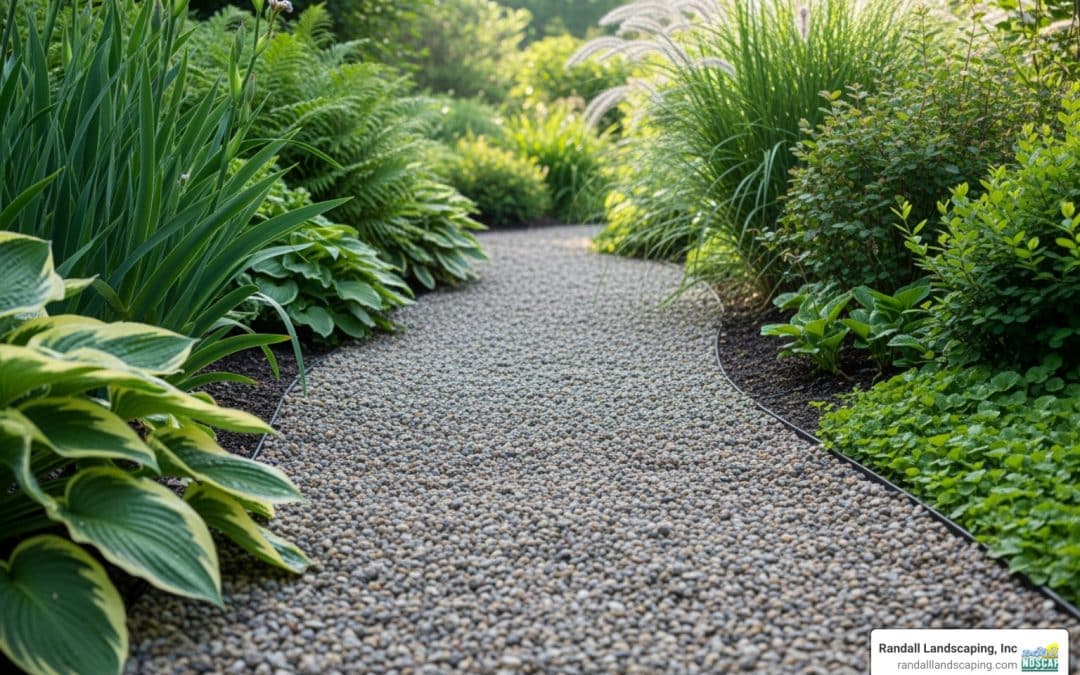
Learning how to install crushed gravel walkway is one of the most satisfying and transformative weekend projects a homeowner can undertake. It’s a project that delivers immediate impact, boosting your home’s curb appeal and adding a touch of rustic elegance or modern simplicity to your landscape. A well-designed gravel path does more than just look good; it creates an inviting journey through your garden, connects different outdoor living areas, and neatly solves common yard problems like worn-out grass paths and muddy patches after a rainstorm.
Quick Installation Overview:
This guide will walk you through the entire process, but here’s a snapshot of the key stages to building a durable, beautiful path:
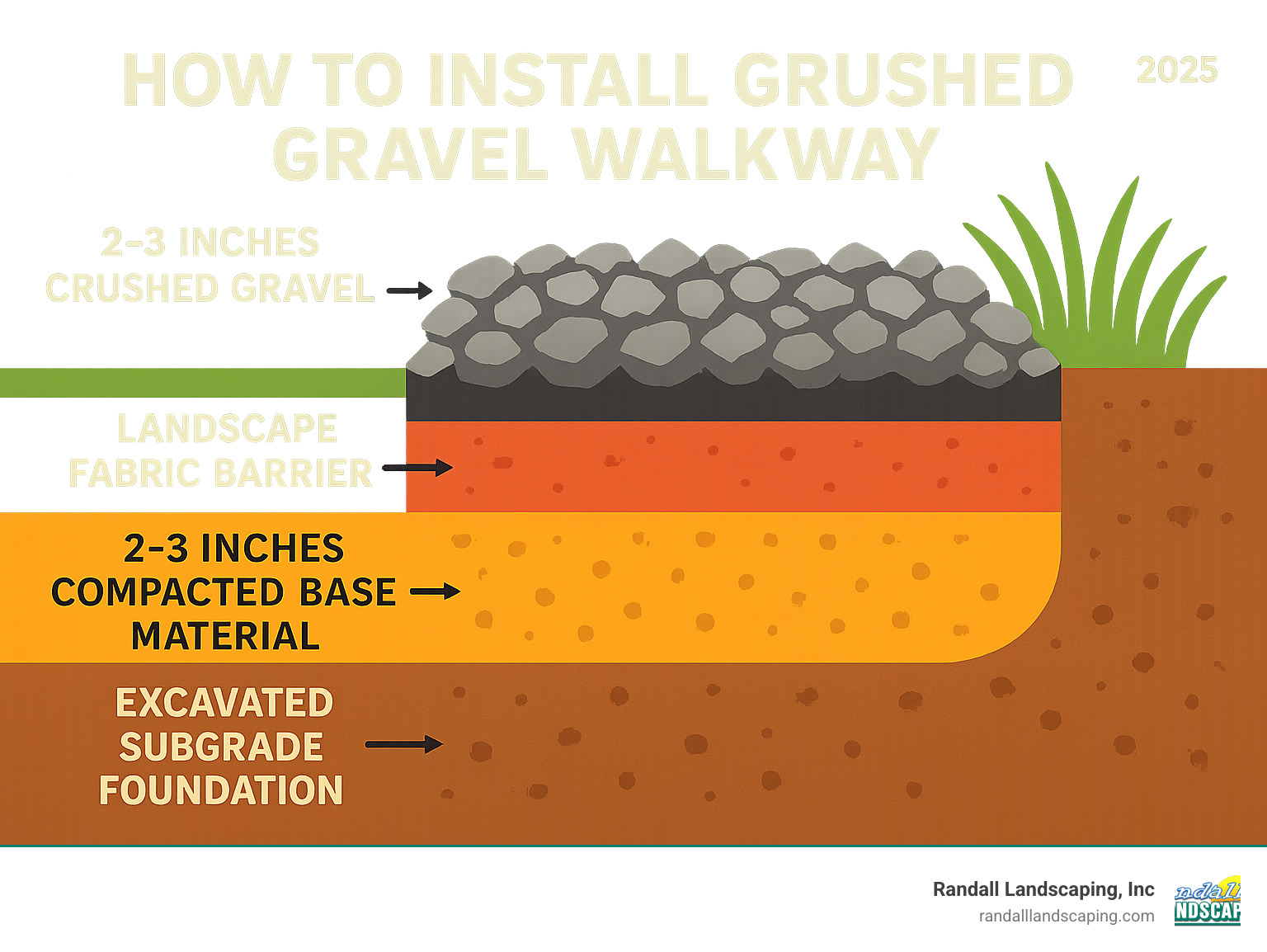
- Excavate: Dig out the planned path area to a depth of 4-6 inches to create a solid foundation.
- Compact Base: Add and thoroughly compact a base layer of crusher run or stone pack, which is the secret to a stable, long-lasting walkway.
- Install Barriers: Lay down professional-grade landscape fabric to prevent weeds and install your chosen edging to keep the gravel contained.
- Add Gravel: Spread 2-3 inches of your chosen decorative crushed gravel in layers, raking it smooth as you go.
- Final Compaction: Compact the top layer of gravel to create a firm, level, and comfortable walking surface.
The true beauty of gravel walkways lies in their unique combination of simplicity, durability, and design flexibility. Unlike rigid materials like concrete or pavers, which can be unforgiving and expensive, gravel moves with the earth. This is a massive advantage here in New England, where our harsh freeze-thaw cycles can heave and crack solid surfaces. A gravel path, however, remains stable and crack-free year after year. This flexibility also allows you to create stunning organic, curving designs that follow the natural contours of your land—a feat that is often difficult and costly with other materials.
For a typical 30-foot path, the total project cost can range from $100-300, making it an incredibly budget-friendly upgrade. With a set of basic tools and a dedicated weekend, you can achieve a professional-quality walkway that will serve you beautifully for years with very little upkeep.
I’m Tommy Randall, owner of Randall Landscaping. Since 2006, my team and I have been dedicated to helping homeowners across Massachusetts and Southern New Hampshire create outdoor spaces they love. We’ve designed and installed countless walkways, and I’ve personally guided many clients through the process of how to install crushed gravel walkway projects. I’m excited to share our proven, field-tested techniques to help you build a path that not only looks fantastic but is built to last.
Planning Your Perfect Path: Tools, Materials, and Gravel Choices
Before a single shovel of dirt is turned, proper planning is the most important step. Trust me on this—the time you invest now in choosing the right materials, gathering your tools, and mapping out your project will pay off tenfold. I’ve seen countless well-intentioned weekend projects go sideways because of a missed tool or a miscalculation on materials. A little preparation ensures a smooth, enjoyable process from start to finish.
Of course, if you’d rather have a team of experts handle the heavy lifting, we offer comprehensive Hardscaping Services that cover everything from initial design to the final sweep-up. But for those of you ready to get your hands dirty and tackle this rewarding project, let’s get you perfectly prepared for success.
Essential Tools and Materials
There’s nothing more frustrating than having to stop mid-project for another trip to the hardware store. Let’s create a comprehensive checklist so you can have everything on hand before you begin. The great news is that most of these are foundational landscaping tools you’ll use for many other yard projects.
Digging and Hauling Tools:
- Flat-Edged Shovel: Essential for creating clean, vertical edges along your path’s border. It’s your go-to tool for shaping and defining the excavation area.
- Digging Shovel (Round Point): This is for the initial grunt work of breaking up soil and scooping it out.
- Mattock or Pickaxe: This is your secret weapon against compacted soil, clay, and stubborn roots. A mattock has a wide adze on one side for chopping through soil and a pick on the other for prying out rocks. It saves an incredible amount of time and effort.
- Wheelbarrow: Don’t underestimate how much soil you’ll be moving out and how much stone you’ll be moving in. A sturdy wheelbarrow is non-negotiable.
Compaction and Leveling Tools:
- Hand Tamper: This is a heavy, flat metal plate on a long handle. It’s crucial for compacting both the base layer and the final gravel layer. It works perfectly well for smaller paths.
- Plate Compactor (Rental): If your path is longer than 50 feet or you want the most professional, solid result possible, renting a gas-powered plate compactor is a wise investment. It provides far more compaction force than a hand tamper, ensuring a rock-solid foundation.
- Sturdy Metal Rake: You’ll use this constantly for spreading and leveling the base material and the top layer of gravel.
- Long Level (4-foot minimum): Absolutely critical for ensuring your path has a slight slope (about a ¼-inch drop per foot of width) for proper water drainage.
- Measuring Tape, String, and Stakes: For accurately marking out your path’s dimensions.
Finishing and Safety Gear:
- Utility Knife: For cutting the landscape fabric to size.
- Hammer or Rubber Mallet: For securing the stakes that hold your edging in place.
- Work Gloves and Safety Glasses: Non-negotiable. Moving stone creates dust and can send small chips flying. Protect your hands and eyes. A dust mask is also highly recommended when spreading fine materials like stone dust or decomposed granite.
Core Materials:
- Base Material: This is the unseen hero of your walkway. You need crusher run (also known as 21A stone, ABC stone, or MOT Type 1) or stone pack. This material is a mix of crushed stone of various sizes, from about ¾-inch down to fine dust. When compacted, these different-sized particles lock together tightly to form a stable, permeable foundation.
- Landscape Fabric: This is a geotextile barrier that serves two critical functions: it prevents weeds from growing up from the soil below, and it stops your expensive gravel from mixing with the dirt over time. Do not skip this step.
- Edging: This defines the path’s shape and, most importantly, keeps your gravel from spilling out into your lawn or garden beds. Galvanized or steel edging is my top recommendation for its durability and clean look. Pressure-treated wood can create a more rustic feel, while paver stones or cobblestones can serve as a decorative and robust border.
Choosing the Right Gravel for Your Walkway
This is the fun part where you define the look and feel of your path. The type of gravel you select impacts aesthetics, walking comfort, stability, and cost. Here’s a breakdown of the most common choices:
| Gravel Type | Stability | Comfort | Cost | Best For |
|---|---|---|---|---|
| Crushed Gravel (Angular) | Excellent | Good | $$ | High-traffic areas, slopes, classic walkways |
| Decomposed Granite | Excellent | Excellent | $$$ | Formal gardens, patios, smooth surfaces |
| Pea Gravel (Rounded) | Fair | Poor | $ | Decorative accents, low-traffic zones |
Crushed Gravel (Angular Stone): This is the workhorse and my go-to recommendation for most how to install crushed gravel walkway applications. The stones are mechanically crushed, giving them flat faces and sharp, angular edges. These edges interlock beautifully when compacted, creating a firm and stable surface that stays put underfoot. It’s available in various sizes, but a ¼-inch to ½-inch size is ideal for walkways—it’s small enough to be comfortable but large enough to provide texture and stability. Colors range from classic gray and blue-gray to warmer tans and reds, allowing you to match your home’s exterior or garden palette.
Decomposed Granite (DG): Think of DG as the luxury choice for gravel paths. It’s a fine, sandy-textured aggregate that compacts to a very hard, smooth surface, almost like a natural pavement. Walking on a well-installed DG path is a solid, quiet experience. It often comes in beautiful golden or reddish hues that complement naturalistic garden designs. It can be installed loose or with a stabilizer mixed in, which helps it harden even more. The main drawbacks are its higher cost and the need for more precise installation to achieve that perfect finish.
Pea Gravel: These are small, rounded, pea-sized stones that have been naturally weathered smooth by water. While they offer a charming, classic look and excellent drainage, I strongly advise against using them for primary walkways. Those smooth, round surfaces act like tiny marbles, constantly shifting under your feet. It creates an unstable, noisy, and often frustrating walking experience. It’s best reserved for decorative areas, drainage trenches, or around fire pits where people are mostly stationary.
Self-Binding Gravel: Also known as path fines or hoggin, this is another excellent option that contains a mix of gravel, sand, and clay. The natural clay binder helps the material compact into a very firm, durable, and smooth surface that is more stable than loose gravel but more natural-looking than asphalt. It’s a popular choice for creating the feel of a classic English country garden path.
Budgeting for Your Project
Let’s talk numbers. While how to install crushed gravel walkway projects are known for being cost-effective, the final price tag depends heavily on your material choices, path dimensions, and local supplier pricing.
Based on internet research, you can expect materials to run $2-8 per square foot for a complete installation. For a standard 3-foot wide by 30-foot long path (90 square feet), this puts your estimated material cost in the range of $180-720. Opting for premium materials like stabilized decomposed granite or high-end stone edging will push your costs toward the upper end of that spectrum.
Here’s a general breakdown of material costs:
- Base Material (Crusher Run): Typically costs $30-110 per ton when purchased in bulk.
- Top Layer Gravel: Ranges from $25-75 per ton for standard crushed gravel, with decorative varieties costing more.
- Landscape Fabric: Runs about $0.50-1.50 per square foot for professional-grade fabric.
- Steel Edging: Costs approximately $3-12 per linear foot.
Disclaimer: These are average costs based on general internet data and are for estimation purposes only. They are not actual quotes from Randall Landscaping. Local pricing can vary significantly, and remember that buying materials by the bag from a big-box home center will almost always be 2-3 times more expensive than getting a bulk delivery from a local supplier.
Pro Tip for Calculating Materials: To figure out how much stone you need, use this simple formula: (Length in feet x Width in feet x Depth in inches) / 324 = Tons needed. For example, for a 30′ long, 3′ wide, 3″ deep layer of base material: (30 x 3 x 3) / 324 = 0.83 tons. Always order about 10% extra to be safe.
To get the best value, call local quarries and landscape supply yards directly. They can help you calculate quantities and arrange for bulk delivery, which saves you money and the back-breaking work of hauling dozens of bags. For our Residential Landscaping projects, we’ve cultivated relationships with the best local suppliers to ensure we get high-quality, consistent materials for our clients.
The great thing about a gravel walkway is its adaptability. You can start with a simple, budget-friendly installation now and easily add improvements like bluestone stepping stones or more decorative edging in the future as your budget allows.