

Introduction: The Future of Driveways is Permeable
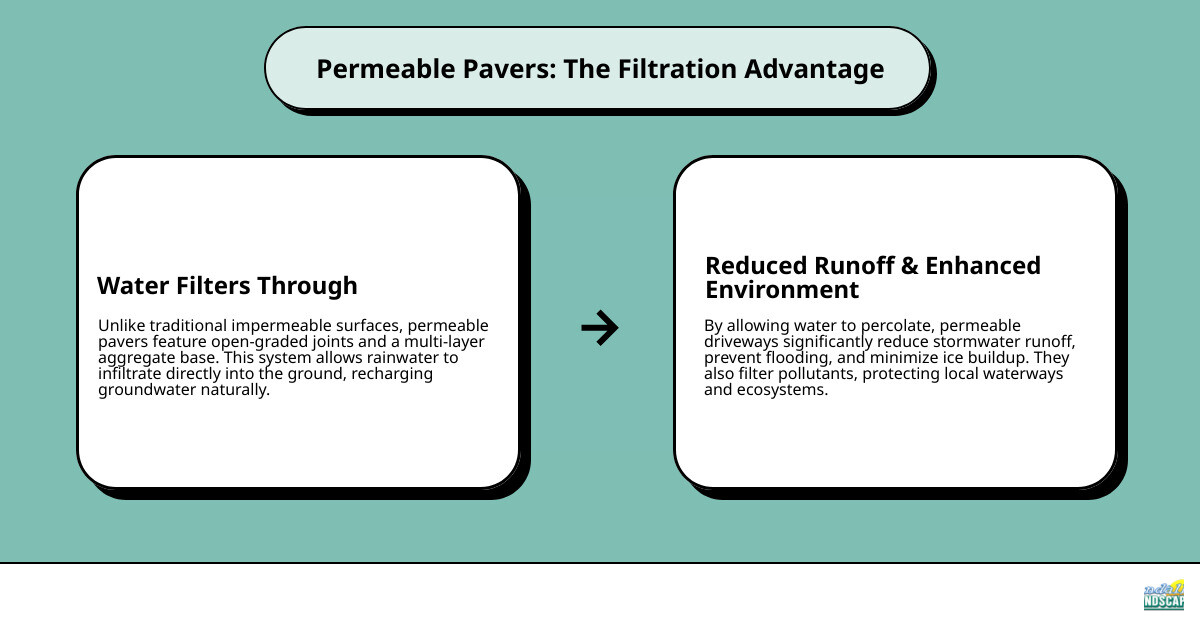
Permeable paver driveway installation is changing how homeowners manage stormwater while creating beautiful, durable outdoor spaces. Unlike traditional asphalt or concrete, permeable pavers allow rainwater to filter through the surface and into the ground below, reducing runoff by up to 100% while helping to prevent flooding, erosion, and ice buildup.
Quick Overview: What is Permeable Paver Driveway Installation?
- Excavate the driveway area to 8-20 inches depth
- Install geotextile fabric and aggregate base layers
- Compact open-graded stone in lifts for stability
- Lay permeable pavers with consistent joint spacing
- Fill joints with small, clean aggregate
- Maintain by keeping joints clear of debris
Key Benefits:
- Reduces stormwater runoff and flooding
- Prevents ice patches in winter
- Filters pollutants before they reach waterways
- May qualify for municipal rebates or reduced stormwater fees
- Lasts 20-50+ years with proper maintenance
If you’ve dealt with pooling water or icy driveways, you know traditional paving has its limits. Permeable pavers offer a smarter alternative that works with nature, not against it.
The installation is a multi-layer system requiring careful excavation and specific aggregates to create a water storage reservoir. Done correctly, the result is an eco-friendly, durable, and low-maintenance driveway.
I’m Tommy Randall, owner of Randall Landscaping Business, and since 2006 I’ve helped homeowners throughout Massachusetts and New Hampshire create beautiful, functional outdoor spaces through expert permeable paver driveway installation. With nearly two decades of hardscape design and installation experience, I’ve seen how proper installation techniques make all the difference in long-term performance.
Quick permeable paver driveway installation definitions:
Why Choose Permeable Pavers? Unpacking the Benefits
Choosing permeable pavers for your driveway means opting for a solution that benefits both your property and the environment. These innovative pavers are designed to allow water to percolate through their surface and into the ground below, mimicking natural absorption. This is a stark contrast to traditional impervious surfaces like asphalt or solid concrete, which create extensive stormwater runoff.
Here’s a quick comparison to highlight the differences:
| Feature | Permeable Pavers | Traditional Asphalt/Concrete |
|---|---|---|
| Stormwater Runoff | Significantly reduced, up to 100% infiltration | High runoff, contributes to flooding |
| Maintenance | Requires occasional cleaning of joints to prevent clogging | Requires sealing, crack repair, and resurfacing |
| Lifespan | 20-50+ years with proper installation and maintenance | 15-20 years for asphalt, 20-30 years for concrete (can crack/heave) |
| Environmental Impact | Eco-friendly, recharges groundwater, filters pollutants, reduces heat island effect | Contributes to stormwater pollution, urban heat island effect, strain on municipal systems |
| Winter Safety | Reduces ice patches due to minimized water pooling | Prone to ice formation and freeze-thaw damage |
| Cost | Higher upfront, potential long-term savings (reduced drainage needs, incentives) | Lower upfront, higher long-term maintenance costs |
One of the primary benefits for homeowners in areas like Andover and Salem is flood prevention. By allowing rainwater to soak into the ground, permeable pavers drastically reduce standing water and localized flooding. This also helps control soil erosion, as water filters through rather than washing away topsoil.
Moreover, this system helps recharge local groundwater, supporting our natural ecosystems and making permeable pavers a key component of sustainable landscape design. For chilly New Hampshire winters, they also reduce dangerous ice patches by minimizing water pooling.
Environmental and Regulatory Advantages
Permeable pavers are a cornerstone of modern stormwater management. They can reduce runoff by up to 100% compared to impervious surfaces, alleviating strain on municipal systems during heavy rain. They also filter pollutants from rainwater as it percolates through the aggregate base. This traps contaminants, protects local waterways, and recharges aquifers with cleaner water.
Homeowners may also find financial incentives. Many municipalities in Massachusetts and New Hampshire limit impermeable surfaces or impose stormwater fees. Installing permeable surfaces can help you meet these regulations and may qualify for rebates or tax benefits. We always recommend checking with your local planning department in towns like Atkinson, Boxford, or Methuen for specific programs.
Practical Perks for Homeowners
Beyond the environmental good, permeable pavers offer numerous practical benefits:
- Minimized Puddling: The design ensures water drains quickly, eliminating standing water that can be a nuisance and a breeding ground for mosquitoes.
- Reduced Ice Buildup: A huge benefit for our clients in the Merrimack Valley, this system prevents water from pooling and freezing. This reduces ice patches, making your driveway safer and lessening the need for de-icing chemicals.
- Preventing Foundation Water Damage: Permeable pavers help prevent water from accumulating near your home’s foundation, reducing the risk of costly water damage and basement flooding.
- Durability and Lifespan: With proper installation, a permeable paver driveway can last 20-50+ years. The robust base and interlocking pavers withstand heavy loads and freeze-thaw cycles.
- Supporting Surrounding Residential Landscaping: By allowing water to soak into the ground, permeable pavers help keep surrounding soil moist, nurturing plants and preventing erosion.
- Aesthetically Pleasing Designs: Permeable pavers come in a vast array of styles, colors, and textures, allowing for beautiful, customizable designs that improve your home’s that improve your home’s curb appeal. We’ll explore more aesthetic options later!
Your Step-by-Step Guide to Permeable Paver Driveway Installation
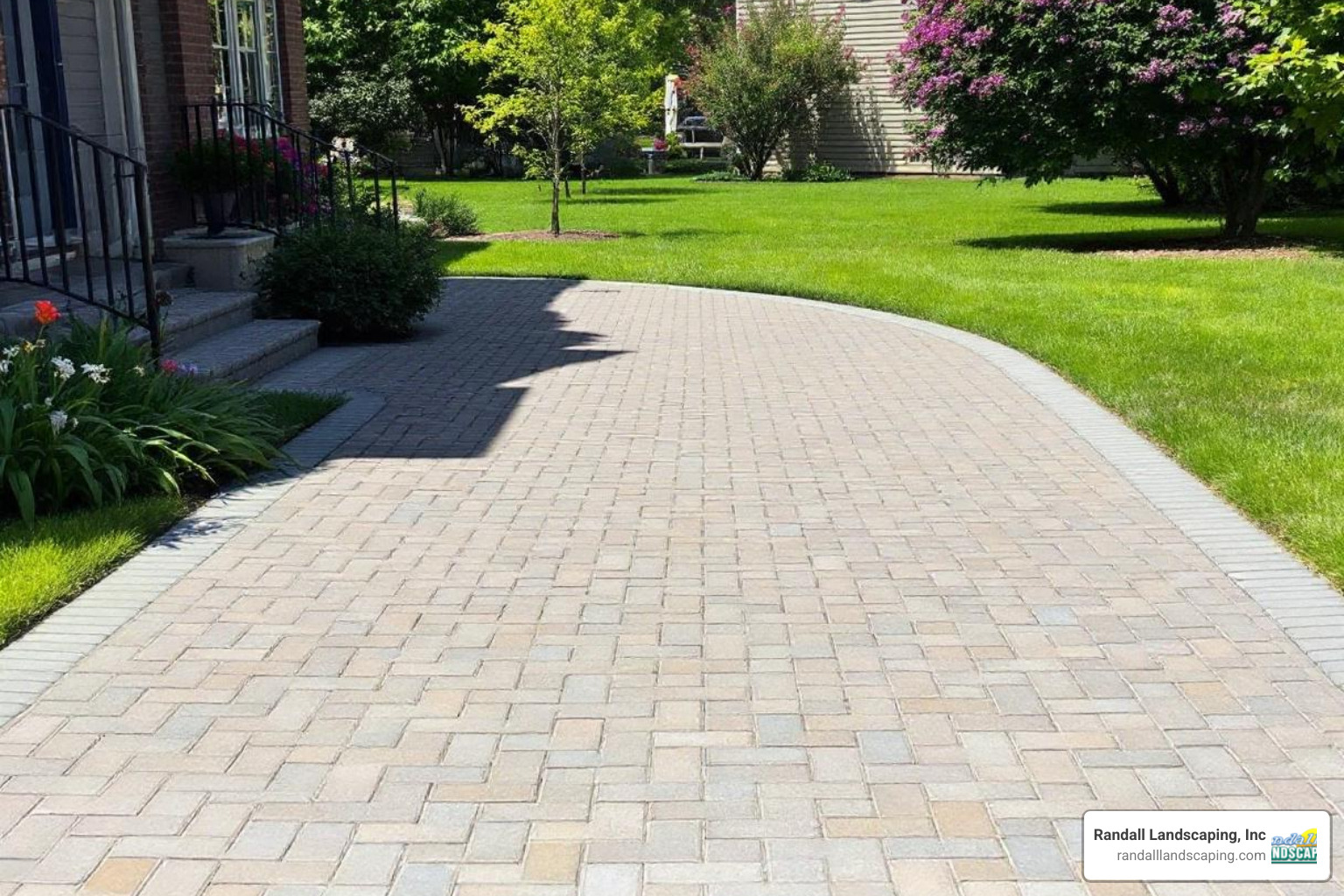
Starting a permeable paver driveway installation is an investment in your home and the environment. While more involved than traditional paving, the long-term benefits are well worth it. Here’s how we approach a successful installation.
Step 1: Planning and Site Preparation
Thorough planning is the bedrock of a successful project, ensuring the installation is custom to your property.
Essential Planning Steps:
- Evaluating Soil Conditions: This is critical. We perform an infiltration test to measure how quickly water drains. Ideally, soil should drain at least 1/2-inch per hour. For clay-heavy soils, we may need additional measures like underdrains or a deeper base. How soil conditions affect the installation and performance of permeable pavers is a key consideration.
- Checking for Underground Utilities: Before digging, we contact Dig Safe to mark all underground utility lines. Safety first!
- Calculating Slope and Drainage: Permeable pavers are best for slopes under 2%. We ensure a minimum 1% incline at the excavation bottom for proper drainage.
- Choosing Your Paver Style: Selecting your pavers early helps in planning the overall design. We’ll discuss the different types and styles later.
- Measuring the Project Area: Accurate measurements are crucial for calculating the precise amount of materials needed, which helps us provide an accurate estimate and avoid waste.
- Obtaining Permits: Some municipalities require permits, especially for projects near water bodies. We check local regulations in your town, whether it’s Georgetown or Pelham, to ensure compliance.
Step 2: Excavation and Subgrade Compaction
- Digging to the Correct Depth: The excavation depth is deeper than for traditional driveways, typically 8 to 20 inches, depending on load and soil conditions. We ensure a minimum of two feet between the stone base and bedrock or the water table for maximum stability.
- Creating a Slight Grade for Drainage: Even though the system is permeable, maintaining a slight grade (around 1%) at the bottom of the excavation helps direct water flow within the aggregate layers.
- Compacting the Native Soil Subgrade: The native soil is lightly compacted. We rake and level the bottom of the excavation but avoid over-compacting, as this can impede natural infiltration.
- Geotextile Fabric Installation: We lay a woven geotextile fabric across the excavated area and up the sides. This filter prevents soil from clogging the aggregate layers while allowing water to pass through and stabilizing the base.
Step 3: Building the Permeable Base
This is the system’s reservoir, where stormwater is stored before infiltrating the ground.
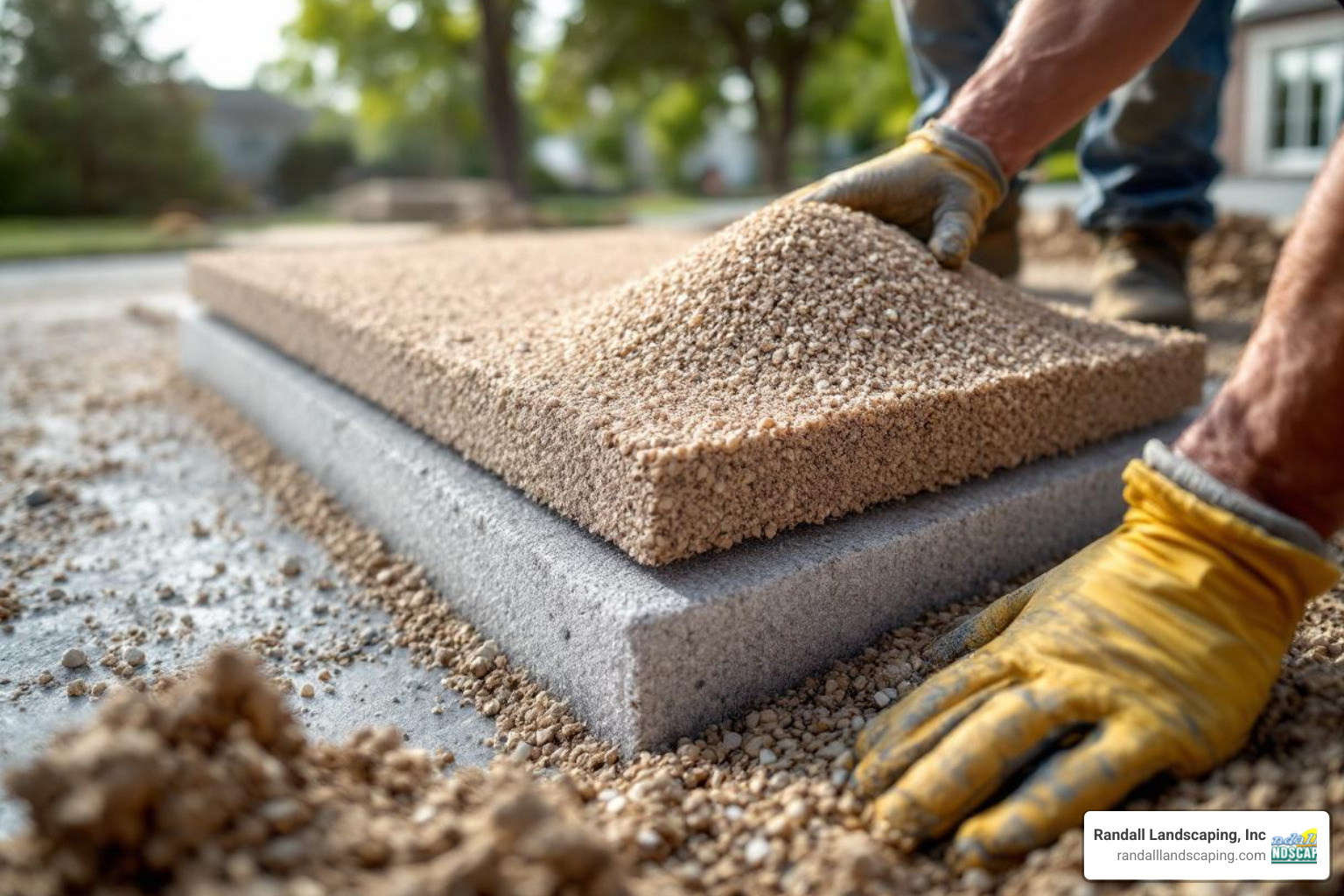
- Open-Graded Aggregate: Permeable bases use “open-graded” aggregates—stones with little to no fine material, creating large void spaces for water storage.
- Reservoir Course (ASTM No. 57 Stone): We spread and compact coarse aggregate (1.5-inch washed stone) in 3-4 inch lifts. Each lift is compacted to create a stable, dense base. This layer is usually a minimum of 12 inches deep, creating the primary water reservoir.
- Choker Course (ASTM No. 8 Stone): On top of the reservoir, we add a thinner layer of finer, open-graded aggregate (3/8-inch pea stone). This “choker course” prevents the bedding layer from migrating down. It is also compacted and leveled to provide a smooth surface for the pavers.
- More info about hardscape products can be found here.
Step 4: Laying the Pavers and Edge Restraints
- Setting the Bedding Course (ASTM No. 8 Stone): A 2-inch layer of 1/4-inch gravel is spread and leveled precisely over the choker course using guides and a straight edge to create the final, level bed for the pavers.
- Placing Pavers in the Desired Pattern: We lay pavers in the desired pattern, starting from a straight edge. It’s important to work from the already laid pavers to avoid disturbing the bedding course and to pull from multiple pallets to ensure even color distribution.
- Maintaining Consistent Joint Spacing: Permeable pavers have built-in spacer bars to create consistent, wider joints (usually 1/4 inch), which are crucial for water infiltration.
- Installing Durable Edge Restraints: Edge restraints are essential to prevent pavers from shifting. We use strong, durable restraints that are securely anchored to maintain the driveway’s shape.
- Making Cuts with a Diamond Blade Saw: For edges and curves, pavers are cut with a diamond blade saw. Cut pieces for driveways should not be smaller than 1/3 of their original size to maintain stability.
Step 5: Filling the Joints
This final step locks the pavers and ensures the system functions correctly.
- Sweeping Aggregate into Joints (ASTM No. 9 Stone): We spread small, clean aggregate (1/8-inch gravel) over the dry pavers and use a push broom to sweep it into the joints until they are completely filled.
- Final Compaction: A vibratory plate compactor with a protective mat is run over the driveway. This settles the joint aggregate, locking the pavers into place for a stable, even surface.
- Topping Off Joints: After compaction, we inspect and top off the joints with more aggregate as needed. This may be repeated as the aggregate settles.
- For a deeper dive into these systems, you can refer to a guide to pervious surfaces.
Cost, Care, and Durability of Your New Driveway
A permeable paver driveway is an investment in your property’s future, offering long-term value through durability, environmental benefits, and reduced maintenance. Let’s look at what that investment entails.
Understanding the Cost of a Permeable Paver Driveway Installation
It’s natural to consider the cost of a permeable paver driveway installation. While the upfront cost can be higher than traditional options, the long-term savings and benefits often make it a worthwhile investment.
Note: All pricing referenced is based on internet averages and not actual costs for Randall Landscaping. Average installation costs for permeable paver driveways can range widely, from $10–$40 per square foot or more, depending on site conditions and material choices.
Several factors influence the overall price:
- Material Costs: The type and quality of permeable pavers chosen impact the price. The cost of the specialized open-graded aggregates for the base also plays a role.
- Labor Costs: Due to the more complex, multi-layered installation process, labor costs for permeable pavers are typically higher than for conventional driveways.
- Project Size and Site Complexity: A larger driveway, difficult site access, significant slopes, or challenging soil conditions can increase costs.
- Additional Drainage Needs: If your site requires underdrains or other specialized drainage components, these will add to the overall expense.
Despite the higher initial outlay, this investment can lead to long-term savings. These include reduced stormwater fees, lower maintenance costs compared to asphalt or concrete, and increased property value. It’s a smart, sustainable choice for your home. You can find more info about driveway pavers here.
Maintaining Your Permeable Paver System
Permeable paver driveways are relatively low-maintenance compared to asphalt, but they require specific care to ensure long-term performance.
- Routine Inspection: Inspect your driveway seasonally and after major storms for debris in the joints or settled aggregate.
- Removing Debris from Joints: The most crucial task is keeping the paver joints clear of leaves, dirt, and other debris that can reduce permeability. A leaf blower or stiff broom is excellent for routine clearing.
- Using a Leaf Blower or Vacuum: For optimal performance, especially after heavy leaf fall, a leaf blower or specialized vacuum can effectively remove organic matter from the joints.
- Occasional Joint Stone Replenishment: Over time, top off the joints with fresh 1/8-inch gravel (ASTM No. 9 stone) to ensure proper filtration and stability.
- Avoiding Sand or Soil Contamination: Be careful not to track sand, topsoil, or other fine materials onto your permeable driveway, as these can quickly clog the system.
- Winter Care and De-icing: Permeable pavers naturally reduce ice buildup. If de-icing is necessary, use minimal salts, preferably products with calcium magnesium acetate (CMA) rather than sodium chloride to protect the pavers and groundwater.
- More info about sealing driveway pavers is available, though permeable pavers typically do not require sealing.
Potential Challenges and Solutions
Understanding potential challenges and their solutions is key to a successful project.
- Clogging from Debris: This is the most common concern. If fine sediment or organic matter fills the joints, permeability can decrease.
- Solution: Regular maintenance is paramount. Sweeping, blowing, or vacuuming can keep joints clear. Professional maintenance can restore full functionality if needed.
- Installation on Heavy Clay Soil: Clay soils have poor infiltration rates.
- Solution: For properties with clay-heavy soils (like parts of Lawrence or Dracut), a deeper base or underdrains can be designed to direct excess water away.
- Heavy Vehicle Traffic Considerations: Very heavy or constant traffic can stress the system if not designed correctly.
- Solution: Proper design of the base layers, including adequate depth and compaction, is crucial to distribute weight evenly for the expected load.
- Preventing Weed Growth: Weeds can sometimes sprout in the joint aggregate.
- Solution: Quality open-graded stone and geotextile fabric significantly reduce weed growth. Any weeds can usually be removed by hand.
- Working with a Qualified Landscape Paver Contractor: The most effective way to overcome challenges is to partner with experienced professionals. Our team at Randall Landscaping has the expertise to assess your site, design an appropriate system, and execute the permeable paver driveway installation flawlessly.
Beyond the Driveway: Aesthetics and Other Applications
While we’ve focused on driveways, the beauty and functionality of permeable pavers extend far beyond. Their versatility in design and application means you can integrate sustainable water management throughout your outdoor living spaces.
Aesthetic Options and Styles
One of the often-underestimated benefits of permeable pavers is the sheer range of aesthetic choices available. You don’t have to sacrifice beauty for functionality!
- Popular Paver Styles: You can find permeable versions of many popular paver styles, including:
- Traditional Cobble: Offering a classic, old-world charm.
- Modern Plank: Long, linear pavers for a contemporary look.
- Classic Brick: A timeless and neat choice.
- Grid Pavers: Such as Turfstone, which allow grass or gravel to grow through, creating a “green” appearance.
- Specific Product Lines: Brands like Belgard offer collections such as Aqua Dublin, Aqua-Bric, Aqualine Series, Eco Dublin, Eco Urbana, Eco Cobble, and Urbana Stone, each with unique textures and shapes. The Andover Collection also features permeable options like Andover 5511 Permeable.
- Available Colors and Finishes: Permeable pavers come in a spectrum of colors, from natural earth tones and grays (like Oxford Grey, Pewter, Charcoal) to richer blends (Richfield Blend, Chatham Blend, Autumn Blend, Vineyard Blend). Finishes can range from smooth to textured, clefted, or tumbled, allowing you to match your home’s architectural style perfectly.
- Creating Patterns: Just like traditional pavers, permeable pavers can be laid in various patterns, such as herringbone, running bond, basketweave, or custom designs, to add visual interest and sophistication to your driveway or patio.
- Combining with Other Hardscaping Elements: Permeable pavers integrate beautifully with other hardscaping features like retaining walls, garden beds, and outdoor lighting, creating a cohesive and stunning outdoor environment.
Other Uses for Permeable Pavers
The principles of permeable paving are applicable to many other areas of your landscape, not just driveways.
- Patios and Outdoor Living Spaces: Create a beautiful, functional patio that manages rainwater effectively. Permeable pavers prevent puddles on your outdoor living area, making it more enjoyable after a rain shower. Explore options for a custom paver patio that is both stunning and sustainable.
- Walkway Installation: Ensure your garden paths and walkways remain dry and safe, even during heavy downpours. Permeable walkways also reduce runoff into adjacent garden beds.
- Pool Decks: Permeable pavers are an excellent choice for pool surrounds, as they allow splashed water to drain away quickly, reducing slippery surfaces and managing chlorine runoff.
- Garden Paths: Beyond formal walkways, permeable pavers can be used for less-trafficked garden paths, providing stability while allowing water to reach plant roots.
- Commercial Parking Areas: While our focus is residential, it’s worth noting that permeable pavers are widely used in commercial and institutional settings to manage large volumes of stormwater runoff efficiently.
Frequently Asked Questions about Permeable Pavers
We often get questions from homeowners in Amesbury, Plaistow, and North Andover about permeable pavers. Here are some of the most common ones:
How long does a permeable paver driveway last?
A properly installed permeable paver driveway can last 20-50 years or more, often outlasting traditional asphalt or concrete surfaces. Its exceptional durability comes from the robust, deep aggregate base and the interlocking nature of the pavers, which effectively distribute weight and withstand environmental stressors like freeze-thaw cycles. The longevity largely depends on the quality of the initial installation, the materials used, and consistent, appropriate maintenance.
Can you use salt on permeable pavers in the winter?
While permeable pavers significantly reduce ice formation by preventing water pooling, some de-icing may occasionally be necessary in extreme conditions. It is generally advised to use minimal de-icing salts. If needed, we recommend using products with calcium magnesium acetate (CMA) instead of sodium chloride (common rock salt). CMA is less corrosive to the pavers and is more environmentally friendly, protecting the groundwater that the permeable system helps recharge.
Do permeable pavers get clogged?
Yes, permeable pavers can get clogged if not properly maintained. Clogging typically occurs when fine debris, sediment, or sand accumulates in the joints, preventing water from filtering through. However, this is largely preventable with routine care. Regular maintenance, such as sweeping or using a leaf blower to clear organic matter and debris from the joints, is crucial to keep the system functioning correctly. Periodic professional maintenance, which might include specialized vacuuming or power washing, can also help clear any deeper blockages and restore the system’s full permeability.
Conclusion: A Smarter, Greener Driveway Awaits
Investing in a permeable paver driveway installation is a decision that offers a multitude of benefits for your home and the environment. From significantly reducing stormwater runoff and preventing costly flooding to minimizing dangerous ice patches in winter, permeable pavers provide practical advantages that improve your property’s safety and functionality. Beyond these practical perks, you’re also contributing to healthier local ecosystems by recharging groundwater and filtering pollutants, all while enjoying a beautiful, customizable aesthetic that boosts your home’s curb appeal.
The long-term value of a permeable paver system, coupled with potential regulatory incentives, makes it a truly worthwhile investment for any homeowner. For homeowners in North Reading, MA, and surrounding areas, choosing a professional installation ensures maximum performance and longevity. At Randall Landscaping, Inc., we pride ourselves on our quality work and 100% reliability, delivering exceptional hardscaping solutions that meet your needs and exceed your expectations.
Ready to transform your driveway into a sustainable, beautiful, and highly functional asset? Contact us for your professional driveway paver installation today. We’re here to help you create the perfect permeable paver driveway for your home in Amesbury, Andover, Atkinson, Boxford, Dracut, Georgetown, North Andover, North Reading, Pelham, Salem, Windham, Methuen, Lawrence, or Plaistow.