
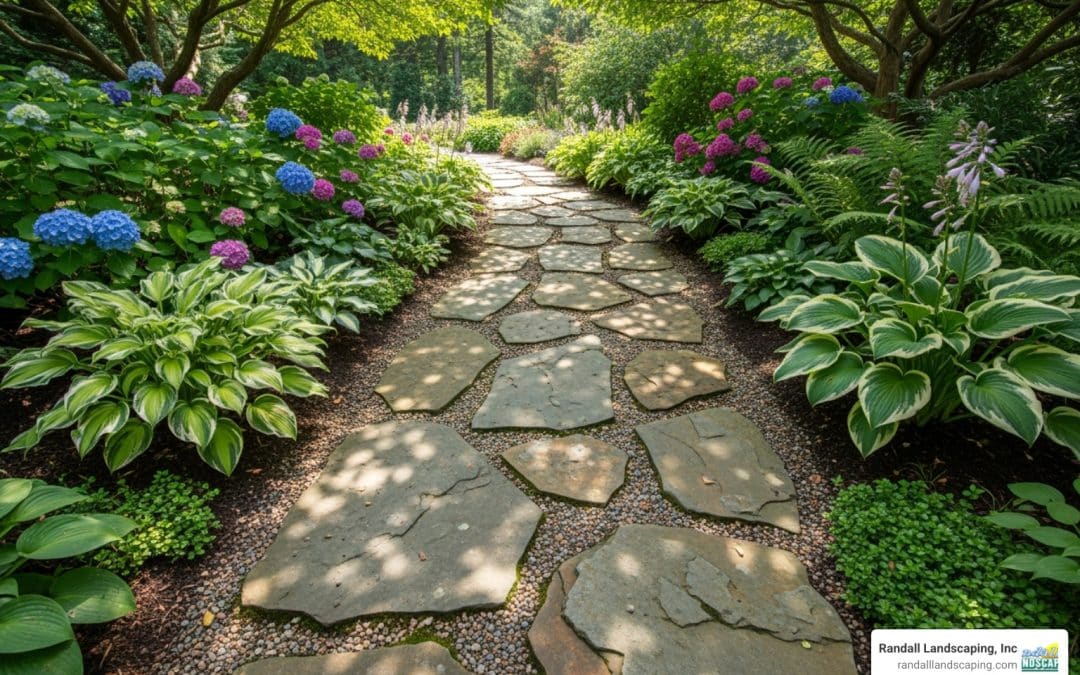
Transform Your Yard with Natural Stone Pathways
Installing flagstone stepping stones creates a beautiful, durable pathway that adds natural charm and functionality to any landscape. This project improves your property’s aesthetic appeal while providing a walking surface that can last for decades.
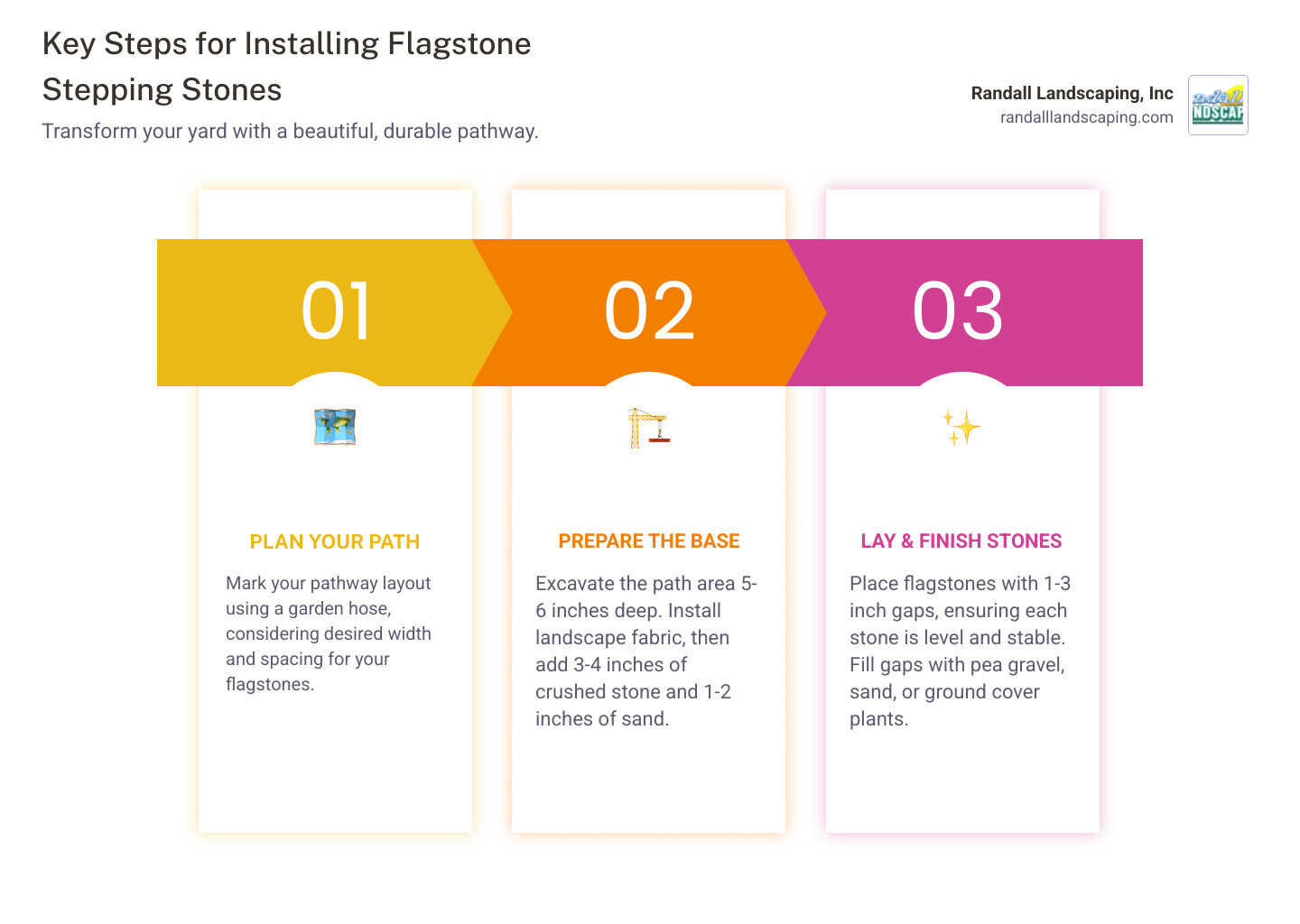
Key Steps for Installing Flagstone Stepping Stones:
- Plan and mark your pathway layout.
- Excavate the path area to 5-6 inches deep.
- Install base materials: landscape fabric, 3-4 inches of crushed stone, and 1-2 inches of sand.
- Place flagstones with 1-3 inch gaps, ensuring they’re level and stable.
- Fill gaps with pea gravel, sand, or ground cover plants.
The beauty of flagstone lies in its versatility. You can create formal, straight pathways or meandering, organic paths that follow your garden’s natural contours. No two flagstones are exactly alike, giving each pathway a unique character.
I’m Tommy Randall, owner of Randall Landscaping Business. Since 2006, I’ve helped countless homeowners with hardscaping projects, guiding them through the process of installing flagstone stepping stones to improve their properties’ beauty and functionality.
Find more about installing flagstone stepping stones:
- decomposed granite walkway installation
- how to install a bluestone walkway
- how to install crushed gravel walkway
Why Flagstone is a Superior Choice for Your Walkway
When considering a new pathway, flagstone should be at the top of your list. After nearly two decades of installing flagstone stepping stones, I can attest that this natural material delivers qualities that manufactured alternatives can’t match.
Flagstone’s primary appeal is its natural aesthetic. Each piece has unique colors, textures, and shapes, bringing an organic charm that feels like a natural part of your landscape. This timeless beauty is why it’s a popular choice for our patio design and construction projects.
Beyond looks, flagstone is incredibly durable and can last for centuries with proper installation. It weathers New England’s harsh seasons without issue. Its naturally rough surface provides excellent safe traction, even when wet, helping to prevent slips and falls.
The design flexibility is another key benefit. We can cut flagstone into uniform shapes for a formal look or use irregular pieces for a more organic, meandering path.
Here’s how flagstone compares to other common materials:
| Feature | Flagstone | Concrete Pavers | Poured Concrete |
|---|---|---|---|
| Cost (Materials) | Higher | Moderate | Lower |
| Durability | Very High (lasts centuries) | High | Moderate (can crack) |
| Maintenance | Moderate (weed control) | Low | Low (can stain, crack) |
| Appearance | Natural, unique | Uniform, geometric | Utilitarian, can be stamped |
| Traction (Wet) | Good | Good | Can be slippery |
| Repair | Individual stone replacement | Individual paver replacement | Patching or slab replacement |
While flagstone costs more upfront, its longevity and timeless appeal make it a smart long-term investment that adds real value to your property.
Choosing the Right Type of Flagstone
“Flagstone” refers to how a stone is cut into flat slabs, typically 1 to 3 inches thick. Here are some popular types:
- Sandstone: A popular choice with warm, earthy tones (reds, browns, tans). It’s tough and provides great traction.
- Bluestone: A dense, durable stone with distinctive blue-gray tones that holds up exceptionally well to freeze-thaw cycles.
- Slate: An neat option with a fine-grained texture, available in grays, greens, purples, and black. It splits into thin, flat sheets for a refined look.
- Quartzite: Features a crystalline structure that sparkles in the sunlight. Its light colors (whites, grays) can brighten a pathway.
When selecting your stone, consider color to complement your home and landscape. Texture is also important; rougher textures offer better slip resistance, while smoother finishes look more refined. For our New England climate, denser stones like bluestone are excellent choices. Finally, ensure your stones are at least 1.5 to 2 inches thick for walkways to prevent cracking and ensure stability.
For more detailed cost information, you can check out resources like How Much Do Flagstone Patios Cost? to get a better sense of what to budget for your project.
Planning and Preparation: Your Blueprint for Success
Proper planning is the foundation of a successful project. This stage is your roadmap to creating a walkway that is both beautiful and functional for years to come.
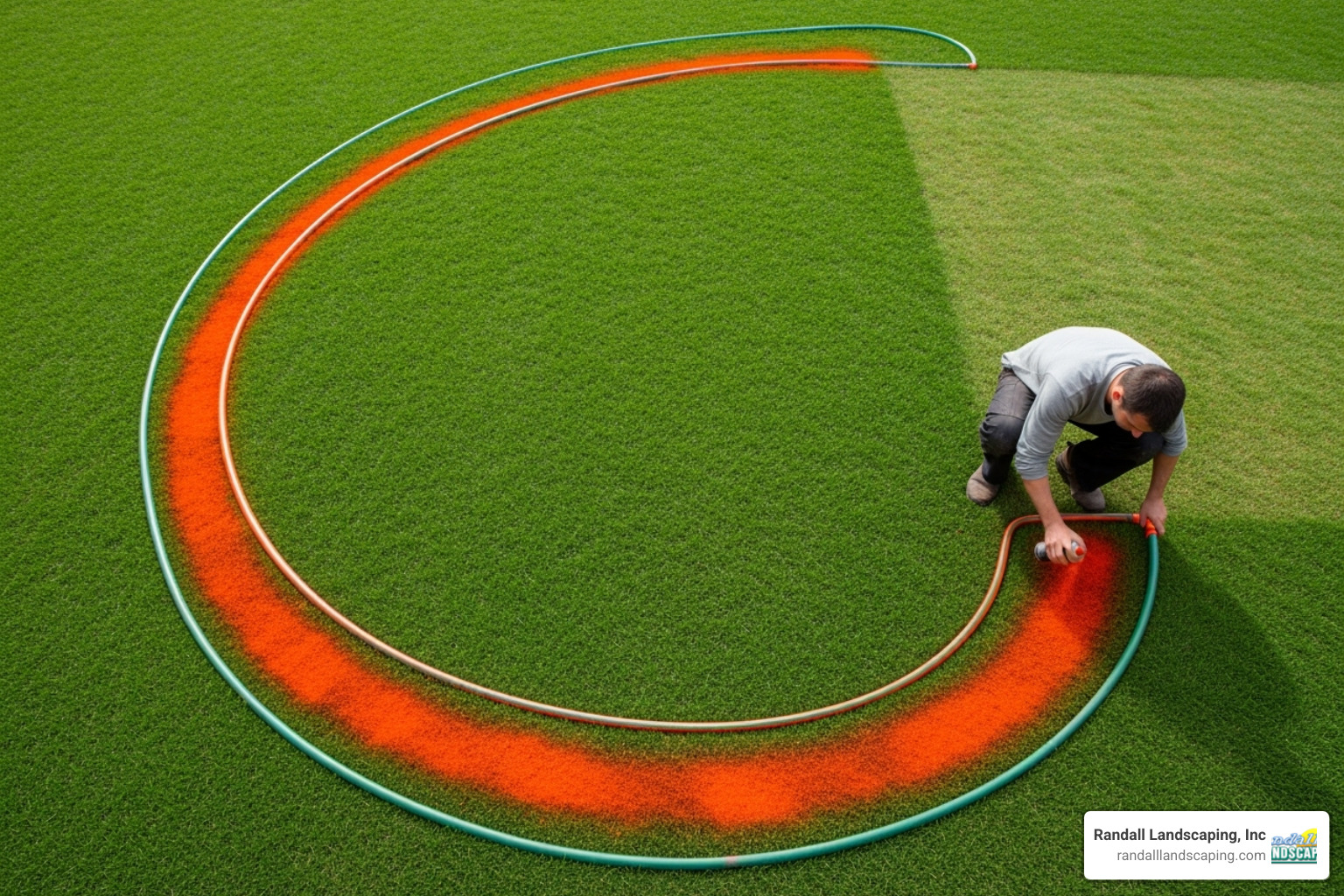
First, decide between a formal or informal design. Formal paths have straight lines and uniform spacing, while informal paths use irregular stones for a meandering, natural look. For path width, three feet is comfortable for one person, but four feet or more is better for two people walking side-by-side. For stepping stones, spacing them 24 inches from center-to-center accommodates a natural stride.
Crucially, call 811 before you dig. This free service marks underground utility lines, preventing dangerous and expensive accidents. It’s required by law and is essential for safety.
For complex projects, professional Landscape Project Management can ensure a seamless process.
Essential Tools and Materials
Gathering your supplies beforehand will save time. You’ll need:
- Flagstones: Order 5-10% extra to account for breakage.
- Base Materials: Angular crushed stone or gravel, coarse sand or decomposed granite, and landscape fabric.
- Tools: Flat-blade and pointed shovels, wheelbarrow, rubber mallet, 4-foot level, and tape measure.
- Safety Gear: Work gloves, safety glasses, and a dust mask.
A plate compactor (rentable for $75-$100/day) is highly recommended over hand tamping for creating a stable base, especially in New England where frost heave is a concern.
Designing Your Walkway Layout
Now, translate your vision to the ground. Use a garden hose to outline curved paths, or stakes and string for straight lines. Once you’re satisfied with the shape, mark the boundaries with landscaping paint. Use a tape measure to ensure the width is consistent.
Before digging, perform a “dry fit” by laying out several flagstones within the marked area. This helps you visualize the final result and check the spacing. Walk the path to ensure the stone placement matches a natural stride to avoid tripping hazards.
This planning stage prevents costly mistakes. For guaranteed professional results, consider our expert Walkway Installation services.
A Step-by-Step Guide to Installing Flagstone Stepping Stones
With the planning complete, it’s time to build your flagstone walkway. Installing flagstone stepping stones requires patience, but each step builds upon the last to create a durable and beautiful path. Rushing often leads to problems, so take your time to get it right.

While this guide is for a DIY approach, our team at Hardscape Companies can help with larger or more complex projects.
Step 1: Excavate the Path
This foundational step determines the final quality. Start by re-marking your boundaries with landscaping paint. The digging depth is critical: excavate to 5 to 6 inches deep to accommodate the flagstones and base materials.
Use a flat-blade shovel to cut clean edges, then a pointed shovel to remove sod and soil. Work in sections, maintaining a consistent depth. Remove any large rocks and trim tree roots as needed. A helpful visual can be found here: DIY Flagstone PathStep 1- Excavate Area.
Next, level the bottom of the trench with a rake. Finally, tamp the soil firmly with a hand tamper or, preferably, a rental plate compactor to prevent future sinking.
Step 2: Build a Stable Foundation
A proper foundation is essential, especially in New England’s climate. First, lay high-quality landscape fabric across the excavated area, overlapping seams by 4-5 inches. This acts as a weed barrier and separates your base from the soil.
Next, add a 3 to 4-inch layer of crushed stone base (3/4″ angular stone is ideal). The sharp edges lock together, creating a stable foundation. Spread and compact the stone in 2-inch layers for best results. Lightly dampen the stone to help it pack down densely.
On top of the compacted stone, add a 1 to 2-inch paver sand layer. This is for leveling the individual stones. Throughout this process, ensure a gentle slope of about 1/4 inch per foot for proper drainage, directing water away from buildings. This is the same durable system we use for our Retaining Walls.
Step 3: Laying the Flagstones for Stability and Style
This is where artistry meets engineering. Start by doing a dry-lay of all your stones to arrange them in a pleasing pattern. This helps you visualize the final look and make adjustments before setting them permanently.
Begin at one end of the walkway, placing one stone at a time. Always choose the best side up—the flattest, most attractive side—for safety and appearance. Place the stone on the sand bed and use a rubber mallet to tap it firmly into place.
Perform the wiggle test: step on the stone and try to rock it. If it moves, lift it and adjust the sand underneath until it is completely solid. A wobbly stone is a safety hazard that will only worsen over time.
Use a level to check that each stone is level side-to-side and has a slight forward slope for drainage. Adjacent stones should be as even as possible. Maintain consistent spacing of 1 to 3 inches for a natural look. For stepping stones, aim for a comfortable walking stride of about 24 inches center-to-center.
Accept the irregularity of the stones; using varying sizes and shapes is what gives a flagstone path its unique character.
Finishing Touches and Long-Term Care
With the stones laid, the finishing touches will complete your walkway and ensure its longevity. This final stage transforms a functional path into a beautiful landscape feature.
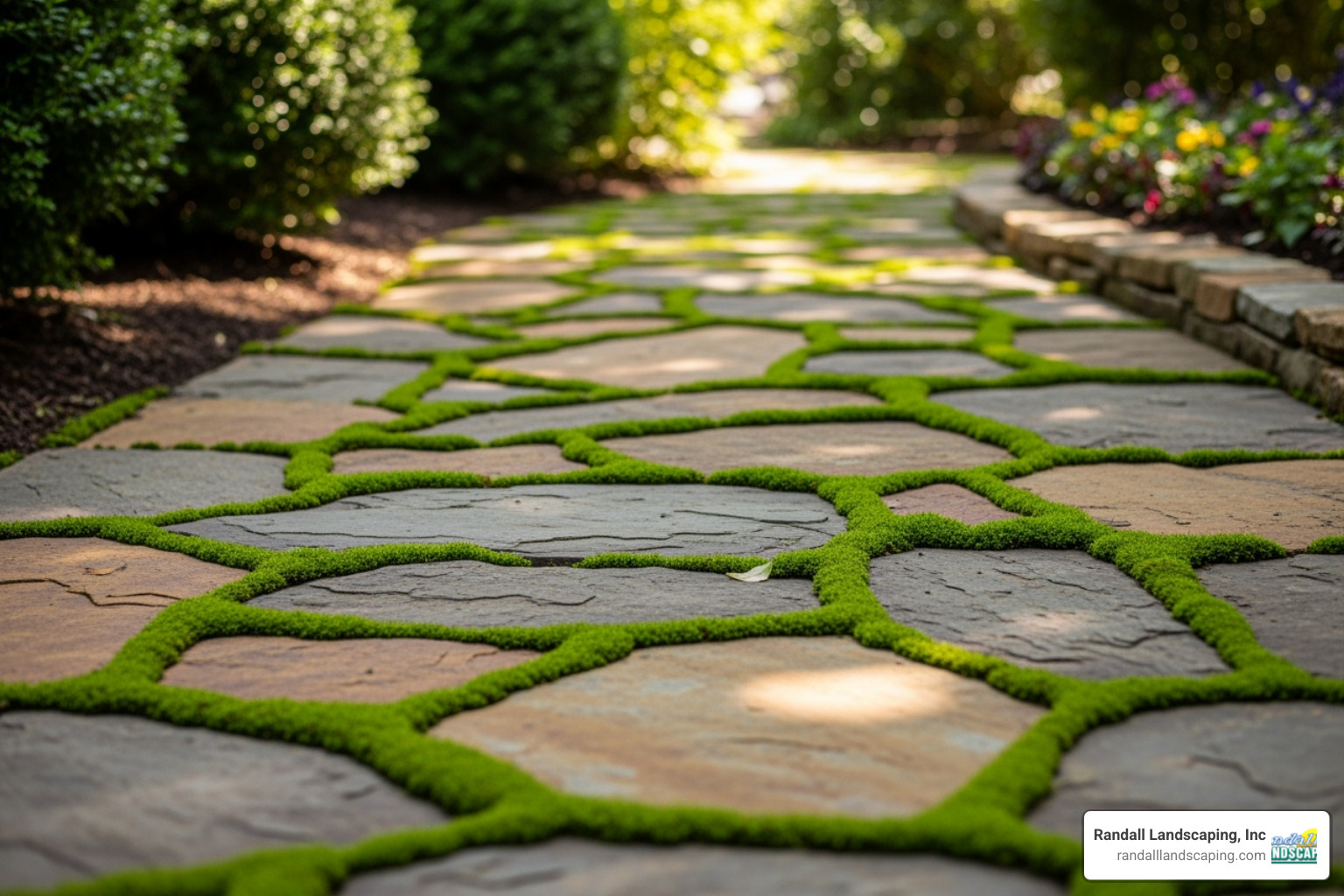
Step 4: Filling the Gaps Between Your Flagstone Stepping Stones
The material used to fill the gaps significantly impacts the walkway’s look and maintenance. Popular options include:
- Pea gravel or decorative stone: Offers excellent drainage and a natural look but can migrate out of the joints.
- Polymeric sand: Hardens to resist weeds but can be tricky to install correctly and may trap moisture in freeze-thaw climates.
- Mulch: Adds organic texture and integrates well with gardens but requires regular replenishment.
- Ground cover plants: Creates a living pathway with options like creeping thyme or Irish moss. They suppress weeds but require some care.
To apply your filler, spread it over the walkway and use a broom to sweep it into the gaps. You may need to repeat this as the material settles. Lightly water the area to help settle sand or gravel, or to activate polymeric sand according to the manufacturer’s instructions. For complementary materials, explore our Garden Bed Mulching services.
Enhancing Your Walkway
Lift your path with thoughtful additions:
- Garden edging: Creates clean borders and contains filler materials. Our Garden Edging Installation services can help.
- Path lighting: Low-voltage or solar lights improve safety and create nighttime ambiance.
- Decorative elements: Benches, planters, or a bird bath can create inviting focal points.
Keeping Your Path Beautiful
Properly installed flagstone requires minimal maintenance:
- Regular sweeping: Prevents debris from accumulating and encouraging weed growth.
- Prompt weed removal: Pull any weeds by hand as soon as they appear.
- Check for loose stones: If a stone wobbles, lift it, adjust the sand, and re-seat it firmly.
- Replenish filler: Top off joint material as it settles over time.
- Annual pressure washing: Removes grime and restores the stone’s natural color. Avoid sealing flagstone in New England, as it can trap moisture and cause damage during freeze-thaw cycles.
For comprehensive care, consider our Landscape Maintenance Services.
Frequently Asked Questions about Installing Flagstone Stepping Stones
Here are answers to the most common questions I’ve received over nearly two decades of installing flagstone walkways.
How much does it cost to install a flagstone walkway?
Costs vary significantly based on a DIY vs. professional approach.
For a DIY project, material costs for a 90-square-foot path typically range from $500 to $1,500. This includes the stones, base materials, and joint filler. Budget an additional $75-$150 for tool rentals like a plate compactor.
Professional installation costs more. National averages from sources like Forbes suggest a range of $15 to $45 per square foot, and sometimes higher depending on stone type, site complexity, and labor rates. A flagstone path generally costs about three times more than poured concrete, but its beauty and longevity provide lasting value.
Please note: The provided costs are national averages from online sources and are not a quote from Randall Landscaping. For a precise estimate for your project in the Merrimack Valley or Southern New Hampshire, please contact us for a consultation.
Can I install a flagstone path directly on dirt?
While it seems like a shortcut, installing flagstone stepping stones directly on dirt is not recommended. Soil shifts with moisture and temperature changes, causing stones to become unstable, uneven, and hazardous over time. This problem is especially pronounced in New England due to our freeze-thaw cycles.
A proper gravel and sand base is essential. It provides stability, ensures proper drainage to prevent erosion and frost damage, and creates a durable foundation that will last for decades. The foundation is unseen but critical for the walkway’s longevity.
How do I prevent weeds from growing between the stones?
A multi-pronged approach is most effective for weed control.
Your first line of defense is high-quality landscape fabric installed beneath the base materials. This physical barrier stops most weeds from growing up from the soil.
For the joints, polymeric sand hardens to create a weed-resistant surface. Alternatively, ground cover plants like creeping thyme can outcompete weeds while adding beauty. The secret to long-term success is regular maintenance: sweep away debris that can host weed seeds and pull any new weeds as soon as you spot them.
Conclusion
Installing flagstone stepping stones is more than a landscape project; it’s a way to create a lasting, beautiful connection between your home and the outdoors. By following the steps of careful planning and proper foundation work, you can build a walkway that offers both natural charm and incredible durability.
This rewarding DIY project results in a unique path that improves with age, gaining character over time. The key to success lies in the foundation you can’t see, which ensures the beautiful stones everyone admires remain stable for decades. Whether you choose durable bluestone or warm sandstone, proper installation is what guarantees your investment will last.
While this guide empowers you to tackle this project, we understand that some jobs are best left to professionals. For homeowners throughout Amesbury, Andover, Atkinson, Boxford, Dracut, Georgetown, North Andover, North Reading, Pelham, Salem, Windham, Methuen, Lawrence, and Plaistow, our team offers nearly two decades of hardscaping expertise.
For a professional, worry-free installation that guarantees quality, consider the expert hardscaping team at Randall Landscaping. We understand the challenges of our local climate and are committed to 100% customer satisfaction.
Contact us today for your walkway installation needs and let us help you create the charming flagstone path your landscape deserves.