Why Finding the Right Landscape Paver Contractors Makes All the Difference
Landscape paver contractors are professional hardscape specialists who design, install, and maintain paved outdoor surfaces like patios, driveways, walkways, and pool decks. Here’s what you need to know when searching for the right contractor:
Key Services Landscape Paver Contractors Provide:
– Site preparation and excavation
– Proper base installation and compaction
– Paver laying with precise patterns
– Drainage grading and water management
– Joint sanding and sealing
– Warranty-backed workmanship
What to Look For:
– Licensed, bonded, and insured contractors
– 2-year workmanship guarantees (industry standard)
– References from recent projects
– Written estimates and contracts
– Experience with your specific paver material
Average Investment:
– Paver installation: $10-$30 per square foot
– 280 sq ft patio: $2,400-$7,000
– Large luxury projects: $7,200-$22,500+
Note: These are average costs based on internet data and not actual costs for Randall Landscaping.
Whether you’re dreaming of a stunning backyard patio or need a durable driveway that can handle New England winters, the right contractor makes the difference between a project that lasts decades and one that fails within years.
I’m Tommy Randall, owner of Randall Landscaping Business, and I’ve been working with landscape paver contractors and installing hardscapes throughout Massachusetts and New Hampshire since 2006. My team has completed hundreds of paver projects, from simple walkways to elaborate outdoor entertainment spaces.
Landscape paver contractors terms simplified:
– hardscape products
– landscape design companies near me
– deck and hardscape contractors near me
Why Work with Landscape Paver Contractors
Landscape paver contractors exist because paver installation is a complex process requiring engineering knowledge, specialized tools, and years of experience to get right.
I’ve lost count of how many homeowners have called us to fix DIY paver projects that failed after the first winter. The most common problem? Skipping proper base preparation because they didn’t realize that what you can’t see underground is actually more important than the pretty pavers on top.
Expert installation starts with understanding your local soil conditions and climate. Here in Massachusetts and New Hampshire, we deal with freeze-thaw cycles that can destroy improperly installed pavers. Professional contractors know how to create drainage grading that prevents water from pooling and freezing, which causes frost heave that makes pavers buckle and separate.
The warranties alone make professional installation worth considering. Most reputable contractors offer two-year workmanship guarantees, and many paver manufacturers provide lifetime material warranties—but only when installed by certified professionals.
Professional contractors also handle local codes and permit requirements. We take care of all the paperwork so you don’t have to figure out what’s required in your specific town.
The design expertise is another huge advantage. We’ve seen what works and what doesn’t in New England weather. We know which materials handle winter salt, which patterns work best for different applications, and how to create outdoor spaces that actually improve your property value.
What Landscape Paver Contractors Do
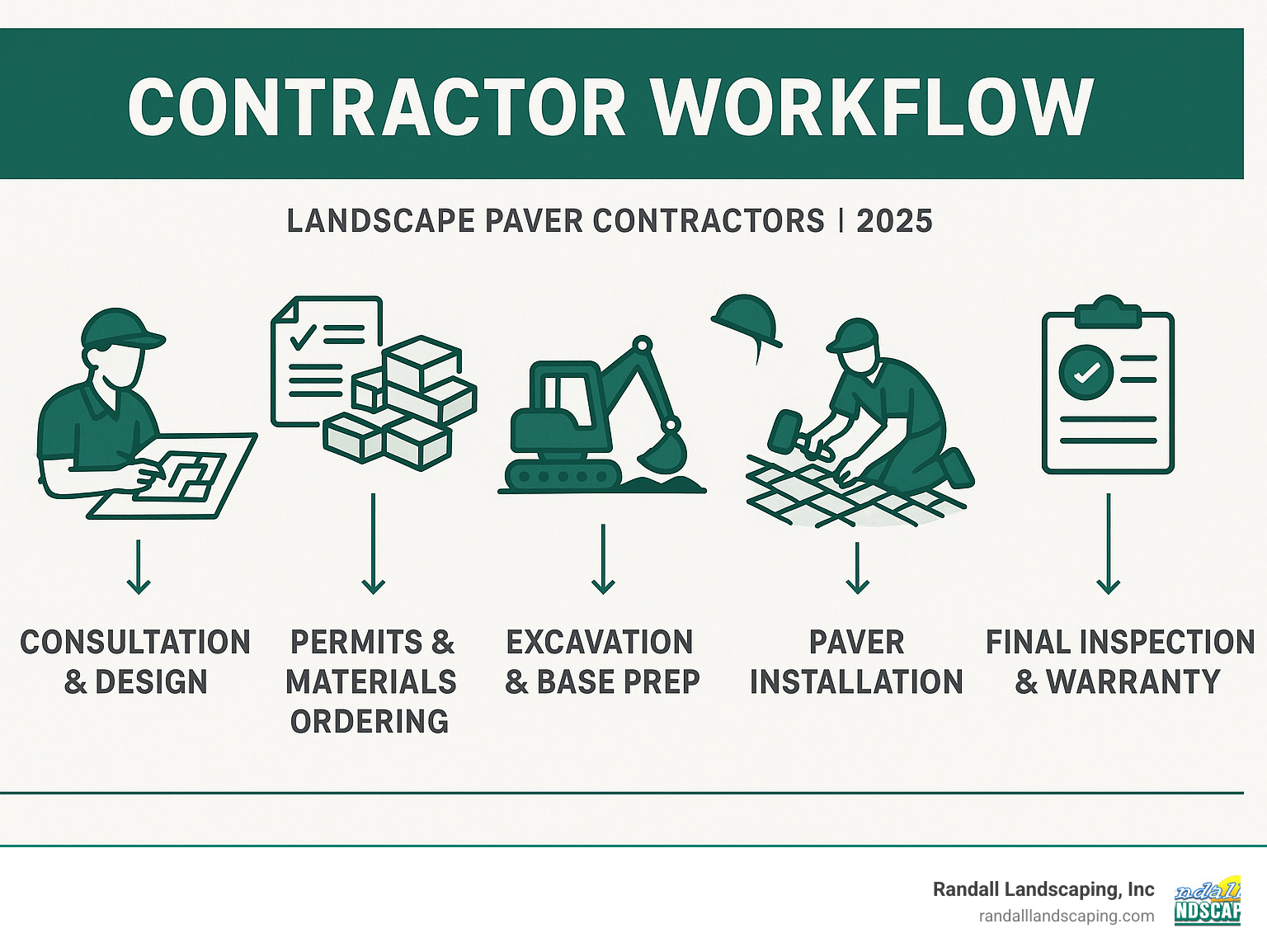
The process starts with site prep involving marking utility lines, evaluating drainage patterns, and assessing soil conditions. We’re not just planning where to put pavers—we’re engineering a system that will work with your property’s unique characteristics.
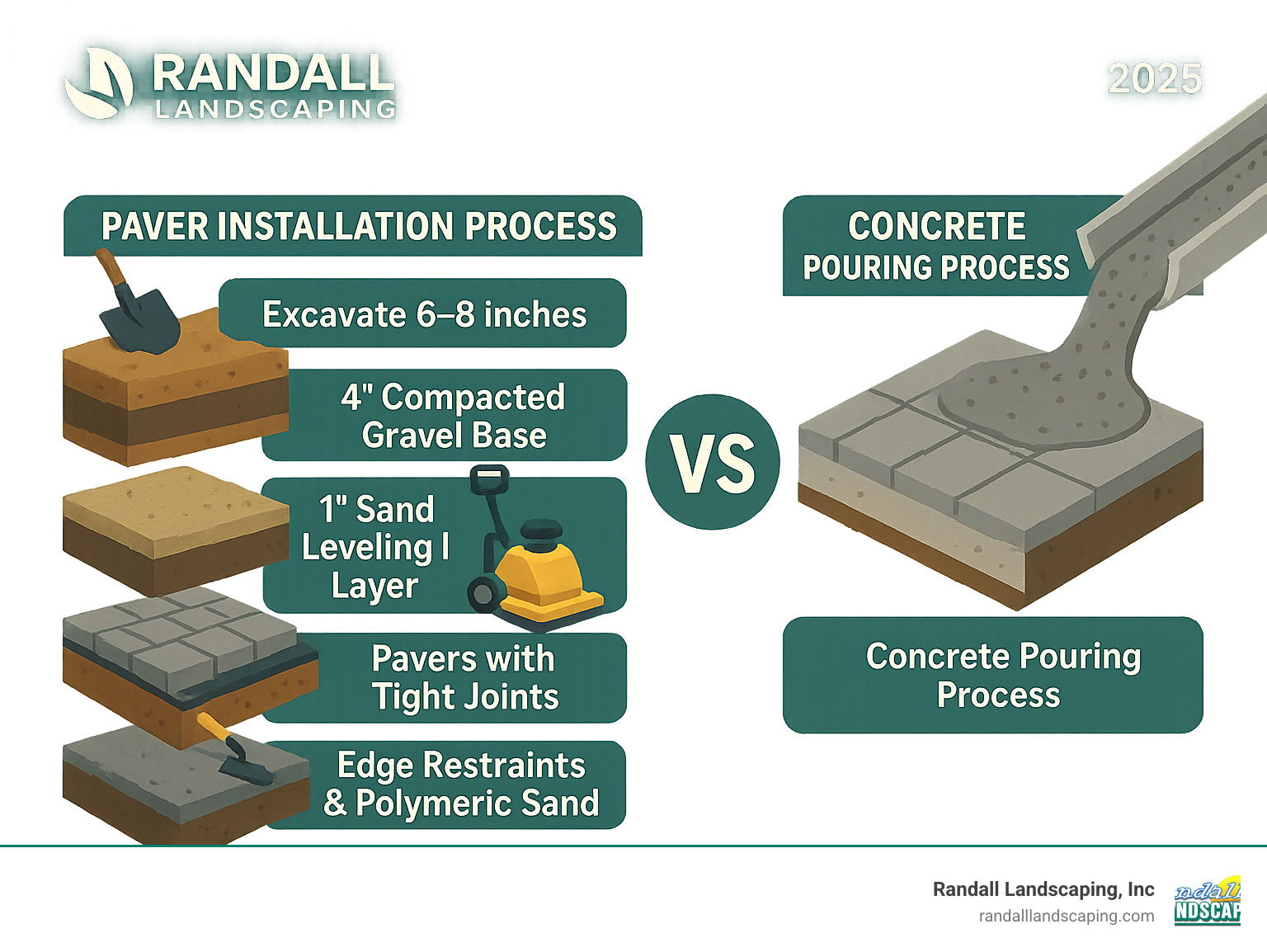
Excavation goes much deeper than most homeowners expect. We typically dig 6-8 inches deep, depending on your soil type and intended use.
Base compaction is where most DIY projects fail. We install a 4-inch compacted gravel base using specific aggregate sizes that lock together when compacted. This base prevents your pavers from settling over time.
The sand leveling layer requires precision. We install exactly one inch of sand, then level it using screed rails to create a perfectly flat surface.
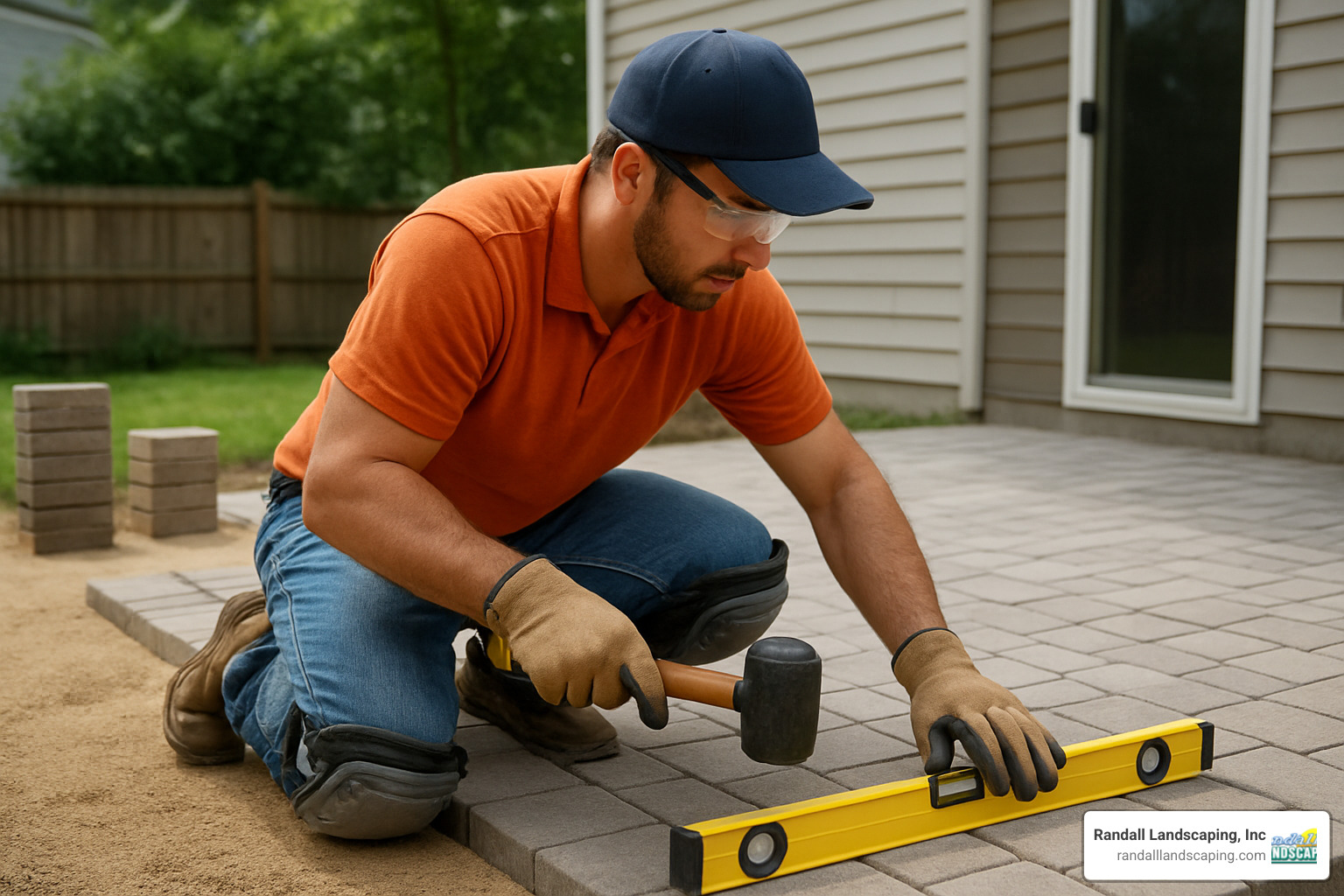
Pattern laying starts from a straight reference line and works outward. Each paver must be placed, never dragged, to avoid disturbing the sand bed.
Joint sanding completes the installation. We sweep polymeric sand into all joints, then compact the entire surface to lock everything together.
How Landscape Paver Contractors Boost Curb Appeal
Professional paver installation typically delivers a 65-70% return on investment when you sell your home. That’s better than most kitchen renovations.
The home value increase happens because pavers create immediate visual impact. Unlike concrete that cracks or asphalt that fades, properly installed pavers maintain their appearance for decades.
Buyer psychology plays a huge role here. When potential buyers see well-designed hardscaping, they assume the entire property is better maintained. Professional landscape paver contractors understand how to select colors and patterns that complement your home’s architecture while creating visual interest.
Paver Materials, Design Options & Long-Term Value
When I’m talking with homeowners about paver options, I always start with a simple truth: the material you choose today will affect how your outdoor space looks and performs for decades.
Natural stone pavers like granite and limestone represent the premium choice. Granite pavers can last over 100 years and handle our brutal New England freeze-thaw cycles. The trade-off? You’ll pay premium prices, but the investment often pays off in both durability and home value.
Concrete pavers offer the sweet spot between cost and performance for most homeowners. Today’s concrete pavers mimic natural stone beautifully while delivering consistent sizing and color. With proper installation by experienced landscape paver contractors, they typically last 25 to 50 years.
Brick pavers bring timeless charm that works especially well in historic neighborhoods. Traditional clay brick pavers last about 20 years in our climate, while modern engineered versions offer improved freeze resistance.
Permeable pavers solve two problems at once: they create beautiful surfaces while managing stormwater runoff. These specialized pavers allow water to filter through joints into the ground below, reducing flooding and helping the environment.
Porcelain pavers represent cutting-edge technology in outdoor surfaces. They’re incredibly stain-resistant and available in large formats that create sleek, modern looks.
| Material | Lifespan | Cost Range (per sq ft) | Best Use |
|---|---|---|---|
| Natural Stone | 50-100+ years | $15-$50 | High-end patios, pool decks |
| Concrete | 25-50 years | $8-$25 | Driveways, walkways, patios |
| Brick | 20-30 years | $10-$20 | Traditional patios, walkways |
| Permeable | 20-40 years | $12-$30 | Eco-friendly driveways, parking |
| Porcelain | 30-50 years | $20-$60 | Modern patios, commercial |
Note: These are average costs based on internet data and not actual costs for Randall Landscaping.
Selecting the Perfect Paver Style
Pattern selection can make or break your project’s final appearance. The pattern you choose also affects structural performance.
Running bond patterns create clean, linear lines that work beautifully with contemporary homes. This pattern also happens to be the strongest for vehicular traffic, making it my go-to choice for driveways.
Herringbone patterns offer maximum strength and visual interest. Whether you choose 45-degree or 90-degree herringbone, you’re getting superior interlock that resists shifting.
Modular patterns combine multiple paver sizes to create sophisticated, complex designs. These patterns work especially well for large areas where you want to avoid monotony.
Accent borders frame your paved area and add definition without overwhelming the design. A simple soldier course border can transform an ordinary patio into something special.
Sustainability & Permeable Choices
Environmental considerations increasingly drive paver selection decisions. Permeable pavers offer significant ecological benefits while meeting strict stormwater management requirements.
Stormwater control becomes more critical every year as development increases impervious surfaces. Permeable paver systems can reduce runoff by up to 80% compared to traditional concrete or asphalt.
Heat island reduction provides another environmental benefit. Light-colored pavers reflect more heat than dark asphalt, helping moderate local temperatures around your home.
Many municipalities now offer eco-credits or reduced stormwater fees for permeable installations. These incentives can significantly offset the higher initial cost while providing long-term environmental benefits.
Contractor Roundup & Selection Guide
Finding the right landscape paver contractors feels overwhelming when you’re facing dozens of options online. Not all contractors are created equal—some specialize in quick concrete pours, while others have mastered precision paver installation.
License and insurance verification should be your first step. Any legitimate contractor will carry general liability insurance and workers’ compensation coverage. Don’t just take their word for it—ask to see current certificates.
Experience with your specific project type matters more than you might think. Installing a simple walkway requires different skills than creating a complex patio with multiple levels. When we meet with potential clients, we always show photos of similar projects and provide references.
The written estimate process reveals a lot about professionalism. Quality contractors provide detailed proposals that include material specifications, timeline, and scope of work.
Workmanship guarantees separate the professionals from the fly-by-night operators. Reputable landscape paver contractors stand behind their installation with minimum two-year warranties.
Manufacturer certification programs like Unilock Authorized Contractors require reference checks, insurance verification, and business practice reviews. These contractors often provide improved warranties backed by the manufacturer.
More info about Hardscape Companies
For manufacturer guarantee details, visit CONTRACTOR HOMEOWNER
Questions to Ask Landscape Paver Contractors
The questions you ask during initial consultations can save you from expensive headaches later.
Timeline discussions prevent the most common source of frustration. Ask about realistic start dates, how weather delays are handled, and what happens if materials arrive late.
Hidden fees can destroy even the most carefully planned budget. Specifically ask about permit costs, material delivery charges, and disposal fees for excavated soil.
Material sourcing questions reveal how contractors handle quality control. Ask where pavers come from, how they’re stored to prevent damage, and what happens if products arrive defective.
Maintenance planning should start during the design phase. Ask about joint sand replacement schedules, sealing requirements, and long-term care needs.
Common Hiring Mistakes to Avoid
Verbal agreements cause more disputes than any other single factor. Professional landscape paver contractors always provide detailed written contracts that protect both parties.
Inadequate base preparation is where most failed installations begin. The excavation should reach proper depth with adequate compaction at each layer.
Poor drainage planning creates expensive problems that show up during the first heavy rain. Proper drainage requires specific slopes and sometimes additional features like French drains.
Choosing the lowest bid often costs more in the long run than paying fair market rates upfront. Focus on value and long-term performance rather than just initial price.
Skipping reference checks allows problem contractors to keep finding new victims. Always contact recent customers and ask specific questions about quality, timeliness, and cleanup.
Large upfront payments give you no leverage if problems arise. Never pay more than 10% down, with progress payments tied to specific completion milestones.
Pricing, Timeline & Installation Process
Let’s talk numbers—because understanding landscape paver contractors pricing helps you make smart decisions and spot red flags in contractor proposals.
Most paver installations run $10-$30 per square foot, though we’ve seen projects range from basic $8 installations to luxury $50+ per square foot jobs. The wide range reflects everything from material choices to site complexity.
Note: These are average costs based on internet data and not actual costs for Randall Landscaping.
For a typical 280-square-foot patio, you’re looking at $2,400 to $7,000 for most installations, with high-end projects reaching $21,000 or more. Small 60-square-foot entry patios might cost $480-$1,800, while elaborate outdoor living spaces can easily hit $7,200-$22,500.
Here’s what affects your final cost: material selection makes the biggest difference—concrete pavers versus natural stone can double your price. Site conditions matter too—if we need to remove existing concrete or deal with poor drainage, costs increase. Design complexity adds time and materials.
Professional installation typically takes 1-2 days for standard patios. Complex projects with retaining walls might need a full week. Compare that to DIY installation taking 40-50 hours for the same project.
The installation process follows a precise sequence. Excavation removes existing surfaces and creates proper depth—typically 6-8 inches total. Base installation involves laying and compacting 4 inches of specific gravel that locks together under compaction.
Sand leveling creates the smooth surface pavers need. We screed it perfectly level because variations over 1/8 inch create uneven paver edges that become tripping hazards.
Paver laying requires patience and precision. Each paver gets placed—never slid—to avoid disturbing that carefully leveled sand bed. Edge restraints secure everything in place. Final compaction and joint sanding locks everything together with polymeric sand that hardens when activated.
More info about Patio Design and Construction
Typical Project Schedule
Every project starts with consultation and design, usually taking 1-2 weeks depending on complexity. Design approval and contract signing happens once you’re happy with our proposal.
Material ordering requires 1-2 weeks lead time for standard products. Specialty pavers or custom colors take longer—sometimes 4-6 weeks during busy season.
Ground preparation typically takes 1-2 days, though challenging sites take longer. Installation timing varies by project size. Simple patios install in 1-2 days, while complex designs need more time.
Final walkthrough and cleanup complete your project. We review everything together, explain maintenance requirements, and make sure you’re completely satisfied.
DIY vs. Pro Costs
Tool rental costs add up fast for DIY projects. Excavation equipment, plate compactors, and specialized tools run $200-$500+ per day. Working only weekends means multiple rental periods.
Risk of failure is the biggest hidden cost. Improper base preparation can cause settling, cracking, or complete failure within the first year. Starting over costs more than hiring professionals initially.
Warranty issues plague DIY installations. Most paver manufacturers require professional installation to honor material warranties.
Time investment is substantial. Research, planning, material selection, and actual installation can consume entire weekends for months. The math often favors professional installation when you factor in tool rental, material waste, time investment, and failure risk.
Frequently Asked Questions about Landscape Paver Contractors
Let me answer the most common questions we hear from homeowners considering paver projects.
Do landscape paver contractors offer warranties?
Yes, reputable landscape paver contractors absolutely offer warranties—and this is one of the biggest advantages of hiring professionals. Most established contractors provide two-year workmanship guarantees that cover installation-related issues like settling, joint failure, or edge movement.
There are actually two types of warranties: Workmanship warranties cover the contractor’s installation work, while material warranties come directly from manufacturers and can be much more extensive.
Material warranties vary significantly by product type. Concrete pavers typically come with 25-year limited warranties, while natural stone products often carry lifetime guarantees. The catch? Most manufacturer warranties require professional installation to remain valid, which means DIY projects void these valuable protections.
Some manufacturers offer improved warranty programs for certified contractors. These programs provide additional coverage and may include transferable warranties that actually add value if you sell your home.
How much maintenance do pavers need after installation?
Properly installed pavers require surprisingly little maintenance compared to other paving materials.
Regular sweeping is your most important maintenance task. This prevents debris buildup that can stain pavers or create conditions for weed growth in joints.
Joint sand maintenance involves adding polymeric sand every 2-3 years as weather and foot traffic gradually remove material. You simply sweep new sand into the joints and activate it with water.
Sealing is optional but recommended every 3-5 years to maintain color vibrancy and stain resistance. Professional sealing typically costs $1-$3 per square foot but significantly extends the life and appearance of your installation.
Note: These are average costs based on internet data and not actual costs for Randall Landscaping.
Winter maintenance in New England requires one important consideration: avoid rock salt, which can damage pavers. Use calcium chloride or magnesium chloride ice melters instead.
Can I install pavers myself instead of hiring a landscape paver contractor?
DIY paver installation is possible for small, simple projects, but it involves a much steeper learning curve than most homeowners expect.
The physical demands alone surprise people. Excavation work requires moving tons of soil and aggregate. A typical 280-square-foot patio involves excavating and hauling about 8-10 tons of material.
Base preparation is where most DIY projects fail. Proper base work requires specific materials, precise depth calculations, and compaction techniques that aren’t intuitive. When the base fails, the entire installation fails.
Drainage planning prevents water damage to your home’s foundation. This isn’t just about making water run away—it’s about calculating proper slopes and understanding soil conditions.
Tool requirements include excavation equipment, plate compactors, and specialized leveling tools that most homeowners don’t own. Rental costs can easily reach $300-$500.
Professional installation provides peace of mind through warranties, insurance coverage, and proven expertise. When you consider the time investment, tool costs, and failure risks, professional installation often provides better value than the DIY route.
Conclusion
Choosing the right landscape paver contractors isn’t just about getting a job done—it’s about creating an outdoor space that brings joy for decades while protecting one of your biggest investments.
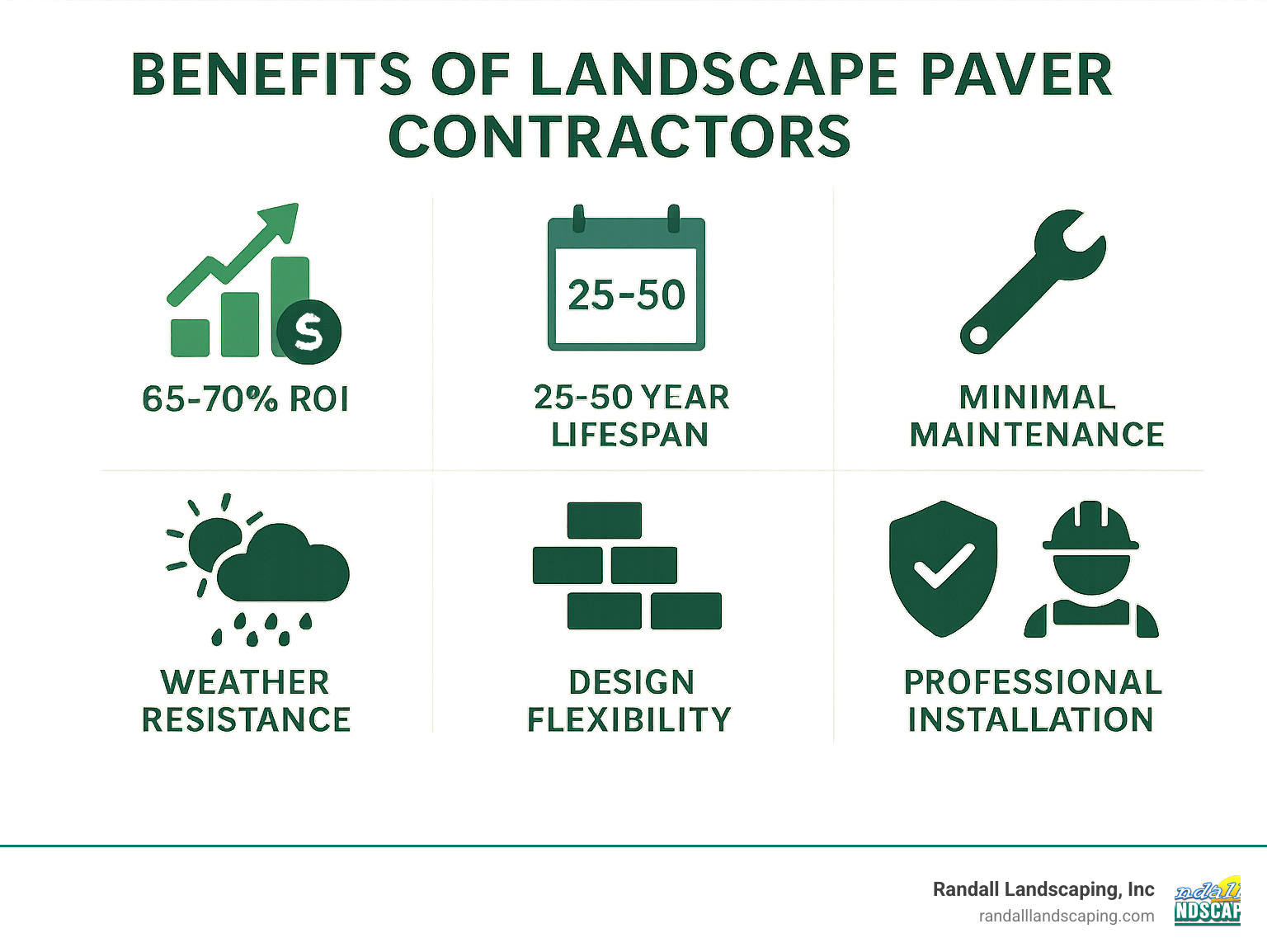
The numbers speak for themselves. With 65-70% return on investment, professional paver installation pays for itself when you sell your home. But the real value comes from years of enjoying your outdoor space without worrying about cracking concrete or settling stones.
At Randall Landscaping, we’ve spent nearly two decades perfecting our craft throughout the Merrimack Valley and Southern New Hampshire. Every project teaches us something new about working with New England’s challenging soils and weather patterns. That experience shows in installations that still look perfect after 15+ years.
Quality work and 100% reliability aren’t just marketing words—they’re the foundation of how we operate. When we say your paver installation will handle whatever New England weather throws at it, we mean it. Our two-year workmanship guarantee backs up that confidence.
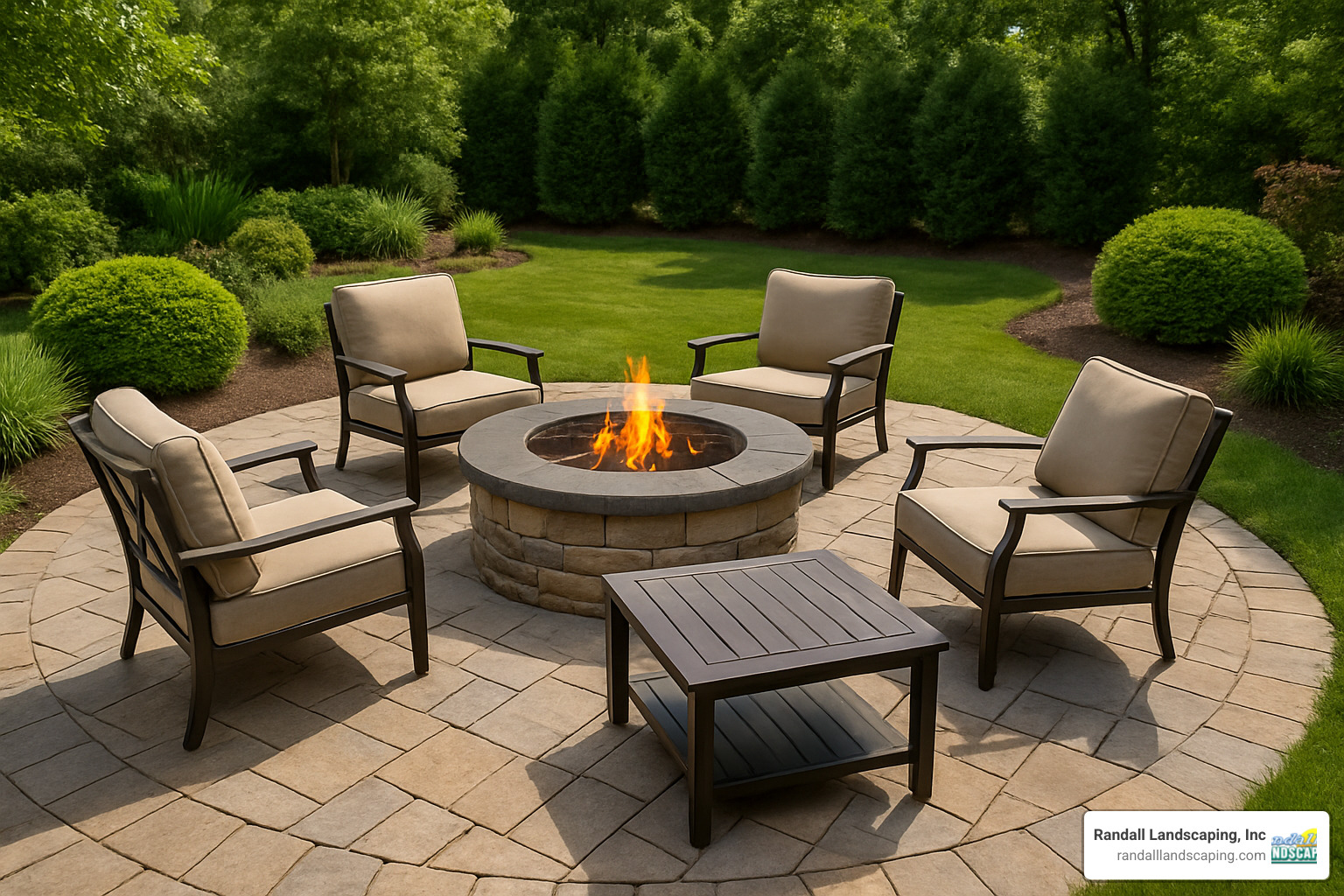
The change happens faster than most homeowners expect. What starts as an ordinary backyard becomes an outdoor room where families gather, friends connect, and memories are made. Professional paver installation creates spaces that improve daily life.
Proper installation makes all the difference between a project that lasts and one that disappoints. The base preparation, drainage planning, and finishing techniques we use ensure your investment performs beautifully year after year.
Your dream outdoor space is closer than you think. The consultation process is straightforward, the installation timeline is manageable, and the results exceed expectations. From simple walkways in Amesbury to elaborate outdoor kitchens in North Andover, we bring the same attention to detail and commitment to excellence.
Don’t let another season pass wishing you had better outdoor living space. Professional landscape paver contractors can transform your property in just days, creating value that lasts for generations.
Ready to get started? More info about Hardscaping and contact us today for your free consultation. Let’s turn your outdoor vision into reality with the quality and reliability that only comes from true professionals.