
Why Bark Mulch Is Essential for a Healthy, Beautiful Landscape
Bark mulch is one of the most cost-effective ways to improve your yard’s health and curb appeal. If you’re looking to purchase quality bark mulch, here’s what you need to know:
Quick Buyer’s Guide:
- Best for acid-loving plants: Pine bark, hemlock
- Best for slopes: Shredded cedar, interlocking pine needles
- Best for nutrients: Aged hardwood bark
- Typical depth: 2-4 inches (coarser mulches on higher end)
- Coverage: 1 cubic yard covers 324 square feet at 1 inch depth
- Common types: Pine bark nuggets, shredded hardwood, cedar, aged bark
- Key benefit: Retains moisture, suppresses weeds, regulates soil temperature
What is bark mulch? It’s shredded or chipped tree bark—often from sawmill waste like pine, cedar, Douglas fir, or hardwood—that serves as a protective layer over your soil. Unlike wood chip mulch (which includes branches and twigs), true bark mulch is bark only.
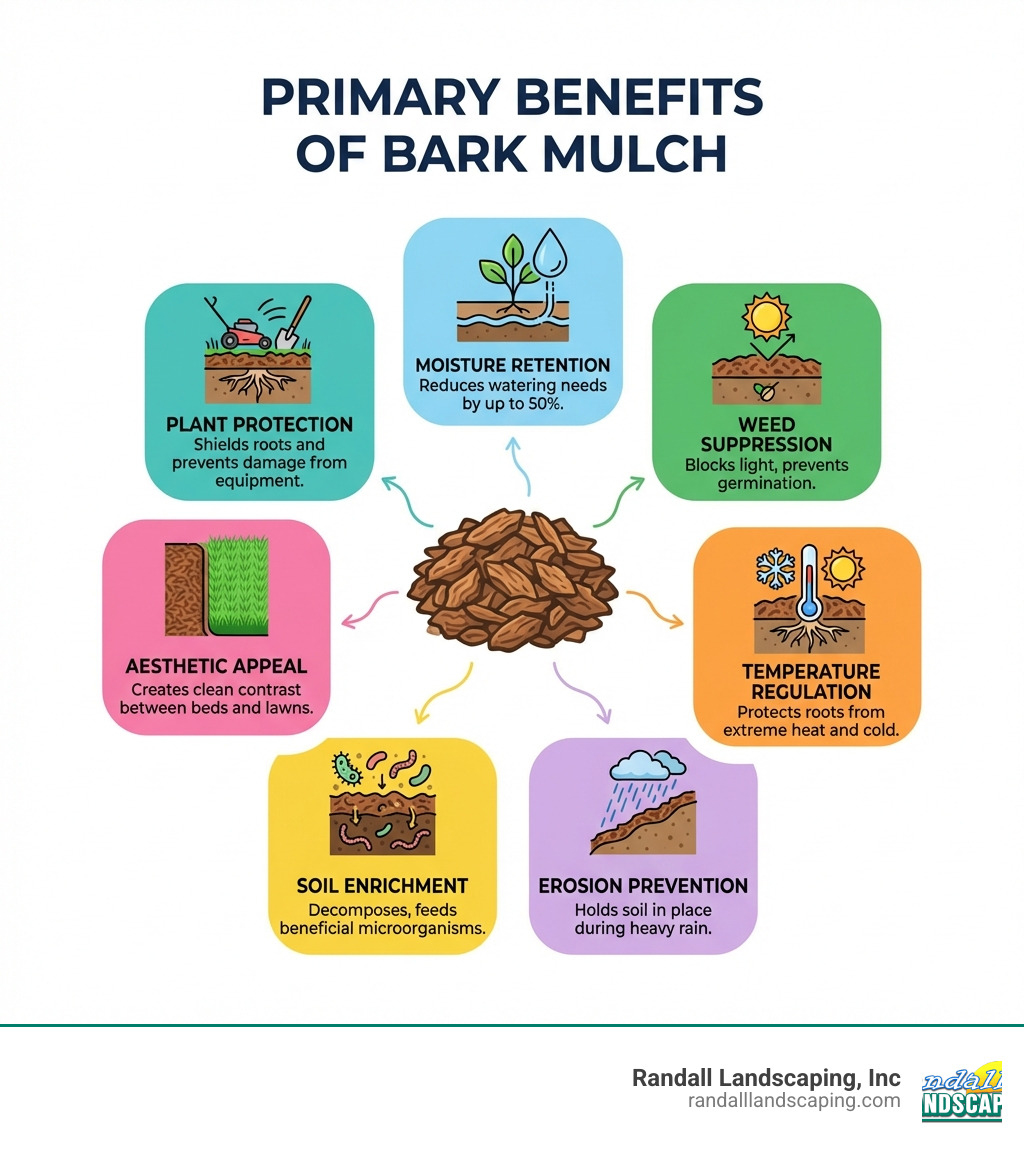
The benefits are substantial. Bark mulch conserves water by reducing evaporation, suppresses weeds by blocking light, and moderates soil temperature to protect plant roots from extreme heat and cold. As it breaks down, it adds organic matter to your soil and creates habitat for beneficial organisms like earthworms and mycorrhizal fungi.
But there are risks too. Improper application—like the dreaded “mulch volcano” piled against tree trunks—invites rot and pest problems. Some mulches can temporarily deplete soil nitrogen or become compacted and hydrophobic. And “sour mulch” from poor storage can actually damage plants.
I’m Tommy Randall, owner of Randall Landscaping Business, and since 2006 I’ve been helping homeowners across Massachusetts and Southern New Hampshire select and install the right bark mulch for their landscapes. Whether you’re tackling a DIY project or need professional mulch blowing services, this guide will walk you through everything you need to make an informed purchase.
Bark mulch vocab explained:
Understanding the Different Types of Bark Mulch
When you head to a landscape supply center in the Merrimack Valley, the sheer variety of colors and textures can be overwhelming. Is “nugget” better than “shredded”? Does the wood species actually matter? The answer is a resounding yes.
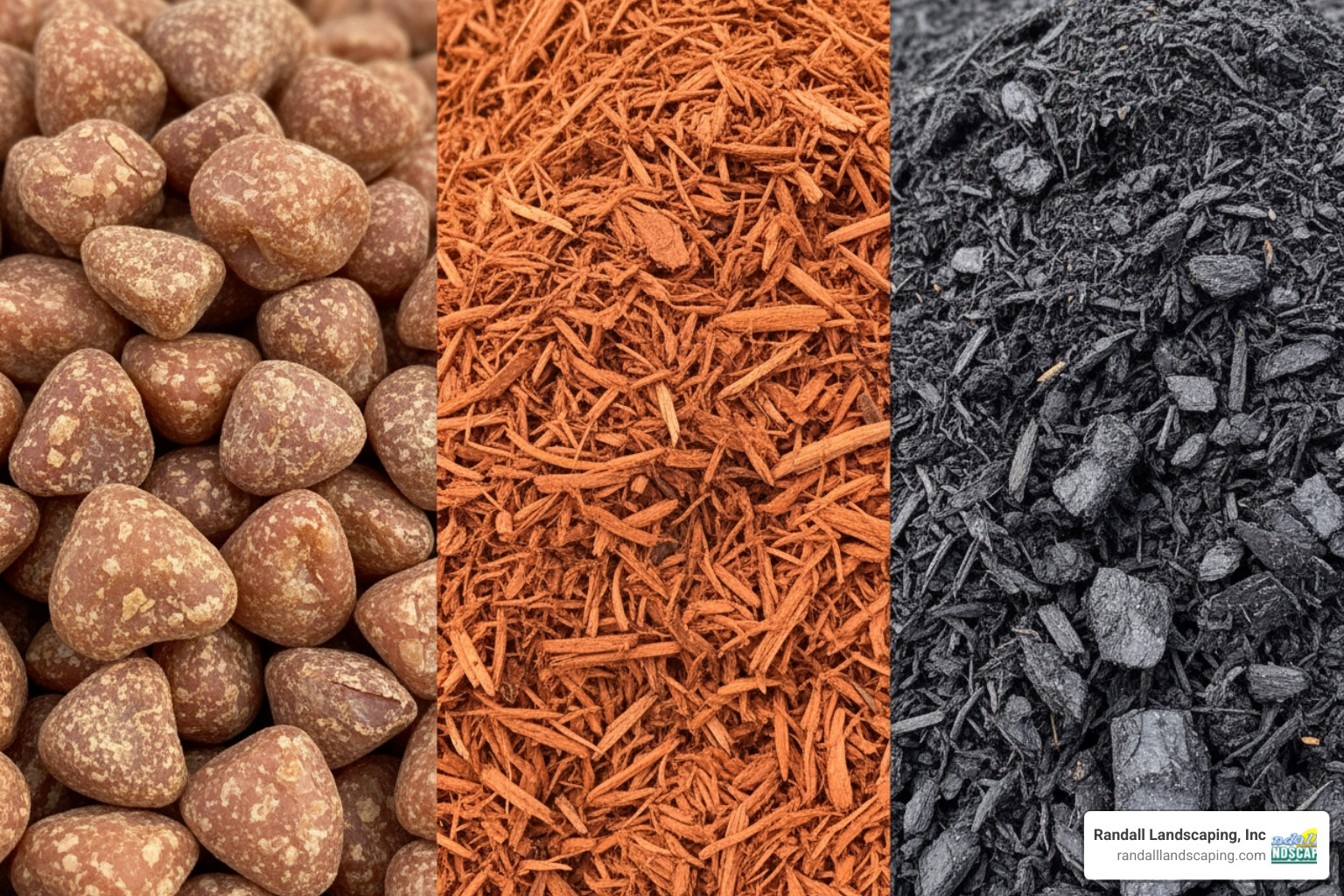
In landscaping, we often hear people use the terms “bark” and “mulch” interchangeably. However, there is a technical distinction you should know. According to industry experts at Bark vs Mulch, all barks are mulch, but not all mulches are bark. “True” bark mulch is strictly made from the outer protective layer of the tree. Wood chip mulch, on the other hand, often contains non-composted land-clearing debris, including the inner wood, twigs, and leaves.
At Randall Landscaping, Inc, we primarily work with high-quality bark products because they decompose more gracefully and offer superior aesthetic appeal for our clients in places like Andover and Windham.
Comparison of Popular Mulch Types
| Mulch Type | Decomposition Rate | pH Impact | Wind/Rain Resistance | Best Use |
|---|---|---|---|---|
| Pine Bark Nuggets | Slow | Slightly Acidic | Low (they float!) | Flat flower beds |
| Shredded Hardwood | Medium | Neutral to Alkaline | High | Slopes and high-traffic beds |
| Shredded Cedar | Very Slow | Neutral | Very High | Slopes and insect-prone areas |
| Hemlock | Medium | Acidic | Medium | Acid-loving shrubs |
| Aged/Composted Bark | Fast | Neutral | Medium | Vegetable gardens |
Bark Mulch for Acid-Loving Plants: Pine and Hemlock
If your landscape features New England staples like azaleas, rhododendrons, or blueberries, you need to pay close attention to the acidity of your mulch. Pine bark and hemlock are the gold standards here.
Pine bark is available in various sizes, from “mini-nuggets” to large chunks. These barks are naturally acidic, which helps maintain the lower soil pH these plants crave. Hemlock is another specialty favorite; it is often prized for its rich, natural reddish-brown color and its ability to provide a boost of nutrients to the soil. For those looking for moisture retaining mulch that also caters to specific plant needs, these coniferous barks are excellent choices.
Choosing the Best Bark Mulch for Your Soil Type
Your choice should also be dictated by your property’s “geography.” Do you have a steep embankment in Salem or a windy corner in Boxford?
- For Slopes: Shredded cedar is our top recommendation. The long, fibrous strands interlock with one another, creating a “mat” that stays put during heavy rain. It also doubles as a natural insect repellent.
- For Nutrient Depleted Soil: If your soil feels like “dead” dirt, opt for aged bark mulch. This material has already begun the decomposition process, meaning it returns nitrogen and organic matter to the earth much faster than fresh chips.
- For Aesthetic Uniformity: Shredded hardwood is the “all-arounder.” It provides a clean, dark contrast that makes the green of your lawn and the colors of your perennials pop.
For those interested in the environmental impact of their choices, we always suggest looking into eco-friendly mulch options that use natural forest products rather than recycled pallets, which can sometimes contain hidden chemicals or nails.
The Benefits and Risks of Using Wood Mulches
Mulching is nature’s own invention. If you walk through a forest in North Reading, you’ll see the ground covered in a thick layer of fallen leaves and decaying wood. This “natural mulch” is the engine of the forest’s health.
The “Soil Food Web”
When we apply a 2- to 4-inch layer of bark mulch, we are jump-starting a biological process. As the bark breaks down, it feeds the “Soil Food Web.” This includes earthworms that aerate the soil and mycorrhizal fungi that form symbiotic relationships with your plant roots. These fungi actually help your plants absorb water and nutrients more efficiently while inoculating them against certain diseases.
The Risks: Nitrogen and “Sour” Mulch
However, it’s not all sunshine and roses. One common concern is nitrogen depletion. Microorganisms that break down high-carbon materials like fresh wood chips require nitrogen to do their jobs. They may temporarily “rob” this nitrogen from the top inch of soil. While this rarely affects established trees, it can stunt the growth of young annuals or vegetables.
Another risk is sour mulch. If mulch is stored in massive, compacted piles without proper aeration, it undergoes anaerobic decomposition. This produces toxic substances like methanol and acetic acid. You’ll know it’s sour if it smells like vinegar, ammonia, or sulfur instead of having that pleasant, earthy “forest” scent. If you accidentally spread sour mulch, it can kill plants within 24 hours.
To avoid these pitfalls, we recommend using mulch in the garden that has been properly aged or composted. Proper mulch for weed control requires a balance—thick enough to stop seeds from germinating, but not so thick that it chokes the soil’s oxygen supply.
Proper Application: How to Mulch Like a Pro
Applying mulch seems simple—just dump and spread, right? Not quite. In fact, improper installation is one of the leading causes of tree death in suburban landscapes.
Avoid the “Mulch Volcano”
The most common mistake we see in the Merrimack Valley is the “mulch volcano.” This is when mulch is piled high against the trunk of a tree. This practice traps moisture against the bark, leading to rot, fungal infections, and providing a cozy home for wood-boring insects.
The Golden Rule: Always keep mulch 3 to 6 inches away from the base of the tree. You should be able to see the “root flare”—the part where the trunk widens at the soil line. Think of a donut, not a volcano!
Depth and Coverage
For most flower beds and around trees, a depth of 2 to 4 inches is the sweet spot.
- Finer mulches (like shredded bark) should be kept closer to 2 inches.
- Coarser mulches (like large nuggets) can go up to 4 inches because air can still circulate through the larger gaps.
The Math: How Much Do You Need?
Before you call for a delivery in Methuen or Dracut, you need to know your numbers.
- 1 cubic yard of mulch covers 324 square feet at 1 inch deep.
- Since we usually apply it at 3 inches deep, 1 cubic yard will cover about 100 to 110 square feet.
If you’re unsure about the process, checking out a professional landscape mulch installation service can save you a lot of back-breaking labor and ensure the depths are perfect.
Buying Guide: Costs and Quantity Calculations
When you’re ready to buy, you have two main options: bags or bulk.
Step-by-Step Calculation
- Measure the area: Multiply the length by the width of your garden beds to get the total square footage.
- Determine depth: Decide on your depth (usually 3 inches).
- The Formula: (Total Square Feet x Desired Depth in inches) / 324 = Cubic Yards needed.
- Round up: It’s always better to have a little extra for touch-ups than to run out with ten feet left to go!
Bulk vs. Bags
- Bags: Great for small flower pots or tiny “touch-up” areas. Most bags are 2 cubic feet. Since there are 27 cubic feet in a yard, you would need 13.5 bags to equal one bulk yard.
- Bulk: Almost always more cost-effective for larger projects.
Pricing Expectations
Note: The following pricing information is based on average internet data and does not represent the actual costs for Randall Landscaping, Inc.
Mulch prices can vary significantly based on the type of wood, whether it is dyed, and your proximity to the supplier. On average, you might see:
- Economy Hardwood Mulch: $35 – $50 per cubic yard.
- Premium Dyed Bark (Black/Brown/Red): $45 – $75 per cubic yard.
- Specialty Cedar or Hemlock: $60 – $95 per cubic yard.
- High-End Organic Pallets/Delivery: Up to $155+ per cubic yard (especially when including delivery fees or small-batch organic bagging).
For those in our service area, we recommend looking into mulch delivery cost factors, such as seasonal load restrictions. In some areas, heavy delivery trucks are restricted on certain roads until late spring (often May) to prevent damage to the thawing pavement.
Common Questions About Landscape Mulching
When is the best time of year to apply mulch?
The ideal time is early spring, once the ground has warmed up but before the summer weeds have a chance to take hold. Applying it too early, while the ground is still frozen, can actually trap the cold in the soil and delay your plants’ spring awakening. Fall is also an excellent time to mulch, as it provides an extra layer of “blanket” insulation to protect roots through the harsh New Hampshire winters. For more details, see our guide on garden bed mulching.
How often should I replenish my mulch beds?
Organic bark mulch is biodegradable—that’s part of its charm! However, this means it will break down over time. Typically, you should plan to refresh your beds every 1 to 2 years.
- Shredded hardwood usually needs a top-off every year to maintain its color and weed-suppression depth.
- Cedar and large nuggets can often last two years or more. If your mulch looks “matted” or has developed a greyish crust, use a rake to flip it over. This improves aeration and brings the colorful side back to the top. Many homeowners combine this with mulch and edging services to keep the borders looking sharp.
Can bark mulch affect soil pH or attract pests?
This is a big one. While pine needles and bark are slightly acidic, scientific research (such as that from Iowa State University Extension) suggests that the effect on deep soil pH is actually quite minor.
As for pests, there is no evidence that wood mulch attracts termites that aren’t already in the area. However, termites do love moisture and wood. To be safe, always keep mulch 6 to 12 inches away from your home’s foundation. This creates a “dry zone” that termites find difficult to cross without being noticed.
Conclusion
Choosing the right bark mulch is about more than just picking a color you like. It’s about understanding the needs of your plants, the layout of your land, and the biological health of your soil. Whether you are in Amesbury, Pelham, or anywhere in the Merrimack Valley, a well-mulched garden is a thriving garden.
At Randall Landscaping, Inc, we pride ourselves on quality work and 100% reliability. We’ve spent nearly two decades perfecting our landscape maintenance and design services to ensure our customers are satisfied every single time. From residential maintenance to complex commercial landscaping and snow plowing, we handle the heavy lifting so you can enjoy your outdoor space.
Ready to transform your property? Check out our mulch installations complete guide or contact us today to schedule your delivery and installation. Let’s give your landscape the professional finish it deserves!