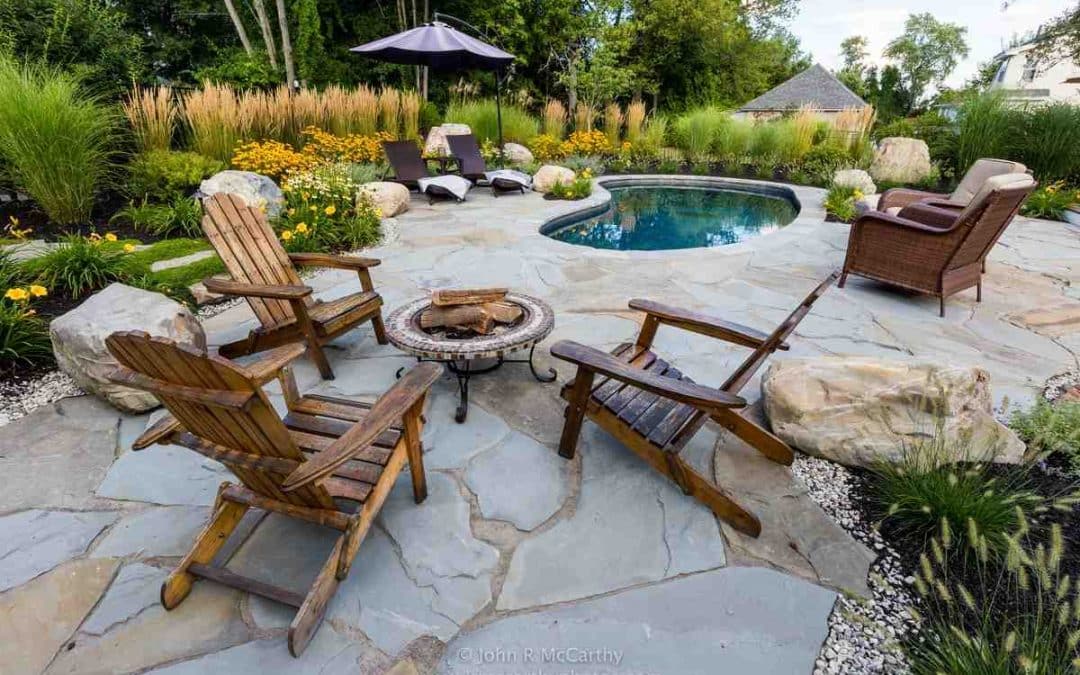
Transform Your Outdoor Space with Hardscape Materials
Hardscape products are the durable, non-living elements that create structure in your landscape. They include:
- Pavers & Slabs: For patios, walkways, and driveways (concrete, porcelain, natural stone)
- Retaining Walls: Made from blocks, natural stone, or modular systems
- Fire Features: Fire pits and outdoor fireplaces
- Water Elements: Fountains, spillways, and water features
- Decorative Elements: Steps, columns, edging, and landscape lighting
Hardscape products provide both functionality and aesthetic appeal, creating defined spaces for outdoor living while increasing property value. Unlike softscape elements (plants, soil, mulch), hardscapes require minimal maintenance and remain attractive year-round.
Creating a balanced outdoor living space requires thoughtful integration of both hardscape and softscape elements. The right combination adds structure, texture, and visual interest to your property while providing practical areas for relaxation and entertainment. Whether you’re planning a simple paver walkway or a complete outdoor kitchen, quality hardscape materials will form the foundation of your design.
I’m Tommy Randall, owner of Randall Landscaping, Inc., with over 18 years of experience designing and installing hardscape products for residential and commercial clients throughout New Hampshire and Massachusetts. My team and I have transformed countless properties using premium hardscape materials that withstand our challenging New England climate.
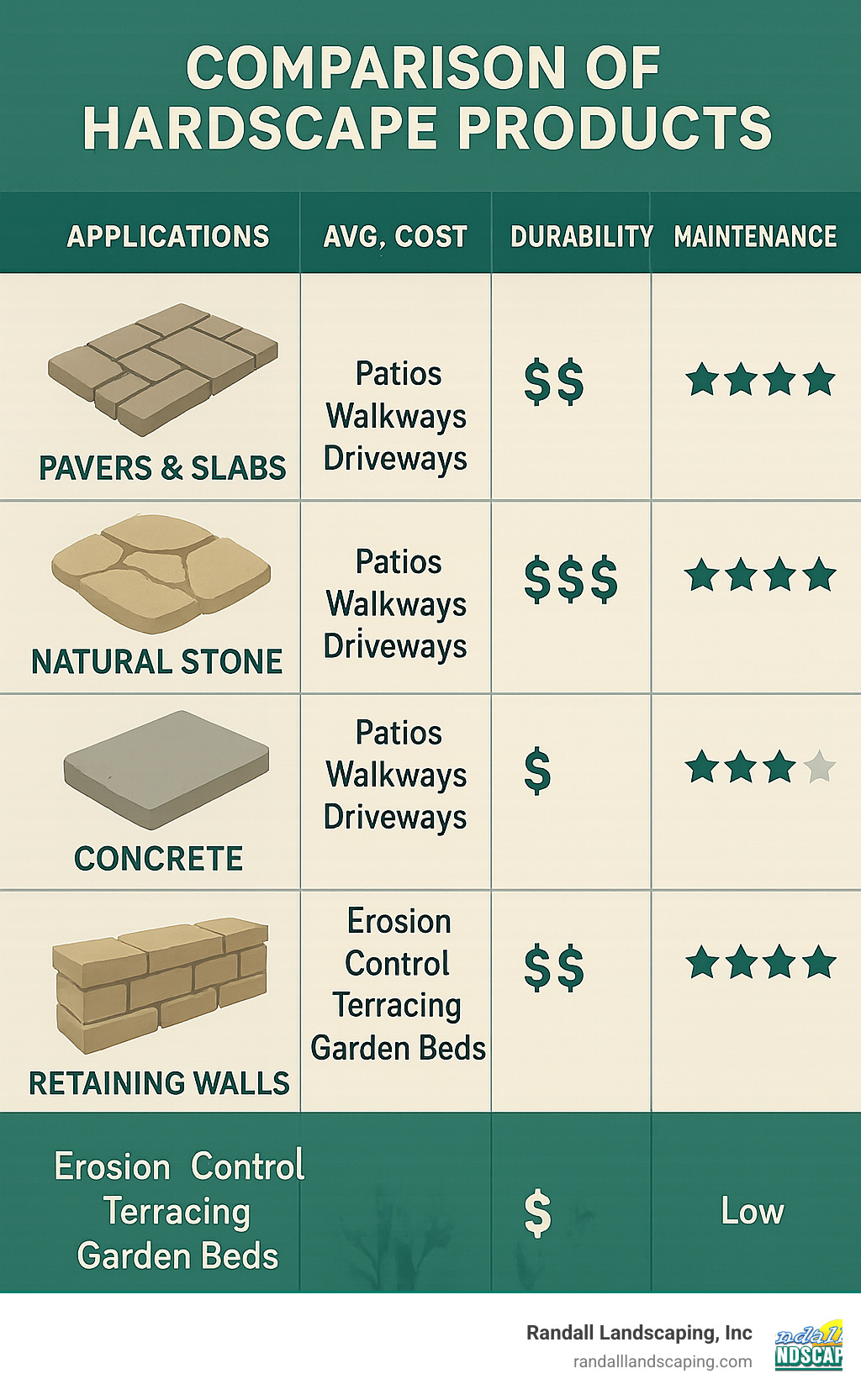
Simple hardscape products word guide:
– deck and hardscape contractors near me
– landscape design companies near me
– landscapers near me
Hardscape Products 101: Definitions, Uses & Value
When you look at any beautiful outdoor space, you’re seeing a thoughtful blend of two key elements: hardscapes and softscapes. Understanding this balance is the first step in creating an outdoor area that’s not just gorgeous but functional for your family.
What Are Hardscape Products?
Hardscape products are the sturdy, non-living elements that give your landscape its structure and personality. Think of them as the “bones” of your outdoor space – they provide the framework that everything else builds upon.
These include your paver patios where summer barbecues happen, the stone walkways that guide guests through your garden, and the retaining walls that tame sloping yards. Hardscape products also encompass fire pits where family stories are shared, water features that bring tranquil sounds, and outdoor kitchens that extend your living space into the sunshine.
“The paver patio and stone walls Randall Landscaping installed completely transformed our backyard from an unused slope into our favorite place to entertain,” one of our North Andover clients recently shared.
What makes hardscape products special is their durability and permanence. While your flowers come and go with the seasons, your stone patio remains beautiful year-round with minimal upkeep. This staying power is especially important in New England, where our freeze-thaw cycles can be particularly challenging for outdoor materials.
Hardscape Products vs. Softscape Elements
While hardscape products provide structure, softscape elements bring your landscape to life. Softscapes include your flowering shrubs, shade trees, seasonal garden beds, grassy areas where kids play, and even the soil and mulch that nourish it all.
The magic happens when these elements work together. A patio surrounded by nothing feels stark and uninviting, while a yard that’s all plants with no defined spaces can feel chaotic and less functional.
“The most successful projects we’ve completed for clients in towns like Andover and Salem incorporate a thoughtful mix of hardscape and softscape,” our lead designer often points out. “The hardscapes provide structure and usable space, while the softscapes add color, texture, and life.”
There’s practical value in this balance too. Industry data shows properties with well-designed hardscapes can see up to a 20% increase in property value. This makes investing in quality hardscape products not just about enhancing your outdoor living experience – it’s also a smart financial decision that pays dividends in both enjoyment and home equity.
The right mix of hard and soft elements creates outdoor spaces that feel natural yet purposeful. Whether you’re looking to add curb appeal with a new front walkway or create a backyard retreat with a multi-level patio, starting with quality hardscape products establishes a foundation that will serve your property beautifully for decades to come.
Pavers & Slabs – The Workhorse Surfaces
When it comes to creating functional outdoor surfaces, pavers and slabs are the workhorses of hardscape products. These versatile materials form the foundation of patios, walkways, driveways, and pool decks throughout the Merrimack Valley and Southern New Hampshire.

I’ve seen countless homeowners transform their outdoor spaces with the right pavers. Your options are nearly endless – from the classic look of concrete pavers manufactured with consistent sizing and a rainbow of color options, to the timeless charm of clay brick pavers that actually gain character as they age.
Natural stone pavers bring unique personality to your space – each bluestone, granite or limestone piece tells its own story through distinctive patterns and coloration. And for those looking for modern performance, porcelain pavers offer exceptional stain and frost resistance while mimicking the look of wood, concrete, or natural stone.
Many of our Methuen clients choose interlocking pavers for their driveways specifically because they can handle heavy loads while flexing slightly without cracking. As one homeowner told me after five winters, “Our interlocking paver driveway hasn’t developed a single crack—something our old concrete driveway never managed.”
For creating beautiful patio designs, I often recommend larger format slabs that create a more contemporary look with fewer joint lines. These create that seamless indoor-outdoor flow that’s particularly popular in our Andover and North Reading projects. The clean lines make outdoor dining and entertaining spaces feel like natural extensions of the home.
Average Costs & Benefits
The investment in quality pavers and slabs varies depending on material, size, pattern complexity, and site conditions. Based on industry averages (not Randall Landscaping’s specific pricing), you can expect:
Concrete Pavers: $4–$15 per square foot
Clay Brick Pavers: $5–$20 per square foot
Natural Stone Pavers: $8–$30 per square foot
Porcelain Pavers: $6–$25 per square foot
While the upfront cost might be higher than poured concrete or asphalt, the long-term benefits often make pavers the smarter choice financially. Quality pavers can last 25-50 years or more with proper installation and maintenance – I’ve seen installations from the 1990s that still look fantastic today.
One of the most practical benefits is repairability. If a single paver gets damaged or stained, you can simply replace that individual piece rather than redoing an entire surface. This is something my clients in Salem particularly appreciate after seeing neighbors struggle with cracked concrete slabs.
The design flexibility is another huge selling point. From simple running bond patterns to complex herringbone or circular designs, pavers let you create a truly custom look for your property. I’ve worked with homeowners who wanted everything from subtle, traditional patterns to bold, statement-making designs that become conversation pieces.
According to feedback from our real estate partners, well-designed paver patios and walkways can provide up to 80% return on investment. As our coordinator notes, “We’ve seen homes in Windham and Salem sell faster and for higher prices after installing quality paver patios and walkways. Buyers immediately recognize the value of these durable, low-maintenance surfaces.”
The slip-resistant textures available in most pavers also make them safer for pool decks and areas that get wet – a practical consideration that doesn’t sacrifice style. Combined with their ability to withstand our harsh New England freeze-thaw cycles, it’s easy to see why pavers remain one of our most popular hardscape products.
Natural Stone & Brick Highlights
There’s something truly special about natural stone and brick hardscape products that manufactured materials simply can’t match. These elements connect your landscape to the earth itself, bringing authentic textures and colors that have been formed over thousands of years.

Hardscape Products for Classic Charm
When clients ask me about creating a landscape with lasting appeal, I often point them toward natural stone and brick. These materials aren’t just beautiful—they tell a story and bring a sense of permanence to your outdoor spaces.
Granite is truly a New Hampshire heritage material. When we install granite steps, curbing, or wall caps, we’re continuing a tradition that goes back generations in our state. The quarries here have produced some of the finest granite in the world, known for its exceptional durability and distinctive character.
Just last month, a client in Pelham told me, “The granite steps Randall Landscaping installed look like they’ve always been part of our 1890s home—they blend perfectly with the historic character while providing safe, solid access.” That’s exactly what we aim for—hardscape elements that feel like they belong.
Bluestone brings a distinctive blue-gray color palette that works beautifully in so many landscape styles. Quarried primarily in Pennsylvania and New York, its natural cleft surface provides excellent traction even when wet—making it perfect for pool surroundings and garden pathways. We can install bluestone in regular, geometric patterns (thermal bluestone) or in more natural, irregular shapes that create a relaxed, organic feel.
The magic of flagstone lies in its incredible versatility. This term encompasses many flat stones used for paving—including varieties of sandstone, limestone, and slate. When we create a flagstone patio or walkway, each installation becomes a unique work of art. Our installation team leader loves to share the story of a Georgetown client whose flagstone patio became the centerpiece of their entire garden, with the varied stone colors pulling together all the elements of their planting scheme.
Brick pavers offer that warm, classic New England charm that’s hard to beat. I’ve always loved how brick seems to improve with age—the colors soften slightly, the edges weather just a bit, and the material develops a patina that looks increasingly at home in the landscape. In historic areas like Andover and North Andover, we often recommend brick for walkways and patios that complement traditional architecture.
While natural materials typically come at a premium compared to manufactured options—with costs ranging from $10–$40 per square foot installed based on internet data (not Randall Landscaping’s specific pricing)—their longevity and timeless appeal often make them worth the investment. Many of the natural stone installations we completed when I first started Randall Landscaping still look as beautiful today as when they were first installed. Few other materials can make that claim.
What I find most rewarding about working with these traditional hardscape products is how they connect homes to their surroundings and history. A well-designed stone walkway or brick patio doesn’t just serve a function—it becomes part of your property’s story and creates a sense of place that manufactured materials simply can’t replicate.
Retaining Wall Systems & Garden Steps
Retaining walls are some of the most versatile and hardworking hardscape products available. Not only do they transform steep or sloping yards into usable, level spaces, but they also help protect your property from erosion and water damage. In the Merrimack Valley and Southern New Hampshire, where hills and uneven ground are common, a well-built retaining wall often makes the difference between a tricky slope and a beautiful, functional backyard.
But retaining walls aren’t just practical—they add striking visual interest, too. Whether you love the crisp lines of modern walls or the rustic charm of natural stone, the right wall can become a true highlight of your landscape.
Structural Tips & Code Basics
When you’re planning a retaining wall, a little know-how goes a long way. First, drainage is absolutely critical. If water builds up behind the wall, it can push with surprising force. That’s why every wall we build includes drainage stone and a perforated pipe to safely channel water away. Trust us—water always finds a way, and we’ve seen our share of walls built without proper drainage that just didn’t last.
Height limitations are another key point. Most towns have building codes that require special engineering and permits for walls over 4 feet tall (measured from the base to the top). If you’re in areas like Dracut or Windham, we’ll handle the permit process and make sure everything’s up to code—no headaches for you.
For walls that are especially tall or supporting heavy loads, we may use geogrid reinforcement. Geogrid looks a bit like plastic “fencing” that locks into the wall and stretches back into the soil, tying everything together for extra strength. It’s invisible once installed, but it can be the difference between a wall that lasts five years and one that lasts fifty.
When it comes to materials, segmental retaining wall (SRW) systems are a favorite. These are modular concrete blocks designed to interlock—no mortar needed! They’re strong, flexible, and have built-in features for drainage and stability. Plus, they work for both straight and curved walls, so you can get creative with your design.
For a classic New England look, you can’t beat natural stone walls. Dry-stacked fieldstone brings that timeless, hand-built charm, while cut granite delivers a crisp, formal edge. Boulder walls are perfect for a dramatic, natural feel. These styles reflect the heritage of our region and look right at home in almost any landscape.
At Randall Landscaping, we love making walls do double duty. Seating walls around patios or fire pits give everyone a place to perch. Terraced gardens let you create layers for planting, turning steep hillsides into lush, multi-level retreats. We often add stone steps right into the walls for safe, easy access between levels, and decorative columns or pillars that can hold lighting or frame an entryway.
One of our recent clients in Boxford said it best: “The terraced retaining walls Randall Landscaping built transformed our sloped backyard from an unusable hill into three distinct outdoor rooms. Now we have spaces for dining, a fire pit, and a flat lawn for the kids—all in a spot we barely used before.”
No matter which style you choose, proper installation is the secret to a wall that stands strong year after year. We follow industry best practices for prepping the base, compacting soil, and backfilling for maximum stability. When built right, today’s retaining wall systems can last half a century or more—a real testament to the durability of modern hardscape products.
If you’re thinking about a retaining wall, garden steps, or want to see some of our favorite projects, be sure to check out our retaining walls page. We’re always ready to help you make the most out of every inch of your landscape!
Porcelain & High-Tech Concrete Upgrades
The world of hardscape products has seen remarkable innovation in recent years, with porcelain pavers and advanced concrete technologies leading the way. These high-performance materials combine stunning aesthetics with exceptional durability and low maintenance requirements.
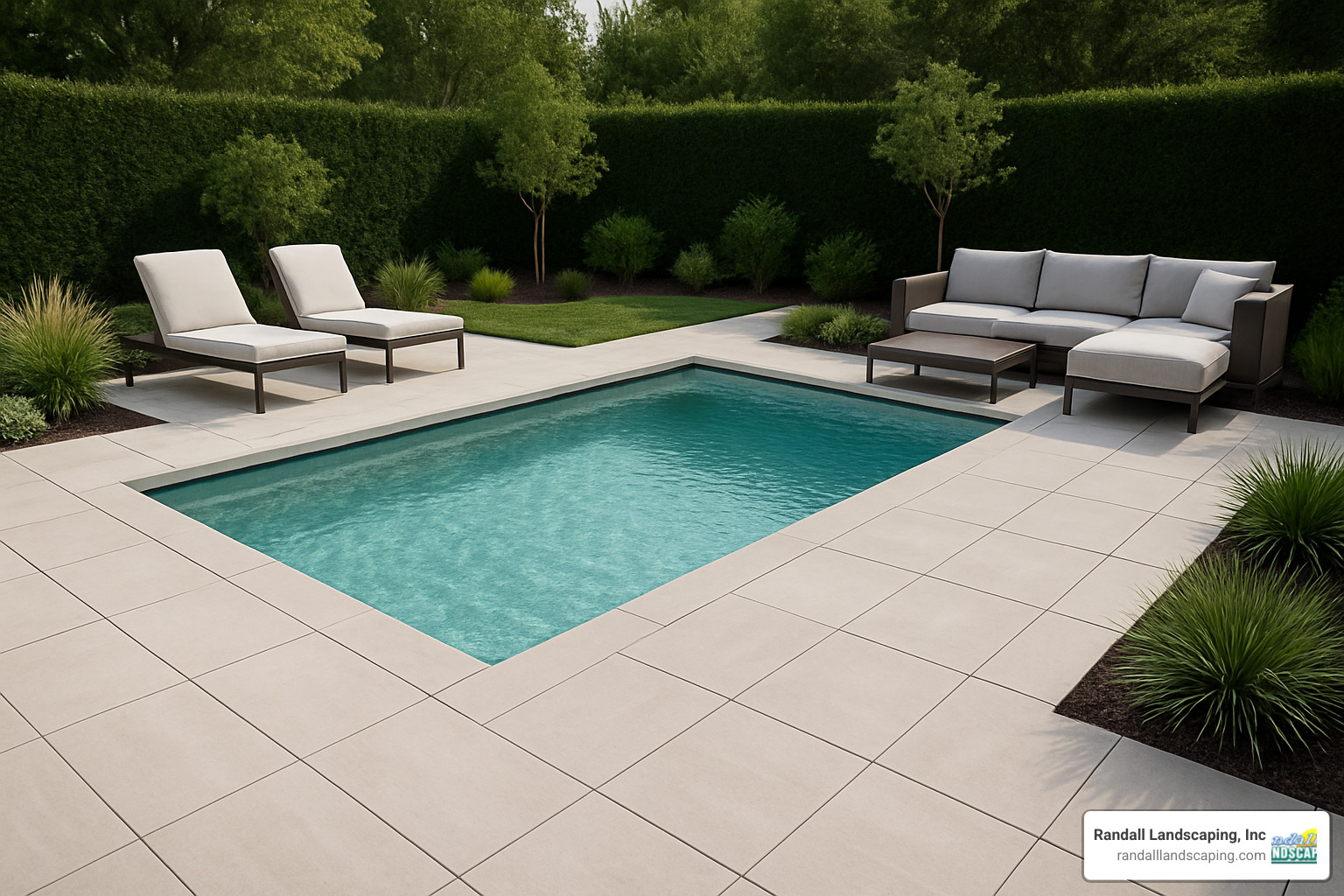
Porcelain Pavers have truly revolutionized outdoor hardscaping. I’ve seen how these incredible materials transform spaces with their practical benefits. They resist stains like nothing else, which makes them perfect for those messy pool deck areas and outdoor dining spaces where spills happen regularly. Their near-zero water absorption means our harsh New England freeze-thaw cycles won’t crack or damage them.
The colors stay true year after year, even under our summer sun. And unlike some materials that become slippery hazards when wet, porcelain maintains its grip. What really impresses my clients is how these pavers manage to be remarkably strong despite their relatively slim profile of just 2cm or 3cm.
“When we installed porcelain pavers around a client’s pool in North Reading last summer, they were initially concerned about the investment,” I recall telling a recent customer. “Now they rave about how the pavers still look brand new despite a full season of pool parties, and how they never get uncomfortably hot underfoot, unlike their previous concrete deck.”
The style options with porcelain are virtually endless. You can get the warm look of wood without worrying about rotting or splinters. There are options that perfectly mimic natural stone but with consistent color and thickness that mother nature can’t provide. For contemporary homes, the clean concrete aesthetics with precise edges create a sleek look. And the large format sizes—some up to 48″ x 48″—create modern, seamless installations that really open up a space.
Yes, porcelain typically comes with a premium price tag (ranging from $15-$45 per square foot installed based on industry averages, not our specific pricing), but when you consider how long they last and how little maintenance they require, more and more of our clients throughout Andover and North Andover find them well worth the investment.
High-Tech Concrete Products have also come a long way from the basic gray slabs of the past. Today’s manufacturers have developed formulations that overcome traditional concrete’s limitations in impressive ways. We’re now seeing ultra-high-density concrete with exceptional strength that stands up to commercial use. The through-body color won’t fade or wear away like surface-only treatments.
Special surface treatments provide improved slip resistance even in wet conditions. Some of the most advanced products even feature photocatalytic surfaces that actively break down pollutants and stay cleaner longer—a real benefit for busy commercial spaces.
For our commercial projects in places like Lawrence and Methuen, these advanced concrete systems hit the sweet spot of looking great while providing the durability and value that businesses need. They’re particularly well-suited to high-traffic areas like commercial plazas and municipal spaces where appearance and longevity both matter.
Trend Watch 2024
Based on our recent projects and what we’re seeing industry-wide, several key trends are emerging in high-end hardscape products for 2024:
Warm Earth Tones are making a strong comeback, replacing the cool grays that dominated the past decade. Terra cotta, sand, taupe, and warm beige create inviting outdoor spaces that feel connected to nature. After years of cool minimalism, homeowners are embracing warmer, more organic color palettes that make outdoor spaces feel like natural extensions of their homes.
Tone-on-Tone Colors with Mixed Motifs create subtle visual interest without overwhelming the space. Rather than high-contrast designs, today’s sophisticated hardscapes layer similar tones in different textures and patterns. This approach is particularly popular in Andover and North Andover, where understated elegance is the preferred aesthetic. I’ve found that these subtle variations create depth that reveals itself gradually, making spaces more interesting over time.
Luxurious Materials and Textures reflect growing desire for outdoor spaces that rival indoor rooms. Honed and leather-finish surfaces offer a refined alternative to traditional bushhammered or flamed textures. These sophisticated finishes feel wonderful underfoot and add a level of tactile pleasure to outdoor living.
Linear Arrangements continue to dominate contemporary designs. Large-format rectangular pavers installed in simple running bond or third-bond patterns create clean lines and a sense of spaciousness. This approach works particularly well in smaller yards throughout our service area, visually expanding the space and creating a sense of flow and continuity.
As I guide clients through material selection, these trends resonate particularly well with the architectural styles and preferences in the Merrimack Valley and Southern New Hampshire. The right combination of these innovative materials creates outdoor spaces that are both thoroughly modern and timelessly appealing—spaces that will look as good in ten years as they do today.
Eco Groundcovers: Permeable Pavers, Turf & Gravel
As New Englanders become more environmentally conscious, we’ve seen a remarkable surge in requests for sustainable hardscape products throughout the Merrimack Valley. These eco-friendly options aren’t just good for the planet—they solve real problems for homeowners while creating beautiful outdoor spaces.
“My backyard used to turn into a swamp after every rainstorm,” explains one of our Salem clients. “Since installing permeable pavers on our patio and walkways, the water just disappears like magic. My kids can play outside almost immediately after a downpour!”
Sustainable Hardscape Products in Action
Permeable pavers have revolutionized how we manage water in residential landscapes. Unlike traditional concrete or asphalt that force water to run off (often creating erosion problems), these specialized pavers allow rainwater to filter through the joints or through the pavers themselves. The water then percolates through layers of specially-sized stone beneath, naturally filtering out pollutants before rejoining the groundwater.
For many of our Andover and North Andover clients, permeable pavers have eliminated the need for additional drainage systems. During normal rainfall events, these systems can reduce runoff by up to 100%—a significant benefit in areas with strict stormwater regulations.
Our driveway pavers projects increasingly incorporate permeable options, particularly in areas where puddles and ice have been persistent problems. Beyond solving water issues, these systems help reduce heat island effects in summer and require less de-icing material in winter—a win-win for comfort and environmental protection.
Artificial turf has come a long way from the plastic-looking products many remember from decades past. Modern options like Evergrass offer remarkably realistic appearances with blades that move and reflect light naturally. For busy families in Windham and Methuen, these surfaces provide year-round green space without the constant watering, mowing, and fertilizing that natural lawns demand.
“My artificial turf backyard has been a game-changer,” shares a Methuen homeowner. “My dogs use it daily, my kids play soccer on it, and it always looks perfect. After three years, I’ve saved enough on lawn care to offset most of the installation cost.”
While the upfront investment for quality artificial turf is substantial (ranging from $15-$45 per square foot installed based on internet data, not Randall Landscaping pricing), the water savings and elimination of ongoing maintenance make it economically sensible over time.
Decorative gravel and crushed stone pathways offer perhaps the most natural-looking permeable solution. When properly installed over the right base materials, these surfaces drain exceptionally well while providing a satisfying crunch underfoot that many clients find appealing.
We often use crushed stone to create secondary garden paths, transition areas between different hardscape spaces, and as decorative accents in larger designs. The wide variety of colors and textures available allows us to complement any architectural style or landscape design.
Water management benefits extend far beyond individual properties. By reducing stormwater runoff, these sustainable hardscape products help prevent erosion of stream banks, reduce flooding during heavy rain events, and decrease pollution in local waterways like the Merrimack River.
For commercial properties in Lawrence and Haverhill, these benefits can translate to reduced stormwater management fees and easier compliance with increasingly strict local regulations. For residential clients, they mean drier yards, fewer puddles, and the satisfaction of making an environmentally responsible choice.
As New England’s climate continues to shift toward more frequent intense rainfall events, these sustainable hardscape solutions become increasingly important components of resilient landscape design. They represent not just a trend, but a fundamental shift in how we approach outdoor spaces—blending beauty, functionality, and environmental stewardship in ways that benefit both individual properties and our wider communities.
Fire & Water Features for Year-Round Enjoyment
Fire and water features are what turn a typical backyard into your favorite place to relax, entertain, and make memories—even when it’s chilly out. These hardscape products don’t just look impressive; they bring warmth, light, and the soothing sound of moving water, creating outdoor spaces you’ll want to use all year long.

Fire features are one of the most popular requests we get at Randall Landscaping, and it’s easy to see why. A crackling fire draws people together, chases away the evening chill, and instantly upgrades your outdoor living space. Whether you like the classic feel of a wood-burning fire pit or the convenience of gas, there’s a style to fit every yard and every personality.
Some folks love the nostalgia of a wood-burning fire pit—think marshmallows, laughter, and the smell of campfire in the air. These are usually the most budget-friendly and deliver great heat, but you’ll need to handle wood storage and a bit of cleanup. For those who want all the ambiance but less mess, natural gas or propane fire pits are a win: flip a switch, and you’re ready to roast s’mores. Fire pit tables add a practical touch, doubling as space for snacks or drinks, while fire bowls turn your patio into a truly modern showpiece.
If you’re after something a bit more grand, outdoor fireplaces make a lasting impression. Built from natural stone or brick, they anchor your patio and reflect more heat—perfect for chilly New Hampshire evenings. You can go fully custom with masonry for that “wow” factor, or opt for a manufactured kit to keep costs down while still getting a cozy outdoor room feel. Gas or wood-burning, it’s your choice; both have their own unique charm.
Here’s a real-world example: after we installed a fireplace in a Georgetown backyard, the family told us they use their patio nearly ten months out of the year. That’s the kind of return on investment you can feel—literally!
Water features add a different sort of magic. The sound of splashing water can drown out street noise, help you relax, and make your whole yard feel more peaceful. Fountains come in all shapes and sizes, from compact, self-contained pieces for patios to tall wall fountains for a dramatic effect. Bubbling rocks and classic urn fountains blend right into your plantings, while formal fountains add a touch of old-world elegance.
Looking for something a little different? Spillway features—like water bowls, weir walls, or step cascades—let water flow in neat sheets or gentle streams, and are especially stunning with evening lighting. And for those who want the calming effect of water without the maintenance of a pond, pond-free water features (sometimes called disappearing waterfalls or pondless streams) recycle water through a hidden reservoir. They’re easy to maintain, safer for families, and just plain cool to watch.
Safety & Fuel Choices
With any fire feature, safety comes first. You’ll want plenty of clearance: at least 10 feet from your house or other structures for wood-burning models, and at least 3 feet from anything flammable for gas versions (though giving it more space is never a bad idea). Make sure there aren’t any overhanging branches, and always set portable fire pits on flat, stable ground. We want your gatherings to be memorable—for good reasons!
Choosing your fuel depends on your lifestyle. Wood-burning fire features give you the full campfire experience (crackles, aroma, the works) and the most heat for your money, but they do mean a bit more mess and effort. Natural gas fire pits or fireplaces are super easy—just push a button—and there’s no smoke or ash, but they do require a gas line to be installed. Propane is the most flexible: you can put a propane fire pit almost anywhere, and tanks are easy to hide, though you’ll need to swap them out now and then.
For water features, keep safety in mind as well. All electrical parts (like pumps or lights) should be protected by GFCI outlets. Pondless systems should have secure covers over reservoirs, and surfaces around water features should be slip-resistant, especially if you have kids running around. Deeper features (like classic ponds) need extra consideration for little ones, too.
When thoughtfully planned and installed, fire and water features become the heart of your outdoor living area. These hardscape products not only boost your home’s value, but also give you a reason to step outside, even when the calendar says it’s not “patio season.” At Randall Landscaping, we’re here to help you design and build a space where every season is the right season to enjoy your yard.
Buying Guide & Project Planning Essentials
Choosing the right hardscape products for your home isn’t always straightforward. With so many materials, styles, and price points available, it helps to have a clear roadmap. As someone who’s helped hundreds of homeowners throughout the Merrimack Valley make these decisions, I’d like to share some practical guidance.
How to Choose the Best Hardscape Products
When we sit down with clients in towns like Andover or Salem to discuss hardscape products, we focus on four key factors that will impact your long-term satisfaction.
First, consider durability and climate compatibility. Our New England winters can be brutal on outdoor materials. Those freeze-thaw cycles, road salt, and snow removal equipment put everything to the test. Look for concrete pavers with compressive strength above 8,000 psi, natural stones with proven frost resistance like granite and bluestone, and materials with water absorption rates under 5%.
“After 18 years of installing hardscapes in the Merrimack Valley, we’ve learned which materials truly stand up to our climate,” I often tell clients. “We simply won’t install products we don’t trust, even if they’re less expensive upfront.”
The style compatibility between your home and hardscape materials creates visual harmony that feels intentional rather than disjointed. Colonial and traditional homes typically pair beautifully with brick, bluestone, or tumbled pavers that have an aged appearance. If you have a contemporary home in North Andover or Methuen, consider clean-lined porcelain or smooth-finish concrete pavers. For rustic or cottage-style homes, irregular flagstone or textured pavers create a natural connection to the landscape.
Be honest about your tolerance for maintenance requirements. Some clients love puttering in their yard, while others want set-it-and-forget-it solutions. Concrete pavers typically need sealing every 3-5 years. Natural stone generally requires less chemical maintenance but may need occasional cleaning. Porcelain is virtually maintenance-free beyond normal sweeping. Even your choice of joint material (regular sand versus polymeric sand versus mortar) significantly impacts your future maintenance schedule.
Finally, establish a realistic budget for your project. Based on industry averages (not Randall Landscaping’s specific pricing), installed costs typically range:
| Material Type | Cost Range ($/sq ft) | Maintenance Level | Climate Resilience | Lifespan (years) |
|---|---|---|---|---|
| Standard Concrete Pavers | $12-$36 | Moderate | Good | 25-30 |
| Premium Concrete Pavers | $15-$45 | Moderate | Very Good | 30-50 |
| Clay Brick | $15-$45 | Low | Very Good | 50+ |
| Bluestone | $18-$54 | Low | Excellent | 50+ |
| Granite | $20-$60 | Very Low | Excellent | 100+ |
| Porcelain Pavers | $20-$60 | Very Low | Excellent | 50+ |
| Permeable Pavers | $18-$54 | Moderate | Very Good | 30-50 |
Your project timeline needs realistic planning. One mistake we frequently see is homeowners calling us in May expecting a new patio by Memorial Day weekend. Quality hardscape installations require proper planning and often have longer lead times than you might expect. Material selection and ordering typically takes 2-4 weeks (sometimes longer for specialty items). If permits are required, add another 2-6 weeks depending on your municipality. The actual installation runs 1-3 weeks for average residential projects, plus you’ll need 1-2 weeks of curing and settling time before full use.
“For the best results and to secure your preferred installation dates, start the planning process at least 3-4 months before you hope to enjoy your new outdoor space,” advises our scheduling coordinator. “Winter is actually an ideal time to begin designing for spring installation.”
Design & Estimating Tools
Technology has transformed how we plan hardscape projects, making it easier than ever to visualize your dream space before breaking ground.
Visualizer tools allow you to upload photos of your property and virtually “try on” different hardscape products. Many manufacturer websites feature these tools for their specific product lines. Some even let you change layouts and patterns, not just materials. These digital previews help narrow down options before ordering physical samples, saving both time and potential disappointment.
Material calculators take the guesswork out of estimating quantities. Square footage calculators help with paving materials, while linear footage calculators assist with wall systems and edging. Most manufacturer websites offer these tools online, though we’re always happy to double-check these estimates for our clients in towns like Windham or Dracut.
For the most realistic preview, 3D rendering services are invaluable. Professional landscape designers can create detailed renderings showing your specific property with proposed changes. These help identify potential issues before construction begins and allow you to make changes on paper rather than during construction (when changes become much more expensive).
At Randall Landscaping, we use advanced design software to help clients visualize their projects. “Seeing your future patio or walkway in a realistic 3D rendering makes all the difference in confidence during the decision-making process,” our design team often explains. “It’s like test-driving your landscape before making the investment.”
Step-by-Step Installation Roadmap
Understanding what goes into a proper hardscape installation helps you appreciate why professional installation matters and sets realistic expectations for your project timeline:
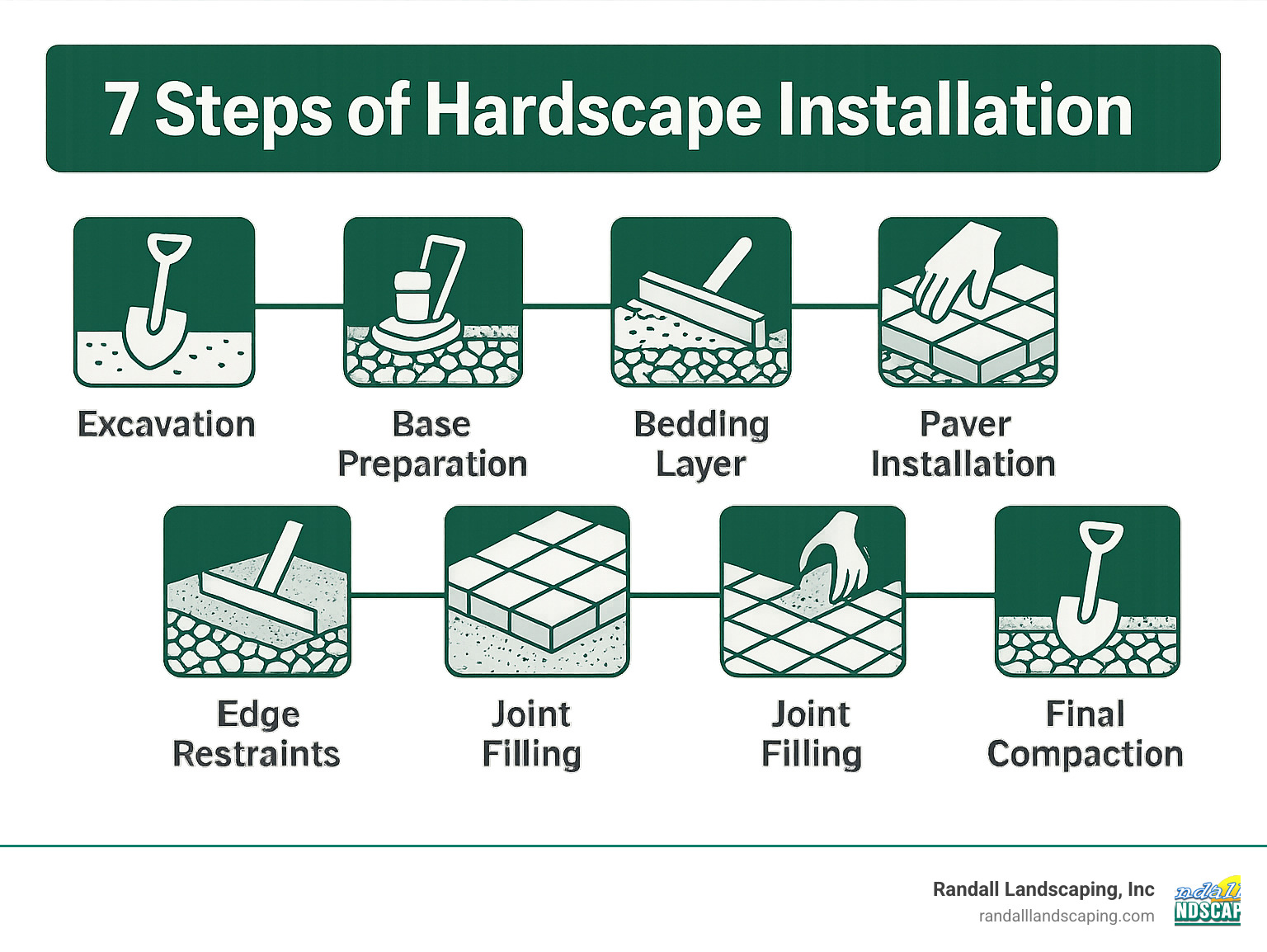
The process begins with thorough site preparation and excavation, removing existing materials and digging to the proper depth. This is followed by base installation, where we place and compact crushed stone (typically 4-12 inches depending on the application). Next comes installing edge restraints to prevent lateral movement of the pavers over time.
Before laying any visible materials, we create a precise bedding layer by placing and screeding a thin layer of bedding sand or stone dust. Only then does the actual hardscape installation begin, with pavers, wall blocks, or other materials placed according to the design plan. After installation, we apply jointing material between units for stability. Finally, compaction and finishing includes final compaction, cleaning, and (if applicable) sealing.
“The base preparation is absolutely critical to a successful hardscape installation,” our lead installer always emphasizes. “About 80% of the time and effort goes into what you’ll never see—the foundation beneath the pavers or wall. But that’s what determines whether your patio or wall will last for decades or start failing after just a few years.”
This attention to proper installation techniques is why we follow industry best practices as outlined in ICPI Tech Specs Technical Guidelines for all of our walkway installation and patio projects throughout Southern New Hampshire and the Merrimack Valley.
Maintenance, Sustainability & Common Mistakes
Once your beautiful hardscape is installed, proper maintenance ensures it remains an enduring part of your landscape for decades to come. Understanding how to care for different hardscape products and avoiding common pitfalls will protect your investment and keep your outdoor spaces looking their best year after year.
Long-Term Care for Hardscape Products
Different materials require different approaches to maintenance, but all benefit from regular attention. For concrete pavers, a simple routine keeps them looking fresh: occasional cleaning with a pressure washer on a low setting, refreshing joint sand when needed, and applying sealer every 3-5 years to improve color and provide stain protection. Don’t forget to address any weeds that might appear in the joints before they become established.
“We recommend our clients perform a simple annual inspection of their paver patios and walkways each spring,” advises our maintenance team leader. “Check for any loose pavers, areas where joint sand has eroded, or pavers that may have settled. Small issues are easy to fix before they become larger problems.”
Natural stone generally requires less chemical maintenance but deserves gentle care. Clean with appropriate stone-specific products—avoiding acidic cleaners on limestone or marble which can cause etching. For mortared stone installations, check those joints every 5-10 years for any deterioration that might need repointing. Some more porous stone varieties benefit from periodic sealing to prevent staining and improve their natural beauty.
Porcelain pavers represent the lowest-maintenance option, typically needing nothing more than occasional cleaning with soap and water. No sealing is required, though it’s still wise to periodically check that joints remain stable and intact.
Retaining walls require their own maintenance routine, focusing on structural integrity. Each spring, inspect walls for any signs of bulging or leaning, ensure drainage systems remain clear and functional, and clean surfaces with products appropriate to your wall material.
For all hardscape products, we recommend this simple annual spring routine:
- Inspect for winter damage or settlement
- Clean surfaces of winter debris and salt residue
- Check and clear drainage systems
- Address minor repairs promptly
This proactive approach prevents small issues from becoming costly problems and keeps your outdoor spaces looking their best through every season.
Green Upgrades & Waste Reduction
Sustainability in hardscaping goes well beyond permeable pavers to encompass a range of eco-friendly practices that reduce environmental impact while creating beautiful, functional spaces.
Many manufacturers now produce concrete pavers incorporating recycled glass or post-industrial waste, reducing the demand for virgin materials. Plastic edging and restraint systems made from recycled materials offer another way to reduce environmental impact. For projects where authentic character matters, reclaimed stone and brick provide historic charm while giving new life to materials that might otherwise end up in landfills.
“For a historic renovation project in Andover, we sourced reclaimed granite curbing that perfectly matched the period of the home,” recalls our sourcing specialist. “Not only did this provide authentic character, but it also gave new life to materials that might otherwise have ended up in a landfill.”
Lighting integration offers another opportunity for sustainable upgrades. Low-voltage LED systems consume minimal electricity while providing safety and ambiance. Solar-powered options eliminate wiring needs entirely for remote locations, and smart controls prevent unnecessary operation, further reducing energy use.
Water conservation features can be thoughtfully incorporated into hardscape designs. Rainwater harvesting systems collect runoff from hardscaped areas for landscape irrigation, while directed drainage channels water to planted areas rather than storm sewers. Even with traditional pavers, permeable bases can improve water infiltration and reduce runoff.
Supporting the local economy while reducing transportation-related carbon emissions is possible through local material sourcing. New England’s rich quarrying history provides access to locally-sourced granite and other stone that connects your landscape to the region’s natural heritage.
Through our Landscape Design & Installation services, we help clients incorporate these sustainable practices while creating outdoor spaces that are both beautiful and environmentally responsible.
Common Mistakes to Avoid
After installing hundreds of hardscape projects throughout Southern New Hampshire and the Merrimack Valley, we’ve observed several common mistakes that can significantly reduce the lifespan and appearance of hardscape products.
The most frequent issue we see is inadequate base preparation. Skimping on base depth inevitably leads to settlement and failure, while improper compaction results in uneven surfaces that can become tripping hazards. Many inexperienced installers also fail to account for specific soil types and drainage needs, leading to problems that emerge months or years after installation.
Improper slope and drainage represent another critical area where mistakes occur. Patios, walkways and driveways need proper pitch (typically 1/4″ per foot) away from structures to prevent water accumulation. For retaining walls, inadequate drainage behind the structure is the leading cause of failure. Perhaps most seriously, hardscapes that direct water toward foundations can cause extensive structural damage to your home.
Poor material selection often stems from focusing solely on initial cost rather than lifetime value. Choosing materials not suited to our challenging New England climate can lead to premature deterioration, while mixing incompatible materials that age differently creates an unbalanced appearance over time.
Installation shortcuts might save money initially but cost far more in the long run. Incorrect joint spacing affects both appearance and structural integrity, improper cutting techniques create weak points and poor aesthetics, and skipping edge restraints inevitably leads to spreading and failure.
“The most expensive hardscape is one you have to install twice,” notes our founder. “Proper installation by experienced professionals might cost more initially, but the long-term value is undeniable when your patio or walkway lasts for decades without issues.”
By understanding these common pitfalls and investing in quality materials and professional installation, you can enjoy your hardscape features for many years with minimal maintenance costs. The right approach to installation and maintenance ensures your outdoor spaces remain beautiful, functional, and valuable additions to your property for generations to come.
Frequently Asked Questions about Hardscape Products
Do hardscape products add resale value to my home?
Yes, quality hardscape products significantly increase property value and marketability. According to real estate data, well-designed hardscape features can provide returns of 60-80% on investment. Beyond the direct financial return, hardscapes also improve curb appeal, making a strong first impression on potential buyers. They effectively extend your usable living space by adding “outdoor rooms” to your home, while demonstrating pride of ownership and attention to detail. As a bonus, they typically require less maintenance than traditional landscaping.
“In our experience selling homes throughout the Merrimack Valley, properties with professional hardscaping typically sell faster and command higher prices,” confirms a local real estate agent we frequently partner with. “Buyers recognize the value of these improvements and the cost they’d incur to add them after purchase.”
The highest ROI typically comes from paver patios and outdoor living spaces, stone walkways and entryways, retaining walls that create usable yard space, and popular features like fire pits and outdoor kitchens. These elements not only improve your daily enjoyment but serve as strong selling points when it’s time to move.
What is the lifespan of different hardscape materials?
The durability of hardscape products varies significantly by material type and installation quality. When properly installed, quality concrete pavers typically last 25-50 years, with higher-end products potentially lasting even longer thanks to advanced manufacturing techniques.
Clay brick has extraordinary longevity – many historic brick walkways and patios remain functional after centuries of use. Modern clay pavers typically carry lifetime warranties and easily last 50+ years with minimal maintenance.
Natural stone products offer exceptional durability, with granite installations often lasting 100+ years (many historic granite structures are centuries old). Bluestone typically performs beautifully for 50+ years with proper installation, while limestone and sandstone generally last 25-50 years depending on the specific variety and climate exposure.
Porcelain pavers, though newer to the market, are engineered for extreme durability with expected lifespans of 50+ years and excellent resistance to fading, staining, and freeze-thaw damage.
For retaining walls, engineered concrete block systems typically last 25-50 years, while natural stone walls can stand strong for 50-100+ years. Timber walls have the shortest lifespan among common wall materials, typically 10-20 years.
“We still see functional stone walls throughout New England that were built by farmers clearing fields 200 years ago,” observes our historian-minded designer. “When you invest in quality materials and proper installation, you’re creating landscape elements that may well outlast your ownership of the property.”
Can I DIY or should I hire a pro for installation?
While DIY installation of some hardscape products is possible for skilled homeowners, several factors should guide this decision. Project complexity is a primary consideration – simple projects like stepping stone paths or small raised planters may be suitable DIY undertakings, while complex projects like large patios, driveways, or retaining walls generally require professional expertise.
Equipment requirements present another challenge. Professional hardscape installation relies on specialized tools including plate compactors and rammers for proper base preparation, wet saws for precise cutting of pavers and stone, laser levels for ensuring proper drainage slopes, and excavation equipment for site preparation. Renting this equipment adds cost and complexity to DIY projects.
Technical knowledge is equally important. Proper hardscape installation requires understanding soil conditions and appropriate base depths, drainage requirements and water management, proper compaction techniques, and material-specific installation requirements. Without this knowledge, DIY projects often develop problems within the first few seasons.
Time commitment shouldn’t be underestimated either. Even relatively simple hardscape projects require significant time – a professional team might install a 200 sq ft patio in 2-3 days, while the same project could consume 2-3 weekends or more for a DIYer.
“We’ve had numerous clients call us to rescue DIY projects that went awry,” shares our repair specialist. “Unfortunately, fixing an improperly installed hardscape often costs more than having it professionally installed from the start would have.”
For those determined to DIY, we recommend starting with smaller projects to build skills, investing in proper tools, thoroughly researching installation techniques specific to your chosen materials, and considering professional consultation for critical aspects like drainage and base preparation.
At Randall Landscaping, we offer consultation services for DIY enthusiasts who want professional guidance while handling the labor themselves. This middle-ground approach has helped many homeowners successfully complete projects while avoiding costly mistakes.
Conclusion
There’s no limit to what you can dream up—and achieve—with quality hardscape products. Whether you imagine a cozy brick walkway winding through your garden, a polished porcelain patio perfect for summer evenings, or a stone wall that looks straight out of a storybook, today’s hardscape materials make it possible to blend beauty, durability, and eco-friendly choices in one outdoor space.
As we’ve seen throughout this guide, choosing the right hardscape products means thinking about your home’s personality, our unpredictable New England weather, the time you want to spend on upkeep, your budget, and the impact your choices have on the environment. Every property and family is unique, and your hardscape should reflect what matters most to you.
Here at Randall Landscaping, Inc., our team brings over 18 years of experience serving the Merrimack Valley and Southern New Hampshire. We know which materials stand up to our winters, which patterns never go out of style, and—most importantly—how to turn your wish list into a space you’ll truly love. Whether you’re picturing a simple path or a whole new backyard, we’re committed to craftsmanship, customer satisfaction, and reliability.
If you’re ready to take the next step, we invite you to browse our Hardscaping Services and see how the right hardscape products can transform your outdoor living. We’ll walk you through every phase, from planning and design to installation and care, so all you need to do is sit back and enjoy the results.
Great outdoor spaces don’t happen by accident—they’re built on thoughtful planning and a trusted partnership. At Randall Landscaping, you’ll always get clear advice, honest pricing (remember, any costs listed here are internet averages—not our actual rates!), and a team that shows up when we say we will.
Let’s work together to create a landscape that’s as reliable and welcoming as your home itself. Your hardscape haven is closer than you think—let’s build it, one stone (or paver, or slab) at a time.