
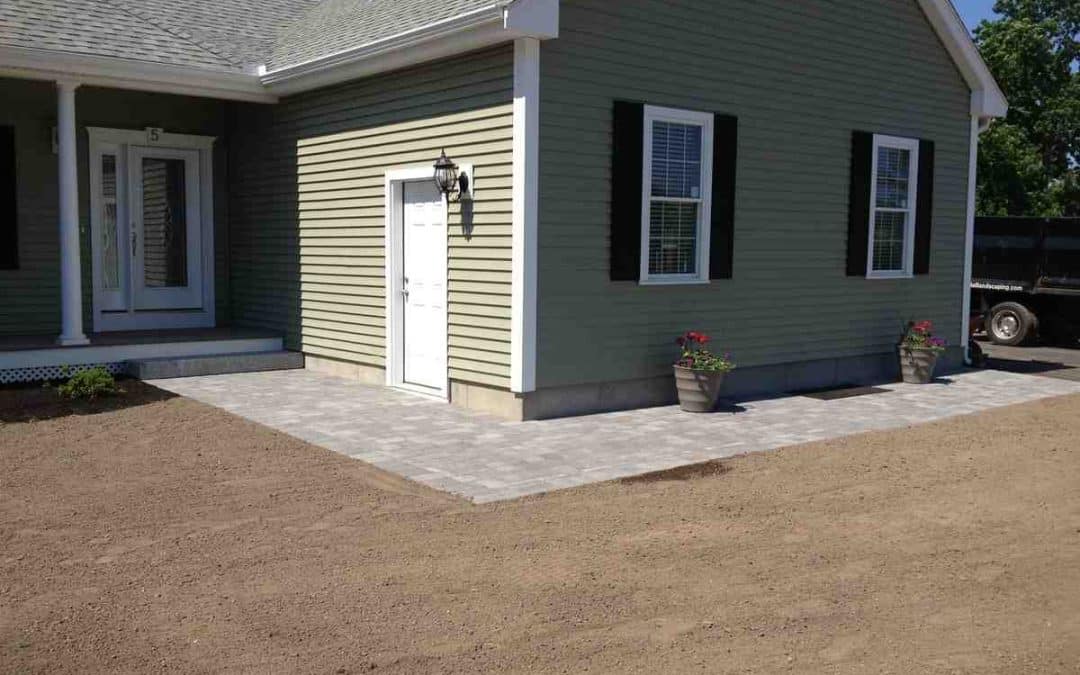
Your Driveway Is the First Thing People See — Make It Count
Driveway paver designs are one of the most impactful upgrades you can make to your home’s exterior. A well-designed paver driveway doesn’t just look beautiful — it can boost your property value by up to 15% and create a lasting first impression for every visitor.
Here are the most popular driveway paver design options at a glance:
| Design Style | Best For | Key Feature |
|---|---|---|
| Herringbone | All homes, high traffic | Maximum strength, resists shifting |
| Running Bond | Modern or traditional | Clean lines, cost-effective |
| Ashlar / Random | Contemporary, luxury | Organic, sophisticated look |
| Cobblestone | Traditional, rustic | Timeless European charm |
| Geometric / Large Format | Modern, minimalist | Sleek, bold visual impact |
| Circular / Mosaic | Grand entrances | Eye-catching focal point |
The best design depends on your home’s architecture, your climate, and how much traffic your driveway handles.
Unlike plain concrete or asphalt, pavers give you real flexibility — in color, texture, pattern, and layout. They’re also easier to repair, and they handle freeze-thaw cycles far better than solid slabs.
I’m Tommy Randall, owner of Randall Landscaping, Inc., and I’ve been designing and installing driveway paver designs across Massachusetts and Southern New Hampshire since 2006. In this guide, I’ll walk you through everything — from layout patterns and material choices to maintenance and costs — so you can make a confident decision for your property.

Driveway paver designs basics:
Creative Driveway Paver Designs for Every Architectural Style
When we sit down with homeowners in places like Boxford or Georgetown, the first thing we look at isn’t the driveway itself—it’s the house. Your driveway should act as a red carpet that leads people to your front door, which means it needs to speak the same “language” as your home’s architecture.
Choosing the right driveway paver designs involves balancing three main elements: color, texture, and borders. If you have a classic red-brick colonial in Andover, you might want a tumbled, weathered paver that looks like it’s been there for a century. If you’ve just built a sleek, contemporary home in Windham, large-format slabs with clean lines and a monochromatic grey palette are likely the way to go.
Borders and accents are the “secret sauce” of a great design. We often use a “soldier course” (pavers laid side-by-side in a row) or a contrasting color to frame the main field. This adds definition and prevents the driveway from looking like a giant, undifferentiated mass of stone. For those looking for more inspiration, also visit 11 Driveway Paver Design Ideas for a Grand Entrance – OUTERclé to see how different materials can transform an entryway.

Modern and Geometric Driveway Paver Designs
For modern homes, less is often more. We see a huge trend toward linear layouts and large-format pavers. These stones are bigger than your traditional 4×8 brick, often coming in sizes like 12×24 or even larger. The goal here is to minimize the number of joint lines, creating a seamless, minimalist aesthetic that complements sharp angles and glass-heavy architecture.
If you want to get a bit more creative, modern mosaic patterns are a fantastic way to add a custom feel. By mixing rectangular and square pavers in a calculated layout, you can create a driveway that looks more like a piece of art than a place to park your SUV. In our experience, using a grey or white hue for these designs helps reflect light and keeps the entrance looking bright and welcoming.
Traditional and Circular Driveway Paver Designs
If your style leans more toward “timeless elegance,” traditional designs with cobblestone textures are a perfect fit. Cobblestones evoke a sense of European charm that works beautifully with Victorian, Craftsman, or Farmhouse-style homes.
One of our favorite ways to add a “wow” factor is through circle kits. A circular inlay in the center of a driveway or at the entrance to a courtyard creates a powerful focal point. It breaks up the straight lines of the driveway and adds a sense of movement. This is also a practical choice for “carriage drops” or large estates where you want to guide traffic in a specific direction. For those in more rural areas of Southern NH, these designs can make a home feel like a sprawling estate.
Structural Strength: Choosing the Right Laying Patterns
It’s easy to get caught up in the colors and textures, but as professional installers, we have to think about the physics. A driveway isn’t just a patio; it has to support the weight of several thousand pounds of steel rolling over it every day. The pattern you choose significantly impacts how well your driveway stands up to that pressure.
In areas with sandy or shifting soil—common in parts of the Merrimack Valley—the “interlock” of the pavers is what keeps the surface flat. Without a strong interlocking pattern, pavers can shift, tilt, or sink over time, leading to unsightly ruts.
The Herringbone Pattern for Maximum Durability
Ask any engineer or experienced hardscaper, and they’ll tell you: the herringbone pattern is the gold standard for structural integrity. In this layout, pavers are set at either a 45-degree or 90-degree angle to one another.
Why does this matter? Because the zigzag interlock ensures that when a tire rolls over a paver, the weight is distributed across several surrounding stones rather than just one. This provides the best resistance to “creeping”—the tendency of pavers to move forward or backward under the force of a vehicle braking or accelerating. For the best results, we recommend the 45-degree herringbone, as it offers superior interlock in all directions.
Running Bond and Ashlar Layouts
If you’re looking for something a bit more modern, a running bond pattern (where each paver is offset by half a stone length) mimics subway tile designs. This is a very clean, organized look that works well on long, straight driveways. It’s also often more cost-effective because it requires fewer cuts than a herringbone pattern.
Ashlar or random patterns are also gaining popularity for luxury homes. These layouts use three or more different sizes of stones to create an organic, sophisticated look. While they don’t have the extreme interlocking strength of a herringbone, they are more than durable enough for residential traffic when installed over a properly compacted base. They are particularly good at hiding the wear and tear that comes with decades of use.
Functional Innovation: Permeable and Sustainable Options
We live in a region that gets its fair share of rain and snow. In places like Dracut and Methuen, managing water runoff is a major concern for homeowners. This is where permeable driveway paver designs come into play.
Permeable pavers are designed with slightly larger joints that are filled with small stones rather than sand. This allows rainwater to drain directly through the surface and into the soil below, rather than running off into the street or pooling near your garage.
Permeable Paver Systems
The environmental benefits of permeable systems are huge. They act as a natural filter, removing pollutants from the water before it hits the groundwater table. But there are practical benefits, too. Because water doesn’t sit on the surface, you don’t get those annoying puddles that turn into “black ice” in the winter.
In fact, some municipalities even offer tax incentives or grants for homeowners who install permeable systems because they reduce the burden on local storm sewers. If you’re planning a project in a town with strict drainage regulations, this might be your best option. You can even find Antika permeable pavers that look like old-world cobblestone but offer all the modern drainage benefits.
Winter Care and Heated Pavers
Let’s talk about the “S” word: Snow. New England winters are brutal on driveways. One of the biggest advantages of pavers is that they are much more resistant to de-icing salts than poured concrete.
For the ultimate luxury, we can install heated driveway systems beneath your pavers. Imagine never having to shovel or plow again! These systems use electric cables or hydronic tubes to warm the pavers from below, melting snow and ice as soon as it hits. Since permeable pavers allow melted snow to drain away immediately, they are the perfect partner for a heated system. If you want to keep your pavers looking great for years, even without a heater, check out our Sealing Driveway Pavers Guide for tips on winter protection.
Technical Specifications, Maintenance, and Costs
A beautiful driveway is only as good as what’s underneath it. For residential driveways, we generally use pavers that are at least 60mm (about 2 3/8 inches) thick. For driveways that see heavy traffic—like delivery trucks or multiple large SUVs—we often upgrade to 80mm (3 inch) pavers for added peace of mind.
The “base” is the most critical part. In our area, we deal with “frost heave,” where the ground expands and contracts as it freezes. To combat this, we excavate deep—usually 10 to 12 inches—and backfill with layers of crushed stone and gravel, compacting each layer to ensure a rock-solid foundation.
| Feature | Standard (60mm) | Heavy Duty (80mm) |
|---|---|---|
| Paver Thickness | 2.375 inches | 3.125 inches |
| Typical Base Depth | 6-8 inches | 10-12 inches |
| Best Use | Standard cars, light SUVs | Heavy trucks, RVs, steep slopes |
| Interlock Strength | High | Maximum |
Installation Standards and Climate Factors
In the Merrimack Valley and Southern NH, we have to be smarter than the weather. We often use geo-fabric layers between the soil and the stone base to prevent the layers from mixing over time. This keeps the base strong and prevents the pavers from settling unevenly.
Edge restraints are another non-negotiable. These are hidden borders (usually made of heavy-duty plastic or metal) that are spiked into the ground to hold the pavers tightly together. Without them, the pavers on the edges of your driveway would eventually start to “walk” away from the rest of the pack.
Maintenance and Investment Value
Maintaining your driveway paver designs is surprisingly simple. We recommend a seasonal cleaning with a low-pressure power washer and a stiff broom to keep them looking fresh.
Sealing is the most important maintenance task. You should have your pavers sealed every 3 to 5 years. This protects them from oil stains, helps prevent weeds from growing in the joints, and enhances the color of the stone. It’s a small investment that can add a decade to the life of your driveway.
Regarding costs, it’s important to understand that a paver driveway is a premium product. Based on internet data, the average cost for a paver driveway can range from $15 to $75+ per square foot. Please note that these are average costs based on general market data and are not the actual costs for Randall Landscaping, Inc. The wide range accounts for differences in paver materials (concrete vs. natural stone), the complexity of the pattern (herringbone is more labor-intensive), and the amount of site preparation required.
For more technical details on how we handle these projects, visit our page on Hardscaping Driveway Pavers.
Frequently Asked Questions about Driveway Paver Designs
How do driveway pavers increase home value?
A paver driveway is a clear sign of a well-maintained home. It significantly boosts “curb appeal,” which is the first thing a potential buyer sees. Real estate experts suggest that a high-quality paver driveway can increase your home’s resale value by up to 15%. It sets your property apart from the standard asphalt driveways in the neighborhood.
What is the best paver pattern for heavy vehicles?
The 45-degree herringbone pattern is widely considered the strongest. Its interlocking design prevents pavers from shifting or rutting under the weight of heavy vehicles like SUVs, delivery trucks, or even RVs. If you have a steep driveway, this pattern is also excellent for providing extra traction and stability.
How often should I seal my paver driveway?
For the best protection, you should seal your driveway every 3 to 5 years. This helps maintain the vibrant color of the stones, protects against oil and chemical stains, and keeps the joint sand in place. If you notice the colors starting to fade or water is no longer “beading” on the surface, it’s time for a fresh coat.
Conclusion
Upgrading your home with professional driveway paver designs is an investment in both beauty and longevity. Whether you’re in Amesbury, Salem, or Pelham, a custom paver entrance tells the world that you take pride in your home.
At Randall Landscaping, Inc., we’ve built our reputation on 100% reliability and quality craftsmanship. We understand the specific challenges of the New England climate and know how to build driveways that stay beautiful and flat through decades of snow, ice, and summer heat. From the initial design to the final sweep of joint sand, we’re committed to your total satisfaction.
If you’re ready to transform your home’s entrance, we’d love to help. Start your driveway project today and let us show you why we’re the preferred hardscape team in the Merrimack Valley and Southern New Hampshire.