

Why Choose a Paver Walkway?
A walkway paver installation creates a durable, attractive path using individual paving stones set on a foundation of gravel and sand. Paver walkways offer significant advantages over concrete, including easy repairs—you can simply replace individual stones instead of the whole slab. They also provide better traction, allow for natural water drainage, and can last over 25 years with minimal care.
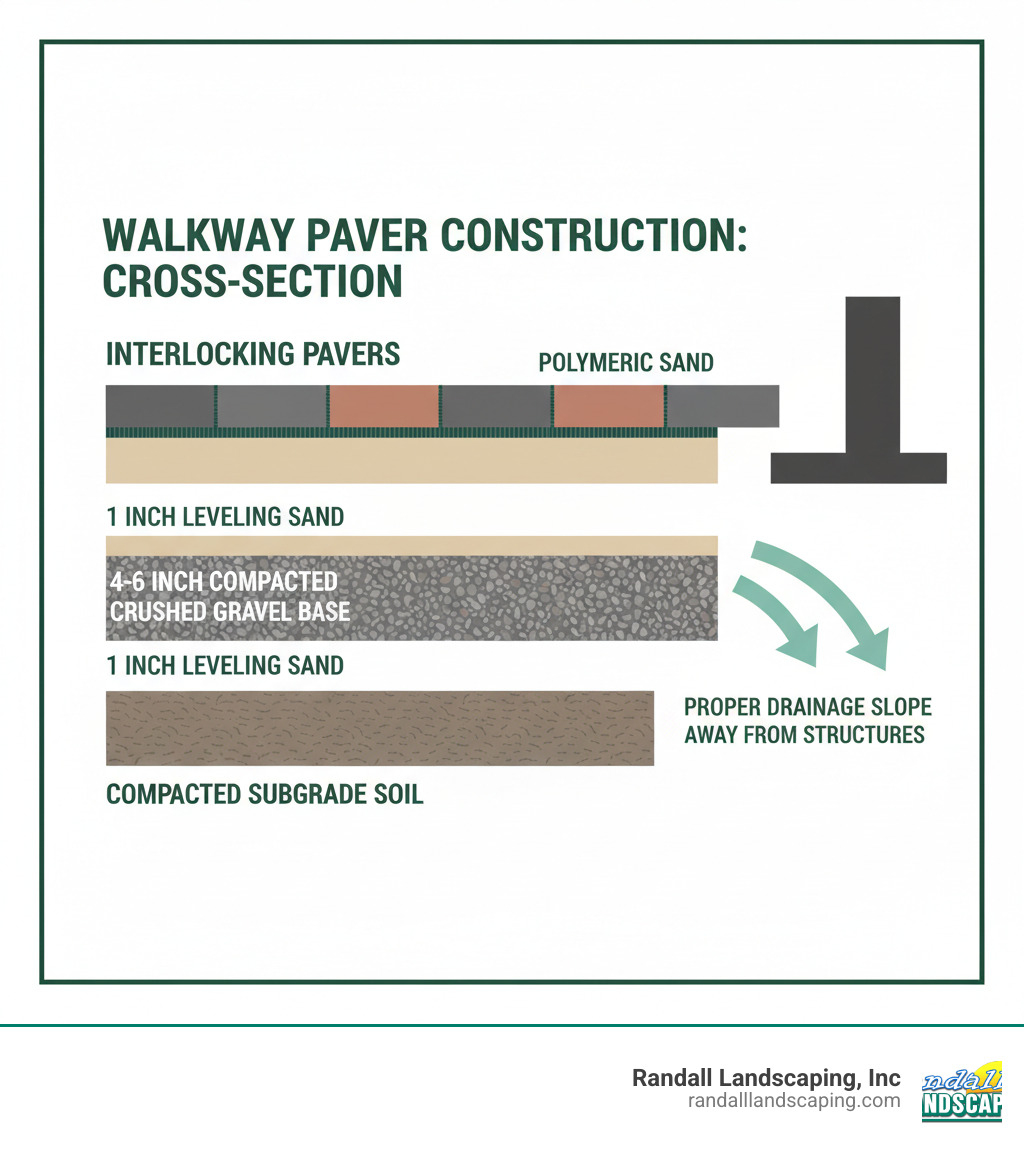
The key to a long-lasting walkway is proper base preparation. A well-compacted gravel base is essential to prevent settling and keep the surface level for decades. While this is an achievable DIY project for many, success hinges on getting the foundation right.
Key Installation Steps:
- Excavate the area to a depth of 7-8 inches.
- Install and compact a 4-6 inch gravel base.
- Add and level a 1-inch sand layer.
- Lay pavers in your desired pattern.
- Install edge restraints to prevent shifting.
- Fill joints with polymeric sand.
Average Cost Range: $5-$45+ per square foot (based on internet data, not Randall Landscaping pricing)
I’m Tommy Randall, owner of Randall Landscaping. Since 2006, my team and I have specialized in walkway paver installations across Massachusetts and New Hampshire. We’ve learned that meticulous base preparation and proper drainage are the secrets to a walkway that endures.
Planning Your Paver Walkway Project
Good planning is the first step toward a beautiful, long-lasting walkway paver installation. This stage ensures your project looks and functions exactly as you envision.
First, consider the style. Do you prefer a formal, straight path or a meandering, natural one? Use a garden hose or spray paint to outline your proposed walkway on the ground. Walk the path to see if it feels natural and flows with your landscape.
Width is also important. While 36 inches is standard, a 48-inch width allows two people to walk side-by-side comfortably. For wheelchair accessibility, a minimum of 36 inches is required, with 60-inch turnaround areas.
| Paver Type | Average Cost (per sq ft) | Durability | Style |
|---|---|---|---|
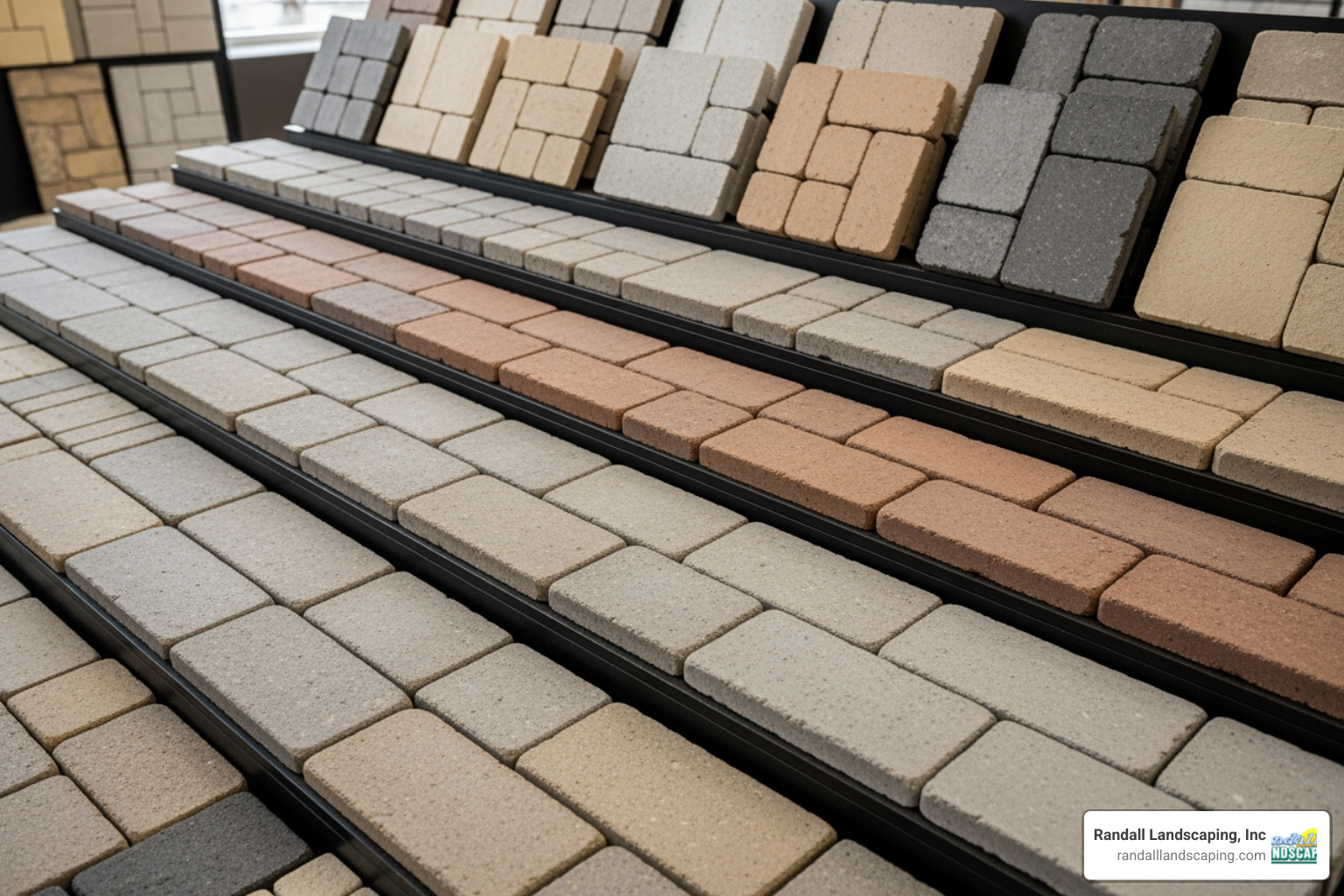
| Concrete Pavers | $2-$6 | Good (prone to staining/fading) | Versatile, diverse shapes/styles, modern to traditional |
| Brick Pavers | $5-$15 | Excellent (50+ years, classic look) | Traditional, warm, rustic, classic |
| Natural Stone Pavers | $15-$30+ | Superior (100+ years, extremely durable) | Neat, luxurious, natural, unique textures and colors |
Note: The costs listed are average estimates based on internet data and do not reflect the actual pricing of Randall Landscaping services or materials.
For more design ideas, see our Patios and Walkway Installations page.
Choosing Your Paver Material and Design
The material you choose defines your walkway’s character.
- Concrete pavers are affordable and versatile, available in many shapes and colors that can mimic stone or brick. They are durable but may require sealing to prevent fading or staining.
- Brick pavers offer timeless, classic charm with warm, earthy tones that age beautifully. They are a long-term investment, often lasting 50 years or more.
- Natural stone pavers like bluestone or granite provide a premium, one-of-a-kind look with unique textures and colors. They are incredibly durable, lasting over 100 years, and naturally resist fading.
Your choice of pattern also impacts appearance and strength. The herringbone pattern is highly interlocking and great for high-traffic areas. The basketweave pattern creates a charming, traditional look. For a clean, modern aesthetic, the stacked bond pattern uses straight, un-staggered lines.
How to Calculate Materials Needed
Accurate material calculation saves time and money.
- Calculate Square Footage: Measure your walkway’s length and width in feet, then multiply them (Length x Width = Square Footage). For curved paths, break them into smaller, measurable sections.
- Calculate Pavers: Ask your supplier for the paver’s coverage rate. Always order 10% extra to account for cuts, breakage, and future repairs.
- Calculate Gravel Base: For a standard 6-inch (0.5 ft) base, multiply your square footage by 0.5 to get the cubic feet of gravel needed (Sq. Ft. x 0.5 ft = Cubic Feet). Convert to cubic yards by dividing by 27.
- Calculate Sand: You’ll need a 1-inch layer of coarse leveling sand. A good rule of thumb is to get about one-third the cubic volume of your gravel.
Essential Tools and Materials for Installation
A successful walkway paver installation depends on having the right equipment. While you may own some tools, specialized items like a plate compactor are best rented. Always prioritize safety with the proper gear.
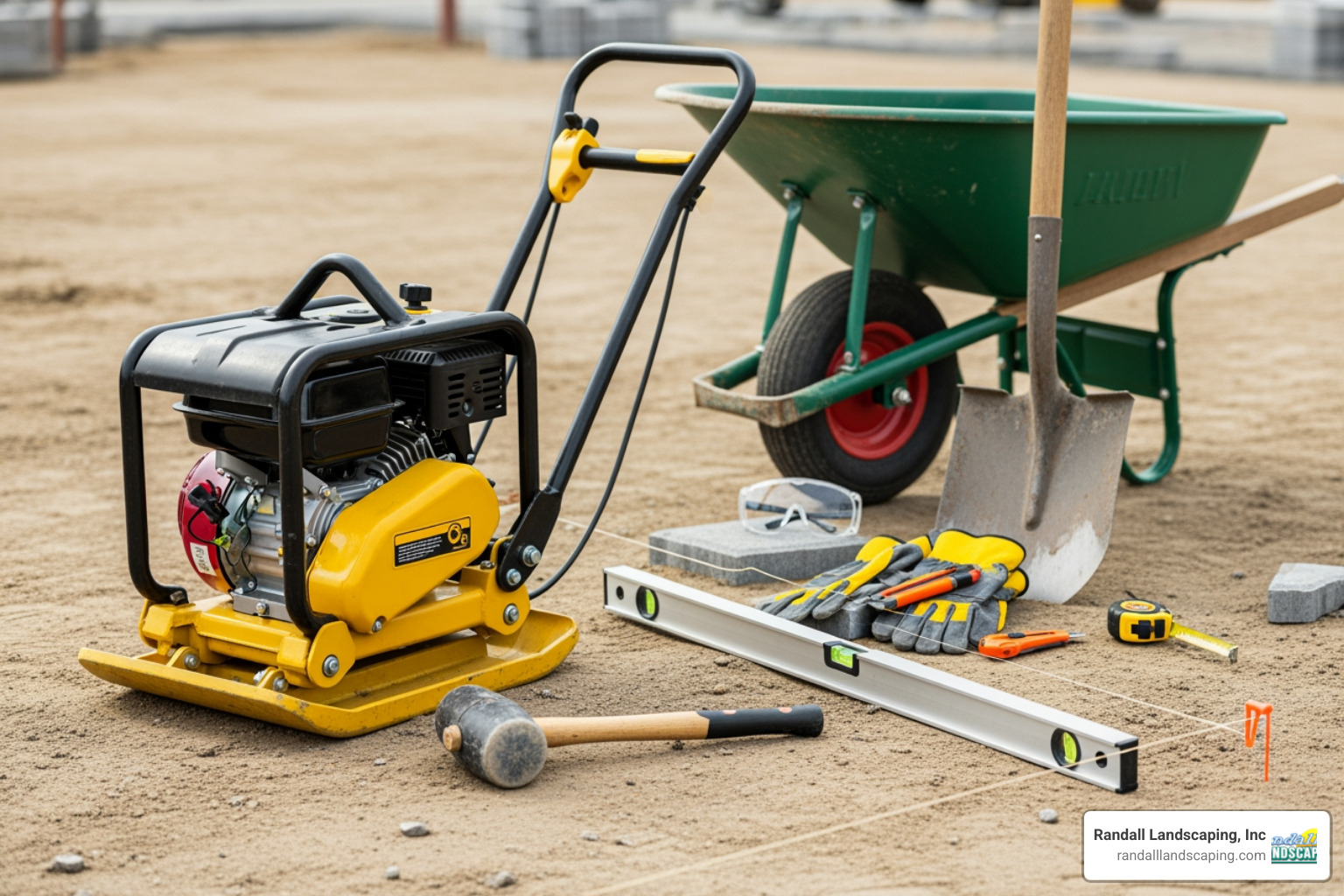
Before starting, gather your safety equipment: sturdy work gloves, safety glasses, a dust mask, and hearing protection, especially if using a masonry saw. You can rent specialized tools like a plate compactor from most hardware stores; its use is key to a professional-quality installation that prevents settling.
For more on hardscaping projects, visit our Hardscaping page.
Tools You’ll Need
- Excavation: Shovel, spade, wheelbarrow
- Layout & Leveling: Tape measure, stakes, string line, line level, 4-foot level
- Compaction: Plate compactor (recommended rental) or hand tamper
- Paver Setting: Rubber mallet
- Cutting: Masonry saw with a diamond blade (rental) or a hammer and masonry chisel
- Finishing: 2×4 straightedge (screed board), 1-inch PVC pipes (screed guides), push broom, garden hose with spray nozzle, utility knife
Materials to Purchase
- Pavers: Your choice of concrete, brick, or natural stone.
- Paver Base: Crushed gravel (e.g., 3/4-inch minus aggregate). A 6-inch layer is recommended for the New England climate.
- Leveling Sand: Coarse sand (also called C-33 sand) for the 1-inch bedding layer. Do not use play sand.
- Edge Restraints: Essential plastic, metal, or concrete edging to prevent pavers from spreading.
- Polymeric Sand: Binds pavers together when activated with water, locking them in place and preventing weeds.
- Geotextile Fabric (Recommended): Placed between the soil and gravel base, it prevents the base from sinking and suppresses weeds.
The Complete Walkway Paver Installation Process
Now it’s time to build. A successful walkway paver installation requires careful execution of each step, especially the foundation work. Rushing the base preparation is the most common reason for walkway failure.
At Randall Landscaping, we know a beautiful finish starts with a strong foundation. Follow these steps carefully for a walkway that lasts for decades.
For more on our professional process, see our Walkway Installation page.
Step 1: Excavation and Grading for Proper Drainage
This is the most critical step. Proper excavation and grading ensure stability and prevent water damage.
First, outline your walkway using stakes and string lines or a garden hose for curves. Before digging, call 811, the national call-before-you-dig service, to have underground utility lines marked. This is a free and essential safety measure.
Excavate to a total depth of 7 to 8 inches. This accommodates a 4-6 inch gravel base, a 1-inch sand bed, and the paver’s thickness. Dig about 6 inches wider than the final walkway on all sides to allow room for installing edge restraints.
Next, establish a proper slope for drainage, directing water away from your house. A slope of 1/4-inch per foot is standard. Use your string lines and a line level to set and check this grade. Once excavated, thoroughly compact the exposed soil (the subgrade) with a plate compactor.
Step 2: Preparing the Gravel and Sand Base
With the subgrade prepared, you can build the foundation.
First, lay geotextile fabric over the compacted soil, overlapping seams by 6-12 inches. This prevents the gravel base from mixing with the soil and suppresses weeds.
Next, add the gravel base material in 2-inch layers (or ‘lifts’). After spreading each lift, compact it thoroughly with the plate compactor. For a 6-inch base, you will repeat this process three times. This layered compaction is vital for a stable, long-lasting foundation.
On top of the compacted gravel, create a 1-inch layer of coarse leveling sand. To do this, lay two 1-inch diameter PVC pipes parallel to each other. Shovel sand between them, then drag a straight 2×4 board (a screed) across the pipes to create a perfectly smooth and level surface. Carefully remove the pipes and fill in the gaps. Avoid walking on the screeded sand.
Step 3: Laying Pavers and Installing Edge Restraints
Now your walkway begins to take shape.
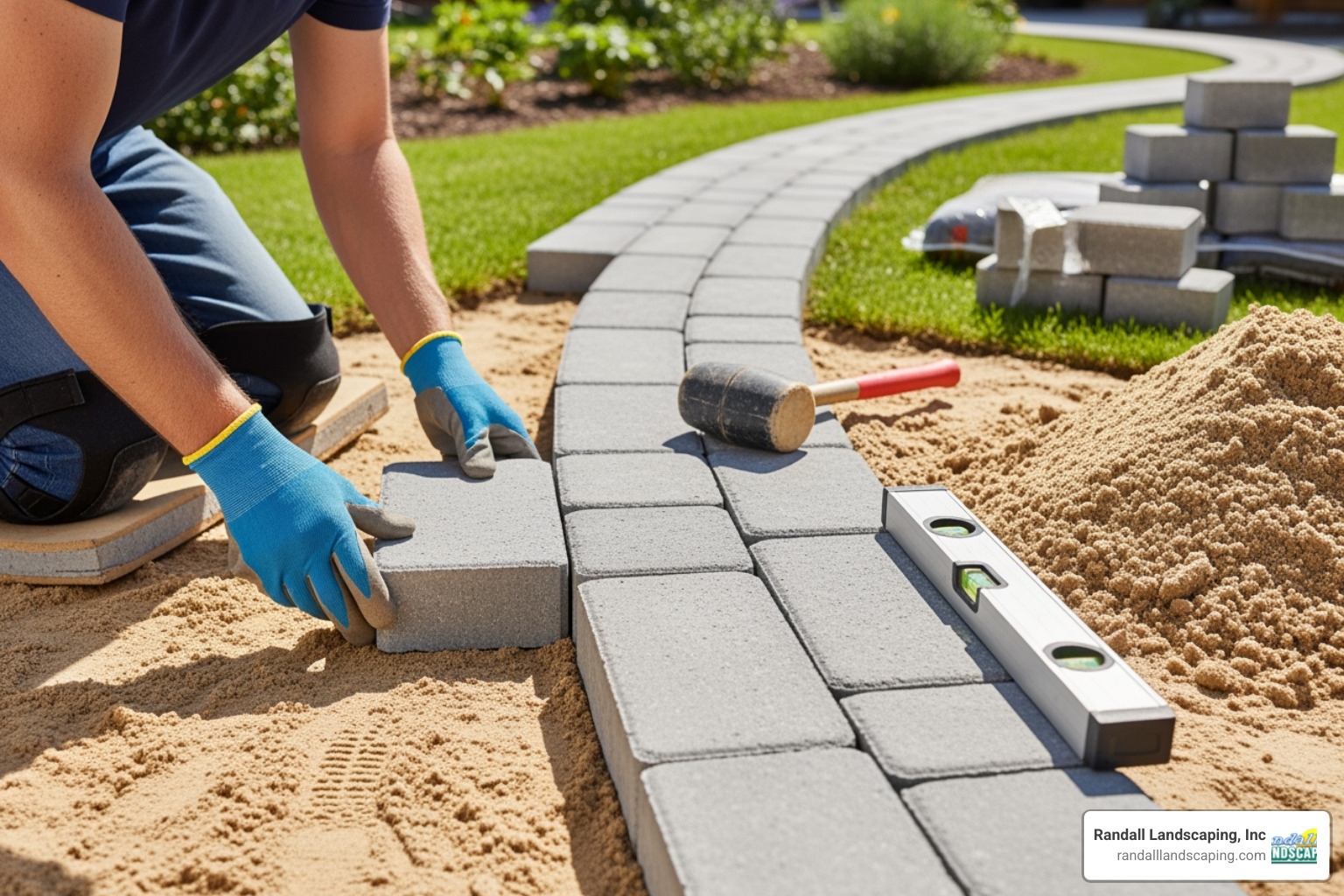
Start laying pavers from a fixed edge, like your driveway or house foundation, to ensure a straight line. Place each paver straight down onto the sand, wiggling it slightly to set it. Do not drag pavers across the sand. Use the built-in spacer bars or plastic spacers to maintain consistent 1/8-inch joints.
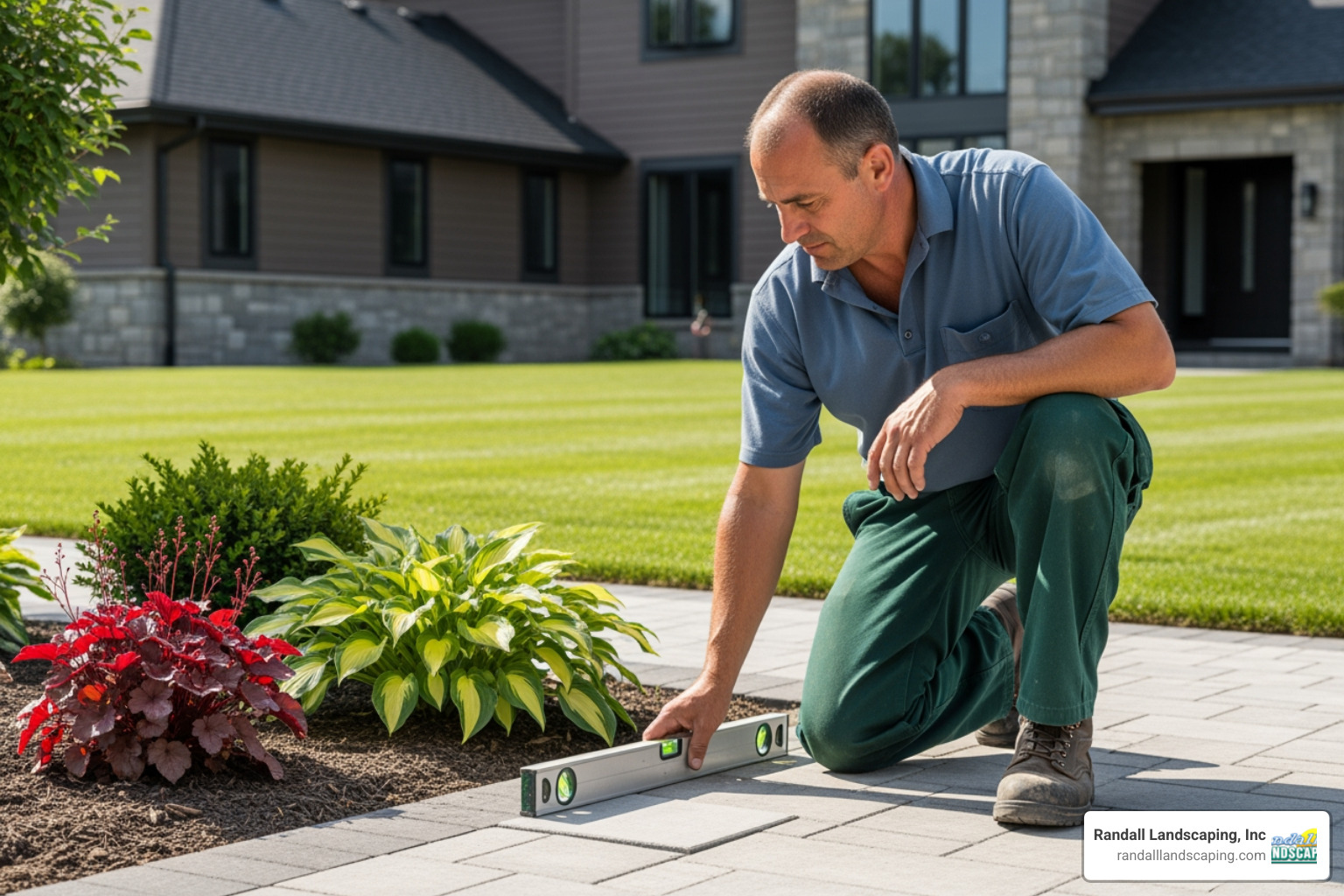
Periodically check your work with a long level, tapping down any high pavers with a rubber mallet. Once the main field of pavers is laid, install edge restraints around the perimeter, securing them into the gravel base with spikes every 12 inches. This step is critical to prevent pavers from shifting over time.
Step 4: Cutting Pavers and Finishing Your Walkway Paver Installation
These final steps lock everything in place.
Mark and cut pavers as needed to fit curves and edges. A masonry saw with a diamond blade provides the cleanest cuts. Always wear safety glasses, a dust mask, and hearing protection when cutting. Place the cut pavers into position.
Once all pavers are in place, run the plate compactor over the entire surface to settle them into the sand. Use a protective pad on the compactor to avoid scuffing the pavers.
Finally, apply polymeric sand. Spread it over the dry paver surface and use a push broom to sweep it into all the joints until they are full. Crucially, use a leaf blower or broom to remove all excess sand from the paver surfaces. Any residue left behind will cause a permanent haze. Run the compactor over the walkway one last time to settle the sand in the joints.
Lightly mist the walkway with a garden hose to activate the polymers in the sand. Allow it to cure for 24-48 hours before walking on it.
Costs, Maintenance, and When to Hire a Pro
Understanding the costs, long-term care, and when to call a professional is key to a successful walkway paver installation. Whether you DIY or hire an expert will significantly impact your budget and the final result.
For guidance on choosing a contractor, see our Paver Walkway Contractors Ultimate Guide.
Understanding the Costs of a Walkway Paver Installation
The final cost depends on paver type, design complexity, site preparation, and labor. Material costs vary widely: concrete pavers ($2-$6/sq ft), brick pavers ($5-$15/sq ft), and natural stone ($15-$30+/sq ft). Base materials like gravel and sand add another $2-$5 per square foot.
A DIY project typically costs $5-$15 per square foot for materials and tool rentals. Professional installation generally ranges from $10-$45+ per square foot, which includes all materials and labor. This price reflects the contractor’s experience, specialized equipment, efficiency, and insurance.
Important note: These are average costs based on internet data and do not reflect the actual pricing for Randall Landscaping services. For an accurate quote for your property in the Merrimack Valley or Southern New Hampshire, please contact us directly.
Paver Walkway Maintenance Best Practices
Paver walkways are low-maintenance. Follow these best practices to keep yours looking great:
- Regular Sweeping: Prevents dirt and debris from accumulating in the joints.
- Quick Stain Removal: Clean spills with soap and water. Use specialized cleaners for tough stains like oil or rust.
- Check Polymeric Sand: Every 1-2 years, check the joints and top up with polymeric sand as needed to maintain stability and prevent weeds.
- Weed Control: The combination of geotextile fabric and polymeric sand is highly effective. Pull any stray weeds by hand.
- Sealing (Optional): Applying a quality sealer every 2-5 years can improve color and protect against stains. Avoid film-forming sealers that can peel.
- Easy Repairs: One of the biggest benefits of pavers is their repairability. Sunken or shifted pavers can be easily lifted, re-leveled, and replaced.
- Winter Care: Use plastic shovels or raise snow blower blades to avoid scratching. Use rock salt sparingly, as it can be abrasive.
DIY vs. Hiring a Professional Contractor
Deciding whether to do it yourself or hire a pro comes down to a trade-off between cost, time, and skill.
DIY Approach:
- Pros: Lower upfront cost.
- Cons: Requires significant time and intense physical labor (excavating, hauling materials, operating heavy equipment). Tool rental costs can add up. There’s a high risk of installation errors, like improper base compaction or poor drainage, which can lead to premature failure and costly repairs.
Hiring a Professional (like Randall Landscaping):
- Pros: Guarantees a high-quality, long-lasting result. Professionals have the experience, specialized tools, and knowledge of local soil and climate conditions (like New England’s freeze-thaw cycles). The work is efficient, insured, and typically comes with a warranty, providing peace of mind.
- Cons: Higher initial investment.
Consider hiring a professional if your project is large, involves complex patterns or significant grading, or if you lack the time or physical ability for such a demanding project. We handle all the heavy lifting and technical details to deliver a flawless walkway.
For more on our professional services, visit our Patios and Walkway Installations page.
Conclusion: Enjoy Your New High-Quality Walkway
You’ve now seen every step of the walkway paver installation process, from initial planning to the final finishing touches. The result is a beautiful and functional addition to your outdoor space.
A well-designed paver walkway improves curb appeal, provides safe passage, and adds lasting value to your property. Unlike concrete, a paver path offers decades of beauty with simple maintenance and easy repairs. The key to this longevity is the quality of the installation—especially the unseen foundation work.
Proper base preparation, thorough compaction, and correct grading are what ensure a walkway will last for years without shifting or settling. Whether you choose to DIY or hire an expert, a properly built paver walkway is an investment in your home’s beauty and functionality.
For a flawless and reliable paver walkway that stands the test of time, trust the experts. Contact us to learn more about our Patios and Walkway Installations. At Randall Landscaping, we use our nearly two decades of experience to turn your vision into a durable, beautiful reality.