What Does It Cost to Install Mulch? (Quick Answer)
The cost of installing mulch typically falls in the following ranges, based on average internet data:
| Cost Type | Typical Range |
|---|---|
| Per square foot (installed) | $0.71 – $6.00 |
| Per cubic yard (installed) | $35 – $300+ |
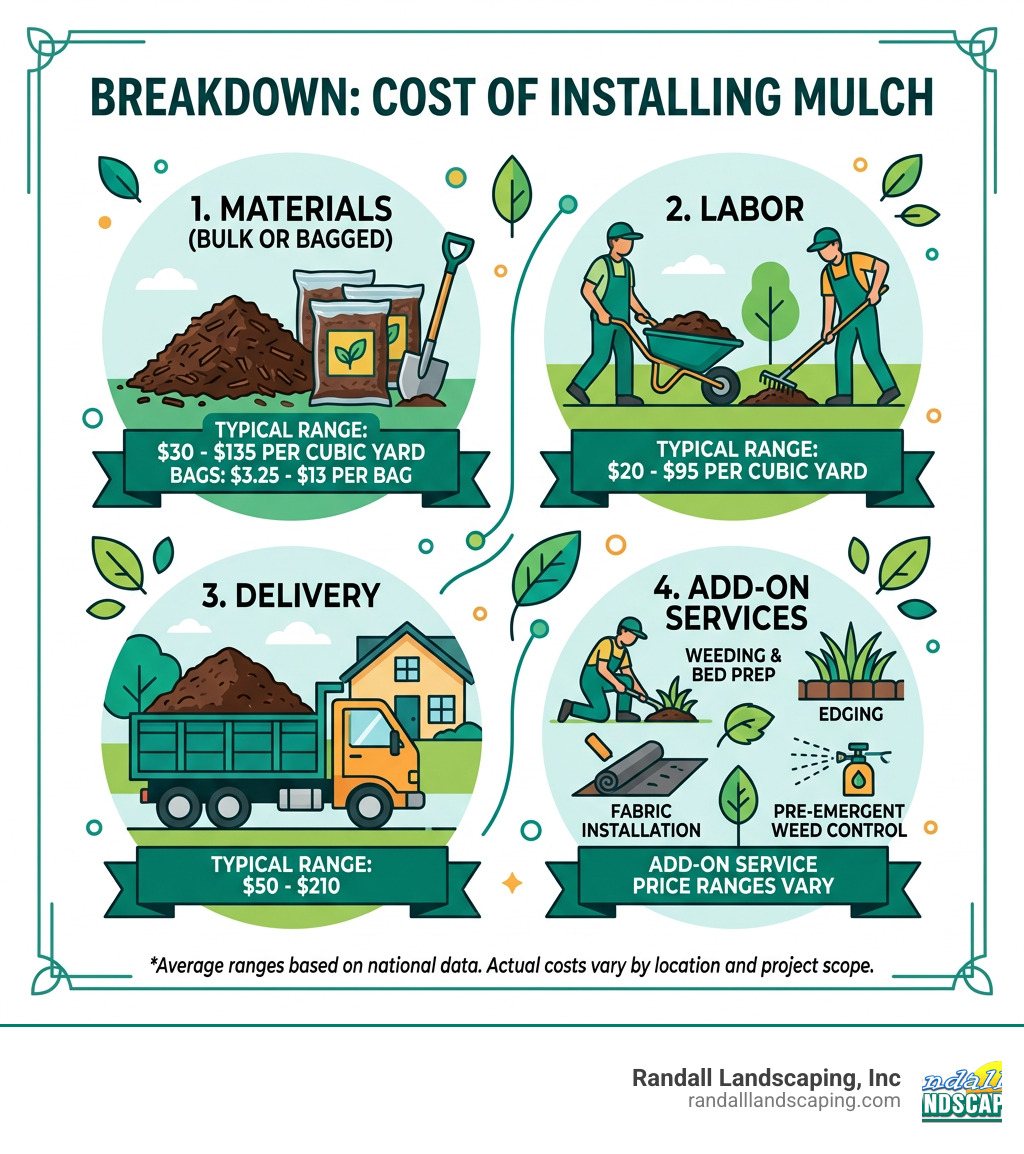
| Materials only (bulk) | $30 – $135 per cubic yard |
| Bagged mulch | $3.25 – $13 per bag |
| Labor only | $20 – $95 per cubic yard |
| Delivery fee | $50 – $210 |
Note: These are average costs based on national internet data. Your actual cost will vary by location, mulch type, bed size, and site conditions.
A fresh layer of mulch does more than look good. It keeps weeds down, holds moisture in the soil, and protects plant roots through temperature swings. But when it’s time to budget a mulching project, most homeowners hit a wall fast. Prices vary wildly depending on mulch type, how much you need, where you live, and whether you hire a pro or go the DIY route.
I’m Tommy Randall, owner of Randall Landscaping, Inc., and I’ve been planning and pricing mulch installation projects across Southern New Hampshire and Massachusetts since 2006. In this guide, I’ll walk you through everything that affects the cost of installing mulch so you can plan your project with confidence.
Cost of installing mulch terms to know:
- installing mulch beds
- mulch installation
Breaking Down the Cost of Installing Mulch
When we look at the total cost of installing mulch, we have to separate the “ingredients” from the “cooking.” You have the material itself, the delivery of that material to your driveway in towns like Andover or Windham, and the physical labor required to move it into your garden beds.
Based on wide-ranging internet data, the average homeowner pays between $0.71 and $1.38 per square foot for basic installation. However, for premium materials or complex landscapes with lots of delicate perennials, that price can climb as high as $4.50 to $6.00 per square foot. It is important to remember that these figures are averages found online and may not reflect the specific custom quotes we provide at Randall Landscaping, Inc.
Here is a quick look at how material costs differ between the two main categories of mulch:
| Mulch Category | Material Cost (Per Cubic Yard) | Longevity |
|---|---|---|
| Organic (Bark, Wood Chips, Pine) | $30 – $110 | 1 – 2 Years |
| Inorganic (Rubber, Stone, Gravel) | $70 – $400+ | 10+ Years |
Average Professional Rates per Cubic Yard and Square Foot
If you are hiring a professional crew, the most common way to price a job is by the cubic yard. On average, you can expect to pay between $77 and $94 per cubic yard for a basic “deliver and spread” service. However, if the site requires extensive preparation or the mulch type is a premium variety like hemlock or cedar, the cost of installing mulch can exceed $300 per cubic yard.
Professional labor typically includes:
- Planning and material acquisition.
- Basic site preparation (clearing small debris).
- Setup and cleanup of the staging area.
- Spreading and leveling the mulch to a uniform thickness.
For more detailed national data on these averages, you can check out this guide on mulch delivery and installation.
Material Costs by Mulch Type
The type of mulch you choose is the biggest variable in your material budget.
- Hardwood Mulch ($30 – $70 per yard): This is the workhorse of the Merrimack Valley. It’s affordable and stays put on slopes.
- Cedar Mulch ($45 – $110 per yard): Famous for its pleasant scent and natural ability to repel certain insects.
- Pine Bark ($30 – $40 per yard): A great option for acid-loving plants like azaleas and rhododendrons.
- Hemlock ($45 – $135 per yard): Often considered a premium bark mulch, it holds its color well and is safe for pets and children.
- Rubber Mulch ($80 – $240 per yard): While expensive upfront, it doesn’t decompose, making it a “one-and-done” choice for playgrounds.
- Gravel/Stone ($40 – $400+ per yard): Prices vary wildly based on the type of stone, from basic pea gravel to decorative river rock.
We often get asked about the safety of dyed mulches. According to scientific research from UMass Amherst, colored mulches are generally safe for landscape use, provided they carry the Mulch and Soil Council (MSC) certification. For those looking for the most sustainable path, we offer several eco-friendly mulch options that enrich the soil as they break down.
Factors That Influence Your Total Mulch Installation Cost
It’s rarely as simple as “Price x Yards.” Several “real-world” factors can push your estimate up or down.
- Site Accessibility: If our crew can park the truck right next to the garden beds, the job goes fast. If we have to wheelbarrow mulch 200 feet into a backyard in Boxford or up a steep hill in Pelham, the labor cost increases.
- Bed Complexity: Mulching a wide-open area under a line of pine trees is simple. Spreading mulch around 50 tiny, delicate hostas and intricate stone edging takes significantly more time.
- Minimum Orders: Most professional companies have a minimum order requirement, often around 5 cubic yards. If you only need one yard, you might be charged a “small job” premium to cover the travel and setup time.
Labor, Delivery, and Site Preparation
Labor rates for landscaping in the Northeast are currently ranging from $35 to $65 per man-hour for basic tasks, but can reach $195 per hour for specialized crews or during the peak spring rush. Some contractors prefer to charge a flat labor fee per cubic yard, which typically falls between $20 and $95.
Delivery fees are another separate line item. Most local suppliers charge between $70 and $210 for delivery, depending on the distance and the size of the truck. If you’re curious about how these fees break down for your specific property, you can read more about mulch delivery cost details.
Preparation is key to a long-lasting look. We recommend clearing weeds and old debris before the new mulch goes down. For a look at projected professional mulch installation costs for 2026, you can see how labor and equipment allowances are trending upward.
Regional Pricing and Seasonal Timing
Living in the Merrimack Valley or Southern New Hampshire means we deal with a very specific “mulch season.” Everyone wants their yard ready for Memorial Day, which makes April and May the busiest months of the year. During this peak demand, labor prices are at their highest.
If you can wait until the late summer or fall, you might find more flexible scheduling. Additionally, fuel surcharges can impact delivery fees if gas prices spike. We provide localized mulch delivery in Haverhill MA and surrounding towns, ensuring our pricing reflects the actual costs of operating in the North Shore and Southern NH regions.
Calculating Your Project Needs: Bulk vs. Bagged
One of the most common mistakes homeowners make is underestimating how much mulch they actually need.
The Math:
- 1 Cubic Yard = 27 Cubic Feet.
- 1 standard bag of mulch = 2 Cubic Feet.
- Therefore, it takes 13.5 bags to equal just one cubic yard.
If you have a large project, buying in bulk is almost always the better financial move. Bulk mulch is typically 15% to 30% cheaper than the equivalent amount in bags. For example, if you need 5 yards of mulch, you’d have to haul 68 bags from the store! That’s a lot of wear and tear on your vehicle and your back. To get an exact number for your yard, try using a mulch calculator tool.
How Much Mulch Do I Need?
Coverage depends entirely on how deep you want the layer to be. We generally recommend a 3-inch depth for the best balance of weed suppression and moisture retention.
- 2-inch depth: 1 cubic yard covers 162 sq. ft.
- 3-inch depth: 1 cubic yard covers 108 sq. ft. (Recommended)
- 4-inch depth: 1 cubic yard covers 81 sq. ft.
If you are installing mulch for the first time in a brand-new bed, you’ll likely need that full 3-4 inches. If you are just “topping off” an existing bed in Salem or Methuen, you might only need an inch or two to refresh the color. Check out our mulch installations complete guide for more on application techniques.
The Hidden Cost of Installing Mulch via DIY
DIY sounds like a great way to save money, but the “hidden” costs add up fast. If you don’t already own the tools, you’ll need to budget for:
- A sturdy wheelbarrow ($100 – $250).
- A high-quality mulch fork or shovel ($30 – $60).
- A garden rake ($20 – $40).
- Work gloves and potentially a truck rental if you don’t want mulch in your trunk.
Then there is the physical cost. A cubic yard of mulch can weigh between 400 and 800 pounds depending on moisture content. Moving 5 yards means shoveling and hauling roughly 3,000 pounds. As we like to joke, “My body reminded me for days that I’m not 25 anymore!” For many of our clients in North Andover and Dracut, the time saved by hiring a pro is worth more than the labor fee. You can find more garden bed mulching tips here if you do decide to tackle it yourself.
Additional Landscaping Services and Maintenance
The cost of installing mulch often includes “add-ons” that make the final result look professional.
- Landscape Fabric: Some homeowners prefer a weed barrier under their mulch. This can cost between $0.05 and $2.50 per square foot depending on the quality of the fabric. While it helps with weeds, it can sometimes make “topping off” mulch more difficult later.
- Soil Amendments: If we are already mulching, it’s a great time to add compost or fertilizer to the beds to boost plant health.
For those struggling with persistent invasive plants, we have a specific guide on using mulch for weed control.
Edging, Weeding, and Old Mulch Removal
A mulch bed without a clean edge is like a picture without a frame.
- Bed Edging: Creating a deep “V” edge with a spade or power edger helps prevent grass from creeping into your mulch. This service typically costs between $5 and $90 per linear foot, depending on whether you want a simple hand-cut edge or a permanent stone/metal border.
- Weeding: You never want to mulch over existing weeds (it just feeds them!). Professional weeding labor typically runs $40 to $120 per man-hour.
- Mulch Removal: If your mulch has built up to more than 4 inches deep over the years, it can actually “suffocate” your plants. Removing old mulch and disposing of it can cost $50 to $75 per hour plus disposal fees ($50 – $100).
Learn more about our mulch and edging services to see how we handle these details.
Long-term Maintenance and Replacement Cost of Installing Mulch
Organic mulch is a living part of your ecosystem—it’s designed to decompose. This means you will have recurring costs.
- Annual Refresh: Most homeowners in the Merrimack Valley do a “top-off” every spring, adding about 1 inch of fresh mulch to bring back the color. This usually costs about 30% to 50% of the initial installation price.
- Full Replacement: Every 2-3 years, you may need a more substantial application.
The investment pays off by reducing your water bill (thanks to moisture retention) and saving you hours of weeding. For the best results, we recommend using moisture retaining mulch to keep your plants happy during our dry New England summers.
Frequently Asked Questions about Mulch Costs
How much does a truckload of mulch cost?
A typical commercial “truckload” can hold anywhere from 10 to 15 cubic yards. Depending on the material and delivery fees, a full truckload of installed mulch can range from $800 to $4,500+. For just the material delivered to your driveway, expect to pay between $400 and $1,500.
Is it cheaper to buy mulch in bags or bulk?
Bulk is almost always cheaper for any project requiring more than 2 cubic yards. Bagged mulch is convenient for small “patch” jobs, but for full beds, the 15-30% bulk discount is significant. Plus, bulk mulch is usually higher quality than the “mystery wood” sometimes found in the cheapest big-box store bags.
How often should I replace my mulch?
Organic mulches like hardwood or cedar should be refreshed annually or every other year. If the mulch has turned gray or has thinned out to less than 2 inches, it’s time for a new layer. Inorganic mulches like stone or rubber can last 10 years or more with just an occasional rinsing.
Conclusion
Calculating the cost of installing mulch doesn’t have to be a “math puzzle.” By understanding the difference between bulk and bagged, the coverage rates of different depths, and the value of professional labor, you can budget accurately for a beautiful yard.
At Randall Landscaping, Inc., we pride ourselves on being 100% reliable. Whether you’re in North Reading, Atkinson, or right here in Lawrence, we focus on quality work that leaves your property looking its best. If you’re ready to skip the heavy lifting and ensure your garden beds are protected for the season, we invite you to explore our landscape mulch installation services. Let us handle the wheelbarrow so you can simply enjoy the view.