

What You Need to Know About Cypress Mulch for Flower Beds
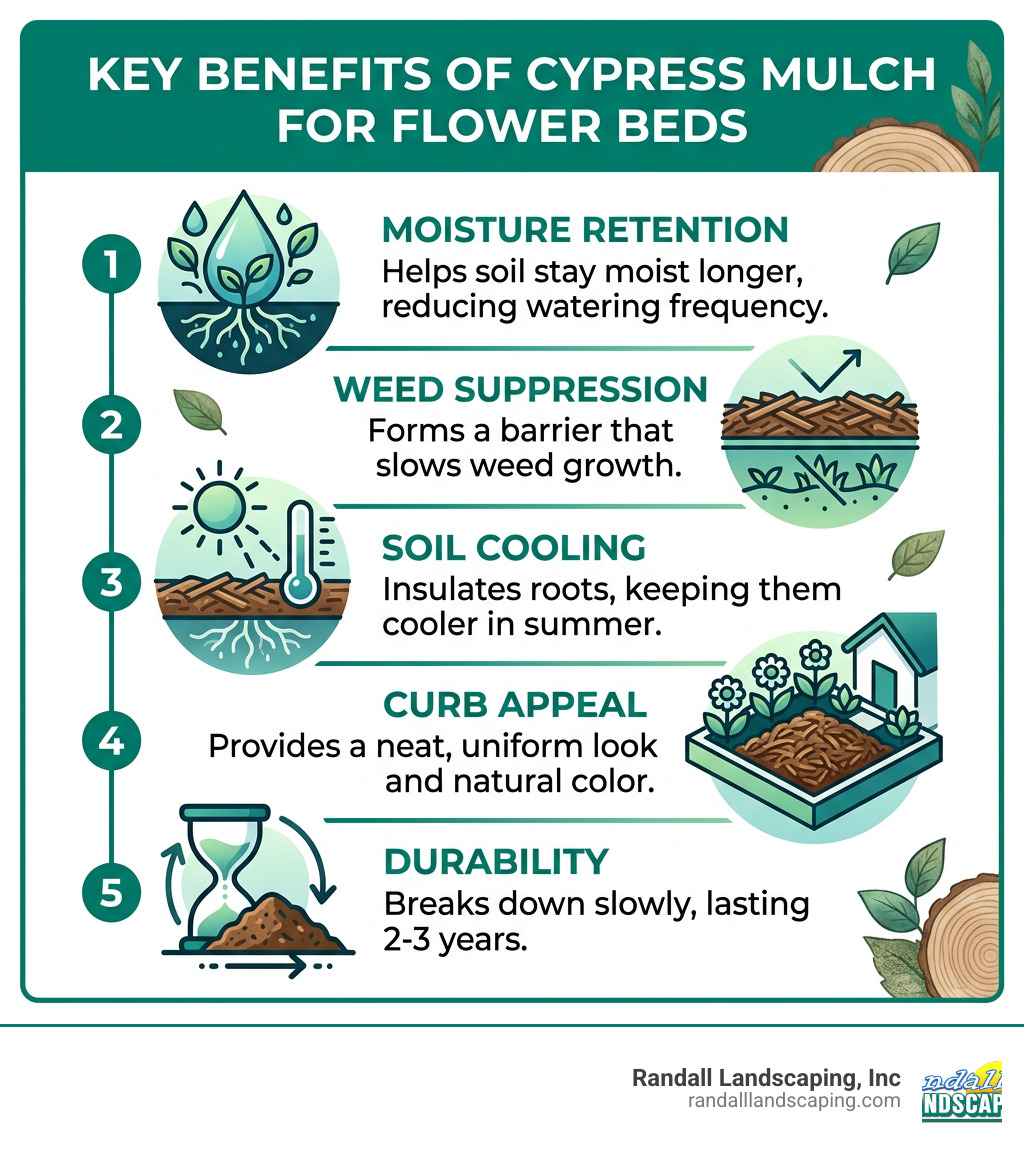
Cypress mulch for flower beds is a popular choice among homeowners who want a clean, long-lasting, and attractive ground cover that also protects plants. Here’s a quick summary of the key benefits:
- Moisture retention – Helps soil stay moist longer, reducing how often you need to water
- Weed suppression – Forms a barrier that slows weed growth between plants
- Soil temperature control – Keeps roots cooler in summer and warmer during cold snaps
- Curb appeal – Gives beds a neat, uniform look with a natural blond or reddish-brown color
- Durability – Breaks down slowly, lasting roughly 2–3 years before needing replacement
That said, cypress mulch comes with some real trade-offs — including environmental concerns and a tendency to repel water if it dries out. This guide covers everything you need to know to decide if it’s the right fit for your flower beds.
Walk into any garden center in Southern NH and you’ll find bags of cypress mulch stacked near the entrance — and for good reason. It looks great, it lasts, and it does the job. But after nearly two decades installing mulch in flower beds across Massachusetts and New Hampshire, I’m Tommy Randall, and I’ve seen when cypress mulch for flower beds works brilliantly — and when another option would’ve served the homeowner better. Let’s dig in.
Cypress mulch for flower beds terminology:
Maximizing Beauty with Cypress Mulch for Flower Beds
When we talk about cypress mulch for flower beds, we are usually referring to products made from the shredded wood and bark of the Bald Cypress or Pond Cypress trees. These are deciduous conifers native to North America, primarily sourced from the wetlands of the southern United States. In our neck of the woods—from the Merrimack Valley up through Southern New Hampshire—this mulch is prized for its unique aesthetic.
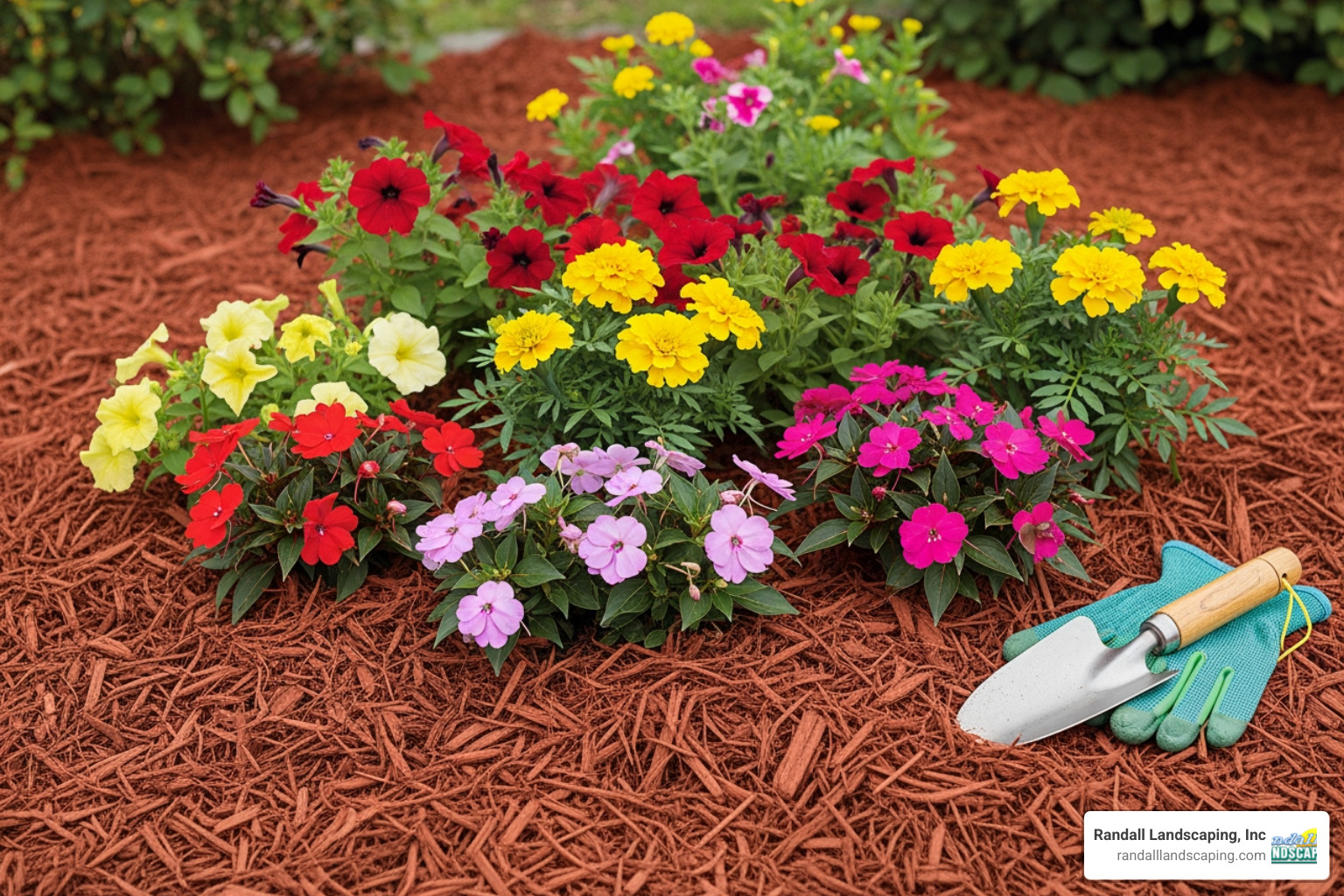
Unlike the dark chocolate or deep black dyes found in many hardwood mulches, cypress offers a natural “blond” or light tan color. Over time, it weathers to a graceful silvery-gray, which many of our clients in towns like Boxford and Georgetown find particularly charming for coastal or cottage-style landscapes.
Key Characteristics of Cypress Mulch for Flower Beds
One of the most functional features of this material is its fibrous nature. When you spread it out, the shredded pieces tend to knit together. This creates what we call a “no-float” property. If you have a sloped flower bed in Andover or Dracut that tends to wash out during those heavy New England spring rains, cypress is a lifesaver. It stays put much better than pine bark nuggets, which have a habit of floating away down the driveway.
Additionally, fresh cypress has a very distinct, pleasant fragrance. This isn’t just for our benefit; those natural oils contribute to the mulch’s legendary resistance to decay and insects. When performing Landscape mulch installation, we often notice how the texture allows for excellent moisture retaining mulch capabilities, keeping the soil beneath cool and damp even during a July heatwave. For more on the technical side of selection, you can check out this guide on Choosing and Installing Mulches.
Why Gardeners Choose Cypress Mulch for Flower Beds
The primary driver for choosing cypress mulch for flower beds is longevity. While a standard hardwood mulch might start looking “tired” and thin by the end of a single season, cypress holds its ground. Because it is naturally rot-resistant, it decomposes much slower than other organic options.
For homeowners in Salem or Pelham who want a “set it and forget it” look for their ornamental beds, this durability is a major plus. It provides a clean, professional finish that enhances curb appeal instantly. We often recommend it for Garden bed mulching in areas where you have established perennials or shrubs that don’t need a massive annual influx of new organic matter.
Performance and Sustainability: The Pros and Cons
Every landscaping material has its strengths and weaknesses. To help you decide, we’ve put together a quick comparison of how cypress stacks up against other common choices we use in the Merrimack Valley.
| Feature | Cypress Mulch | Cedar Mulch | Pine Bark |
|---|---|---|---|
| Lifespan | 2–3 Years | 3–5 Years | 1–2 Years |
| Wind/Water Resistance | Excellent (Knits together) | Good | Poor (Floats) |
| Soil Enrichment | Low (Slow decay) | Low | High (Fast decay) |
| Pest Resistance | Moderate (If heartwood) | High | Low |
| Sustainability | Low/Concern | Moderate/High | High (By-product) |
While it excels at Mulch for weed control, there are some “myths” regarding its performance that are worth investigating. For a deeper dive into the science, the Sierra Club offers an interesting perspective on Myths About Cypress Mulch.
Environmental Impact and Harvesting Concerns
We believe in being transparent with our neighbors in Atkinson and Windham. The biggest “con” for cypress isn’t how it performs in the garden—it’s how it gets to the bag. Cypress trees are incredibly slow-growing, often taking decades to reach maturity. In states like Florida and Louisiana, wetlands are sometimes cleared faster than the trees can regrow.
This harvesting can lead to habitat loss and reduced water filtration in those sensitive ecosystems. Because of this, many environmental groups and universities actually recommend Eco-friendly mulch options like pine bark or local hardwoods over cypress. If sustainability is your top priority, we can always discuss alternative Environmental mulch solutions that provide a similar look without the ecological footprint.
Potential Drawbacks for Plant Health
From a purely horticultural standpoint, cypress mulch for flower beds has one quirk you need to watch out for: it can become hydrophobic. If the mulch dries out completely in the sun, it can form a hard, crusty layer that actually repels water. Instead of soaking through to your flower roots, the water just rolls right off the top.
To prevent this, we recommend “fluffing” the mulch with a rake once or twice a summer. This breaks up any crust and ensures your plants are actually getting the hydration they need. Also, because it breaks down so slowly, it doesn’t add nutrients to the soil as quickly as leaf mulch or compost-blended mulches.
Application and Cost: Getting the Best Value
Proper installation is the difference between a thriving garden and a maintenance nightmare. When applying cypress mulch for flower beds, the “sweet spot” is a depth of 2 to 3 inches.
One of our golden rules at Randall Landscaping is to keep the mulch away from the “necks” or stems of your plants. Piling mulch against a plant stem—what we call “volcano mulching”—traps moisture against the bark and can cause rot or invite pests. Always leave a small gap around the base of your flowers and shrubs. For a deeper look at the process, see our Mulch installations complete guide.
Calculating Coverage for Your Cypress Mulch for Flower Beds
If you’re a DIYer in North Reading or Methuen, you’ll need to know how much to buy. A standard 2 cubic foot bag of cypress mulch typically covers about 12 square feet if you’re aiming for that 2-inch depth.
If you have a large project—say, a full backyard renovation in Lawrence or Plaistow—bulk delivery is often the way to go. One cubic yard of mulch is equal to about 13.5 of those standard bags. We find that bulk Landscape mulch installation is usually more cost-effective for anything larger than a couple of small foundation beds.
Average Costs and Longevity
How much should you expect to pay? Based on internet data, the average cost for cypress mulch varies significantly depending on whether you are buying individual bags or bulk yards.
Please note: These are average market costs and do not represent the actual pricing for Randall Landscaping, Inc.
- Per Bag (2 cu. ft.): $4.50 to $28.00
- Per Cubic Yard (Bulk): $35.00 to $145.00
While the upfront cost might be slightly higher than a local “triple-ground” hardwood, the 2–3 year lifespan means you aren’t paying for labor and materials every single spring. In the long run, cypress can be a very economical choice for the busy homeowner.
Frequently Asked Questions
Does cypress mulch attract termites or pests?
This is a common concern for homeowners in towns like Amesbury and North Andover. The truth is a bit of a mixed bag. The heartwood of mature cypress trees contains natural oils that are toxic to termites and actually repel them. However, most modern mulch is a “blend” that includes sapwood (the younger, outer part of the tree), which does not have those same protective properties.
As the mulch ages and those oils dissipate, it can become a habitat for various insects. Our advice? Keep any wood-based mulch at least 6–12 inches away from your home’s foundation and use stone or gravel in that “buffer zone” to be safe.
Is cypress mulch better than cedar or pine bark?
“Better” depends on your goals.
- Cedar lasts longer (up to 5 years) and has a stronger pest-repelling scent, but it’s usually the most expensive.
- Pine Bark is great for acid-loving plants (like the azaleas and rhododendrons common in Southern NH) and is very sustainable, but it tends to wash away in heavy rain.
- Cypress is the middle ground—excellent stay-put power and a beautiful light color, though it has more environmental baggage.
If you are looking for Eco-friendly mulch options, we often steer clients toward pine or local bark blends.
Can cypress mulch harm my flowers long-term?
Not directly, but poor maintenance can cause issues. As mentioned, the “hydrophobic” crust can starve plants of water if you don’t rake it occasionally. Also, because it doesn’t enrich the soil quickly, you may need to supplement your flowers with a high-quality fertilizer to ensure they have the nutrients they need to bloom.
Conclusion
At the end of the day, cypress mulch for flower beds remains a top-tier choice for its beauty and its ability to stay exactly where you put it. Whether you’re looking to boost the curb appeal of your home in Atkinson or maintain a commercial property in Salem, the right mulch makes all the difference.
At Randall Landscaping, Inc., we pride ourselves on quality work and 100% reliability. We’ve been serving the Merrimack Valley and Southern New Hampshire for years, and we know exactly which mulches thrive in our local climate. If you’re ready to transform your yard but aren’t sure which material is right for your specific soil and sun conditions, we’re here to help.
From professional Garden bed mulching to complete landscape design, our goal is your total satisfaction. Give us a call today, and let’s make your flower beds the envy of the neighborhood!