
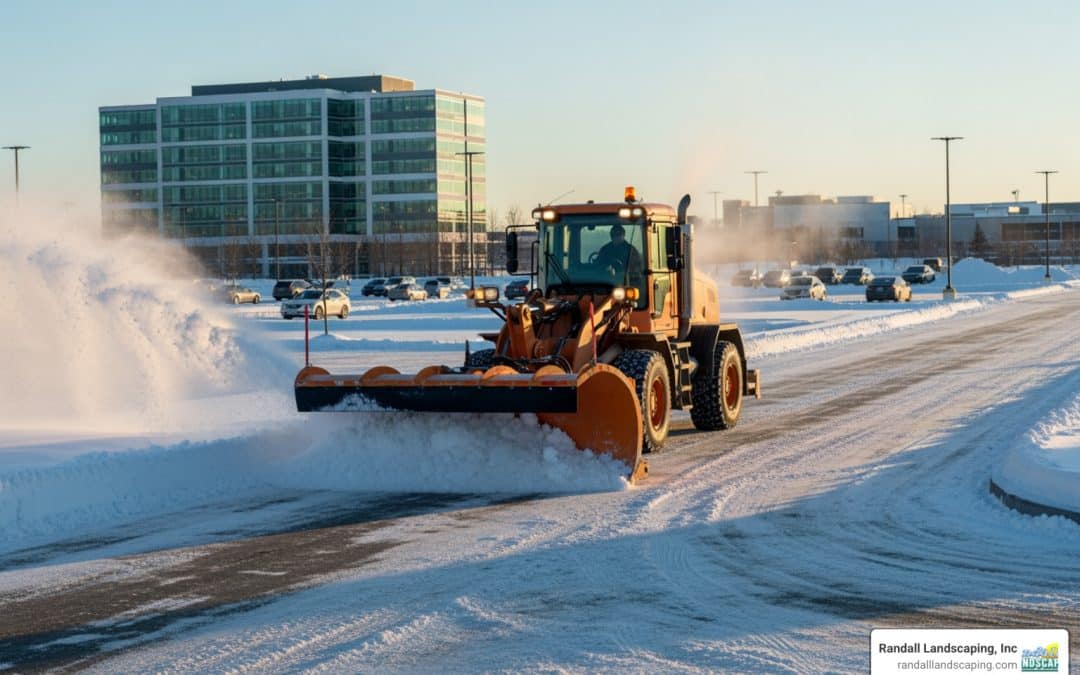
Why a Snow Removal Contract Protects Your Property and Budget
A snow removal contract is a legally binding agreement between a property owner and a contractor that outlines the terms, services, and compensation for clearing snow and ice from your property throughout the winter season. Here’s what you need to know:
Key Components of a Snow Removal Contract:
- Snow Event Trigger – The specific snow accumulation (typically 2-4 inches) that activates service
- Scope of Services – Plowing, shoveling, de-icing, and hauling for specific areas like driveways, walkways, and parking lots
- Pricing Structure – Per-event, seasonal flat rate, hourly, or hybrid billing options
- Contract Duration – Usually seasonal (one winter) or multi-year agreements (2-3 years)
- Liability Protection – Insurance requirements and indemnification clauses for both parties
Winter in New Hampshire is unpredictable. One season might bring multiple major storms, while another stays relatively mild. Without a clear, written agreement, property owners risk unpredictable costs, unclear service expectations, and potential liability if someone slips on an icy walkway. A well-structured contract provides budget certainty, defines exactly when and how snow will be removed, and protects both you and your contractor from disputes.
For commercial properties, the stakes are even higher. A retail center with an inaccessible parking lot loses customers. A restaurant with icy walkways faces slip-and-fall lawsuits. An office building where employees can’t safely enter loses productivity. As noted by one industry professional, “Winter weather can be unpredictable, with some years having multiple snowstorms and others being relatively dry.”
I’m Tommy Randall, and I’ve spent nearly two decades helping property owners across Massachusetts and Southern New Hampshire steer winter weather challenges through well-structured snow removal contracts. At Randall Landscaping, we’ve seen how a clear agreement makes the difference between winter chaos and smooth operations.
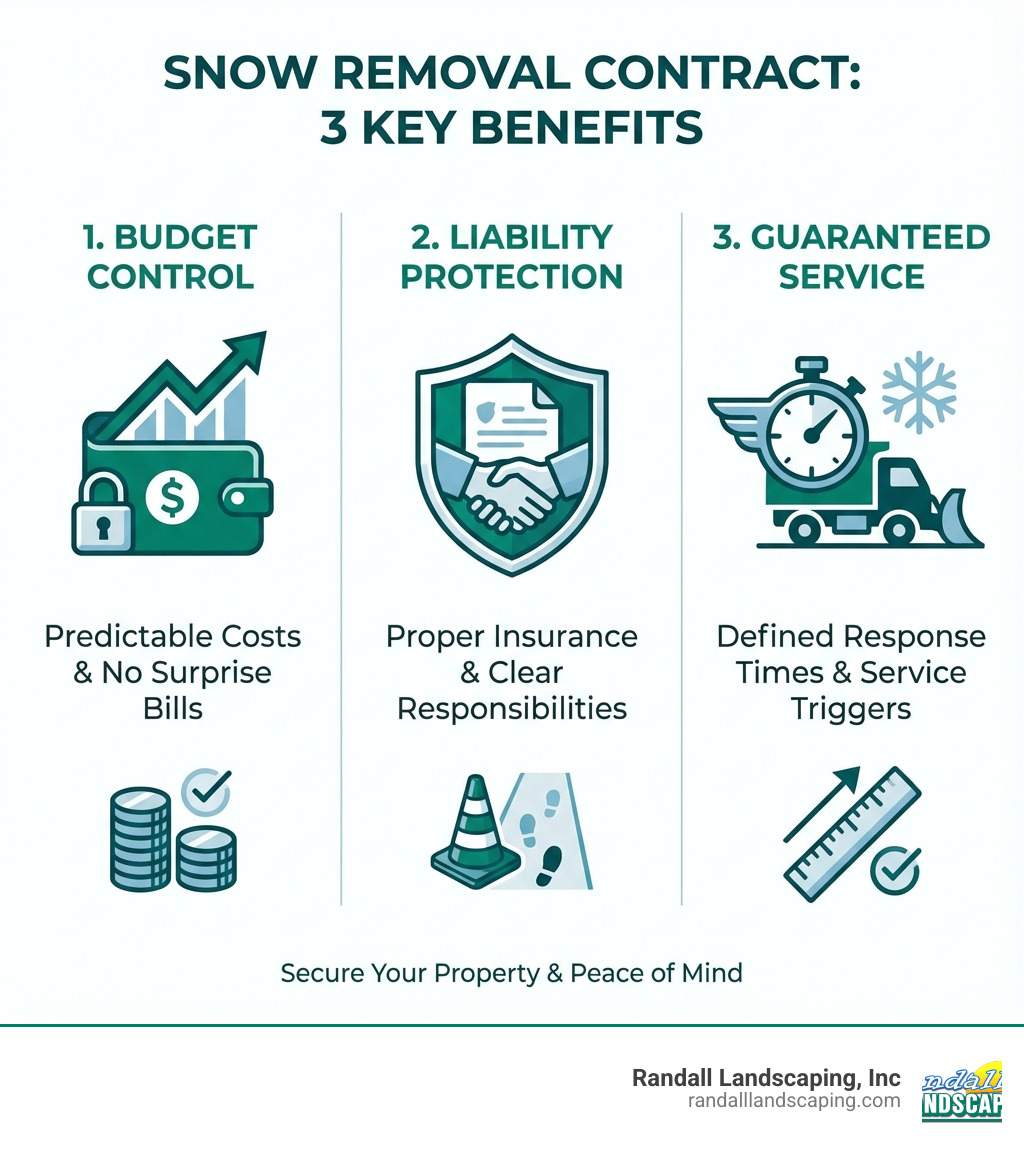
Understanding the Basics: Why a Snow Removal Contract is Non-Negotiable
A snow removal contract is more than just a piece of paper; it’s our winter lifeline, ensuring safety and accessibility when the snow starts to fall. For both clients and contractors, it’s non-negotiable for several reasons.
For clients, a clear snow removal contract provides invaluable peace of mind. It sets expectations, outlines precisely what services will be rendered, and helps manage your budget effectively. Imagine waking up to a foot of fresh snow, knowing exactly when and how your property will be cleared, without having to scramble for last-minute services or worry about unexpected costs. This certainty is especially crucial for commercial properties where business continuity and customer safety are paramount. Unclear agreements can lead to frustration, missed services, and even legal disputes if someone is injured due to uncleared snow or ice.
For contractors like us, these contracts are equally vital. They allow us to plan our routes, allocate resources, and ensure our teams are ready to respond efficiently to winter storms across the Merrimack Valley and Southern New Hampshire. A solid snow removal contract clarifies our responsibilities and ensures fair compensation for our hard work, allowing us to invest in the best equipment and training. It’s how we build reliable, long-term relationships with our clients, focusing on quality work and 100% reliability.
To learn more about how we can keep your commercial property safe and accessible all winter long, visit our page on Commercial Snow Removal Services.
What is a Snow Event Trigger?
One of the most critical elements in any snow removal contract is the “snow event trigger.” This clause defines the specific conditions that activate our services. Without it, confusion can arise, leading to delays or unnecessary service calls.
A snow event trigger is typically defined by a specific snow accumulation depth within a certain timeframe. For example, a common trigger is “2 inches or more of snow accumulating in a 24-hour period.” This means we spring into action once that threshold is met. Research indicates that the average snow accumulation that generally triggers snow removal services is more than 2 inches, but this can be negotiated to suit your property’s specific needs.
Defining this trigger clearly ensures that our team is dispatched promptly when needed, whether it’s an automatic dispatch based on weather monitoring or an on-call system coordinated with you. For commercial properties, a well-defined trigger means your parking lots, walkways, and entrances are cleared before business hours or as needed throughout the day, minimizing disruption and risk.
Typical Contract Duration and Terms
The duration and terms of a snow removal contract are important considerations for both budget predictability and service continuity. Most contracts are structured as either seasonal agreements or multi-year contracts.
Seasonal agreements typically cover one winter season, from a specified start date (e.g., November 1st) to an end date (e.g., March 31st). These are common for residential clients or businesses that prefer to reassess their needs annually.
However, for many commercial properties, multi-year contracts, often spanning 2-3 years, offer significant advantages. Research highlights that seasonal and full-service contracts are typically set for 2-3 years at fixed prices. This approach balances the risk between the client and the contractor over several winter seasons. In a heavy snow year, the client benefits from a fixed price, while in a light snow year, the contractor is assured of continued business. This long-term commitment allows for more predictable budgeting for you and better resource planning for us.
Key terms also include renewal clauses, which specify how the contract can be extended, and termination clauses, outlining the conditions and notice periods required to end the agreement. We believe in transparency and clearly outlining these terms to avoid any surprises.
Decoding Contract Types and Pricing Structures

Choosing the right type of snow removal contract is like picking the right winter coat – it needs to fit your needs perfectly! Different contract types offer varying levels of budget predictability and flexibility, making it essential to understand your options. We work with clients across Amesbury, Andover, Methuen, Salem, and other communities to find the best fit for their property.
Here’s a quick comparison to help you choose:
| Contract Type | Cost Structure | Budget Predictability | Ideal Use Case |
|---|---|---|---|
| Per-Push | Fee per service event | Low (variable) | Mild winters, low-traffic areas, small properties |
| Seasonal | Fixed fee for season | High (fixed) | Consistent service, moderate to heavy snow regions, commercial properties |
| Hourly | Rate per hour worked | Low (variable) | Unpredictable conditions, small jobs, specific tasks |
| Full-Service | Fixed fee for season | High (fixed) | Maximum peace of mind, high-traffic commercial properties, critical access areas |
| Hybrid | Base fee + per-push | Moderate (balanced) | Desire for guaranteed readiness with cost control for light snow |
Per-Event and Per-Push Contracts
These “pay-as-you-go” models are popular for clients who prefer to only pay when services are actually rendered. With a per-event or per-push contract, you’re billed each time we clear snow from your property, typically after a specified accumulation (e.g., 2-4 inches).
Pros: If we experience a mild winter with minimal snowfall, this can be a cost-effective option, as you only pay for the services you receive. It also provides an itemized statement for each service, which can be useful for expense tracking.
Cons: The main drawback is unpredictable budgeting. In a heavy snow year, your costs can quickly escalate, making financial planning challenging. It also means you rely on us responding to each individual event, which can sometimes be less priority than our full-service clients during major storms.
For a deeper dive into how pricing works for commercial snow plowing, check out our guide on Snow Plowing Pricing Commercial.
Seasonal and Full-Service Contracts
For many commercial property owners, seasonal and full-service contracts are the preferred choice due to their predictability and comprehensive coverage. These contracts involve a fixed seasonal or monthly price, regardless of the amount of snow that falls.
Pros: The biggest benefit here is budget predictability. You know exactly what you’ll pay for the entire winter season, making financial planning simple. These contracts guarantee our services whenever the snow trigger is met, providing peace of mind and ensuring your property in Plaistow, Windham, or Georgetown remains safe and accessible. Full-service contracts often include all aspects of snow and ice removal, from plowing and shoveling to de-icing and even snow hauling, making them the “Cadillac plan” for winter maintenance. They are ideal for high-traffic commercial properties, retail centers, and HOAs where uninterrupted access and safety are paramount.
Cons: If the winter turns out to be exceptionally mild, you might end up paying more than you would with a per-push model. However, the value often lies in the guaranteed readiness and the transfer of risk from you to us.
To ensure your commercial property is fully prepared, explore the Must Haves for Snow Removal Commercial.
Hourly and Hybrid Contracts
Hourly contracts mean we bill you based on the time our crew and equipment spend on your property.
Pros: You only pay for the actual work performed. This can be beneficial for very specific tasks or properties with highly variable needs.
Cons: Like per-push contracts, hourly billing can lead to unpredictable costs, especially during major storms that require extensive clearing. Costs can quickly add up if a storm is prolonged or particularly heavy.
Hybrid contracts offer a clever solution, blending the predictability of seasonal contracts with the flexibility of per-event or hourly models. With a hybrid model, you might pay a retainer or a fixed base fee for a set number of hours or pushes. Once that initial allocation is used up, services then switch to a per-push or hourly rate. This balances guaranteed service readiness with cost control for lighter snow seasons. It’s a great option for clients who want to ensure our on-site crews are available without committing to unlimited payments for every single snowfall.
Need to estimate your budget? Our page on the Cost for Snow Removal can provide valuable insights.
Factors Influencing Snow Removal Costs

When we provide a quote for your snow removal contract, several factors come into play, all contributing to the overall cost. It’s rarely a one-size-fits-all situation, especially across diverse areas like the Merrimack Valley and Southern New Hampshire.
- Property Size and Complexity: A sprawling commercial parking lot in Londonderry, NH, will naturally cost more to clear than a smaller office building in Andover, MA. Factors like the number of entrances, tight corners, presence of obstacles, and the need for hand shoveling around storefronts or fire exits all add to the complexity and time required.
- Location and Regional Snowfall Averages: Our service areas experience varying amounts of snowfall. While we can’t predict the exact amount of snow each winter, historical data helps us understand the typical number of snow events and accumulation. This influences our seasonal pricing models.
- Fuel and Material Costs: The price of diesel fuel directly impacts our operational costs. Similarly, the cost of de-icing materials like salt and sand fluctuates. These material costs are passed on in our pricing.
- Type of Equipment Needed: Large parking lots require heavy-duty plows and loaders, while intricate walkways and entrances demand smaller equipment like snow blowers and shovels. The specialized equipment and manpower required for your property will influence the quote.
Industry average costs for snow removal services can vary widely based on these factors. For example, a per-push service for a commercial property might range from $75 to $500+, depending on the size and scope. Hourly rates for equipment and crew can range from $100 to $350+ per hour. Seasonal contracts, offering comprehensive service, could range from $1,500 to $15,000+ for a commercial property, again, depending heavily on the property’s size and the level of service required. These figures are industry averages based on our research and general market data, and do not reflect Randall Landscaping’s specific rates, which are custom to each client’s unique needs.
The dedication involved in snow removal is substantial. For grounds maintenance workers, which includes snow removal professionals, the median pay is around $35,460 per year or $17.05 per hour. This reflects the skilled labor and demanding conditions of the job. You can find more details on this at the Bureau of Labor Statistics: Median Pay for grounds maintenance workers.
The Anatomy of an Ironclad Snow Removal Contract
A well-drafted snow removal contract is a legal document designed to protect both parties and ensure a smooth winter season. Think of it as the blueprint for our partnership, clearly outlining expectations and responsibilities. We believe clarity upfront prevents headaches down the line.
At Randall Landscaping, we understand the importance of comprehensive agreements. That’s why we focus on creating contracts that leave no room for ambiguity. For more insights into what makes a robust agreement, visit our page on Commercial Snow Plowing Contracts.
Essential Information and Scope of Work
Every solid snow removal contract must clearly identify the parties involved: you, the client, and us, the contractor. It will include full contact details for both.
Next, a detailed property description is crucial. This should specify the exact location where services will be rendered, often accompanied by a site map highlighting areas for snow removal. This eliminates any guesswork about which areas are covered.
The “scope of services” section is perhaps the most important. It precisely defines what we will do. This includes:
- Areas to be cleared: Clearly listing parking lots, driveways, walkways, entrances, loading docks, and any other specific zones.
- Service types: Will it be plowing only, or will shoveling, snow blowing, and de-icing also be included?
- Plowing routes and priorities: For commercial properties, we can establish priority areas (e.g., main entrances first, then parking lot lanes) to ensure critical access points are always clear.
A comprehensive contract ensures that everyone is on the same page regarding what “cleared” actually means for your property in North Andover or North Reading.
Insurance, Licensing, and Liability
This section is vital for protecting both you and us. We always ensure our snow removal contracts explicitly detail our insurance coverage and liability considerations.
We maintain robust insurance policies, including general liability coverage and commercial auto insurance, typically with high limits (e.g., $1 million General Liability policy, $300,000 on commercial auto). We also carry workers’ compensation to protect our employees. You should always verify that any contractor you hire has adequate and current insurance.
A critical clause is the “release of liability” or indemnification clause. This outlines how responsibility is assigned in case of accidents, such as slip-and-falls. While we take every precaution, these clauses protect both parties from unforeseen circumstances. For instance, a contract might state that the client indemnifies the contractor for damages not directly caused by the contractor’s negligence.
Finally, the contract will clearly establish our “independent contractor status.” This clarifies that we are not your employees, defining the legal relationship and responsibilities of each party. These legal and liability considerations are paramount for everyone’s protection.
Special Considerations for a Commercial Snow Removal Contract
Commercial properties, whether a retail facility in Salem, NH, an HOA in Atkinson, NH, or an industrial complex in Dracut, MA, have unique needs that go beyond simply clearing snow. Our snow removal contracts are custom to address these specifics:
- 24/7 Business Needs: Many businesses operate around the clock. Our contracts can specify response times and service schedules to ensure your property is operational and safe at all hours.
- Slip-and-Fall Liability: Commercial property owners face significant liability risks from slip-and-fall incidents. A comprehensive contract with a reputable, insured contractor helps mitigate this risk. Some states, like New Hampshire, offer “Green SnowPro” certification, which can provide clients with liability protections similar to those municipalities have against slip-and-fall lawsuits. This is a significant benefit for our clients in Southern New Hampshire.
- Pre-Treatment and De-Icing Protocols: Proactive ice management is often more important than snow removal. Our contracts can include specific protocols for pre-treating surfaces before a storm and applying de-icing agents during and after snow events.
- Post-Storm Reporting: For large commercial properties, detailed reporting after a storm can be included, outlining services performed, materials used, and timestamps.
- Specific Needs: Retail facilities often require continuous clearing during business hours. HOAs need clear access for residents and emergency services. Industrial and office buildings need safe routes for employees and deliveries. Our agreements are flexible enough to accommodate these varied requirements.
For homeowners associations, managing snow removal is a collective effort. Our HOA Snow Removal services are designed to meet these community-specific demands.
Beyond the Plow: Detailing Services and Best Practices
When you partner with us for a snow removal contract, you’re getting more than just a plow. You’re securing a comprehensive suite of services designed to keep your property safe and functional throughout the winter. We pride ourselves on defining these services clearly to ensure all your needs are covered. Explore our full range of services on our Commercial Snow Plowing page.
Plowing, Shoveling, Blowing, and Hauling
Understanding the different methods of snow removal is key to a custom contract:
- Snow Plowing: This is the most common method for clearing large areas like parking lots and long driveways. Our trucks are equipped with heavy-duty plows to efficiently push snow to designated areas.
- Snow Shoveling/Blowing: For sidewalks, intricate pathways, stairs, and tight spaces around entrances or fire hydrants, our crews use shovels and snow blowers. This ensures pedestrian safety and access where large machinery cannot operate.
- Snow Banking: This involves piling snow on-site in predetermined locations. This is a cost-effective solution for properties with ample unused space. However, these snow banks can remain until late spring or early summer, potentially impacting aesthetics or drainage.
- Snow Hauling: For properties with limited space or specific aesthetic requirements, snow hauling involves physically removing snow from the site and transporting it to an off-site snow farm or designated disposal area. This is an additional service and typically comes with an extra charge, but it ensures your property remains clear and functional, especially after heavy snowfalls.
If you’re looking for comprehensive snow plowing and salting services near you in the Merrimack Valley or Southern New Hampshire, we’ve got you covered. Visit our Snow Plowing and Salting Near Me page.
Ice Management and De-Icing
Snow is one thing, but ice is often the real culprit behind winter hazards. That’s why effective ice management and de-icing are crucial components of our snow removal contracts. Ice can form even without new precipitation, making constant vigilance necessary.
We typically include pre-salting or pre-treatment applications before a storm hits to prevent ice from bonding with surfaces, making snow removal easier and more effective. During and after snow events, we apply de-icing materials to melt existing ice and prevent refreezing.
Common de-icing materials include:
- Rock Salt (Sodium Chloride): Effective and widely used, but it can be erosive to concrete, building exteriors, and damaging to landscapes over time.
- Calcium Chloride & Magnesium Chloride: These work at lower temperatures than rock salt and are generally less damaging to plants and hardscapes. They are often preferred for sidewalks and sensitive areas.
- Liquid Deicers: Often used for pre-treatment, liquid deicers can be less damaging to plants and buildings than granular salt.
We are committed to using environmentally conscious practices where possible. In New Hampshire, we are proud to have Green SnowPro Certified contractors on our team. This certification means our applicators are trained in advanced snow and ice management techniques to reduce the environmental impact of road salt on watershed areas by using efficient application methods and “green” de-icing products. This not only protects our beautiful local environment but also provides our clients with improved liability protection against slip-and-fall incidents.
How to Review Your Contract and Ensure a Fair Deal
Securing a snow removal contract is a significant decision. To ensure you’re getting a fair deal and that your contractor will meet their obligations, we always recommend a thorough review process.
- Read Every Clause: Don’t skim! Understand all terms, conditions, triggers, and responsibilities. If anything is unclear, ask for clarification.
- Verify Insurance and Licenses: Always request proof of current general liability and commercial auto insurance. Ensure the contractor is properly licensed for operations in your area, whether it’s Methuen, MA or Salem, NH.
- Check References: Ask for references from current or past clients, especially those with properties similar to yours.
- Ask About Equipment and Manpower: Inquire about the contractor’s fleet size, types of equipment, and the size of their crew. This gives you an idea of their capacity to handle major storms.
- Clarify All Pricing Tiers: Ensure you understand how you’ll be billed for every service, including extras like de-icing, snow hauling, or services required outside standard operating hours. Ask about potential fuel surcharges or other variable costs.
- Discuss Communication Protocols: How will you be notified when services begin? Who is your point of contact during a storm? Clear communication is essential.
Choosing the right partner is just as important as the contract itself. For reliable service, you need experienced Commercial Snow Plowing Companies who understand the unique challenges of winter in our region.
Conclusion
Navigating the complexities of snow removal contract prices and terms can seem daunting, but it’s an essential step towards a safe and stress-free winter. We’ve explored why a clear contract is non-negotiable for both clients and contractors, defining key elements like snow event triggers and contract durations. We’ve also decoded the various contract types – from flexible per-push options to predictable seasonal and comprehensive full-service agreements – and discussed the many factors that influence pricing.
A well-structured snow removal contract is your shield against unpredictable winter weather, safeguarding your budget, reducing liability risks, and guaranteeing the safety and accessibility of your property. It’s about securing peace of mind.
For reliable Commercial Snow Plowing in Methuen MA and surrounding areas, a professional partner like Randall Landscaping is essential. Don’t let winter catch you off guard. Secure your peace of mind this winter by understanding your cost for snow removal and partnering with a trusted professional.