Changing Outdoor Spaces: The Art of Hardscaping
Looking for reputable hardscape companies to transform your outdoor space? Here’s a quick overview of what to look for:
- Local Expertise – Companies familiar with your region’s climate and soil conditions
- Proper Credentials – Licensed, insured, and industry-certified professionals
- Portfolio Quality – Extensive examples of completed projects similar to yours
- Material Knowledge – Experience with various materials from pavers to natural stone
- Comprehensive Services – From design to installation and maintenance
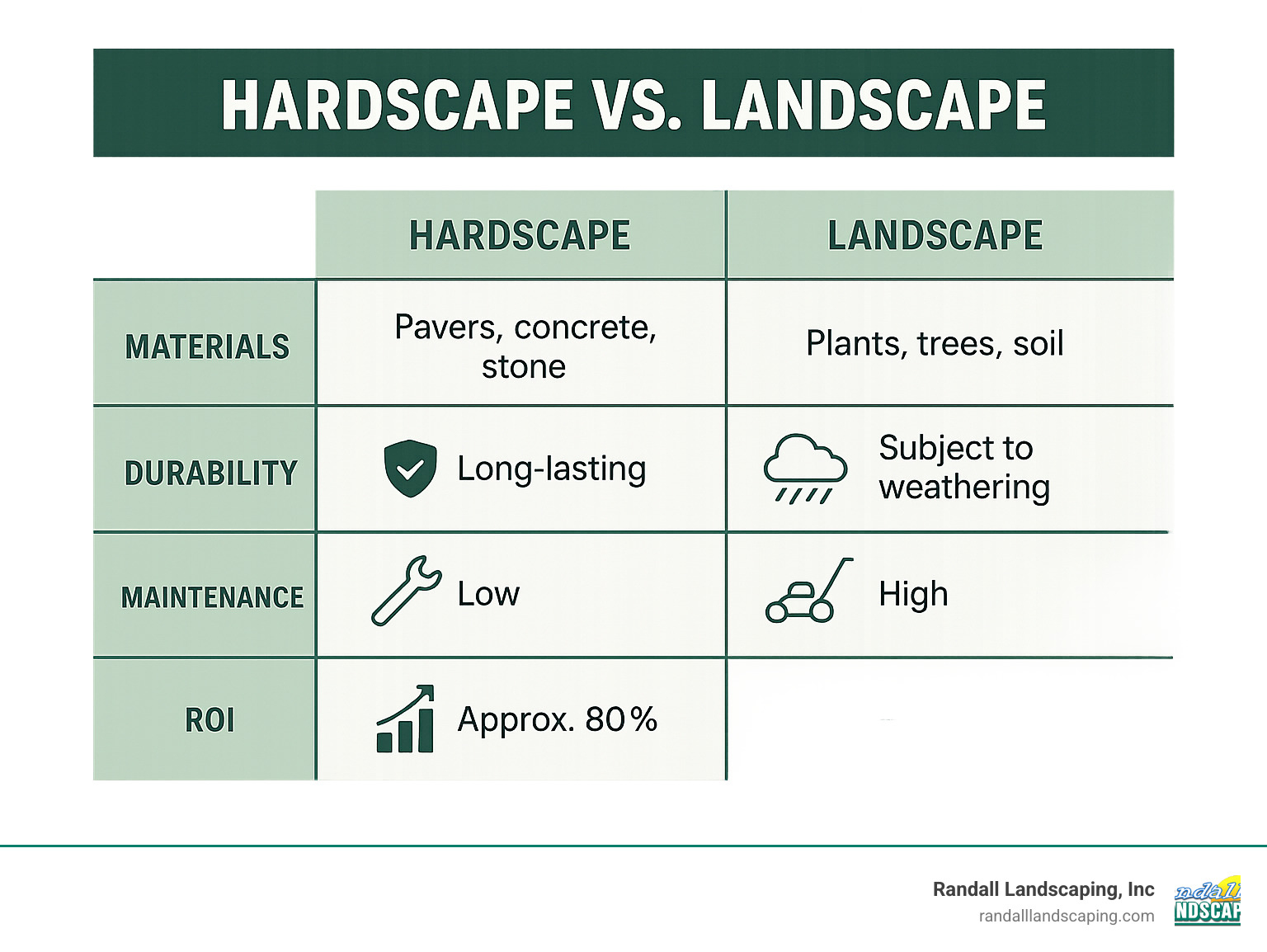
Hardscaping has become an integral component of residential and commercial landscaping, creating functional outdoor living spaces that stand the test of time. While traditional landscaping focuses on the “soft” elements like plants, trees, and lawn care, hardscape companies specialize in the permanent, structural elements that define your outdoor areas and add significant value to your property.
Professional hardscaping transforms ordinary backyards into extraordinary outdoor retreats—creating spaces for entertaining, relaxation, and everyday enjoyment. With the right hardscape elements, homeowners can expect approximately an 80% return on investment, making it one of the smartest exterior improvements you can make.
From custom patios and walkways to retaining walls and outdoor kitchens, today’s hardscape companies offer solutions that blend beauty and functionality. These durable installations not only improve your property’s curb appeal but also solve practical problems like erosion control, drainage issues, and creating usable space on sloped terrain.
I’m Tommy Randall, owner of Randall Landscaping, Inc., with over 18 years of experience working with and alongside top hardscape companies throughout New England to create stunning outdoor living spaces that withstand our challenging climate conditions.
Hardscape companies terms made easy:
– hardscape products
– landscape design companies near me
– deck and hardscape contractors near me
What Hardscaping Is & Why It Matters
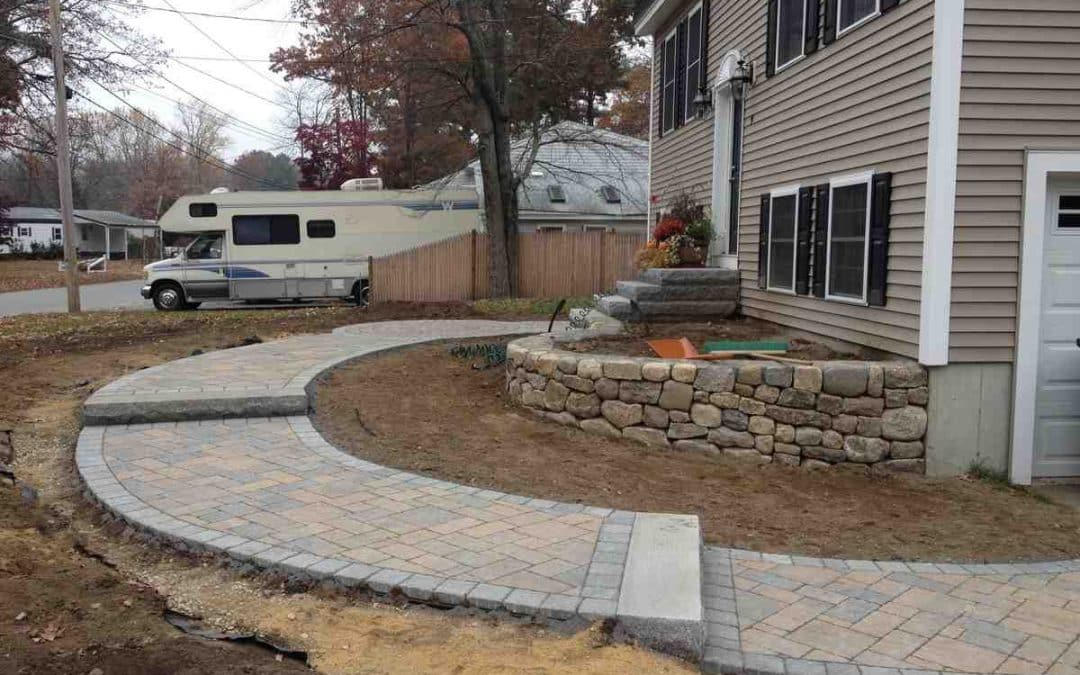
Hardscaping is the backbone of your outdoor living space—it’s everything that doesn’t grow in your landscape. Think patios, walkways, retaining walls, driveways, and other permanent structures that create the framework for your outdoor areas. While your flowers and shrubs change with the seasons, these durable elements provide lasting structure and functionality year after year.
Here in the Merrimack Valley and Southern New Hampshire, where we experience everything from scorching summers to freezing winters, thoughtfully designed hardscaping isn’t just nice to have—it’s essential. These permanent outdoor features must stand up to our region’s challenging freeze-thaw cycles, heavy snow loads, and spring runoff without cracking, shifting, or failing.
“Proper drainage is absolutely critical in New England hardscaping,” I often tell my clients. “Without it, even the most beautiful patio can become a maintenance nightmare after just one winter.”
Beyond just withstanding our harsh climate, well-executed hardscaping transforms your property in meaningful ways. It creates usable outdoor living spaces where family memories are made. It solves those nagging drainage and erosion problems that can damage your home’s foundation. And unlike traditional landscaping that requires constant attention, quality hardscaping dramatically reduces your ongoing maintenance needs.
The best hardscape companies understand that successful projects must balance beauty with engineering—creating spaces that look stunning while functioning properly through every New England season. When done right, these investments increase your property value, improve curb appeal, provide accessible outdoor areas for everyone to enjoy, and define distinct “rooms” in your outdoor space.
More info about Hardscaping Services
Hardscape vs. Landscape: Key Differences
Understanding what falls under hardscaping versus landscaping helps clarify exactly what services you need and which professionals to hire:
Hardscaping covers all the solid, structural elements—your patios and decks, walkways and steps, retaining walls, driveways, outdoor kitchens, fire pits, pergolas, and water features. These are the permanent foundations that define how you use your outdoor space.
Landscaping (often called softscape) includes all the living elements—trees, shrubs, perennials, annual flowers, lawns, ground covers, and the soil amendments and irrigation systems that keep them thriving.
While many companies offer both services, specialized hardscape companies typically bring deeper expertise with the structural aspects of outdoor design. They understand load-bearing requirements, proper base preparation techniques, and the technical installation details that ensure your investment lasts for decades.
“The most beautiful plants in the world won’t save a poorly constructed patio,” I remind clients. “But a well-built hardscape will provide the perfect backdrop for your landscaping for generations to come.”
Benefits of Professional Installation
Those DIY hardscaping videos make projects look deceptively simple—just lay some pavers and you’re done, right? The reality is much more complex, and professional installation offers significant advantages:
Professional hardscape companies bring structural integrity to every project, understanding proper base preparation, compaction requirements, and material selection for your specific site conditions. They also provide warranty protection, standing behind their work with meaningful guarantees—something you simply don’t get with weekend DIY projects.
The time savings alone can be substantial. What might take a homeowner weeks of backbreaking weekend work can often be completed by professionals in just days. Professionals also steer permitting and compliance issues, steering through local building codes, setback requirements, and permitting processes that might be unfamiliar territory for homeowners.
Established hardscape companies have relationships with suppliers and access to premium materials that aren’t always available to the public. They incorporate proper drainage solutions to prevent water damage, erosion, and frost heave—issues that often plague amateur installations. Perhaps most valuable is their design expertise, suggesting improvements and solutions you might never have considered on your own.
Research from the Interlocking Concrete Pavement Institute (ICPI) shows that professionally installed permeable pavers can effectively manage stormwater runoff while providing durable surfaces for decades—creating environmental benefits alongside lasting beauty for your property.
Scientific research on permeable pavers
Meet the Masters: 10 Hardscape Companies Redefining Outdoor Spaces
The hardscaping industry has transformed dramatically in recent years, with innovative professionals creating outdoor spaces that would have seemed impossible a decade ago. As someone who’s worked alongside many talented teams throughout New England, I’ve had the privilege of watching this evolution firsthand.
What sets the true masters apart in the hardscape companies world? It’s more than just laying stone or building walls. The industry leaders share a genuine passion for changing outdoor environments through exceptional craftsmanship and innovative thinking.
“When you work with a top-tier hardscape professional, you’re not just hiring someone to install pavers—you’re partnering with an artist who happens to work in stone and concrete,” as I often tell our clients at Randall Landscaping.
These trendsetters invest heavily in ongoing education, making sure their teams master both time-tested techniques and cutting-edge approaches. They understand that New England’s unique climate demands specialized knowledge—what works in Florida or California simply won’t hold up to our freeze-thaw cycles and heavy snow loads.
The best hardscape companies also recognize that maintenance considerations must be designed into every project from day one. A beautiful patio that becomes a maintenance nightmare after two winters isn’t actually beautiful at all.
What’s particularly exciting is how today’s hardscape professionals are blending traditional craftsmanship with modern innovation. From app-controlled lighting systems to permeable pavers that manage stormwater naturally, these companies are creating outdoor spaces that are as environmentally responsible as they are beautiful.
Commercial expertise has also become a differentiator among leading hardscape companies. Projects for businesses, municipalities, and institutions require a different approach than residential work—with considerations for accessibility, durability under heavy use, and often tighter construction timelines.
In the following sections, we’ll explore ten categories of exceptional hardscape professionals who are redefining what’s possible in outdoor living. Whether you’re planning a simple patio refresh or dreaming of a complete backyard change, understanding these specialized approaches will help you find the right partner for your project.
1. Patio Artisans — Local Hardscape Companies That Wow
There’s something special about working with a local patio specialist—someone who knows your neighborhood, understands your soil, and has likely created stunning outdoor spaces for people you know. These hometown hardscape companies bring a level of regional expertise that simply can’t be matched by national chains.
When we talk with homeowners across the Merrimack Valley, they consistently mention how much they value the personalized attention they receive from local artisans. These craftspeople don’t just install pavers; they create outdoor living spaces that feel like natural extensions of your home.
What makes these local patio artists truly shine is their deep community roots. They’ve earned their reputation the old-fashioned way—one beautiful patio and one satisfied neighbor at a time. Many have been changing properties in the same communities for decades, building relationships that span generations of homeowners.
The best part? Local hardscape companies understand the unique challenges of New England’s climate. They know exactly how deep to dig for proper frost protection, which materials stand up to our harsh winters, and how to ensure water drains away from your home during spring thaws.
Custom material selection becomes second nature to these professionals. They can recommend pavers and natural stone options that not only look beautiful but also complement the colonial, Victorian, or contemporary architecture that defines different New England neighborhoods.
Our experience has shown that these relationship-based businesses typically deliver higher customer satisfaction than larger operations. When your business depends on local referrals and repeat customers, there’s simply no room for cutting corners or delivering anything less than exceptional quality.
For homeowners considering a patio project, we always suggest starting your search locally. The artisan who created your neighbor’s stunning backyard retreat brings something invaluable to the table—site-specific design knowledge that understands your area’s unique conditions, from the soil composition to local permitting quirks.
This local expertise translates into hardscape installations that not only look beautiful on day one but continue to perform beautifully for decades to come—even through our notorious freeze-thaw cycles that can wreak havoc on inferior work.
2. Eco-Paver Innovators
When it comes to environmentally conscious outdoor spaces, a new breed of hardscape companies is leading the charge. These green pioneers are changing the industry with sustainable solutions that work with nature rather than against it.
The eco-paver specialists combine environmental responsibility with stunning aesthetics, proving that you don’t need to sacrifice beauty for sustainability. Their approach resonates with homeowners who want gorgeous outdoor spaces that also reduce their environmental footprint.
“What we’re seeing is a fundamental shift in how people think about hardscaping,” we often tell clients. “It’s no longer just about creating a pretty patio—it’s about being responsible stewards of our land and water resources.”
These forward-thinking hardscape companies excel in several key areas:
Permeable paving systems are perhaps their most significant innovation. Unlike traditional concrete or asphalt that sends rainwater rushing into storm drains, these specially engineered pavers allow water to filter naturally through joints and into the ground below. The result? Reduced flooding, less pollution in our waterways, and replenished groundwater systems.
The use of recycled materials has also transformed the industry. Today’s eco-pavers often incorporate recycled glass, concrete aggregate, and even plastic, creating unique colors and textures while diverting waste from landfills. These materials don’t just look good—they tell a story about environmental responsibility.
Stormwater management has become a science unto itself among these companies. The best systems capture rainwater for landscape irrigation or controlled release, taking pressure off municipal systems during heavy downpours. For New England homeowners dealing with increasingly intense rain events, this feature alone can prevent costly water damage.
Heat-reducing technologies address another environmental concern: the urban heat island effect. Light-colored pavers and specially formulated materials reflect rather than absorb sunlight, creating cooler outdoor spaces that require less energy to maintain comfortable temperatures.
Beyond their environmental benefits, these sustainable hardscaping approaches often help property owners steer increasingly strict stormwater regulations in many New England towns and cities. What was once just a good idea has become a practical necessity in many communities.
More info about Hardscaping Services
3. Outdoor Living Visionaries
Remember when backyards were just a patch of grass with maybe a grill and a few chairs? Those days are long gone! Today’s outdoor living visionaries among hardscape companies are completely reimagining what your backyard can be – turning simple outdoor spaces into stunning extensions of your home that you’ll actually use year-round.
These innovative companies don’t just build patios; they create complete outdoor living environments that feel like natural extensions of your indoor spaces. They understand that New England homeowners want to maximize their outdoor enjoyment despite our sometimes challenging weather.
“Our clients are amazed at how much time they spend outdoors once we’ve created a space that truly functions like another room of their home,” we often hear from customers after completing their projects.
The magic happens when these visionaries combine several key elements into a cohesive design. Outdoor kitchens have evolved far beyond a simple grill, now featuring built-in refrigerators, pizza ovens, storage cabinets, and countertop space that can withstand everything from summer heat to winter snow. These kitchens become the heart of outdoor entertaining, allowing hosts to remain part of the conversation rather than running back and forth to the indoor kitchen.
Fireplaces and fire pits transform cool New England evenings into cozy gathering spots, extending your outdoor season by months. Whether it’s a dramatic stone fireplace that serves as a focal point or a simple fire pit surrounded by comfortable seating, these features consistently rank among the most-used elements in outdoor living spaces.
Integrated lighting is another hallmark of these visionary hardscape companies. Strategic placement of low-voltage lighting systems not only ensures safety after dark but also highlights architectural features and creates ambiance that transforms your backyard when the sun goes down.
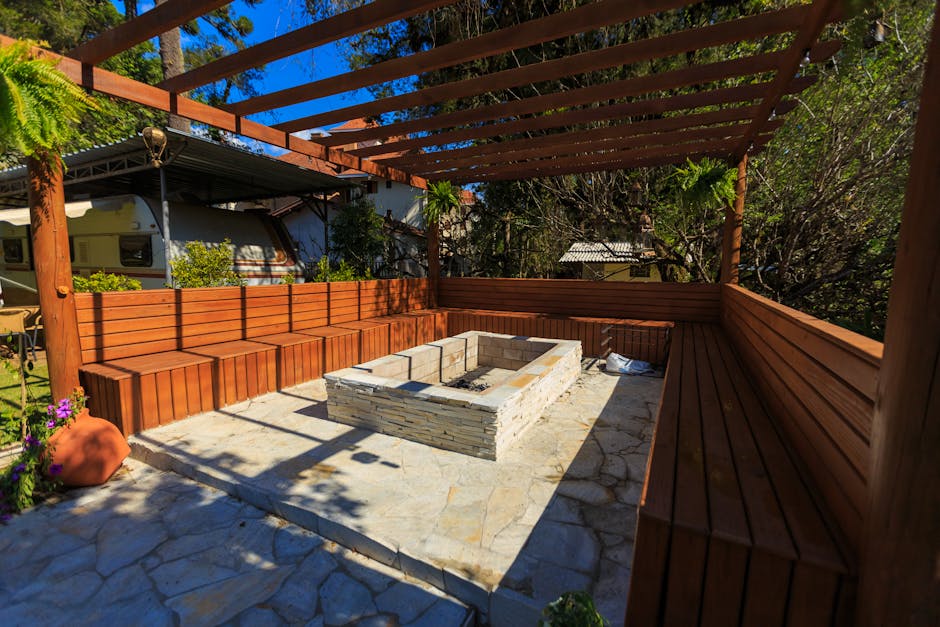
For true four-season enjoyment, many homeowners are investing in covered structures like pergolas, pavilions, and covered patios. These provide shade during summer months and, when designed with optional sides or heaters, can extend outdoor living well into fall and winter.
The most forward-thinking companies are now incorporating entertainment systems seamlessly into their designs. Weather-resistant speakers, outdoor televisions, and even wifi boosters ensure that technology improves rather than intrudes upon the outdoor experience.
What separates true visionaries from basic hardscape companies is their ability to blend all these elements into a cohesive, beautiful space that reflects your lifestyle and complements your home’s architecture. They don’t just build features; they create experiences – places where memories are made and everyday stress melts away.
When you’re ready to transform your own backyard into a true outdoor living space, look for companies that can show examples of complete outdoor environments, not just isolated features. The best partners will ask how you plan to use the space and design accordingly, creating a backyard retreat that’s uniquely yours.
4. Retaining-Wall Specialists
If you’ve spent any time in New England, you know our rolling terrain presents both challenges and opportunities for property owners. This is where specialized hardscape companies focused on retaining walls truly shine – they transform problematic slopes into stunning, functional spaces.
“Retaining walls are often the unsung heroes of landscape design,” we tell our clients. “They’re not just problem-solvers, they’re opportunities to add character and usable space to your property.”
These specialists bring a unique blend of engineering knowledge and artistic vision to every project. They understand that a well-built wall must withstand thousands of pounds of soil pressure while looking beautiful for decades to come.
The best retaining wall experts offer several approaches based on your specific needs:
Gravity wall systems harness basic physics – using the sheer weight and mass of materials to hold back soil. These impressive structures are ideal for significant grade changes and can be constructed from natural stone, concrete blocks, or even repurposed materials that complement your home’s architecture.
For taller applications, segmental retaining wall systems incorporate hidden geogrid reinforcement that extends into the soil behind the wall. This engineering marvel creates a unified mass that can safely retain soil at heights that would be impossible with traditional methods.
Throughout New England, you’ll find stunning examples of natural stone walls that have stood for generations. Today’s craftsmen continue this tradition, building dry-laid or mortared stone walls that add authentic character to historic properties while solving modern drainage challenges.
For properties with dramatic elevation changes, terraced designs transform previously unusable slopes into a series of level areas perfect for gardens, seating areas, or play spaces. These stepped solutions not only manage grade changes but create visual interest and expand your outdoor living area.
Beyond aesthetics, these specialists excel at slope stabilization techniques that prevent erosion and manage water flow – critical concerns in our region where spring thaws and summer downpours can wreak havoc on hillsides.
The true art of retaining wall construction lies in making something highly technical look effortlessly beautiful. When done right, these structures become seamless elements of your landscape that appear to have always been there, working quietly to make your outdoor space more functional and enjoyable.
5. Commercial Campus Creators
When it comes to business properties, the stakes are different. Commercial campus hardscape companies face a unique set of challenges that go well beyond aesthetics. These specialists understand that commercial spaces must balance beauty with serious practical considerations.
“Commercial hardscaping isn’t just about looks—it’s about creating spaces that work for everyone, comply with regulations, and stand up to heavy use,” explains Tommy Randall. “A beautiful corporate courtyard isn’t successful if it turns into a liability during winter.”
These specialized hardscape companies excel at creating functional outdoor environments for businesses, schools, hospitals, and other institutions. They understand the importance of ADA-compliant walkways that provide seamless access for all visitors while still complementing the overall campus design. The best commercial hardscapers integrate these accessible paths so naturally that they improve rather than detract from the property’s appearance.
Corporate courtyards represent another specialty where these companies shine. These gathering spaces often serve as the heart of a business campus—providing places for employees to recharge, collaborate informally, or enjoy lunch outdoors. Smart design in these areas reflects company branding and culture while providing practical amenities that employees genuinely appreciate.
In our New England climate, snow management becomes a critical consideration for commercial properties. Forward-thinking hardscape companies design with winter in mind, incorporating snow-melt technology in critical areas like entryways and main walkways. These systems, while an investment upfront, can dramatically reduce slip-and-fall liability and maintenance costs over time.
Traffic management presents another challenge unique to commercial spaces. From pedestrian plazas that must accommodate occasional maintenance vehicles to delivery access points that see heavy trucks, commercial hardscapes must be engineered for durability under significant stress. The right materials and proper installation make all the difference in how these high-traffic areas perform over time.
Perhaps most importantly, commercial hardscape companies steer the complex world of stormwater compliance—helping businesses meet increasingly strict regulations for water management on commercial properties. With permeable paving solutions and integrated drainage systems, these specialists help businesses avoid costly fines while contributing positively to local watershed health.
The most successful commercial campus creators strike that perfect balance between practical requirements and aesthetic appeal, creating hardscapes that improve property value, reduce maintenance costs, and provide safe, functional spaces for employees and visitors alike.
6. Commercial Titans — Hardscape Companies for Large-Scale Projects
When a project goes beyond the typical residential patio or walkway, you need hardscape companies with serious muscle. These commercial titans handle the massive projects that transform entire campuses, public spaces, and commercial properties.
During my years in the industry, I’ve watched these specialized firms tackle projects that would overwhelm most contractors. They bring a different scale of thinking to hardscaping challenges.
What truly sets these large-scale specialists apart is their ability to balance engineering precision with aesthetic vision. They’re not just building bigger—they’re solving complex problems while creating beautiful, functional spaces that thousands of people might use daily.
Value engineering becomes crucial on these projects. The best commercial hardscape companies know how to optimize designs to deliver maximum durability and visual impact while respecting budget constraints. This might mean suggesting alternative materials or construction methods that provide similar results at lower costs without compromising quality.
The equipment these firms deploy is impressive. While your neighborhood landscaper might arrive with a skid steer and mini-excavator, these commercial titans roll in with specialized machinery designed specifically for efficient installation of extensive hardscape systems. This specialized equipment allows them to maintain precision across vast areas.
Perhaps most impressive is their expertise with tall retaining structures. When a commercial site requires significant grade changes—sometimes 20 feet or more—these hardscape companies implement engineered systems that safely manage these elevations while complementing the overall design aesthetic.
Public spaces present unique challenges, requiring hardscapes that withstand intensive use and maintenance. From snow plowing considerations to vandalism resistance, these firms understand how to build for the long haul in high-traffic environments.
The coordination of multiple trades and project phases becomes an art form on large commercial projects. The best firms in this category excel at orchestrating the complex dance of excavation, base preparation, utility coordination, and installation across extended timelines.
These commercial titans bring peace of mind to projects where failure simply isn’t an option. Whether it’s a municipal plaza that thousands will traverse daily or a corporate campus that needs to impress clients for decades to come, these specialized hardscape companies deliver commercial-grade durability with architectural finesse.
7. Poolscape Perfectionists
Creating the perfect pool area isn’t just about the water—it’s about everything surrounding it. The most talented hardscape companies specializing in poolscapes understand that these spaces require a delicate balance of beauty, safety, and durability that few other outdoor projects demand.
I’ve seen countless pool projects transformed from basic concrete surrounds into stunning outdoor retreats by these specialists. What makes poolscape perfectionists stand out is their deep understanding of how materials perform in constantly changing wet and dry conditions.
Coping stones are where these experts truly shine. These critical transition pieces that cap the pool walls aren’t just functional—they’re the finishing touch that frames your entire pool. A skilled poolscape company selects coping that complements both your home’s architecture and the interior finish of your pool, creating a seamless visual flow.
Safety is never compromised for style in professional pool hardscaping. The best hardscape companies prioritize slip-resistant surfaces that provide secure footing even when splashed with water. These textured finishes come in various styles that maintain the neat look you want while protecting family and guests from slips and falls.
“We always remind clients that what looks beautiful dry needs to perform beautifully wet,” is something we often share when discussing pool surrounds. This practical wisdom guides material selection for every poolscape project.
Water features take pool environments to the next level. From subtle cascading waterfalls to dramatic fountain jets, these elements add movement, sound, and visual interest that transform a simple pool into a resort-like retreat. The most experienced hardscape companies integrate these features seamlessly into the overall design rather than treating them as afterthoughts.
Proper drainage is non-negotiable around pools. Professional poolscape installers incorporate subtle grading and specialized drainage systems that quickly channel water away from the pool area. This prevents puddling that can create slipping hazards and keeps debris from washing back into your clean pool.
In our sun-drenched summer months, heat-reflective materials make the difference between a comfortable poolside experience and a scorching one. Specialized pavers and stones that stay cooler underfoot allow for barefoot comfort even on the hottest days—a detail that poolscape perfectionists never overlook.
What truly separates average pool contractors from poolscape specialists is their understanding of how all these elements work together to create a cohesive, functional outdoor space that improves your swimming experience year after year. These aren’t just hardscape installers—they’re outdoor lifestyle creators who understand that your pool area is where summer memories are made.
8. Historic Restoration Experts
New England’s cobblestone streets, centuries-old stone walls, and historic brick walkways tell stories of our past. These cherished hardscape elements require a special touch to preserve their character while ensuring they meet modern needs. That’s where historic restoration hardscape companies come in – they’re the skilled artisans who bridge yesterday’s craftsmanship with today’s engineering.
“Working on historic properties is like having a conversation with the original builders,” we often tell clients. “Our job is to honor their work while making subtle improvements that will help these structures last another century.”
These specialized hardscape companies bring unique capabilities to preservation projects:
They understand cobblestone street restoration, carefully lifting, cleaning, and resetting original stones while improving the base materials for better drainage and stability. This meticulous process preserves the historic appearance while reducing maintenance issues common in older installations.
Masonry repair requires intimate knowledge of traditional mortar formulations and techniques. Modern cement can actually damage historic structures, so these experts use lime-based mortars and traditional pointing methods that allow old brick and stone to “breathe” properly.
Creating hardscapes with heritage aesthetics means designing new elements that look like they’ve always belonged. Whether matching existing stonework or creating complementary new spaces, these specialists understand period-appropriate designs that improve historic properties.
Sourcing traditional materials is another critical skill. The best restoration hardscape companies maintain relationships with architectural salvage suppliers and specialty quarries that can provide stone matching historic New England buildings. When necessary, they can also carefully weather new materials to blend seamlessly with existing elements.
Finally, these specialists steer the complex world of preservation compliance, working effectively with historical commissions and preservation authorities. They understand the balance between authentic restoration and practical improvements that ensure safety and functionality.
For properties with historical significance, choosing a hardscape company with restoration experience isn’t just preferable—it’s essential for maintaining the authentic character that makes these places special. Their work ensures that New England’s architectural heritage continues to be enjoyed for generations to come.
9. All-Season Deck & Patio Builders
In New England, we don’t just have seasons—we have dramatic seasons. That’s why the best hardscape companies have mastered the art of creating outdoor spaces that shine all year round, not just during those perfect summer days.
“Many clients come to us thinking they’ll only use their outdoor space for three months a year,” I often tell homeowners. “But with the right design, you can easily double or triple that time.”
The secret lies in thoughtful design that anticipates how spaces will be used across changing conditions. All-season specialists create environments that transition seamlessly from summer barbecues to autumn gatherings around the fire pit to winter evenings under the stars.
Composite decking has revolutionized our industry, especially in New England. Unlike traditional wood that can warp, crack, and splinter through our harsh freeze-thaw cycles, these engineered materials maintain their beauty and structural integrity year after year with minimal maintenance. They might cost more upfront, but the long-term value is undeniable when you’re not replacing boards every few years.
Covered structures transform seasonal spaces into true outdoor rooms. Pergolas, pavilions, and roofed patios create protected areas that shield from summer sun, autumn rain, and even light snow. Many of our clients are surprised by how much more they use their outdoor spaces once they have some overhead protection.
The real game-changer for extending your outdoor season? Integrated heating elements. From neat built-in fireplaces to practical patio heaters, these features can make the difference between abandoning your outdoor space in September and enjoying it well into November. A thoughtfully placed fire pit doesn’t just provide warmth—it creates a natural gathering spot that draws family and friends together.
Smart hardscape companies also pay attention to wind patterns when designing four-season spaces. Strategic placement of walls, screens, or even plantings can block biting winter winds while preserving views and summer breezes. This subtle but crucial design element can make a 40-degree day feel ten degrees warmer.
Even snow management gets factored into truly all-season designs. Proper spacing between elements, convenient storage for winter furniture, and easy-access pathways make winter maintenance simpler and more likely to happen regularly.
With the right hardscape partner, your outdoor living space becomes a true extension of your home that you’ll enjoy in every season—not just a fair-weather friend that sits abandoned most of the year.
10. Design-Build One-Stop Shops
For comprehensive projects, design-build hardscape companies offer start-to-finish solutions under one roof. These firms handle everything from initial concept to final installation, simplifying the process for property owners.
Advantages of design-build hardscaping:
- Concept-to-Completion Service: Seamless transition from design to construction without handoffs between companies.
- 3D Renderings: Sophisticated visualization tools that help clients see the finished project before construction begins.
- Single Contract: Simplified paperwork and clear accountability throughout the project.
- Integrated Planning: Coordination of all elements, from drainage to lighting to planting.
- Budget Alignment: Real-time adjustments to keep designs within established budgets.
These full-service providers streamline the hardscaping process, particularly for complex projects with multiple elements.
Budgeting & ROI: How Much Does Hardscaping Cost?
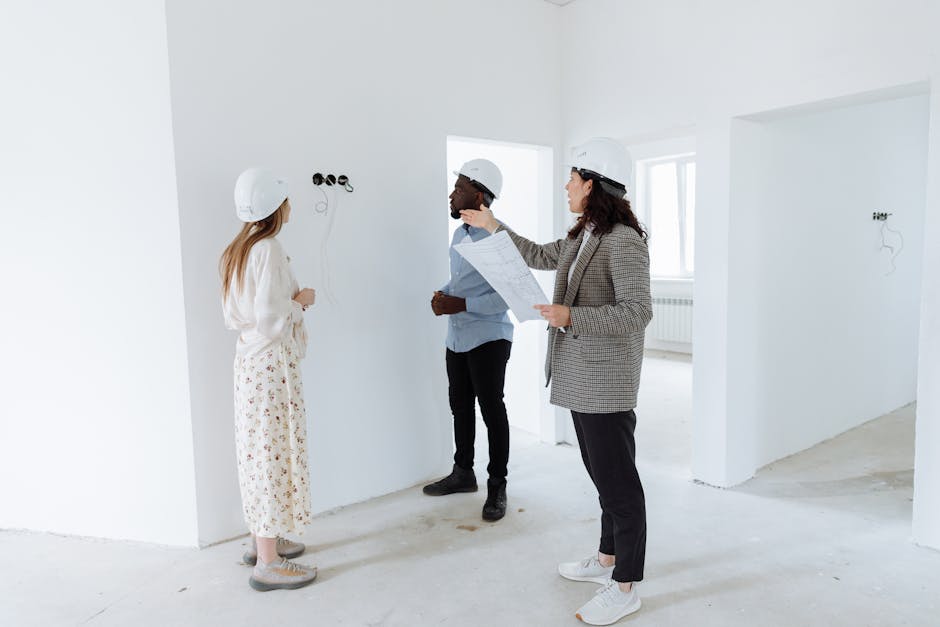
When planning your outdoor change, understanding the costs involved helps you set realistic expectations and evaluate proposals from hardscape companies. While every project is unique, I’ve gathered some helpful pricing guidelines to give you a starting point for your budget planning.
“The most common question we hear is ‘how much will this cost?'” says Tommy Randall. “And while it’s impossible to give an exact answer without seeing your property, having some general ranges in mind helps our clients plan more effectively.”
Average Patio Pricing (Internet Data)
For basic planning purposes, these national averages from internet data can help you establish a preliminary budget:
- Small Patio (60 sq ft): $480 to $1,500
- Medium Patio (280 sq ft): $2,400 to $7,000
- Large Patio (900 sq ft): $7,200 to $22,500
These figures represent average costs based on internet data and not actual costs for Randall Landscaping. Your actual investment will depend on your specific needs, material choices, and property conditions.
For retaining walls, the investment typically ranges from $25 to $75 per square face foot for basic segmental block systems, while natural stone options generally run $40 to $150 per square face foot. More complex engineered systems for taller walls can range from $60 to $250 per square face foot, reflecting the additional structural requirements.
The silver lining? Hardscaping delivers excellent return on investment. A well-designed deck installation, for example, can recover approximately 80% of its cost when you sell your home. Even better, you’ll enjoy the immediate lifestyle benefits of your expanded outdoor living space while you live there.
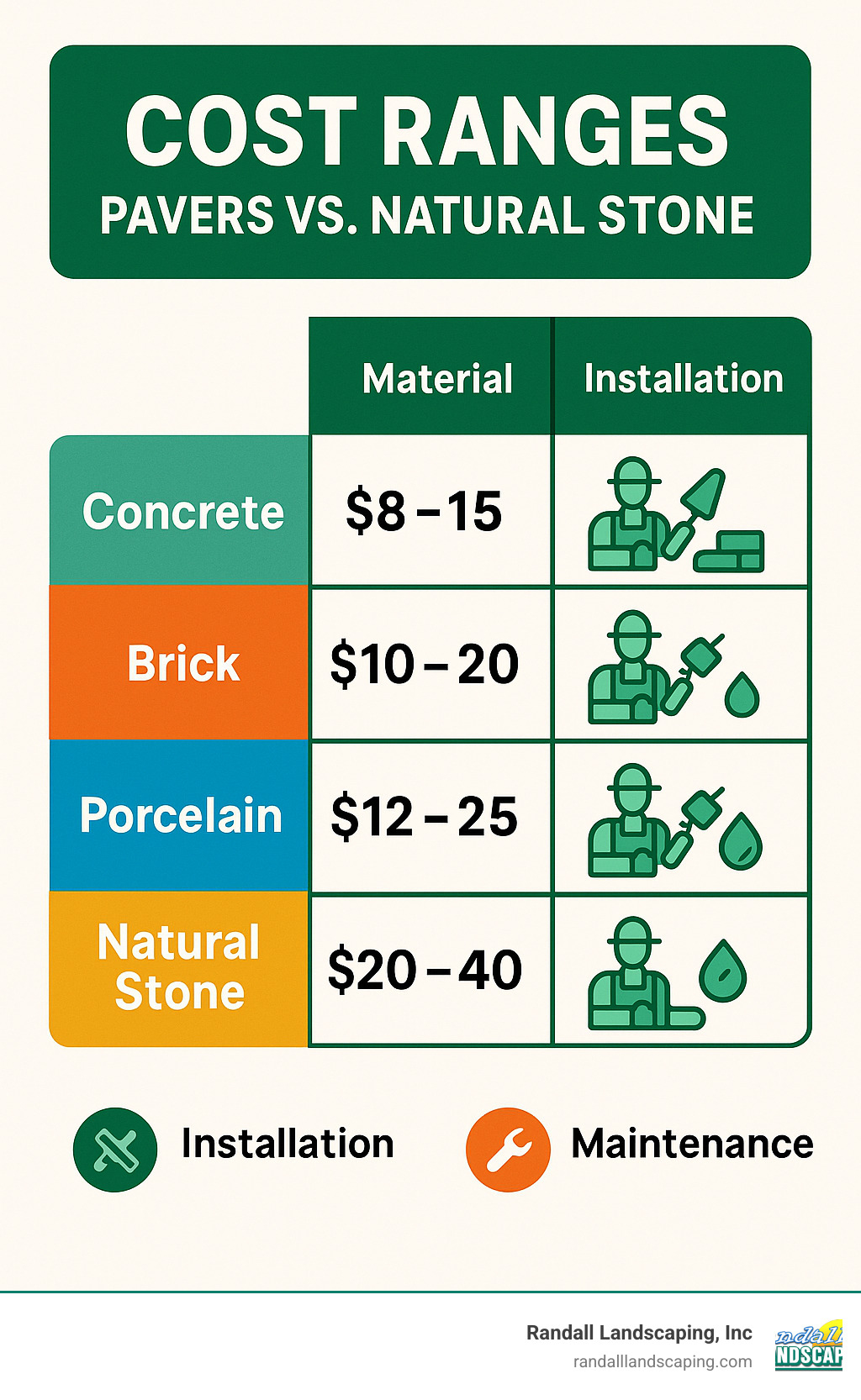
Looking for specific materials? Check out our full selection of Hardscape Products to explore options that fit your style and budget.
Factors That Influence Price
Several key elements can significantly impact your final hardscaping costs. Understanding these factors helps explain why pricing can vary so widely between seemingly similar projects:
Design Complexity plays a major role in pricing. A simple rectangular patio costs substantially less than an intricate design featuring curves, patterns, or multiple levels. Each cut in pavers or stone requires additional labor and creates more material waste.
Site Access challenges can quickly increase labor costs. When hardscape companies can’t bring equipment directly to your project area, materials may need to be moved by hand rather than machinery, adding significant time and effort.
Site Preparation requirements vary dramatically between properties. Poor drainage conditions, unsuitable soil, tree root removal, or old concrete demolition can add considerable costs to your project. “The part of the job you don’t see—the proper base preparation—is often the most important factor in long-term success,” Tommy often reminds clients.
Material Grade offers perhaps the widest range of pricing options. Basic concrete pavers might be perfect for a utilitarian space, while premium natural stone or imported porcelain could be ideal for a showcase patio. Your material choices can easily double or triple your project cost.
Regional Climate Considerations impact installation requirements, especially in New England. Our freeze-thaw cycles demand deeper excavation and more substantial base preparation than warmer regions, increasing both material and labor needs.
Additional Features like built-in lighting, irrigation access, steps, walls, and specialty elements add to the base price of any hardscape project but often deliver the most distinctive and useful aspects of your outdoor space.
Permit Requirements vary by municipality, with some towns requiring extensive engineering and documentation that add time and cost to projects.
Most experienced hardscape companies recommend setting aside a 10-15% contingency budget for unexpected challenges that might arise during excavation or construction. This buffer helps ensure your project can proceed smoothly even if surprises emerge once work begins.
When comparing proposals from different hardscape companies, look beyond the bottom-line price to understand exactly what’s included—and what might generate additional charges down the road.
Choosing the Right Hardscape Partner & Planning Your Project
Selecting the right hardscape company for your project is perhaps the most important decision you’ll make. The quality of installation directly impacts both the appearance and longevity of your hardscape.
Key credentials to look for include:
- Proper Licensing: Verify that the company meets all state and local licensing requirements.
- Insurance Coverage: Confirm they carry liability insurance and workers’ compensation coverage.
- Industry Certifications: Look for ICPI (Interlocking Concrete Pavement Institute) certification for paver installers or NCMA (National Concrete Masonry Association) certification for wall builders.
- Manufacturer Certifications: Many premium hardscape product manufacturers offer certification programs for installers.
- Local Experience: Companies familiar with New England’s specific challenges will better anticipate and address potential issues.
Beyond credentials, evaluate potential partners by reviewing their portfolio, checking references, and assessing their communication style. The best hardscape companies will listen carefully to your needs and offer solutions that fit both your vision and budget.
Step-by-Step Process From Consultation to Completion
Understanding the typical hardscaping process helps set realistic expectations and ensures a smooth project:
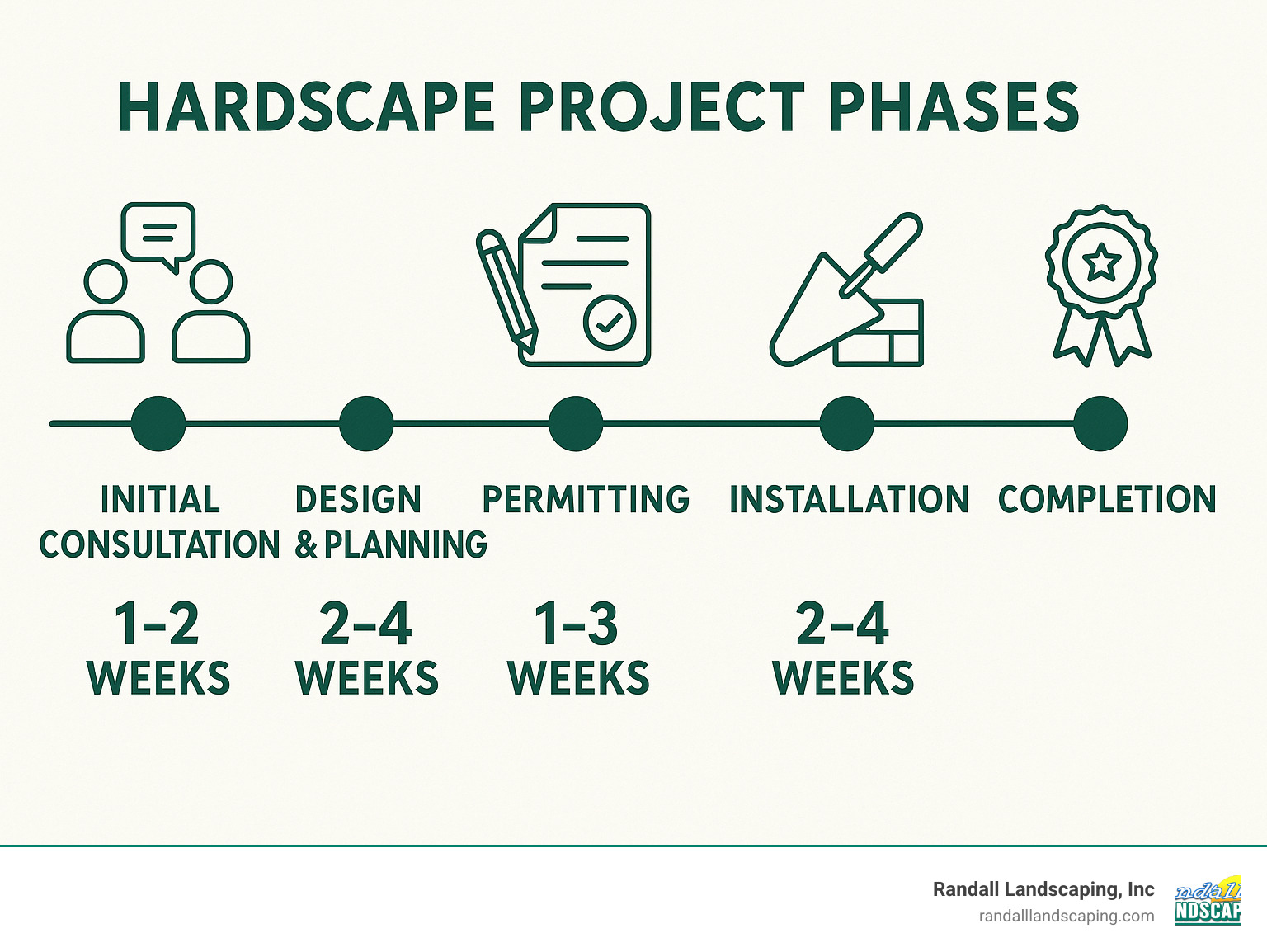
- Initial Consultation: The company visits your property to discuss your goals, assess site conditions, and gather information for design and estimating.
- Site Analysis: Professional evaluation of drainage, soil conditions, utilities, access points, and other factors that will impact design and construction.
- Design Development: Creation of conceptual designs, often including 3D renderings or drawings to help visualize the finished project.
- Proposal and Contract: Detailed specification of materials, timeline, payment schedule, and other project parameters.
- Permitting: Securing necessary approvals from local building departments or conservation commissions.
- Material Selection and Ordering: Finalizing specific products and placing orders to ensure availability when construction begins.
- Site Preparation: Excavation, grading, and base preparation—the critical foundation work that ensures long-term performance.
- Installation: The visible construction phase, including setting materials, cutting, fitting, and finishing details.
- Final Walkthrough: Inspection of the completed project to ensure all specifications have been met and any punch list items are addressed.
- Care Instructions: Guidance on maintaining your new hardscape to preserve its beauty and functionality.
The timeline for this process varies dramatically based on project scope, from a few weeks for simple patios to several months for complex multi-feature installations.
Must-Ask Questions for Hardscape Companies Near You
When interviewing potential hardscape companies, ask these critical questions to ensure you’re making an informed decision:
- “How many similar projects have you completed in our area?” Look for specific experience with projects like yours in similar conditions.
- “Can I see examples of your work that’s 5+ years old?” This reveals how well their installations hold up over time.
- “What base preparation methods do you use for our climate?” In New England, proper base depth and drainage are essential for preventing frost heave.
- “How do you handle drainage in your hardscape designs?” Water management is critical to long-term performance.
- “What warranty do you provide on materials and workmanship?” Reputable companies stand behind their work with meaningful guarantees.
- “Who will supervise my project, and will they be on-site daily?” Understand who’s responsible for quality control.
- “What maintenance will my new hardscape require?” Get realistic expectations about ongoing care requirements.
- “How do you schedule projects and handle weather delays?” Understand how the company manages timelines and contingencies.
Finding local hardscape companies is easier than ever with online resources, but nothing replaces in-person evaluation of their work and communication style.
Frequently Asked Questions about Hardscaping
What materials are best for my climate?
Living in the Merrimack Valley and Southern New Hampshire means our outdoor spaces face some serious weather challenges. Not all hardscaping materials are created equal when it comes to handling our notorious freeze-thaw cycles and snow-laden winters.
Concrete pavers remain our most recommended option for most properties. They offer excellent durability while coming in countless styles that can complement anything from colonial to contemporary homes. The interlocking design provides stability through seasonal ground movement that would crack solid concrete.
Natural stone speaks to New England’s heritage and has literally stood the test of time. Granite, bluestone, and our regional fieldstone not only withstand our harsh climate but actually develop more character with age. While typically more expensive than manufactured options, their timeless appeal makes them worth considering for many properties.
For those seeking ultra-low maintenance, porcelain pavers have become increasingly popular. These newer materials resist staining, don’t fade in the sun, and require virtually no upkeep. The tradeoff is a higher initial investment, but many homeowners find the long-term benefits worth it.
When it comes to retaining walls, engineered segmental block systems provide the best combination of structural integrity and value for most applications. That said, there’s something undeniably charming about traditional New England stone walls that can make them the perfect choice for certain properties.
Remember though—even the best materials will fail without proper installation. In our New England climate, that means 8-12 inches of properly compacted crushed stone base beneath your hardscape to prevent frost heave. This foundation work is where experienced hardscape companies truly earn their keep.
How much upkeep do patios and walls need?
One of the biggest selling points of hardscaping is how it dramatically reduces your outdoor maintenance compared to traditional landscaping—but “low maintenance” doesn’t mean “no maintenance.”
Most patios benefit from an annual cleaning to remove the inevitable buildup of dirt, pollen, and organic matter. Depending on your surrounding landscape and tree coverage, you might need a simple rinse with a garden hose or a more thorough cleaning with a pressure washer and specialized cleaners.
For paver installations, the sand between the joints occasionally needs refreshing—typically every 2-3 years. Modern polymeric sands resist washing out and prevent weeds from taking hold, making this task much simpler than in decades past.
Some homeowners choose to apply sealants to improve colors and provide additional protection against stains. These typically need reapplication every 3-5 years, depending on the product and your specific conditions.
Retaining walls should get a quick annual inspection, ideally in spring after the ground thaws. Look for any signs of movement, bulging, or drainage issues. Catching small problems early prevents costly repairs later.
Winter care requires some attention too. Use plastic snow shovels rather than metal ones that can chip your pavers, and be careful with ice melt products—look for those specifically labeled as safe for your hardscape material.
The good news? Even with these maintenance tasks, you’ll spend far less time caring for your hardscape than you would mowing, weeding, and watering the same area if it were lawn.
Can hardscaping really raise resale value?
In a word: absolutely. Well-designed hardscaping consistently ranks among the smartest investments for improving property value, with returns that outperform many interior renovations.
Decks and patios typically return about 80% of their cost when you sell—and that’s just the measurable financial return. What’s harder to quantify, but equally valuable, is how outdoor living spaces have become major selling points that can significantly reduce a home’s time on the market.
Today’s buyers aren’t just looking for square footage inside the home—they’re shopping for lifestyle. A thoughtfully designed outdoor kitchen, fire pit area, or multi-level patio creates an emotional connection that often leads to higher offers.
Beyond the “wow factor,” practical hardscaping like retaining walls and proper drainage solutions eliminate red flags that might otherwise scare away potential buyers or lead to lower offers. No one wants to purchase a property with obvious erosion issues or standing water problems.
The best part? Unlike many home improvements made solely for resale, quality hardscaping delivers immediate lifestyle benefits you can enjoy every day. That outdoor living room becomes the setting for countless family gatherings, quiet morning coffees, and memory-making moments long before you ever think about selling.
As one of our clients recently told us, “We built the patio thinking about resale value, but now I can’t imagine ever wanting to leave it behind!”
Conclusion
The journey to creating your dream outdoor space isn’t just about laying stones and building walls—it’s about changing your property into a functional, beautiful extension of your home. In our corner of New England, where winter frost gives way to summer heat, professional hardscaping stands as an investment in both lasting beauty and practical durability.
Here at Randall Landscaping, Inc., we’ve had the privilege of working alongside the region’s finest hardscape companies, developing deep expertise in creating outdoor environments that not only withstand our challenging New England conditions but provide meaningful spaces where memories are made. From intimate family gatherings to grand summer celebrations, well-designed hardscapes become the foundation for life’s outdoor moments.
I’ve seen how the right patio, walkway, or retaining wall can completely transform a property’s usability and value. Whether you’re considering a modest patio refresh or dreaming of a complete backyard change, I encourage you to research potential partners thoroughly. Take time to verify credentials, check references, and choose hardscape companies with proven experience in our unique climate. The extra effort in selecting the right partner pays tremendous dividends through reduced maintenance headaches and significantly longer installation lifespan.
The most successful hardscape projects marry technical expertise with creative vision—blending the science of proper construction with the art of beautiful design. When those elements come together under the guidance of experienced professionals, the results aren’t just satisfying—they’re transformative.
As you consider your next outdoor project, we’re here to help guide you through the process with the reliability and craftsmanship that have defined Randall Landscaping for nearly two decades. Your perfect outdoor space awaits—and we’d be honored to help you create it.
More info about hardscape services