What Does It Cost to Mow a Lawn Per Square Foot in 2026?
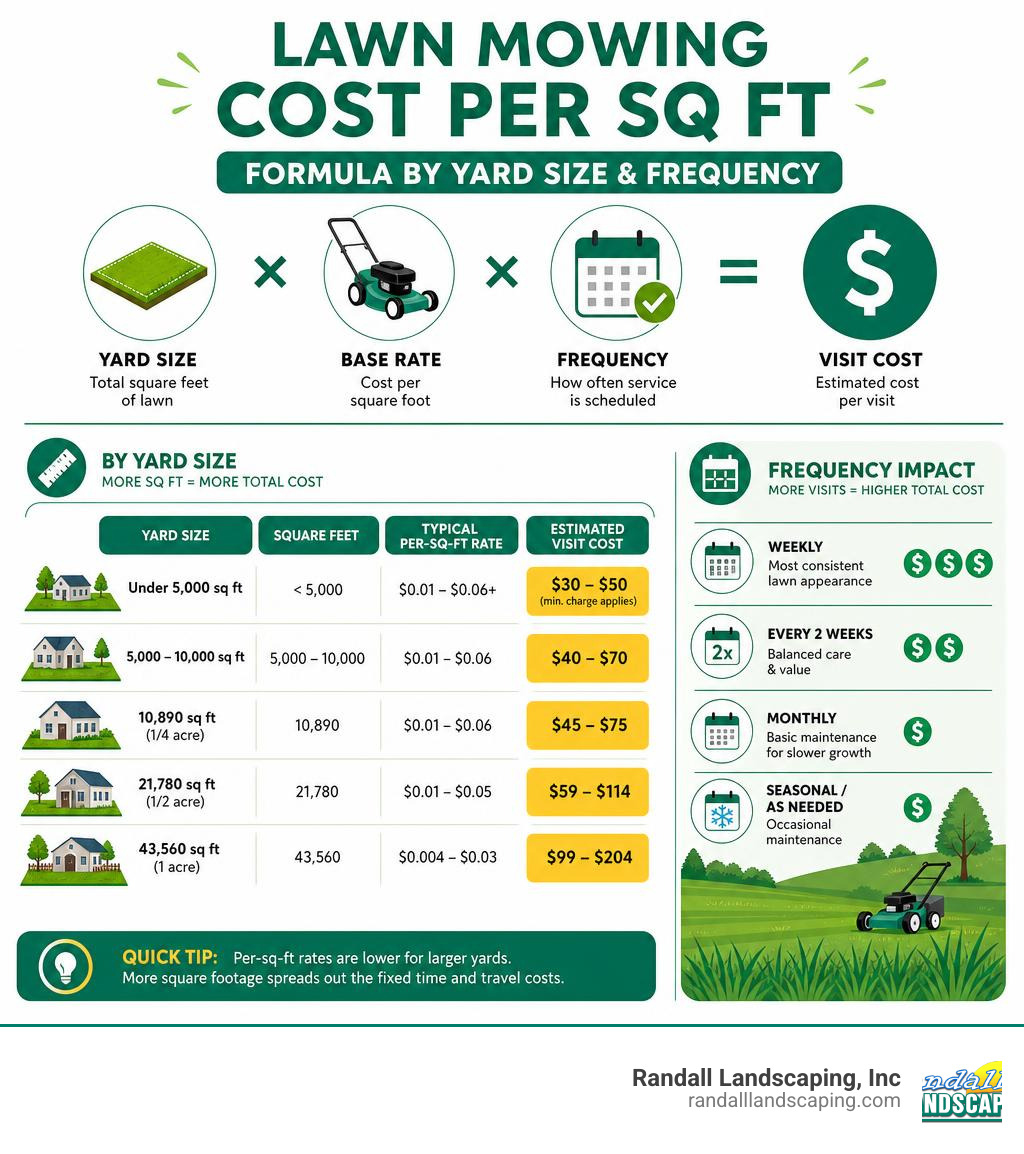
Understanding the cost to mow a lawn per square foot is the fastest way to budget for professional lawn care — whether your yard is a compact suburban lot or a sprawling half-acre in Southern New Hampshire.
Here’s a quick answer before we dive deeper:
| Lawn Size | Typical Per-Sq-Ft Rate | Estimated Visit Cost |
|---|---|---|
| Under 5,000 sq ft | $0.01 – $0.06+ | $30 – $50 (min. charge applies) |
| 5,000 – 10,000 sq ft | $0.01 – $0.06 | $40 – $70 |
| 10,890 sq ft (1/4 acre) | $0.01 – $0.06 | $45 – $75 |
| 21,780 sq ft (1/2 acre) | $0.01 – $0.05 | $59 – $114 |
| 43,560 sq ft (1 acre) | $0.004 – $0.03 | $99 – $204 |
Note: These are average costs based on national internet data and not actual pricing from Randall Landscaping, Inc. Costs can range from as low as $0.01 to as high as $0.26 per square foot depending on region, lawn condition, and service scope. Always request a local quote for accurate pricing.
Most homeowners across the U.S. pay somewhere between $30 and $204 per visit, with a national average around $123 per visit for a typical residential lawn. But that single number hides a lot of variation — your yard’s size, location, grass type, and how often you schedule service all shift the math considerably.
For homeowners in the Merrimack Valley and Southern New Hampshire, local labor rates, property density, and the shorter growing season all play a role in what you’ll actually pay. Getting a quote from a local pro is the only way to know your real number.
I’m Tommy Randall, owner of Randall Landscaping, Inc., and I’ve been pricing and delivering lawn mowing services across Massachusetts and New Hampshire since 2006 — so I know how many variables go into the cost to mow a lawn per square foot for properties in this region. In this guide, I’ll walk you through everything you need to know to budget accurately and get fair pricing.
Essential cost to mow lawn per square foot terms:
Average Cost to Mow Lawn Per Square Foot in 2026
Based on 2026 internet-average pricing data, the most common professional lawn mowing range is about $0.01 to $0.06 per square foot. Broader unit-cost calculators show a wider range, around $0.06 to $0.26 per square foot, especially when labor minimums, setup time, and small-project costs are included.
That is why square-foot pricing can feel confusing. A 3,000-square-foot lawn at $0.01 per square foot would only be $30, which may line up with a minimum service charge. But the same lawn at $0.06 per square foot would be $180, which is six times higher. The difference usually comes down to service scope, region, grass condition, and whether the estimate includes trimming, edging, blowing, travel, and setup.
For a technical unit-cost starting point, homeowners can review this 2026 unit-cost calculator for lawn mowing. Just remember: calculator ranges are educational averages, not local quotes.
Here is how the common pricing models compare:
| Pricing Model | Typical Internet-Average Range | Best Used For | Watch Out For |
|---|---|---|---|
| Per square foot | $0.01-$0.06 common; up to $0.26 broad range | Estimating by measured turf area | Small lawns still hit minimum fees |
| Per visit | $30-$204+ | Residential recurring mowing | Scope must be clear |
| Hourly | $32-$68 per hour | Overgrown or uncertain jobs | Faster crews should not be penalized |
| Per acre | $50-$200+ per acre | Larger open properties | Obstacles and access can raise cost |
Again, these are average costs based on internet data and are not actual costs for Randall Landscaping, Inc.
How to Calculate the Cost to Mow Lawn Per Square Foot
The basic formula is simple:
Mowable lawn square footage x per-square-foot rate = estimated mowing cost
Then compare that number to the provider’s minimum charge.
Example 1: Small lawn
| Item | Calculation |
|---|---|
| Lawn size | 5,000 sq ft |
| Rate | $0.01/sq ft |
| Math | 5,000 x $0.01 |
| Estimate | $50 |
Example 2: Quarter-acre lawn
| Item | Calculation |
|---|---|
| Lawn size | 10,890 sq ft |
| Rate | $0.005/sq ft |
| Math | 10,890 x $0.005 |
| Estimate | $54.45 |
Example 3: One-acre lawn
| Item | Calculation |
|---|---|
| Lawn size | 43,560 sq ft |
| Rate | $0.004/sq ft |
| Math | 43,560 x $0.004 |
| Estimate | $174.24 |
The key is to measure mowable turf, not total lot size. A quarter-acre property may have a house, driveway, patio, mulch beds, trees, and walkways. The actual grass area may be much smaller.
To estimate your lawn:
- Measure the front, side, and back lawn separately.
- Multiply length x width for each section.
- Subtract patios, pools, buildings, and large beds.
- Add the sections together.
- Apply the estimated per-square-foot rate.
- Add any minimum charge or extra service fees.
Sample Cost to Mow Lawn Per Square Foot by Yard Size
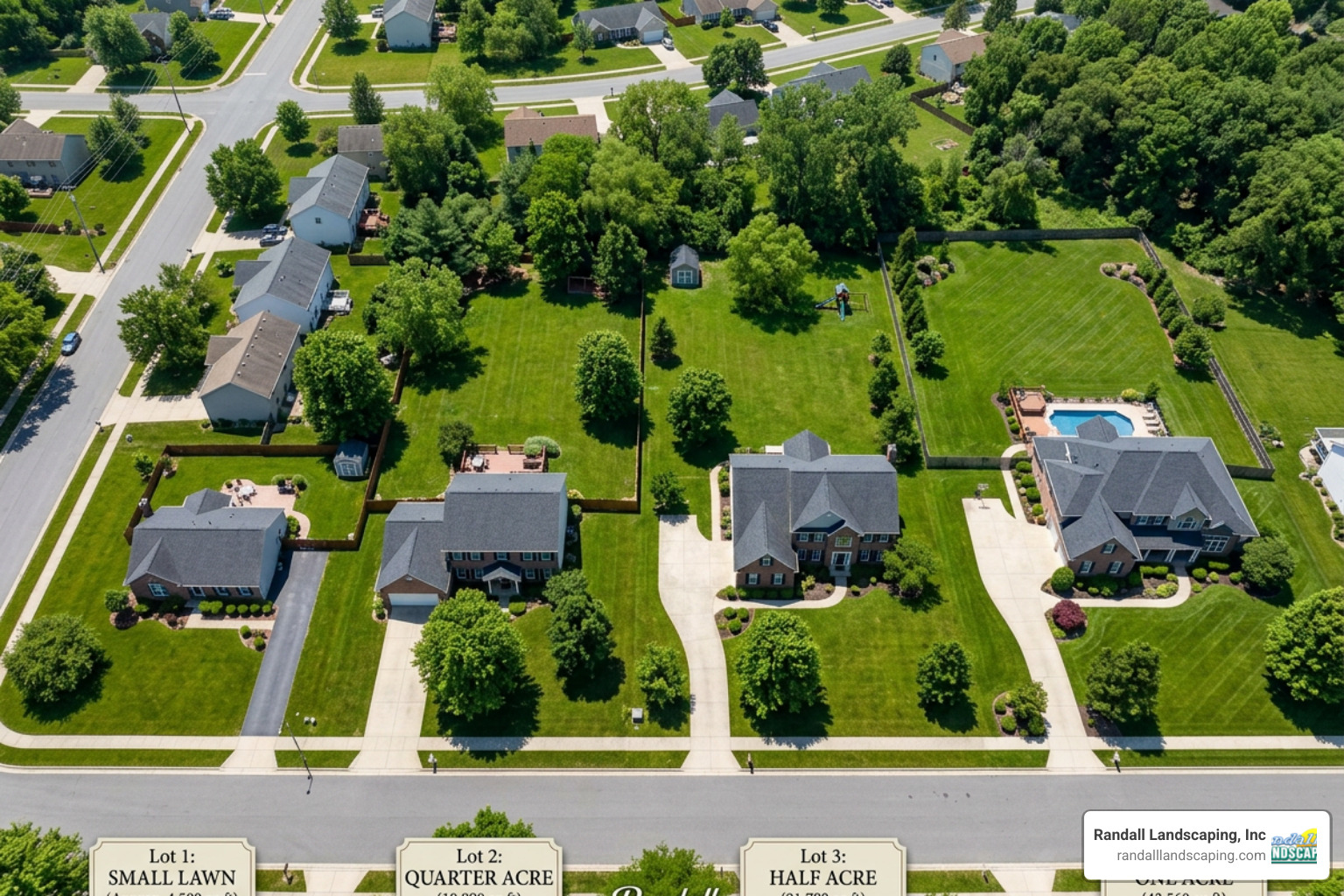
Larger lawns often cost more per visit but less per square foot. That is called economy of scale. Once the crew is on-site and the mower is unloaded, open turf is faster to cut than small, fenced, obstacle-heavy sections.
| Yard Size | Typical Internet-Average Visit Range | Why the Rate Changes |
|---|---|---|
| Under 5,000 sq ft | $30-$90+ | Minimum charge and travel time dominate |
| 5,000-10,000 sq ft | $40-$180+ | Common suburban range |
| 10,890 sq ft, or 1/4 acre | $45-$204+ | Often priced as a standard residential visit |
| 21,780 sq ft, or 1/2 acre | $59-$250+ | More mower time; riding access matters |
| 43,560 sq ft, or 1 acre | $99-$400+ | Equipment efficiency becomes important |
| 2 acres or more | $278-$600+ | Acreage, terrain, and access drive cost |
These ranges are intentionally wide because the high end needs to account for difficult properties, tall grass, poor access, and premium markets. A clean, open lawn in a tight service route is very different from a steep, wet, fenced backyard with a trampoline, five trees, and a mystery rock hiding in the grass. That rock always wins, by the way.
Why Per-Square-Foot Estimates Can Look Higher on Small Lawns
Small lawns often have the highest cost to mow lawn per square foot because fixed costs do not shrink with the yard.
Even for a small lawn, a professional crew still has to:
- Drive to the property
- Park safely
- Unload equipment
- Walk the site
- Trim edges
- Mow carefully around obstacles
- Blow off hard surfaces
- Load equipment again
- Move to the next job
That is why many companies use minimum charges, often around $25 to $30 or more based on internet-average data, especially for lawns under 5,000 square feet. In many cases, the minimum charge matters more than the square-foot rate.
How Lawn Mowing Rates Vary by Size, Region, and Frequency
Lawn mowing rates are not just about square footage. In the Merrimack Valley and Southern New Hampshire, pricing can shift based on neighborhood density, travel time, crew availability, fuel costs, and the local growing season.
A weekly lawn in Salem, NH or Methuen, MA may be easier to keep on a route than a one-time overgrown cut with limited access. The more predictable the work, the easier it is to price efficiently.
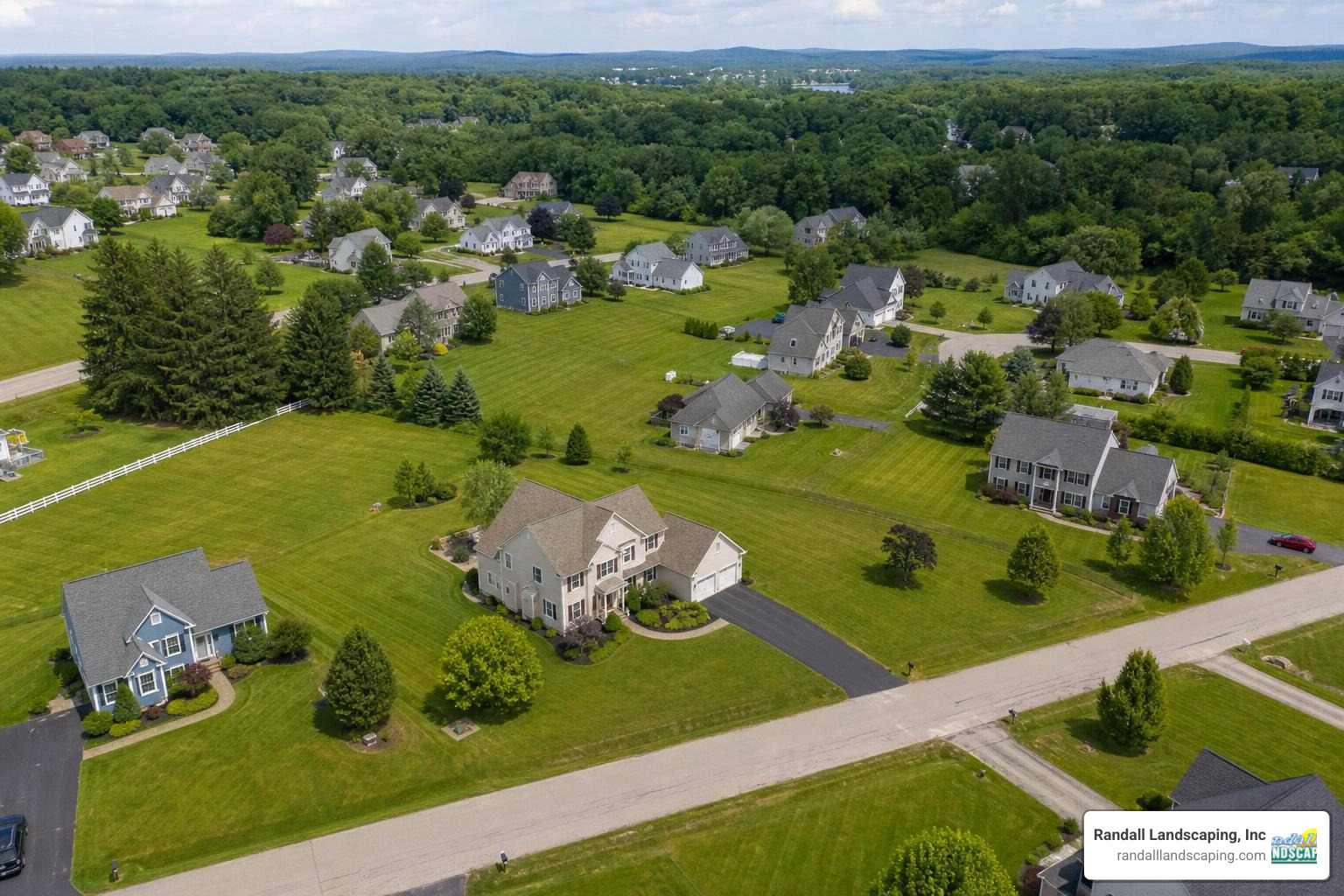
Lawn Size Tiers That Affect Mowing Price
Most residential lawn pricing falls into tiers rather than exact penny-by-penny square-foot pricing.
Common tiers include:
- Under 5,000 sq ft: minimum pricing often applies
- 5,000-10,000 sq ft: standard small-to-medium residential lawn
- Around 10,890 sq ft: quarter-acre benchmark
- Around 21,780 sq ft: half-acre benchmark
- Around 43,560 sq ft: one-acre benchmark
- 2 acres and up: acreage pricing or custom quote
Equipment matters too. A 21-inch push mower is slow but useful for tight areas. A walk-behind mower is faster. A commercial riding mower is efficient on open turf but only if gates, slopes, and terrain allow safe access.
Regional Lawn Mowing Cost Differences in 2026
Labor, insurance, fuel, and operating costs in Massachusetts and New Hampshire can be higher than in lower-cost parts of the country. Dense neighborhoods may reduce travel time between jobs, while larger rural properties may require more drive time and heavier equipment.
Internet-average data shows professional mowing visits commonly ranging from about $30 to $204, with some high-end or complex quotes reaching several hundred dollars. One reason regional estimates vary so much is that a “lawn mowing visit” might mean a quick mow and blow on one property, and a full maintenance stop with trimming, edging, bagging, and cleanup on another.
For local homeowners, the most useful comparison is not national pricing alone. It is a quote from a company that actually works in Amesbury, Andover, Dracut, North Andover, North Reading, Methuen, Lawrence, Salem, Pelham, Windham, Atkinson, Plaistow, Boxford, and nearby Merrimack Valley communities.
How Mowing Frequency Changes Cost Per Square Foot
Frequency has a major impact on per-visit and per-square-foot cost.
Weekly mowing is usually the most efficient per visit because grass is kept at a manageable height. Biweekly mowing may cost more per visit because the lawn is taller and may need slower cutting, extra trimming, or cleanup. Monthly or one-time mowing can cost much more per visit.
Internet-average data commonly shows:
| Frequency | Typical Price Effect |
|---|---|
| Weekly | Lowest per-visit cost; best for lawn health |
| Biweekly | Often 20%-30% higher per visit |
| Monthly | Can be 50%-80% higher per visit |
| One-time mowing | Often 50%-75% higher than weekly pricing |
| Overgrown first cut | May include a $25-$75+ surcharge |
There is also a turf-health reason to mow regularly: the one-third rule. Ideally, no more than one-third of the grass blade should be removed in a single mowing. Letting grass grow too tall and then scalping it is stressful for the lawn. It also makes the mower complain, and nobody wants to hear that.
What Is Included in Standard Mowing Pricing—and What Costs Extra
A standard mowing visit usually includes cutting the grass, trimming edges, and blowing clippings off hard surfaces. However, every company defines “standard” differently, so it is important to ask what is included before comparing quotes.
For a broader look at service expectations, see our Professional Lawn Service page and our Lawn Maintenance Services Complete Guide.
Standard Mow-Blow-and-Go Services
A basic professional mowing visit often includes:
- Cutting the lawn to an appropriate height
- String trimming along fences, beds, and tight spaces
- Basic edging along sidewalks or driveways, depending on scope
- Blowing clippings from walkways, patios, and driveways
- Mulching clippings back into the lawn when appropriate
- Quick cleanup before leaving
Good mowing is not just about making stripes. Mower height, blade sharpness, and consistent timing all affect turf health.
Add-Ons That Change the Cost to Mow Lawn Per Square Foot
Add-ons increase the effective per-square-foot cost because they require more labor, equipment, disposal, or materials.
Common internet-average add-on impacts include:
- Bagging clippings: often extra because it slows mowing and adds disposal
- Clipping haul-away: extra labor plus dumping or disposal costs
- Heavy edging: can add time, especially along long driveways and walkways
- Weed control: separate treatment, not usually included in mowing
- Fertilization: often priced per application
- Aeration: separate service using specialized equipment
- Leaf removal: usually priced separately due to volume and disposal
- Overgrown grass: may add 25%-50% or more to the visit
- Slopes and difficult terrain: can raise labor time and safety risk
- Obstacles: trees, playsets, furniture, and garden decor slow crews down
Property Factors That Increase Lawn Mowing Rates
The same square footage can take very different amounts of time depending on property conditions.
Pricing may rise when a lawn has:
- Tall or thick grass
- Wet turf
- Steep slopes
- Narrow gates
- Fenced backyard access
- Many trees or planting beds
- Playsets, trampolines, or lawn furniture
- Irrigation heads that require careful trimming
- Uneven ground
- Difficult parking
- Long driveway distance from truck to turf
- Pet waste that must be avoided
If we had a nickel for every time a hidden dog toy met a mower blade, we would have… well, several nickels. Still too many.
Professional Mowing vs. DIY Cost Per Square Foot
DIY mowing can look cheaper at first glance. After all, you are not paying a crew every week. But the real DIY cost includes equipment, fuel, maintenance, storage, time, and safety.
Professional mowing rates are often based on route efficiency, commercial equipment, trained crews, and consistent scheduling. For contractor-side pricing context, this professional lawn care pricing guide explains common 2026 rate structures.
DIY Cost Components Homeowners Forget
DIY mowing costs may include:
- Mower purchase
- Gas, oil, or batteries
- Spark plugs and air filters
- Blade sharpening
- Repairs
- Annual tune-ups
- Safety glasses, gloves, and hearing protection
- Storage space
- Time spent mowing, trimming, and cleaning up
- Disposal for bagged clippings or yard waste
A basic mower may cost a few hundred dollars, while larger or more advanced equipment costs much more. Then there is the time factor. If mowing takes two hours per week over 25 to 35 visits, that can become 50 to 70 hours per season before trimming and cleanup.
When Hiring a Professional Is More Cost-Effective
Hiring a professional often makes more sense when:
- Your lawn is large
- Your schedule is packed
- You want consistent curb appeal
- The property has slopes or difficult terrain
- You need reliable recurring service
- You do not want to maintain equipment
- You prefer insured crews and commercial equipment
- You want mowing bundled with broader maintenance
If you are comparing options, our Professional Lawn Care Near Me page can help you think through what to look for in a local provider.
Residential vs. Commercial Mowing Cost Considerations
Residential mowing is usually priced by visit, size tier, or seasonal maintenance plan. Commercial mowing is different. Commercial properties often involve larger turf areas, parking lot edges, public visibility, insurance requirements, safety expectations, and recurring contract terms.
Commercial sites may include:
- Office parks
- Retail properties
- Apartment or condo grounds
- Industrial properties
- Municipal-style open spaces
- High-traffic turf areas
For businesses, reliability is often just as important as price. A missed mow at a commercial property is not just an eyesore; it can affect the way customers, tenants, and employees view the site.
Learn more about our Commercial Lawn Care services and our Commercial Lawn Care Pricing Complete Guide.
How to Get Accurate Lawn Mowing Quotes Based on Square Footage
The best quote is based on real property details, not guesswork. Square footage helps, but a good estimate also considers access, frequency, grass condition, add-ons, and route location.
For local help, start with our Lawn Maintenance Near Me page.
Information to Provide Before Requesting a Quote
To get a more accurate lawn mowing quote, provide:
- Property address
- Estimated mowable square footage
- Current lawn condition
- Grass height
- Desired frequency: weekly, biweekly, seasonal, or one-time
- Whether you want edging, bagging, or haul-away
- Gate widths and backyard access notes
- Slopes or drainage issues
- Obstacles such as playsets, furniture, or garden beds
- Parking details
- Pet information
- Preferred service days or scheduling flexibility
Photos can help, but for many properties, a site visit gives the clearest picture.
Best Ways to Save Money on Lawn Mowing Per Square Foot
Smart scheduling can lower your effective per-square-foot cost.
Money-saving tips:
- Choose recurring service instead of one-time mowing
- Stay on a weekly schedule during peak growth
- Avoid overgrowth surcharges
- Mulch clippings instead of bagging when possible
- Clear toys, hoses, and furniture before the crew arrives
- Bundle mowing with seasonal maintenance
- Be flexible with service timing
- Keep gates unlocked on service day
- Tell your provider about access issues upfront
- Choose a reliable local provider with efficient routes
Bundling can be especially helpful if you also need seasonal cleanup, mulching, pruning, or full property maintenance.
Red Flags in Unusually Cheap or Vague Mowing Estimates
A low price is not always a bad thing, but an unclear price is a warning sign.
Be cautious if an estimate has:
- No written scope of work
- No mention of insurance
- No explanation of add-ons
- No minimum charge despite travel and setup
- Vague frequency terms
- Hidden disposal fees
- Poor communication
- No reliability standard
- Rock-bottom pricing that seems unsustainable
The cheapest cut can become expensive if the lawn is damaged, the crew disappears, or the “basic mow” turns out not to include trimming, edging, or cleanup.
Frequently Asked Questions About Lawn Mowing Cost Per Square Foot
Here are quick answers to the most common questions homeowners ask us when comparing lawn mowing prices.
What Is the Average Cost to Mow a Lawn Per Square Foot in 2026?
Based on internet-average 2026 data, professional lawn mowing commonly ranges from $0.01 to $0.06 per square foot. Broader calculator-based ranges may show $0.06 to $0.26 per square foot, especially when setup, labor minimums, and smaller job costs are included.
These are not actual Randall Landscaping prices. Local quotes are needed for accurate pricing in Merrimack Valley and Southern New Hampshire.
What Minimum Charge Should I Expect for a Small Lawn?
For small lawns, internet-average minimums often start around $25 to $30 or more, especially for properties under 5,000 square feet. The minimum covers travel, unloading, setup, trimming, mowing, blowing, and cleanup.
That is why a tiny lawn may not price out neatly at a simple per-square-foot number.
Is Edging or Bagging Included in the Cost to Mow Lawn Per Square Foot?
Basic trimming and blowing are often included in standard mowing. Basic edging may be included by some companies and separate for others.
Bagging is more commonly an extra charge because it takes more time and may require disposal. Clipping haul-away is also usually separate. The safest approach is to ask for an itemized estimate that clearly states what is included.
Conclusion
The cost to mow lawn per square foot is a helpful budgeting tool, but it is only the starting point. In 2026, internet-average pricing commonly falls between $0.01 and $0.06 per square foot, with broader ranges reaching $0.26 per square foot when minimums and service details are included.
Your actual cost depends on:
- Lawn size
- Mowable square footage
- Grass height and condition
- Service frequency
- Access and obstacles
- Add-ons like bagging or edging
- Local labor and route efficiency
- Residential vs. commercial needs
At Randall Landscaping, Inc., we focus on quality work, customer satisfaction, and 100% reliability for homeowners and businesses across the Merrimack Valley and Southern New Hampshire. If you want a clear, local number instead of internet guesswork, we are happy to help.
Request a lawn maintenance quote and we will help you understand the right mowing plan for your property.