Why Clear HOA Snow Removal Policies Matter for Your Community
HOA snow removal is a critical winter service that keeps your community safe and accessible during harsh New England weather. But understanding who’s responsible for what can be confusing for many residents.
Quick Answer: HOA Snow Removal Responsibilities
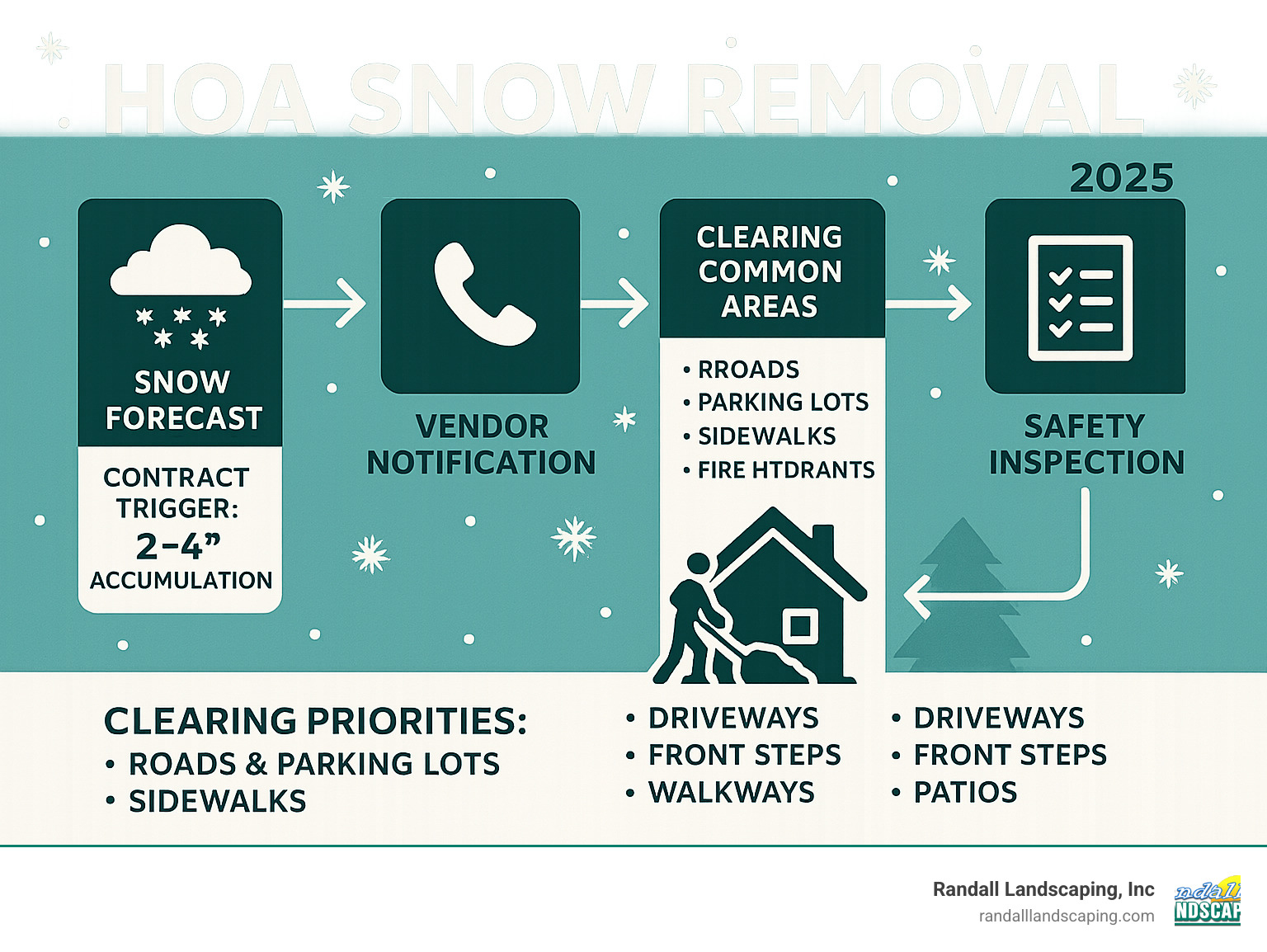
- HOA handles: Common areas, community roads, shared parking lots, sidewalks, fire hydrant access
- Homeowners handle: Private driveways, front steps, walkways on personal property, patios
- Contracts typically trigger: After 2-4 inches of snow accumulation
- Funding: Covered by regular HOA fees for common areas only
Winter weather brings real dangers to communities. Fall accidents are the second leading cause of unintentional injury globally, with 37.3 million falls each year severe enough to need medical care. Snow shoveling alone causes thousands of injuries and up to 100 deaths annually.
The key to avoiding confusion and liability issues? Clear policies and well-defined contracts.
Most HOAs hire professional snow removal companies to handle common areas like streets and parking lots. These contracts usually kick in when snow reaches a certain depth – often 2 to 4 inches. But homeowners typically stay responsible for their own driveways and walkways.
The stakes are high. HOAs can face serious liability if someone slips and falls on an icy common area that should have been cleared. That’s why having the right contractor and clear expectations matters so much.
I’m Tommy Randall, owner of Randall Landscaping since 2006. Over nearly two decades, I’ve helped countless HOAs in Massachusetts and New Hampshire steer HOA snow removal contracts and develop policies that keep their communities safe and accessible. My team understands the unique challenges New England winters bring to community associations.
The Great Divide: HOA vs. Homeowner Responsibilities
Picture this: it’s 6 AM after a big snowstorm, and your neighbor is outside furiously shoveling their driveway while muttering about “paying HOA fees for nothing.” Meanwhile, another neighbor is relaxing with coffee, confident the HOA will handle everything. Who’s right?
The truth is, HOA snow removal creates one of winter’s biggest sources of confusion. The line between what your association handles and what you’re responsible for isn’t always crystal clear.
Your governing documents hold all the answers. These include your CC&Rs (Covenants, Conditions, and Restrictions) and community rules. Think of them as your winter playbook – they spell out exactly who does what when the snow starts flying.
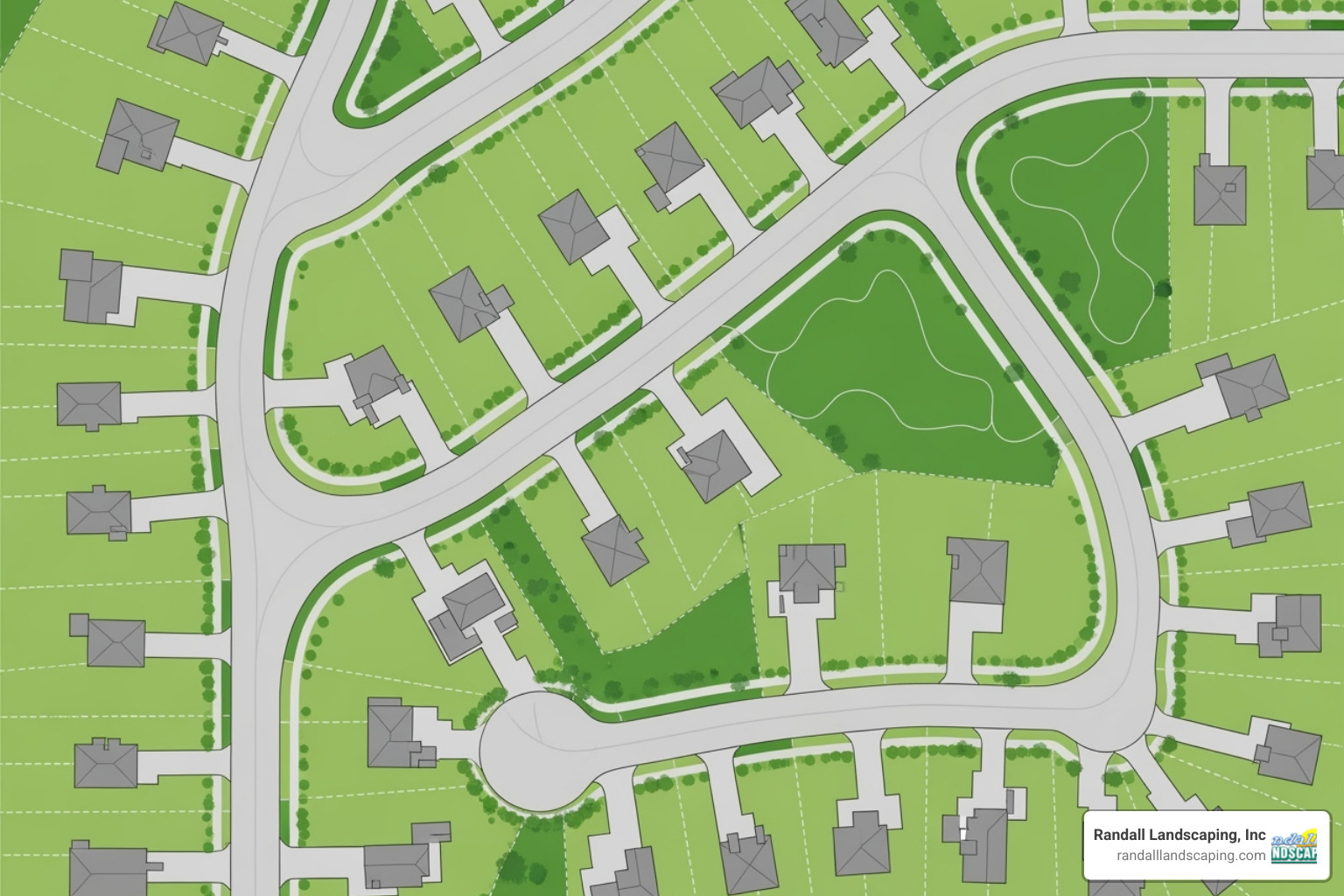
The general rule is beautifully simple: common areas belong to the HOA, while private property is your domain. But like most simple rules, the devil’s in the details.
HOA Responsibilities: Clearing Common Ground
Your HOA takes on the heavy lifting when it comes to shared spaces – the areas that everyone in your community relies on daily. These are typically funded through your regular HOA fees, and for good reason. Imagine trying to coordinate snow removal among dozens or hundreds of neighbors!
Community roads often top the HOA’s priority list. If you live in a gated community or have private roads, the city isn’t coming to help. Your HOA must ensure these internal streets stay passable for residents and, crucially, for emergency vehicles.
Parking lots present their own challenges. Beyond just plowing, HOAs need to manage de-icing and sometimes relocate massive snow piles to preserve parking spaces. After all, nobody wants to lose their parking spot to a mountain of snow.
Don’t overlook the smaller but vital areas. Mailbox access keeps the postal service happy and residents connected. Fire hydrants must stay visible and accessible – a buried hydrant could mean the difference between a small fire and a disaster.
Community sidewalks connecting different parts of your neighborhood require careful attention. These high-traffic pedestrian areas are where slip-and-fall accidents often happen, making them a key part of the HOA’s duty of care to residents.
The beauty of professional HOA snow removal is consistency. Rather than hoping everyone handles their part, your community gets coordinated, efficient service that keeps common areas safe and accessible.
Homeowner Responsibilities: Your Personal Patch
While your HOA handles the big picture, you’re still the captain of your own property. Think of it as teamwork – they clear the highways, you handle the side streets.
Your private driveway is almost always your responsibility, even if the HOA plows right up to your property line. This includes dealing with that annoying pile of snow the community plow might push to the end of your driveway. (Pro tip: it’s not personal – it’s just physics!)
Your front steps and walkways leading to your door are typically yours to manage. This makes sense when you think about it – you know when you’re expecting deliveries or guests, and you can clear these areas on your own schedule.
Patios and porches fall under your domain too. These private outdoor spaces are extensions of your home, so they’re your responsibility to maintain.
Here’s a question I get all the time: “Can I still use my own snowblower if the HOA provides snow removal?” Absolutely! Your HOA can’t tell you what equipment to buy. Just be mindful of any community courtesy rules about noise levels or hours of operation. Nobody appreciates a 5 AM snowblowing session.
Some HOAs have specific rules about timing – maybe you need to clear your walkways within 24 hours of snowfall. Others might have guidelines about where you can pile snow on your property. Check your HOA rules to avoid any surprises or fines.
The key is understanding that paying HOA fees doesn’t mean you can ignore your private property. It means you’re part of a community where everyone does their part to keep the whole neighborhood safe and accessible.
For larger properties or those wanting comprehensive coverage, commercial snow and ice removal services can handle both common areas and private spaces with professional efficiency.
The Blueprint for a Clear Winter: Understanding HOA Snow Removal Contracts
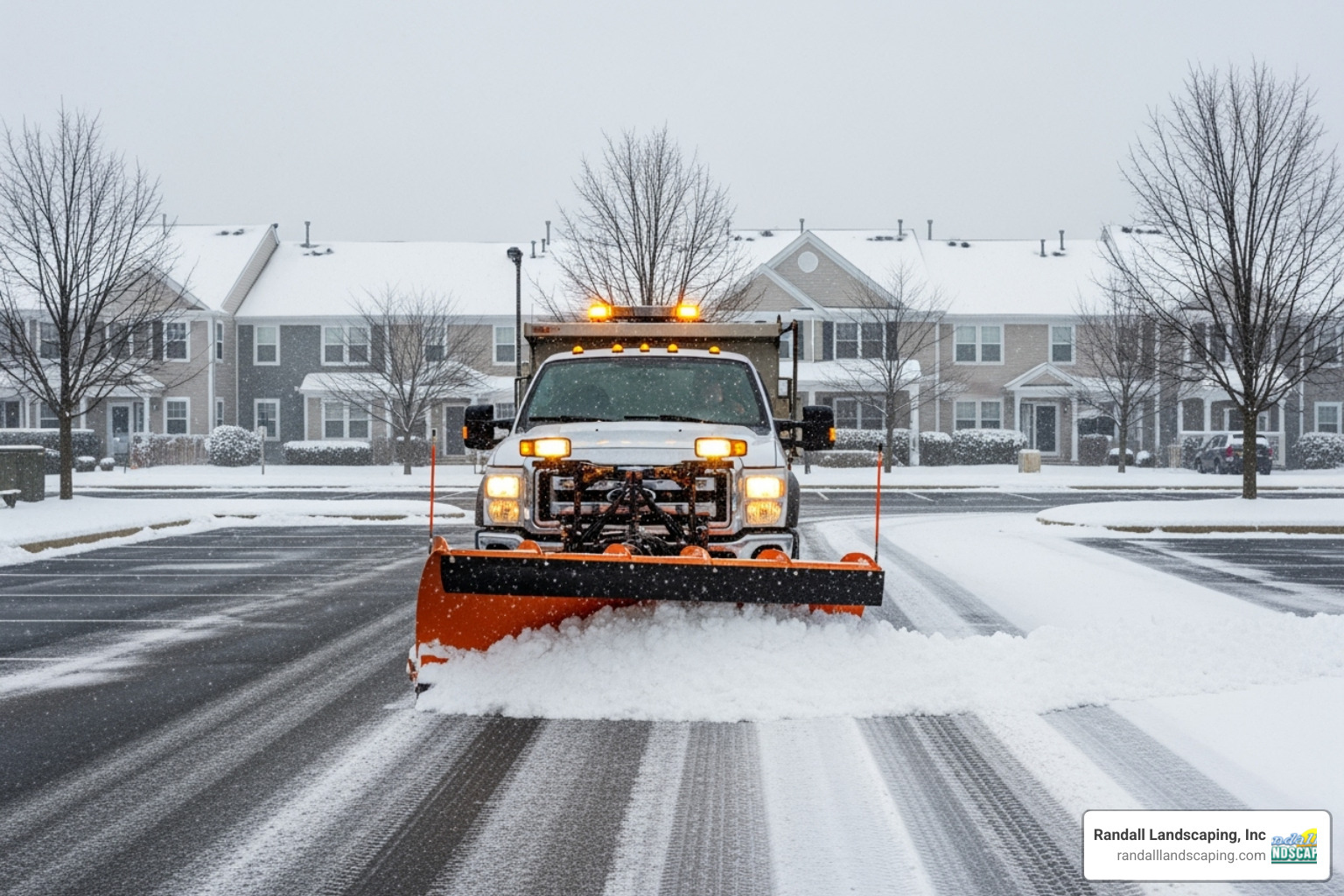
When it comes to HOA snow removal, most communities quickly realize this isn’t something they can handle with a few volunteers and some shovels. We’re talking about clearing potentially miles of roads, massive parking lots, and countless sidewalks – often in the middle of the night during a blizzard. That’s why smart HOAs partner with professional snow removal companies who have the right equipment, trained crews, and the ability to work around the clock.
As the owner of Randall Landscaping, I’ve seen HOAs go through the contractor selection process many times. It typically starts with a bidding process where several companies submit proposals. But here’s the thing – the lowest bid isn’t always the best choice. HOAs need to dig deeper, checking references, verifying insurance coverage, and making sure the contractor has the equipment and experience to handle their specific community’s needs.
The vetting process is crucial because you’re not just hiring someone to push snow around. You’re entrusting them with the safety of your entire community. That’s why we always provide comprehensive insurance documentation and maintain robust liability coverage. After all, if someone slips and falls because we didn’t do our job properly, that’s on us – not the HOA.
A solid contract is what separates a smooth winter from a season full of headaches and angry residents. I’ve seen communities struggle with contractors who disappeared during big storms or left snow piles blocking fire hydrants because expectations weren’t clearly defined upfront. For more detailed information about what makes an effective agreement, check out more info about commercial snow plowing contracts.
Key Elements of an HOA Snow Removal Contract
Think of your HOA snow removal contract as your winter survival guide. It needs to cover every detail so there are no surprises when that first big storm hits at 2 AM.
The scope of work section is where you’ll find exactly what areas get cleared and how. This isn’t just “plow the parking lot” – it should specify which roads get priority, whether sidewalks get plowed or hand-shoveled, and which pathways to mailboxes and common areas are included. Without this clarity, you might find your contractor focused on the main entrance while residents can’t get to their mail.
Service triggers are probably the most important part of any contract. Most agreements kick in when snow reaches a certain depth – usually 2 to 4 inches. This prevents costly call-outs for light dustings that will melt by noon, but ensures action when accumulation becomes a real problem. Some contracts also include provisions for de-icing services when there’s less snow but dangerous ice conditions.
Timing expectations can make or break resident satisfaction. The contract should spell out response times – like “plowing begins within 2 hours of reaching trigger depth” – and completion windows. During long storms, it should clarify whether crews will make multiple passes or wait until the snow stops falling.
The contract must also address where all that snow goes. Designated snow pile locations prevent contractors from blocking fire hydrants, covering storm drains, or creating dangerous sight line issues at intersections. Trust me, you don’t want to deal with the fire department because snow is blocking a hydrant.
Proof of insurance and a hold harmless clause protect your HOA from liability if something goes wrong. Any reputable contractor will carry comprehensive general liability and workers’ compensation insurance. The contract should require current certificates and include language that shields the HOA from claims related to the contractor’s work.
Common Types of Snow Removal Contracts
HOAs have three main options for structuring their snow removal agreements, each with distinct advantages depending on your community’s needs and risk tolerance.
Per-Push contracts charge for each time equipment goes out to clear snow. This means you pay for exactly what you get – if it’s a light snow year, your costs stay low. However, during heavy winters with frequent storms, costs can add up quickly. These work well for communities in areas with unpredictable snowfall patterns.
Per-Event pricing charges a flat rate for each storm, regardless of how many times crews need to return during extended snowfall. This provides more predictability than per-push pricing while still tying costs to actual weather events. It’s a good middle ground for many HOAs.
Seasonal contracts offer the most budget predictability by charging a fixed fee for the entire winter season, regardless of snowfall. Whether you get 10 inches or 100 inches, you pay the same amount. These contracts work best for communities that prioritize budget certainty over potentially paying for services they don’t use in mild winters.
The key is matching the contract type to your community’s financial preferences and local climate patterns. Some HOAs even negotiate hybrid agreements that combine elements of different pricing structures to balance predictability with cost-effectiveness.