Why Your Irrigation System Needs an Upgrade
Irrigation system upgrades can transform how you water your lawn—and they’re often simpler than you think. Whether you’re dealing with brown patches, sky-high water bills, or a system that runs on a fixed schedule no matter the weather, the right upgrades can solve these problems while saving you money.
Top Irrigation System Upgrades to Consider:
- Smart Controllers – Automatically adjust watering based on weather and eliminate manual programming
- High-Efficiency Nozzles – Reduce water use by up to 30% compared to traditional spray heads
- Drip Irrigation – Deliver water directly to plant roots with minimal waste
- Leak Detection & Pressure Management – Prevent water loss and protect your system components
- Low-Pressure Conversion – Lower energy costs while improving water distribution
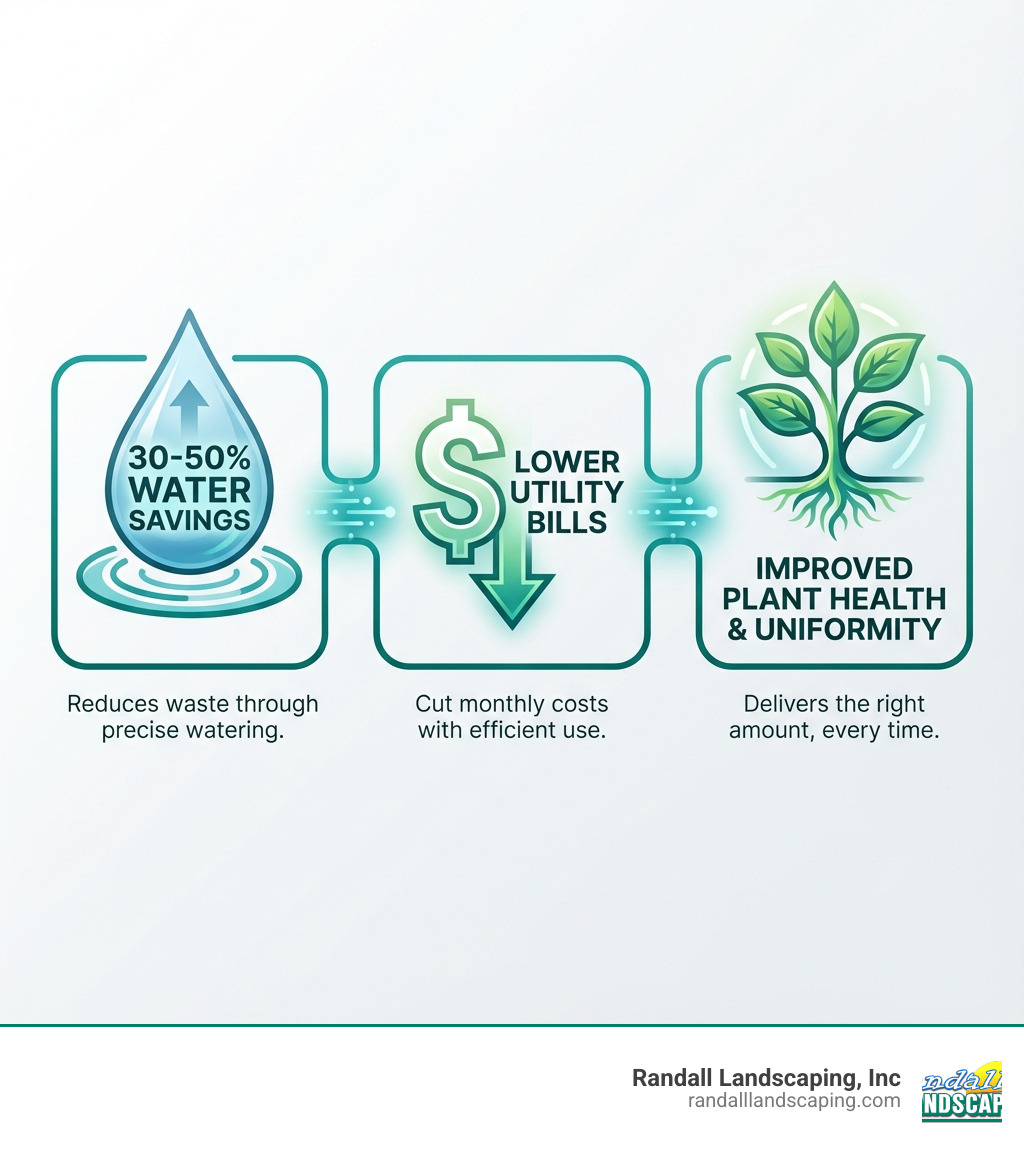
According to EPA WaterSense, as much as 50 percent of outdoor water use is wasted due to inefficient irrigation methods. That’s not just bad for the environment—it’s money down the drain every month.
The good news? Upgrading doesn’t always mean replacing your entire system. Many homeowners see dramatic improvements from simple hardware swaps or adding smart technology to existing equipment. Modern controllers can adjust watering schedules based on real-time weather data, while high-efficiency nozzles apply water more slowly and evenly, giving your soil time to absorb every drop.
I’m Tommy Randall, owner of Randall Landscaping Business, and over the past 18 years, I’ve helped countless homeowners in Massachusetts and New Hampshire optimize their irrigation systems through strategic upgrades. From installing weather-based controllers to converting entire zones to drip irrigation, I’ve seen how the right irrigation system upgrades can cut water bills in half while creating healthier, more vibrant landscapes.
Upgrade #1: The Brains of the Operation – Smart Irrigation Controllers
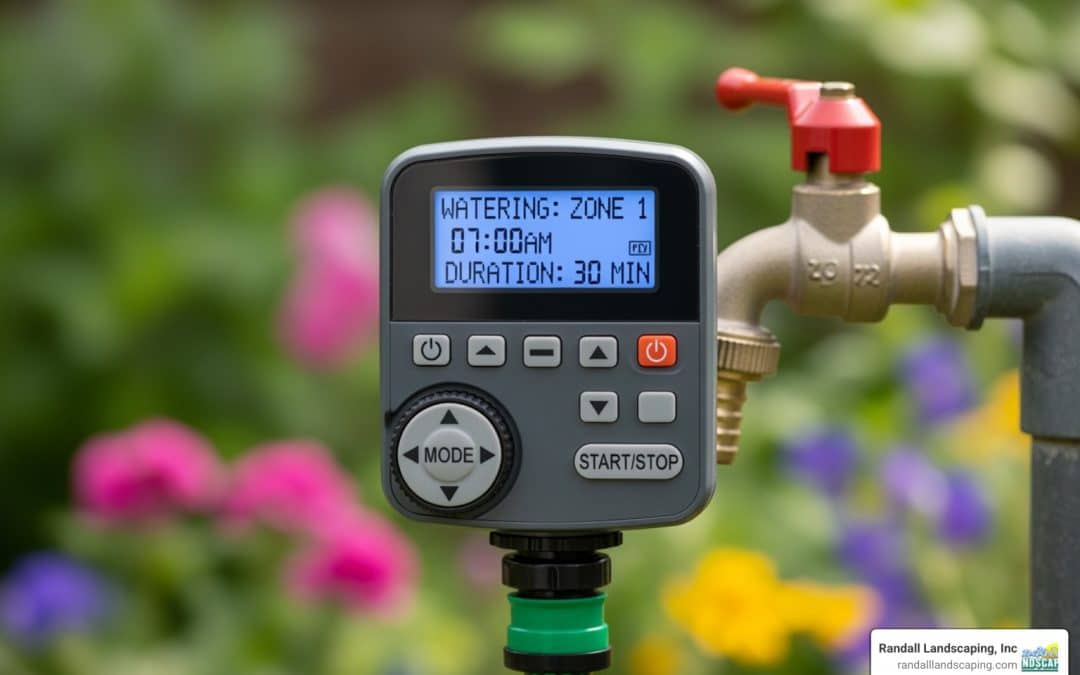
Think of your irrigation controller as the brain of your entire watering system. If it’s still operating on a rigid, set-it-and-forget-it schedule from years ago, it’s time for an upgrade. Older irrigation controllers may not account for changing weather conditions, leading to inefficient watering and wasted resources. Modern smart irrigation controllers are a game-changer, offering a host of benefits that make them one of the most impactful irrigation system upgrades you can make.
Smart controllers use advanced technology like weather-based adjustments, which means they can automatically modify watering schedules based on local weather forecasts, historical weather patterns, and even real-time data. This intelligent approach ensures your landscape receives precisely the right amount of water, exactly when it’s needed, preventing both overwatering and underwatering.
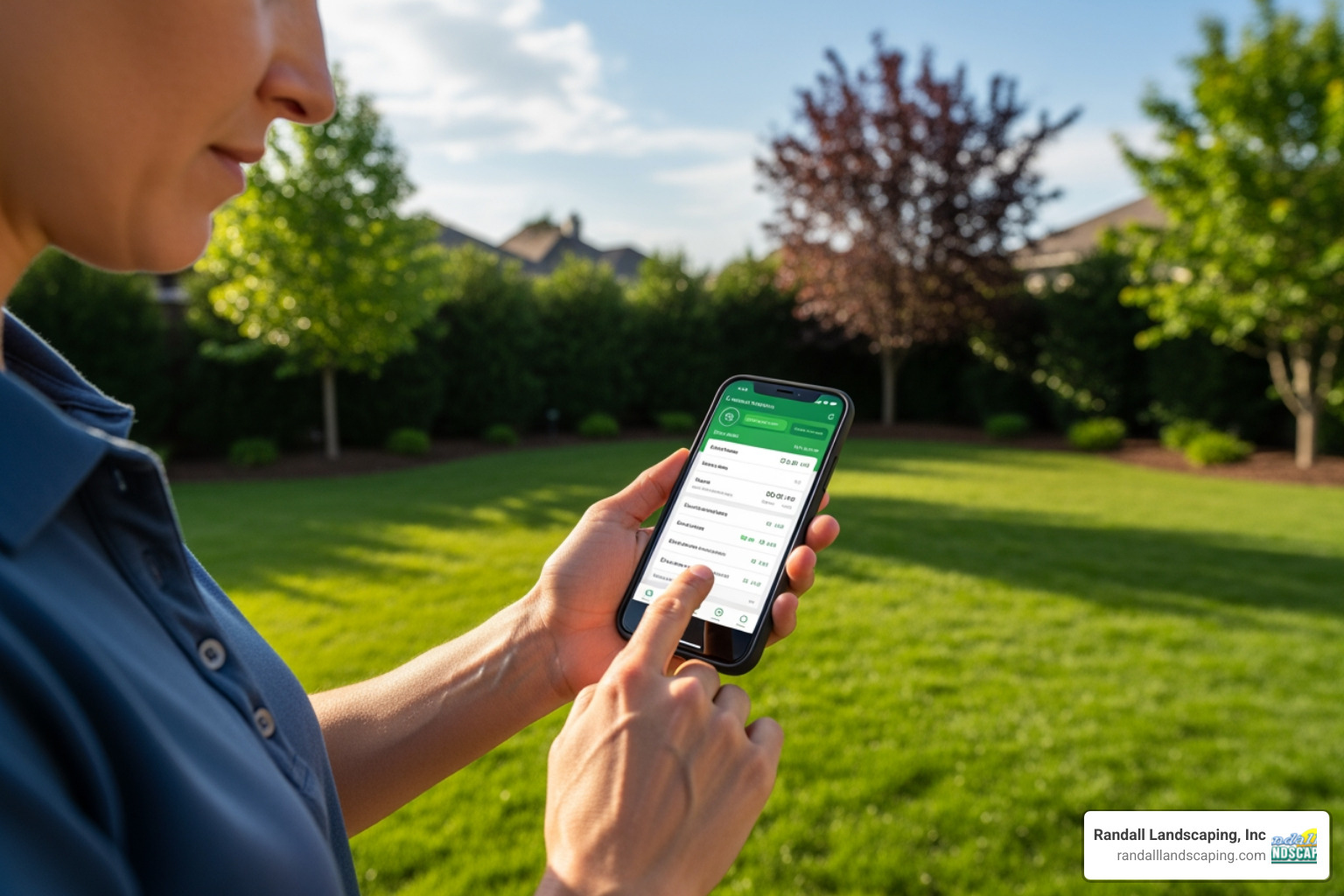
Beyond intelligent scheduling, these systems often come with remote access capabilities, allowing you to manage your irrigation from anywhere using smartphone apps. Imagine being able to adjust your watering schedule from your office in Andover, MA, or while on vacation, ensuring your lawn stays green and healthy no matter where you are. This offers a huge convenience factor, giving you peace of mind and control at your fingertips.
Many smart controllers also feature sophisticated zone programming, letting you customize watering for different areas of your property based on specific plant types, soil conditions, and sun exposure. This level of precision is crucial for water conservation and overall landscape health. For more on smart control, check out our guide on a Garden Irrigation System with Timer.
Furthermore, smart systems can integrate with rain sensors and freeze sensors, automatically shutting off the system during precipitation or when temperatures drop below freezing. This prevents unnecessary watering and potential damage to your system or plants. We often advise our clients in Boxford and North Reading to consider these additions.
It’s also worth noting that many local water authorities and utility providers in areas like Methuen and Lawrence offer rebates for installing rain sensors and smart controllers. These incentives can help offset the initial investment, making smart irrigation system upgrades even more appealing.
The Primary Advantage of Upgrading Your Controller
The primary advantage of upgrading your irrigation controller is its ability to provide automated, optimized watering based on real-time environmental conditions. This “set-it-and-forget-it” convenience doesn’t just save you time; it leads to significant water savings and a healthier landscape.
By eliminating guesswork and fixed schedules, smart controllers prevent overwatering, which can lead to soggy lawns, runoff, and increased water bills. They also help avoid underwatering, ensuring your plants thrive even during dry spells in places like Salem, NH. This precise application of water maximizes water efficiency, allowing us to meet your landscape’s needs with fewer hours of irrigation.
A well-watered lawn is less susceptible to diseases and pests, meaning fewer headaches and less money spent on treatments. With a smart controller, you’re not just watering your lawn; you’re nurturing a resilient, vibrant landscape that improves your property’s curb appeal.
Upgrade #2: Water-Efficient Hardware for a Healthier Landscape
While smart controllers handle the “when” and “how much,” water-efficient irrigation hardware tackles the “how” water is delivered. Upgrading to more efficient irrigation hardware improves system performance and results in improved uniformity across your landscape. These improvements make it possible to meet your landscape’s water needs with fewer hours of irrigation, and therefore, less energy use. This is especially important for our clients across the Merrimack Valley and Southern New Hampshire.
Water-efficient irrigation hardware is specifically designed to minimize water waste and maximize water application, ensuring every drop benefits your plants. By increasing application precision and reducing unneeded applications, water can be conserved, and energy can be saved. Whether you’re considering a new installation or improving an existing one, our Professional Sprinkler System Installation services can guide you toward the most efficient solutions.
High-Efficiency Nozzles and Sprinkler Heads
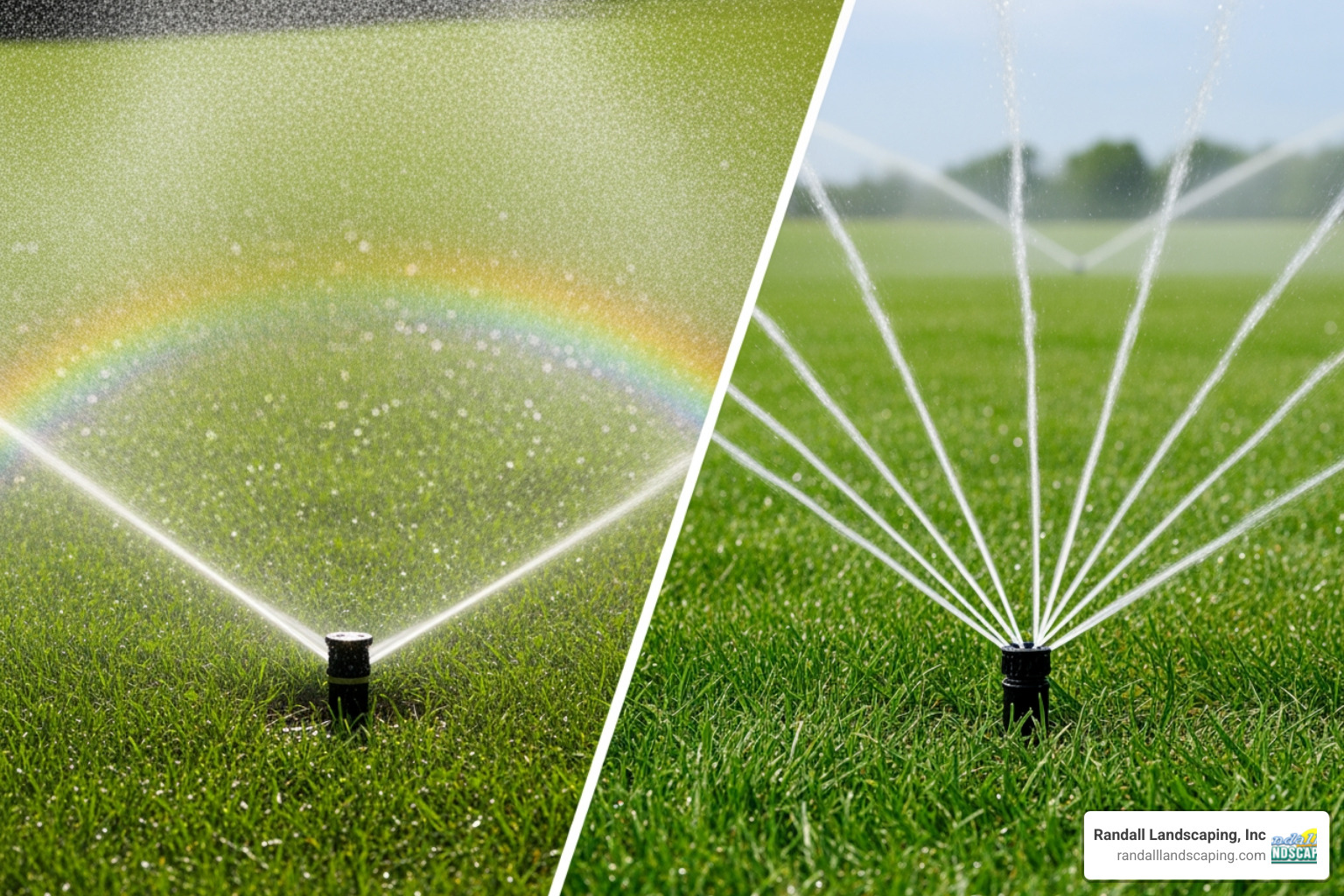
One of the simplest yet most effective irrigation system upgrades for traditional sprinkler systems is switching to high-efficiency nozzles, particularly multi-stream rotator nozzles (like MP Rotators). Older sprinkler heads often spray water at a faster rate, leading to runoff, and the mist from these heads can be easily blown off course by wind, common in coastal areas near Amesbury.
High-efficiency nozzles, such as MP Rotators, address these issues directly. They emit water in several rotating streams at a low application rate, allowing the landscape to absorb water more evenly and effectively. These nozzles deliver water in larger, wind-resistant droplets, significantly reducing misting and wind drift. This means more water reaches your lawn, not the sidewalk or street.
The impact on water usage is remarkable: MP Rotators are proven to decrease water use by 30% over traditional spray nozzles. Consider the difference: a typical spray head uses 3.5 to 4.5 gallons of water per minute, while an MP Rotator uses only 0.7 gallons per minute. This translates to substantial savings on your water bill and a more uniform, healthier lawn.
| Feature | Traditional Spray Heads | High-Efficiency Rotator Nozzles (e.g., MP Rotators) |
|---|---|---|
| Water Usage (GPM) | 3.5 – 4.5 GPM | 0.7 GPM (approx.) |
| Coverage Uniformity | Lower, prone to over/under-watering | Higher, even distribution |
| Wind Resistance | Poor, susceptible to wind drift | Excellent, larger droplets |
| Misting/Runoff | High, prone to waste | Low, water soaks in effectively |
| Water Savings | Minimal | Up to 30% reduction |
Drip Irrigation: A Targeted Irrigation System Upgrade
For garden beds, trees, and shrubs, drip irrigation is an unparalleled irrigation system upgrade that offers targeted watering with exceptional efficiency. Unlike overhead sprinklers that water everything in their path, drip systems deliver water directly to the root zone of individual plants. This direct application minimizes water loss due to evaporation and wind drift, ensuring your plants receive exactly what they need.
The benefits extend beyond water conservation. By only wetting the soil around the plant’s base, drip irrigation discourages weed growth in surrounding areas. It also reduces the risk of plant diseases that can arise from wet foliage. This method is ideal for specific plantings and can be a fantastic addition to any landscape design in communities like Georgetown or Atkinson.
Converting from overhead spray to drip irrigation in established gardens can be straightforward. For example, perennials can be pruned back to lay down lines at the root zone, ensuring precise delivery. If you’re interested in learning more, this Drip Irrigation Basics webinar offers a great introduction. For new installations or comprehensive conversions, our team is expert in Garden Sprinkler System Installation and can help design a highly efficient drip system.
The Hidden Costs of Leaks and Pressure Problems
Leaks in an irrigation system are silent water thieves and efficiency destroyers. They reduce system pressure, causing poor sprinkler distribution patterns and significantly reducing overall system efficiency. This means some areas of your landscape might be overwatered while others remain parched, leading to uneven growth and unhealthy plants.
The consequences of leaks go beyond wasted water. Significant leaks can cause your irrigation pump’s motor to work harder, leading to motor overloading and shortening its lifespan. Imagine your pump constantly struggling to maintain pressure due to a hidden leak in Dracut or Hampton, NH—it’s a recipe for premature wear and costly repairs. The increased run time also translates to higher energy consumption and electricity bills.
To combat this, we recommend incorporating flow sensors into your irrigation system upgrades. These “water waste-detecting wizards” can identify unusually high water flow (a sign of a leak or broken line) and automatically shut down the system, sending an alert to prevent further water loss and landscape damage. Additionally, ensuring proper check valves are installed prevents water from draining out of pipes when the system turns off, avoiding muddy puddles and ensuring quick startup. Pressure regulators are also key to maintaining consistent water delivery across all zones, optimizing performance and prolonging system life.
When to Upgrade vs. When to Replace Your Entire System
Deciding between upgrading specific components and undertaking a full system replacement is a common dilemma for homeowners in Methuen, Plaistow, and beyond. While irrigation system upgrades can significantly improve efficiency and extend the life of your existing setup, there comes a point when a full replacement is the more cost-effective and beneficial option.
Generally, residential irrigation systems have a lifespan of 20-25 years. If your system is nearing or has surpassed this age, even with some upgrades, it might be operating on borrowed time. Here are some signs it’s time to consider a full replacement rather than just continued upgrades:
- Frequent Breakdowns: If you’re constantly calling for repairs—broken heads, leaky pipes, or controller malfunctions—the cumulative cost of fixes can quickly outweigh the investment in a new, more reliable system.
- Significant Landscape Changes: Has your landscaping evolved dramatically since the system was installed? New garden beds, relocated trees, or redesigned hardscapes may render your current zone layout and water delivery methods inefficient or ineffective.
- Outdated Technology: While you can upgrade controllers and nozzles, the underlying pipe network and valve technology might be too old to integrate seamlessly with the latest advancements, limiting your potential for efficiency.
- High Water Bills Despite Upgrades: If you’ve made some efficiency upgrades but your water bills remain stubbornly high, it could indicate fundamental inefficiencies in the system’s design or extensive hidden problems that are too costly to fix piecemeal.
While the average cost of an inground sprinkler system can vary widely based on property size and complexity, generally ranging from $2,500 to $6,000 for a typical residential yard, more elaborate systems or larger properties could easily exceed $10,000 to $15,000. These are average costs based on internet data and not actual costs for Randall Landscaping. For a precise estimate, we always recommend a professional on-site consultation. You can find more information about potential costs on our Average Cost of Inground Sprinkler System page.
A new system, while a larger upfront investment, offers the chance to implement the most current water-saving technologies from the ground up, ensuring optimal performance, longevity, and peace of mind for decades to come.
Key Irrigation System Upgrades for Maximum Savings
For homeowners and property managers in our service areas of Andover, Atkinson, and Georgetown, focusing on a few key irrigation system upgrades can yield the most significant returns on investment in terms of water and energy savings, as well as landscape health.
Combining Smart Controls and Efficient Hardware
The true magic happens when smart controls and efficient hardware work in synergy. A smart controller intelligently decides when and how much to water, while high-efficiency nozzles and drip lines ensure that water is applied precisely and effectively. This combination creates an automated, highly efficient system that maximizes savings and nurtures a thriving landscape.
To further optimize your system, consider creating a water budget for your landscape. This technical yet effective method balances water use with landscape needs by considering factors like landscape area, plant type, water requirements, system design, and efficiency. Tools like Waterfluence.com (an example of such a resource) can help in this process. Additionally, integrating soil moisture sensors directly into your system allows for hyper-localized watering decisions, ensuring that irrigation only occurs when the soil genuinely needs it. You can even use simple moisture meters to test your soil manually before watering.
Techniques to Improve Your Upgrades
Even with the best irrigation system upgrades, applying smart watering techniques can further improve efficiency and plant health.
- Cycle and Soak Method: Many irrigation systems apply water faster than the soil can absorb it, leading to runoff. The “cycle and soak” method involves dividing your watering into multiple shorter cycles per day, allowing the soil a chance to absorb water between applications. This eliminates runoff and ensures deeper penetration. The EPA offers a great brochure on cycle and soak techniques.
- Deep Watering: Water plants deeply but less frequently. This encourages roots to grow deeper, making plants more resilient to drought and stress. For trees, deep watering is crucial for their long-term health; this video on how to deep water trees provides helpful tips.
- Mulching: Applying a 2-3 inch layer of organic mulch around your plants is a simple yet powerful way to conserve water. Mulch reduces evaporation from the soil surface, suppresses weeds (which compete for water), and helps regulate soil temperature.
- Hydro-zoning: Grouping plants with similar water needs together in the same irrigation zone ensures that each plant receives appropriate watering. This prevents overwatering drought-tolerant plants or underwatering moisture-loving ones.
Implementing these practices alongside your irrigation system upgrades ensures that your system operates at peak efficiency. Our comprehensive landscape maintenance services include advice and assistance with these techniques to keep your landscape thriving.
Frequently Asked Questions about Irrigation Upgrades
What specific upgrades lead to the most significant energy and water savings?
The most impactful irrigation system upgrades for both energy and water savings typically involve:
- Smart, Weather-Based Controllers: These are arguably the most significant upgrade, as they intelligently adjust watering schedules based on real-time weather, preventing unnecessary watering. This reduces water use and the energy required to pump that water.
- Replacing Old Leaking Sprinklers and High-Efficiency Nozzles: Old sprinklers can be significant sources of water waste. Replacing them with high-efficiency models like multi-stream rotator nozzles (e.g., MP Rotators) can decrease water use by 30% and improve uniformity, leading to less run time and energy consumption.
- Converting to Low-Pressure Systems: For larger systems, converting to a low-pressure setup can drastically reduce the energy required to pump water, leading to substantial electricity savings.
- Drip Irrigation: For non-turf areas, converting to drip irrigation delivers water directly to plant roots, minimizing evaporation and runoff, thus saving both water and the energy used for pumping.
How much do irrigation system upgrades typically cost?
The cost of irrigation system upgrades varies widely depending on the type and extent of the upgrade, whether you DIY or hire a professional, and the size of your property. It’s crucial to remember that these are average costs based on internet data and not actual costs for Randall Landscaping. We always provide custom quotes after a thorough assessment.
- Simple Nozzle Swaps: Replacing old sprinkler nozzles with high-efficiency rotator nozzles can cost between $5 and $15 per head, plus labor if professionally installed.
- Smart Controllers: A smart irrigation controller can range from $150 for basic models to over $500 for advanced, feature-rich units, not including installation.
- Rain/Freeze Sensors: These typically cost between $30 and $100 per sensor, plus installation.
- Drip Irrigation Conversion: Converting a zone to drip irrigation can range from $1 to $3 per linear foot of drip line, plus emitters and other components, making a full garden bed conversion potentially several hundred dollars.
- Full System Replacement: As mentioned earlier, a full inground system replacement can cost several thousand dollars, with a wide range from $2,500 to $15,000+ depending on property size and features.
For more detailed information on system costs, please refer to our Underground Water Sprinkler System Cost.
Are there efficiency upgrades available for larger, agricultural systems?
Yes, absolutely. While our focus is primarily on residential and commercial landscaping, it’s worth noting that significant efficiency irrigation system upgrades are also available for larger agricultural systems. These include:
- Center Pivot Retrofitting: Upgrading older center pivot systems with more efficient nozzles, such as low-pressure, high-efficiency sprinklers (LEPA or LESA), can drastically improve water uniformity and reduce evaporation.
- Installing Drop Tubes: Adding drop tubes to center pivot or lateral move systems brings the water discharge point closer to the ground, reducing wind drift and evaporation, improving uniformity and water application efficiency.
- Low-Pressure Conversion: Many older agricultural systems operate at higher pressures than necessary. Converting them to low-pressure systems can significantly reduce energy consumption for pumping.
- Wheel-Line Hub and Leveler Upgrades: Even components like wheel-line hubs and levelers can be upgraded for better efficiency, ensuring the system moves smoothly and applies water consistently across the field.
For agricultural producers in Merrimack Valley and Southern New Hampshire seeking incentives for such upgrades, we recommend contacting your local utility providers or state agricultural departments. These entities often have programs or can direct you to resources like grants for water efficiency. For example, some states offer programs similar to the State Water Efficiency & Enhancement Program, which helps agricultural operations implement water and energy-saving irrigation technologies.
Conclusion: A Smarter, Greener Landscape is an Upgrade Away
Investing in irrigation system upgrades is one of the smartest decisions you can make for your property in the Merrimack Valley or Southern New Hampshire. From the immediate benefits of water and energy conservation to the long-term advantages of a healthier, more resilient landscape, these improvements pay dividends in many ways. You’ll enjoy lower utility bills, reduce your environmental footprint, and spend less time worrying about the health of your lawn and garden.
At Randall Landscaping, Inc., we pride ourselves on quality work and 100% reliability, focusing on customer satisfaction. We understand the unique climate and soil conditions of communities like Windham, Derry, and Londonderry, and we’re here to help you steer the best upgrade options for your specific needs. Our expertise ensures that your investment not only saves you money but also contributes to a vibrant, thriving outdoor space.
Ready to transform your watering system? For a professional evaluation of your system and to explore the best irrigation system upgrades for your property, contact us today. We’re here to help you achieve a smarter, greener landscape. Explore our Garden Sprinkler System Installation services to get started!