The True Price of a Greener Lawn
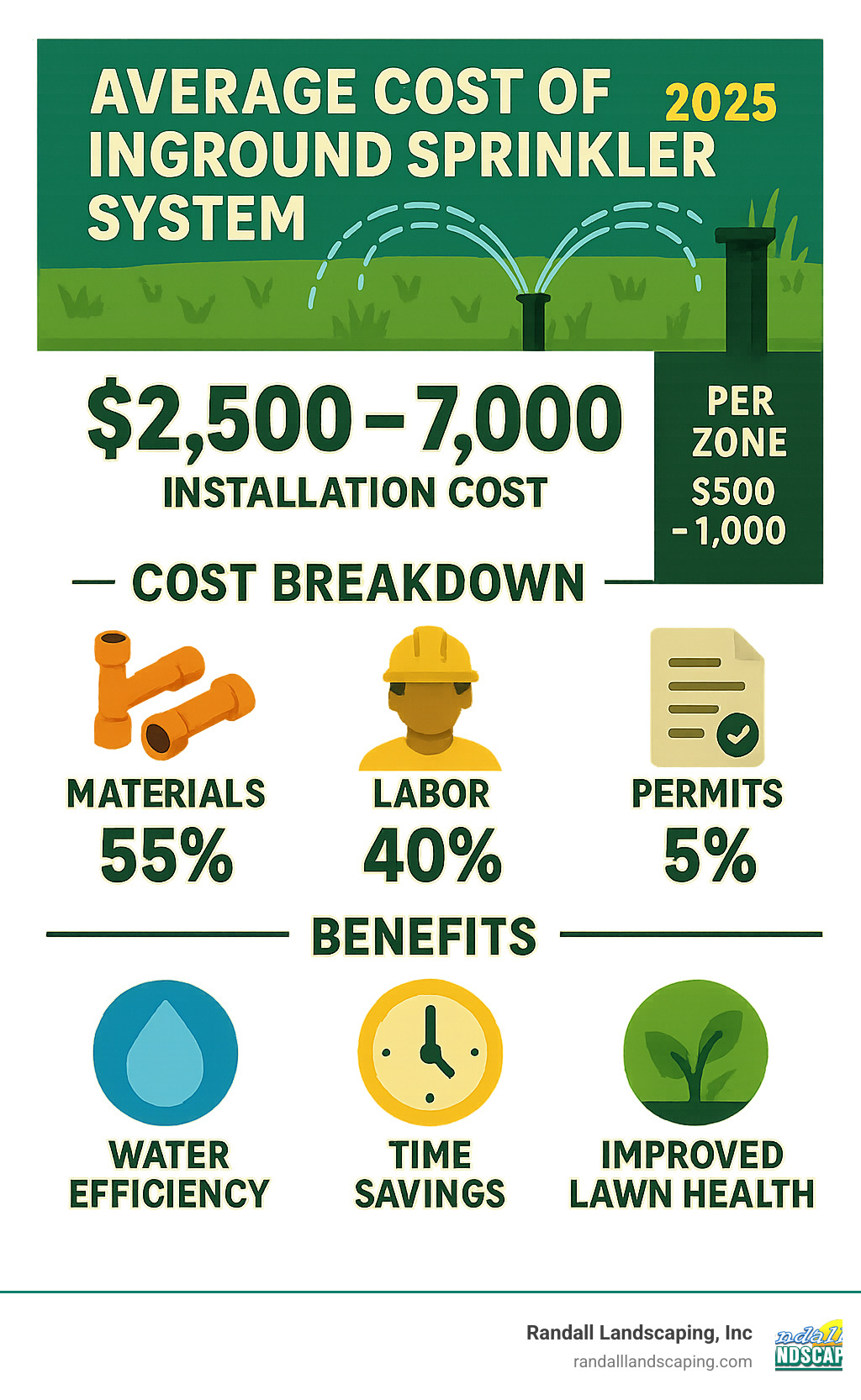
The average cost of inground sprinkler system installation ranges from $2,500 to $7,000 for most residential properties, with costs varying based on lawn size, system complexity, and local factors.
Quick Cost Overview:
- Per square foot: $0.20 – $1.00+
- Per zone: $500 – $1,000+
- Quarter-acre lot: $1,700 – $5,500
- Half-acre lot: $3,500 – $11,000
- Full acre: $7,000 – $21,000+
Note: These are national average costs based on internet data and do not represent actual quotes from Randall Landscaping.
For busy homeowners in Southern New Hampshire, manual watering is a time-consuming, inconsistent, and often wasteful chore. An automated irrigation system offers a convenient and efficient solution.
Beyond convenience, an inground system provides consistent watering schedules, improved water efficiency, and can increase your home’s value by 7-15%, according to industry data. Understanding the costs is key to making an informed decision. The investment includes initial installation plus ongoing maintenance and repairs. However, a well-designed system often pays for itself through water and time savings.
I’m Tommy Randall, and since 2006, I’ve helped homeowners in Massachusetts and New Hampshire install irrigation systems. With nearly two decades of experience, I’ve seen how the right system transforms lawns and simplifies homeowners’ lives.
Quick average cost of inground sprinkler system terms:
Breaking Down the Average Cost of Inground Sprinkler System Installation
When homeowners ask about the average cost of inground sprinkler system installation, it’s important to note that every property is unique. The figures discussed here are national averages for informational purposes and do not represent quotes from Randall Landscaping.
These averages provide a useful starting point. Professional installation typically ranges from $1,800 to $7,000 or more, with most homeowners spending between $2,500 and $4,500. Costs can be broken down per square foot ($0.20 – $1.00+), per zone ($500 – $1,000+), or per acre (up to $10,000+ for complex jobs). These figures include design, materials, labor, and the assurance of a reliable system.
How Lawn Size Impacts the Average Cost of an Inground Sprinkler System
Lawn size is the biggest cost factor, as larger lawns require more materials and labor. Here’s what you can expect based on common property sizes, using national average data:
- Quarter-acre property (about 10,000 sq. ft.): $1,700 – $5,500
- Half-acre properties: $3,500 – $11,000
- Full-acre lots: $7,000 – $21,000+
While the cost per square foot may decrease slightly on larger properties, the total investment still rises with size. The time saved on a large property, however, is significant.
The Role of Watering Zones in Your Final Bill
The number of watering zones is a major cost driver. A zone is a section of your property watered by a specific group of sprinkler heads. Zones are necessary due to limited home water pressure and also address the varied needs of your landscape. Sunny lawns, shady areas, garden beds, and sloped sections all require different watering schedules to thrive and prevent runoff.
Most homes need four to seven zones for optimal coverage. Each additional zone typically adds $600 to $1,000+ to your installation cost, but this investment improves water efficiency and plant health by delivering the right amount of water to each area.
More info about garden irrigation
How System Components and Quality Affect Price
Component quality directly impacts both the average cost of inground sprinkler system installation and its long-term performance. Investing in quality parts from the start prevents future issues.
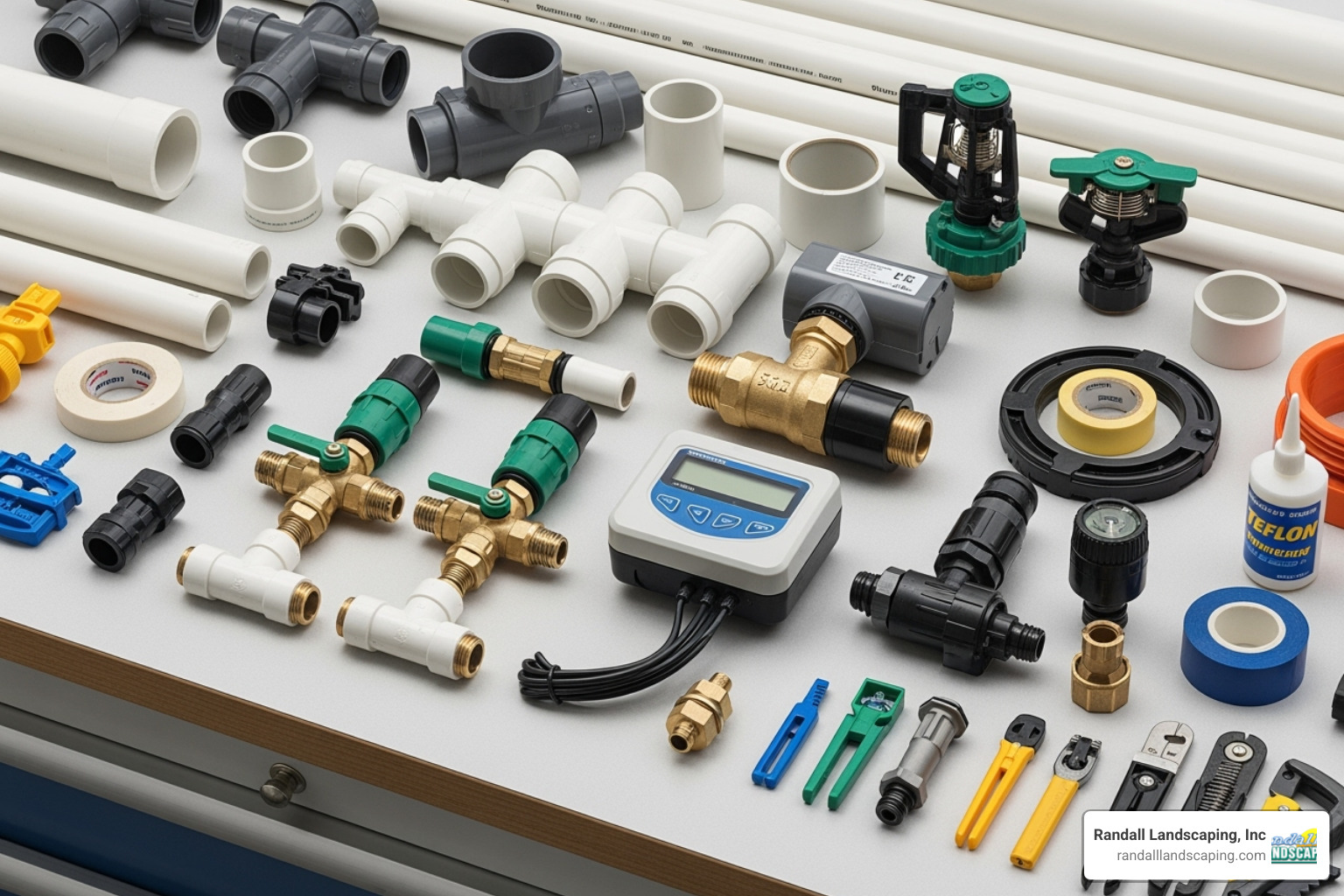
- Sprinkler heads range from basic fixed sprays ($2 each) to premium rotary heads ($35+), differing in coverage, durability, and efficiency.
- Controllers or timers act as the system’s brain. Basic timers start around $50, while smart, Wi-Fi-enabled controllers can cost $400 or more.
- Valves control water flow to each zone and typically cost $20 to $150 each.
- Piping is usually PVC, costing $0.50 to $2.00 per foot.
- Backflow preventers are legally required safety devices. Quality units cost $250 to $800+, preventing contaminated water from entering your drinking supply.
Quality components ensure fewer breakdowns and a reliable system for 15-20 years, making it a worthwhile long-term investment.
Key Factors That Influence Installation Costs
Beyond lawn size and components, other factors influence the final average cost of inground sprinkler system installation, especially in the diverse landscapes of the Merrimack Valley and Southern New Hampshire.
- Site complexity
- Labor rates
- Geographic location
- System type
- Add-on features
A professional assessment is necessary for an accurate estimate that accounts for your property’s unique characteristics. Contact us!
Labor, Trenching, and Permit Expenses
Labor is often the largest expense, accounting for 50-60% of the total project price based on industry data. This covers skilled design, precise installation, and system testing.
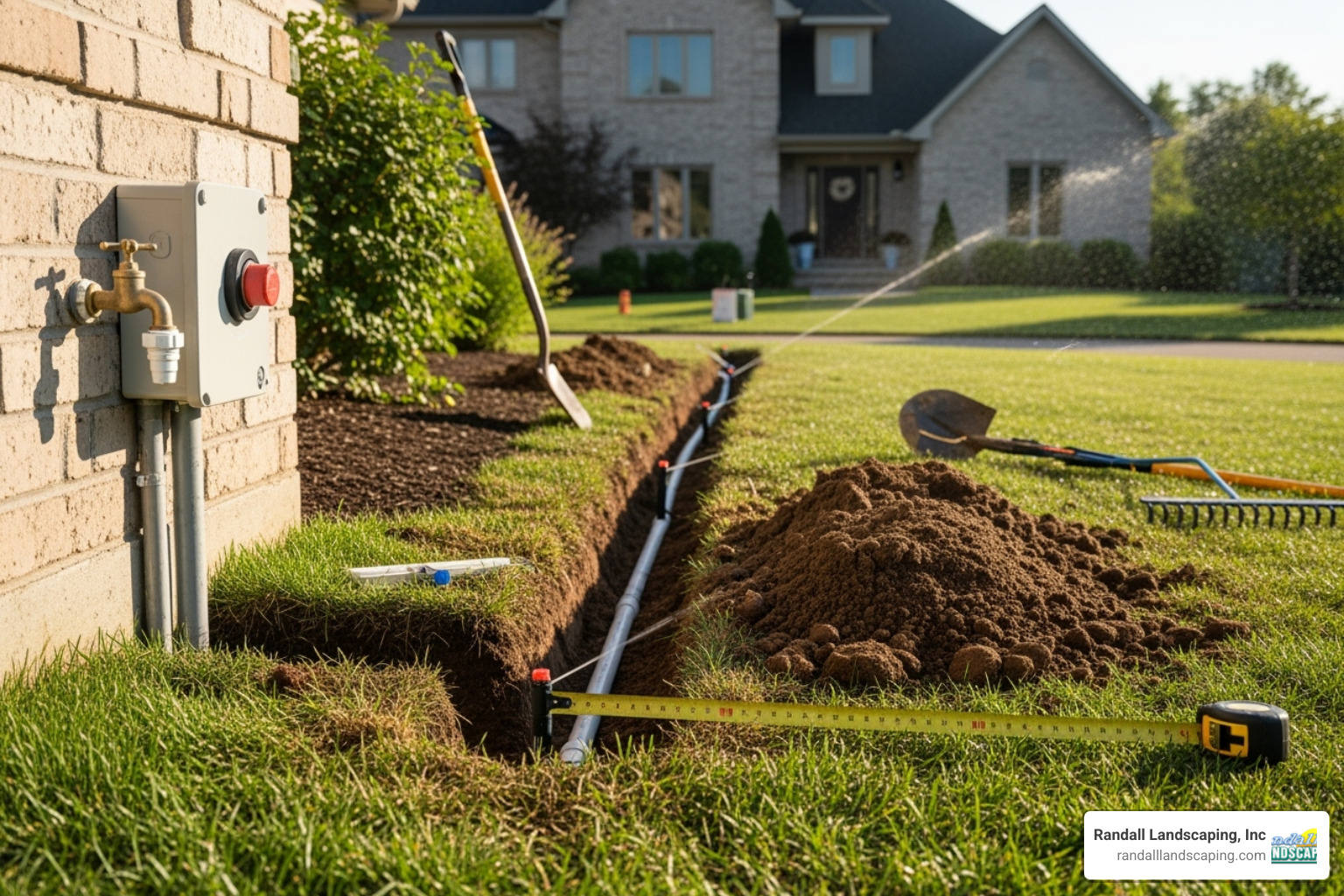
Trenching methods affect cost. Pipe-pulling machines are fast and minimally disruptive, while manual digging is needed for complex areas with obstacles, increasing labor time.
Permits are typically required, costing $50 to $200+ based on internet data; we handle the paperwork. Before work begins, we contact the national Call Before You Dig service (811) to have underground utility lines marked, preventing dangerous and costly accidents.
Landscape and Terrain Challenges
Landscape and terrain challenges can significantly influence installation costs.
- Soil type: New England’s rocky or clay soil is harder to trench than soft loam, increasing labor costs.
- Slope and grading: Sloped lawns require careful design, specialized heads, and sometimes extra zones to ensure even watering and prevent runoff.
- Existing landscaping: Working around mature trees, garden beds, and other features requires careful hand-digging and routing.
- Obstacles: Patios, walkways, and driveways require more labor-intensive work to steer.
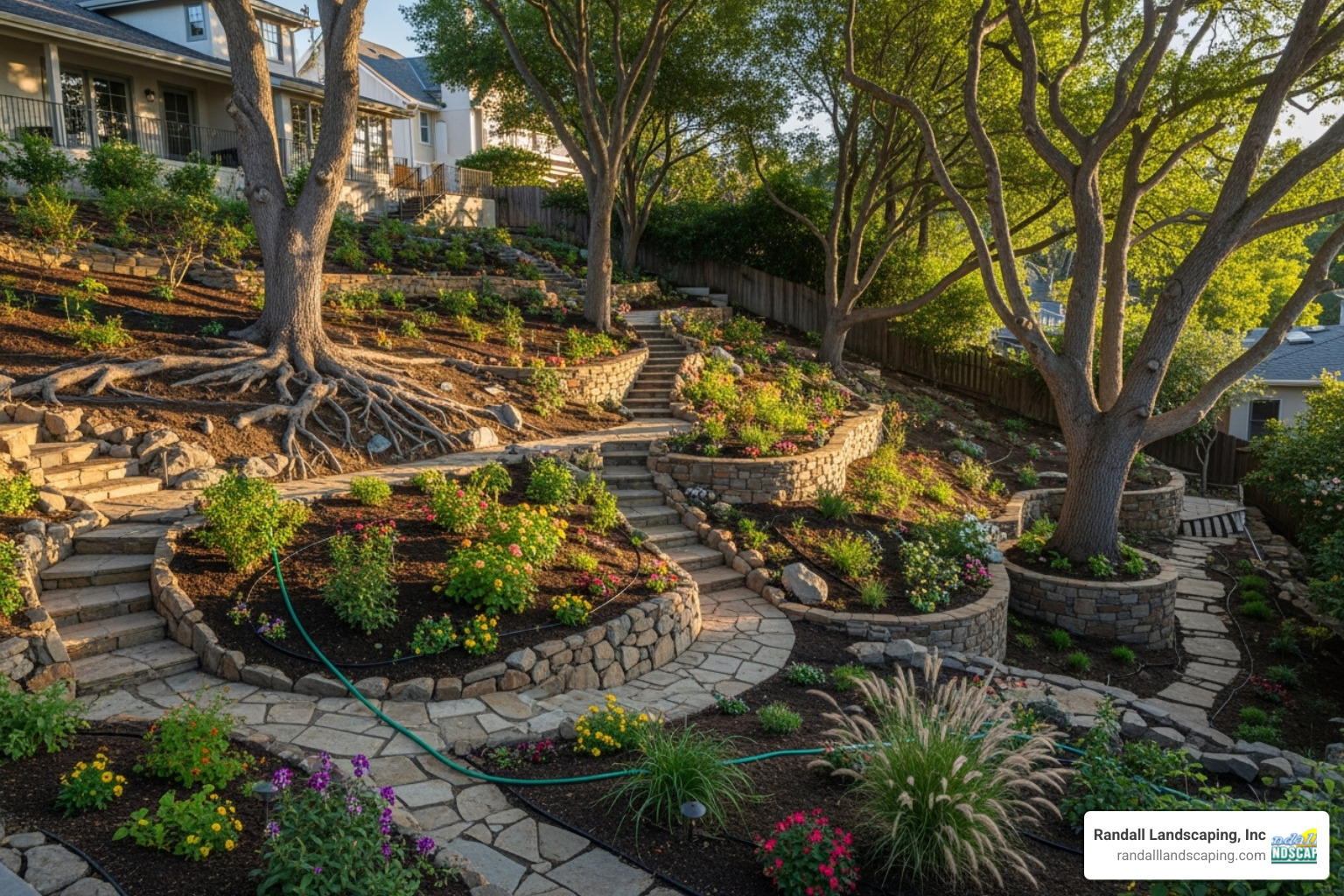
Complex landscapes require a more customized design. Our expertise ensures the system integrates seamlessly with your property’s unique character.
More info about landscape design
System Types and Technology Add-Ons
System type and technology add-ons significantly impact the average cost of inground sprinkler system installation. Spray systems are great for smaller, irregular areas, while rotor systems are ideal for large, open lawns. Drip irrigation is a highly efficient option for gardens and shrubs, delivering water directly to the roots.
| System Type | Coverage | Average Cost (per acre, based on internet data) | Best Use |
|---|---|---|---|
| Spray Systems | Fixed spray patterns, smaller areas | $6,000 – $18,000 | Small to medium lawns, irregular shapes |
| Rotor Systems | Rotating streams, larger coverage | $6,000 – $18,000 | Large, open lawn areas |
| Drip Systems | Slow, direct water delivery to plant roots | $1,800 – $6,000 | Gardens, flower beds, shrubs, trees |
Modern add-ons increase convenience and efficiency. Smart controllers ($50 – $300+) use weather data to optimize watering. Rain sensors ($25 – $100) and soil moisture sensors ($100 – $350) prevent watering when it’s not needed. While these features add to the initial cost, they typically pay for themselves through water savings and a healthier landscape.
Professional Installation: What’s the Average Cost of an Inground Sprinkler System?
While DIY installation seems like a way to save money, professional installation is an investment that pays for itself in the long run. The average cost of inground sprinkler system installation by professionals typically ranges from $2,500 to $5,500 for a standard residential property, though more complex projects can reach $8,000 or higher.
These are national averages based on internet data and don’t represent actual costs for Randall Landscaping – every property is unique!
Proper installation requires expertise in water pressure, zone design, backflow prevention, and local codes. Mistakes can lead to poor performance and costly repairs. With professional installation, you get an efficient, expertly designed system custom to your landscape’s soil and layout, preventing uneven watering and high water bills.
Professionals use specialized equipment to complete the job in just one to two days with minimal lawn damage, a task that could take a DIYer several weekends. Professional work also includes warranties on parts and labor, permit handling, and compliance with all local regulations, giving you peace of mind.
Save your valuable time and ensure the job is done right the first time with professional installation.
More info about professional installation
Long-Term Costs and Return on Investment
Beyond the initial average cost of inground sprinkler system installation, consider the long-term expenses and benefits. This includes regular maintenance, seasonal water costs, potential repairs, and the increase in your home’s value.
Ongoing Maintenance and Potential Repairs
In our New England climate, seasonal care is essential for your sprinkler system’s longevity.
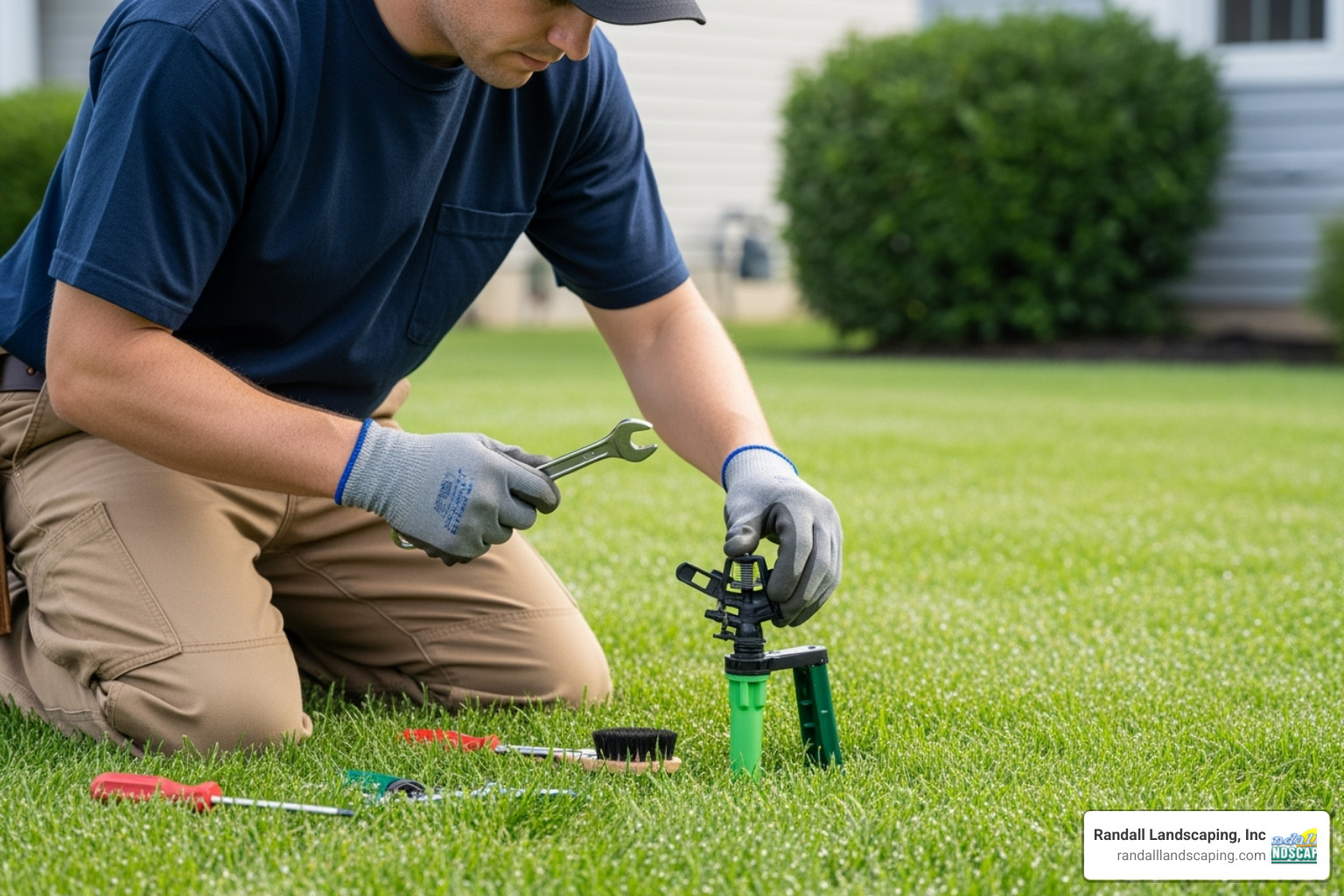
- Seasonal Service: Winterization is essential each fall to prevent frozen pipes and typically costs $75 to $250 annually, based on internet data. Spring startup services, costing a similar amount, ensure the system is ready for the growing season.
- Common Repairs: Expect occasional repairs for broken sprinkler heads ($65 – $200), pipe leaks ($50 – $150), and valve replacements ($75 – $250). Costs depend on the issue’s complexity.
- Backflow Preventer: This device requires annual testing ($50-$100) and will eventually need replacement, which can cost up to $800 or more.
- Water Bill: Expect your water bill to increase by $30 to $100+ per month during watering season, though an efficient system often uses less water than manual methods.
Does a Sprinkler System Increase Home Value?
Yes, an inground sprinkler system is a smart investment that boosts your home’s appeal and market value.
Curb appeal is crucial; a lush lawn makes a great first impression. Buyers also value the convenience of automated systems that simplify homeownership. The return on investment (ROI) is strong. The National Association of Realtors estimates an 86% ROI, while other sources suggest a range of 50% to 85%+, based on internet data.
Modern systems with water conservation features also appeal to eco-conscious buyers. While not a dollar-for-dollar increase in appraised value, a sprinkler system can help your home sell faster and stand out in a competitive market.
More info about landscape maintenance
Frequently Asked Questions about Sprinkler System Costs
Here are answers to common questions we receive about the average cost of inground sprinkler system installation, based on our experience in the Merrimack Valley and Southern New Hampshire.
How long does it take to install an inground sprinkler system?
For a typical residential lawn, professional installation usually takes 1 to 2 days. The exact timeline depends on factors like lawn size, site complexity (terrain, obstacles), and weather. Larger or more complex properties may take 3-4 days.
Can a sprinkler system save me money?
Yes, a sprinkler system can save you money over time. The primary savings come from water conservation. An automated system uses water more efficiently than manual methods, reducing waste from runoff and evaporation. Smart controllers can further reduce water use by up to 15%, according to the EPA. You also save on the costs of replacing plants lost to drought stress and, most importantly, you save valuable time.
What is the best time of year to install a sprinkler system?
Early spring and late fall are the ideal times for installation. The ground is softer, making trenching easier and less disruptive to your lawn. A spring installation prepares your lawn for summer, while a fall installation ensures you’re ready for the next growing season. These off-peak seasons also cause less stress to your turf and may offer more flexible scheduling.
Is an Inground Sprinkler System the Right Investment for You?
After reviewing the average cost of inground sprinkler system installation ($1,800 to $7,000+ for most homes), you may wonder if it’s the right investment. The true value, however, extends far beyond the initial price.
Consider the frustrations of manual watering: the time spent dragging hoses and the inconsistent results. An automated system eliminates these hassles.
The key benefits are transformative:
- Time Savings: Reclaim hours each week for family, hobbies, or relaxation.
- Water Efficiency: An automated system delivers the precise amount of water needed, often using less than manual methods.
- Improved Lawn Health: Consistent watering creates a lush, healthy lawn free of brown spots and over-saturated patches.
A professional system is especially beneficial for homeowners in the Merrimack Valley and Southern New Hampshire, as it effectively manages our region’s challenging climate. The increased home value is another major advantage. It improves your daily life and makes your property more attractive to potential buyers, who recognize the convenience and care an automated system represents.
At Randall Landscaping, Inc., our commitment to quality work and 100% reliability ensures your investment serves you for decades. We focus on customer satisfaction by designing systems custom to your property and lifestyle.
The question is not just about cost, but about the value of your time and the benefits of a healthy, beautiful landscape. For most homeowners, the convenience and results make it a clear choice.
If you’re ready to move beyond the hassle of hoses and timers, consider pairing your new irrigation system with a new lawn installation for the ultimate outdoor change.