
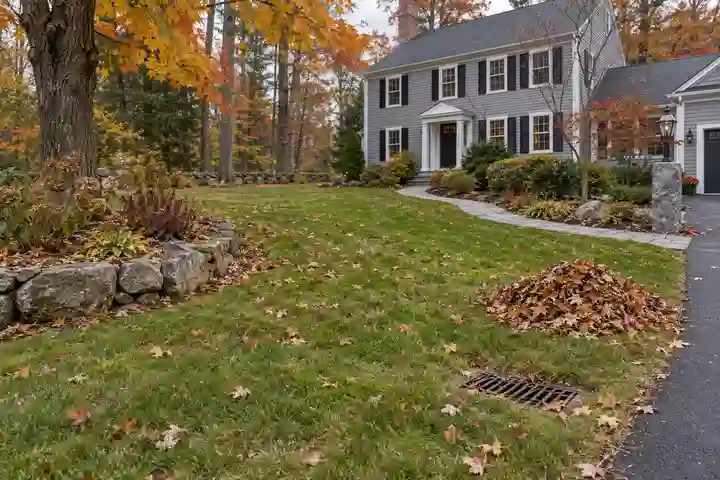
Fall yard cleanup in Southern New Hampshire is less about making every bed look bare and more about putting each kind of debris in the right place before winter. A thick mat of whole leaves can block light and hold moisture against turf, while shredded leaves can be useful on a lawn and some stems and leaf litter can remain in garden beds.
The practical rule: clear hard surfaces and drainage paths, thin or mulch leaves on turf, remove diseased material, and leave healthy habitat where it will not smother grass or block water. Then schedule the final mow based on growth and ground conditions—not a date on the calendar.
This guide is for properties in Salem, Windham, Pelham, and nearby Merrimack Valley communities where mature deciduous trees, autumn rain, freeze-thaw cycles, and winter snow all affect the cleanup sequence.
Start With a Keep, Move, or Remove Decision
Before filling bags, sort material by where it is and what it is doing. The same oak leaves that create a wet blanket on turf can protect soil when they are moved to an appropriate garden bed.
| Material or condition | Best next move | Why it matters before winter |
|---|---|---|
| Light, dry leaf cover on turf | Mulch finely with a mower if the pieces settle between grass blades. | Small pieces break down more readily and avoid the mat created by whole leaves. |
| Deep or wet leaves on turf | Remove or relocate them in stages. | A dense layer can smother grass and hold moisture at the surface. |
| Healthy leaves in ornamental beds | Leave a modest layer or move shredded leaves there. | They can cover soil and provide winter habitat without blocking lawn growth. |
| Diseased foliage or rotting fruit | Collect it separately and follow local disposal guidance. | Keeping suspect material out of a home compost pile limits carryover problems. |
| Leaves on walks, steps, drains, and curb lines | Remove promptly. | Wet leaves are slippery and can hide or obstruct the route water needs to follow. |
| Standing water or recurring washout | Photograph it during rain and flag it for assessment. | Cleanup should reveal a drainage problem, not erase the evidence an installer needs. |
University of New Hampshire Extension advises removing thick leaf layers from lawns or chopping the leaves into smaller pieces to reduce matting. Its current wildlife guidance also explains that leaves and flower stalks can remain in appropriate garden areas. Those recommendations support a selective cleanup rather than an all-or-nothing one. See UNH Extension’s winter lawn and garden guidance and leaves and stems fact sheet.
A Five-Pass Fall Cleanup Sequence
1. Walk the property while it is wet
Use a rainy day or the morning after a storm to see where water actually travels. Note roof runoff, low spots beside patios, blocked catch basins, eroded bed edges, and puddles that remain after surrounding areas drain. Take photos from fixed locations. They are more useful than trying to describe a problem after everything dries.
Clear leaves from drains and obvious outlets, but do not dig trenches or redirect water toward a neighbor, street, septic area, or foundation. A recurring drainage issue belongs in a site plan, not an improvised cleanup shortcut.
2. Open the working routes
Clear the driveway, front walk, stairs, gates, utility access, and the route used to move debris. This makes later passes safer and keeps piles from being dragged across already-finished areas. It also exposes loose pavers, lifted edging, and branches that may interfere with winter access.
3. Clear turf without scalping it
Work in manageable sections. Mulch a light, dry layer; collect deep, wet, or clumped leaves; and avoid repeated traffic on saturated soil. If grass is still growing, cleanup and mowing may require more than one visit because trees do not drop all their leaves at once.
The last mow is its own timing decision. Randall’s guide to when to make the final lawn cut explains the growth and weather cues to watch. The fall cleanup job is broader: keep the lawn uncovered, keep access open, and coordinate that final cut with the rest of the property.
4. Triage beds and plant material
Remove storm-damaged branches, invasive weeds with seed heads, and visibly diseased material. Healthy perennial stems and a controlled amount of leaves can remain where they will not block a walkway, bury low evergreen foliage, or create a wet mass against the house.
Avoid shearing every shrub simply because the season is ending. Pruning needs vary by plant and by whether it blooms on old or new wood. Mark questionable plants for a separate pruning decision rather than turning cleanup day into an unplanned renovation.
5. Finish with a winter-readiness check
When most debris is gone, make one final circuit. Confirm that:
- walks, steps, driveway edges, and gates are clear;
- drains and visible outlets are open;
- turf is not buried under whole, wet leaves;
- debris piles are not sitting on grass or blocking sightlines;
- hoses, portable furniture, and fragile containers are stored;
- snow-storage areas and plow routes are not obstructed; and
- drainage, masonry, or tree concerns are documented for follow-up.
How to Decide Between One Cleanup and Staged Visits
A single cleanup can work on a smaller, open property after most leaves have fallen. Staged visits are usually more practical when a property has mature oaks, wooded edges, extensive beds, or a long leaf-drop window. The first visit protects turf and access; the last visit handles remaining leaves and completes the winter-readiness check.
Use three questions:
- Can you still see and reach the turf? If a thick layer has formed, waiting for every tree to finish may create more work and stress the grass.
- Are hard surfaces or drains repeatedly covered? Those areas may need attention before the final property-wide cleanup.
- Will crews or equipment need access later? Coordinate cleanup before irrigation service, masonry work, or snow preparation so the same routes are not reopened twice.
What a Useful Fall Cleanup Estimate Should Clarify
“Fall cleanup” can mean very different things. Before comparing estimates, ask whether the scope includes leaf removal from turf and beds, mowing, edging, shrub or perennial cutback, debris hauling, and a return visit after late leaf drop. Also confirm which tasks are excluded, especially tree work, drainage repair, irrigation winterization, and snow services.
Randall Landscaping’s landscape maintenance services include mowing, edging, trimming, spring and fall cleanups, pruning, mulch installation, and bed maintenance. A written scope lets a homeowner decide which of those tasks belong in the same visit and which should be planned separately.
Plan Around the Property, Not the Calendar
The best fall yard cleanup plan follows leaf volume, turf growth, soil conditions, and access needs. Start with water flow and safe routes, then protect the lawn, make selective choices in the beds, and finish with a documented winter-readiness check. That sequence produces a cleaner property without removing every useful leaf or concealing a problem that needs a real fix.
If your Salem-area property needs a defined fall maintenance scope, request an estimate from Randall Landscaping. Share photos of heavy leaf areas, access constraints, and any drainage concerns so the site visit can focus on the decisions that matter.