
Why Getting Your Last Lawn Cut of the Year Right Matters More Than You Think
Knowing when to do your last lawn cut of the year can mean the difference between a healthy spring lawn and one that’s patchy, diseased, or slow to recover.
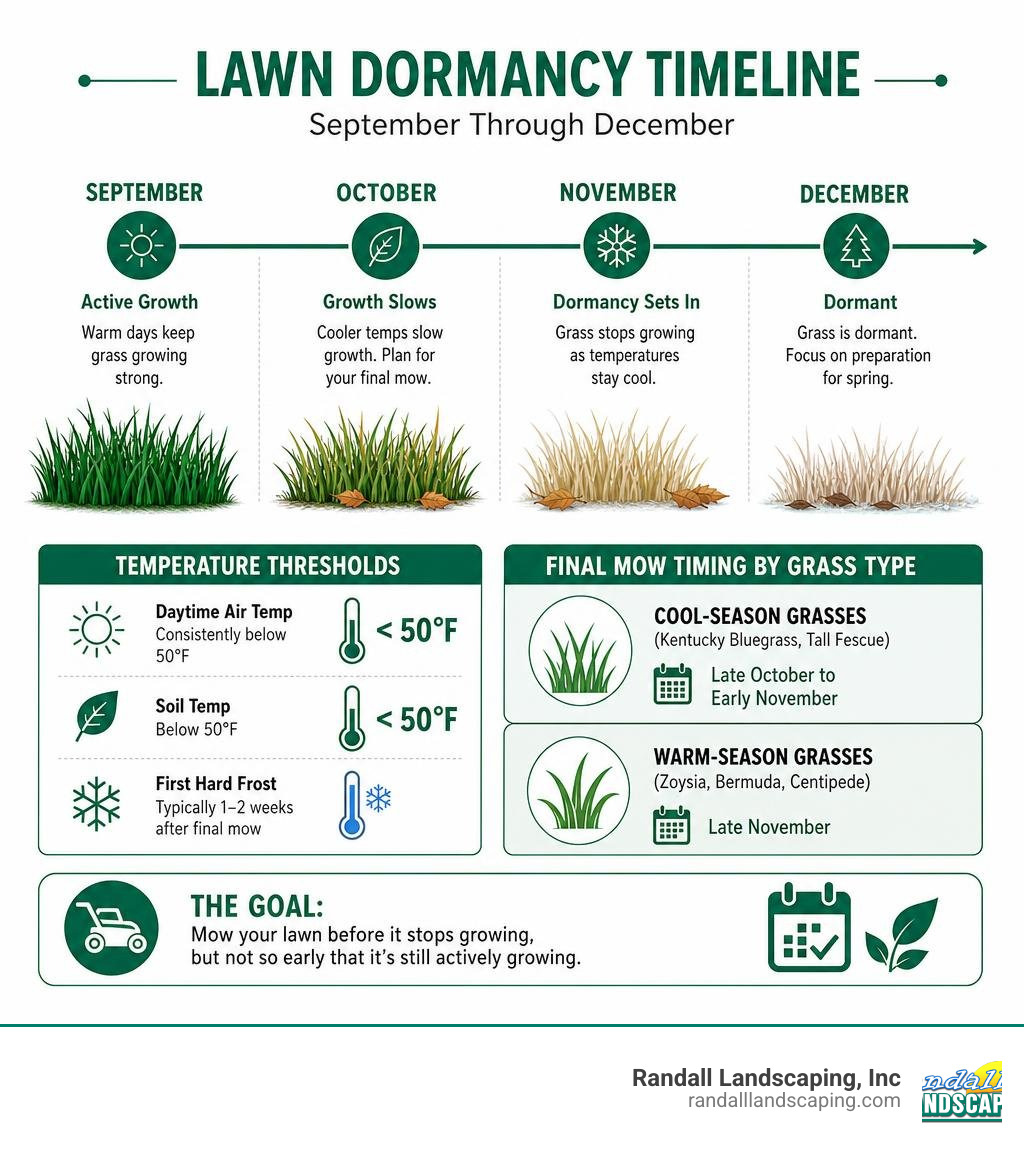
Quick answer: For most homeowners in the Northeast, the final mow should happen when:
- Daytime temperatures consistently drop below 50°F
- Grass growth has visibly slowed (mowing every 2-3 weeks instead of weekly)
- You’re 1-2 weeks away from the first hard frost
- Soil temperature is below 50°F
For cool-season grasses (like Kentucky bluegrass and tall fescue), that typically means late October to early November in Southern NH. For warm-season grasses, it’s closer to late November.
Many homeowners assume the first frost means it’s time to put the mower away for good. That’s not quite right. Grass can keep growing well after the first frost — and mowing too early or too late both cause real damage.
I’m Tommy Randall, owner of Randall Landscaping, Inc., and after nearly 20 years managing lawns across Massachusetts and New Hampshire, I’ve seen what a poorly timed last lawn cut of the year can do to an otherwise healthy turf. Getting this one detail right sets your lawn up for a strong comeback in spring.
Essential last lawn cut of the year terms:
Why the Last Lawn Cut of the Year is Crucial for Turf Health
As we transition into the colder months of 2026, many homeowners in the Merrimack Valley and Southern New Hampshire are tempted to park their mowers in the garage and forget about the yard until spring. However, the final cut of the season is one of the most critical steps in your entire annual lawn care routine. It directly impacts how your turf handles the harsh winter weather and how quickly it rebounds when the ground thaws.

Preventing Snow Mold and Winter Diseases
One of the primary reasons to execute a proper last lawn cut of the year is to protect your grass from fungal winter diseases, most notably snow mold. When grass is left too long going into winter, the heavy snow we experience in places like Windham, Pelham, and Andover presses the tall blades down. This creates a dense, matted layer of grass that traps moisture underneath.
This dark, cold, and soggy microclimate is the perfect breeding ground for snow mold pathogens, including:
- Typhula Blight (Gray Snow Mold): This fungus thrives under snow cover on unfrozen ground, leaving unsightly straw-colored circular patches in spring.
- Microdochium Patch (Pink Snow Mold): A more severe disease that can active even without snow cover when the weather is cold and wet, potentially killing the crown of the grass.
By cutting your lawn to the appropriate height before the snow falls, you improve airflow across the soil surface, allowing moisture to evaporate and significantly reducing the risk of these destructive fungi. For more detailed insights, check out this guide on how to prevent winter diseases.
Reducing Vole and Rodent Damage
Overgrown grass doesn’t just attract fungi; it also invites unwanted winter guests. Meadow mice and voles remain active under the snow cover. Tall, matted grass provides them with the perfect canopy to hide from predators like hawks and owls. They will happily construct an extensive network of tunnels (called runways) right through your lawn, chewing down your grass to the roots and leaving your yard looking like a miniature road map by March. Keeping your grass at a tidy, managed height removes their cover and encourages them to nest elsewhere.
Balancing Photosynthesis and Crown Protection
Your grass is a living organism that continues to photosynthesize late into the autumn, even as air temperatures hover in the 40s. During this time, cool-season grasses are busy storing carbohydrates and nutrients in their root systems to survive the winter and fuel early spring green-up.
If you scalp the lawn too short too early, you strip away the leaf blade surface area needed for photosynthesis, starving the root system. Conversely, leaving the grass too tall makes it prone to winter desiccation (windburn) and matting. The final mow must strike a perfect balance: short enough to prevent matting and disease, but tall enough to protect the delicate crown of the grass plant from freezing temperatures. To learn more about maintaining this balance, read our more tips on quality yard care.
How to Determine the Perfect Timing for Your Final Mow
Timing the last lawn cut of the year isn’t about circle-marking a specific date on your calendar. New England weather is notoriously unpredictable. In October and November, we can experience a week of freezing rain followed by a sudden 65-degree weekend. Instead of relying on a calendar date, you must read the environmental cues your lawn and the local weather are giving you.
Here are the key indicators that it’s time for your final cut:
- Soil Temperature Drops Below 50°F: This is the most reliable scientific indicator. When soil temperatures consistently fall below 50°F, cool-season grasses dramatically slow their growth, and warm-season grasses begin their transition into dormancy.
- Air Temperatures Consistently Below 50°F: When daytime highs struggle to reach 50°F and nighttime temperatures drop near or below freezing, the grass’s biological activity slows to a crawl.
- Visible Growth Slowdown: If you find that you only need to mow every two to three weeks instead of your usual weekly schedule to maintain a tidy appearance, your lawn is preparing for winter rest.
- The Trees Are Bare: Once the deciduous trees in Salem, NH or Boxford, MA have dropped all their leaves, it’s a clear signal that the growing season is officially wrapping up.
To make sure you don’t miss this window, monitor your local weather forecasts closely. You want to perform your final cut about a week or two before the first hard, ground-freezing frost. For a deeper dive into recognizing these seasonal transitions, check out this article on identifying final mow timing and consult our complete guide to lawn maintenance.
Timing the Last Lawn Cut of the Year by Grass Type
While the Merrimack Valley and Southern New Hampshire are dominated by cool-season turfgrasses, understanding the differences between grass types is essential for proper care. The table below outlines the distinct requirements for each category:
| Grass Category | Common Species in Our Area | Growth Stop Temperature | Ideal Winter Height | Key Timing Cues |
|---|---|---|---|---|
| Cool-Season Grasses | Kentucky Bluegrass, Tall Fescue, Perennial Ryegrass | Air temp consistently below 40°F – 45°F | 2.0 to 2.5 inches | Late October to mid-November; after leaf drop but before ground freezes. |
| Warm-Season Grasses | Bermudagrass, Zoysiagrass (rarely used but present) | Soil temp drops below 55°F | 1.5 to 2.0 inches | Early to mid-autumn; as the grass begins to lose its green color and turn golden-brown. |
Best Practices for the Final Cut of the Season
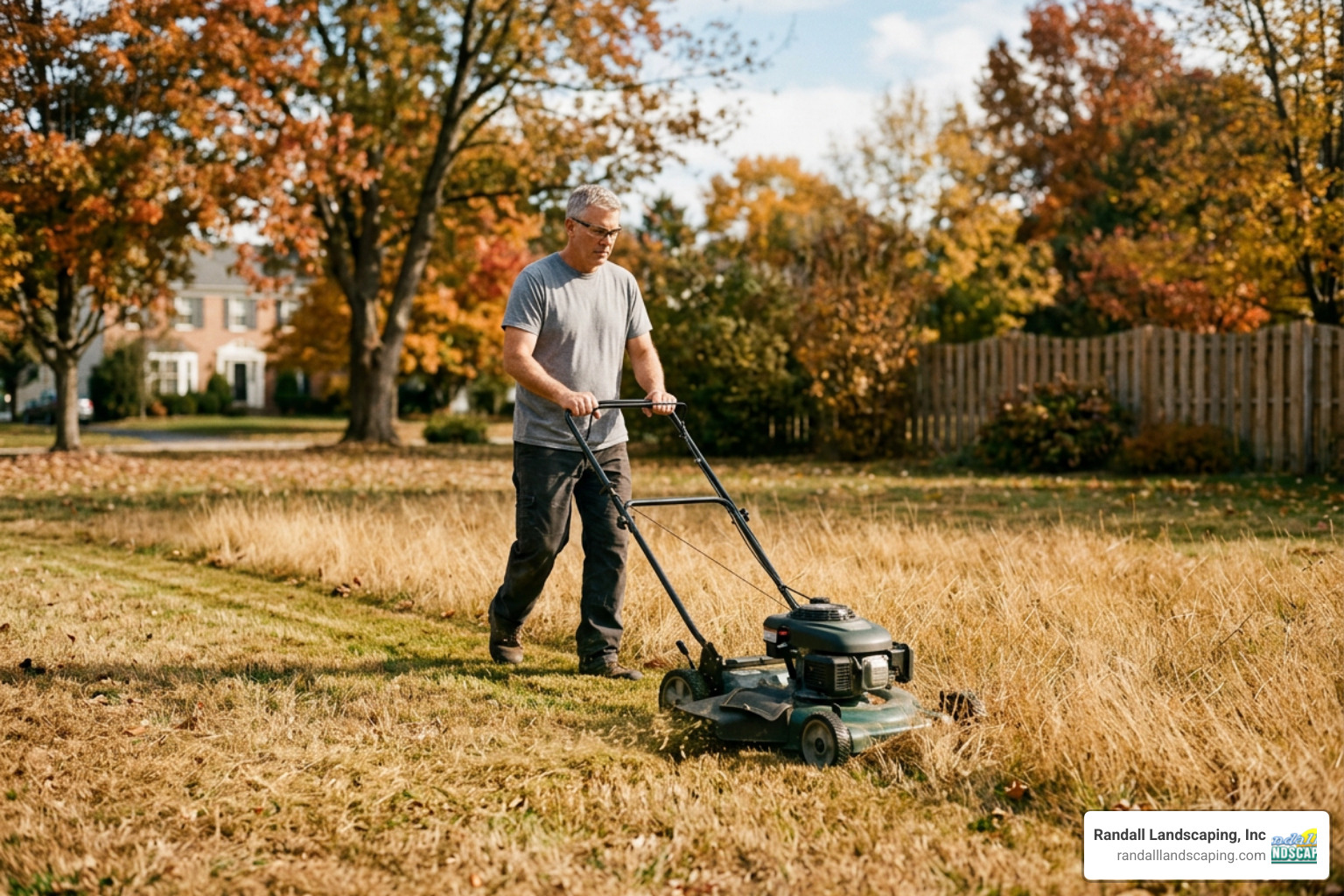
Executing the last lawn cut of the year requires a slightly different approach than your standard summer mowing. It’s not just about running the machine over the grass; it’s about precision and preparing the turf for a long, dormant stretch.
Adjusting the Mowing Height
There is a long-standing debate in the lawn care community about whether the final cut should be extremely low or kept at a normal height. While older advice often recommended scalping the lawn to prevent snow mold, modern agronomic consensus suggests a more moderate approach.
For the cool-season lawns of North Andover, Methuen, and Dracut, we recommend a final height of 2.0 to 2.5 inches.
- Why not shorter? Going below 1.5 inches exposes the grass crowns and shallow roots to extreme cold, frost heaving, and winter desiccation.
- Why not taller? Leaving it above 3 inches allows the grass to bend, mat under snow weight, and invite snow mold and voles.
If you are interested in the different perspectives of this debate, you can read more about the debate on mowing height.
Adhering to the One-Third Rule
Even on your final cut, the golden rule of mowing still applies: never remove more than one-third of the grass blade in a single mowing session. If your grass has gotten a bit overgrown during a busy autumn, do not drop your mower deck to 2 inches and cut it all down at once. Doing so will shock the grass, damage the stems, and leave the lawn highly vulnerable to winter injury.
Instead, step the height down gradually. If your grass is currently 4 inches tall, cut it down to 3 inches first, wait a few days, and then perform your final cut at 2 inches. If this sounds like a lot of coordination, you can always explore our professional lawn service options.
Never Mow Wet or Frosty Grass
Autumn mornings in New England are frequently damp with heavy dew, rain, or frost. It is absolutely critical that you wait for the grass to dry completely before performing your final cut.
- Wet grass clumps together, clogs your mower deck, and tears rather than cuts cleanly. This leaves ragged edges that are highly susceptible to fungal infections.
- Frosty grass is extremely brittle. Walking or driving a mower over frozen grass blades will fracture the plant cells, leaving ugly black footprints or tire tracks that won’t recover until spring.
Keep Mower Blades Razor Sharp
A clean cut is always important, but it is doubly critical for the last cut of the season. Dull blades rip and shred the grass tips, leaving a frayed, white appearance. These open wounds take longer to heal, wasting the plant’s precious energy reserves right before dormancy and leaving the grass vulnerable to winter pathogens.
Step-by-Step Guide to Your Last Lawn Cut of the Year
To ensure your lawn enters winter in peak health, follow this systematic step-by-step process for your final seasonal mow:
- Clear All Debris: Before starting your mower, thoroughly rake or blow away all fallen leaves, twigs, and branches. Leaving organic debris on the lawn during a cut will clog your mower and cause uneven cutting heights.
- Step Down the Height Gradually: If your grass is tall, adjust your mower deck to bring the height down over two or three separate cuts spaced a few days apart, eventually reaching your target height of 2 to 2.5 inches.
- Choose a Dry Afternoon: Wait until the midday sun has completely evaporated any morning dew or frost.
- Collect the Clippings: While we love mulching grass clippings back into the soil during the summer to return nitrogen, you should bag your clippings on the very last cut. Cold soil temperatures slow down decomposition significantly, and leaving heavy piles of clippings over winter can smother the grass and encourage mold.
- Apply a Winterizer Fertilizer: Within a week or two after your final cut, apply a high-potassium winterizer fertilizer. This helps strengthen the root systems and prepares the grass cells to resist freezing temperatures.
- Winterize Your Equipment: Once the final cut is complete, don’t just park the mower. Drain the fuel tank (or add a fuel stabilizer), remove and sharpen the blade, clean out the underside of the deck, and store your mower in a dry place so it’s ready for next spring.
Frequently Asked Questions About the Final Mow
What happens if I miss the window for the final cut?
If an early winter storm catches you by surprise and dumps snow before you can perform your final cut, do not panic, and do not attempt to mow frozen or snow-covered grass. Mowing dormant, frozen grass will cause severe, irreversible structural damage to the crowns.
If you miss the window, simply leave the grass as-is. You will face a slightly higher risk of snow mold and vole damage in the spring, but you can mitigate this by gently raking out any matted areas with a thatch rake as soon as the snow melts in March to encourage airflow and drying.
Should I bag or mulch leaves during the last mow?
This depends entirely on the volume of leaves on your lawn.
- Light Leaf Cover: If you can still see at least 80% of the grass through the leaves, you can safely mulch them. A sharp mulching mower will shred the leaves into tiny, dime-sized pieces that will decompose over winter, adding valuable organic matter and nutrients back into your soil.
- Heavy Leaf Cover: If your lawn is completely blanketed in a thick layer of leaves (common in heavily wooded areas of Boxford and Georgetown), you must bag or rake them. Large, intact leaves will block sunlight, trap excess moisture, suffocate the turf, and virtually guarantee a severe outbreak of snow mold.
What is the average cost of professional lawn mowing services?
Please note: The pricing details provided below are average costs based on national and regional internet data and do not represent the actual or guaranteed rates for services provided by Randall Landscaping, Inc.
For homeowners considering outsourcing this task to save time and ensure a professional finish, professional weekly lawn maintenance is highly accessible. According to average internet data, professional lawn mowing services typically range from $35 to $150 or more per visit, depending on the size of your property, the complexity of your landscaping, and your specific location.
For example, a standard quarter-acre suburban lot in Methuen or Salem, NH might average on the lower to mid-range of that spectrum, while larger estate properties with intricate slopes, extensive turf areas, or heavy leaf cleanups can easily range from $150 to $300+ per visit. Investing in professional fall cleanup and final mowing ensures that your lawn is cut to the exact appropriate height, all leaves are professionally vacuumed or bagged, and your turf is perfectly prepared for the winter months. Learn more about local service areas on our Lawn care Methuen and Lawn Mowing Salem NH pages, or request a quote directly through our Lawn Maintenance Near Me portal.
Conclusion
Getting the last lawn cut of the year right is one of the smartest investments of time and effort you can make for your property. By monitoring soil temperatures, stepping down your mowing height to a protective 2 to 2.5 inches, clearing away heavy leaf cover, and keeping your equipment sharp, you protect your turf from snow mold, rodent damage, and winter desiccation.
At Randall Landscaping, Inc., we have spent nearly two decades helping homeowners throughout the Merrimack Valley and Southern New Hampshire maintain beautiful, healthy lawns year-round. From Andover and North Reading to Pelham and Windham, our team is known for delivering 100% reliable, top-quality residential and commercial lawn care.
Let us handle the heavy lifting of autumn lawn prep so you can relax and enjoy the changing seasons. Contact us today to schedule your final lawn maintenance near me and ensure your lawn returns greener, thicker, and healthier than ever in the spring of 2027!