Why Commercial Properties Can’t Afford to Ignore Water Management
Commercial drainage solutions are engineered systems that collect, convey, store, and treat water on business properties—protecting structures, meeting code requirements, and preventing costly flooding. Here’s what you need to know:
- Primary systems: French drains, trench drains, catch basins, roof drains, and bioswales
- Key benefits: Foundation protection, flood prevention, regulatory compliance, employee safety
- Cost range: French drain installations average $5,000–$15,000+ (internet-based averages; actual costs vary widely by scope)
- Materials: Stainless steel, cast iron, PVC, HDPE—each suited to different loads and environments
- Maintenance: Annual inspections, grate cleaning, camera checks, and grease-trap service
On a commercial site—whether it’s a loading dock, a restaurant kitchen, or a warehouse roof—poor drainage means more than just puddles. It can lead to structural damage, voided warranties, slip hazards, and municipal fines.
A single inch of water on a 20-square-foot section of roof weighs 2,000 pounds. Across a large commercial roof, that translates to tens of thousands of pounds stressing the structure. Ponding water also attracts birds, breeds mosquitoes, grows algae, and accelerates membrane wear. Inside, commercial kitchens and industrial bays demand hygienic, code-compliant drains that won’t clog or corrode.
Modern drainage solutions are highly engineered. Siphonic roof systems drain up to 100 times faster than gravity. Pre-sloped trench channels install quickly, ensuring consistent flow. Control-flow drains and vegetated roofs help manage stormwater at the source, while sustainable options use recycled materials, diverting over 500 million pounds of plastic from landfills annually.
The bottom line: proper water management protects your investment, keeps employees safe, and satisfies inspectors. Unmanaged water leads to erosion, foundation cracks, flooding, and emergency repair bills that dwarf the cost of a professional installation.
I’m Tommy Randall, owner of Randall Landscaping, Inc. Since 2006, my team has designed and installed commercial drainage solutions across Massachusetts and Southern New Hampshire, from parking-lot catch basins to subsurface French drains. For any retail, industrial, or multifamily property, our principles are the same: move water away quickly, meet code, and build systems that last.
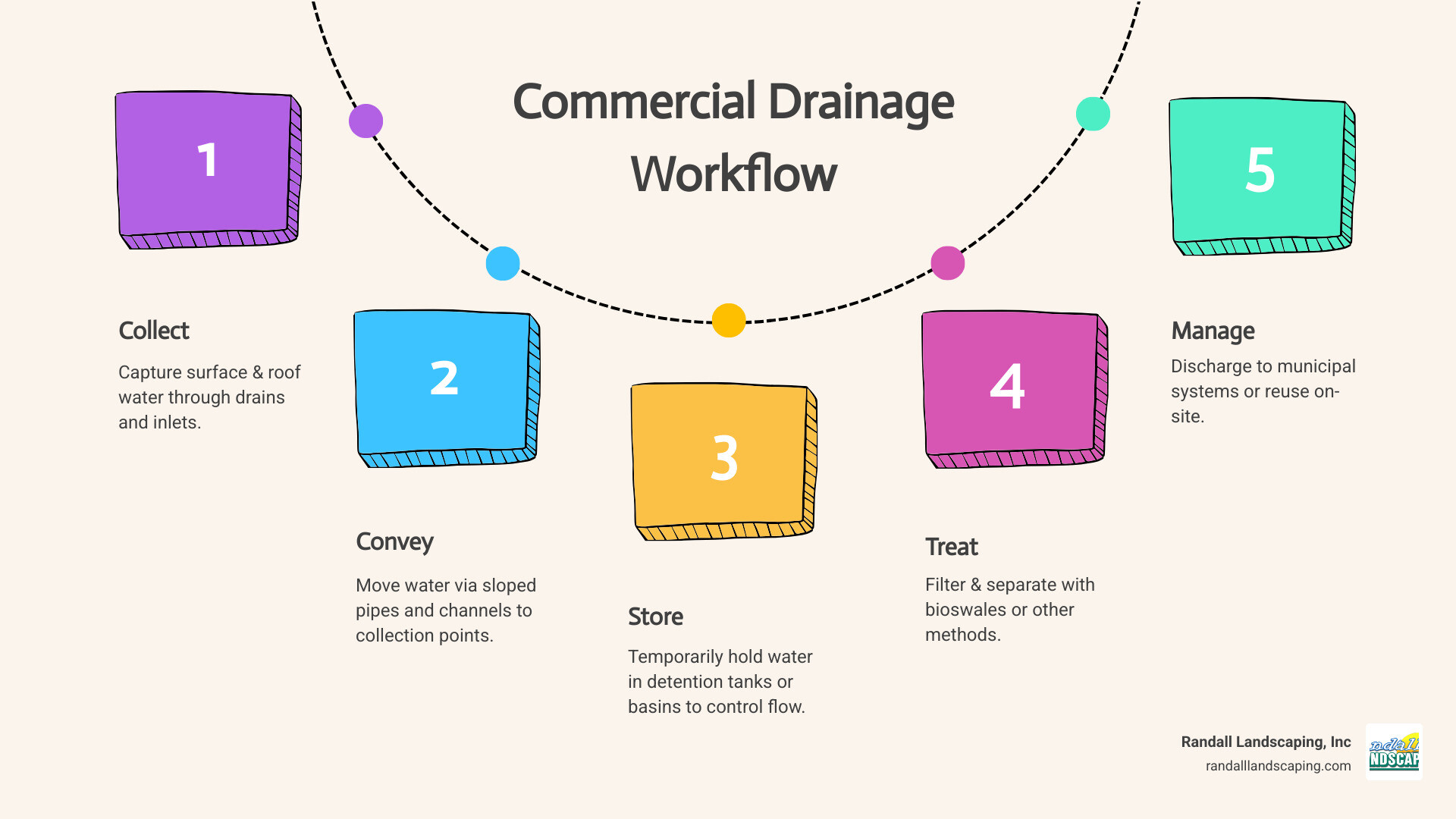
Learn more about commercial drainage solutions:
Commercial Drainage Solutions: Systems and Components
For commercial properties in the Merrimack Valley and Southern New Hampshire, from a retail store in Andover to an industrial complex in Plaistow, effective water management is non-negotiable. Robust commercial drainage solutions are essential to protect property integrity and ensure operational continuity. Here, we break down the primary exterior and interior drainage systems.
Proactive drainage installation and maintenance are essential. Waiting for a water problem to appear often leads to significant and costly damage, making prevention the most cost-effective strategy. For more information on how we manage commercial properties, visit our Business Landscape Services page.
Primary Sitewide Systems (Exterior)
Exterior drainage systems are the first line of defense against water damage from downpours and snowmelt, which is vital in our region’s climate.
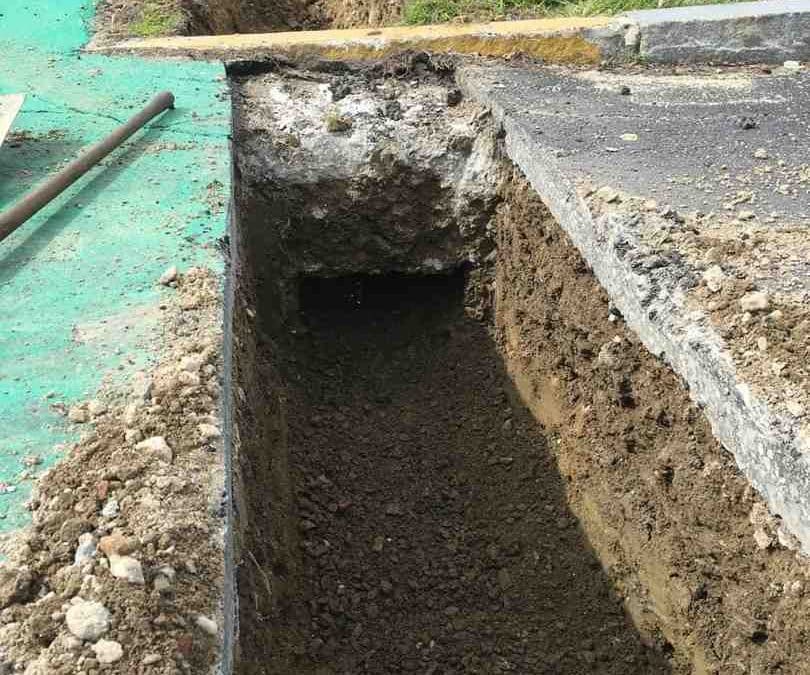
- French Drains: A trench with a perforated pipe and gravel that collects and redirects subsurface water away from foundations. Based on internet data, commercial installations average $5,000–$15,000+, but these are not quotes from Randall Landscaping. Actual costs for your project in Boxford or Atkinson depend on site-specific conditions.
- Grading: Proper grading involves shaping the land to direct water flow away from buildings. It is a fundamental step in preventing water accumulation and protecting foundations.
- Swales: Shallow, vegetated channels that collect and convey stormwater runoff. They can be an aesthetic and functional addition to a landscape in Georgetown or Salem.
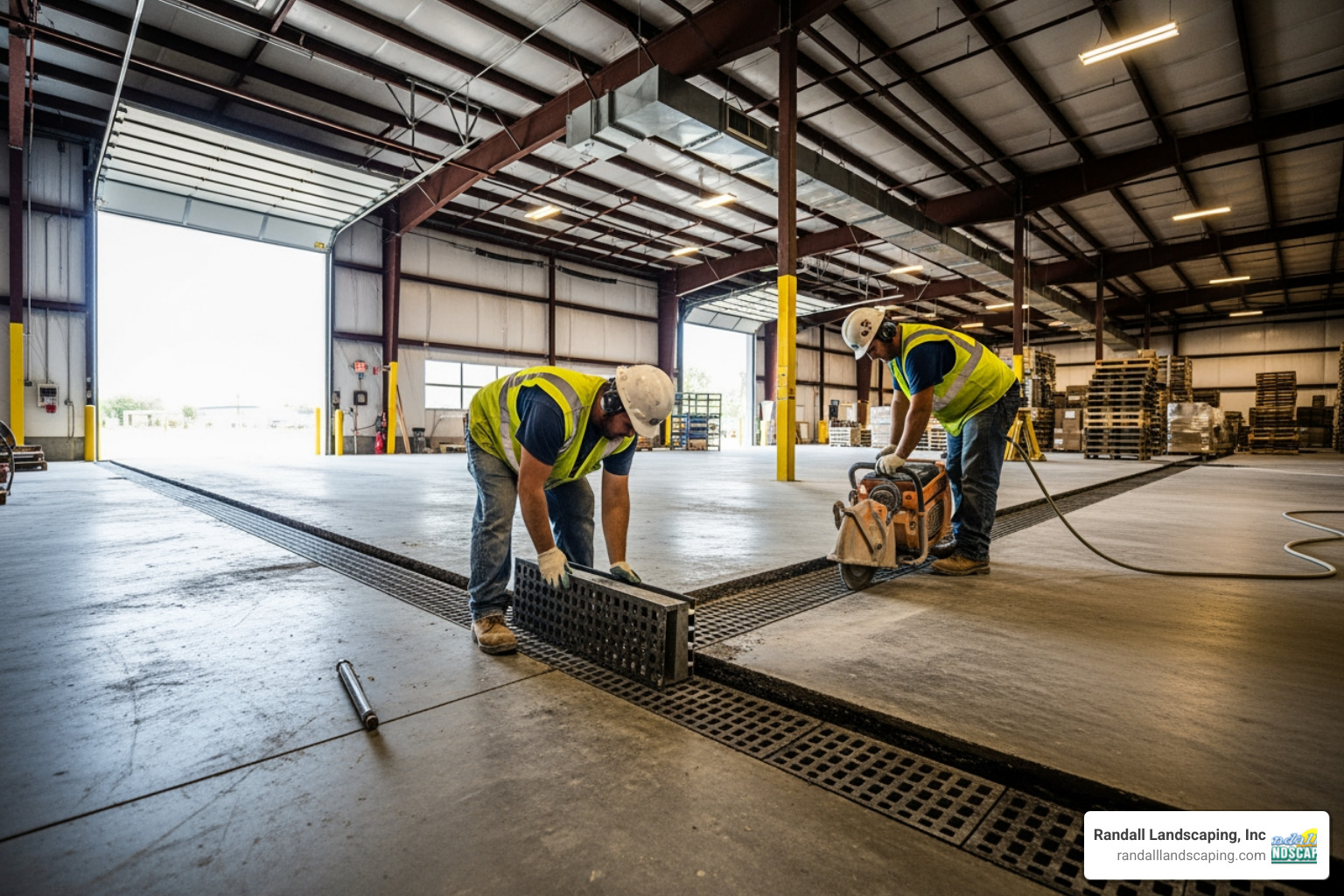
- Trench Drains: Linear drains with a grate cover, commonly used in parking lots and loading docks to quickly collect surface water.
- Precast Trench Drains: Manufactured off-site and delivered ready to install, speeding up installation as they are not affected by weather during curing.
- Cast-in-Place Trench Drains: Poured on-site for precise customization, though installation in Dracut or Methuen can be delayed by weather during the curing process.
- Point Drains: Individual drains installed at specific low points where water naturally collects.
- Slot Drains: A discreet alternative to trench drains with a narrow opening and no visible grate, ideal for aesthetic-sensitive areas.
- Catch Basins: Underground structures that collect stormwater from parking lots and paved surfaces. A sump traps sediment and debris, protecting the main drainage system.
- Permeable Paving: An innovative surface that allows water to infiltrate into a gravel base below, reducing runoff. A great sustainable design choice for properties in areas like Windham.
- Underground Detention/Retention Systems: Large underground systems that temporarily store stormwater, releasing it slowly to mitigate urban runoff.
Inside the Building: Commercial Drainage Solutions for Floors and Roofs
Specialized commercial drainage solutions are also required inside your building and on its roof to maintain safety, hygiene, and structural integrity.
- Adjustable Floor Drains: Systems like Watts’ Pronto!™ have integrated levels for precise, accurate installation, ensuring efficient water removal and reducing rework.
- Interior Point Drains: Strategically placed in areas prone to spills or wash-downs, such as warehouses or restrooms in facilities in North Andover. The surrounding floor must be sloped toward them.
- Hygienic Drains: Critical for food service and healthcare, these drains (e.g., Watts’ HygienicPro®) are designed to minimize microbial contamination and meet stringent hygiene standards.
- Grease Management Systems: Essential for commercial kitchens, systems from brands like ACO include grease traps and interceptors to manage hot water, grease, and waste, preventing clogs and ensuring compliance.
- Chemical Waste Lines: Industrial facilities use highly resistant materials, like Orion Chemical Waste Drainage systems, to safely convey corrosive or hazardous waste.
- Roof Drains: Commercial roofs need drains with a dome strainer to prevent debris, a flashing system for a watertight seal, and an outlet pipe.
- Overflow Scuppers: Openings at the roof’s edge that act as a backup drainage system, handling excess water if primary drains clog.
- Downspouts (Leaders): Channel water from the roof to the ground level, directing it into the exterior drainage system.
- Sump Pumps and Backwater Valves: Sump pumps remove collected water from basements to prevent flooding. Backwater valves prevent sewage or stormwater from backing up into the property.
Materials and Hydraulics: Choosing the Right Approach
The effectiveness and longevity of your commercial drainage solutions depend heavily on the materials used and the hydraulic principles applied. Selecting the right components is crucial for properties from Lawrence to Plaistow.
Materials: Built to Last
Different applications demand different materials, each with its own strengths.
- Stainless Steel: Excellent for hygiene, corrosion resistance, and high-temperature applications, making it ideal for food service (e.g., ACO products) and chemical waste.
- Cast Iron: Known for its strength, durability, and sound-dampening properties. It’s often used for underground and waste piping.
- PVC (Polyvinyl Chloride): A lightweight, cost-effective, and corrosion-resistant option for many drainage applications.
- HDPE (High-Density Polyethylene) & Polypropylene: These plastics offer good chemical resistance and flexibility, often used for their sustainability benefits (e.g., Advanced Drainage Systems uses recycled plastics).
Beyond the material, we consider factors like load ratings for high-traffic areas, corrosion resistance, and temperature tolerance.
Siphonic vs. Gravity Roof Drainage
On large commercial roofs, the choice between siphonic and gravity drainage is critical.
| Feature | Gravity Drainage System | Siphonic Drainage System |
|---|---|---|
| Principle | Relies on roof pitch and gravity to move water. | Uses a baffle to create a vacuum, pulling water rapidly. |
| Pipe Slope | Pipes must run on an incline. | Pipes run horizontally, saving space. |
| Drainage Speed | Slower, less efficient for heavy rainfall. | Up to 100 times faster drainage speed. |
| Roof Area | Recommended for roofs less than 150 square meters per drainage point. | Recommended for roofs 150 square meters or more. |
| Ponding Risk | Higher risk of ponding water, especially on large roofs. | Significantly reduces ponding risk due to rapid removal. |
| Pipe Size | Requires larger diameter pipes for the same flow rate. | Smaller diameter pipes can handle larger volumes. |
| Cost | Generally lower initial installation cost for small roofs. | Higher initial cost, but can reduce overall pipe runs and structural load. |
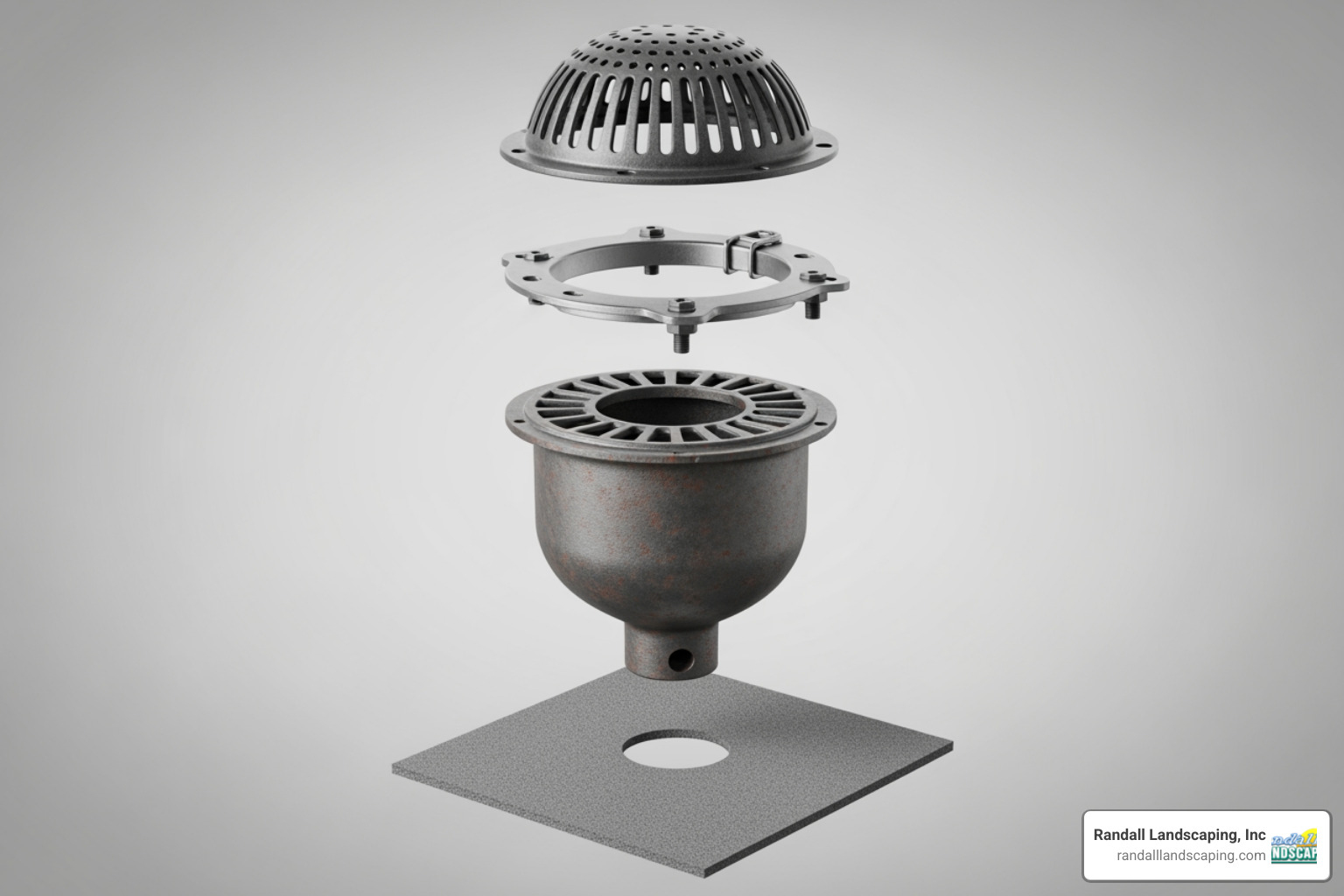
While gravity drainage works for smaller roofs, siphonic systems are superior for larger commercial buildings in Haverhill or Derry, NH. By creating a vacuum, they pull water rapidly from the roof, preventing the dangerous weight of ponding water—where just one inch on 20 square feet weighs 2,000 pounds. This protects the roof structure from long-term damage.
Pre-Sloped Trench Drains and Adjustable Floor Drains
Innovations in drainage design also improve installation accuracy and speed.
- Pre-Sloped Trench Drains: Systems like Watts’ Dead Level® have a built-in slope, ensuring consistent flow and eliminating complex on-site calculations. This speeds up installation and guarantees performance in parking lots or industrial bays.
- Adjustable Floor Drains: For interiors, adjustable drains (like Watts’ Pronto!™) use integrated leveling features for quick, accurate installation. This ensures proper drainage without pooling, which is essential for safety and ADA compliance.
Urban Runoff, Codes, and Compliance for Commercial Sites
Managing water on commercial properties in the Merrimack Valley and Southern New Hampshire involves adhering to local regulations and building codes, especially concerning urban runoff. Proper stormwater management is critical due to our region’s significant rainfall and snowmelt.
Managing Urban Runoff On-Site
Modern commercial drainage solutions often use Low Impact Development (LID) strategies to manage polluted stormwater at its source, preventing it from overwhelming municipal systems.
- Rain Gardens and Bioswales: Landscaped depressions with native plants that collect, filter, and absorb stormwater runoff. They are a functional and aesthetic addition to commercial landscapes in Methuen or Andover.
- Bioretention Areas: Shallow basins that use engineered soil and vegetation to filter and retain stormwater.
- Permeable Pavements: As discussed, these surfaces allow water to seep through, reducing runoff volume.
- Oil/Sediment Separators: Crucial for parking lots and industrial yards, these devices remove pollutants before water enters the storm sewer.
- Closed-Loop Water Cycle Systems: Advanced systems, like ACO’s WaterCycle, collect, clean, and reuse water, offering a hygienic and ecological solution. This aligns with sustainability goals, such as the industry’s use of over 500 million pounds of recycled plastic annually in drainage products.
- Optimized Wastewater Systems: Intelligent pump designs from brands like Grundfos address common wastewater challenges. Self-controlling sensors and anti-clogging features improve reliability for commercial buildings. Learn more about optimised wastewater systems for commercial buildings.
Snow, Ice, and Wet-Weather Operations
The climate in our service area, from Atkinson to Dracut, presents unique drainage challenges related to snow and ice.
- Snowmelt Management: Systems must be robust enough to handle large, sudden influxes of water from melting snow.
- Freeze-Thaw Cycles: Systems must be designed to withstand damaging freeze-thaw cycles that can crack pipes and pavement.
- De-Icers: Runoff from de-icing chemicals requires proper filtration to protect water quality.
- Catch Basin Icing: Proper design and maintenance can prevent catch basins from freezing solid and causing localized flooding.
- Redundancy: Backup systems are a best practice in areas prone to severe winter weather to ensure functionality if a primary component fails.
We understand these challenges and offer services to address them. Find more information on our Commercial Snow and Ice Removal and Commercial Snow Plowing pages.
Ownership: Maintenance, Costs, and Property-Specific Needs
Investing in commercial drainage solutions is the first step; proactive ownership through diligent maintenance and understanding costs is essential for long-term function. Different commercial properties also have unique drainage requirements.
Maintenance Requirements for Commercial Drainage Systems
Neglecting regular maintenance can lead to clogs, system failures, and costly emergency repairs.
- Annual/Semi-Annual Inspections: Professional inspections once or twice a year are recommended to check for blockages, damage, and proper function.
- Debris Removal: Regular cleaning of grates, catch basins, and trench drain channels is crucial to prevent blockages.
- Jetting and Vacuum Cleaning: Specialized equipment can clear deep clogs and accumulated sediment in pipes and catch basins.
- Camera Inspections: A camera inspection can pinpoint the exact location of persistent blockages or suspected damage for targeted repairs.
- Roof Drain Strainer Upkeep: Keep roof drain strainers clear, secure, and visible. Codes often require a height of at least 4 inches to prevent clogs.
- Grease Trap Hygiene: In food service, grease traps require frequent cleaning to prevent grease from solidifying and blocking pipes.
Here’s a general quarterly maintenance checklist:
- Quarter 1 (Winter): Check for ice in catch basins and downspouts. Ensure clear paths for snowmelt. Inspect roof drains for ice dams.
- Quarter 2 (Spring): Clean all drains of winter debris. Inspect for freeze-thaw damage. Clear downspouts.
- Quarter 3 (Summer): Monitor for ponding during heavy rain. Check for vegetation overgrowth near drains and inspect for insect breeding in standing water.
- Quarter 4 (Fall): Clear leaves and debris from all drains before winter to prepare for autumn rains and snowmelt.
Investing in a regular maintenance plan, like our Commercial Landscape Maintenance services, is key. Understanding the Commercial Landscape Maintenance Cost can help you budget effectively.
Cost Considerations for Installing and Maintaining Commercial Drainage Systems
The cost of commercial drainage solutions is an investment in your property’s longevity. Based on internet data, commercial French drain installations average $5,000–$15,000+, though this is not a quote from Randall Landscaping, Inc. The actual cost for your project in Amesbury or Pelham depends on factors including:
- Scope and Complexity: The size of the area, system type, and installation difficulty.
- Material Choice: Stainless steel is more expensive than PVC.
- Site Conditions: Soil type, existing infrastructure, and accessibility.
- Local Regulations: Specific requirements can influence design and materials.
While the initial outlay can seem substantial, it is minor compared to the cost of inaction. Emergency repairs for flooding or foundation damage can be exorbitant. Preventive maintenance is a predictable, cost-effective way to extend system life and avoid catastrophic failure.
Sector-Specific Needs and Hygiene
The specific demands of your business dictate the type of commercial drainage solutions required.
- Food Service (Restaurants, Commercial Kitchens): These challenging environments require robust, hygienic drainage to manage hot water, grease, and organic waste. Systems from brands like ACO must be easy to clean, prevent bacterial growth, and meet food safety standards (HACCP, EHEDG). Slip resistance around drains is also crucial for employee safety.
- Industrial Facilities (Manufacturing, Warehousing): Drainage must handle chemical waste, high temperatures, and heavy traffic. This requires chemically resistant materials (HDPE, stainless steel) and heavy-duty trench drains for forklift areas.
- Retail/Office Buildings: These properties require efficient drainage for restrooms and entrances, with a focus on ADA compliance and aesthetic integration.
- Multifamily Properties: Shared courtyards, garages, and laundry facilities require durable, low-maintenance drainage to prevent water from impacting multiple units.
Proper drainage directly improves employee well-being by creating dry, safe environments, reducing slip-and-fall risks, and controlling pathogens, especially in sensitive areas like kitchens.
Drainage that Lifts Landscapes and Protects Structures
Commercial drainage solutions are not just functional; they can also improve your property’s aesthetic appeal while safeguarding its structural integrity. A well-designed landscape integrates seamlessly with effective water management.
Integrating drainage with landscaping provides both aesthetic and functional benefits. Bioswales planted with native flora manage stormwater naturally, while thoughtful grading directs water away from buildings and walkways. Elements like curb cuts and splash blocks can be used to guide water and prevent erosion.
Our approach to Commercial Landscape Designs always considers water flow, ensuring beauty and utility go hand-in-hand. We also focus on Low Maintenance Commercial Landscaping that provides superior drainage. If you’re looking for a Commercial Landscaper Near Me in areas like North Reading or Derry, we’re here to help.
Preventing Foundation Damage and Structural Issues
The most critical role of commercial drainage solutions is preventing foundation damage. Uncontrolled water around a building can lead to devastating and costly problems.
- Hydrostatic Pressure: Saturated soil exerts immense pressure on foundation walls, causing cracks and leaks. Footing drains (perimeter drains) collect this subsurface water to relieve pressure and direct it away from the building.
- Soil Movement (Heave/Settlement): In the expansive clay soils found in our region, excess moisture causes damaging cycles of swelling and shrinking. Effective drainage stabilizes soil moisture to prevent this movement and protect the foundation.
- Roof-to-Grade Discharge: Roof water must be channeled far from the building’s base. Downspout extensions or buried leaders should discharge water into a drainage system or permeable area, not against the foundation.
- Underdrains at Walls: For below-grade spaces, underdrains (weeping tiles) around the foundation perimeter collect groundwater and channel it to a sump pump or gravity discharge, keeping the foundation dry.
- Seal Joints and Eliminate Ponding: Joints in hardscaping near the building must be sealed. Eliminating ponding water near slab edges or foundation walls is critical to prevent the pressure and weight that leads to long-term structural damage.
By carefully designing and installing comprehensive commercial drainage solutions, we help protect your investment from the ground up, ensuring the structural integrity and longevity of your commercial property.
Conclusion
Well-designed and maintained commercial drainage solutions are a cornerstone of responsible property ownership. They protect foundations, prevent structural damage, ensure employee safety, and maintain regulatory compliance. In the Merrimack Valley and Southern New Hampshire, with our heavy rains and snowmelt, these systems are a necessity.
This guide has covered the diverse systems, materials, and hydraulic principles behind effective drainage. We’ve also highlighted the importance of code compliance, sustainable practices, and proactive maintenance for long-term success.
At Randall Landscaping, Inc., our expertise in designing, installing, and maintaining commercial drainage solutions ensures your property is resilient, safe, and sustainable. We help you steer the complexities of water management, protecting your assets and providing peace of mind.
Ready to secure your commercial property against water damage and ensure a dry, safe, and compliant environment? Contact us today for a site audit and to discuss tailor-made commercial drainage solutions for your business. We’re here to help you build a more resilient future.
Explore all our Business Landscape Services to learn how we can support your commercial property needs.