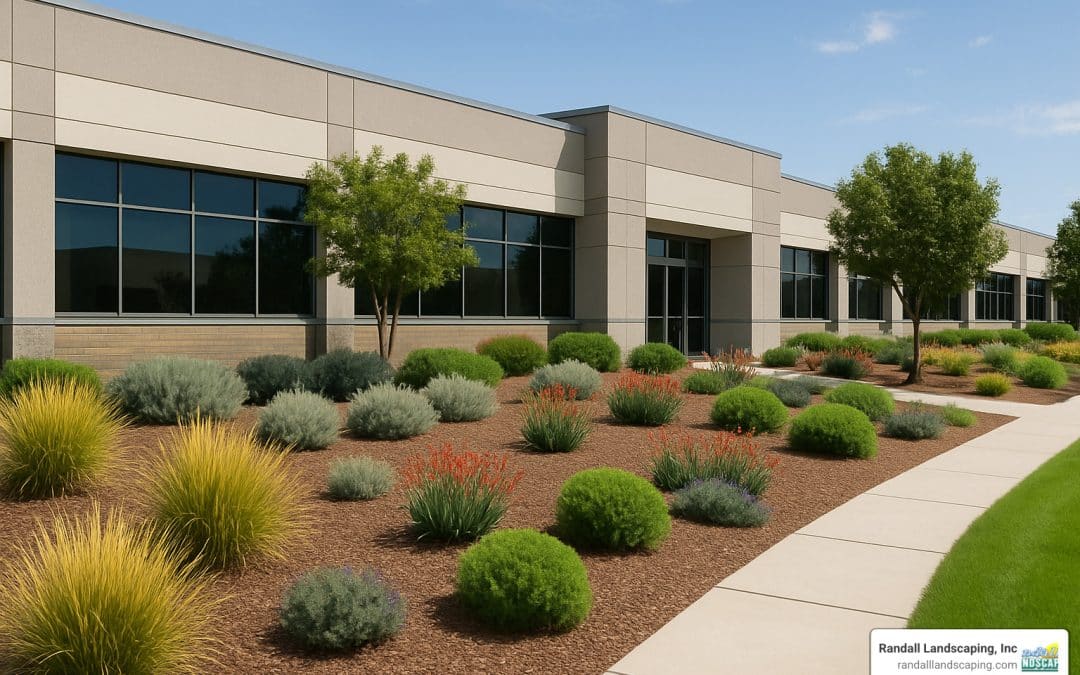
Why Smart Property Managers Choose Low Maintenance Commercial Landscaping
Low maintenance commercial landscaping is the practice of designing outdoor spaces that require minimal water, pruning, and upkeep while maintaining professional curb appeal. Here are the key strategies that deliver the biggest impact:
Top Low Maintenance Strategies:
– Native plants – Require up to 80% less water and 50% less maintenance than non-native species
– Drip irrigation – Saves up to 60% more water compared to traditional watering methods
– Mulching – Reduces weed growth by up to 90% and cuts watering needs by 50%
– Artificial turf – Saves 55 gallons of water per square foot annually
– Perennial plantings – Reduce annual replanting costs by 30-40% compared to annuals
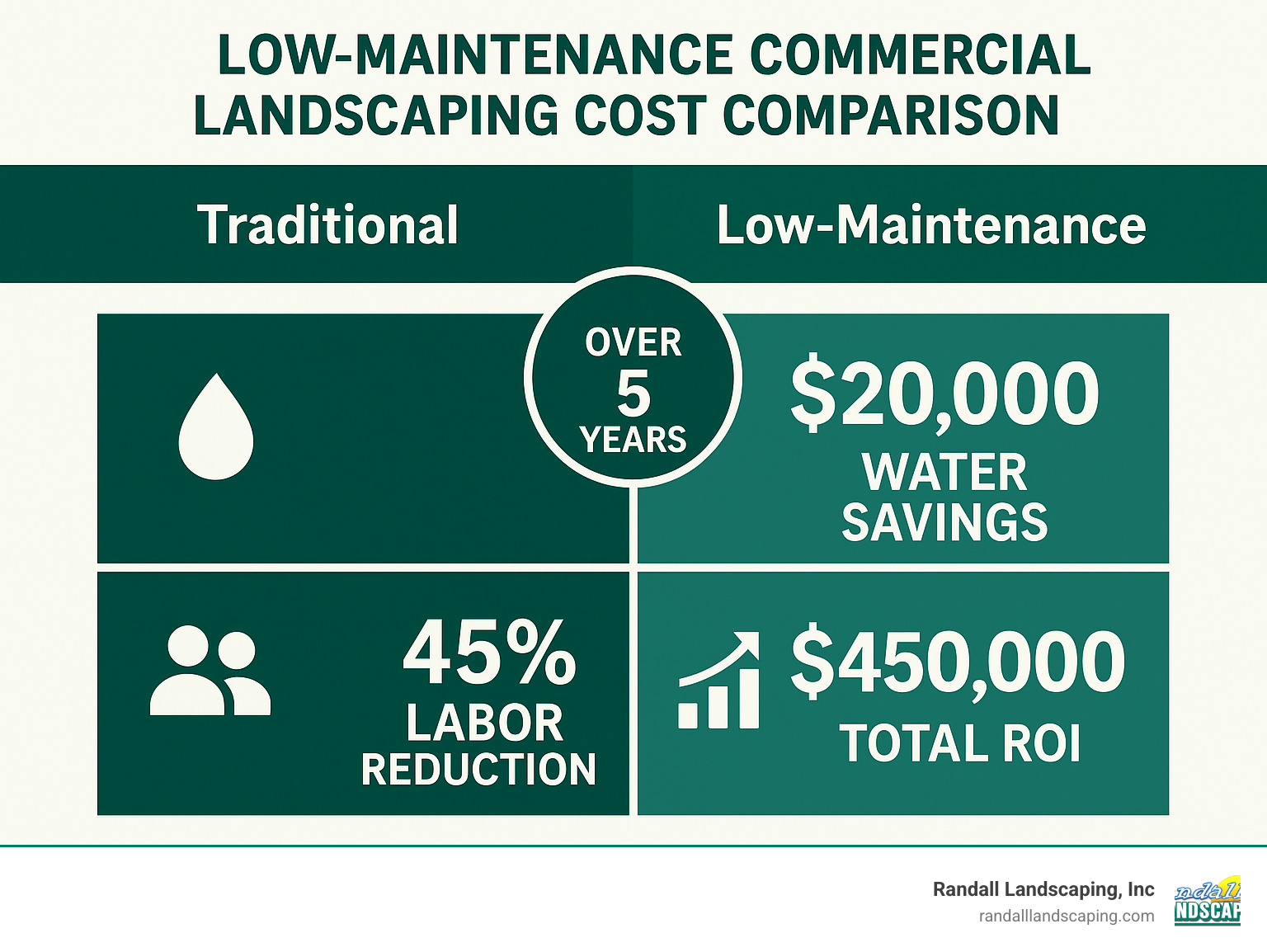
The numbers tell the story. Switching to low-maintenance landscaping can reduce commercial property maintenance costs by up to 50% over time while increasing property value by up to 15% due to improved curb appeal and reduced long-term costs.
As a property manager with a packed schedule, keeping up with commercial landscape maintenance can feel overwhelming. The good news? You can create stunning outdoor spaces that practically take care of themselves.
“As a property manager with a packed schedule, keeping up with commercial landscape maintenance can feel overwhelming—here’s how to make your site look great with less work.”
I’m Tommy Randall, owner of Randall Landscaping Business, and I’ve been helping Massachusetts and New Hampshire property owners transform their low maintenance commercial landscaping challenges into cost-saving solutions since 2006. Over nearly two decades, I’ve seen how smart plant choices and design strategies can slash maintenance costs while boosting curb appeal.
Key low maintenance commercial landscaping vocabulary:
– commercial landscape designs
– commercial sod installation
– does commercial landscaping increase your property value
Why Low Maintenance Commercial Landscaping Matters
Picture this: it’s Monday morning, and instead of worrying about brown patches on your office lawn or scrambling to find emergency sprinkler repairs, you’re sipping coffee while admiring your thriving landscape that practically takes care of itself. That’s the reality for smart property managers who’ve accepted low maintenance commercial landscaping.
After nearly two decades working with businesses across the Merrimack Valley and Southern New Hampshire, I’ve seen the same story play out countless times. Property managers start with good intentions – beautiful traditional landscapes that look amazing for the first few months. Then reality hits: skyrocketing water bills, constant maintenance calls, and landscapes that look tired by mid-summer.
The research on sustainable landscape design backs up what we see in the field every day. Low maintenance commercial landscaping isn’t just about cutting costs – though the savings are substantial. It’s about creating outdoor spaces that support your bottom line, improve your branding, boost property value, reduce your carbon footprint, and help with staff retention.
When we replace thirsty traditional plants with drought-tolerant natives, water consumption typically drops by 40-60% in the first year. For a typical office complex in Methuen or Derry, that often means saving $2,000-5,000 annually on irrigation costs alone.
The benefits ripple out from there. Your maintenance crews spend less time on weekly upkeep, which means lower labor costs. Your property looks consistently professional year-round, which strengthens your company’s image. Companies pursuing green building certifications find that thoughtful landscape choices can contribute valuable LEED points while demonstrating genuine environmental commitment.
How It Impacts Profit & People
Here’s where the rubber meets the road – the actual financial impact of switching to low maintenance commercial landscaping. After working with hundreds of commercial properties from Amesbury to Windham, the numbers are remarkably consistent.
That 50% maintenance cut comes from several sources working together. Native plants need less frequent pruning and virtually no fertilizing. Drought-tolerant groundcovers eliminate most weeding. Perennial plantings mean no annual flower bed replanting costs. Smart irrigation systems water only when needed, not on rigid schedules.
For a typical 10,000 square foot commercial landscape, this translates to $3,000-8,000 in annual savings starting in year one. The exact amount depends on your current maintenance intensity, but the pattern holds true whether you’re managing a small office building or a large corporate campus.
The 15% property value boost takes longer to realize but carries even more weight. Commercial real estate appraisers consistently value properties with sustainable, low-maintenance landscapes higher than those requiring intensive upkeep.
From a human perspective, we’ve had clients tell us their employees actually use outdoor break areas now instead of avoiding them. There’s something about well-designed natural spaces that reduces stress and creates a more pleasant work environment.
For businesses pursuing green building certifications, smart landscape choices can contribute LEED points across multiple categories: Water Efficiency, Sustainable Sites, and Innovation in Design. We’ve helped several North Andover and Salem clients achieve LEED Gold status partly through their landscape strategies.
The bottom line? Low maintenance commercial landscaping pays for itself through lower operational costs while creating more attractive, sustainable outdoor spaces that benefit everyone who uses your property.
Low-Maintenance Materials & Plant Palette
Choosing the right plants and materials is where the magic happens in low maintenance commercial landscaping. After nearly two decades of working with commercial properties from Amesbury to Windham, I’ve learned that success comes down to matching the right plant to the right place – and keeping things simple.
Native plants are your secret weapon. These local heroes evolved right here in New England, which means they already know how to handle our unpredictable weather, clay soils, and harsh winters. They don’t need constant babying with fertilizers or extra water because they’re perfectly adapted to what Mother Nature dishes out.
Evergreens give you that year-round backbone every commercial landscape needs. I’m particularly fond of compact varieties like Fire Chief globe arborvitae, which stays a manageable 3-4 feet tall and keeps its shape without constant pruning. Small-leaf boxwood creates clean, consistent backdrops that look intentional and well-maintained with minimal fuss.
Ornamental grasses provide movement, texture, and four-season interest with just one annual haircut in early spring. Calamagrostis ‘Karl Foerster’ is my go-to recommendation for sunny spots – it stands up straight without staking and looks neat from spring through winter.
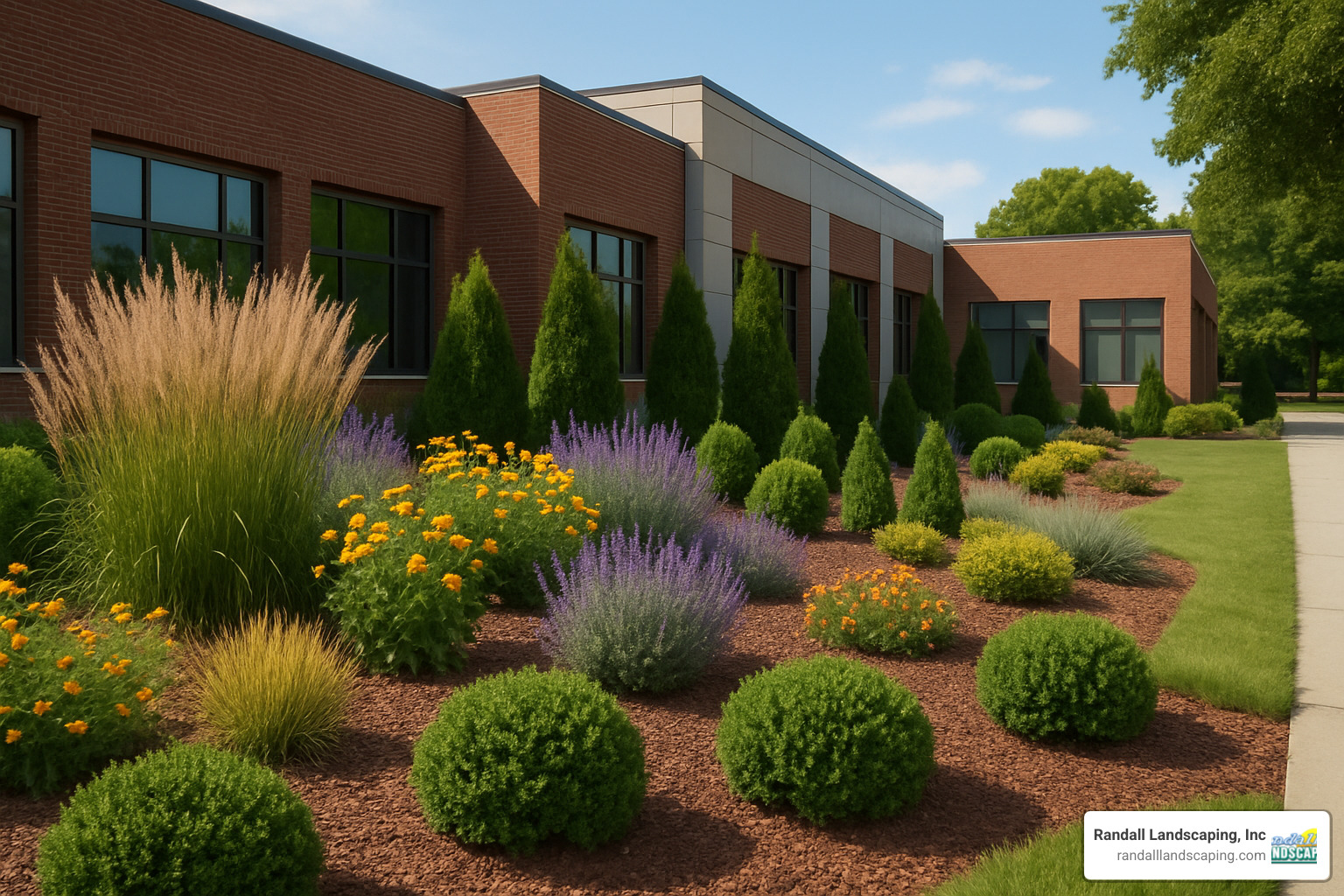
Groundcovers can eliminate traditional lawn maintenance in many areas. Wild ginger creates lush carpets in shaded spots, while creeping phlox blankets sunny slopes with spring color. The trick is being patient during the first year while they establish – then they’ll reward you with decades of low-maintenance coverage.
Mulch selection matters more than most people realize. Organic options like shredded hardwood help retain moisture and suppress weeds, though they need refreshing every few years. We often guide clients toward Eco-Friendly Mulch Options that balance sustainability with practical performance.
Modern artificial turf has come a long way from the green carpet of the 1970s. Today’s products look remarkably natural and can save thousands of gallons of water annually. For high-traffic areas that would otherwise need constant reseeding and watering, the math often works in your favor.
Rock gardens and dry riverbeds solve problems while looking great. They handle stormwater runoff naturally, create visual interest with zero watering needs, and can even provide snow storage areas during our New England winters.
Top Regional Plant Picks for Low Maintenance Commercial Landscaping
Working in USDA zones 5-6 across our service area, I’ve developed a reliable roster of plants that consistently perform well in low maintenance commercial landscaping projects. These selections have proven themselves through our region’s clay soils, variable rainfall, and the salt spray that comes with winter road treatments.
Butterfly weed (Asclepias tuberosa) tops my list for drought-tolerant perennials. It blooms for 6-9 weeks in summer with bright orange flowers, never needs staking, and attracts beneficial pollinators. Purple coneflower and black-eyed Susan are equally dependable, providing cheerful color from July through September while asking for almost nothing in return.
Our Northeast natives like wild bergamot and New England aster have a huge advantage – they’ve been perfecting their survival skills in this exact climate for thousands of years. They naturally resist local pests, tolerate our soil conditions, and support the birds and butterflies that make outdoor spaces more enjoyable.
For properties near parking lots or roadways, salt-tolerant evergreens are essential. Mugo pine and various juniper varieties shrug off salt spray that would damage other plants. I’ve seen these tough performers maintain their good looks even when they’re getting splashed with road salt all winter long.
Prairie species like little bluestem grass and prairie dropseed create those naturalistic plantings that look intentionally designed rather than neglected. They’re particularly brilliant on slopes or in areas where pushing a mower would be dangerous or impractical.
Pollinator perennials do double duty beautifully. Plants like bee balm, wild lupine, and native asters create stunning displays while supporting the beneficial insects that keep your landscape ecosystem healthy.
Research from Perennials for Commercial Landscapes confirms what we’ve learned through experience: the best commercial perennials have long bloom periods, look good across multiple seasons, need minimal deadheading, and never require staking.
Hardscape Elements that Cut Upkeep
The smartest low maintenance commercial landscaping designs use hardscaping strategically to reduce ongoing maintenance while enhancing professional appearance. The right balance of hard and soft elements creates landscapes that practically maintain themselves.
Permeable walkways and patios eliminate areas that would otherwise need mowing, edging, and replanting. Modern permeable pavers also handle stormwater runoff beautifully, potentially solving drainage headaches while meeting municipal sustainability requirements.
Seating nodes create purposeful gathering spaces that need nothing more than occasional cleaning. Well-placed benches or low walls define outdoor break areas for employees while eliminating those awkward lawn edges that are impossible to mow cleanly.
Dry riverbeds and rain gardens handle the practical job of stormwater management while adding visual interest that never needs watering. During heavy rains, they channel water safely away from your building’s foundation. During dry spells, they provide beautiful textural contrast with decorative stones and drought-tolerant plantings.
Retaining walls solve multiple challenges at once. They create manageable planting areas on sloped sites, prevent erosion problems, and provide opportunities for terraced gardens that are much easier to maintain than steep slopes.
These hardscape elements work best when they’re integrated thoughtfully with your plantings and building architecture. For examples of how these pieces work together in real commercial settings, take a look at our Commercial Landscape Designs portfolio.
Smart Design & Automation Strategies for Low Maintenance Commercial Landscaping
The most successful low maintenance commercial landscaping projects combine thoughtful design with modern technology. After nearly two decades of commercial landscape installation and maintenance, we’ve learned that the upfront investment in smart systems pays dividends for years to come.
Zoning your landscape by water and maintenance needs is fundamental. Group plants with similar requirements together, creating hydrozones that can be managed efficiently. This approach allows you to provide intensive care where it’s needed while leaving low-maintenance areas to largely care for themselves.
Xeriscape principles, adapted for our New England climate, form the backbone of sustainable commercial landscapes. This doesn’t mean creating desert-like environments – instead, it means choosing plants that thrive with minimal supplemental watering once established. The key is improving soil structure and selecting appropriate species for each microclimate on your property.
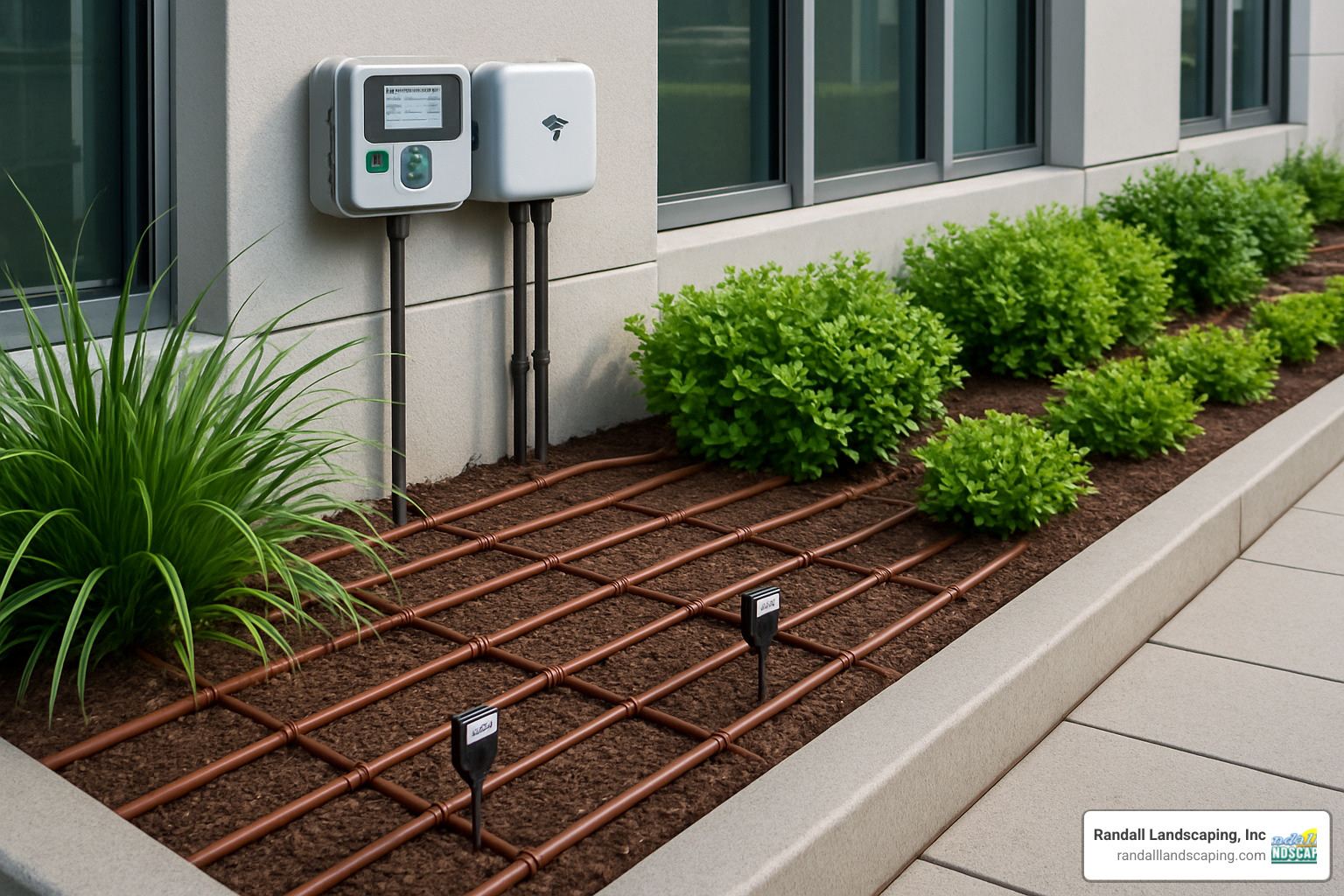
Drip irrigation systems represent one of the best investments in low maintenance commercial landscaping. By delivering water directly to plant roots, they can reduce water consumption by up to 60% compared to traditional sprinkler systems. Modern systems include smart controllers that adjust watering based on weather conditions, soil moisture levels, and plant needs.
LED landscape lighting requires minimal maintenance while providing year-round functionality. Unlike traditional lighting systems that require frequent bulb replacement, LED fixtures can operate for years without intervention. Smart controls allow you to adjust lighting schedules seasonally and respond to security needs without manual intervention.
Vertical green elements like living walls or trellised plantings maximize visual impact while minimizing ground-level maintenance requirements. These features can screen unsightly areas, provide privacy, and create focal points without requiring extensive ground preparation or ongoing lawn care.
For ongoing support and maintenance of these systems, consider our Landscape Maintenance Services, which can help ensure your automated systems continue operating efficiently.
Automation Essentials for Low Maintenance Commercial Landscaping
Modern technology has revolutionized what’s possible in low maintenance commercial landscaping. The key is selecting automation tools that match your specific site conditions and maintenance capabilities.
Soil moisture sensors eliminate guesswork from irrigation scheduling. These devices monitor actual soil conditions and communicate with irrigation controllers to prevent both overwatering and drought stress. For commercial properties, this technology typically pays for itself within the first growing season through reduced water bills and improved plant health.
Weather-based irrigation controllers automatically adjust watering schedules based on local weather conditions. They can delay irrigation during rainy periods, increase frequency during heat waves, and adjust seasonal schedules without manual intervention. The latest models connect to local weather stations for real-time data, ensuring optimal efficiency.
Quick-connect irrigation systems make seasonal maintenance much easier. Instead of complex permanent installations that require professional service for adjustments, modular systems allow facility managers to make basic modifications as landscape needs change. This flexibility is particularly valuable for commercial properties that may undergo periodic renovations or expansions.
Self-watering container systems extend the possibilities for seasonal color displays without increasing maintenance requirements. Modern reservoir systems can keep container plantings healthy for weeks without attention, making them practical for commercial applications where daily watering isn’t feasible.
According to Scientific research on efficient irrigation, ancient irrigation techniques like olla jars are finding new applications in modern sustainable landscaping. These clay vessels slowly release water directly to plant roots, providing consistent moisture with minimal waste.
Design Tricks to Balance Looks & Function
Creating attractive low maintenance commercial landscaping requires balancing aesthetic appeal with practical considerations. Our experience across diverse commercial properties in the Merrimack Valley has taught us several design principles that consistently deliver professional results.
Line-of-sight considerations are crucial for commercial properties. Plantings should improve rather than obstruct visibility for both security and wayfinding purposes. Low-growing plants near entrances and windows maintain clear sightlines while providing attractive landscaping. Taller elements should be positioned to frame views rather than block them.
Color theory plays an important role in commercial landscape design. Hot colors like red, orange, and yellow draw attention and are ideal for highlighting entrances or important features. Cool colors like blue and purple create calming effects and can make spaces feel larger. For low maintenance commercial landscaping, choose plants that provide reliable color without requiring frequent replacement.
Traffic flow analysis helps determine where hardscaping elements will be most effective. Areas of heavy foot traffic should be paved or planted with extremely durable groundcovers. Secondary circulation areas can accommodate more traditional plantings, while remote areas can be designed for minimal maintenance.
Snow storage zones are a critical consideration in our New England climate. Identify areas where snow will be piled during winter months and select plants that can tolerate periodic burial and salt exposure. This planning prevents costly plant replacement each spring and maintains professional appearance year-round.
ADA accessibility requirements influence both plant selection and hardscape design. Ensure that pathways remain navigable, that plantings don’t create barriers, and that maintenance activities won’t interfere with accessibility. Well-designed accessible landscapes often require less maintenance because they emphasize clear circulation and simple plant arrangements.
Costs, Savings & Implementation Tips
Let’s talk numbers – because when you’re managing a commercial property, every dollar counts. After working with hundreds of businesses across the Merrimack Valley, I’ve seen how low maintenance commercial landscaping transforms both budgets and bottom lines.
The upfront investment might make you pause, but here’s the reality: while initial costs run 20-40% higher than traditional landscaping, most property managers see their investment returned within 3-5 years. After that? Pure savings, year after year.
Note: These are average costs based on internet data and not actual costs for Randall Landscaping services, which may vary significantly based on site conditions and project scope.
Typical investment ranges for common improvements include native plant installation at $300-$1,500 per 100 square feet, while drip irrigation systems typically cost $1,200-$3,500 for an average commercial property. Artificial turf installation ranges from $3,000-$15,000 for 1,000 square feet, and hardscaping projects like patios and walkways can run $4,000-$20,000 depending on materials and complexity. Complete landscape conversions generally fall between $15,000-$75,000 for comprehensive redesigns.
The ROI timeline varies by improvement type, but water-saving measures like drip irrigation and drought-tolerant plants often pay for themselves within the first year through reduced utility bills alone. Hardscaping improvements take longer to recover costs but provide decades of maintenance savings.
Here’s something many property managers don’t know: many utilities and municipalities offer rebates for water-efficient landscaping improvements. Some programs can offset 25-50% of installation costs for qualifying improvements. It’s worth a call to your local water department.
Phased implementation makes these improvements much more manageable. Start with your most visible or problematic areas, then expand successful approaches to other zones as budget allows. This approach lets you spread costs over multiple budget cycles while learning what works best for your specific property.
| Feature | Traditional Annual Cost | Low-Maintenance Annual Cost | 5-Year Savings |
|---|---|---|---|
| 5,000 sq ft lawn area | $2,500-$4,000 | $800-$1,200 | $8,500-$14,000 |
| Seasonal flower beds | $1,800-$3,200 | $400-$800 | $7,000-$12,000 |
| Irrigation water costs | $1,200-$2,400 | $480-$960 | $3,600-$7,200 |
| Total Annual Savings | $5,500-$9,600 | $1,680-$2,960 | $19,100-$33,200 |
Frequently Asked Questions
What is a realistic budget range for converting a site?
The honest answer? It depends on your property size, existing conditions, and how ambitious your goals are. For a typical commercial property of 10,000-15,000 square feet, comprehensive low maintenance commercial landscaping conversions typically range from $25,000-$100,000.
Before you close this tab, hear me out. Phased approaches make these improvements much more budget-friendly. Starting with high-impact areas like entrances and main circulation routes might require $8,000-$25,000 initially. You can add additional phases as budget allows and results prove their worth.
The smart money focuses on changes that provide the biggest maintenance reduction for your investment. Replacing high-maintenance lawn areas with groundcover or hardscaping typically provides the fastest payback, while irrigation upgrades offer immediate water savings you’ll see on next month’s bill.
Think of it this way: a $30,000 investment that reduces annual maintenance costs by $8,000 pays for itself in less than four years, then provides ongoing savings for decades. That’s the kind of math that makes CFOs smile.
How do drip systems lower water bills?
Drip irrigation systems are like having a personal water butler for each plant – they deliver exactly what’s needed, exactly where it’s needed, with zero waste. Traditional sprinkler systems are more like using a fire hose to fill a coffee cup.
The 60% water savings comes from several factors: reduced evaporation (water goes directly to roots, not into the air), elimination of overspray onto sidewalks and buildings, and precise delivery that matches actual plant needs rather than watering everything equally.
For a typical commercial property, this translates to annual water bill reductions of $1,500-$4,000, depending on local water rates and property size. During drought conditions or water restrictions, these systems often allow continued irrigation when traditional methods are prohibited – keeping your landscape looking professional when others turn brown.
Smart controllers take this efficiency even further by adjusting for weather conditions and seasonal requirements. No more watering during rainstorms or running irrigation when plants are dormant.
When should I bring in a professional crew?
Here’s where I’ll be completely honest with you. While some aspects of low maintenance commercial landscaping can be handled by facility staff, professional installation makes the difference between a project that thrives and one that becomes an expensive lesson.
Soil preparation is particularly crucial for long-term success. Our crews have the equipment and expertise to properly amend those stubborn New England clay soils, install drainage where needed, and create growing conditions that support your low-maintenance plant selections for years to come.
Plant selection and placement require understanding mature sizes, growth habits, and site-specific microclimates. We’ve seen too many well-intentioned DIY projects where plants either fail to thrive or quickly outgrow their intended spaces, creating bigger maintenance headaches than before.
Irrigation system installation definitely calls for professional expertise. Proper design, installation, and programming ensure your system operates efficiently from day one and continues performing reliably for years.
For ongoing maintenance of converted landscapes, professional crews can often maintain larger areas more efficiently than in-house staff, especially for specialized tasks like irrigation system maintenance or seasonal adjustments that keep everything running smoothly.
Conclusion
Making the switch to low maintenance commercial landscaping is one of the smartest investments you can make for your property. It’s not just about cutting down on weekend mowing or reducing your landscaping crew’s hours – though those benefits are certainly welcome. It’s about creating outdoor spaces that work harder for your business while demanding less from your budget.
After nearly two decades of helping businesses across the Merrimack Valley and Southern New Hampshire transform their properties, I’ve seen how the right landscape choices can completely change a property’s trajectory. The 50% maintenance reduction and 15% property value increase we’ve discussed aren’t just numbers on paper – they’re real results that show up in your operating budget and property appraisals year after year.
The secret to success lies in taking a thoughtful, systematic approach. Start by honestly assessing your current maintenance challenges and costs. Are you spending too much on water bills? Constantly replanting seasonal displays? Dealing with brown patches in high-traffic areas? These pain points should guide your improvement priorities.
Low maintenance commercial landscaping doesn’t mean sacrificing curb appeal. Some of our most stunning commercial properties require the least ongoing care because we’ve matched the right plants to the right locations and invested in smart systems that do the heavy lifting.
Avoid the common mistakes that can undermine your investment. Don’t choose plants just because they look good in the garden center – make sure they’ll thrive in your specific conditions with minimal care. Don’t install irrigation systems without proper zoning for different plant needs. And don’t try to convert everything at once if budget is tight – phased approaches often work better and let you learn what works best on your property.
Long-term success requires some ongoing attention, but much less than traditional landscapes. Annual check-ups can catch small issues before they become expensive problems. Your irrigation system might need seasonal adjustments. Some plants may need occasional pruning or division. But these tasks are minor compared to the weekly mowing, constant watering, and seasonal replanting that traditional landscapes demand.
For detailed guidance on budgeting for ongoing care, our Commercial Landscape Maintenance Cost resource provides comprehensive information to help you plan effectively.
The bottom line? Low maintenance doesn’t mean low impact. With the right design and plant choices, you can create outdoor spaces that improve your property value, support your sustainability goals, and provide professional appearance year-round – all while freeing up budget and time for other business priorities.
At Randall Landscaping, we’ve been translating these principles into thriving commercial properties since 2006. Whether you’re managing a small office complex in Georgetown or a large commercial facility in Salem, we understand the unique challenges of New England commercial landscaping. Our team can help you achieve more green with less work, creating outdoor spaces that truly serve your business goals.
Prices quoted throughout this article are broad internet averages and may vary widely based on local conditions, site complexity, and specific project requirements.