Transform Your Outdoor Space with a Custom Paver Patio
A custom paver patio is a personalized outdoor living space built with individual paving stones arranged in specific patterns and designs to match your home’s style and your family’s needs. Unlike pre-cast concrete slabs, custom paver patios offer unlimited design flexibility, superior durability, and the ability to create unique outdoor entertainment areas.
Key Benefits of Custom Paver Patios:
- Durability – Last 25-50+ years with proper installation
- Design Flexibility – Unlimited patterns, colors, and shapes
- Easy Repairs – Individual pavers can be replaced without affecting the entire surface
- Increased Home Value – Quality hardscaping adds significant property value
- Low Maintenance – Simple cleaning and occasional re-sanding keeps them looking new
The process involves careful planning, proper excavation, installing a stable base, and laying pavers in your chosen pattern. While DIY installation can save thousands in labor costs, the project requires physical work, proper tools, and attention to detail for lasting results.
As Tommy Randall, owner of Randall Landscaping, Inc., I’ve been designing and installing custom paver patio projects throughout Massachusetts and New Hampshire since 2006, helping homeowners create beautiful outdoor spaces that stand the test of time. Whether you choose to tackle this project yourself or work with professionals, understanding the process ensures you’ll get the results you want.
Key custom paver patio vocabulary:
The Allure of a Custom Paver Patio: Benefits and Design Inspiration
When we say custom, we mean a patio designed for your yard, lifestyle, and taste – not a one-size-fits-all slab. Curves, multiple levels, or a layout that wraps an old maple are all possible, and the finished space feels like an outdoor room that truly belongs to the house.
Why invest?
- Higher resale value – quality hardscaping consistently delivers strong ROI.
- Built for New England weather – pavers flex; a concrete slab cracks.
- Low upkeep – sweep, rinse, and replace a single stone if needed.
- Best style – mix colors, borders, and patterns to echo your architecture.
Paver Materials and Types
- Concrete pavers – budget-friendly workhorse with endless colors and textures.
- Brick pavers – timeless New England charm that develops patina.
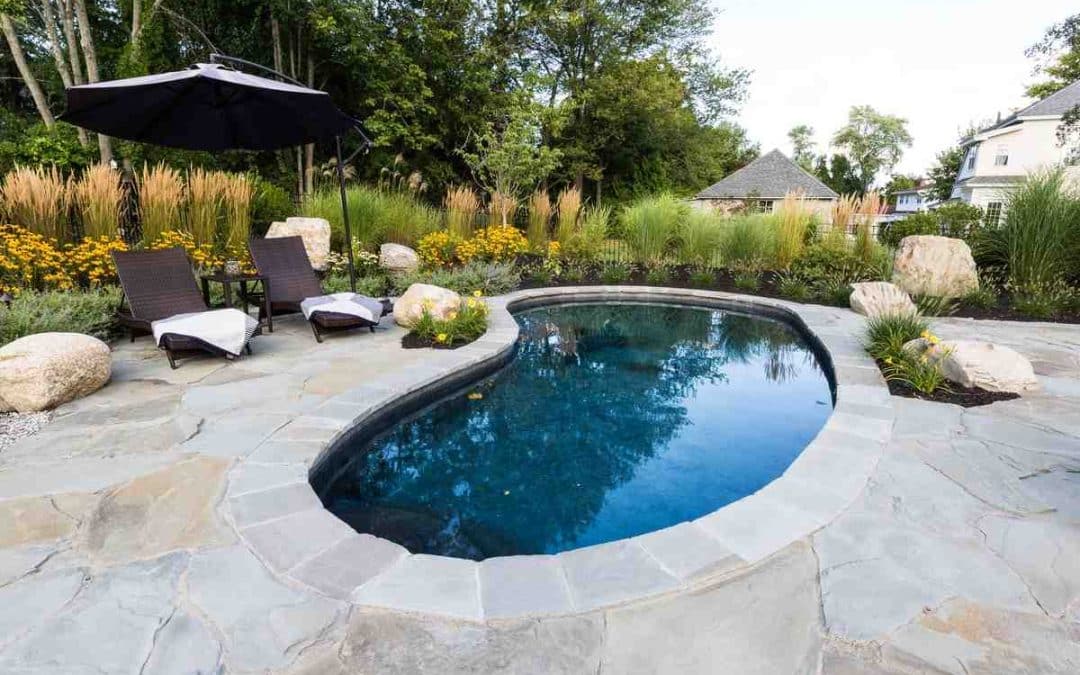
- Natural stone – premium bluestone, granite, travertine, or flagstone for a truly upscale look.
- Permeable pavers – filter rainwater and reduce runoff.
Randall Landscaping will help you balance appearance, performance, and budget.
Design Elements and Customization Options
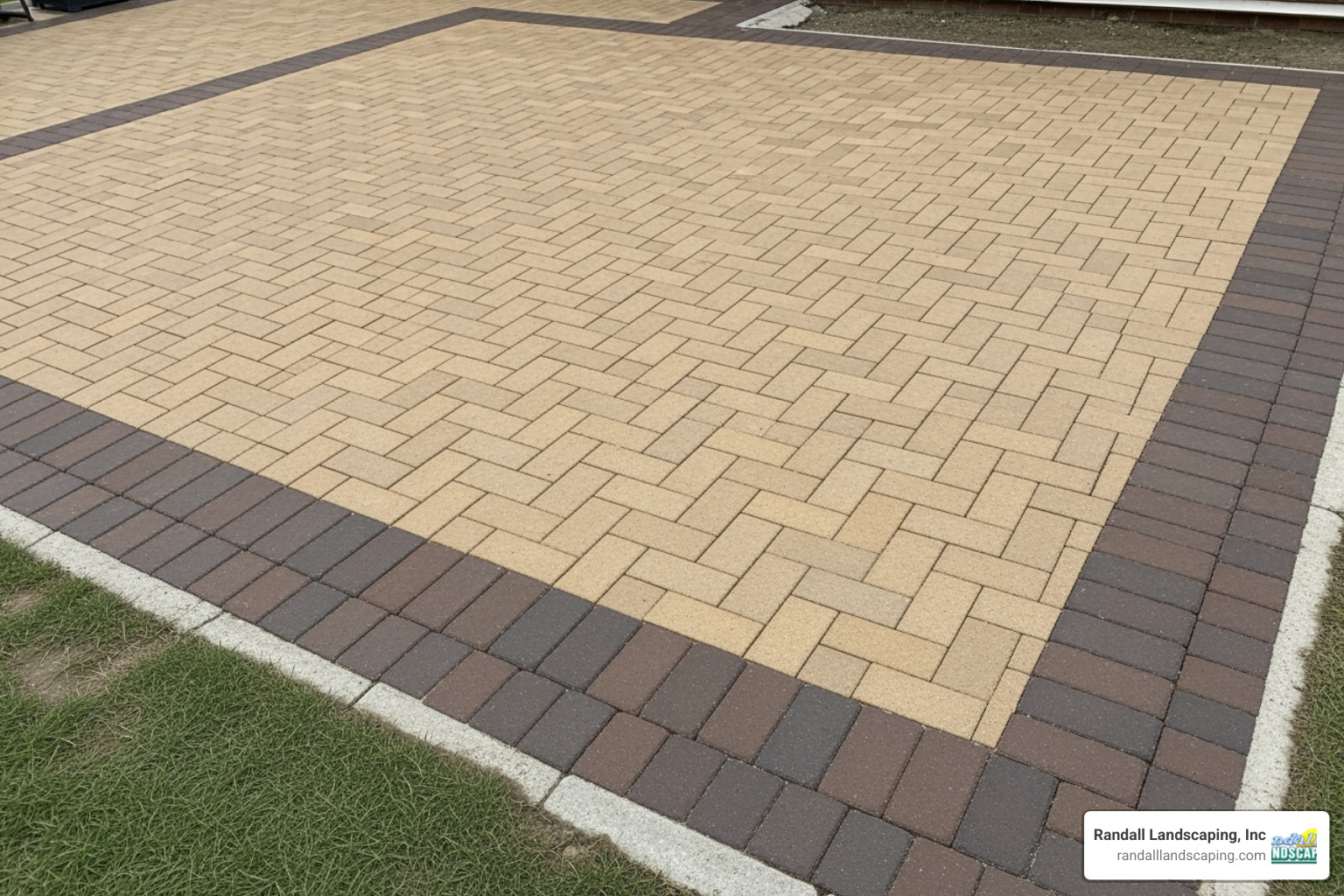
Popular patterns include herringbone, basket weave, running bond, and circular kits.
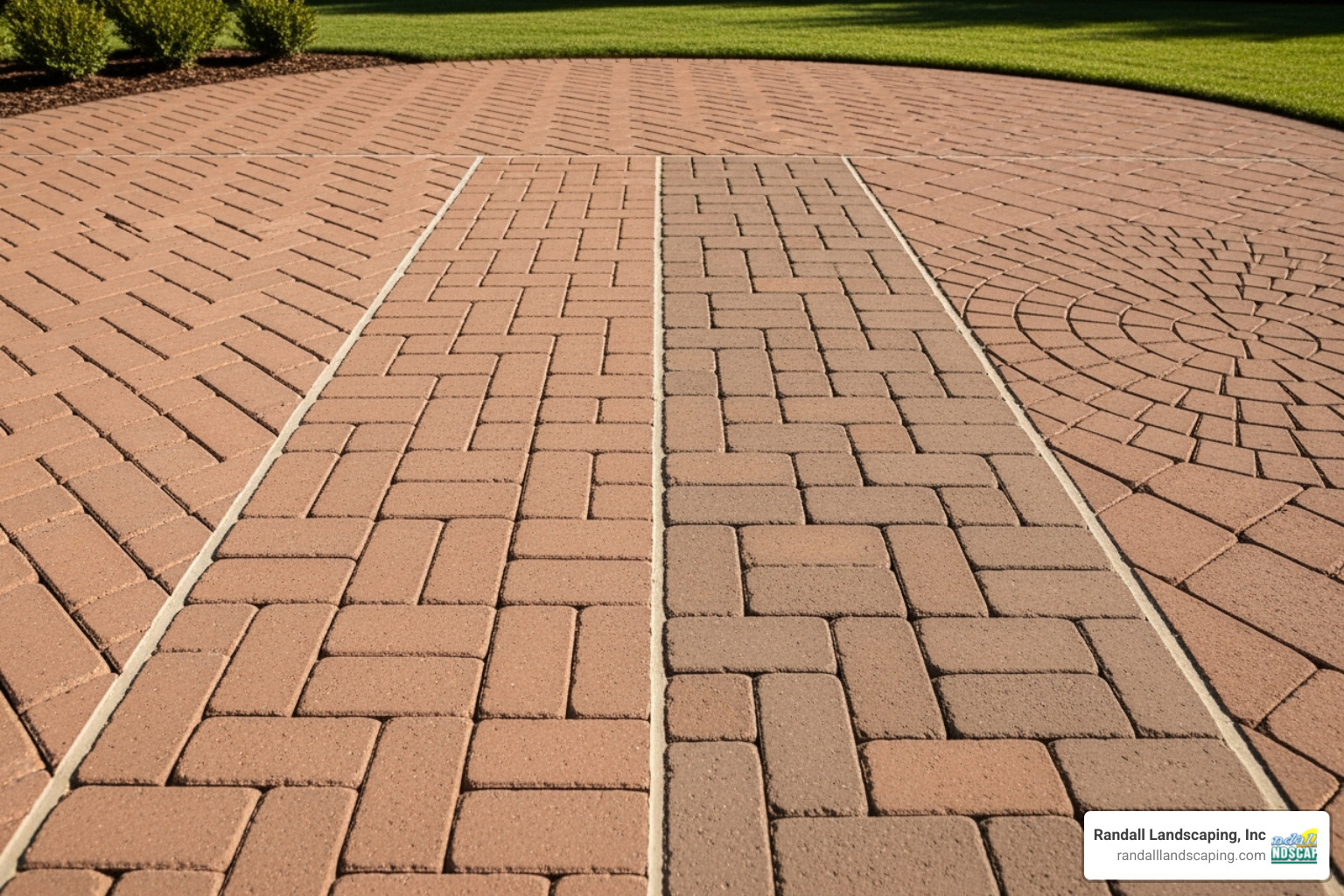
Size and shape follow function: big and open for parties, cozy and curved for quiet mornings. Contrasting borders and accents frame the space and separate activity zones.
Integrated Hardscape Features
Plan early for seating walls, fire pits, outdoor kitchens, water features, lighting, and retaining walls so foundations and utilities are placed once – not torn up later.
Planning Your Project: Materials, Tools, and Budgeting
Proper planning prevents poor performance, as we always tell our clients. Start by clearly defining your project scope – will this be a simple rectangular patio, or do you envision curves, multiple levels, or integrated features? The complexity directly impacts both material needs and installation difficulty.
Measuring accurately is crucial. For a basic rectangular patio, multiply length by width to get square footage. Add 10% for waste and cuts. For complex shapes, break the area into manageable geometric sections and calculate each separately.
When sourcing materials, quality matters enormously. We’ve seen too many DIY projects fail because homeowners chose inferior base materials or skipped important components like edge restraints. At Randall Landscaping, we work with trusted suppliers to ensure our clients get materials that will perform for decades.
Essential Materials and Tools
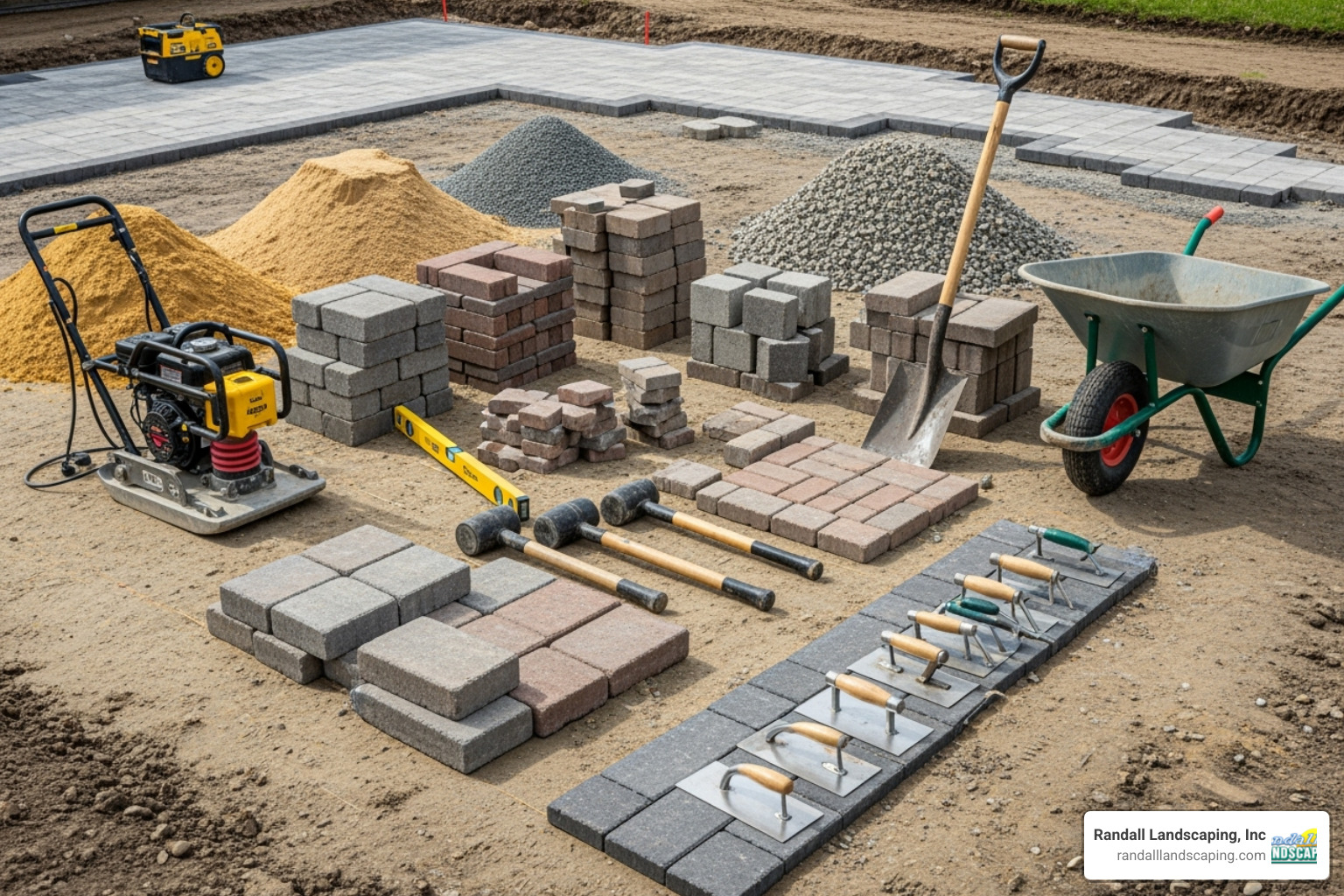
Materials needed for every project:
- Pavers (calculate square footage plus 10% waste)
- Gravel base material (processed gravel, crushed base, or bank run gravel)
- Bedding sand (coarse, angular sand – never use fine sand)
- Polymeric sand for joints
- Edge restraints (plastic or metal)
- Geotextile fabric (weed barrier)
Essential tools:
- Shovels and spades
- Wheelbarrow or garden cart
- Tape measure and marking spray paint
- 4-foot level and string line
- Rubber mallet
- Plate compactor (rental typically under $70)
- Masonry saw or angle grinder for cuts
The plate compactor deserves special mention – it’s absolutely essential for proper base preparation and final compaction. Don’t attempt to substitute with hand tampers for anything larger than a small walkway.
What are the cost considerations for a custom paver patio?
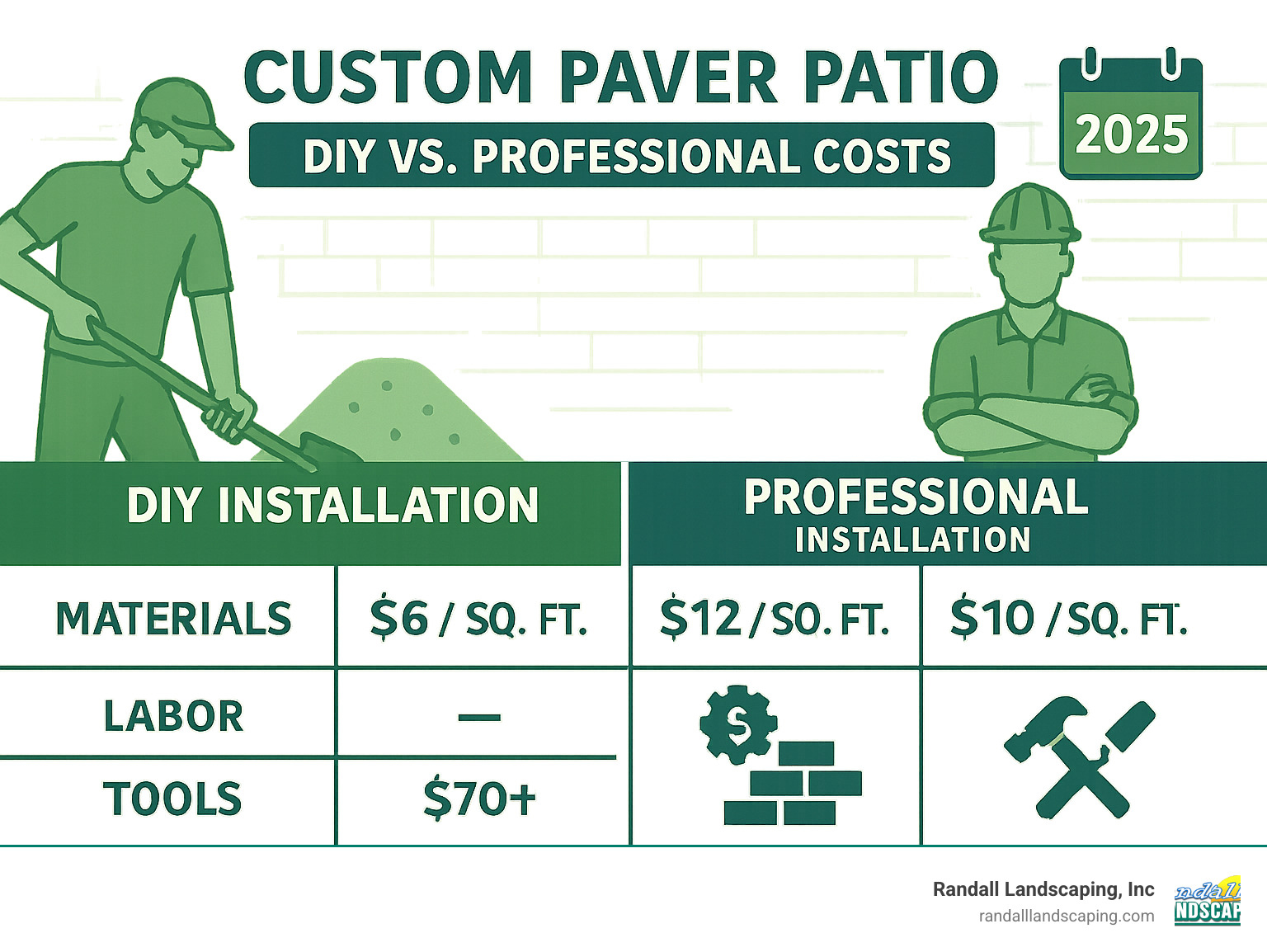
The figures below are wide-ranging average costs gathered from publicly available internet data; they are NOT Randall Landscaping pricing. Local conditions, material selections, and project complexity will ultimately determine your final investment.
| Cost Factor | Low End | Average | High End |
|---|---|---|---|
| Concrete Pavers (installed) | $8 / sq ft | $12 / sq ft | $40 / sq ft |
| Natural Stone (installed) | $15 / sq ft | $25 / sq ft | $75 / sq ft |
| DIY Materials Only | $3 / sq ft | $6 / sq ft | $20 / sq ft |
For a typical 225-square-foot patio, that translates to roughly $1,800–$9,000 for professionally installed standard concrete pavers, or about $675–$4,500 in DIY material costs alone.
The potential savings from DIY installation can be substantial—often $10,000–$30,000 on larger projects according to the same industry sources. However, remember to factor in tool rentals, the value of your time, and the risk of mistakes that might require professional correction.
Geographic location affects costs significantly. In the Merrimack Valley and Southern New Hampshire, material delivery, local labor rates, and seasonal demand all influence pricing.
Your Step-by-Step Guide to a Flawless Paver Patio Installation
Safety first – gloves, glasses, boots, and a quick call to 811 to locate utilities. Two handy homeowners can finish a simple 16×20 ft rectangle in a weekend; complex designs take longer.
1. Excavate and Prep
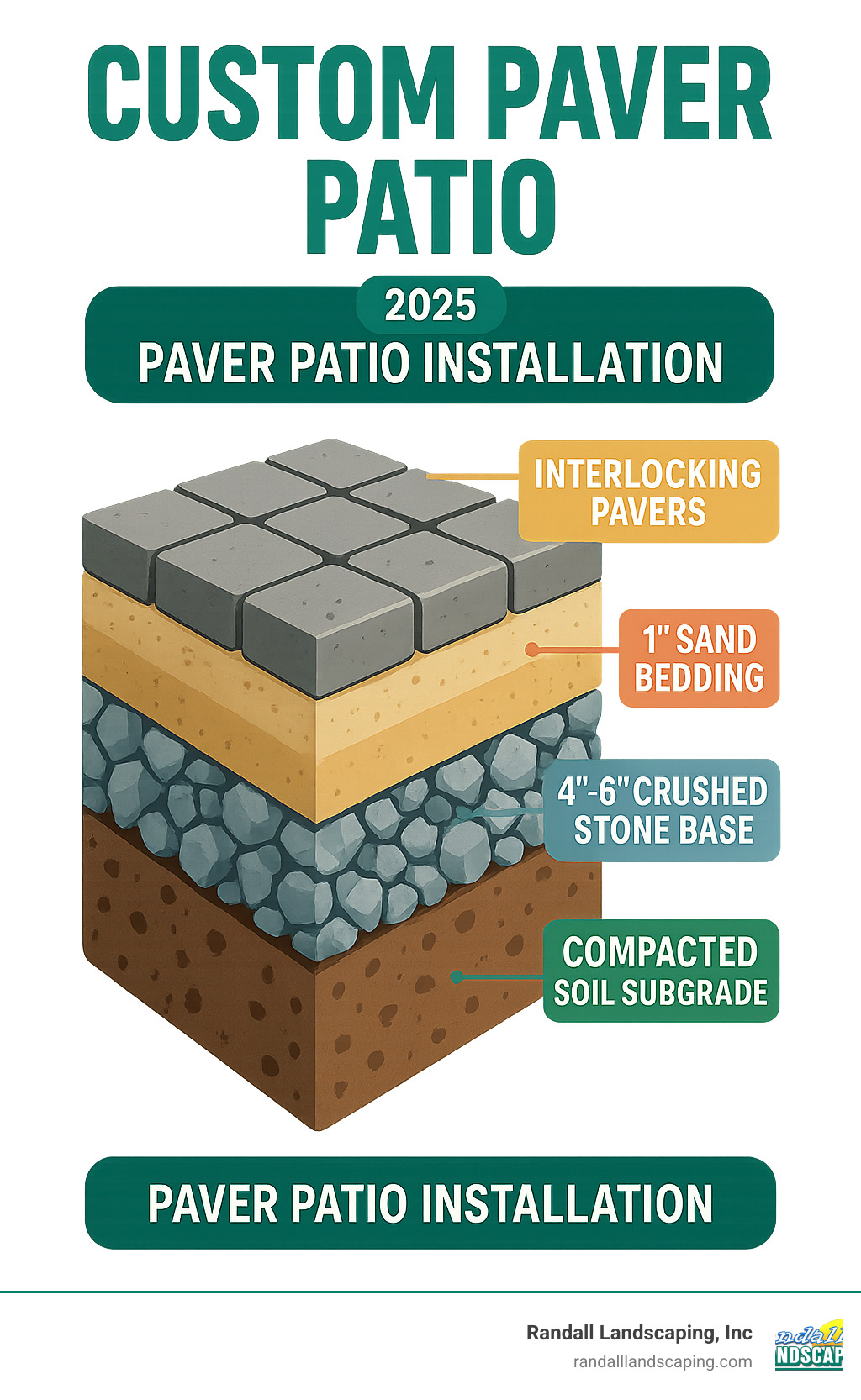
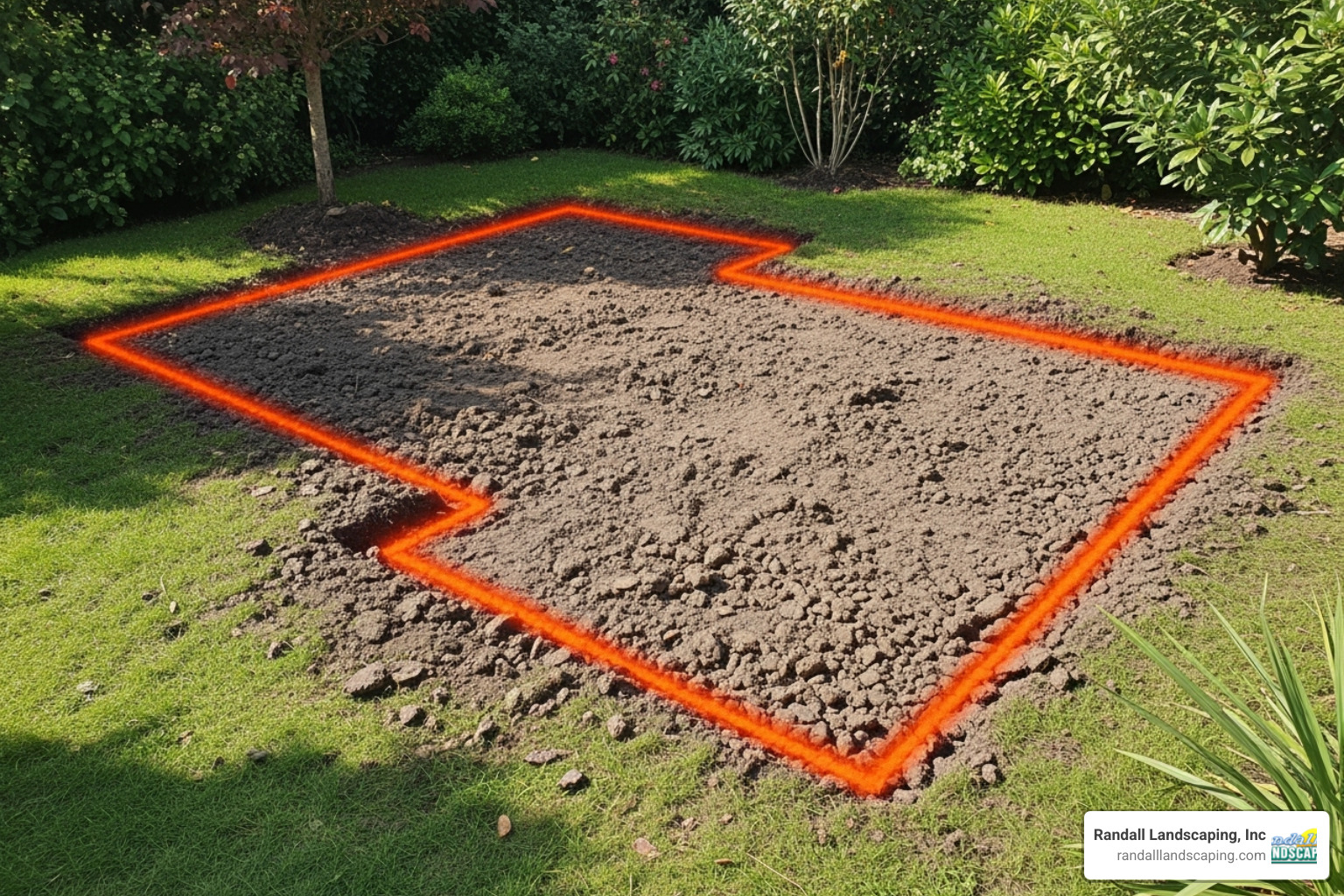
Mark the outline with paint, remove sod, and dig about 6 in. below finish grade (New England frost demands depth). Compact the sub-grade and create 1 in. of fall every 10-15 ft so water runs away from your home.
2. Base and Bedding
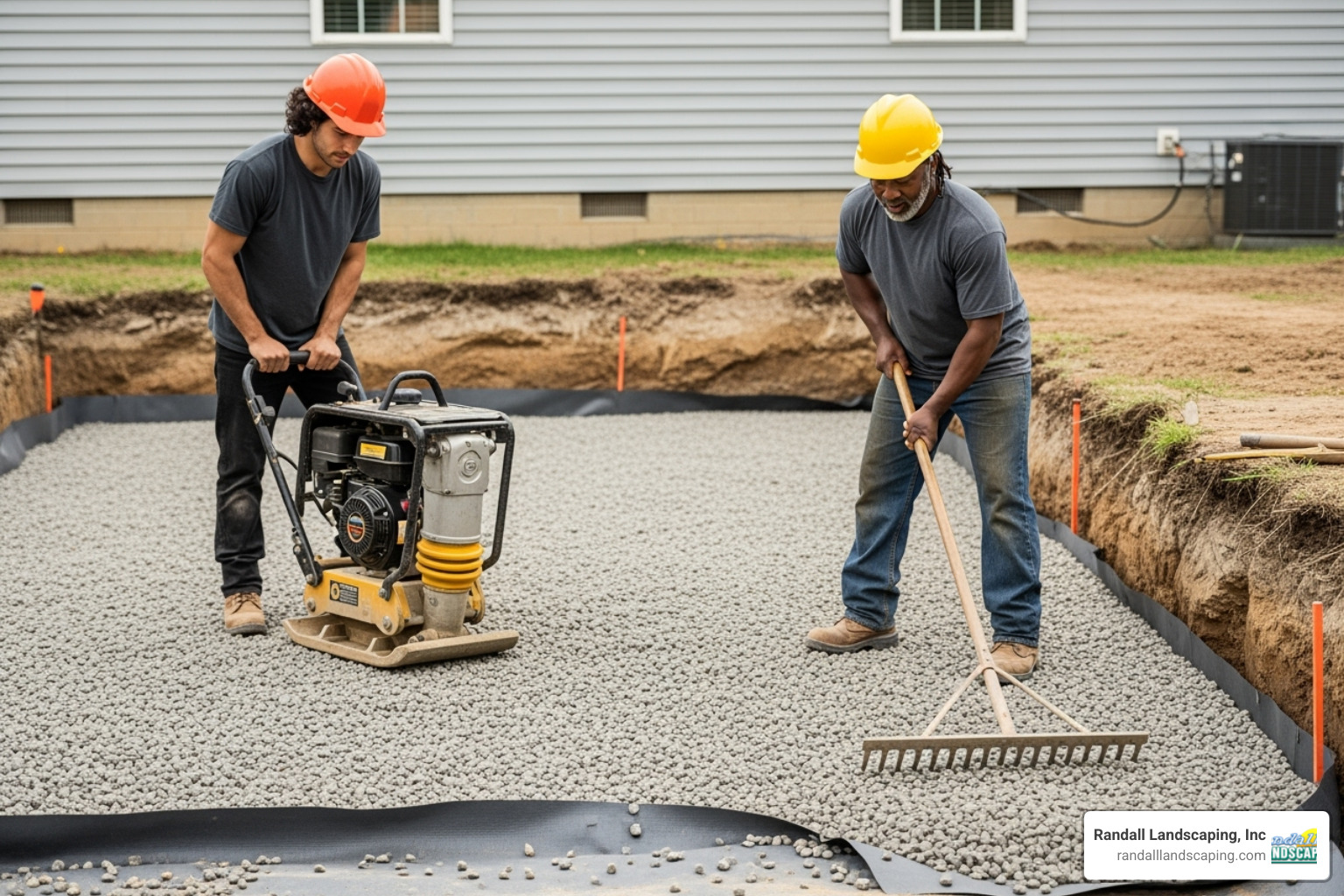
Roll out geotextile fabric, then add crushed gravel in 2-in. lifts, compacting each pass with a plate compactor. Top with 1-1.5 in. of coarse bedding sand and screed flat.
3. Lay Pavers
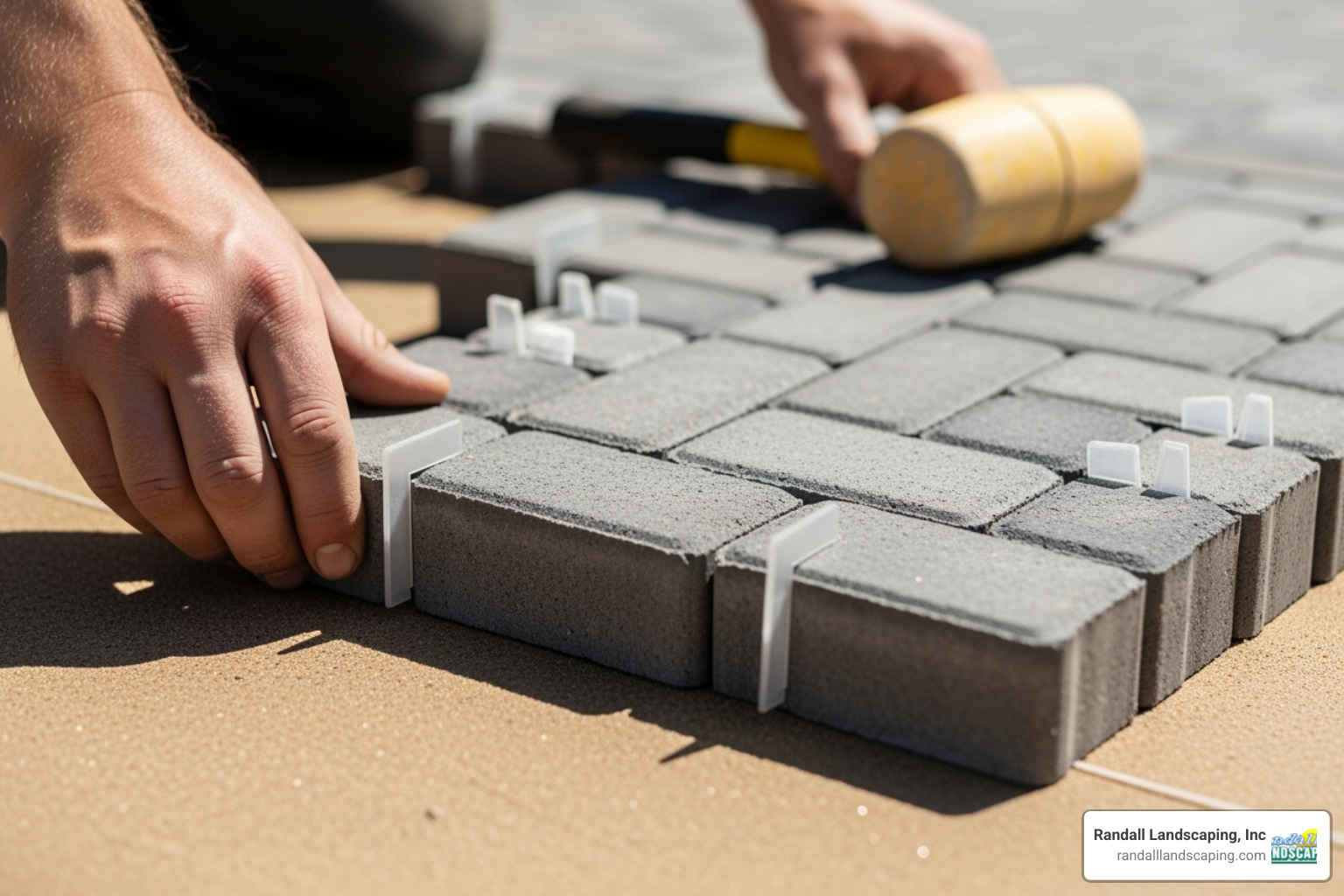
Start on a straight edge, set pavers gently, and tap with a rubber mallet. Keep joints uniform (about 1/8 in.) and check level often. Cut edges with a diamond-blade saw.
4. Lock Everything In
Install edge restraints, sweep polymeric sand into joints, and mist lightly to activate. Finish with one last pass of the compactor (use a protective pad). Let the patio cure 24 hours before heavy use – then fire up the grill!
DIY or Hire a Professional: Making the Right Choice
Ask yourself:
- Skill – Are you comfortable reading grades and using power tools?
- Time – Multiple weekends may vanish under piles of gravel.
- Physical ability – Excavation and hauling are demanding.
- Tools – Rentals add cost; mistakes add more.
DIY Pros
- Save thousands in labor.
- Full creative control.
- The satisfaction of building it yourself.
DIY Cons
- Steep learning curve and potential rework.
- Weather or family events can delay progress.
- No warranty if settling occurs.
Why Hire Randall Landscaping
- Decades of experience with Merrimack Valley and Southern NH soils.
- Commercial equipment for fast, precise results.
- Written warranty and all permits handled for you.
Many homeowners start DIY-curious and decide their time is more valuable; others happily build a simple patio themselves. Choose the path that fits your situation.
Maintaining Your Investment: Paver Patio Care and Longevity
Keeping a paver patio pristine is surprisingly easy:
- Sweep or blow away debris weekly.
- Scrub stains with mild dish soap and water, then rinse.
- Avoid harsh de-icing salts; use sand for winter traction.
- Top up joint sand and reseal (optional) every 3-5 years.
- Store a few spare pavers; swapping a damaged stone takes minutes.
Seasonal tips:
- Spring – inspect for frost heave and refresh sand.
- Summer – clean spills quickly.
- Fall – remove leaves to prevent tannin stains.
- Winter – plastic shovels only.
Need a refresh? Randall Landscaping offers professional cleaning, re-sanding, and sealing services.
Frequently Asked Questions About Custom Paver Patios
Can I build a paver patio over an existing concrete slab?
Yes – if the slab is crack-free and drains well – but the finished height rises 2-3 in., which can create threshold issues. In most cases we recommend removing the concrete and starting with a proper gravel base for maximum longevity.
How do you prevent weeds from growing between pavers?
Weeds are blocked by geotextile fabric under the base, solid edge restraints, and polymeric sand in the joints. If any appear, pull them promptly and top up sand.
How long does a custom paver patio last?
With correct installation, a paver patio routinely lasts 25-50+ years – far longer than wood decks or stamped concrete – and individual stones can be swapped out if one ever cracks.
Conclusion: Bring Your Vision to Life
Creating a custom paver patio is one of the most rewarding home improvement projects you can undertake. The change from ordinary backyard to stunning outdoor living space happens right before your eyes, and the results last for decades.
Think about it – you’re not just adding square footage to your home. You’re creating memories. Picture summer barbecues with friends, quiet morning coffee moments, and cozy evenings around a fire pit. A well-designed custom paver patio becomes the heart of your outdoor living experience.
The beauty of this project lies in its flexibility. Durability that withstands New England winters, design options that match your unique style, and low maintenance requirements that let you enjoy your space instead of constantly working on it. Plus, the increased home value means you’re making a smart financial investment while improving your quality of life.
Whether you tackle this as a DIY trip or work with professionals, understanding the process puts you in control. You’ll know what questions to ask, what materials matter most, and how to spot quality workmanship. That knowledge is valuable regardless of which path you choose.
The DIY route offers substantial savings and the satisfaction of creating something beautiful with your own hands. With proper planning, quality materials, and attention to detail, many homeowners successfully complete their dream patio projects. Just remember – take your time, don’t skip steps, and invest in the right tools.
For homeowners in the Merrimack Valley and Southern New Hampshire, tackling a large-scale project can be daunting. If you prefer a professional touch to guarantee a beautiful and long-lasting result, the experts at Randall Landscaping, Inc. are here to help. Contact us today to discuss your patio design ideas!
Your outdoor space is waiting. Whether you’re dreaming of intimate gatherings or grand entertaining, a custom paver patio can make it happen. The combination of beauty, functionality, and lasting value makes this investment one you’ll appreciate for years to come.
Start planning today – your perfect outdoor retreat is closer than you think.