

Why Drip Irrigation Misters Are Perfect for Smart Garden Watering
A drip irrigation mister is a specialized watering device that creates a fine spray to efficiently water plants while providing cooling and humidity. These emitters are ideal for delicate plants, seedlings, hanging baskets, and creating a comfortable microclimate in outdoor spaces.
Quick Guide to Drip Irrigation Misters:
- What they are: Small nozzles creating fine water mist.
- Flow rates: 1-10 GPH (gallons per hour) per nozzle.
- Best for: Ferns, seedlings, hanging baskets, greenhouse plants.
- Key benefit: Combines efficient watering with cooling and humidity.
- Essential accessory: 200-mesh filter to prevent clogging.
Drip irrigation misters offer something traditional drippers can’t: they water plants and create a cooling microclimate. Research from MIT shows drip irrigation can reduce water consumption by up to 60% compared to sprinklers, and misters add the bonus of evaporative cooling. Whether you’re nurturing hanging baskets, propagating seedlings, or cooling your patio, misters provide a smart solution.
I’m Tommy Randall, owner of Randall Landscaping Business. With 18 years of experience in Massachusetts and New Hampshire, I’ve seen how the right drip irrigation mister setup can transform plant health and outdoor comfort. Let me guide you through choosing the perfect misting system.
The Surprising Benefits of Misting Your Garden
A drip irrigation mister offers more than just basic hydration. A primary benefit is water efficiency. You might wonder how spraying water is efficient, but the secret is in the ultra-fine droplets. Unlike sprinklers that waste water on driveways, misters create tiny droplets that plants absorb. According to the Massachusetts Institute of Technology, drip systems can cut water use by up to 60% compared to sprinklers.
Misters also boost plant health. Their gentle spray won’t flatten seedlings or cause soil erosion. By delivering a fine mist that evaporates quickly, they keep leaves dry, which helps with disease prevention against mildew and fungal issues. Healthier plants can lead to increased crop yields, as water is delivered precisely where needed. Their versatility is another plus, as they can create cooling zones for family and pets on hot days.
Why Misters are Great for Certain Plants and Environments
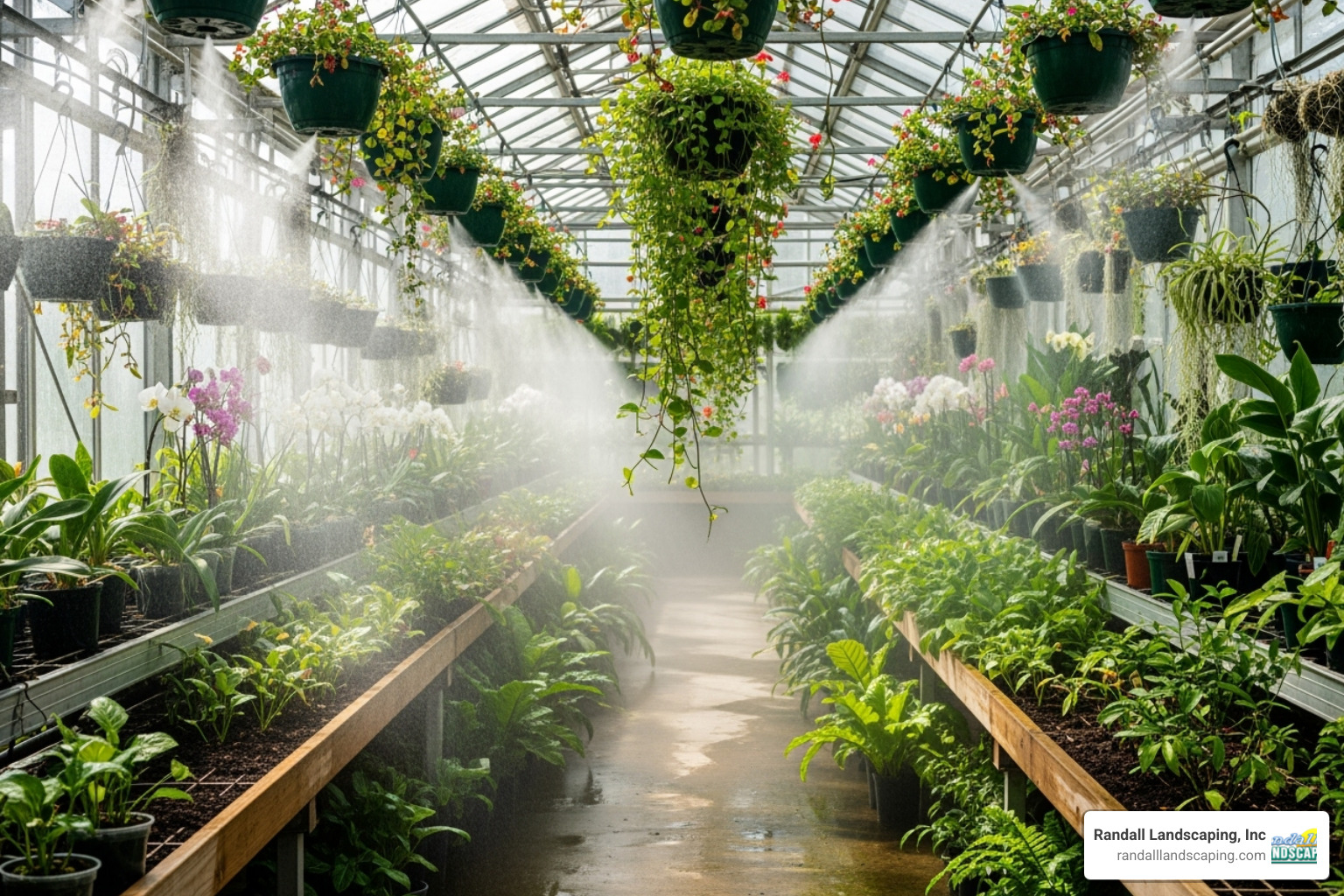
Certain plants thrive with misting. Delicate plants and seedlings are protected from harsh water pressure. Ferns, perennials, and tropical plants benefit from the added humidity that mimics their native environments. Hanging baskets, which dry out quickly, receive consistent moisture. Misters are also essential in greenhouses and atriums for humidity control and are highly effective for plant propagation from cuttings or seeds.
More Than Just Watering: Cooling and Humidity
The evaporative cooling effect is a major advantage. As fine water droplets evaporate, they absorb heat and can lower air temperature by 10-20 degrees. This cooling effect reduces heat stress on plants, helping them thrive in high temperatures. Misters also provide excellent humidity control, creating a microclimate with increased ambient humidity, which is perfect for moisture-loving plants. A drip irrigation mister system offers solutions that traditional watering methods can’t. For a comprehensive landscape approach, you might explore more info about our landscape design services.
How to Choose the Perfect Drip Irrigation Mister for Your Garden
Choosing the right drip irrigation mister requires matching the tool to the task. A little planning upfront can save you headaches later.
First, check your system pressure (PSI). Most misters operate best between 15-50 PSI. Too much pressure creates a wild spray, while too little results in drips. A pressure regulator can solve high-pressure issues. Water quality is also critical. The tiny openings in misters clog easily, so a 200-mesh filter is essential. Finally, match your mister to your plant needs and coverage area. Consider the flow rate (GPH) and spray pattern required for your specific garden.
Types of Misters: Finding Your Perfect Spray
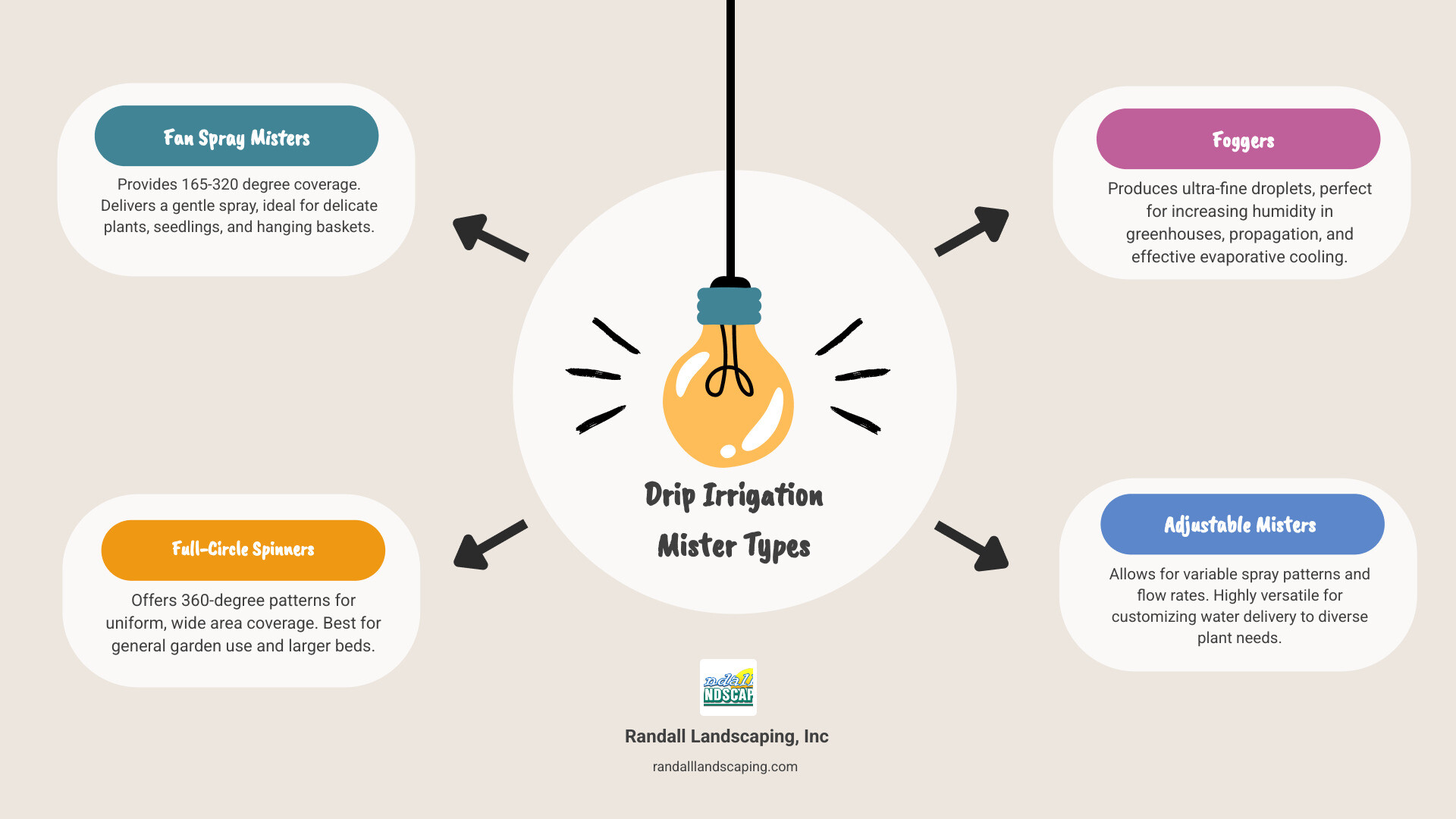
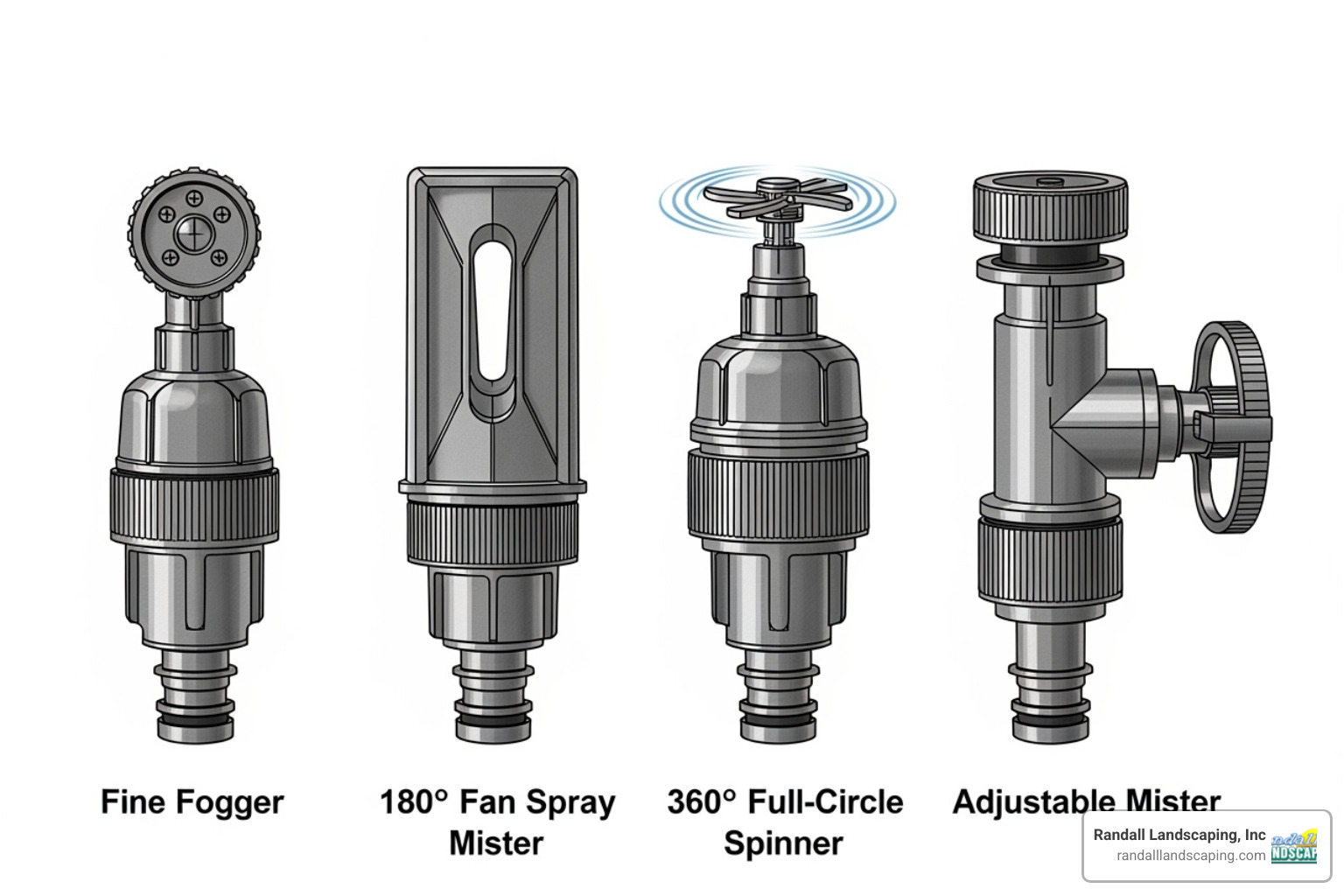
Different misters serve different purposes:
- Fan spray misters: Versatile, creating a fan-shaped pattern from 90 to 360 degrees. Great for garden beds and rows of plants.
- Full-circle spinners: Provide a 360-degree spray, ideal for central planting areas or round beds.
- Foggers: Produce an ultra-fine mist, perfect for high-humidity needs like propagation, cooling, or for tropical plants. They are very water-efficient, with flow rates as low as 1-2 GPH.
- Adjustable misters: Offer flexibility to change the flow rate or spray pattern, adapting to evolving garden needs.
- Multi-nozzle misters: Feature multiple spray heads in one unit for broader, more uniform coverage, often used in greenhouses.
- Low-flow misters: Deliver water at very low rates for precise watering of individual plants or containers.
Key Factors in Selecting a Drip Irrigation Mister
Consider these factors to create the ideal watering solution:
- Spray pattern: Determines water distribution. A 165-degree fan spray is good for a bed against a fence, while a 360-degree pattern suits a central plant.
- Flow rate (GPH): Indicates water delivery per hour, typically from 1 GPH for precision to 10 GPH for broader coverage.
- Operating pressure (PSI): Crucial for performance. Most misters need 15-50 PSI for a fine mist.
- Droplet size: Finer droplets are better for cooling and humidity, while larger droplets provide more direct watering.
- Coverage radius: The reach of the mister, from a few inches to several feet. This helps determine placement and quantity.
- Plant and soil type: Delicate plants and ferns benefit from a fine mist. Soil type influences how long to run the system.
By considering these factors, we can design a custom misting system. For broader irrigation solutions, see our professional sprinkler systems page.
Installation, Accessories, and Maintenance
Building a successful drip irrigation mister system relies on the right components working together.
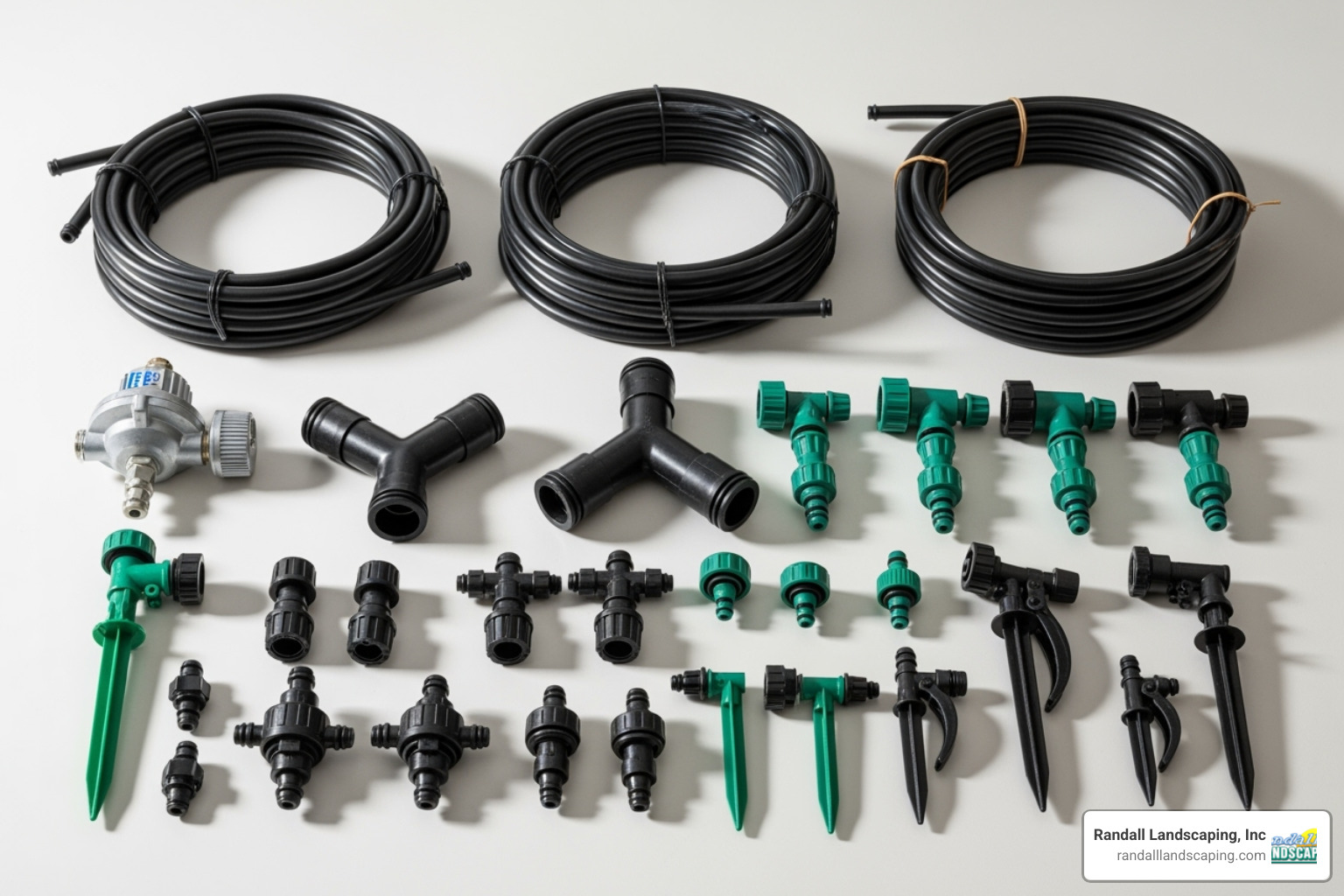
Essential components include a main water line, a backflow preventer (a safety requirement), a pressure regulator (to achieve 15-50 PSI), and a 200-mesh filter to prevent clogs. You’ll also need poly tubing (1/2-inch or 3/4-inch) as the main water carrier, smaller 1/4-inch micro-tubing to reach individual plants, risers to lift nozzles, and the mister nozzles themselves.
A Step-by-Step Guide to Installation
Installation is a methodical process:
- Connect to the water source: Attach the backflow preventer, pressure regulator, and filter, in that order.
- Lay out the poly tubing: Plan an efficient route to reach all plants.
- Punch holes and insert misters: Use a punch tool to make clean holes in the tubing and push misters in for a watertight seal. Use risers to position misters above foliage.
- Flush the system: Before capping the end, run water through the tubing to clear any debris from installation. Then, cap the end and test the system.
For help with complex setups, learn more about our garden water irrigation system installation services.
Maintaining Your Drip Irrigation Mister System
Regular maintenance keeps your system running smoothly:
- Regular inspection: Walk through your garden while the system is on to spot any issues.
- Clean the filter: When performance drops, rinse the 200-mesh filter screen.
- Check for clogs: If a mister stops working, remove and rinse it. A small pin can clear stubborn clogs.
- Replace damaged parts: Keep spare parts on hand for quick fixes.
- Winterization: In cold climates like New England, drain all water from the system before the first freeze to prevent damage.
- UV protection: Cover tubing with mulch to protect it from sun damage and for a cleaner look.
Misters vs. Other Emitters: What’s the Difference?
Not all irrigation emitters are the same. A drip irrigation mister is just one option, and understanding the differences helps you choose wisely for your garden. The main distinctions are the water application method and coverage area. Many of our clients in the Merrimack Valley use hybrid systems with multiple emitter types.
If you’re curious about the investment involved, we have information on the cost of a garden irrigation system.
Misters vs. Drippers and Bubblers
- Drippers are precise, delivering a slow drip (0.5 to 4 GPH) directly to the root zone. This is highly efficient, keeps leaves dry, and is ideal for plants prone to fungal diseases.
- Bubblers deliver more water than drippers, creating a small fountain effect to cover a concentrated area (1 to 3 feet). They are great for larger shrubs and new trees.
- Drip irrigation misters are different. They create a fine mist over a broad area (up to 12 feet). Their goal is to create a favorable microclimate by watering, increasing humidity, and providing cooling. While drippers and bubblers focus on root zone watering, misters condition the entire plant environment.
Misters vs. Soaker Hoses
- Soaker hoses are porous hoses that weep water slowly along their entire length at ground level. They are excellent for straight vegetable rows and flower beds, keeping foliage dry and minimizing evaporation.
- Misters work from above with an overhead mist. Soaker hoses provide ground-level seepage, while misters offer humidity control and atmospheric cooling, which soaker hoses cannot.
In terms of installation flexibility, soaker hoses are best for straight lines or gentle curves. Misters are more versatile and can be configured for hanging baskets, overhead systems, or scattered plantings. Both are more water-conscious than traditional sprinklers, but they serve different purposes. The choice depends on your plants’ needs and how you use your outdoor space.
Frequently Asked Questions about Drip Irrigation Misters
Here are answers to common questions I hear about drip irrigation misters from my clients in Massachusetts and New Hampshire.
Do misters use a lot of water?
No, they are quite efficient. A typical mister nozzle uses only 1 to 10 gallons per hour, far less than a standard sprinkler which can use hundreds of gallons per hour. The fine spray minimizes runoff, and the evaporation that occurs is intentional, providing a cooling effect. They use slightly more water than a dripper but are very efficient for creating a beneficial microclimate.
What kind of filter do I need for a mister system?
This is non-negotiable: you need a 200-mesh screen filter. Mister openings are tiny and will clog without proper filtration. This fine screen catches the smallest particles of sediment and debris. Install the filter in the line after the pressure regulator to protect your entire system and save yourself the frustration of clearing blocked nozzles.
What are the potential drawbacks of using misters?
While excellent tools, misters have limitations:
- Wind: On breezy days, the fine mist can drift away from your target plants. They are less effective in exposed, windy locations.
- Evaporation: While useful for cooling, it means some water may not reach the plant roots on hot, dry days. Drippers are better if your only goal is soil watering.
- Clogging Risk: The nozzles are prone to clogging, so regular filter maintenance is essential.
- Foliage Wetness: Not all plants like wet leaves, as it can encourage fungal diseases, especially in shaded or humid areas.
- Mineral Deposits: Hard water may leave mineral deposits on leaves over time.
Get the Perfect Watering System for Your Landscape
A well-designed drip irrigation mister system can transform your landscape. It’s not just about watering; it’s about creating an environment where plants thrive while enhancing your outdoor comfort.
Misters offer a unique triple benefit: efficient watering, humidity control, and evaporative cooling. This versatility sets them apart, whether you’re nurturing delicate seedlings or cooling a patio on a hot summer afternoon.
However, proper selection and installation are crucial. The right spray pattern, flow rate, and operating pressure must be matched to your garden’s specific needs to conserve water and ensure plant health. A DIY attempt can easily go wrong.
At Randall Landscaping, Inc., our experience across the Merrimack Valley and Southern New Hampshire ensures your system is designed and installed correctly. Our commitment to quality work and 100% reliability means you get a system that performs optimally for years. We handle everything from design to installation and maintenance.
Ready to upgrade to a smarter watering solution? Contact us for a professional garden sprinkler system installation and let’s design the perfect system for your landscape.