
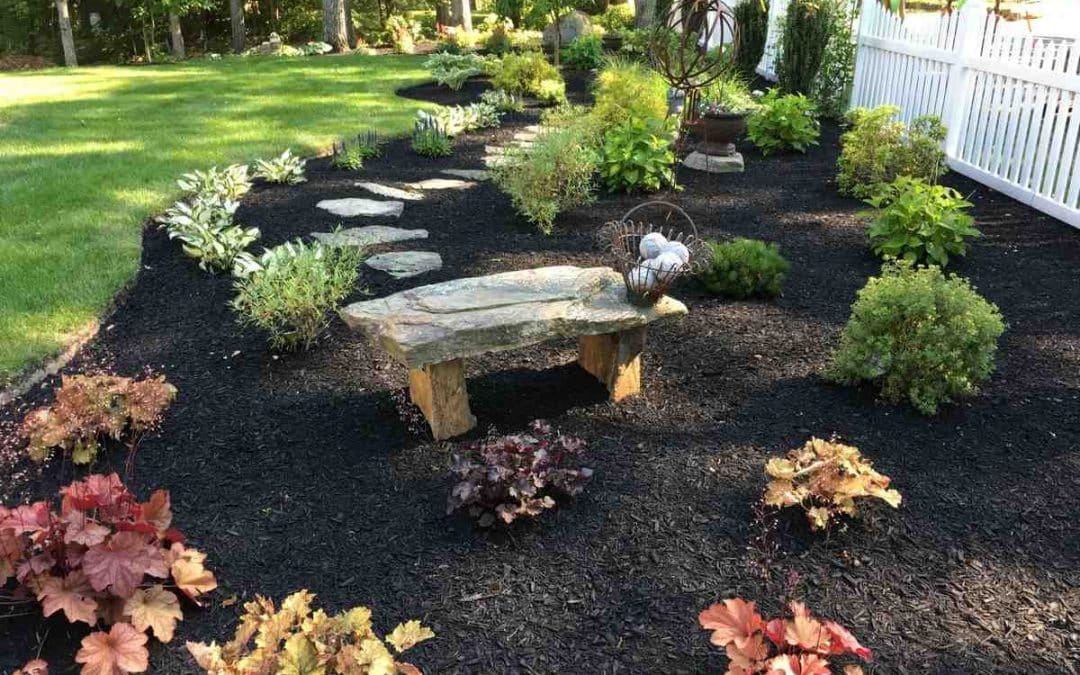
Making Your Garden Thrive with Earth-Friendly Ground Cover
When it comes to creating a healthy, vibrant landscape, what you put on the ground matters just as much as what you plant in it. Eco-friendly mulch options are sustainable materials that cover the soil around your plants, creating a protective blanket that benefits both your garden and the environment.
I’ve seen how the right mulch can transform a struggling garden into a thriving oasis. These earth-friendly options don’t just make your landscape look polished—they actively conserve water, keep weeds at bay, and enrich your soil naturally, all while reducing your environmental footprint.
Let’s take a closer look at some sustainable mulch choices that deliver amazing results:
| Mulch Type | Benefits | Best For | Environmental Impact |
|---|---|---|---|
| Wood Chips/Bark | Long-lasting, excellent weed control | Trees, shrubs, perennial beds | Repurposes waste, improves soil |
| Compost | Highest nutrient value, improves soil structure | Vegetable gardens, annual beds | Diverts waste, adds beneficial microbes |
| Straw | Good for vegetable gardens, inexpensive | Food gardens, winter protection | Renewable agricultural byproduct |
| Pine Needles | Acidic (good for acid-loving plants), lightweight | Azaleas, blueberries, rhododendrons | Natural forest byproduct |
| Leaf Mulch | Free, nutrient-rich, improves soil | Woodland gardens, shade beds | Recycles yard waste |
| Grass Clippings | Free, nitrogen-rich | Vegetable gardens | Recycles yard waste |
| Newspaper/Cardboard | Excellent weed suppression | Sheet mulching under other mulches | Recycles paper waste |
| Living Mulch | Adds beauty, supports pollinators | Around trees, between garden rows | Creates habitat, fixes nitrogen |
The benefits of using these materials are impressive. A simple 2-3 inch layer of organic mulch can slash your water needs by up to 50% while knocking out about 90% of potential weed growth. That means less time watering and weeding, and more time enjoying your outdoor space!
Among these options, pine straw stands out as one of the most environmentally friendly choices. It’s 100% biodegradable and comes as a natural byproduct of pine harvesting—a perfect example of turning what might be waste into a garden resource.
Hi there! I’m Tommy Randall, owner of Randall Landscaping Business. Since 2006, our team has been helping homeowners throughout Massachusetts and New Hampshire create more beautiful, sustainable landscapes with the perfect mulch applications. We take pride in matching the right eco-friendly mulch options to your specific landscape needs, ensuring you get both the aesthetic appeal and environmental benefits you’re looking for.
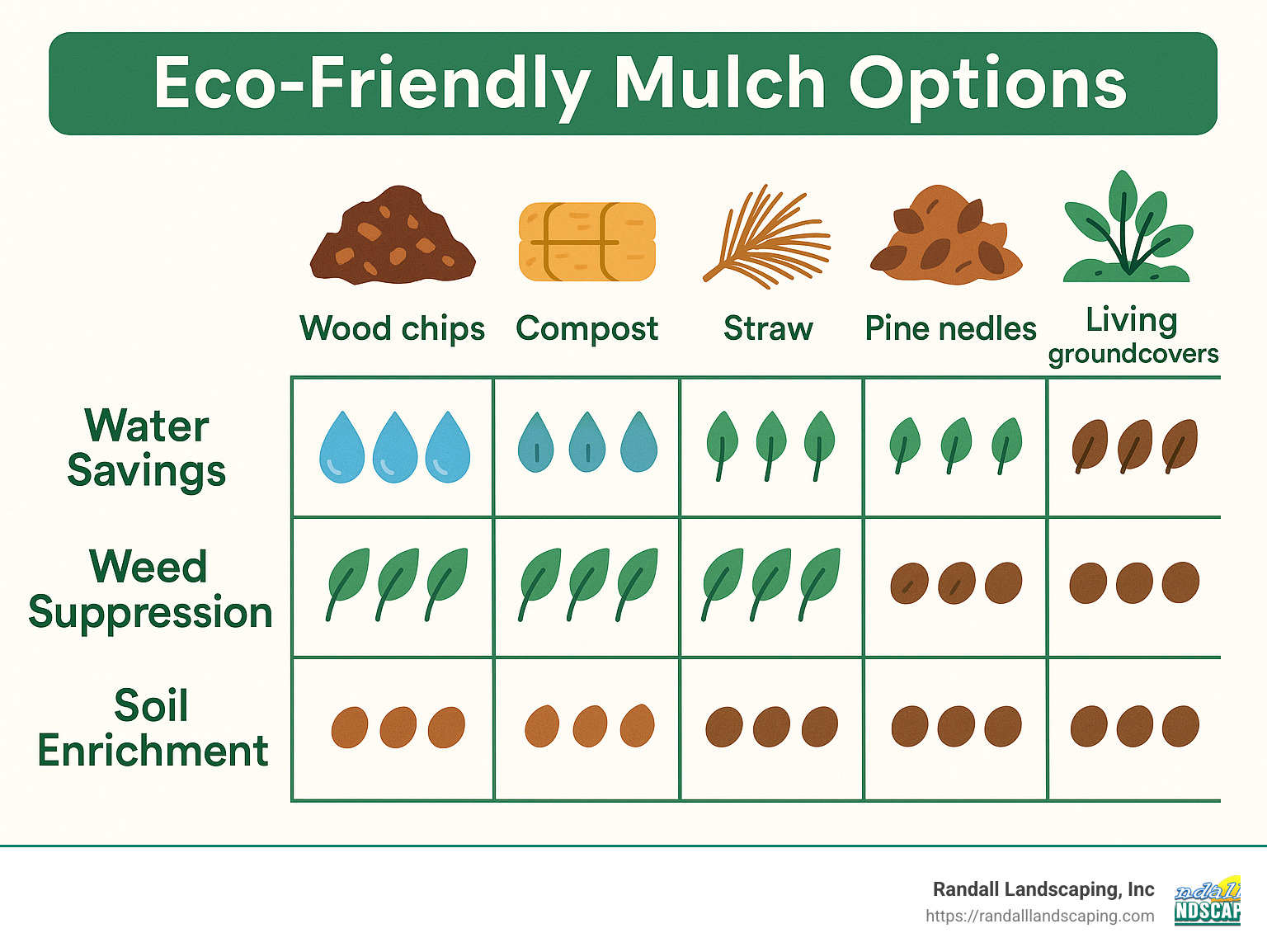
Eco-friendly Mulch Options: Quick Comparison
When considering how to improve your landscape while being environmentally conscious, understanding the differences between mulch types is essential. At Randall Landscaping, we’ve seen how the right mulch choice can transform both the appearance and health of gardens throughout the Merrimack Valley and Southern New Hampshire.
| Mulch Type | Average Cost* | Lifespan | Soil Benefits | Environmental Impact | Weed Control |
|---|---|---|---|---|---|
| Organic Mulches | $30-150/cubic yard | 1-3 years | High – adds nutrients as it decomposes | Excellent – biodegradable, supports soil life | Very good – 70-90% suppression |
| Synthetic Mulches | $50-300/cubic yard | 5-10+ years | Low – no nutrient addition | Poor – slow/no decomposition, potential leaching | Excellent – 90%+ suppression |
| Living Mulches | $3-30/flat of plants | Self-renewing | Excellent – adds organic matter, may fix nitrogen | Outstanding – creates habitat, supports pollinators | Moderate – 50-70% suppression |
*Prices represent internet averages and can vary widely—high-end specialty mulches may cost 3× or more than basic bulk options.
The optimal application depth for most eco-friendly mulch options is 2-4 inches. Any less won’t effectively suppress weeds, while too much can prevent water from reaching plant roots and create conditions for fungal diseases. I always tell my clients, “The right depth of mulch is like Goldilocks—not too little, not too much, but just right.”
Here’s a crucial warning: avoid creating “mulch volcanoes” around trees! This common mistake can cause bark rot, invite pests, and eventually kill trees. Instead, keep mulch 2-4 inches away from tree trunks, creating a slight depression around the base rather than a mound.
For sustainability and cost savings, we strongly recommend sourcing mulch locally. This reduces transportation carbon emissions and often means fresher, more beneficial materials for your soil ecosystem. If you’re looking for professional installation, check out our Mulch Installation & Blowing services. Michigan State University also offers excellent scientific research on organic mulch benefits that confirms what we’ve seen in practice.
Choosing the right Eco-friendly mulch options for your climate
The climate in the Merrimack Valley and Southern New Hampshire presents specific challenges and opportunities when selecting eco-friendly mulch options. Our region, primarily in hardiness zones 5b-6a, experiences cold winters and moderately humid summers, which influences mulch performance.
For areas with heavy rainfall like parts of Southern NH, we recommend mulches with good drainage properties, such as arborist chips or pine straw, which prevent soil compaction while retaining appropriate moisture. In drier microclimates, coconut coir or leaf mulch excel at moisture retention.
Soil pH also matters significantly. Many areas in our service region have naturally acidic soils. If you’re growing acid-loving plants like blueberries, rhododendrons, or azaleas, pine needle mulch can help maintain that acidity. For vegetable gardens or plants preferring more neutral conditions, compost or straw makes a better choice.
Native plants typically thrive with mulches that mimic their natural environment. For woodland natives common in our region, leaf mulch or pine needles create familiar conditions that support healthy growth.
Cost considerations vary widely based on material and source. While basic wood chips might range from $30-60 per cubic yard delivered, specialty mulches like cocoa hulls can cost $90-270 per cubic yard. Living mulch groundcovers might start at $3-5 per plant but provide years of coverage as they spread.
“When selecting mulch, think beyond the current season,” I often tell our clients at Randall Landscaping. “The right mulch not only improves aesthetics now but builds soil health for years to come.”
Organic Mulch Staples
The foundation of any sustainable landscape begins with organic mulches. These materials not only protect and improve your soil but return to it as they break down, completing a natural cycle that synthetic options simply cannot match.
Wood chips, bark, and arborist chips have become the gold standard for long-lasting organic mulch. What makes arborist chips particularly valuable is their mixed composition—containing wood, bark, and often some leaf material—creating a diverse material that supports a wide range of soil organisms. According to our research, a thick layer of wood chips can suppress up to 90% of weed growth in garden beds.
Leaves, grass clippings, and compost represent readily available resources that many homeowners already produce. Shredded leaves as mulch can provide up to 80% of the nutrients needed for healthy soil while reducing landfill waste. When these materials break down, they feed essential soil microbes that form the foundation of plant health.
The decomposition rate matters too. Faster-decomposing materials like grass clippings and compost provide quick nutrient boosts but need more frequent replenishment. Slower-decomposing wood chips and bark offer longer-lasting protection with less maintenance.
What truly sets organic mulches apart is their contribution to soil life. As one soil scientist explains: “When you apply organic mulch, you’re not just covering soil—you’re feeding an entire ecosystem that works 24/7 to support your plants.”
Eco-friendly mulch options: Wood chips & bark
Mixed-size arborist chips represent one of the most sustainable mulch options available today. These materials, once considered waste byproducts, have become prized for their exceptional garden benefits.
“Arborist chip mulch is our favorite!” notes one expert gardener. “What was once an unwanted by-product has become one of the most valuable resources for sustainable landscapes.”
The key advantages of wood-based mulches include:
- Diverse composition: Contains wood, bark, and often leaf material, supporting varied soil organisms
- Excellent weed suppression: A 3-4 inch layer can block 90% of weeds
- Moisture retention: Reduces watering needs by up to 50%
- Temperature moderation: Keeps soil cooler in summer and warmer in winter
- Fungal support: Encourages beneficial mycorrhizal networks that extend plant root systems
For optimal results, we recommend using untreated hardwood chips from local sources. At Randall Landscaping, we’ve found that a 2-4 inch layer provides the perfect balance of protection without risking root rot or oxygen deprivation. With proper application, wood chip mulch typically needs refreshing every 1-2 years, though a thin top-up annually maintains its aesthetic appeal.
One important note: avoid using fresh wood chips directly around young plants, as they can temporarily tie up nitrogen during decomposition. For vegetable gardens or annual beds, aged chips (at least 6 months old) work best.
Leaf litter, grass & compost blend
Nature’s original mulch—fallen leaves—provides an excellent opportunity to recycle yard “waste” into garden gold. When shredded, leaves break down more quickly and stay in place better than whole leaves, which can mat together and block water.
For an optimal leaf mulch:
- Collect fallen leaves in autumn (oak, maple, and beech work particularly well)
- Shred them with a lawn mower or dedicated shredder
- Apply a 2-3 inch layer around perennials, trees, and shrubs
Adding nitrogen-rich grass clippings to leaf mulch accelerates decomposition and adds nutrients. However, we strongly advise using only chemical-free lawn clippings to avoid introducing herbicides or pesticides to your garden beds.
“Slugs hate grass clippings,” notes one experienced gardener, “so you won’t need to worry about any midnight bug buffets.” This natural pest deterrent effect makes grass clippings particularly valuable in vegetable gardens.
Compost represents the most nutrient-dense organic mulch option. A layer of compost mulch can increase soil organic matter by up to 5% in a single season, dramatically improving water retention and plant health. For best results, screen compost before use to remove any weed seeds or large chunks.
Many of our clients in the Merrimack Valley have found success with a layered approach: a base layer of shredded leaves, a thin layer of compost, and a top dressing of wood chips for aesthetics and longer-lasting protection.
Best practices & maintenance
Proper application and maintenance of organic mulches ensures maximum benefits while avoiding common pitfalls. Through our years of experience at Randall Landscaping, we’ve developed these best practices:
- Maintain proper clearance: Keep mulch 2-4 inches away from plant stems and tree trunks to prevent rot and disease.
- Watch your depth: Never exceed 4 inches of mulch depth. Excessive mulch can create anaerobic conditions that harm roots and beneficial soil organisms.
- Annual refreshing: Add approximately 1 inch of fresh mulch yearly as the existing layer breaks down and settles.
- End-of-season integration: For annual beds and vegetable gardens, consider turning spent mulch into the soil at season’s end to improve soil structure.
- Monitor for pests: Occasionally check under mulch for unwanted visitors like slugs or voles, especially in wetter areas.
- Address matting: Fluff up mulch that has become compacted to improve air and water flow.
“Excessive mulch depth can create ‘mulch volcanoes’ that seriously threaten tree health,” warns one arborist. This common mistake can lead to bark rot, pest infestation, and eventually tree decline or death.
For clients throughout Southern New Hampshire and the Merrimack Valley, we recommend adjusting maintenance based on your specific microclimate. Shadier, moister areas may require less frequent mulch application but more vigilance against fungal issues, while sunnier spots may need more frequent refreshing to maintain adequate depth.
Agricultural & Nut-based Mulches
Beyond traditional wood-based mulches, a variety of agricultural byproducts and nut-based materials offer excellent eco-friendly mulch options with unique benefits. These sustainable alternatives represent a wonderful way to repurpose what might otherwise end up as waste.
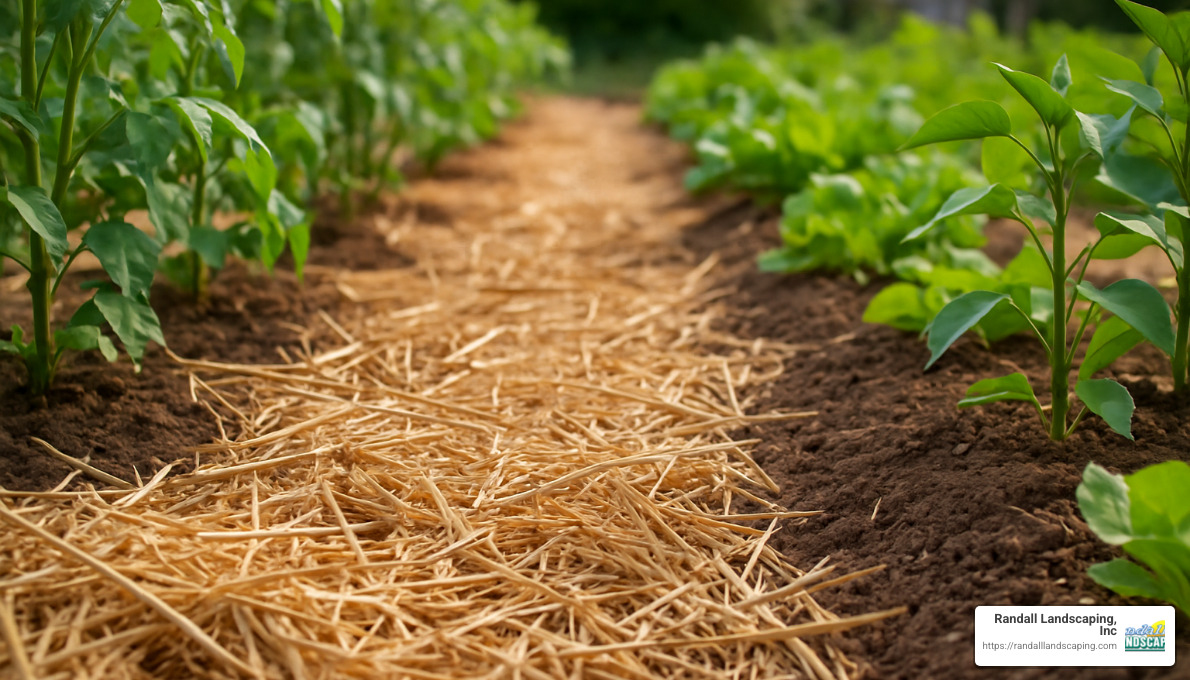
In our years of landscaping experience throughout the Merrimack Valley, we’ve seen how materials like straw, seed-free hay, pine needles, bamboo shreds, coconut coir, and various nut shells can transform gardens. Each brings something special to your landscape. Bamboo mulch, for instance, is packed with silica that helps plants resist pests and environmental stress. Crushed nut shells add wonderful texture and slowly release nutrients as they break down.
These materials also let you fine-tune your soil’s pH balance naturally. Pine needles provide that slight acidity that blueberries, azaleas, and rhododendrons absolutely love, while coconut coir maintains a neutral pH while holding an impressive amount of moisture.
For those tricky slopes we often encounter in New Hampshire landscapes, we’ve finded that pine straw and coconut coir really shine during heavy rainstorms. Their natural tendency to interlock creates a protective mat that keeps soil in place while still allowing water to soak in rather than run off.
Pine straw & needle mulch
Pine needles, commonly called pine straw, stand out as one of the most environmentally friendly mulching materials available today. As a natural byproduct of pine harvesting that requires minimal processing, its sustainability credentials are impressive.
“Pine straw is considered one of the most environmentally friendly mulches because it is a natural by-product of pine tree harvesting and is 100% biodegradable,” as one environmental landscaping expert puts it.
What makes pine straw so wonderful to work with is its lightweight nature – much easier on your back than lugging heavy wood mulches! The needle structure creates natural air pockets that ensure excellent oxygen flow to your soil while the needles naturally interlock to stay put, even on slopes. This makes it perfect for the rolling landscapes we often work with in Southern New Hampshire.
During our harsh New England winters, pine needle mulch provides outstanding insulation, protecting perennial roots from damaging freeze-thaw cycles. It typically lasts 1-2 years before needing replacement, and as it slowly breaks down, it gently acidifies the soil – a real bonus for those acid-loving plants.
Many of our clients choose pine straw for its distinctive, natural appearance that works beautifully in woodland-style gardens. Its initial reddish-brown color gradually ages to a subtle silver-gray that complements many landscape designs throughout the seasons.
Coconut coir, nut & seed shells combo
Coconut coir has been gaining well-deserved popularity as an eco-friendly mulch option with remarkable water retention properties. While it travels farther than locally-sourced materials, its performance and durability often justify the transportation impact.
“Coconut coir not only retains moisture well but may also deter snails and slugs without chemicals,” according to garden researchers. This natural pest deterrence makes it particularly valuable around hostas or in vegetable gardens where slugs often feast.
Nut and seed shells bring both beauty and function to your garden beds. Pistachio, walnut, and pecan shells create interesting textures while slowly breaking down to feed your soil. We recommend crushing them before application (whole shells can blow away too easily) and mixing them with leaves or compost to improve decomposition. Each type of shell brings its own unique color and texture to your landscape.
One caution we always share with our Andover and North Andover clients: watch for allelopathy with certain nut shells, particularly black walnut, which contain compounds that can inhibit some plants.
For several of our clients in the Merrimack Valley, we’ve created a layered mulch approach that combines the best qualities of multiple materials:
– A base layer of moisture-retaining coconut coir
– A middle layer of crushed nut shells for drainage and visual interest
– A lightweight top accent of pine straw for protection with natural appeal
This combination creates not just a functional soil cover but an aesthetically pleasing, highly effective mulch system that supports plant health through multiple seasons.
Straw, hay & bamboo blankets
Straw mulch has earned its place as a vegetable garden favorite, and for good reason. Its light color reflects sunlight, keeping soil temperatures cooler during hot summer days – ideal for heat-sensitive crops. It breaks down relatively quickly, enriching your soil with organic matter over a single growing season.
One important distinction we always emphasize: straw (hollow stems) differs significantly from hay (which includes seed heads). We strongly recommend seed-free straw to avoid introducing weeds. As one of our clients in Methuen humorously finded after using hay instead of straw: “I saved money on mulch but spent the whole summer pulling weeds!”
Bamboo mulch represents an exciting newer addition to our eco-friendly mulch options with some impressive characteristics. Unlike wood mulches, bamboo decomposition doesn’t significantly reduce available nitrogen in your soil. It’s naturally rich in silica, which helps plants resist both pests and environmental stresses. Its excellent permeability allows water to penetrate while preventing evaporation, and it completely breaks down in about 12 months, enriching your soil in the process.
For the sloped properties we frequently work with throughout the Merrimack Valley, bamboo mulch has proven exceptional for erosion control. Its fibrous nature helps it stay firmly in place during heavy New England downpours, protecting valuable topsoil from washing away.
Here’s a helpful tip from our field experience: When spreading straw or bamboo mulch, dampen it immediately after application to prevent wind from carrying it away. A 2-3 inch layer provides optimal weed suppression while still allowing water to penetrate to plant roots.
Innovative Upcycled & Living Mulch Alternatives
Thinking beyond traditional mulch materials opens up exciting possibilities for sustainable landscaping. Upcycled materials and living mulch alternatives represent some of the most innovative eco-friendly mulch options available today.
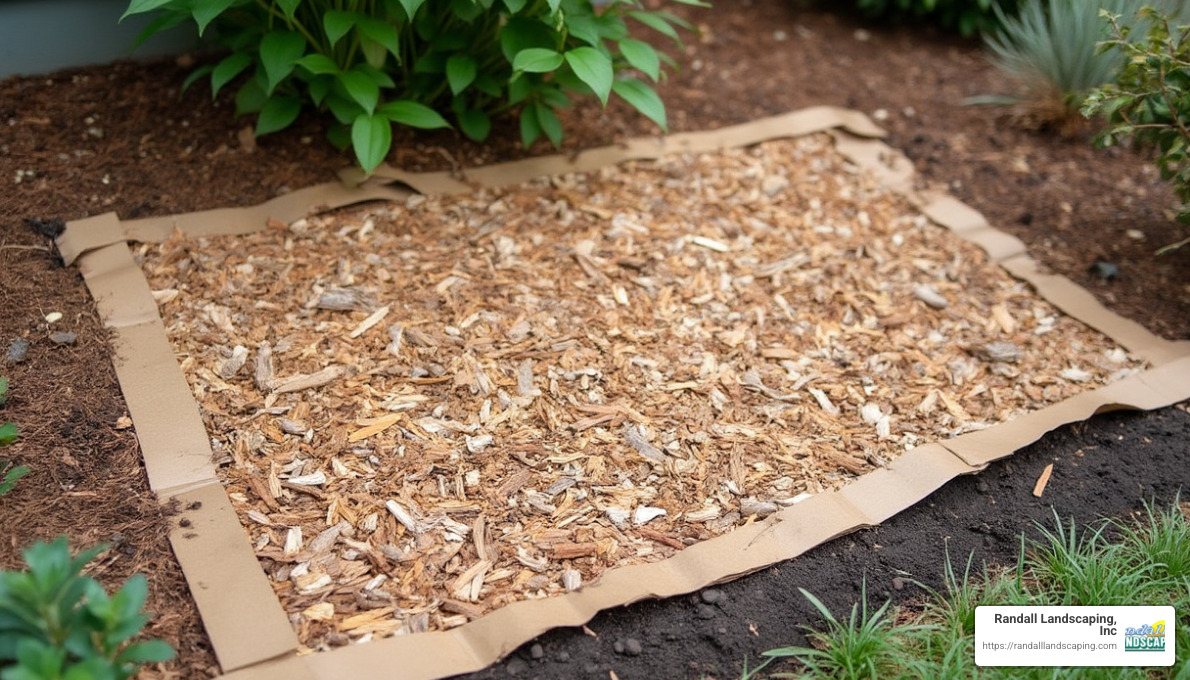
Those old newspapers piling up? That cardboard box from your latest online purchase? They could be your garden’s new best friends. These everyday items can be transformed into effective weed barriers that eventually feed your soil. At Randall Landscaping, we’ve helped countless homeowners throughout the Merrimack Valley turn what would be recycling bin fodder into garden gold.
Tumbled glass and pea gravel offer more permanent solutions with unique aesthetic appeal. The soft sparkle of tumbled glass catches morning light in ways that organic mulches simply can’t, while providing excellent drainage for drought-tolerant plants.
Perhaps most exciting are living mulches – groundcovers and strategically planted cover crops that perform all the functions of traditional mulch while creating vibrant habitat. As one client in North Andover told me after we installed a creeping thyme groundcover, “It’s like having three landscape features in one – mulch, flowers, and a butterfly playground!”
For clients throughout Lawrence, Methuen, and surrounding areas, we’ve implemented innovative combinations of these approaches, creating landscapes that are both beautiful and highly functional ecological systems.
Eco-friendly mulch options: Newspaper & cardboard sheet mulching
Sheet mulching with newspaper or cardboard is the garden equivalent of a home renovation “before and after” moment. This simple technique transforms weed-infested areas into pristine garden beds without chemicals or backbreaking labor.
The process couldn’t be simpler: lay down plain black-ink newspaper (5-10 sheets thick) or unwaxed cardboard directly over grass or weeds, overlapping edges by 6-8 inches to prevent escapees. Then thoroughly wet this layer – this step is crucial to prevent your new mulch from becoming airborne during the next breeze! Finally, top with 2-3 inches of wood chips, compost, or other organic mulch.
“I was skeptical about cardboard killing my lawn,” confessed one Haverhill client, “but within two months, the grass was gone and the cardboard was already starting to break down. By spring, we had perfect planting beds with rich, dark soil.”
Most newspapers now use organic soy-based inks, making them safe even for vegetable gardens. The decomposition timeline varies with conditions, but newspaper typically breaks down in 2-6 months, while cardboard takes 6-12 months.
The beauty of this approach is its simplicity and cost-effectiveness. When my team at Randall Landscaping installs sheet mulch for clients in Andover or North Reading, we often hear, “That’s it? That seems too easy!” But the results speak for themselves – dramatically reduced weeding time and improved soil structure as the paper products decompose.
For maintenance, simply add new organic mulch as the paper layer breaks down. The decomposed materials add valuable carbon to your soil, improving structure and feeding beneficial organisms – a perfect example of true upcycling.
Living mulch & groundcover carpets
Living mulches represent the gold standard of sustainable landscaping – self-maintaining systems that provide multiple ecological benefits while looking beautiful year-round. Unlike traditional mulches that need regular replacement, these groundcovers renew themselves while supporting local biodiversity.
Creeping thyme creates a fragrant carpet that erupts in tiny purple flowers each summer, attracting bees and butterflies. White clover quietly fixes nitrogen from the air, fertilizing your soil for free while providing food for beneficial insects. Native sedges thrive in conditions that would challenge other plants, creating habitat for the small creatures that form the base of our local food web.
In shadier spots, sweet woodruff forms a dense, weed-suppressing mat with a pleasant fragrance, while various moss species create a velvet-like surface perfect for woodland gardens. The benefits extend far beyond typical mulch functions.
“My living mulch garden has become my favorite place to relax,” shared a Georgetown client. “There’s always something happening – bees visiting flowers, birds finding insects, and I haven’t had to weed or add fertilizer in two years.”
For several properties in Boxford, we’ve designed mixed groundcover systems that combine several species for year-round interest. These living carpets not only suppress weeds and protect soil but create beautiful tapestries of texture and seasonal color.
The secret to success with living mulches is proper plant selection for your specific conditions and adequate care during the establishment phase. While they require more initial investment than traditional mulches, the long-term savings in maintenance time and materials make them economically sensible for many landscapes.
Decorative recycled materials
For areas where organic mulches may not be practical, several recycled materials offer sustainable alternatives with unique aesthetic appeal. These options shine in contemporary landscapes, rock gardens, and areas where you want a more permanent solution.
Tumbled glass mulch, made from recycled bottles and other glass products, catches and reflects light in ways that transform ordinary garden beds into something magical. The tumbling process rounds all edges, making it safe for garden use while maintaining its signature sparkle.
“The blue glass mulch around my water feature looks like it’s extending the water into the landscape,” explained one Salem homeowner after our installation. “Visitors always ask about it, and I love telling them it’s actually recycled bottles.”
The benefits go beyond aesthetics. Glass mulch provides excellent drainage, permanent color that never fades, fire resistance, and even deters certain insects. Available in various colors from clear to cobalt blue to amber, it can be selected to complement your landscape design.
Pea gravel and other stone mulches offer similar longevity with a more natural appearance. These materials excel around foundation plantings, in rock gardens with drought-tolerant plants, as pathway materials between raised beds, and in fire-prone areas where organic mulch poses a hazard.
For clients concerned about cost, we often recommend using these specialty materials strategically. A beautiful approach we’ve implemented for several Windham properties involves using tumbled glass in key accent areas, with organic mulches in the broader landscape. This maximizes visual impact while maintaining the soil-building benefits of organic mulches throughout most of the garden.
If you’re interested in exploring more sustainable approaches to landscape maintenance, check out our landscape maintenance services for professional guidance custom to your property’s specific needs.
Conclusion
As we’ve explored throughout this guide, eco-friendly mulch options offer far more than just aesthetic benefits—they represent a fundamental approach to landscape management that supports soil health, conserves water, and contributes to broader environmental sustainability.
The right mulch choice depends on your specific needs, garden conditions, and environmental priorities. Whether you opt for traditional wood chips, innovative living groundcovers, or creative recycled materials, the key is selecting options that minimize environmental impact while maximizing benefits to your landscape.
Some important takeaways to remember:
- Water conservation: A proper 2-3 inch layer of organic mulch can reduce water needs by up to 50%
- Soil enrichment: As organic mulches decompose, they add valuable nutrients and improve soil structure
- Weed suppression: Most organic mulches can block 70-90% of weeds when properly applied
- Biodiversity support: Living mulches and organic materials create habitat for beneficial organisms
- Waste reduction: Many excellent mulch materials repurpose what would otherwise be waste products
We strongly advise against using rubber mulch and certain dyed wood products, which can leach chemicals into soil and don’t provide the same benefits as natural alternatives. As one expert notes, “Rubber mulch is a bad choice for home landscapes” due to its toxicity concerns and lack of soil benefits.
For the most sustainable approach, consider integrating multiple mulch types—perhaps using living groundcovers between shrubs, leaf mulch in perennial beds, and straw in vegetable gardens. This layered strategy maximizes ecological benefits while creating visual interest.
At Randall Landscaping, Inc., we’re committed to helping clients throughout the Merrimack Valley and Southern New Hampshire create beautiful, sustainable landscapes using the best eco-friendly mulch options for their specific needs. Whether you’re in Andover, Methuen, Dracut, or any of our service areas, our team can help you select, source, and properly install the right mulch for your landscape.
For professional mulch installation or blowing services that save you time while ensuring proper application, contact us today. Your garden—and the planet—will thank you!