
Why Hardscape Landscapers Are Your Yard’s Secret Weapon
Hardscape landscapers specialize in creating the non-living structural elements of your outdoor space – patios, walkways, retaining walls, fire pits, and outdoor kitchens. Unlike traditional landscapers who focus primarily on plants and lawns, these specialists combine engineering expertise with design vision to build durable, functional features that improve your property’s value and usability year-round.
What hardscape landscapers do:
– Design and install patios, walkways, and driveways
– Build retaining walls and outdoor living spaces
– Create fire pits, outdoor kitchens, and pergolas
– Integrate drainage solutions and proper grading
– Select materials (pavers, stone, concrete) for durability and aesthetics
Key benefits:
– Low maintenance compared to traditional landscaping
– Year-round functionality regardless of weather
– Increased property value up to 20% according to industry data
– Extended living space for entertaining and relaxation
When your yard needs more structure, functionality, or entertainment space than plants alone can provide, hardscape landscapers transform your vision into reality. These projects require specialized knowledge of materials, drainage, and construction techniques that go far beyond basic gardening skills.
I’m Tommy Randall, owner of Randall Landscaping Business, and I’ve been working with hardscape landscapers and designing outdoor spaces since 2006 across Massachusetts and New Hampshire. Over nearly two decades, I’ve seen how the right hardscape elements can completely transform both the function and value of a property.
Simple hardscape landscapers glossary:
– hardscape products
– landscape design companies near me
– deck and hardscape contractors near me
Hardscaping vs. Landscaping: Setting the Groundwork
Picture your dream backyard. Maybe you’re imagining a cozy fire pit surrounded by lush gardens, or a stone patio where morning coffee tastes better somehow. The secret to creating that perfect outdoor space? Understanding how hardscape and softscape work together like dance partners.
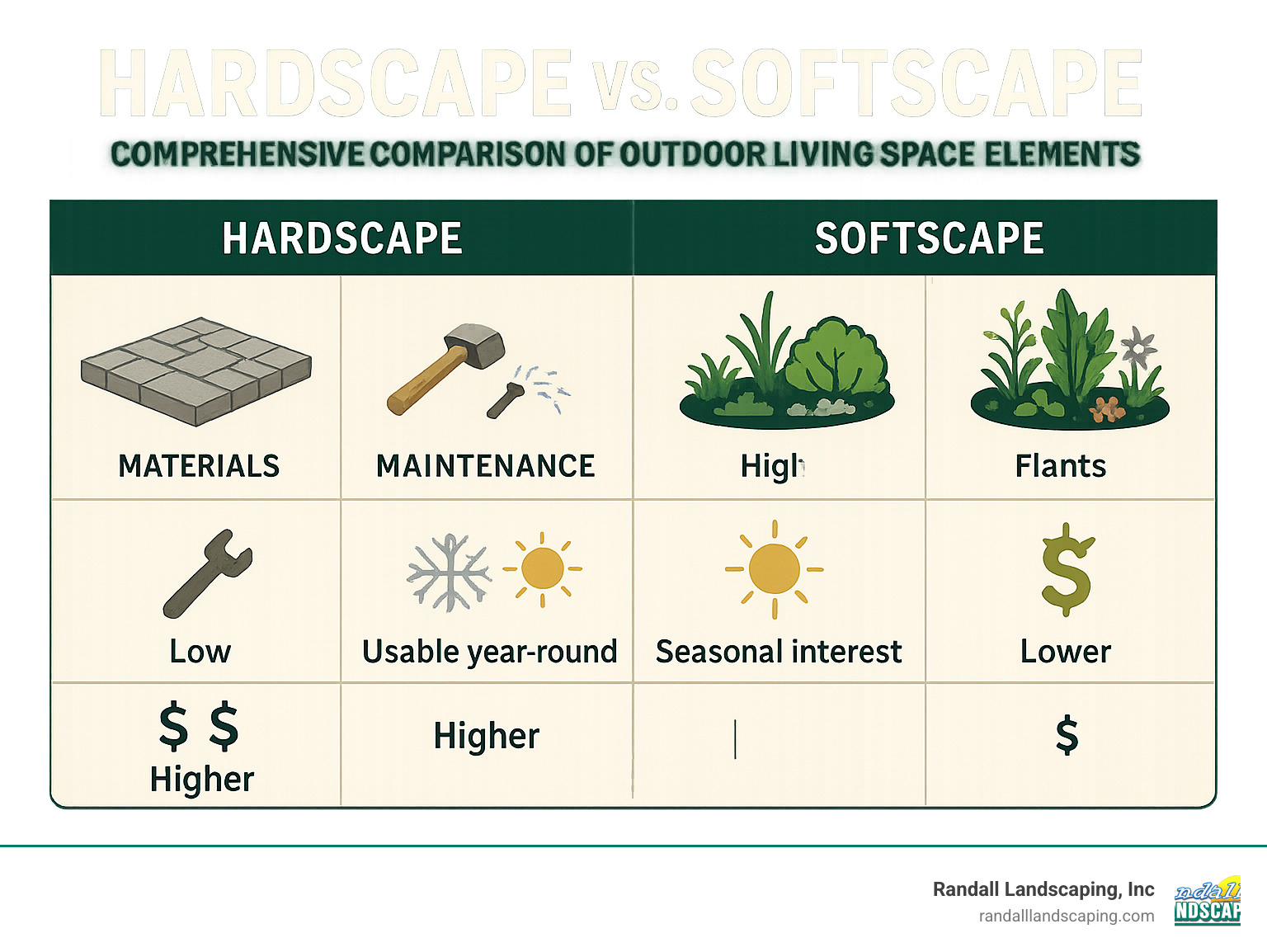
Hardscaping includes all the non-living, structural bones of your outdoor space – patios, walkways, retaining walls, fire pits, and pergolas. These are the workhorses that provide function and framework, standing strong through New England’s harsh winters and humid summers.
Softscaping brings the life and beauty – your plants, flowers, trees, shrubs, and that perfect patch of grass where the kids can play. These living elements change with the seasons, providing color, texture, and that natural stress-reducing magic that scientific research shows can actually improve your mental health.
The real magic happens when hardscape landscapers understand how to blend these elements. Your stone retaining wall isn’t just holding back soil – it’s creating the perfect backdrop for those climbing roses. Your patio isn’t just a place to put furniture – it’s the stage where your container gardens can shine.
What Is Hardscaping?
Patios serve as your outdoor living room, extending your home’s footprint into the fresh air. Modern patio design often incorporates multiple levels and built-in seating areas.
Walkways and pathways create flow through your landscape, guide visitors’ eyes, and help with erosion control on sloped properties. The right materials set the tone for your entire outdoor space.
Retaining walls create usable flat spaces while managing water runoff and preventing soil erosion. Modern systems make these walls both functional and beautiful, often incorporating planters or seating areas.
Decks and pergolas add vertical interest and create defined outdoor rooms, changing basic patios into intimate spaces.
What Is Landscaping (Softscape)?
Plants and trees form the backbone of your garden design, providing year-round structure, seasonal color, and natural privacy screening. In our climate, choosing plants that handle both summer heat and winter cold is crucial.
Turf and ground cover create usable space while providing visual continuity. Seasonal color keeps your landscape interesting throughout the year. Soil health forms the foundation – healthy, well-draining soil supports plant growth while managing water properly.
When these elements work in harmony, you get an outdoor space that’s both functional and beautiful – one that increases your property value while reducing your stress levels.
Signature Hardscape Features & Materials
After nearly two decades working with homeowners across the Merrimack Valley and Southern New Hampshire, certain hardscape features come up in almost every conversation.
Patios top everyone’s list as your outdoor living room, dining room, and entertainment center. The secret isn’t just picking pretty materials – it’s understanding that proper base preparation prevents settling, shifting, and weeds. Our patio design process always starts with proper drainage and base work.
Walkways and pathways eliminate muddy tracks through your lawn and prevent grass wear in high-traffic areas. Smart hardscape landscapers design walkways that feel natural.
Retaining walls have become much more than slope management. Today’s systems create curved seating areas, raised planting beds, and outdoor rooms with different elevation levels.
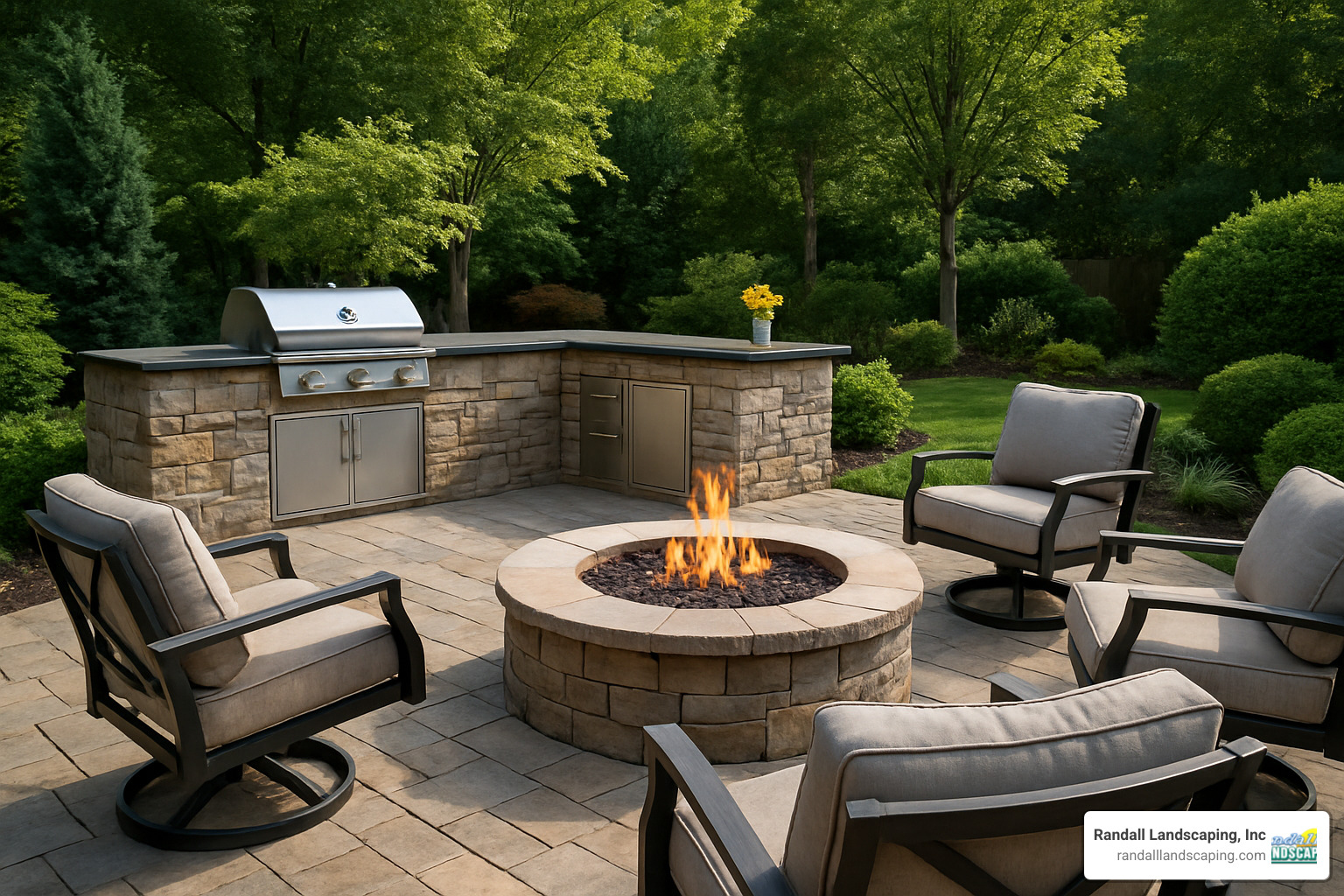
Outdoor kitchens and fire pits extend your living season into fall and winter. These features require coordination of gas lines, electrical work, and proper ventilation.
Water features add movement and sound. Pergolas create vertical interest and define spaces without walls. Driveways might seem boring, but upgrading from plain asphalt to pavers makes a huge difference in curb appeal.
Material Showdown: Picking the Right Look & Lifespan
Natural stone is the premium choice – flagstone, bluestone, and granite bring unique character that improves with age. Higher cost but can outlast the house.
Concrete pavers offer the sweet spot between appearance and budget. Modern manufacturing creates realistic textures with consistent sizing for predictable installation.
Brick brings timeless appeal for colonial and traditional architecture. Quality brick installed properly lasts generations.
Wood and composite materials excel for structures like decks. Composite costs more upfront but eliminates annual maintenance.
Poured concrete remains economical for large areas. Stamped and colored concrete significantly improves appearance.
Our hardscape products selection focuses on materials that perform well in New England’s challenging climate.
Trend Spotlight 2024
Large-format pavers create clean, contemporary looks with fewer grout lines. Mixed media designs combine materials for visual interest without looking busy. Smart lighting integration transforms hardscape features for evening enjoyment. Permeable surfaces address environmental concerns and stormwater regulations. Curved seat walls replace straight retaining walls with flowing designs that provide seating around gathering areas.
Planning a Project With Hardscape Landscapers
The difference between a hardscape project that makes you smile and one that makes you wish you’d never started? Planning. Really good planning.
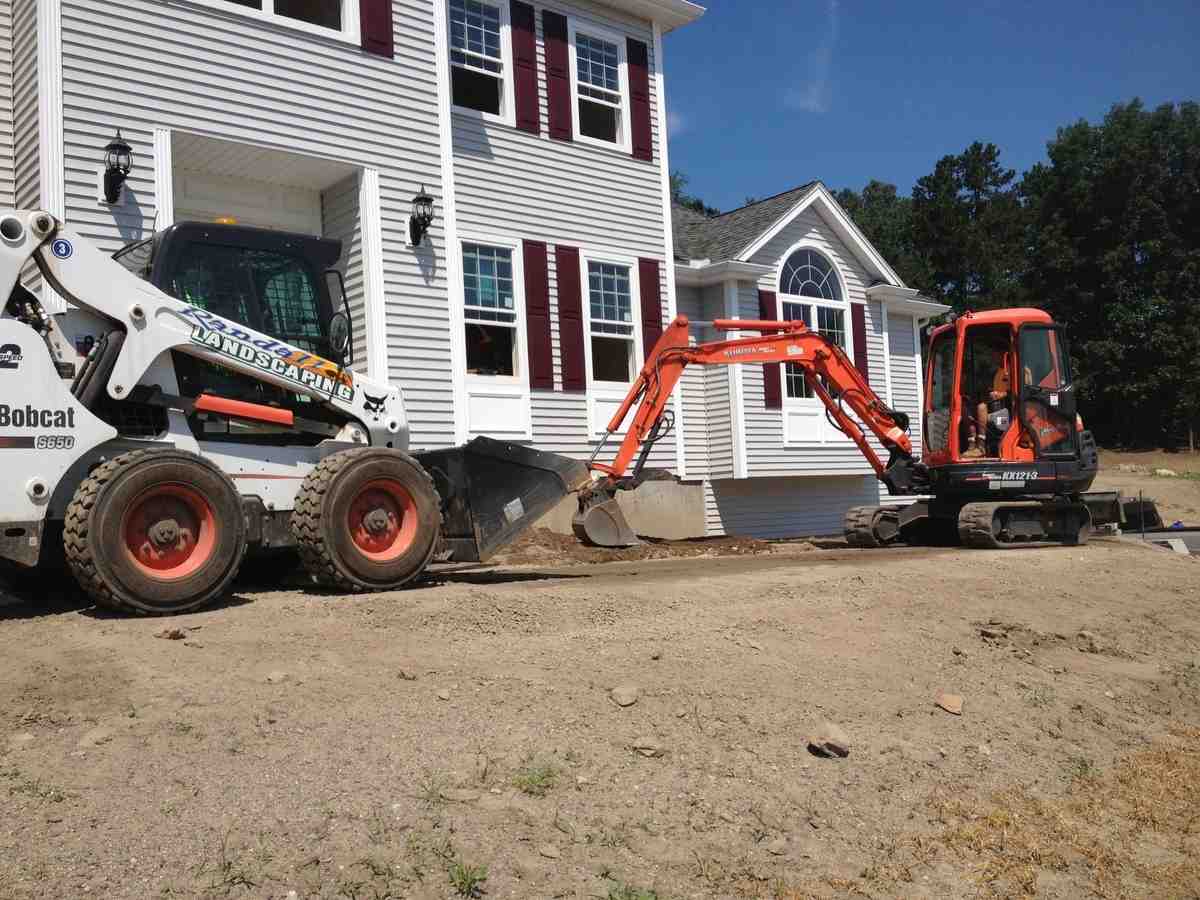
Site surveys understand how water moves across your property, what your soil conditions are, and where utility lines run. Drainage planning ensures water flows away from your home and doesn’t pool where you want to walk or sit. New England weather throws everything at us – proper grading prevents costly problems.
3D rendering technology lets you see your project before we break ground. Permit requirements vary by town – professional hardscape landscapers handle these details so you don’t have to steer local building codes.
Timeline planning considers weather windows, material delivery, and seasonal factors. Most hardscape work happens best between spring and fall.
Budget planning should account for the full picture. Hardscape projects typically range from $3,000 for straightforward walkway installation to $30,000 or more for comprehensive outdoor living spaces, though complex projects can reach $100,000 or higher. These are average costs based on internet data and not actual costs for Randall Landscaping.
Design-to-Install Process
Consultation starts with understanding how you use your outdoor space. Concept development explores different possibilities with material samples letting you see and feel options.
Detailed specifications turn concepts into construction-ready plans. Phased construction makes sense for larger projects, spreading costs over time.
Project completion includes thorough walkthrough addressing any concerns and explaining care for your new features.
Avoiding Common Mistakes
Fighting your property’s natural drainage creates problems that worsen over time. Skimping on base preparation saves money upfront but costs much more later. Mixing too many materials makes spaces look chaotic rather than cohesive. Forgetting about future access for utilities or maintenance creates headaches.
Essential checkpoints: verify utility locations, confirm proper drainage, check base preparation quality, inspect materials upon delivery, review progress at each phase, and conduct thorough final walkthrough.
Costs, ROI & Maintenance Essentials

Investment costs vary dramatically. A simple walkway might start around $3,000, while basic patios range from $8,000 to $25,000. Comprehensive outdoor entertainment areas run $20,000 to $75,000 or more. Premium projects with natural stone can easily exceed $100,000. These are average costs based on internet data and not actual costs for Randall Landscaping.
Industry research shows property value increases up to 20% for well-designed outdoor living spaces. That patio you install today pays you back when you sell.
Quality warranties protect your investment long-term. Reputable hardscape landscapers provide guarantees covering both materials and installation.
Sustainability matters – permeable paving manages stormwater, locally sourced materials reduce costs, and LED lighting slashes electricity bills. These choices often qualify for rebates or tax incentives.
Our hardscaping services include maintenance planning from day one.
Hardscape Maintenance vs. Softscape Care
Hardscaping’s biggest advantage: way less maintenance than traditional landscaping. No weekend slavery to lawn mowers or vacation watering panic.
Hardscape care focuses on preservation. Annual power washing keeps surfaces clean and safe. Joint sand refill for pavers happens every few years. Protective sealing every 2-3 years maintains appearance and extends material life.
Winter preparation prevents freeze-thaw damage through proper drainage and knowing how to remove snow safely. Seasonal inspections catch small issues before they become expensive problems.
Compare this to traditional landscaping: constant pruning, regular mulching, seasonal plant replacement, irrigation management, and ongoing pest control.
The time and cost savings add up quickly. Clients spend weekends enjoying their spaces instead of maintaining them.
How to Choose the Right Hardscape Landscapers

The best hardscape landscapers combine technical expertise with design vision and solid business practices. They understand proper drainage, frost-resistant base preparation, and materials that survive New England winters.
Professional certifications like ICPI (Interlocking Concrete Pavement Institute) for pavers and NCMA (National Concrete Masonry Association) for retaining walls represent hundreds of training hours on proper installation techniques.
Portfolio reviews should go beyond pretty pictures. Ask to see similar projects and speak with recent customers. Quality contractors are proud of their work and happy to share references.
Insurance and bonding are critical. Verify adequate general liability and workers’ compensation coverage. Local knowledge of soil conditions, frost depths, and building codes ensures installations that last.
Our hardscape companies page provides detailed contractor evaluation guidance.
Interview Checklist for Hardscape Landscapers
Insurance and project protection should be your first concern. Ask for current certificates and verify licensing. Technical expertise shows in detailed drainage explanations and material sourcing relationships. Project management capabilities include daily supervision and clear communication processes. Experience verification goes beyond years in business to industry certifications and recent references.
Red Flags & Deal Breakers
Avoid contractors who won’t provide written estimates or give vague pricing. Unclear change order processes create perfect conditions for disputes. Poor communication during sales typically worsens during construction. Unusually low bids signal corners will be cut. Pressure tactics for immediate decisions are classic warning signs.
The customer feedback on professional installs provides valuable contractor performance insights.
Taking time to properly vet hardscape landscapers protects your investment and peace of mind.
Frequently Asked Questions about Hardscape Landscapers
How long will my hardscape last?
It depends on what you choose, how it’s installed, and how you care for it. Natural stone installations can easily last 50+ years, often improving with age. Quality concrete pavers typically provide 20-30 years of reliable service, with individual units replaceable if damaged. Poured concrete generally lasts 15-25 years.
The real secret is proper base preparation, quality materials, and skilled installation – not just the surface material.
Do hardscape projects need permits?
Permit requirements vary by town. Generally, you’ll need permits for structures over certain heights (typically 30 inches for retaining walls), electrical or plumbing work, significant grading, or work within setback areas.
We handle permit applications because we know local regulations, typical approval timelines, and building code requirements. The process usually adds 2-4 weeks but provides peace of mind and protects your investment.
Can hardscaping be done in winter?
Some work can continue, but spring through fall is preferred. Winter limitations include frozen ground preventing excavation, concrete work requiring freeze protection, complicated deliveries, and materials that perform better in moderate temperatures.
However, winter isn’t wasted – we use these months for planning, design work, material ordering, and permit processing. This means faster project completion once construction season begins.
Conclusion
Hardscape landscapers transform ordinary yards into extraordinary outdoor living spaces that provide year-round functionality, increased property value, and improved quality of life. The difference between a DIY project that cracks after the first freeze and a stunning retreat that improves with age comes down to working with experienced professionals.
Quality hardscape landscapers understand local soil conditions, proper drainage techniques, and construction methods that survive New England’s challenging freeze-thaw cycles. From planning through installation, every detail matters – proper base preparation prevents settling, thoughtful drainage design manages water flow, and quality material selection ensures lasting beauty.
At Randall Landscaping, Inc., we’ve been serving the Merrimack Valley and Southern New Hampshire since 2006, helping homeowners in communities like Amesbury, Andover, North Andover, Salem, and Windham create outdoor spaces that improve their properties and lifestyles. Our commitment to quality work and 100% reliability means your hardscape investment provides lasting value and satisfaction.
The best part about working with experienced hardscape landscapers? You get to enjoy the process instead of stressing about it. We handle permits, coordinate deliveries, manage timelines, and ensure every detail meets our quality standards. You focus on the fun part – imagining summer barbecues on your new patio or cozy fall evenings around your fire pit.
Ready to transform your yard? Contact us today for a free, no-obligation consultation. Let’s discuss how the right hardscape elements can turn your backyard into the outdoor living space you’ve always wanted – one that provides beauty, functionality, and value for years to come.