
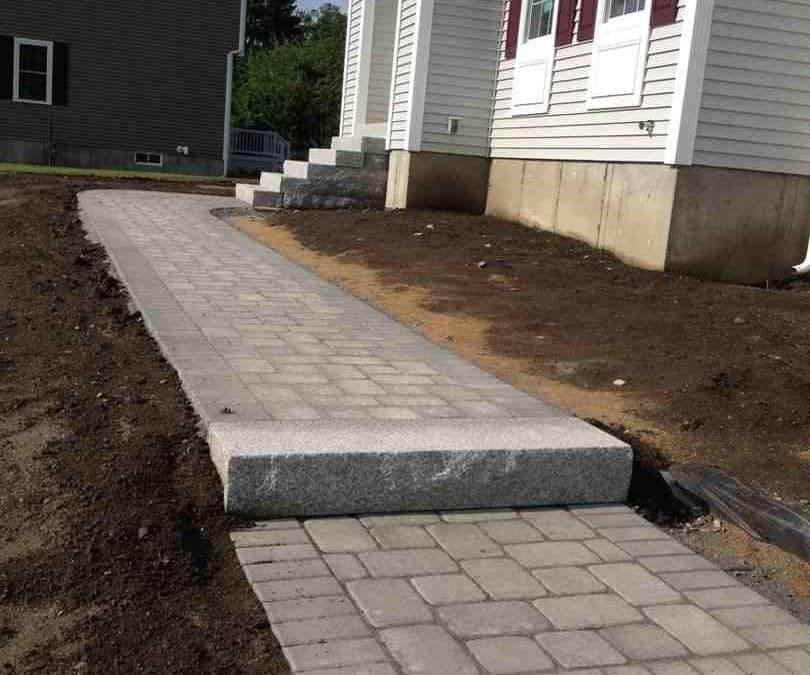
Modern Concrete Square Walkway Ideas That Actually Work
A concrete square walkway is one of the most popular hardscape upgrades homeowners are choosing in 2026 — and for good reason. Square pavers combine clean modern aesthetics with serious durability, even through harsh New England winters.
Quick answer: Best modern concrete square walkway styles at a glance
| Style | Best For | Key Feature |
|---|---|---|
| Stacked bond | Modern/minimalist homes | Clean grid lines |
| Running bond | Traditional & transitional | Strong interlocking pattern |
| Stepping stones with gravel | Garden paths | Relaxed, natural feel |
| Large-format slabs | Contemporary homes | Bold, seamless look |
| Mixed texture/color | Decorative appeal | Visual contrast |
Square concrete pavers come in a wide range of colors, textures, and sizes. They can mimic natural stone or brick — without the high price tag. And unlike poured concrete, individual pavers can be replaced if one cracks or shifts, which is a huge advantage in freeze-thaw climates like Massachusetts and Southern New Hampshire.
Whether you’re connecting your front door to the driveway or building a winding garden path, there’s a square walkway design that fits your home and budget.
I’m Tommy Randall, owner of Randall Landscaping, Inc., and I’ve been designing and installing concrete square walkways across Massachusetts and New Hampshire since 2006. Over nearly two decades, I’ve seen what works — and what fails — in our tough regional climate.
Why Choose a Concrete Square Walkway?
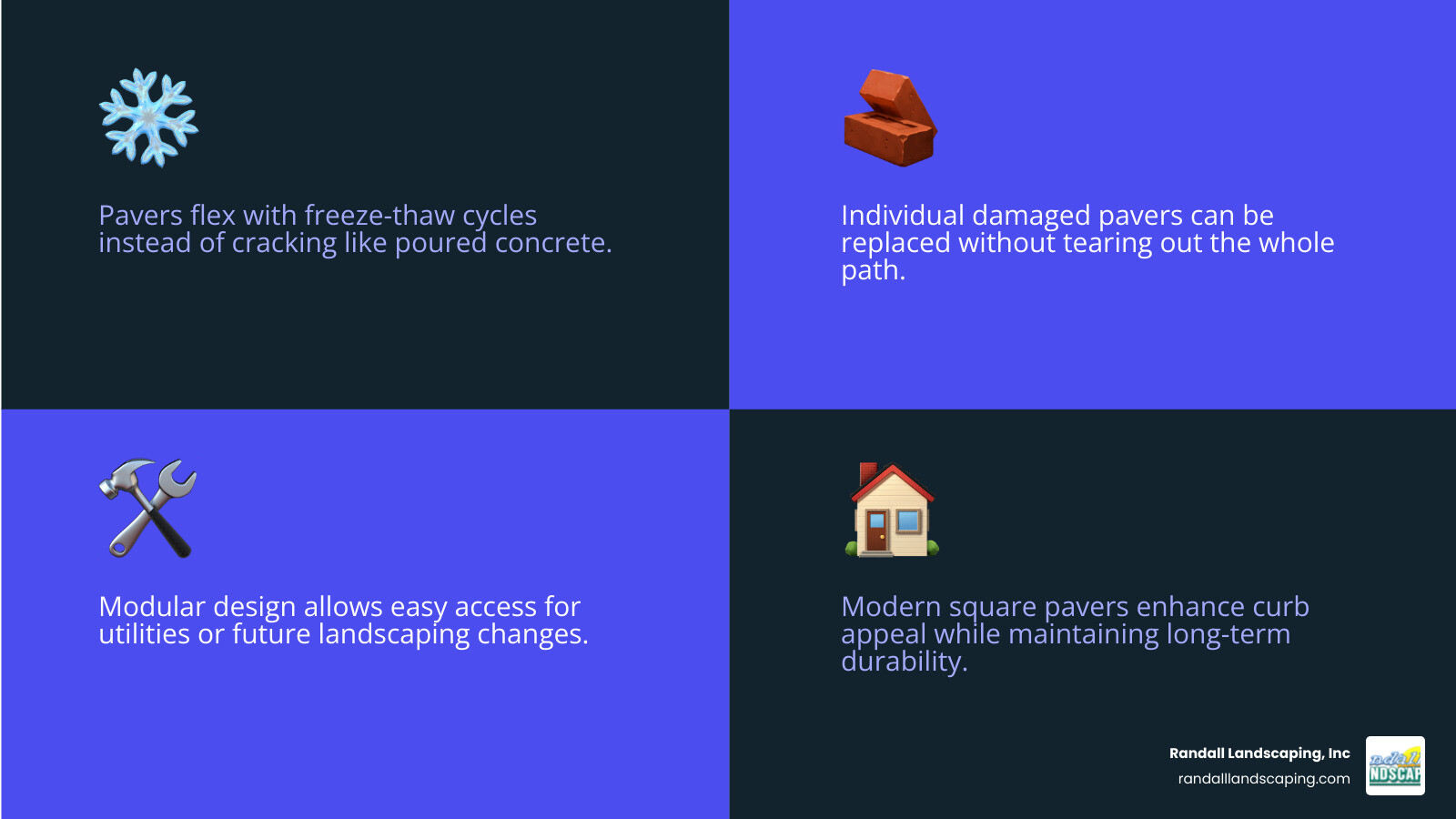
When we talk to homeowners in places like Andover or Windham, the debate usually boils down to: “Should I just pour a slab, or should I use pavers?” While a poured sidewalk is a classic choice, the concrete square walkway built with individual pavers has some secret weapons that make it a superior choice for our neck of the woods.
The biggest factor is freeze-thaw resistance. In the Merrimack Valley, the ground is constantly “heaving”—expanding when it freezes and shrinking when it thaws. A solid, monolithic slab of concrete is rigid. When the earth moves underneath it, that slab has nowhere to go but crack. Even with control joints, you’re often left with unsightly lines or trip hazards.
In contrast, square concrete pavers are a modular system. They sit on a flexible base of compacted stone and sand. This allows for “micro-movement.” Think of it like a suspension system for your yard; the pavers can shift slightly with the frost and settle back into place without breaking. This modularity also means modular repairability. If a delivery truck accidentally drives over your path and cracks a stone, we don’t have to jackhammer the whole yard. We simply pop out the damaged square and drop in a new one.
For a deeper dive into how these systems are put together, check out our Walkway Installation Complete Guide 2025.
According to experts at How to Build a Concrete Paver Walkway – This Old House, pavers offer a level of uniformity and variety that poured concrete struggles to match. You get the high-end look of natural stone with the structural integrity of manufactured concrete. Plus, because they are manufactured in a controlled environment, they are often stronger than concrete poured on-site on a humid Tuesday in July.
Modern Design Ideas for Your Path
The beauty of a concrete square walkway is its versatility. You can go from ultra-modern to rustic just by changing the spacing or the “infill” (the stuff between the stones).
One of our favorite modern looks involves using large-format square pavers—think 24×24 inches—as “floating” stepping stones. Instead of butting them right up against each other, we space them out and fill the gaps with decorative river stone or Mexican beach pebbles. This creates a high-contrast, architectural look that complements the contemporary homes popping up in Boxford and North Reading.
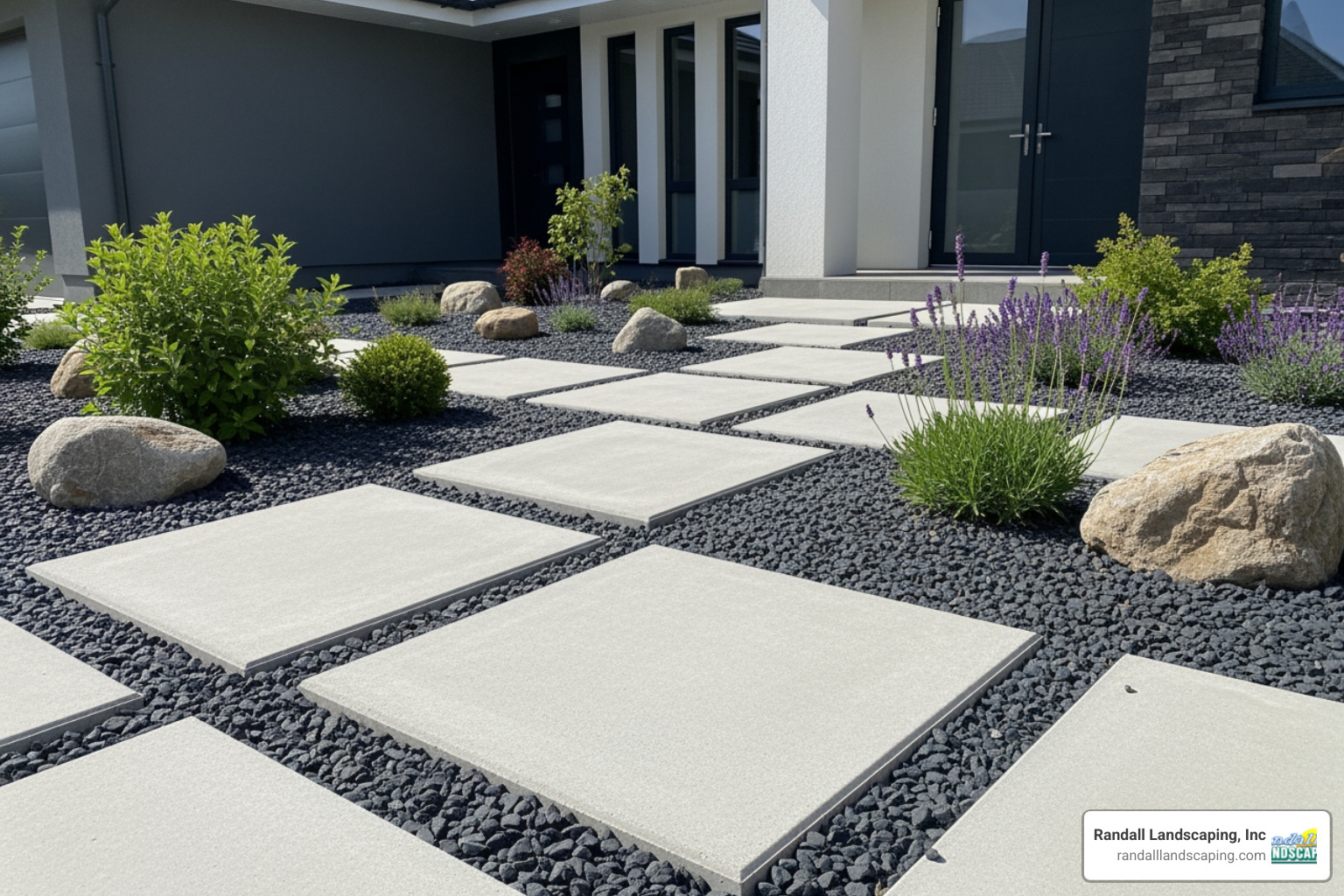
Creating a Linear Concrete Square Walkway Pattern
If you prefer a solid surface, the way you lay the squares changes the whole vibe of the project. Here are the most common patterns we use:
- Stacked Bond (Grid): This is where the corners of every paver line up perfectly. It creates long, straight lines both vertically and horizontally. It’s the “minimalist” choice and looks fantastic against modern siding.
- Running Bond: This is the classic “brick” look, where the joints are offset by half a paver. It’s incredibly strong and helps lead the eye toward the destination, like your front door.
- Modular/Multi-Size: Sometimes we mix squares of different sizes (e.g., 6×6, 12×12, and 18×18) to create a more organic, random pattern that feels less “industrial.”
If you’re curious about the nitty-gritty of how we keep these patterns straight, our Walkway Paver Installation Complete Guide covers the technical layout process in detail.
Decorative Effects for Square Concrete Pavers
Don’t think you’re stuck with “sidewalk gray.” Modern concrete technology allows us to get creative. We can use liquid color additives during the manufacturing process to create deep charcoals, warm tans, or even terra cotta hues.
Another popular option is exposed aggregate. This is where the top layer of cement is washed away to reveal the beautiful stones inside. It provides a natural texture and excellent slip resistance. For the DIY crowd, products like the QUIKRETE® – Building Paths with the WALKMAKER™ allow you to use a reusable mold to create your own “faux” stone path. You can even press small pebbles or sea glass into the wet concrete before it sets to give it a personal touch.
Step-by-Step Installation for New England Climates
If there is one thing I want you to take away from this guide, it’s this: The base is everything. You could buy the most expensive pavers in the world, but if you put them on bad soil, they will look like a roller coaster in three years.
In Massachusetts and New Hampshire, we have “plastic” soils—clay and silt that hold water and move significantly. Here is the process we follow to ensure your concrete square walkway stays flat:
- Excavation: We dig down 8 to 10 inches. You need room for the base, the sand, and the paver.
- Geotextile Fabric: We lay down a professional-grade fabric. This prevents the native soil from mixing with your clean gravel base. It’s like a structural “floor” for your walkway.
- Compacted Gravel: We add 6 inches of “crushed bank-run” or “3/4-minus” gravel. We don’t just dump it; we add it in 2-inch “lifts” and hit it with a heavy-duty plate compactor.
- Sand Bedding: A 1-inch layer of concrete sand provides the final leveling surface. We “screed” this sand to be perfectly flat.
- Drainage Slope: We always build in a slope of at least 1/8 inch to 1/4 inch per foot. This ensures water runs off the path and away from your foundation.
- Edge Restraints: Once the pavers are down, we install heavy-duty plastic or metal edging held in by 10-inch spikes. This prevents the squares from “creeping” outward over time.
For a visual breakdown of this layering process, see our guide: Lay It Right: A Step-by-Step Guide to Your Paver Walkway Base.
Maintenance and Winter Care in Massachusetts
Winter is the “final boss” for any walkway in Dracut or Georgetown. Between the snowplows and the ice melt, your path takes a beating.
The secret to a long-lasting concrete square walkway is polymeric sand. This isn’t your kid’s sandbox sand. It’s a mix of fine sand and special polymers that turn into a flexible “glue” when wetted. It stays in the joints, prevents weeds from growing, and keeps ants from making a home under your stones.
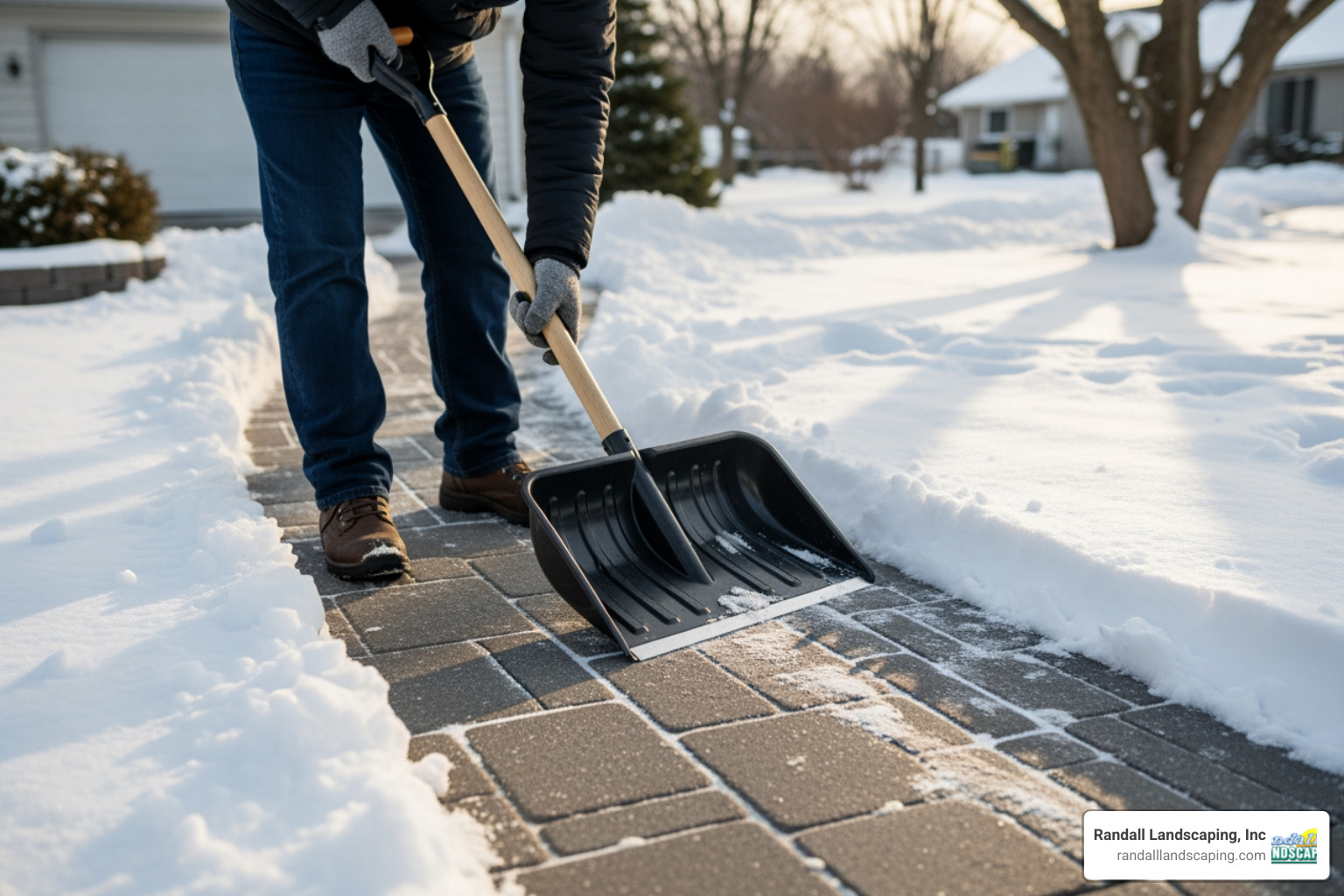
When it comes to snow removal, put down the metal shovel. Metal blades can scratch the surface of concrete pavers or chip the edges. Use a shovel with a rubber or plastic edge.
For ice, be picky about your chemicals. Traditional rock salt (sodium chloride) is brutal on concrete. It causes “scaling,” where the top layer of the paver flakes off. Instead, use calcium chloride or magnesium chloride. They work at lower temperatures and are much gentler on the concrete. If you want to keep costs down while staying safe, check out our tips on how to Pave Your Way to a Better Yard Without Breaking the Bank.
Cost Comparison: DIY vs. Professional Installation
Building a walkway is a labor of love—emphasis on the labor. A single 24-inch square paver can weigh 80 pounds. By the time you’ve excavated, moved 5 tons of gravel, and laid the stones, you’ve had a serious workout.
Here is a breakdown of what you can expect to pay in 2026. Note: These figures represent average costs based on internet data and are not actual costs for Randall Landscaping, Inc.
| Expense Category | DIY (Your Labor) | Professional Installation |
|---|---|---|
| Materials (Gravel, Sand, Pavers) | $5 – $12 per sq ft | $5 – $12 per sq ft |
| Equipment Rental (Compactor, Saw) | $300 – $600 | Included |
| Labor Cost | $0 (Just your weekends!) | $15 – $35 per sq ft |
| Total Project Cost | $8 – $18 per sq ft | $20 – $45+ per sq ft |
While DIY saves money upfront, the “Labor Value” of a professional team includes things like laser-leveling for perfect drainage and the heavy machinery required to compact the base properly. If you’re planning a complex project with levels or stairs, professional help is often the better ROI. You can see examples of these more complex builds here: Pave Your Way: Designing and Building a Walkway with Integrated Steps.
Frequently Asked Questions
How do I prevent my walkway from cracking?
Cracking in a concrete square walkway is almost always caused by one of two things: poor soil compaction or water trapped under the stones. By using a deep gravel base and a geotextile fabric, you create a “wicking” layer that allows water to drain away before it can freeze and push the pavers up. Also, ensure you are using control joints if you are pouring a solid path, or stick to pavers to avoid the issue entirely. For more on this, read Walk This Way: Building Your Own Brick or Paver Path.
Are square pavers better than poured concrete for winter?
Yes, in my professional opinion. In the Merrimack Valley, the flexibility of a paver system is its greatest asset. When the ground moves in January, pavers move with it. When a poured sidewalk moves, it cracks. Additionally, pavers are naturally more resistant to salt damage than “green” (freshly poured) concrete.
How much does a concrete square walkway cost in 2026?
As of May 2026, internet averages suggest a wide range. A basic DIY path might cost as little as $8 per square foot in materials. However, a high-end, professionally installed walkway using premium large-format pavers and a reinforced base can reach $45 per square foot or more. Factors like site accessibility, soil removal, and decorative edging will all push you toward the higher end of that scale.
Conclusion
A concrete square walkway is more than just a place to walk; it’s a design statement that adds real value to your home. Whether you choose a sleek, modern grid or a winding path of stepping stones, the key to success lies in the preparation and the materials you choose for our unique New England climate.
At Randall Landscaping, Inc., we take pride in delivering 100% reliability and quality work to our neighbors in Amesbury, Salem, Pelham, and beyond. We know the local soils, we know the winters, and we know how to build a walkway that stands the test of time.
If you’re ready to transform your yard with a professional touch, visit our Hardscaping/Walkway Installation page to see our portfolio or schedule a consultation. Let’s build something beautiful together!