

What Exactly is a Landscape? More Than Just a Pretty View
A World of Wonder: Exploring Different Types of Landscapes
The world around us is a magnificent mix woven from countless landscapes, each telling its own unique story. While we often think of them as either “natural” or “man-made,” the reality is far more nuanced. Most landscapes today are actually a beautiful blend, showcasing the intricate dance between nature’s raw power and human creativity.
What makes landscapes so fascinating is their interconnectedness. Every landscape is essentially a living ecosystem where countless elements interact in surprising ways. The soil beneath our feet, the water flowing through valleys, the air we breathe, and the plants and animals that call these places home – they all work together to create what we see and experience.
Picture a river carving its way through a canyon over thousands of years. As it flows, it creates a unique microclimate that supports specific plant and animal life. Then humans might build a bridge across that river, or create a park along its banks. This is how landscapes become these dynamic, ever-changing spaces that blend natural wonder with human ingenuity.
You’ll find these common features scattered across landscapes everywhere: mountains that tower over valleys, forests that stretch for miles, deserts with their stark beauty, coastlines where land meets sea, and wetlands that filter our water. Then there are the human touches – urban areas busy with life, agricultural lands feeding our communities, and gardens and parks designed for our enjoyment.
The Grandeur of Natural Landscapes
Natural landscapes are truly Earth’s masterpieces, sculpted by geological forces, weather patterns, and the slow, patient work of ecological processes over millions of years. These are the places where nature takes center stage, offering breathtaking beauty and vital ecosystems that sustain life on our planet.
Think about the majestic mountain landscapes like our own White Mountains here in New Hampshire. These towering formations didn’t appear overnight – they were shaped by tectonic uplift and millions of years of erosion, creating the dramatic vistas and challenging terrains we love to explore today.
Forests are perhaps nature’s most complex landscapes. From the dense northern woods of Canada to tropical rainforests, these green giants are absolutely critical for global biodiversity and climate regulation. They’re like the lungs of our planet, constantly working to keep our air clean and our ecosystems balanced.
Desert landscapes might seem harsh at first glance, but they showcase life’s incredible resilience. These arid regions, with their unique rock formations and sparse vegetation, support amazing wildlife that has adapted to extreme conditions. Coastal areas are equally dynamic, where the endless dance between land and ocean creates beaches, cliffs, and incredibly diverse marine ecosystems.
Don’t overlook wetlands – these marshes, swamps, and bogs might not seem as glamorous as mountain peaks, but they’re environmental heroes. They act as natural water filters, provide homes for countless species, and help prevent flooding. Grasslands and prairies stretch across vast areas, supporting unique animal populations and providing the foundation for much of our agriculture.
Each natural landscape tells an incredible story of geological time and ecological balance. They’re not frozen in time – they’re constantly evolving, just usually on timescales far beyond what we can easily observe.
To learn more about these incredible natural wonders, explore Canada’s natural landscapes.
The Ingenuity of Man-Made Landscapes
While natural landscapes showcase Earth’s raw power, man-made landscapes demonstrate human creativity, ingenuity, and our ability to shape the world around us. These are areas where human activity has significantly transformed the environment, often creating spaces that serve both practical needs and aesthetic desires.

Urban landscapes are perhaps the most dramatic examples of human change. Cities like Boston or Manchester are defined by their skyscrapers, roads, and dense populations. These busy cityscapes are constantly evolving, with new buildings rising and old ones being reimagined to meet changing needs.
Agricultural landscapes represent one of humanity’s most essential changes of the natural world. From the fertile farmlands of the Connecticut River Valley to carefully tended vineyards, these landscapes showcase our ability to work with nature to feed our communities. They’re living examples of how humans can cultivate the land while maintaining its productivity for generations.
Then there are designed landscapes – the parks, gardens, and outdoor spaces crafted specifically for beauty, recreation, and function. This is where landscape architecture truly shines. Whether it’s a grand public park or a cozy backyard garden here in the Merrimack Valley, these spaces are thoughtfully planned to improve our daily lives.
At Randall Landscaping, we specialize in creating these beautiful, functional man-made landscapes. We work with homeowners and businesses throughout Massachusetts and New Hampshire to design and install everything from lush gardens to sophisticated hardscaping elements.
Hardscaping elements are the backbone of many designed landscapes. These non-living features – stone walls, brick pavers, gravel paths, patios, and fire pits – provide structure, define spaces, and add lasting character to outdoor areas. They’re the elements that make a space functional year-round, creating places where families can gather and memories can be made.
Whether you’re dreaming of a new patio for summer entertaining or want a garden that harmonizes beautifully with the natural surroundings, the key is thoughtful design that considers both your needs and the existing landscape.
For more information on how we transform outdoor spaces, visit More info about residential landscaping and More info about hardscaping. We believe your outdoor space should be an extension of your home or business – a place that’s both beautiful and perfectly suited to how you live and work.
Capturing Beauty: Landscapes in Art and Media
Have you ever found yourself staring at a breathtaking view, wishing you could capture that exact moment forever? For hundreds of years, people have felt that same pull! We’ve always had this amazing drive to share the beauty and sheer wonder of landscapes, whether through art or media. It’s how we connect with nature, understand our world, and even share how it makes us feel. These paintings, photos, and films let us experience incredible landscapes even when we’re miles away.
Landscapes on Canvas: A Journey Through Art History
The journey of landscapes in art is truly fascinating! It’s been a long trip, showing us how people’s views and art styles have changed over time. If you look way back at ancient art, you’ll see landscapes were usually just in the background. They set the scene for important people or stories, like in old Egyptian paintings or Roman garden murals. They were there, but not really the star of the show.
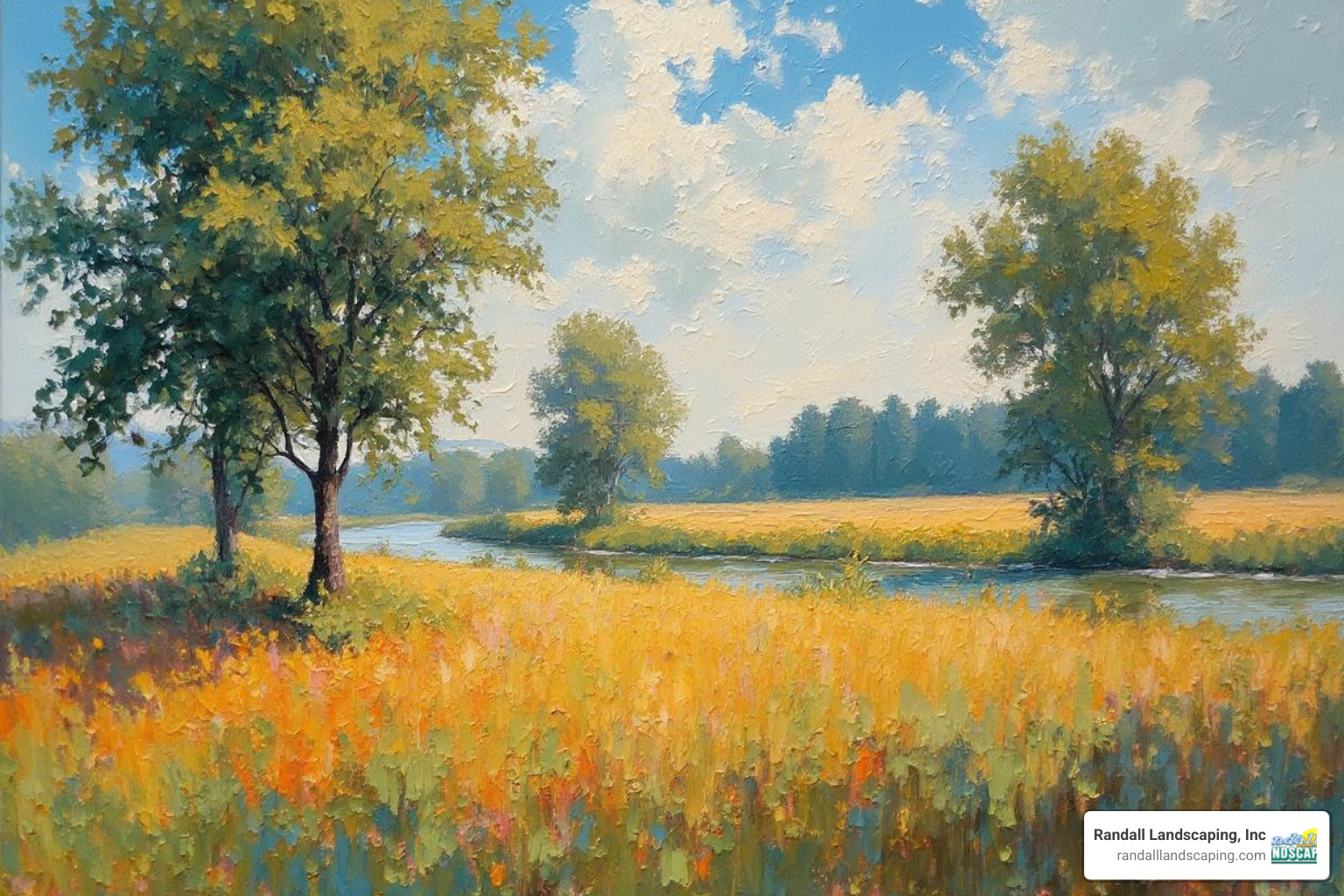
Things started to change during the Renaissance. Artists began to pay more attention to the natural world. They even used new math skills to create realistic, wide-open views! Still, painting landscapes wasn’t seen as “top-tier” art compared to portraits or historical scenes. But then came the Dutch Golden Age in the 1600s – a real game-changer! A new middle class wanted art for their homes, and suddenly, paintings of pure landscapes became super popular. Artists like Jacob van Ruisdael became experts at showing off the beauty of the Dutch countryside, really putting landscape art on the map.
The 1700s and 1800s were a boom time for landscape painting, especially with the Romanticism movement. Romantics loved strong emotions, individual feelings, and celebrating nature. They painted wild, jaw-dropping scenes that made you feel small and amazed – what they called the “sublime.” Think of artists like J.M.W. Turner and Caspar David Friedrich, showing nature’s incredible power. Later, in the late 1800s, Impressionism burst onto the scene. Thanks to new, portable paint tubes, artists like Claude Monet and Camille Pissarro could paint outside – “en plein air.” They weren’t just about perfect details anymore. Instead, they focused on capturing how light and air felt in a moment, changing how we saw landscapes forever. Fun fact: Monet’s painting, ‘Impression, soleil levant,’ even gave the whole movement its name!
Into the 20th century, landscape art kept changing. We saw bold Expressionist strokes, the dreamy worlds of Surrealism, and even modern “cityscapes.” Artists kept finding fresh ways to show the world around them. Today, new landscape art keeps pushing limits, showing how our relationship with the environment is always changing. As the art blog Artsper wisely says, “landscape painting is much more than just a pretty picture.” It truly shows us how we see our world. Want to dive deeper into this amazing history? Check out A Brief History of Landscape Art.
Landscapes Through the Lens: The Power of Photography
While paintings captured the feeling of landscapes, photography gave us a new way to simply show them, exactly as they are. From the very beginning, cameras have been amazing tools for capturing the raw beauty and tiny details of our world.
Today, digital photography has truly opened up new worlds. Think about drone technology – it lets us snap incredible aerial views and perspectives we could only dream of before! Now, we can easily see the sweeping patterns of farm fields, the winding paths of rivers, or the grand scale of mountain ranges from high above. It really helps us grasp the “big picture” of a landscape, capturing its reality in a new way. And people love taking landscape photos! Websites like Pexels have over 168,000 photos and 41,000 videos tagged ‘landscape.’ Adobe Stock has over 103 million results for landscapes across different media! These huge numbers show just how much the world loves seeing and sharing these amazing views.
Of course, certain photographers became legends. Think of Ansel Adams, whose iconic black-and-white photos of the American West are simply breathtaking. His work, and that of amazing photographers often featured in National Geographic, or by artists like Robert Adams and William A. Garnett, didn’t just show beautiful places. They also helped people care more about protecting them. Here at Randall Landscaping, we might not be photographing grand mountain ranges, but we do understand how important visual appeal is for your own outdoor landscape. Just like photographers use light to make things pop, we use smart landscape lighting to transform your property after dark. It creates stunning looks and makes your space safer too. It’s all about making your landscape truly shine, whether you’re seeing it in a photo or enjoying it right outside your door. Curious how light can change your outdoor space? Learn more about More info about landscape lighting.
The Deeper Meaning: Why Landscapes Matter
Beyond their sheer beauty and the way they inspire artists, landscapes hold a much deeper meaning for all of us. They connect us to the world around us, play a huge part in our well-being, and are absolutely vital for the health of our planet. When we truly understand a landscape, we understand a piece of ourselves and our home.
Environmental Significance
Think of landscapes as the very stage where all life’s amazing stories unfold. Each one is a complex ecosystem, a living network that supports a unique variety of plants and animals. From the tiniest insect to the grandest mammal, every living thing depends on the specific conditions and resources that its landscape provides.
These incredible spaces are also the source of so many natural resources we rely on. They give us clean water to drink, fresh air to breathe, timber for building, and fertile soil for growing our food. Landscapes are like nature’s sponges, playing a crucial role in our water cycles. They soak up rainfall, filter it through their soil and plants, and then release that clean water into rivers and underground reserves. They even help regulate our climate! Forests and healthy soils act like giant carbon sinks, helping to absorb the greenhouse gases that warm our planet.
That’s why protecting these natural landscapes is so incredibly important. Efforts like those by the National Park Service in the U.S. or organizations like the Nature Conservancy of Canada work hard to keep these vital areas safe from harm. Their work ensures that our children and grandchildren can experience the same awe-inspiring beauty and benefit from the same life-giving services these natural spaces provide. As the U.S. National Park Service reminds us, their landscapes “tell the stories of remarkable forces of nature and the influences that shaped, and continue to shape, what we see today.”
For a closer look at how we track and manage our land, you can explore resources like the USGS Land Cover Database.
Cultural and Societal Importance
Landscapes aren’t just physical places; they’re woven into the very fabric of our culture and identity. Many are considered sacred sites, holding deep spiritual meaning for indigenous peoples. Others are places of immense historical significance, where pivotal events that shaped our world took place. Imagine Tongariro National Park in New Zealand, a place deeply cherished by the Maori people.
These incredible spaces also offer endless opportunities for fun and relaxation. Millions of people visit them for recreation and tourism, whether it’s hiking a mountain trail, capturing a stunning photograph, or simply enjoying a peaceful view. The “most beautiful landscapes in the world” inspire wonder and draw visitors from across the globe.
Beyond recreation, landscapes have always been a wellspring of inspiration for artists, writers, and musicians. They influence our creative expressions and help shape the stories we tell about ourselves. Think of how William Wordsworth’s poetry was inspired by the English countryside, or how Chinese Shan Shui painting reflected ancient philosophies.
Landscapes give us a powerful sense of place – that feeling of belonging and connection to a particular area. Whether it’s the familiar, gentle hills of the Merrimack Valley, the rugged, beautiful coastlines of New Hampshire, or your very own backyard, our local landscapes shape who we are and how we interact with the world. They are the beautiful backdrop to our lives, holding our cherished memories and defining our communities.
The Human Touch: Shaping and Changing Our World
While Mother Nature certainly lays the groundwork, we humans have always been active participants in shaping landscapes. From the earliest nomadic tribes to our busy modern societies, our presence leaves an undeniable mark. This human touch makes landscapes incredibly dynamic, constantly evolving under our influence. Our impact can be both profoundly negative and wonderfully transformative.
The Human Footprint: Changing the Earth
Unfortunately, humanity’s touch often leaves a heavy footprint. As our populations grow and technology advances, our ability to alter landscapes has increased dramatically. Sometimes, this change isn’t for the better.
Think about urbanization: the rapid growth of cities and towns often means replacing natural habitats with concrete and buildings. This transforms open, green spaces into dense urban landscapes. Or consider deforestation, where vast forests are cleared for farming, logging, or new developments. This leads to habitat loss, soil erosion, and even contributes to climate change.
Agriculture, while essential for feeding us, can also change landscapes significantly. Intensive farming practices can deplete soil nutrients and introduce pollutants. Mining for valuable minerals can devastate local areas, leaving behind barren land and contaminated water. And then there’s pollution – air, water, and soil pollution from our industries and waste directly harm ecosystems and spoil the beauty of our landscapes.
On a global scale, climate change, largely driven by human activities, is altering landscapes everywhere. We see rising sea levels, more extreme weather, and the loss of glaciers and vital habitats. All these activities contribute to widespread habitat loss, pushing countless species closer to extinction.
It’s clear that our ability to change the world comes with great responsibility. We have the power to create, but also to damage.
Cultivating Beauty: The Art of Designing Landscapes
Despite the negative impacts we sometimes have, human interaction with landscapes can also be incredibly positive and artistic! This is where landscape architecture truly shines—it’s a field dedicated to designing and creating beautiful, functional, and often sustainable outdoor spaces that truly improve our lives.
Landscape architects and designers, like our team at Randall Landscaping, work with your property’s existing features to improve its beauty and utility. It’s a wonderful blend of artistic vision, knowing what plants thrive where, and understanding how to build things to last.
A big focus for us is sustainable design. This means choosing native plants that thrive with less water and maintenance, or using permeable pavers that help manage stormwater naturally. We aim to create designs that work in harmony with the local environment, ensuring your outdoor space thrives, whether you’re in Amesbury, Andover, or Salem.
We also see the positive impact of human touch in restoration projects. This involves bringing degraded landscapes back to life, like reclaiming old industrial sites or restoring vital wetlands. It’s about healing the Earth and bringing back its natural beauty and ecological health.
When it comes to your home, garden design offers endless possibilities! We can create intentional zones in your backyard, using different hardscaping surfaces to define cozy areas for outdoor kitchens, a crackling fire pit, or a tranquil seating nook. Imagine blooming flower borders, structured greenery, or even a charming picket fence to add character and curb appeal.
Hardscaping elements are crucial in these designs. Features like patios, walkways, and retaining walls don’t just add structure; they provide functionality and beauty. Envision a spacious new patio where you can comfortably host gatherings, or a custom walkway that warmly welcomes guests to your front door. Our team specializes in creating these durable and attractive features. Want to learn more? Check out our pages on patio design and retaining walls.
Even simple additions like water features, from serene ponds to bubbling fountains, can add a sense of tranquility and a beautiful focal point to any landscape. And for our commercial clients in Dracut, Georgetown, or North Andover, we design and maintain vast commercial landscapes that significantly improve their business’s appearance and functionality. You can explore more about our commercial services here: commercial landscape designs.
You might be curious about costs. The average cost for landscape design services can vary widely, from around $2,000 for a basic plan up to $20,000 or more for comprehensive, large-scale projects, depending on their complexity and your location. For installation, features like patios might range from $15 to $50 per square foot, while retaining walls could be $30 to $100 per linear foot. Please note, these are average costs based on general internet data and not actual costs for Randall Landscaping, as every project is unique and priced individually.
We truly believe that thoughtful landscape design is an investment that adds significant value to your property, making your outdoor space the envy of the neighborhood.
Conclusion: Your Landscape, Your World
Wow, what a journey we’ve been on! From towering mountain peaks to the cozy garden right outside your door, it’s clear that landscapes are so much more than just pretty scenery. They’re like intricate puzzles, pieced together by nature’s powerful hand and our own human creativity.
We’ve seen how the very word “landscape” has grown, from just a painting term to a huge idea covering everything geographical. We explored those grand natural landscapes – the mountains, forests, and coasts that take our breath away. And then, we admired the cleverness of man-made ones – our busy cities, fertile farms, and beautifully designed gardens. We even peeked into how artists and photographers have captured these views, sharing their beauty across time and cultures.
But beyond just looking good, we also learned how deeply landscapes matter. They’re vital for our planet’s health, keeping our air clean and supporting all sorts of life. And for us, they shape who we are, creating special places for fun, history, and inspiration. We also talked about our human touch – how we can sometimes leave a heavy mark, but also how we can design and build incredible, positive changes.
It’s a big world out there, but your own outdoor space is a huge part of your personal landscape. Here at Randall Landscaping, we truly get that. Whether you call Pelham, Salem, Windham, or Plaistow home, we’re dedicated to helping you create and care for outdoor spaces that are not only beautiful but also super reliable and functional. Our promise is simple: quality work and 100% reliability. We want every customer to be thrilled with their project, whether it’s putting in a brand new lawn or keeping commercial properties clear with snow plowing in the winter.
So, as you look around today, take a moment to really see the landscapes in your life. Appreciate their beauty, understand how complex they are, and remember the part you play in keeping them amazing. Because, in the end, your landscape isn’t just something “out there” – it’s woven into who you are and how you live.
Ready to make your outdoor world even better? Come see how we can transform your own space with our residential landscaping services.
Transform your own space with our residential landscaping services