
Why Your Property Needs a Retaining Wall
Retaining walls are essential structures designed to hold back soil and prevent erosion on sloped properties. A properly built retaining wall provides structural support and aesthetic improvement, helping to control erosion, create usable flat space for patios or gardens, protect your home’s foundation, and manage water runoff.
If you’re a homeowner in Southern New Hampshire with sloped terrain, you know the challenges: unusable ground, drainage problems, and soil washing away after every storm. A retaining wall solves these issues by creating stable, level areas. It turns a sloped backyard into terraced gardens, a hillside into a functional patio, or an eroding bank into a beautiful stone feature.
However, retaining walls must withstand significant pressure from soil and water. Without proper design and drainage, a wall can fail within years. Understanding the basics is crucial, whether you’re planning a DIY project or hiring a professional.
I’m Tommy Randall, owner of Randall Landscaping. Since 2006, my team and I have designed and installed retaining walls throughout Massachusetts and Southern New Hampshire. We know how to build walls that protect your property and improve your landscape for generations.
What is a Retaining Wall and Why Do You Need One?
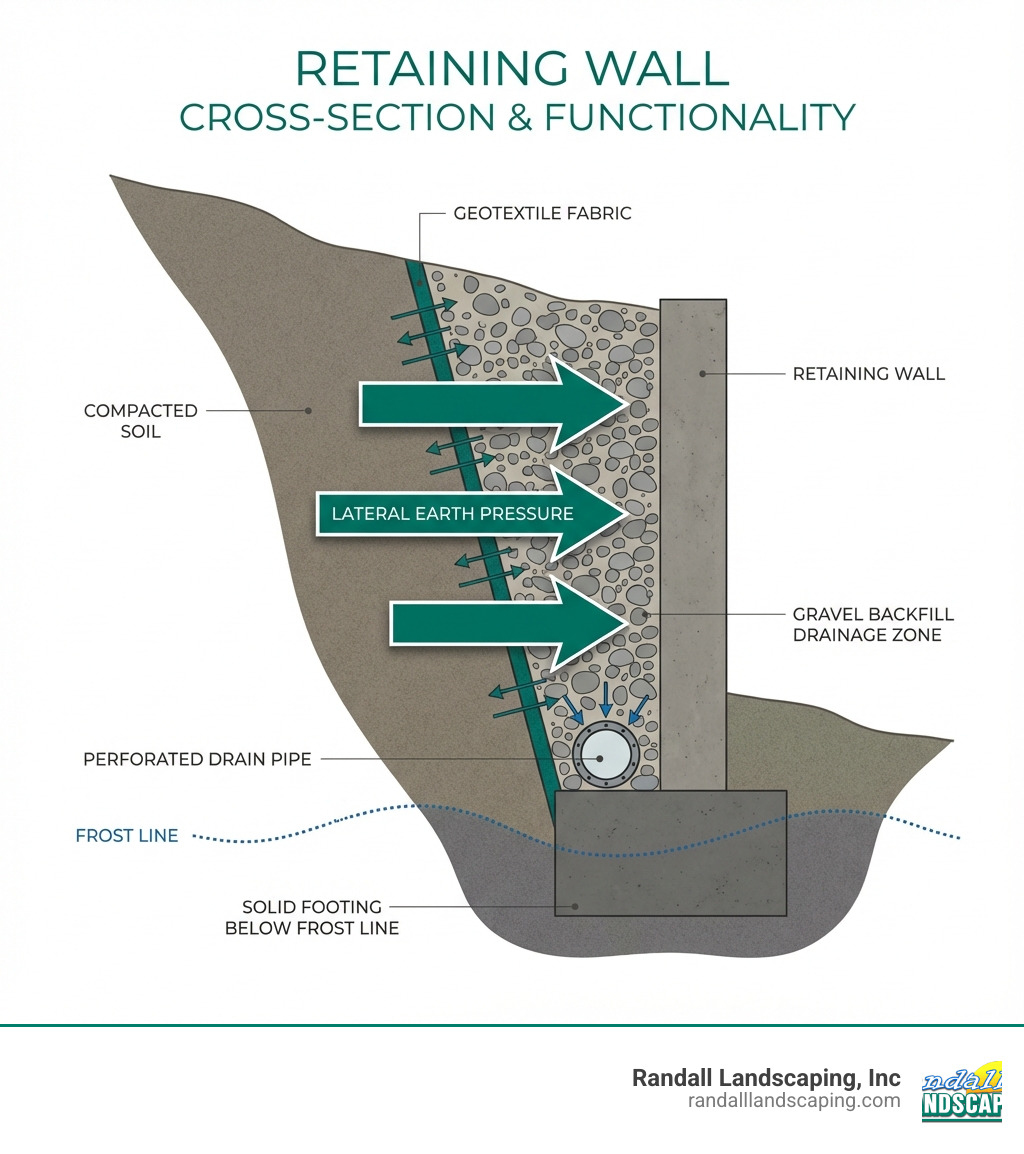
At its core, a retaining wall is a rigid structure designed to support soil laterally, keeping it at different elevations on two sides. Think of it as a hardworking boundary that holds back earth or water, preventing it from eroding or collapsing. Its primary purpose is to stabilize slopes, manage soil movement, and create usable, level ground where none existed before.
In areas like the Merrimack Valley and Southern New Hampshire, with our sometimes unpredictable terrain, retaining walls are incredibly useful. They prevent soil from washing away during heavy rains, which is crucial for protecting your landscape and even your home’s foundation. By creating flat surfaces, they allow us to design beautiful terraced gardens, install functional patios on slopes, and simply make more of your outdoor living space.
For more information on changing your outdoor areas, check out our insights on landscape wall construction.
The Key Difference: Retaining Walls vs. Freestanding Walls
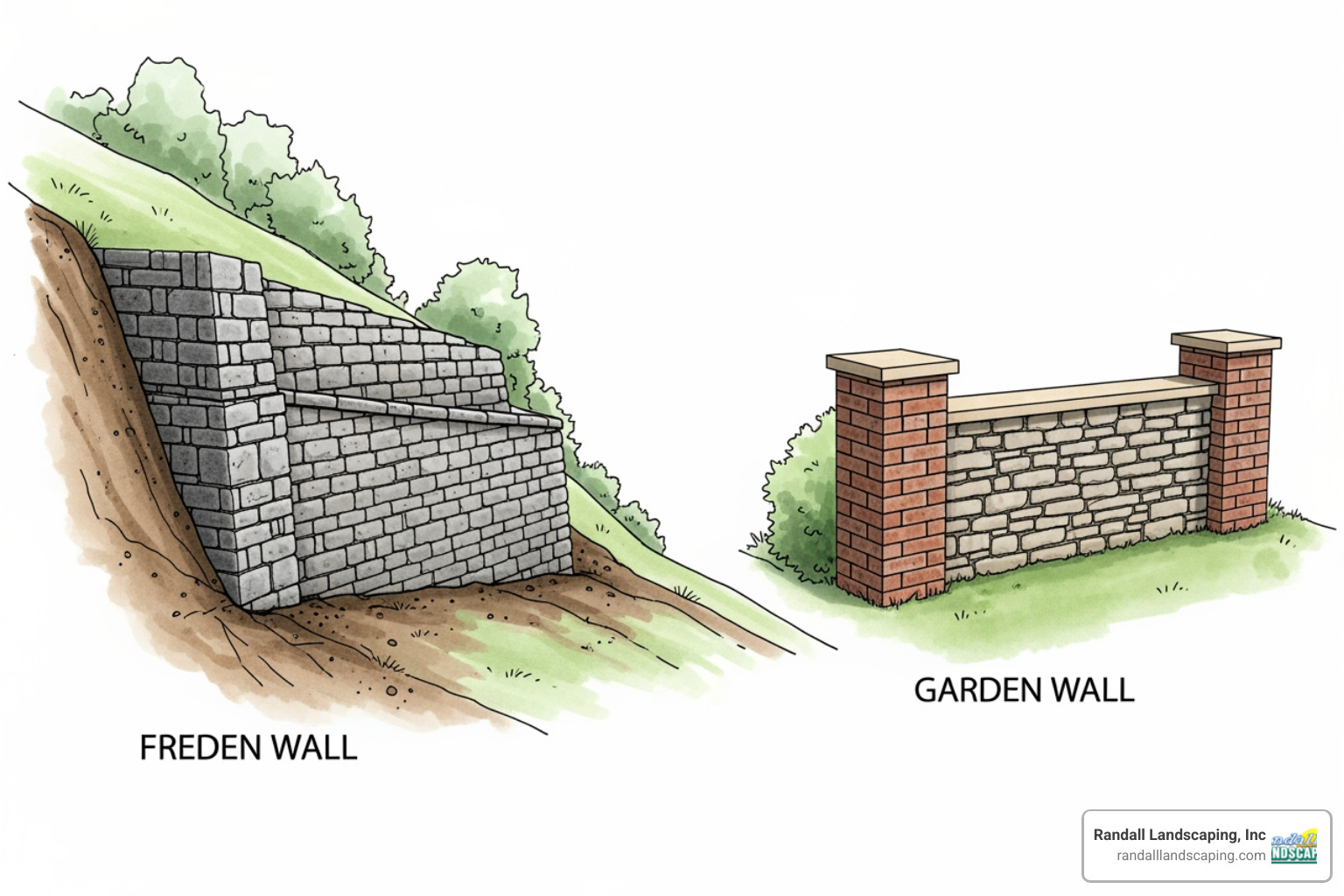
While both can define spaces and add beauty, retaining walls and freestanding walls serve fundamentally different purposes. The key distinction lies in their structural load and primary function.
A retaining wall is engineered to withstand the immense lateral pressure exerted by the soil it holds back. This means it requires a robust foundation, often with deep footings, and a carefully designed drainage system to manage water and prevent pressure buildup. Its main job is structural support and soil retention.
In contrast, a freestanding wall, like a low garden wall or a decorative boundary, is primarily aesthetic. It’s built on flat ground and doesn’t bear significant soil load. While it can divide spaces, create seating areas, or mark property boundaries, it’s not designed to prevent erosion or stabilize a slope. It’s more about defining an area than holding back the earth.
Exploring the Different Types of Retaining Walls
Choosing the right type of retaining wall depends on its height, soil conditions, budget, and desired aesthetic. Each type has unique characteristics for different applications.
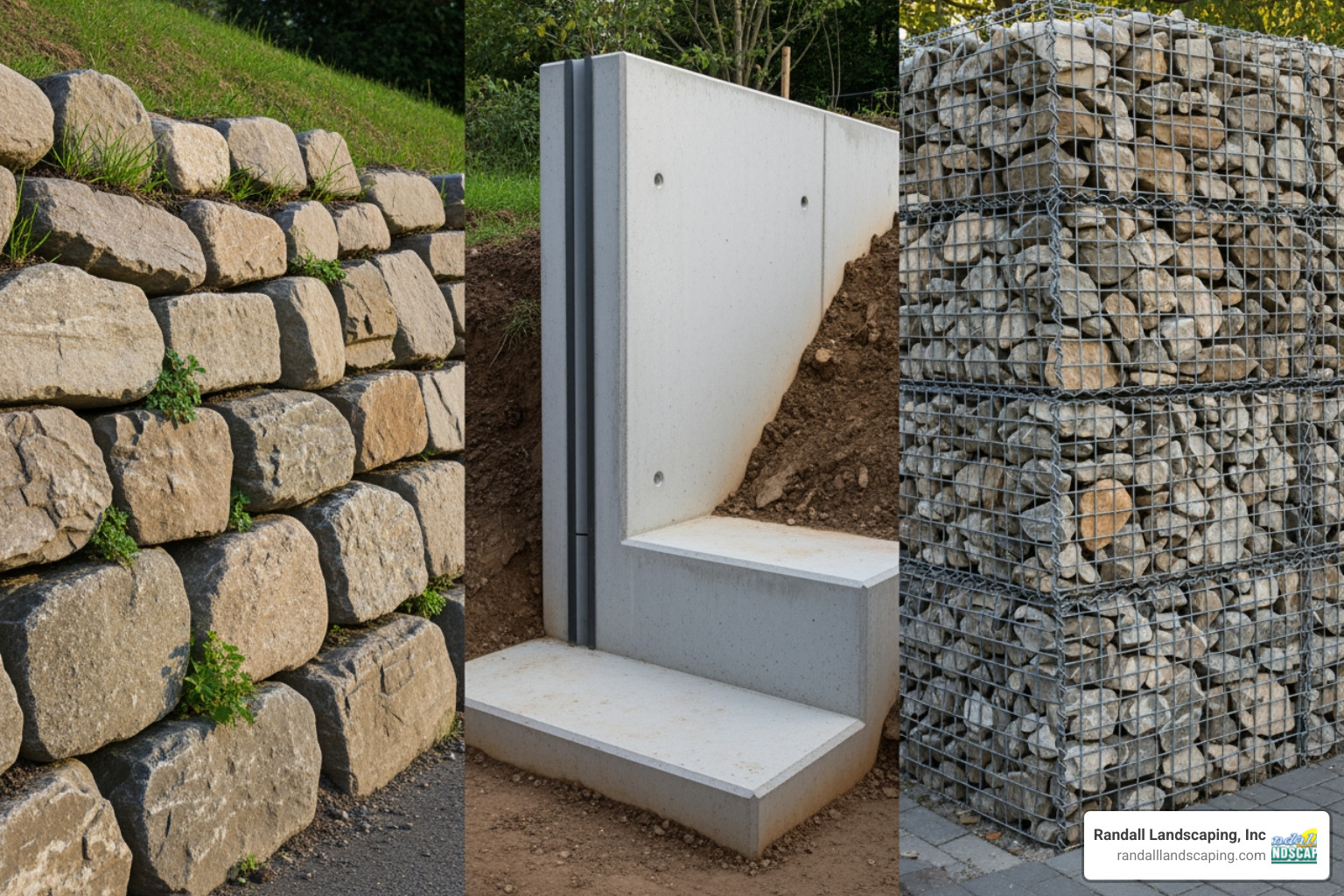
Here are the most common types:
- Gravity Walls
- Cantilever Walls
- Sheet Piling Walls
- Anchored Walls
- Mechanically Stabilized Earth (MSE) Walls
- Gabion Walls
Gravity Walls
These walls use their own mass (from concrete blocks, stone, etc.) to hold back soil. They are wider at the base and best for shorter walls, typically under 10 feet.
Cantilever Walls
An efficient choice for taller walls (up to 16 feet), these use an L-shaped or T-shaped footing made of reinforced concrete. The weight of the soil on the footing’s “heel” provides stability through leverage.
Sheet Piling Walls
Constructed by driving interlocking sheets of steel, vinyl, or wood into the ground, these are ideal for soft soils, tight spaces, and waterfront applications. Taller walls may use anchors for extra support.
Anchored Walls
For very tall walls or challenging soil, anchors (cables or rods) are drilled into the earth behind the wall and tensioned. This provides extra resistance and allows for a thinner wall design, but requires specialized installation. For a deeper dive into how these systems work, explore our guide on retaining wall anchors.
Mechanically Stabilized Earth (MSE) Walls
A modern, efficient solution for large projects. MSE walls use a facing of segmental blocks with layers of geogrid reinforcement embedded in the soil behind them. This creates a stable, reinforced soil mass. They are known for being cost-effective and quick to build. You can learn more about their construction from the Commercial Installation Manual for Allan Block Retaining Walls.
Gabion Walls
These consist of wire mesh cages filled with rocks. Gabion walls are highly permeable (great for drainage), flexible, and offer a rustic, natural look. If you’re considering this distinctive look for your property, we have local experts ready to help. Find gabion wall builders near you.
Materials, Costs, and Creative Designs
Selecting the right material for your retaining wall is a critical decision, balancing aesthetics, durability, and budget. The material not only defines the wall’s look but also impacts its lifespan and maintenance needs.
| Material Type | Pros | Cons | Expected Lifespan | Cost Range (per sq/ft, material only) |
|---|---|---|---|---|
| Concrete Blocks (Segmental) | Versatile, interlocking, wide range of colors/textures, DIY-friendly for smaller walls | Can look manufactured if not chosen carefully, may fade over time | 50-100 years | $5 – $200+ |
| Poured Concrete | Extremely strong, smooth finish, customizable shapes, modern aesthetic | Requires forms, professional installation, can crack if not reinforced/jointed | 50-100 years | $30 – $50 |
| Natural Stone | Beautiful, timeless, unique, increases property value, no fading | Expensive, heavy, skilled labor required, can be irregular | 50-100 years | $20 – $100 |
| Wood/Timber (Treated) | Affordable, natural look, relatively easy to install | Shorter lifespan, prone to rot, warping, insect damage, requires replacement | 20-40 years | $15 – $30 |
| Gabion | Permeable, flexible, unique rustic aesthetic, environmentally friendly | Can be bulky, requires rock fill, wire can corrode over long periods | 50+ years | $10 – $40 |
| Brick | Classic, neat, durable, wide range of colors/styles | Skilled labor required, can be expensive, mortar joints need maintenance | 50-100 years | $20 – $25 |
| Steel (e.g., I-Beams, Sheet Piling) | Very strong, slender, good for tight spaces, modern industrial look | Expensive, prone to rust if not treated, specialized installation | 50-100 years | $15 – $150 |
Popular choices in our region include versatile concrete blocks, strong poured concrete, and timeless natural stone like the ones we use for sandstone retaining walls. Wood is a more affordable but less durable option, with a lifespan of 20-40 years compared to 50-100 years for stone or concrete.
Factors Influencing Retaining Wall Costs
The cost of a retaining wall can vary dramatically. Based on internet data, the national average cost to build a retaining wall ranges between $3,202 and $9,203, but complex projects can exceed $27,000. Please remember these are average costs based on internet data and not actual costs for Randall Landscaping.
Key cost factors include:
- Materials: Costs can range from $5 to over $200 per square foot.
- Labor: Professional labor ensures proper installation.
- Site Preparation: Clearing, grading, and excavation can be significant expenses.
- Wall Size: Taller and longer walls require more materials and engineering.
- Permits & Engineering: Walls over 3-4 feet often require permits and an engineer’s design.
- Drainage: A necessary cost for ensuring the wall’s longevity.
Creative Ways to Use Retaining Walls in Your Landscape
Beyond their essential structural function, retaining walls offer incredible opportunities to improve the beauty and utility of your outdoor spaces. We love helping clients envision these possibilities:
- Terraced Gardens: Transform a sloped yard into a series of level planting beds for easier gardening and stunning visual interest.
- Raised Patios and Outdoor Living Areas: Use a wall to create a flat, liftd space for a patio, outdoor kitchen, or fire pit.
- Built-in Seating: Integrate durable benches directly into your retaining wall design.
- Integrated Planters: Design pockets within the wall to hold plants, softening the hardscape.
- Steps and Walkways: Define and support neat staircases or paths that steer changes in elevation.
- Water Features: Create a serene backyard oasis with a waterfall flowing over a stone retaining wall.
For more inspiration on how to improve your home’s exterior, especially with these kinds of features, explore our residential retaining walls services.
The Essentials of Building a Stable Retaining Wall
Building a retaining wall isn’t just about stacking blocks; it’s about understanding the forces of nature and engineering a structure that can resist them. A stable, long-lasting retaining wall relies on fundamental design principles that ensure its integrity for decades. We adhere to the highest standards, often consulting detailed resources like the Design Manual for Retaining Walls to ensure the longevity and safety of our projects.
The Foundation: It All Starts at the Base
Just like a house, a retaining wall is only as strong as its foundation. This is where stability begins. For smaller walls (under 3 feet), a properly excavated trench filled with a compacted gravel base, known as a leveling pad, can suffice. This pad must be perfectly level to ensure the first course of blocks is even, which is crucial for the entire wall’s stability.
For taller or more heavily loaded walls, deeper footings are essential. These structural footings are poured below the frost line (which varies across our region, from Atkinson, NH to Boxford, MA) to prevent shifting due to the freeze-thaw cycles that cause frost heave. Burying the bottom course of the wall, typically one-tenth its total height, also helps prevent the soil from pushing the bottom out.
Managing Soil and Hydrostatic Pressure
The primary challenge a retaining wall faces is the relentless lateral earth pressure from the soil behind it. Soil, especially our New England clay/loam, constantly wants to move down its natural “failure plane” – the steepest slope it can maintain without collapsing. This pressure increases with the depth of the soil, meaning taller walls experience much greater forces.
Adding to this, water saturation significantly increases the load. Groundwater behind a wall creates hydrostatic pressure, which can be immense. Imagine a wall trying to hold back not just soil, but also a pool of water! This is why managing soil pressure and understanding soil types (clay soils retain more water and exert more pressure than sandy soils) are critical design principles. Poor compaction of the backfill also creates problems, leading to settling and uneven pressure.
Critical Drainage Solutions for Retaining Walls
Given the destructive power of hydrostatic pressure, proper drainage is not just important; it’s absolutely critical for the longevity of any retaining wall. Without it, water can build up behind the wall, saturating the soil, increasing pressure, and eventually leading to bulging, leaning, or even catastrophic failure.
Our best practices include:
- Proper Backfill Material: We use free-draining, granular materials like gravel or crushed stone directly behind the wall, not topsoil. Topsoil absorbs water and swells, exerting immense pressure, and will break down and settle over time.
- Gravel Drainage Zone: We install at least a 12-inch thick layer of gravel or similar granular material immediately behind the wall. This allows water to quickly drain away.
- Perforated Drain Pipe: At the base of this gravel layer, we install a perforated drain pipe (sometimes called a “weeping tile”) wrapped in geotextile fabric. This pipe collects the water and directs it away from the wall’s foundation, often to a daylighting point or a storm drain.
- Weep Holes: For some wall types, we also incorporate weep holes in the wall face itself, allowing any accumulated water to escape.
- Geotextile Fabric: This fabric is crucial. It separates the granular drainage material from the native soil, preventing fine soil particles from clogging the drainage system.
These measures ensure that water never has a chance to build up and compromise the wall’s structural integrity.
DIY vs. Hiring a Professional Contractor
Deciding whether to build a retaining wall yourself or hire a professional is a common dilemma. It largely depends on the project’s scope, your skill level, and your understanding of the inherent risks.
The DIY Approach: What to Know
For small, simple retaining walls—typically under 3 feet in height and on relatively flat ground—a DIY approach might be feasible. Simple gravity walls made from interlocking concrete blocks are often the best bet for homeowners. You’ll need basic tools, a good understanding of excavation, leveling, and compaction, and a significant time commitment.
However, even for small walls, there’s a risk of improper installation. Without adequate drainage or a solid base, even a short wall can fail, leading to wasted effort and materials. This is especially true in areas with heavy clay soils or significant frost heave potential, like much of Southern New Hampshire and the Merrimack Valley.
When to Hire a Professional
We strongly recommend hiring a professional for most retaining wall projects, especially if:
- Walls are over 4 feet tall: Many communities in our service areas (from Andover, MA to Windham, NH) require building permits and professional engineering for walls exceeding this height. Walls taller than 4 feet are structurally complex and can fail catastrophically if not designed correctly.
- Complex Soil Conditions: If your property has heavy clay, loam with slip planes, or unstable soils, extra precautions are needed. Professionals understand how to redirect water or reinforce the soil to prevent these issues. New England soils, in particular, can be tricky.
- Poor Drainage Areas: If you’re building in an area prone to water accumulation or runoff, a professional will design and implement a robust drainage system to prevent hydrostatic pressure.
- Proximity to Structures: If the wall is near your home’s foundation, a driveway, or other structures, the stakes are higher. An improperly built wall could cause significant damage.
- Engineering Requirements: Professionals have the expertise to calculate soil pressure, design appropriate foundations, and ensure the wall meets all safety factors.
- Local Permits: We handle all necessary permitting, ensuring your project complies with local zoning laws and building codes in your specific town.
For critical projects where stability and longevity are paramount, entrusting the job to experienced retaining wall construction contractors is the smartest investment.
Common Problems, Repairs, and Maintenance
Even the best-built retaining wall requires some attention over its lifespan. Understanding common problems, knowing when to seek repairs, and performing routine maintenance are key to ensuring its longevity and continued performance.
Identifying Common Retaining Wall Failures
Catching issues early can save you from more extensive and costly repairs down the line. Keep an eye out for these red flags:
- Leaning or Bulging: If a wall is tilting forward at the top or bulging outward, it’s a clear sign of excessive hydrostatic pressure or improper engineering. Waves in the wall can also indicate improper compaction of the base material.
- Cracking: Small hairline cracks might be normal with temperature changes, but larger, spreading cracks or cracks that create distinct segments in the wall often point to settling, foundation issues, or overwhelming soil pressure.
- Separation: If segments of the wall are pulling apart, or if the wall is separating from an adjacent structure, it indicates significant movement or foundational problems.
- Uneven Settling: If one part of the wall is noticeably lower than another, it suggests an inadequate or poorly compacted foundation.
- Water Stains (Efflorescence): White, powdery stains on the wall face can indicate that moisture is pooling behind the wall and migrating through the material. This is a tell-tale sign of a drainage issue and potential hydrostatic pressure buildup.
- Erosion: Soil washing away from the base or top of the wall, or behind the wall, signals drainage problems or inadequate backfill.
Solutions and Professional Repairs
Addressing retaining wall problems often requires professional intervention. Solutions can range from minor adjustments to a complete rebuild:
- Improving Drainage: For issues related to hydrostatic pressure, solutions include installing perforated drainage pipes at the base, adding gravel backfill, or incorporating weep holes.
- Reinforcement: For bulging or leaning walls, tie-backs or anchors extending into the soil behind the wall can provide additional support. In some cases, specialized solutions like helical anchors for retaining wall repair can be used to stabilize failing structures.
- Partial or Full Replacement: In severe cases of bulging, leaning, or foundational failure, the wall may need to be dismantled and rebuilt with proper engineering and construction techniques.
- Crack Repair: Small cracks can be filled with concrete sealant or epoxy to prevent water infiltration, but larger structural cracks often require professional assessment.
If you notice any of these issues, it’s best to consult with experts. Learn more about comprehensive retaining wall repair options.
Long-Term Maintenance for Your Wall
Proactive maintenance can extend the life of your retaining wall significantly:
- Annual Inspection: Periodically inspect your wall for any signs of wear, damage, movement, or drainage issues. Check for backfill loss, loss of joint seals, or displaced panels.
- Clear Weep Holes: Ensure any weep holes or drainage outlets are clear of debris to allow water to flow freely.
- Manage Surface Water: Ensure that surface water runoff is directed away from the wall, either through proper grading or by using gutters and downspouts.
- Check for Erosion: Regularly inspect the soil at the base and top of the wall for signs of erosion and address them promptly.
- Seal Joints: For walls with coping, sealing coping joints prevents excessive quantities of water from entering the top of the wall and causing internal pressure.
- Address Voids: If you observe any voided areas behind or within the wall (e.g., from backfill loss), treat them when they are small and manageable, as they will always increase in size over time.
Frequently Asked Questions about Retaining Walls
How long does a retaining wall last?
The lifespan of a retaining wall largely depends on the materials used, the quality of construction, and ongoing maintenance. Concrete and stone walls, when built properly, can last 50-100 years or even longer. Wood walls, typically made from treated timbers, usually have a shorter lifespan of 20-40 years due to their susceptibility to rot and decay. Proper construction, especially adequate drainage and a solid foundation, is the most crucial factor for longevity.
What is the most common reason retaining walls fail?
The overwhelming majority of retaining wall failures can be attributed to poor drainage and the resulting hydrostatic pressure buildup. When water cannot escape from behind the wall, it saturates the soil, dramatically increasing the pressure on the wall. This, combined with inadequate foundations or improper backfill materials, leads to bulging, leaning, cracking, and eventual collapse.
Do I need a permit to build a retaining wall?
Whether you need a permit to build a retaining wall varies significantly by municipality in the Merrimack Valley and Southern New Hampshire. Generally, walls over a certain height—often 3 or 4 feet—or those supporting a significant load will require a building permit. It’s always best to check with your local building authority (e.g., in Plaistow, NH, or Methuen, MA) before starting any project. A professional contractor like Randall Landscaping will be familiar with these requirements and can handle the permitting process for you.
Conclusion
Retaining walls are far more than just functional barriers; they are integral components of a well-designed, stable, and beautiful landscape. From preventing erosion and managing challenging slopes to creating invaluable usable space and enhancing curb appeal, their benefits are numerous.
However, the success of a retaining wall hinges on meticulous planning, proper design principles, careful material selection, and, critically, robust drainage. Without these elements, even the most aesthetically pleasing wall is destined for problems.
At Randall Landscaping, we pride ourselves on delivering quality work and 100% reliability in every project, ensuring our clients’ satisfaction. If you’re in the Merrimack Valley or Southern New Hampshire and considering a retaining wall for your property, our team has the expertise to design and build a solution that is both beautiful and built to last.
Don’t let a sloped yard limit your outdoor dreams. Contact us for your retaining wall project today, and let’s create something amazing together!