

Why Making a Paver Walkway Is a Smart Investment for Your Home
Making walkway with pavers is a rewarding DIY project that boosts curb appeal and creates a functional, lasting outdoor path. A well-built paver walkway adds value, beauty, and durability to your property.
Here’s a brief overview of the process:
- Plan your layout: Mark the path with stakes and string.
- Excavate the area: Dig down 7-8 inches for the base layers.
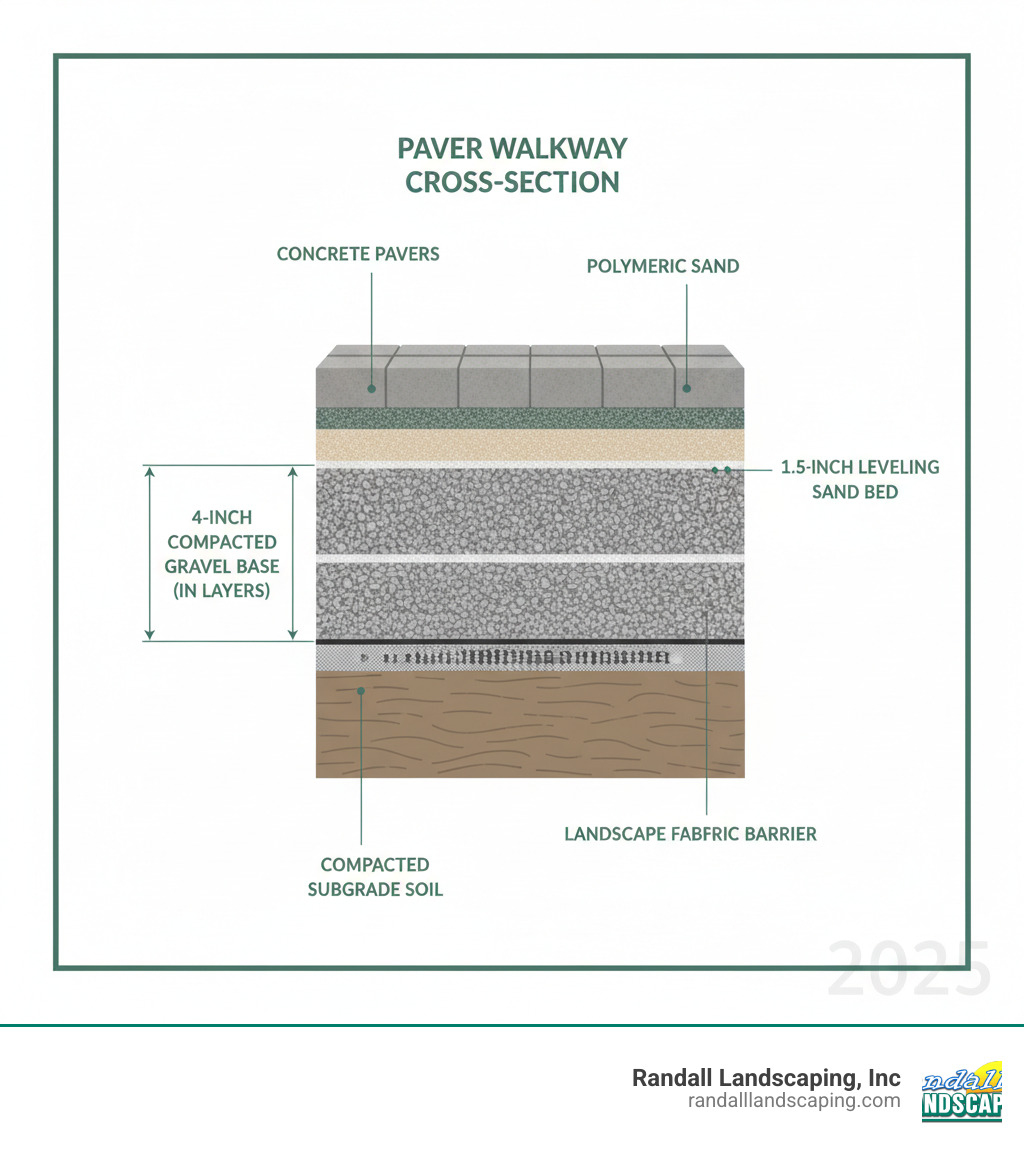
- Build a solid foundation: Install landscape fabric, a 4-inch compacted gravel base, and 1-1.5 inches of leveling sand.
- Lay the pavers: Start from a fixed edge and use string lines for alignment.
- Secure and finish: Install edge restraints, compact the pavers, and fill joints with polymeric sand.
- Activate the sand: Mist with water to lock pavers in place.
The key to a long-lasting paver walkway is preparation. As research shows, “The success or failure of a paver walk depends largely on how well you compact the layers, including the subgrade. Loose dirt or gravel will cause sections of the walk to sink.” Proper base preparation is critical.
Concrete pavers are advantageous over traditional walks: they require less work, provide a solid surface, and are easily replaced if damaged. They also come in a wide variety of styles to match any home.
Is this a difficult project? Yes, it’s physically demanding. Research confirms: “This is a very difficult, dirty, and back breaking project. It is not easy.” However, it’s a doable project for a motivated homeowner.
I’m Tommy Randall, owner of Randall Landscaping, Inc. Since 2006, I’ve been installing professional hardscapes in Massachusetts and New Hampshire. My experience has taught me that proper technique is the key to a walkway that lasts for decades.
Step 1: Planning Your Paver Walkway Design
Before you dig, a few hours of planning will save you days of frustration. First, define your walkway’s purpose. Is it a formal entry path or a meandering garden trail? This will guide your design choices.
For width, aim for 35 to 40 inches to allow two people to walk side-by-side. For wheelchair accessibility, ensure a minimum clear width of 36 inches. For the path’s shape, straight paths are formal and easier to install, while curved paths add a natural, softer feel. Outline your design with marking spray paint. Use stakes and string for straight lines and a flexible garden hose for curves.
Proper drainage is critical. Your walkway must slope away from your house at a rate of 1/8 to 1/4 inch per foot. This prevents water from pooling or damaging your foundation. You can verify your calculations with a free slope calculator. Before any digging, call 811. This free service locates and marks underground utility lines, a step that is required by law and essential for safety.
Now, choose your pavers and pattern. From classic brick to sleek modern styles, the options are endless. The pattern affects both looks and stability. Herringbone is very strong and great for high-traffic areas. Running bond is a simple, classic choice. Basketweave offers a charming, traditional look. Browse our hardscape products to see the range of styles available. Finally, check local building codes and HOA rules to avoid any issues.
Essential Tools and Materials
Gather these items before you start making walkway with pavers:
Materials:
- Pavers: Your total area plus 5% extra for cuts.
- Gravel or Limestone Screening: Enough for a 4-inch compacted base. We prefer limestone screening for its stability.
- Leveling Sand: For a 1 to 1.5-inch screed bed.
- Paver Edging and Spikes: To lock the perimeter.
- Landscape Fabric: To block weeds and stabilize the base.
Tools:
- Shovel, spade, wheelbarrow
- Tape measure, marking spray paint, stakes, string line
- 4-foot level, rubber mallet
- Plate Compactor: Rent one. This is non-negotiable for a lasting walkway.
- Circular Saw or Angle Grinder with a diamond blade for cuts.
- Push broom, leaf blower, hose with mist nozzle.
Safety First
This is hard, physical work. Prioritize safety.
- Protect Your Back: Lift with your legs, not your back. Bend your knees and keep loads close to your body.
- Respect the Plate Compactor: Read the manual, wear sturdy shoes, and maintain a firm grip. Let the machine do the work.
- Use Cutting Gear: When cutting pavers, always wear safety glasses, work gloves, and a dust mask or respirator. Concrete dust is harmful to your lungs, and flying debris is a serious risk.
Step 2: Excavation and Base Preparation
This step is the backbone of your project. A solid, well-prepared base is what separates a walkway that lasts for decades from one that fails in a few seasons. The effort you put in here pays off tenfold.
Using your marked lines, begin excavating. How deep should you dig when making walkway with pavers? A depth of 7 to 8 inches from the final surface level is recommended. This accommodates a 4-inch gravel base, a 1 to 1.5-inch sand bed, and the thickness of your pavers. Remove all grass, rocks, and roots. Once at your target depth, use a plate compactor to compact the subgrade (the soil at the bottom). This creates a firm foundation that won’t settle.
Creating a Stable and Level Base
Now, build up the layers that support your pavers. Patience and precision are key.
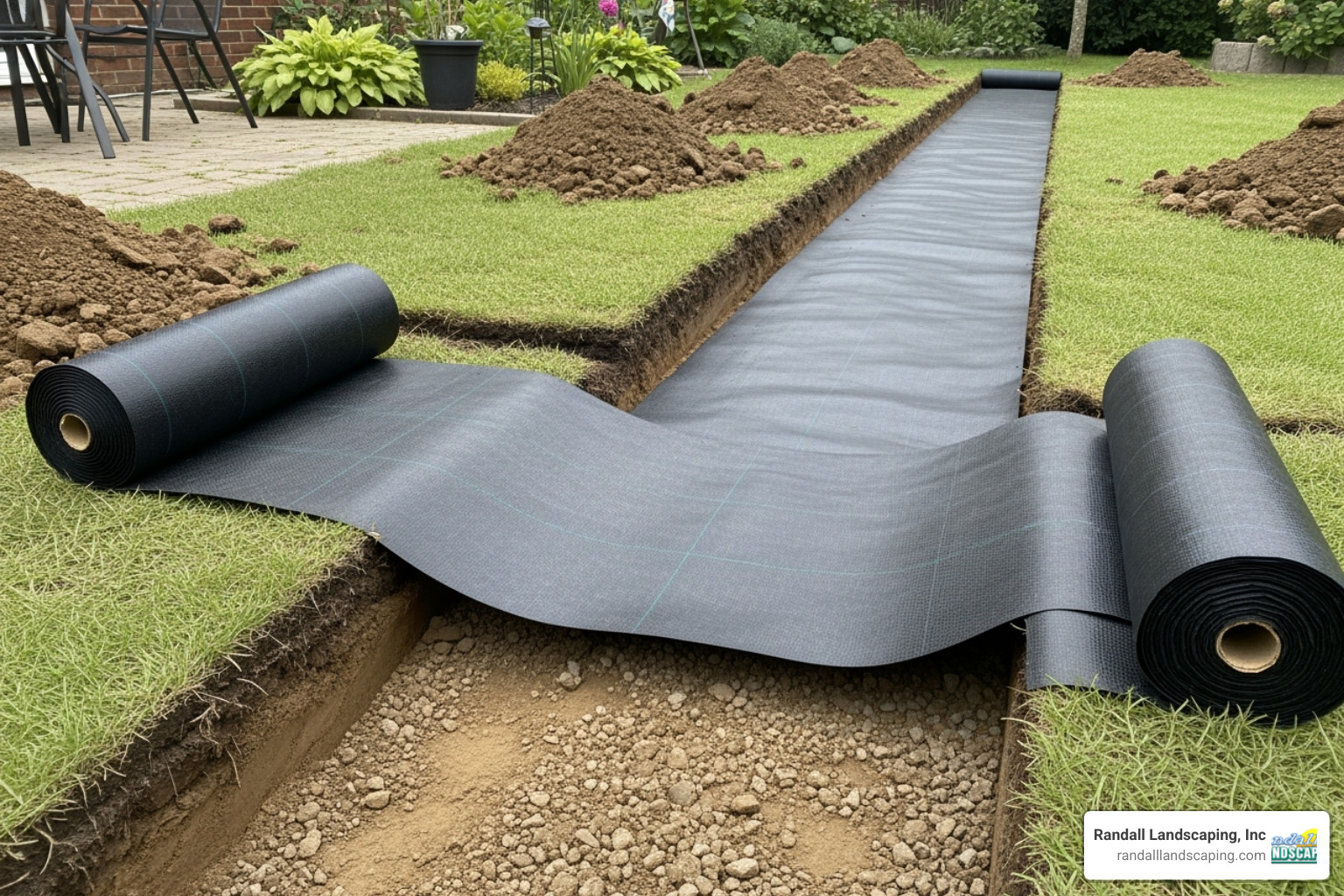
First, lay landscape fabric over the entire excavated area. This prevents the gravel base from sinking into the soil and blocks weeds. Overlap any seams by 12 to 18 inches.
Next is the gravel base. This 4-inch layer provides drainage and distributes weight. Don’t just dump 4 inches of gravel at once. Build it in two 2-inch layers. Spread the first 2-inch layer of gravel (we recommend limestone screening), rake it smooth while maintaining your drainage slope, and then use the plate compactor to make multiple passes until it’s rock-solid. Repeat the process with the second 2-inch layer. This method ensures proper compaction throughout the base. For more on professional-quality foundations, see our hardscape installations guide.
Finally, add the leveling sand. Shovel a 1 to 1.5-inch layer of paver sand over the compacted gravel. To get a perfectly flat surface, you need to screed the sand. Place two long, straight pipes (e.g., 1/2-inch PVC) on the gravel base on either side of the path. Pour sand between them, then drag a straight 2×4 board along the pipes to scrape off the excess, leaving a uniform bed. Carefully remove the pipes and fill in the gaps with sand. This base preparation is where you earn your success.
Step 3: A Step-by-Step Guide to Making a Paver Walkway
This is where your vision takes shape. The care you take in laying the pavers will determine the professional quality of the final result.
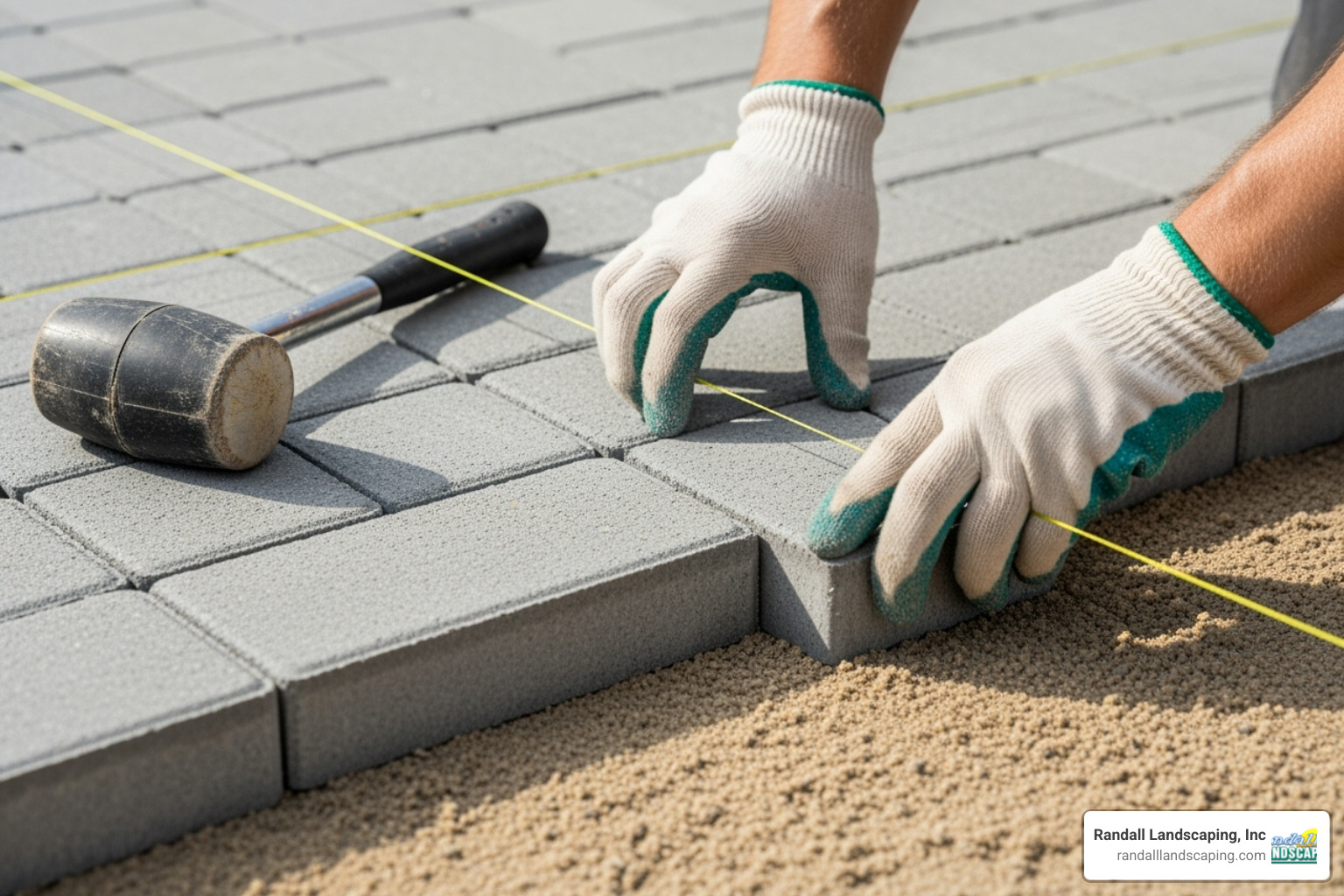
Start from a fixed edge, like your house foundation or driveway, to ensure a straight reference point. Place each paver gently onto the sand bed—do not slide them, as this disturbs the sand. Lower each paver straight down, then give it a few taps with a rubber mallet to settle it. Use taut string lines every few rows to check your alignment and prevent your lines from drifting.
As you work, position yourself on the pavers you’ve already laid, not on the prepared sand bed. You will work your way backward, laying pavers in front of you.
Key Considerations for Making a Paver Walkway
Your laying pattern affects both appearance and strength. A simple running bond is classic and straightforward. A herringbone pattern is stronger and more decorative but requires more cuts. Basketweave patterns offer a traditional, woven look.
Consistent joints are crucial for stability. Most pavers have built-in spacer nubs that create the perfect 1/8-inch gap for the jointing sand. Regularly check your work with a level every few rows to ensure the pavers are even and maintain the proper drainage slope. If a paver is too high, remove some sand from underneath; if it’s too low, add a little more.
Cuts will be necessary at the edges or for curves. Use a circular saw or angle grinder with a diamond-tip blade. Remember the safety gear mentioned earlier: safety glasses, gloves, and a dust mask are essential when cutting. Measure twice and cut once for clean, professional results.
Step 4: Finishing Your Paver Walkway
You’re in the home stretch. These final touches secure the perimeter and lock everything into place, ensuring your walkway lasts for decades.
How to Edge and Secure the Perimeter
Before finishing, you must install paver edging restraints. These plastic or metal strips create a firm boundary that prevents pavers from shifting over time, especially during freeze-thaw cycles. Place the edging flush against the outer pavers and drive 10- to 12-inch spikes through the pre-drilled holes into the ground, typically every 12 inches. Once you backfill with soil or mulch, the edging becomes nearly invisible, providing structural support without visual clutter. This step is what keeps your paver walkway looking crisp for years. For more hardscape inspiration, see our custom paver patios.
The Final Steps in Making a Paver Walkway
These steps lock everything together for a professional finish.
- Compact the pavers. Run your plate compactor over the entire surface. This settles the pavers into the sand bed and creates a perfectly level surface.
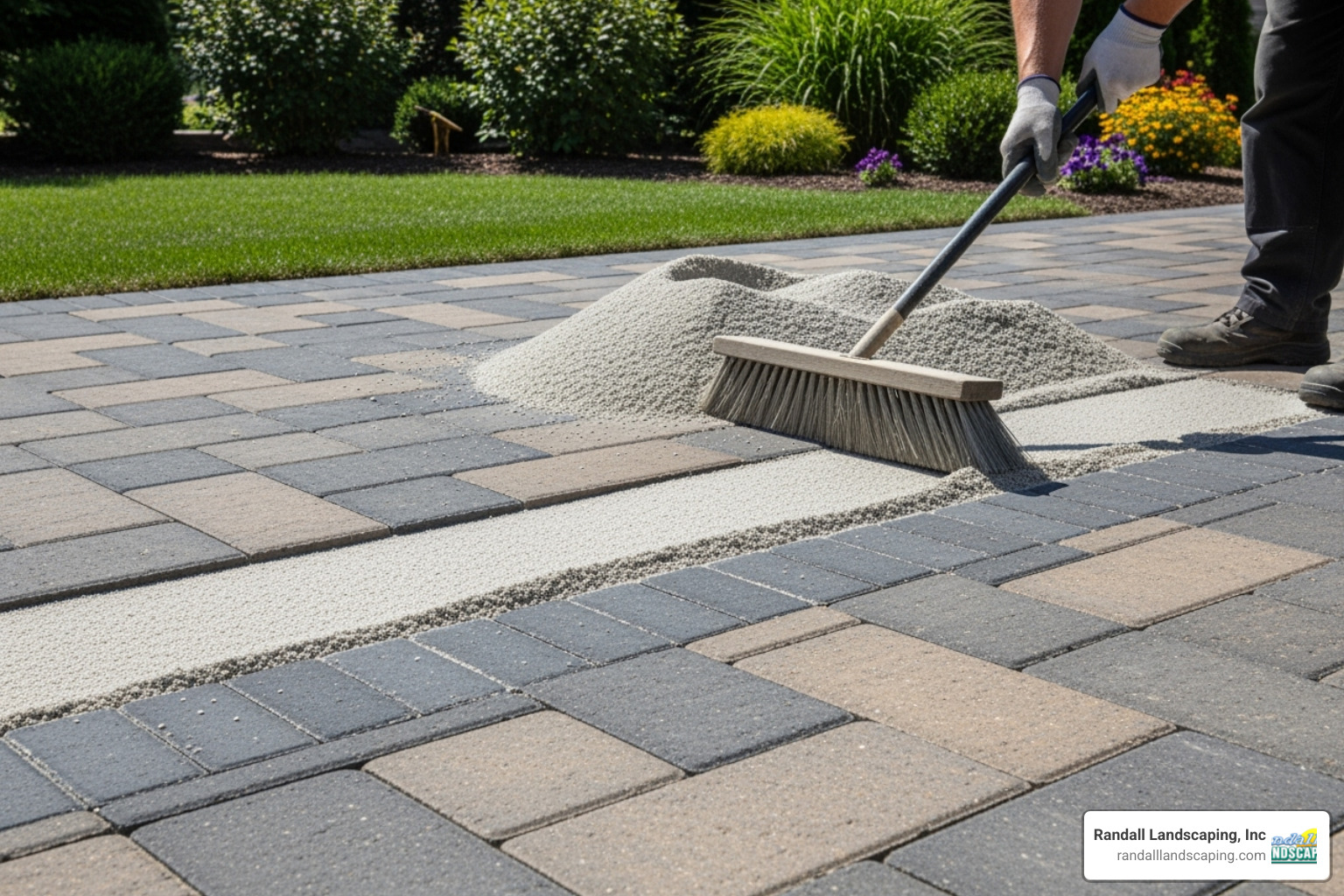
- Add polymeric sand. This special sand contains polymers that harden when wet, locking pavers in place and preventing weeds. Ensure the paver surface is completely dry before you begin. Pour the sand over the walkway and use a push broom to sweep it into every joint until they are full.
- Remove excess sand. This is a critical step. Use a leaf blower to carefully blow every grain of sand off the paver surfaces. Any remaining sand will create a permanent haze when wet.
- Activate the sand. Using a hose with a fine mist nozzle, lightly spray the walkway. You want just enough water to soak into the joints and activate the polymers without washing the sand out.
Allow the sand to cure for 24 to 48 hours, keeping foot traffic off the area. Once cured, the joints will be solid and durable. Congratulations—you’ve finished making walkway with pavers!
Advanced Techniques and Long-Term Care
Your walkway is complete, but what about challenging slopes or long-term maintenance? These advanced techniques and care strategies will protect your investment for decades.

How to Incorporate Steps
If your yard has a slope, incorporating steps is a functional and attractive solution. To determine the number of steps, measure the total height change and divide by a comfortable step height of approximately seven inches.
To build a step, excavate into the slope and create a compacted gravel foundation, just as you did for the walkway base. This prevents the step from settling. For the structure, use retaining wall blocks or larger pavers secured with construction adhesive. Lay the first course, ensuring it is level, and stagger the joints on subsequent courses for strength, using adhesive between each layer. The top tread should match your walkway pavers. Ensure your steps also slope slightly for drainage. For complex designs, our guide to retaining wall options offers more ideas.
How to Repair and Maintain Your Walkway
One of the best features of making walkway with pavers is the ease of maintenance and repair.
- Fixing Sunken Pavers: If a paver becomes uneven, carefully lift it out. Add fresh leveling sand to the base, compact it, and re-lay the paver until it’s flush with its neighbors. Finish with new polymeric sand.
- Topping Up Joint Sand: Every few years, you may notice joints looking empty or weeds appearing. Simply sweep in new polymeric sand, blow off the excess, and mist with water to refresh the joints.
- Cleaning: Sweep regularly to remove debris. For a deeper clean, use a stiff brush and mild detergent. A pressure washer can be used carefully, but avoid blasting the joints directly.
- Sealing: While optional, sealing pavers every 1-2 years can improve color, protect against stains, and further stabilize the joint sand.
- Winter Care: Avoid using harsh rock salt, which can damage pavers over time. Sand or calcium chloride-based de-icers are gentler alternatives.
These simple maintenance tasks will keep your walkway looking great. If you prefer to have a professional handle it, Randall Landscaping offers professional walkway installation services, including maintenance and repair.
Frequently Asked Questions about Paver Walkways
After nearly two decades in the hardscaping business, I’ve heard almost every question about making walkway with pavers. Here are answers to some of the most common ones.
Can you lay pavers over an old concrete walkway?
Yes, this can be a great shortcut, saving you the messy work of demolition. However, it’s only possible if the existing concrete is stable, flat, and not crumbling or heaving. If the slab is in good condition, you can spread a 3/4-inch layer of leveling sand over the concrete to create a smooth, level bed for your new pavers. You must also ensure the final surface still has proper drainage, sloping away from your house.
How long does it take to build a paver walkway?
This depends on the project’s complexity and how much help you have. For a typical straight, 20-foot DIY walkway, plan for a full weekend. The excavation and base preparation are the most time-consuming parts. Laying the pavers is often quicker, but making cuts for curves or patterns will add time. A professional crew with specialized equipment can often complete a standard residential walkway in just one or two days.
Is building a paver walkway a difficult project?
Yes, this is a challenging DIY project that is physically demanding. It involves lifting tons of material and requires hours of bending, digging, and kneeling. If you have back issues or physical limitations, you may want to consider hiring a professional.
Success also depends on precision. A poorly compacted base will lead to a failed walkway. You must be diligent about maintaining a consistent slope, keeping lines straight, and ensuring every paver is level.
While the sense of accomplishment from a DIY project is immense, hiring a professional is a great option if the work seems overwhelming. Based on internet data, the average cost to install a paver walkway typically ranges from approximately $8 to $25 per square foot, though this can vary with complexity and materials. Please note these are average costs from various sources and not actual prices for Randall Landscaping—contact us directly for a detailed quote specific to your project. The bottom line is to be realistic about your physical ability, time, and commitment to doing the job right.
Conclusion
From the initial plan to the final finishing touches, making walkway with pavers is a journey that adds lasting beauty, function, and value to your home. The pride of building something with your own hands is a significant reward for a challenging but satisfying project.
This project demands physical effort and precision. The digging, hauling, and compacting are a serious workout. For many, this is part of the appeal. However, if you lack the time or physical ability, or simply prefer a guaranteed professional result, we are here to help.
At Randall Landscaping, Inc., we have been creating beautiful, durable paver walkways throughout the Merrimack Valley and Southern New Hampshire since 2006. Our commitment to quality work and 100% reliability ensures your project is done right the first time. Professional installation provides peace of mind, knowing your walkway is built on a solid foundation that will withstand New England’s weather for years to come.
Whether you’re in Amesbury, North Andover, Salem, Windham, or a surrounding area, we bring the same dedication to every job. If you’re ready to transform your property with a flawless paver walkway, let’s talk. Get a professional quote with our Paver Walkway Contractors Ultimate Guide and let us bring your vision to life.