

The Water-Saving Secret for Your Garden
Moisture retaining mulch is a garden’s best friend during hot, dry periods. It can significantly reduce your watering needs while keeping plants healthy and thriving.
Quick Answer: Best Moisture Retaining Mulches
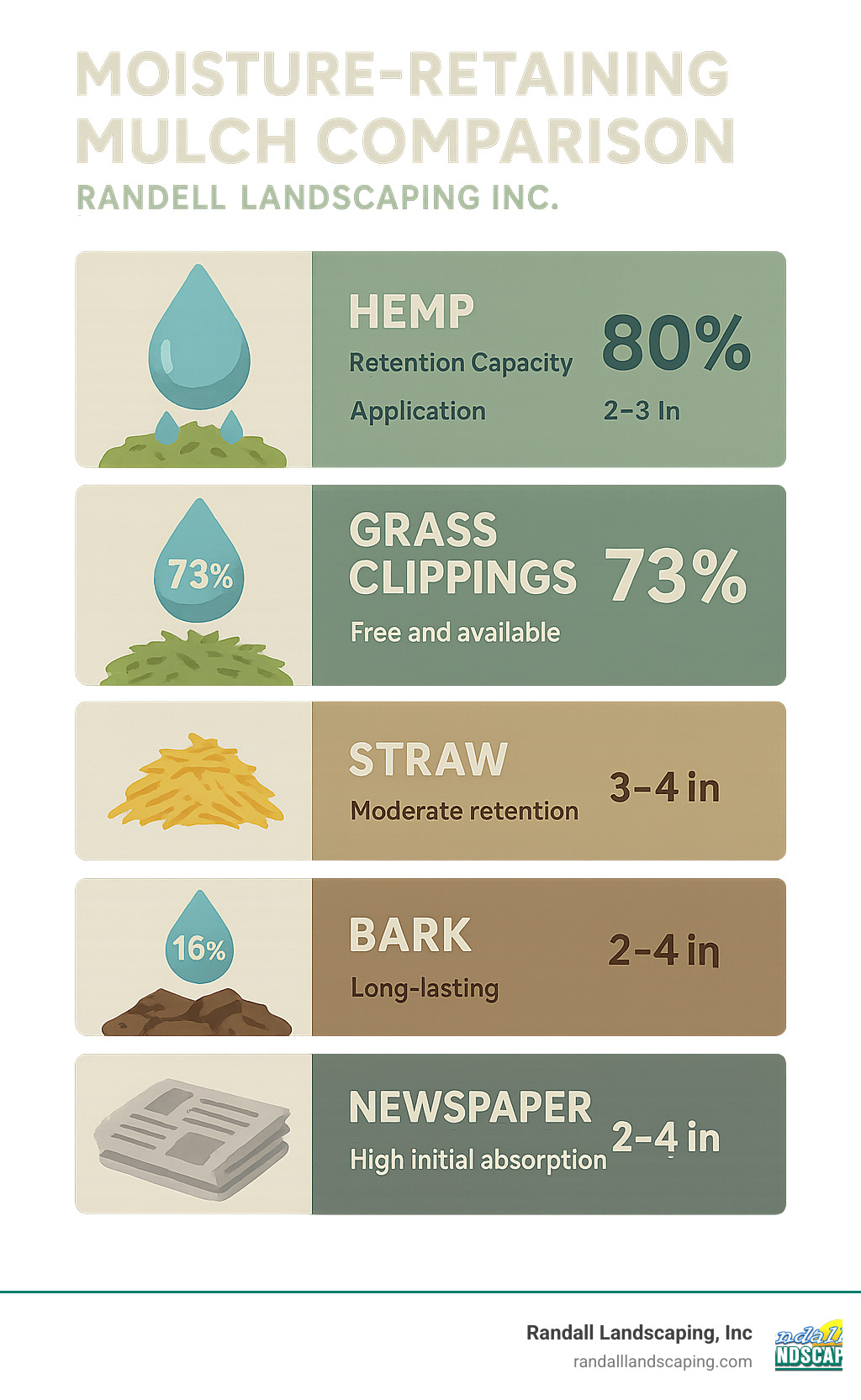
- Hemp bedding: Retains up to 80% of water over three days
- Grass clippings: Retains about 73% of water (free and readily available)
- Straw/hay: Excellent for vegetable gardens, moderate retention
- Bark/wood chips: Long-lasting but less absorbent (16% retention)
- Newspaper: High initial absorption but dries quickly
Recommended depth: 2-4 inches for most gardens
Did you know that by simply covering your soil with the right mulch, you can increase the amount of water stored in your garden by up to 80%? Studies show that properly mulched soil requires up to two-thirds less watering compared to bare soil. This is game-changing for busy homeowners who want a beautiful landscape without constant maintenance.
What makes mulch so effective? It works by:
- Creating a protective barrier that blocks evaporation
- Shading the soil from direct sun and heat
- Insulating against temperature extremes
- Slowly breaking down to improve soil structure (organic types)
During hot summer days, unmulched soil can lose critical moisture rapidly, leaving plants stressed and thirsty. With the right moisture-retaining layer, your plants develop stronger root systems and become more resilient to drought conditions.
I’m Tommy Randall, owner of Randall Landscaping, Inc., and after 18 years of installing moisture retaining mulch in countless New England gardens, I’ve seen how proper mulching transforms struggling landscapes into thriving outdoor spaces that require less water and maintenance.
Simple Moisture retaining mulch word guide:
– Commercial mulch installation
– Eco-friendly mulch options
– Garden bed mulching
What Is Moisture Retaining Mulch?
Moisture retaining mulch is essentially nature’s water-saving blanket for your garden. It’s any material that you spread over your soil surface to lock in precious moisture and keep thirsty plants happy with less watering. Think of it as a protective shield that stands guard against the sun’s drying effects.
When I explain this to my clients in the Merrimack Valley, I often use this simple comparison: just as you might use a cozy blanket to keep warmth from escaping on a chilly New England night, moisture retaining mulch keeps water from vanishing from your soil when conditions turn dry.
These garden guardians come in two main families: organic mulches (like bark, straw, or grass clippings that gradually break down and feed your soil) and inorganic mulches (such as rocks or rubber that stick around longer but don’t improve soil health).
“It doesn’t matter how much rain you get if most of it never enters your soil,” as soil health expert Dale Strickler wisely points out. This highlights something many gardeners miss—good mulch doesn’t just prevent moisture loss; it creates a soil surface that welcomes rainfall rather than repelling it.
How Moisture Retaining Mulch Works
Moisture retaining mulch isn’t just pretty to look at—it’s a hardworking part of your garden that saves water through several clever mechanisms:
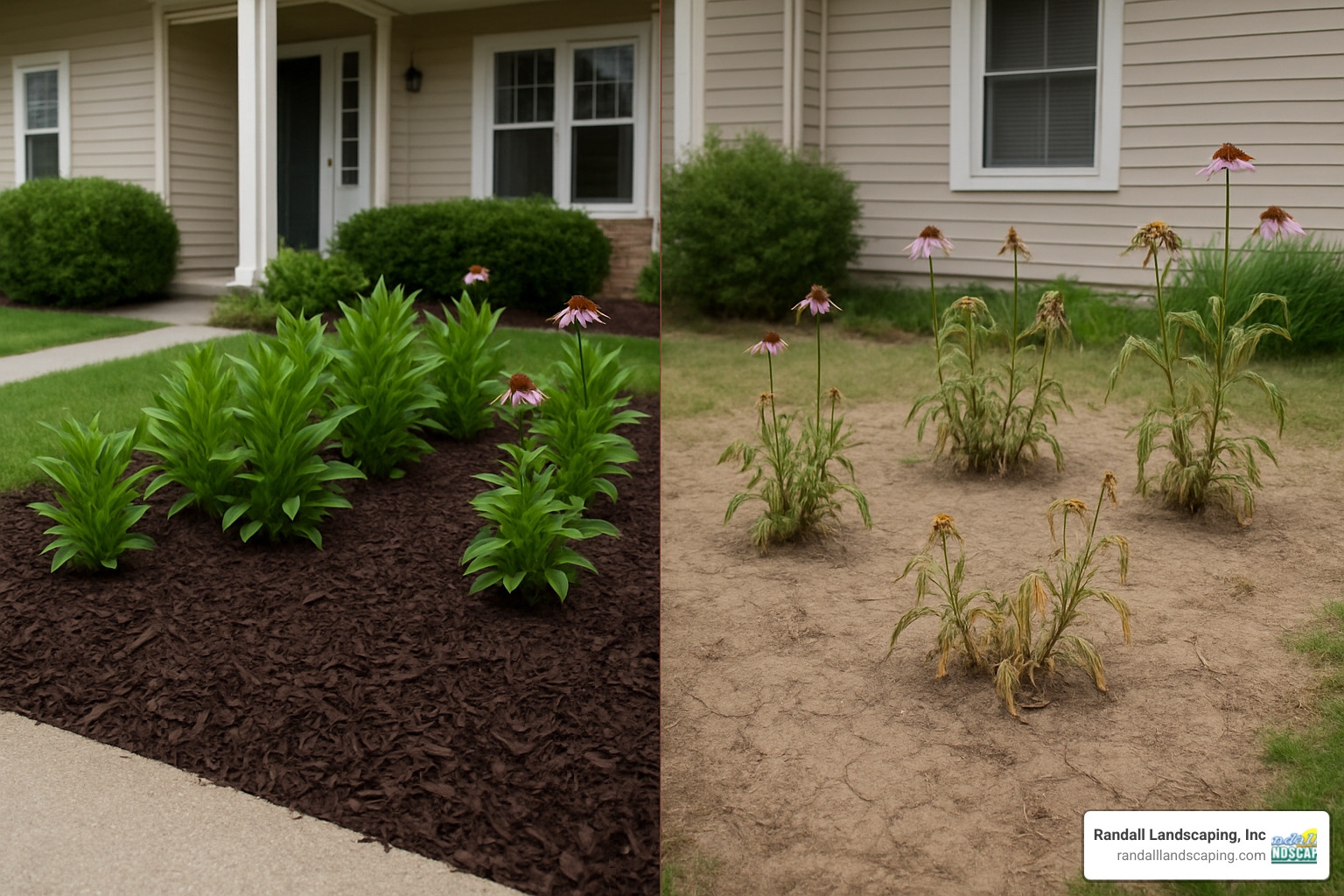
First, it creates soil shading that blocks harsh sunlight from baking your soil. This shade effect alone can slash evaporation by nearly 60%—imagine cutting your water bill by more than half just by adding a protective layer!
It also forms a capillary break that interrupts water’s natural tendency to creep upward through soil where it would evaporate away. This is like putting a lid on your soil’s water supply.
As an insulation layer, mulch keeps soil temperatures more moderate—cooler during scorching summers and warmer during frosty New Hampshire winters. This temperature buffering means less stress on plant roots and less water lost to extreme heat.
For organic mulches, there’s an added bonus of root hydration improvement. As they gradually decompose, they improve your soil’s structure, turning it into a better sponge that holds more plant-available water.
One of our Merrimack Valley customers finded this benefit dramatically: “After a tornado dumped 4.5 inches of rain in 20 minutes, my mulched garden beds absorbed all the water with no runoff, while my neighbor’s bare soil flooded immediately.”
Why Moisture Retention Matters for Gardens & Landscapes
In today’s increasingly unpredictable climate, the water-saving power of moisture retaining mulch has become more valuable than ever for several compelling reasons:
Plant stress reduction is perhaps the most visible benefit. When soil moisture remains consistent, plants develop stronger root systems and show greater resilience. They’re less likely to wilt dramatically between waterings and better able to fight off pests and diseases that prey on weakened plants.
For busy homeowners throughout Southern New Hampshire, reduced watering frequency is a genuine lifesaver. Many of our clients tell us they’ve cut their garden watering needs by 50-75% after we’ve properly mulched their beds—that’s hours of time saved every week during summer.
With climate patterns becoming less predictable, climate resilience has become a priority even in traditionally water-rich New England. Properly mulched gardens can weather both unexpected dry spells and sudden downpours with minimal stress.
For those creating xeriscaping or low-water landscapes, effective mulching isn’t optional—it’s essential. It amplifies the drought tolerance of already water-wise plants and makes these sustainable landscapes even more successful.
Beyond just keeping moisture in, mulch provides valuable erosion control by absorbing the impact of heavy rainfall and preventing soil from washing away during the intense storms that sometimes sweep through our region.
Scientific Benefits & Proof You Can Bank On
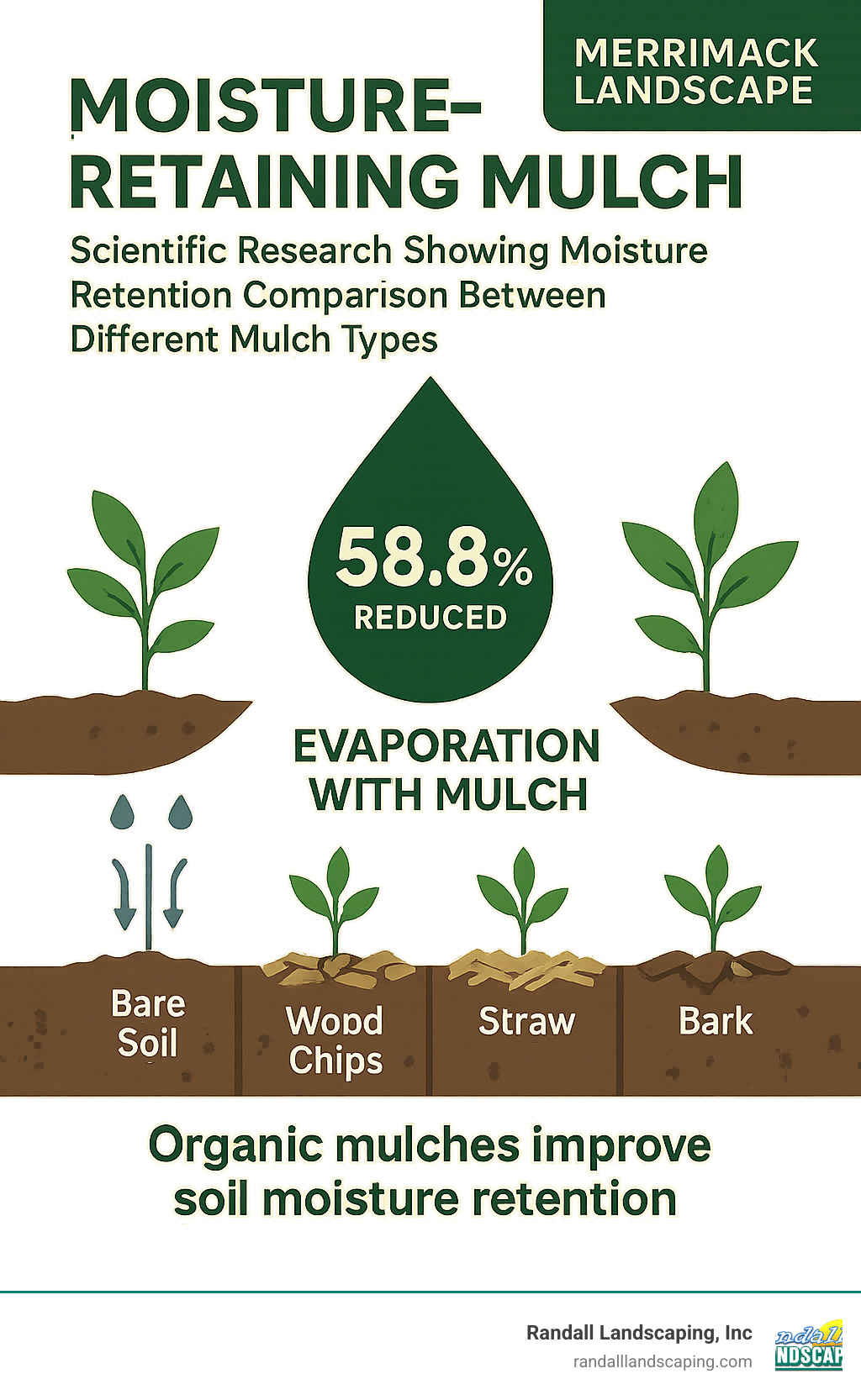
When researchers studied evaporation rates, they finded something remarkable: properly mulched soil loses up to 58.8% less moisture to evaporation compared to bare soil. This translates to needing only one-third the water you’d typically usea game-changer during those scorching July days we experience in the Merrimack Valley.
What really catches my attention is how different mulches perform in real-world conditions. In controlled testing over three hot, windy days, the differences were striking: hemp bedding held onto an impressive 80% of added water, while grass clippings retained 73%. Traditional bark mulch, though beautiful, only managed to keep 16% of moisture. And bare soil? It lost everything0% retention.
A client in North Andover put it perfectly: “Before mulching, I was practically chained to my garden hose every other day during summer. After applying a 3-inch layer of wood chip mulch, I now water just once a week, even during those brutal July heat waves.”
The physical structure of your mulch matters tremendously too. Scientists have found that newspaper mulch allows water to infiltrate quickly but doesn’t hold it long-term. Bran-based mulches, on the other hand, act like natural sponges with remarkable water-holding capacity, slowly releasing moisture to plant roots over time. For more detailed research on organic mulches and their benefits, check out this comprehensive study from the University of Missouri Extension.
Impact on Soil Temperature & Root Health
Moisture retaining mulch doesn’t just save waterit creates a more comfortable home for your plants’ roots through impressive temperature regulation.
On a 906F summer day, the surface of unmulched soil can heat up to a scorching 1056Fhot enough to stress or even damage delicate root systems. Add a proper layer of mulch, and that same soil might stay around a comfortable 856F. This matters because most plant roots function best between 65-756F, where they can efficiently absorb water and nutrients.
The benefits extend year-round. During winter, that same mulch layer insulates the soil against harsh freeze-thaw cycles that can heave plants right out of the ground and damage their root systems. It’s like providing your plants with a cozy blanket during the coldest months.
One fascinating arborist study noted that “trees store enough energy to survive 2-3 years without external water sources once soil moisture is depleted.” However, since 90% of a tree’s water uptake happens in the top 6-8 inches of soil, mulch provides protection exactly where it’s needed most.
The stable environment created by mulch also nurtures beneficial soil microbes that break down organic matter, cycle nutrients, and improve overall soil healthcreating a thriving underground ecosystem that supports your plants from the roots up.
Water-Use Efficiency & Cost Savings
Let’s talk dollars and sense. Moisture retaining mulch delivers real economic benefits that you’ll notice on your water bill.
A typical suburban lawn requires about an inch of water weekly during the growing seasonapproximately 620 gallons per 1,000 square feet. At current municipal water rates in the Merrimack Valley ($5-10 per 1,000 gallons), summer irrigation can add anywhere from $50 to $300 to monthly water bills.
By reducing watering needs by up to two-thirds, proper mulching can save you $30-200 monthly during peak season. One Andover homeowner shared their experience: “After mulching our 2,500 square foot perennial garden, we reduced our summer water usage by approximately 10,000 gallons, saving around $85 per month during the growing season.”
For those on well water, the benefits extend beyond direct costsless pumping means lower electricity bills and longer pump life. And during those increasingly common drought restrictions in Southern New Hampshire, mulched gardens stay healthier with limited irrigation.
The investment in moisture retaining mulch typically pays for itself within the first season through water savings alonenot counting the reduced need for weeding, fertilizing, and replacing stressed plants. It’s truly one of the smartest investments you can make in your landscape.
Best Types of Mulch for Holding Water
Not all mulches are created equal when it comes to moisture retention. After years of testing different materials across hundreds of New England properties, we’ve seen which options truly keep your soil hydrated when the heat is on.
Hemp & Grass Clippings: High-Performance Champions
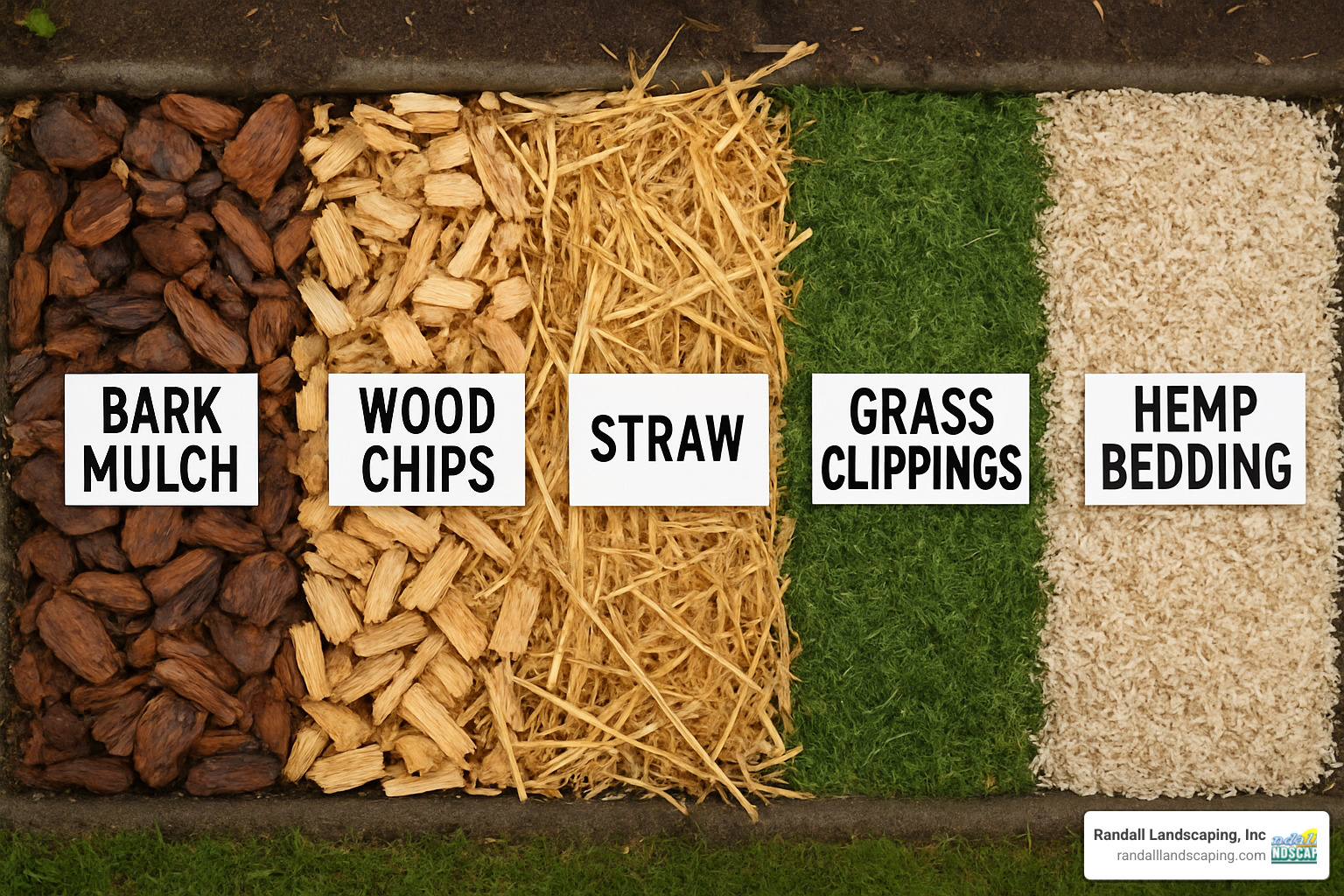
When it comes to pure water-holding power, two materials consistently outshine the rest: hemp bedding and those humble grass clippings from your lawn.
Hemp bedding is truly remarkable, retaining an impressive 80% of added water over three days. It creates a sponge-like layer that slowly releases moisture to plant roots below. While it’s more expensive than other options, many of our clients find it worth every penny, especially for water-sensitive plants or during drought periods.
A Boxford client recently told me, “I repurposed hemp bedding from my chicken coop as garden mulch. Even during a week-long heatwave, my tomatoes stayed perfectly hydrated with just one deep watering.” If you have access to a local farm, you might find used hemp bedding at a bargain price.
Grass clippings are the unsung heroes of moisture retaining mulch, holding approximately 73% of moisture over three days. Best of all, they’re completely free for most homeowners! Beyond water retention, their high nitrogen content feeds your plants as the clippings break down. For best results, let them dry slightly before application and apply in thin, loose layers to prevent matting.
“Fresh grass clippings from routine lawn mowing provide an excellent, free mulch,” explains our head landscaper. “Just make sure they’re pesticide-free and collected before seed heads form.”
Straw & Pine Needles: Vegetable Garden Favorites
For vegetable gardens and specialty planting areas, straw and pine needles offer excellent moisture retention with additional benefits custom to specific growing needs.
Straw has earned its popularity in vegetable gardens for good reason. While its moisture retention is moderate compared to hemp, it excels at keeping produce clean by preventing soil splash during watering or rain. Its lightweight nature makes it perfect for tucking around delicate vegetable seedlings without crushing them. For maximum effectiveness, apply straw in 3-4 inch layers, knowing it will decompose relatively quickly and add valuable organic matter to your soil.
“Straw is my go-to for vegetable gardens,” shares a Salem, NH community garden coordinator. “It not only keeps moisture in but also keeps my tomatoes and strawberries clean and prevents soil-borne diseases.”
Pine needles (sometimes called pine straw) offer good moisture retention with excellent longevity. Their natural acidifying effect makes them perfect for acid-loving plants like blueberries, azaleas, and rhododendrons. Their interlocking nature creates superior erosion control on slopes, and many gardeners appreciate their attractive, natural appearance in woodland gardens. A 2-3 inch layer, refreshed annually, is typically ideal.
Bark & Wood Chips: Long-Lasting Landscape Choice
While bark mulch and wood chips don’t win the pure moisture retention contest (holding about 16% of added water over three days), they offer exceptional overall benefits that make them the go-to choice for many landscape beds.
Bark mulch provides a finished, attractive appearance that maintains its good looks for 1-2 years before needing replacement. Its durability and excellent weed suppression capabilities make it ideal for perennial beds and foundation plantings. Available in various colors and textures, bark mulch helps create that polished landscape look while still performing its moisture-saving duties.
Wood chips share similar moisture retention to bark but with a different texture that works beautifully for pathways and around trees. As they gradually decompose, they improve soil structure in ways that benefit long-term plant health. Many property owners find wood chips more cost-effective than bark, especially when applied at the optimal 2-4 inch depth (keeping away from direct stem contact).
“Wood chips are the best material I’ve used for long-term moisture management,” reports a Georgetown property manager. “While they don’t hold as much water as grass clippings, their longevity and soil-building properties make them ideal for perennial beds and tree rings.”
For professional mulch installation and blowing services, Randall Landscaping provides efficient, uniform application throughout the Merrimack Valley.
Newspaper & Bran: Budget & Specialty Options
Don’t overlook these unconventional but effective moisture retaining mulch options, especially if you’re gardening on a budget or have specialized needs.
Newspaper and cardboard might seem too simple to be effective, but science proves otherwise. These materials offer surprisingly high initial water absorption and infiltration rates. They create an excellent weed barrier when layered under other mulches, essentially giving you two benefits for the price of one. And that price? Often free! For proper application, layer 5-10 sheets thick, making sure to overlap edges to prevent weeds from finding gaps.
“Newspaper as a base layer under wood chips gives us the best of both worlds,” explains our landscape maintenance supervisor. “The paper creates an immediate moisture barrier and weed block, while the chips provide longevity and aesthetics.”
Bran mulch is perhaps the most surprising performer in laboratory testing. Despite slow initial infiltration, it exhibits remarkably strong water-holding capacity, acting as a slow-release moisture reservoir for plants. Laboratory tests show bran mulch had the highest water retention after drying, holding 1.10 g water per g mulch—1.53 times that of grass and an astounding 9.17 times that of newspaper. As it breaks down, it also adds valuable nutrients to your soil. For best results, apply in 2-3 inch layers in areas with drip irrigation or light rainfall.
How to Apply Moisture Retaining Mulch for Maximum Results
Proper application is crucial for getting the most moisture retention benefit from your mulch:
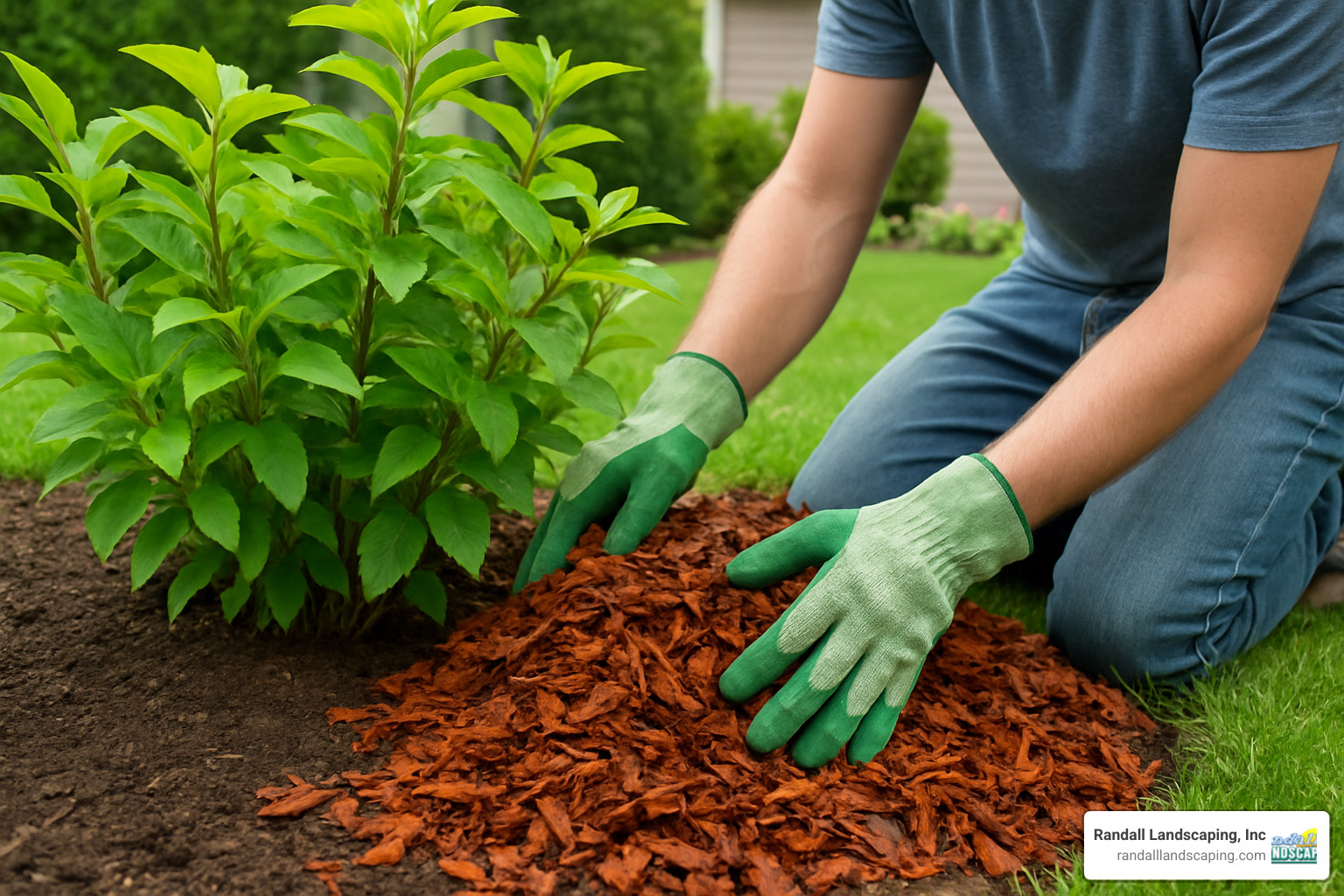
When it comes to moisture retaining mulch, depth matters more than you might think. For most garden beds, aim for that sweet spot of 2-4 inches deep. Think of it like a blanket for your soil – too thin and it won’t insulate properly, too thick and it might smother your plants’ ability to breathe.
I always tell my clients in Methuen and Haverhill that timing can make or break your mulching success. Apply your mulch after a good soaking rain or thorough watering. This simple step “locks in” existing moisture, giving your garden a tremendous head start.
“I learned this lesson the expensive way,” laughed Jane from Dracut, a longtime customer. “I once spread mulch on bone-dry soil during last summer’s drought, and it actually repelled water at first! Now I always water deeply first, then mulch – what a difference!”
Always keep a 1-2 inch breathing space between your moisture retaining mulch and plant stems or tree trunks. Direct contact isn’t just bad for moisture management – it can lead to stem rot and create cozy homes for pests you definitely don’t want in your garden.
Organic mulches naturally decompose over time. This is great for your soil, but it means their moisture-retention powers gradually diminish. Plan to refresh your mulch annually, typically in spring after the soil has had a chance to warm up.
For the ultimate water-efficient garden, consider installing drip irrigation or soaker hoses beneath your mulch layer. This combo delivers moisture directly to root zones with minimal evaporation – a perfect pairing that’s helped many of our Merrimack Valley clients reduce watering by up to 75%.
For professional mulch installation in Salem, NH and surrounding areas, our team ensures proper techniques for optimal moisture retention.
One common mistake I see? Using plastic sheets under mulch. While it might seem logical for blocking evaporation, plastic prevents rainfall from reaching the soil and creates suffocating conditions most plants hate. Stick with breathable landscape fabric if you need an additional weed barrier.
Common Mistakes to Avoid
Even experienced gardeners make these mulching errors that sabotage moisture retention:
Volcano mulching is perhaps the most common mistake I see around North Andover and Andover. That cone-shaped pile against tree trunks might look tidy, but it causes bark rot, attracts pests, and actually directs water away from roots rather than toward them.
Over-mulching is a classic case of “too much of a good thing.” Layers deeper than 4 inches can actually prevent light rainfall from reaching soil. As our arborist often says, “I’ve seen well-meaning clients apply 6-8 inches of mulch thinking they’re being extra helpful. In reality, they’re creating a thick thatch that repels water rather than conserving it.”
Watch out for matted layers, especially with grass clippings and leaves, which can form water-repelling sheets when compacted. A quick rake-through every few weeks keeps these mulches working properly.
Be mindful of impermeable edging installed too deeply around beds. These barriers can block the natural lateral movement of water through soil. If you’re using edging, ensure it allows for proper drainage.
Using raw compost as mulch is another common error. While excellent for amending soil, fresh compost dries quickly and often forms a crusty surface that water bounces right off. Use fully finished compost or mix it with coarser materials for better moisture retention.
Regional & Climate Considerations
The best moisture retaining mulch strategy should be custom to your specific location and climate:
In our relatively humid Merrimack Valley, organic mulches work beautifully year-round. The natural decomposition process is supported by our seasonal moisture, gradually improving soil structure as the mulch breaks down.
For windier locations like hilltops in Windham or Pelham, lightweight mulches like straw can become your neighbor’s problem pretty quickly! Choose heavier materials or apply a thin layer of compost over lighter mulches to keep everything where it belongs.
On sloped properties common in parts of Andover and North Reading, interlocking mulches like pine needles or shredded bark perform significantly better than round materials like wood chips, which tend to wash away during heavy New England downpours.
Our famous New England freeze-thaw cycles make mulch particularly important for winter protection. I recommend applying a fresh layer in late fall to insulate perennial roots from temperature fluctuations that can push plants right out of the ground.
Whenever possible, consider using native materials. Using locally sourced mulch reduces transportation costs and environmental impact. Around here, materials like pine needles, leaf mold, and wood chips from local tree services are sustainable choices that work perfectly with our regional growing conditions.
Frequently Asked Questions About Moisture Retaining Mulch
Does mulch ever block water from reaching soil?
Yes, mulch can sometimes create barriers to water penetration, despite its moisture-saving benefits. This typically happens when you apply mulch too thickly (beyond 4 inches), when layers become compacted over time, or when you spread mulch over already parched soil.
I’ve seen this happen most often with finer mulches like sawdust and fresh grass clippings, which can form a dense mat that actually repels water instead of absorbing it. One of our Lawrence clients finded this the hard way during a summer downpour.
“I was confused when I saw water running off my freshly mulched beds instead of soaking in,” she told me. “The solution was surprisingly simple – I used my garden fork to gently poke holes throughout the mulch layer without disturbing my plants. Those little channels gave water a path to reach the soil, and the problem was solved immediately.”
To prevent your mulch from becoming a barrier:
* Always water thoroughly before applying a new layer of mulch
* Stick to the recommended 2-4 inch depth (less is often better than more)
* Break up any matted areas with a rake periodically
* For extremely dry soil, consider using a wetting agent before mulching
How thick should I mulch for pots vs garden beds?
Your containers and landscape beds need different approaches to moisture retaining mulch. Container gardens dry out much faster than in-ground plantings, but they also have less space for thick mulch layers.
For garden beds, follow these guidelines:
* Most mulch types: 2-4 inches depth
* Fine materials like compost or grass clippings: Just 1-2 inches
* Coarser materials like straw or bark nuggets: 3-4 inches is ideal
For containers, scale down proportionally:
* Small pots under 12″ in diameter: A thin ½-1 inch layer of fine mulch
* Medium-sized containers: 1-2 inches maximum
* Large planters: Up to 2 inches, but always keep mulch away from stems
“The difference in watering frequency with mulched containers is dramatic,” explains our container garden specialist. “During hot Methuen summers, bare containers often need watering twice daily, while properly mulched ones might go 2-3 days between waterings. That’s a huge time-saver for busy homeowners.”
Are rubber or rock mulches good for moisture retention?
When it comes to holding moisture, not all mulches are created equal, and synthetic options often fall short.
Rubber mulch is among the worst choices for moisture retention. Despite marketing claims, it offers very poor water-holding capacity. It neither absorbs water itself nor improves your soil structure. Even worse, rubber mulch can leach chemicals into your soil over time and actually creates a barrier that prevents water and nutrients from reaching plant roots. I never recommend it to clients looking to conserve moisture.
Rock and gravel mulches perform somewhat better, but still can’t match organic options. They work primarily by shading the soil surface, which does reduce evaporation. However, rocks don’t absorb water themselves, and in sunny locations, they can actually increase soil temperature, potentially stressing plants. Stone mulches make sense in specific xeriscaping applications or with extremely drought-tolerant native plants.
“For genuine moisture retention benefits, organic mulches consistently outperform inorganics like rubber or stone,” our landscape designer often advises clients. “That said, in specific applications like rain gardens or steep slopes where erosion control is critical, a thoughtful combination of stone and organic materials can work wonderfully together.”
If you’re primarily concerned with keeping your garden hydrated while reducing watering chores, stick with the organic options we’ve discussed throughout this guide. Your plants – and water bill – will thank you!
Conclusion
Adding moisture retaining mulch to your garden might be the simplest yet most powerful change you can make this season. Throughout this guide, we’ve seen how the right mulch properly applied can cut your watering needs by up to two-thirds while nurturing healthier, more resilient plants. It’s like giving your garden a superpower against drought!
At Randall Landscaping, Inc., we’ve spent over 18 years helping homeowners across the Merrimack Valley and Southern New Hampshire create gardens that thrive with less effort. We’ve seen how proper mulching transforms struggling plants into lush, vibrant landscapes that need far less of your time and water.
“The difference in my garden was immediate,” shared one North Andover client. “After professional mulching, my plants sailed through last summer’s heat wave while my neighbor was out watering daily. The soil stayed cool and moist even during the hottest weeks.”
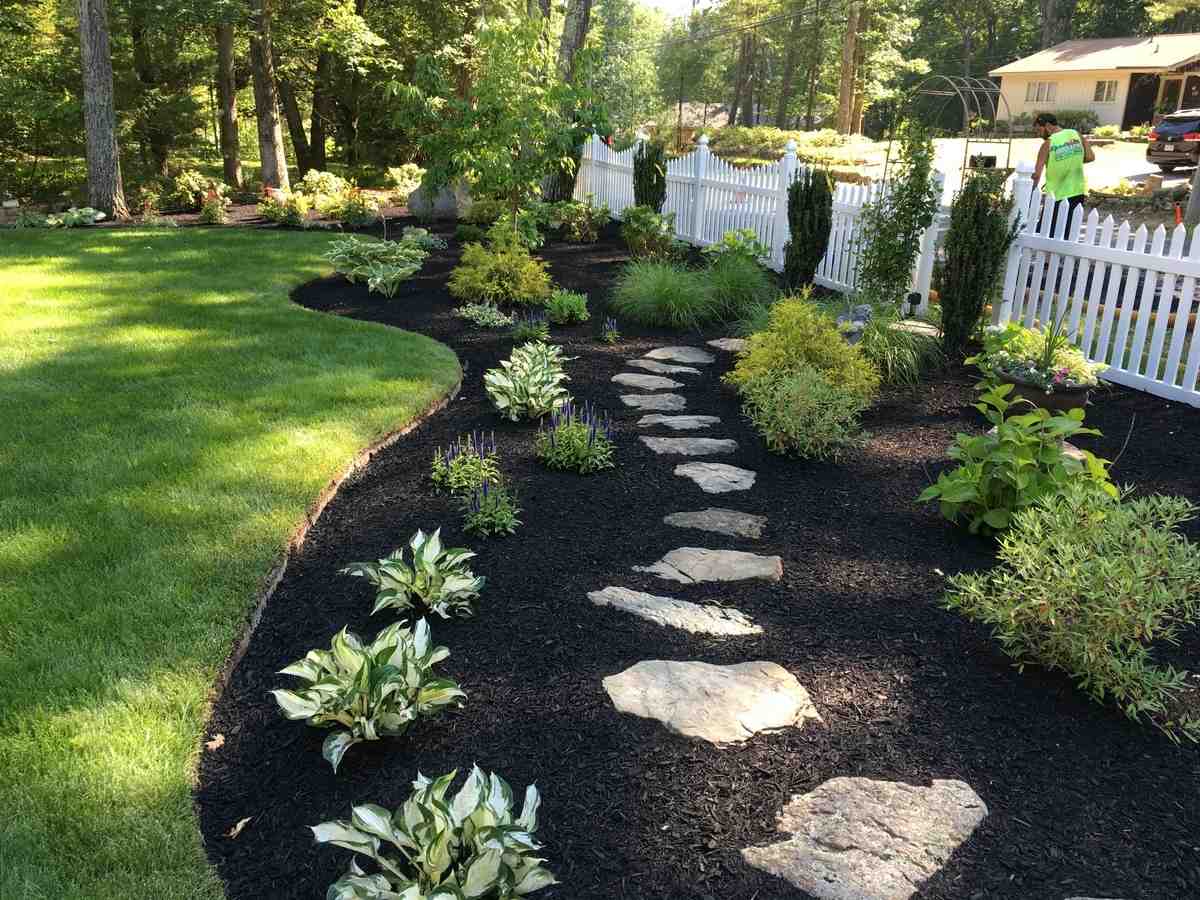
The benefits of moisture retaining mulch extend well beyond your property line. By reducing water consumption, you’re contributing to local conservation efforts. Less frequent watering means reduced runoff that might otherwise carry fertilizers and other pollutants into our local streams and rivers. It’s a win for your garden and our community’s watersheds.
Every property presents unique challenges and opportunities. Whether you’re dealing with the sandy soils common near Salisbury, the heavy clay that challenges gardeners in parts of North Andover, or something in between, there’s a mulching strategy that can transform your gardening experience. The right approach takes into account your specific soil, plants, and local climate conditions.
Ready to make your landscape more water-wise? Contact us for professional mulch installation in Haverhill or anywhere in our service area. Our team will help you select the perfect moisture retaining mulch for your specific needs and apply it using techniques that maximize its water-saving potential.
Remember what we tell all our clients: in gardening, as in life, sometimes the simplest solutions yield the most remarkable results. A humble layer of mulch might not look revolutionary, but its impact on your garden’s health and your water bill will feel like magic. Keep calm and mulch on!