
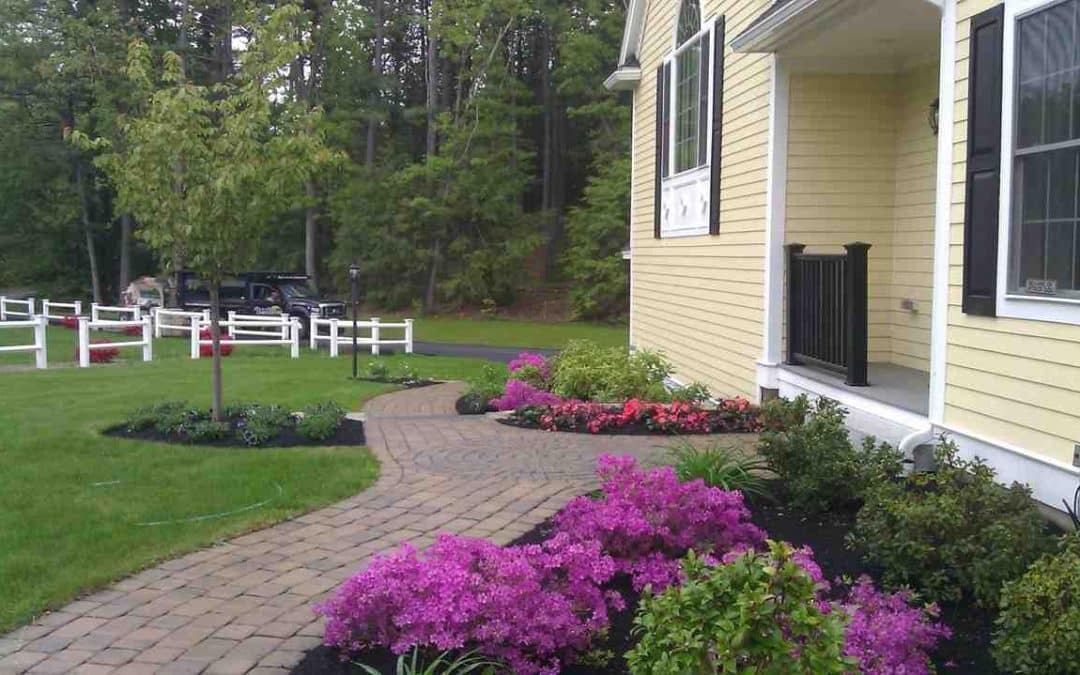
Why Your Flower Beds Crave Organic Mulch
Organic mulch for flower beds is a key step to improve soil health, suppress weeds, retain moisture, and create a beautiful, finished look in your garden. Here are the best options:
Top Organic Mulch Options for Flower Beds:
- Wood Chips & Bark Mulch – Long-lasting, attractive, excellent weed barrier
- Shredded Leaves – Free, nutrient-rich, improves soil structure quickly
- Compost – Feeds plants directly, enriches soil, improves water retention
- Pine Straw – Lightweight, great for slopes and acid-loving plants
- Straw – Budget-friendly, excellent insulation for roots
Fresh mulch on flower beds signals warmer days and gives your landscape a polished look. But organic mulch does far more than just look good.
When you spread organic mulch, you’re mimicking a forest floor. These natural materials—bark, leaves, straw, or compost—slowly decompose, releasing nutrients, feeding beneficial microbes, and creating a thriving ecosystem.
The benefits are significant. A 2-3 inch layer of organic mulch suppresses weeds by blocking light, acts as a blanket to regulate soil temperature, prevents erosion, and creates a barrier against soil-borne diseases. Crucially, it conserves moisture, potentially cutting your watering needs by half.
The challenge is choosing the right one for your flower beds.
I’m Tommy Randall, owner of Randall Landscaping. Since 2006, I’ve helped homeowners across Massachusetts and New Hampshire transform their landscapes with proper mulching. I’ve seen how the right organic mulch for flower beds can turn a struggling garden into a showcase of vibrant blooms.
This guide covers the top five organic mulch options, how to apply them for maximum benefit, and how to avoid common mistakes.
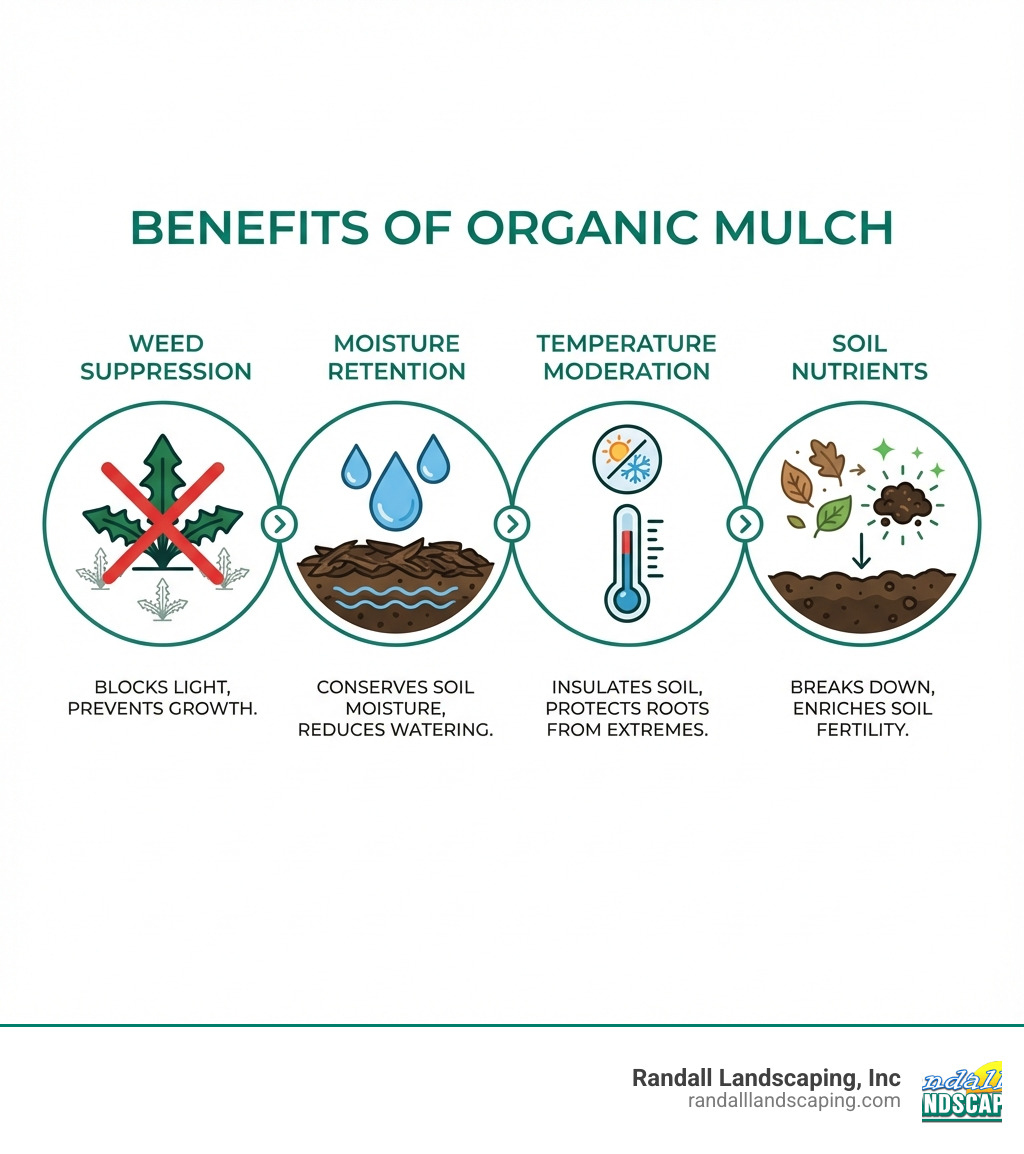
Must-know organic mulch for flower beds terms:
The Top 5 Organic Mulch Choices for Stunning Flowers
Choosing the ideal organic mulch for flower beds involves balancing aesthetics, longevity, cost, and the specific needs of your plants. Here’s a quick comparison of our top five picks:
| Mulch Type | Longevity (Replenishment Frequency) | Aesthetics | Cost | Soil Improvement Benefits |
|---|---|---|---|---|
| Wood Chips/Bark | Long (1-2 years) | Natural, polished, various colors | Moderate | Slow release of organic matter, improves soil structure, excellent weed suppression. No nitrogen tie-up if applied on surface. |
| Shredded Leaves | Short (Annually) | Natural, rustic, blends in | Free | Rapidly enriches soil with nutrients, boosts microbial activity, improves soil structure and tilth. |
| Compost | Short (Annually) | Dark, rich, earthy | Moderate to High (if purchased) | Ultimate soil conditioner, feeds plants and microbes directly, improves water retention and drainage, reduces need for fertilizer. |
| Pine Straw | Medium (Annually) | Fine texture, reddish-brown, natural | Low to Moderate | Good for acid-loving plants (minor pH effect), allows excellent air/water movement, interlocks for stability on slopes. |
| Straw | Short (Annually) | Light gold, rustic | Low | Excellent insulation, conserves moisture, suppresses weeds, adds organic matter. |
Wood Chips & Bark Mulch: The Classic, Long-Lasting Choice
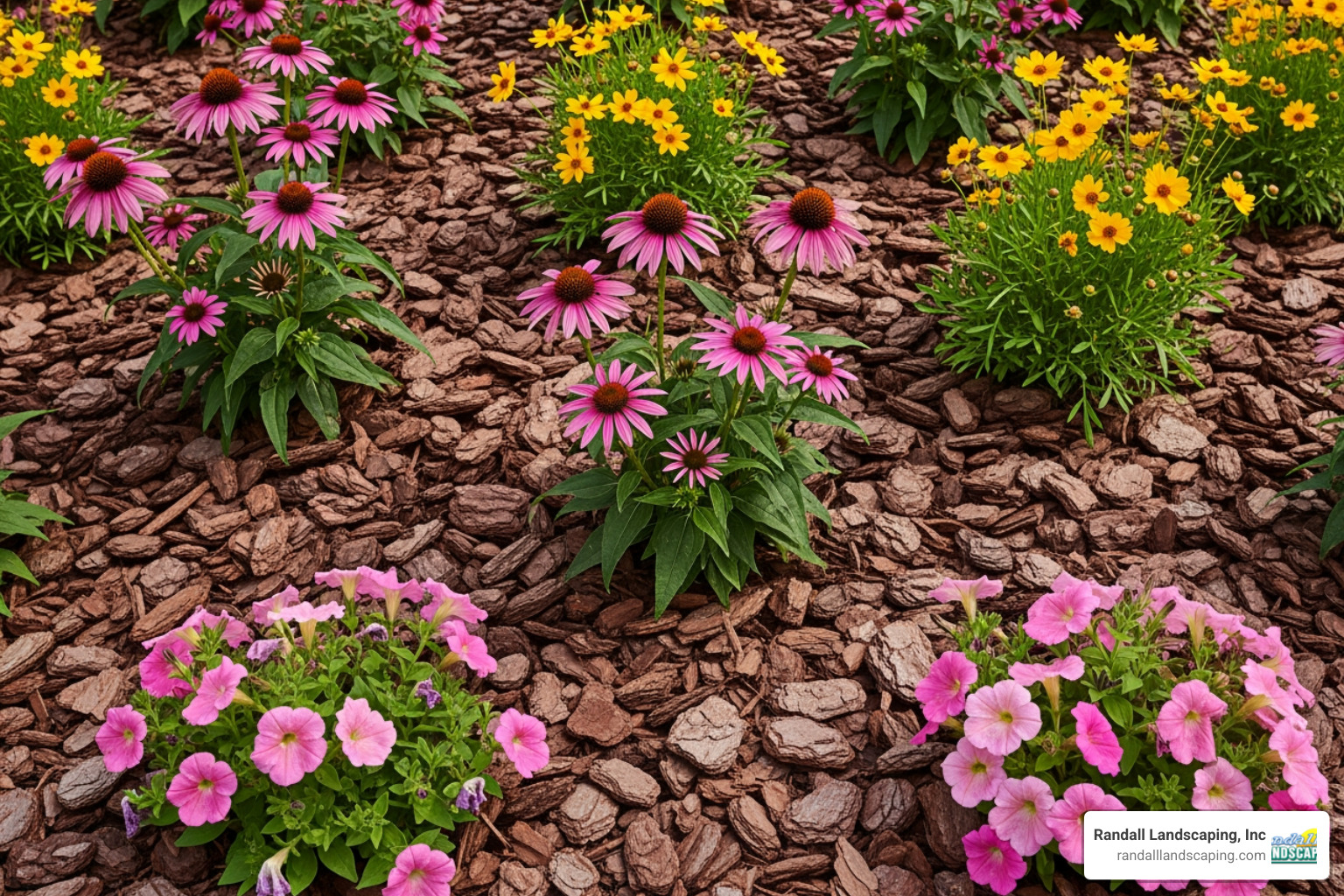
Wood chips and bark mulch are classic choices for organic mulch for flower beds, offering a beautiful, natural aesthetic. Shredded bark interlocks, making it great for slopes, while wood chips are coarser. Both provide a clean, polished look, especially in dark varieties that make colorful blooms pop.
A key advantage is their durability and longevity. They decompose slowly, requiring reapplication only every one to two years. This slow breakdown gradually releases organic matter, improving soil structure and fertility over time.
Pros of Wood Chips & Bark Mulch:
- Long-lasting: Reduces the frequency of reapplication.
- Excellent weed barrier: A 2-3 inch layer effectively suppresses weeds.
- Attractive appearance: Provides a clean, finished look to your flower beds.
- Moisture retention: Keeps soil consistently moist, reducing watering needs.
- Temperature moderation: Insulates roots from extreme heat and cold.
Cons of Wood Chips & Bark Mulch:
- Potential for temporary nitrogen tie-up: A common misconception is nitrogen tie-up. This only occurs if these carbon-rich materials are mixed into the soil. When used as a surface mulch, decomposition happens at the soil-mulch interface, away from plant roots, so your flowers get the nitrogen they need.
- Can be heavy: Spreading large quantities can be labor-intensive.
- Cost: While offering good value for their longevity, they are not free.
For those in Merrimack Valley and Southern New Hampshire looking for a pristine finish, we at Randall Landscaping offer Mulch and Edging Services to ensure your wood and bark mulches are applied perfectly.
Shredded Leaves: The Gardener’s Free Gold
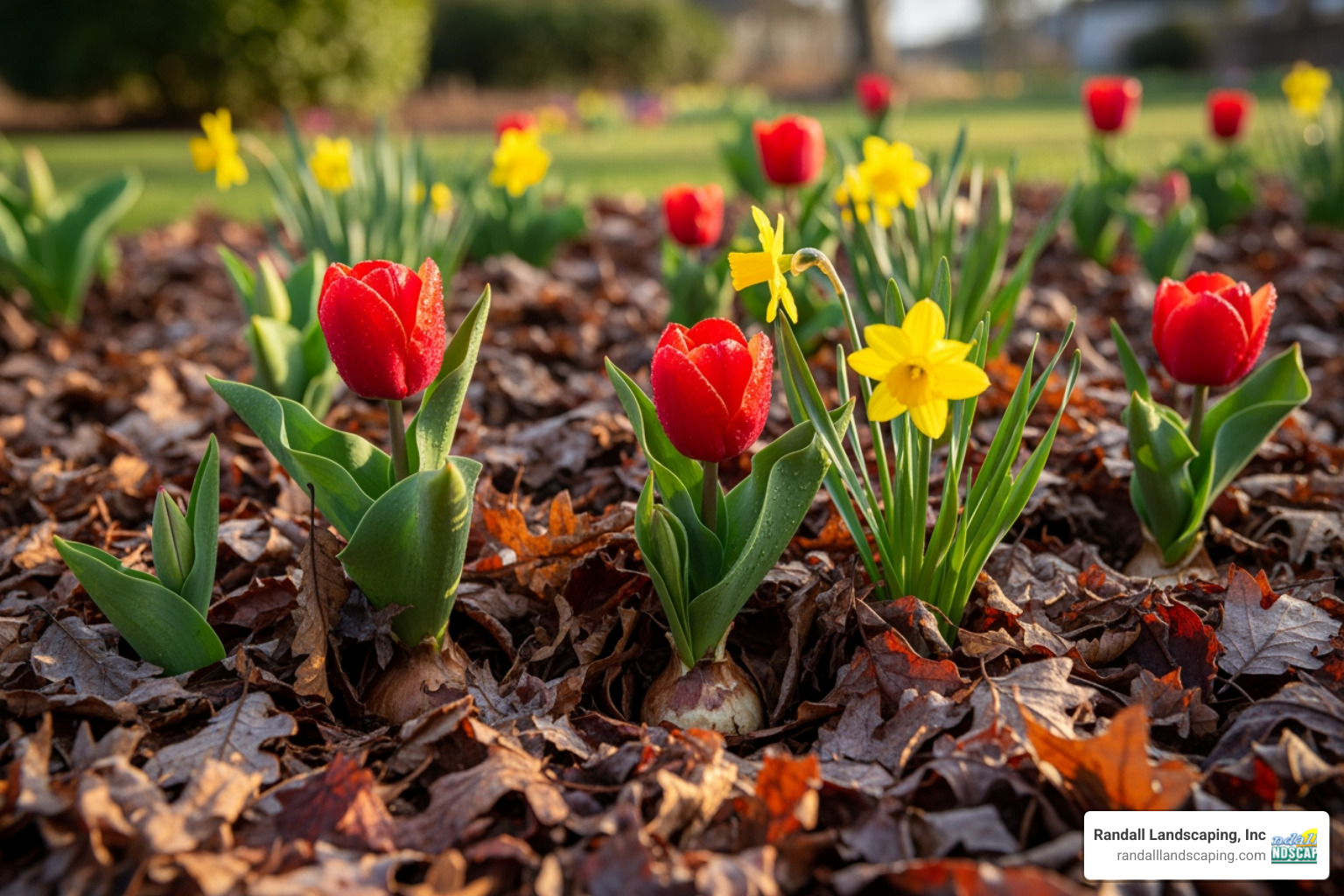
Fallen leaves are a cost-effective organic mulch for flower beds. Shredded leaves act as a slow-release fertilizer and improve soil structure. As they decompose, they release micronutrients and organic matter, feeding plants and enriching the soil. This process supports beneficial microbes and earthworms, which improve soil aeration.
Pros of Shredded Leaves:
- Free and abundant: If you have deciduous trees, you have an endless supply.
- Enriches soil quickly: Rapidly breaks down, returning valuable nutrients to the soil.
- Improves soil structure: Adds organic matter, enhancing tilth and drainage.
- Eco-friendly: Recycles yard waste, keeping it out of landfills.
Cons of Shredded Leaves:
- Can mat if not shredded: It’s crucial to shred leaves, as whole leaves can mat down and block water and air. A lawn mower or leaf shredder works well for this.
- Breaks down faster than wood: Requires more frequent replenishment, typically annually.
- Can blow away: Especially if not shredded or if applied too thinly in windy areas.
To get the most out of this “free gold,” we recommend shredding your leaves. For a visual guide, check out this How to use leaves as mulch video.
Compost: The Ultimate Soil-Enriching Organic Mulch for Flower Beds
Compost is the gold standard for organic mulch for flower beds. This dark, crumbly material is a multitasker, acting as both mulch and a powerful soil amendment. With a high nutrient content, it continuously releases essential minerals, reducing the need for synthetic fertilizers and feeding the entire soil food web.
Compost is also an exceptional soil conditioner. It improves drainage in heavy clay soils and boosts water-holding capacity in sandy soils, leading to better aeration and overall soil health.
Pros of Compost Mulch:
- Feeds plants and soil microbes directly: A nutrient powerhouse that enriches the soil as it breaks down.
- Improves soil texture: Improves both drainage in clay and water retention in sand.
- Excellent water retention: Significantly reduces watering frequency.
- Weed suppression: A 2-3 inch layer effectively smothers weeds.
- Versatile: Can be made at home or purchased, and can be used for flower beds or even in a Best Mulch for Vegetable Garden.
Cons of Compost Mulch:
- Can contain weed seeds: If not fully processed (hot composted), homemade compost might introduce weed seeds. Certified compost is a safer bet.
- Decomposes quickly: Requires annual reapplication to maintain its benefits and depth.
- Cost: Purchasing finished compost can be more expensive, averaging $20 to $110 per cubic yard, but the benefits often outweigh the cost.
Pine Straw (Pine Needles): The Lightweight & Airy Option
Pine straw (pine needles) is an excellent choice for a unique aesthetic. Its reddish-brown hue and fine texture work well in woodland or naturalized gardens common in the Merrimack Valley and Southern New Hampshire. Pine straw is lightweight and easy to spread. Its needles interlock, providing stability on slopes and allowing excellent air and water penetration to plant roots.
While many believe pine needles significantly acidify soil, their impact is minimal. Fresh needles are slightly acidic, but as our research confirms, pine needles do not significantly acidify soil once they are brown and dry, as the pH neutralizes during decomposition.
Pros of Pine Straw:
- Excellent for acid-loving plants: Provides a natural aesthetic and a slightly acidic environment.
- Lightweight and easy to spread: Less strenuous than heavier mulches.
- Interlocks to stay on slopes: Great for erosion control.
- Allows water and air flow: Prevents compaction and ensures healthy root growth.
- Slow to decompose: Lasts several years, reducing replenishment frequency.
Cons of Pine Straw:
- Decomposes relatively quickly: Might need more frequent topping up than bark mulch.
- May not be readily available: Availability depends on your location.
- Can be a fire hazard: Can be flammable in very dry conditions.
Straw: The Budget-Friendly Insulator
Straw is a budget-friendly organic mulch for flower beds, offering excellent insulation and moisture retention. It’s crucial to distinguish it from hay, which contains weed seeds. Straw, the dry stalks of cereal grains, is generally weed-free and a better choice for mulching. It provides superb soil insulation, protecting roots from temperature extremes in both winter and summer.
Pros of Straw Mulch:
- Inexpensive: One of the most cost-effective organic mulch options.
- Great for insulating roots in winter: Excellent for overwintering tender perennials.
- Good moisture retention: Reduces evaporation and keeps soil moist.
- Effective weed suppression: A 4-6 inch layer can effectively block weed growth.
- Adds organic matter: Decomposes into the soil, improving its structure.
Cons of Straw Mulch:
- Less formal appearance: Its rustic look might not suit all garden aesthetics.
- Can harbor slugs: The moist environment can attract slugs and snails.
- May blow around in windy areas: Its light nature can be a disadvantage.
- Decomposes quickly: Requires annual replenishment.
How to Apply Mulch for a Thriving Flower Garden
Properly applying organic mulch for flower beds is crucial to maximize benefits and avoid pitfalls. At Randall Landscaping, we’ve perfected our mulching process to ensure your flowers thrive.
Step 1: Prepare the Flower Bed
Before mulching, a little preparation is essential for effective weed suppression and garden health.
- Weed thoroughly: Remove all existing weeds from your flower beds. Mulch suppresses new weeds but won’t kill established ones.
- Water the soil: Ensure the soil is moist before applying mulch to lock in as much moisture as possible.
- Create a clean edge: For a polished look, establish a crisp edge with a spade or edger to prevent grass from creeping in.
Step 2: Apply the Right Amount
Applying the right amount of organic mulch for flower beds is key—more isn’t always better.
- Recommended depth: Aim for a 2-3 inch layer for most mulches like wood chips or compost. For lighter materials like straw or shredded leaves, a 4-6 inch layer is better. This depth is ideal for weed suppression and moisture retention.
- Avoid over-mulching: Applying too much mulch (more than 4 inches) can suffocate roots by blocking oxygen and water. It can also encourage fungal diseases and pests.
- Prevents root rot: Keeping the mulch layer at the recommended depth, especially away from plant stems, is vital to prevent moisture buildup that can lead to root rot.
Step 3: Use the Proper Technique for organic mulch for flower beds
Even with the right mulch and depth, improper application can cause problems.
- Keep mulch 1-2 inches away from plant stems and crowns: This is a golden rule! Piling mulch directly against the base of plants can cause stem rot, fungal diseases, and pest issues. For woody stems, a 4-inch mulch-free circle is recommended.
- Avoid “mulch volcanoes” against trunks: Resist the urge to pile mulch high against tree and shrub trunks. This common mistake can cause bark decay, improper root growth, and attract rodents. Instead, spread mulch evenly 2-4 inches deep, keeping it 3-4 inches away from the trunk.
- Spread evenly: Use a rake or your hands to ensure a consistent layer across the entire flower bed for uniform benefits.
For a truly flawless application that improves both the health and beauty of your garden, consider professional assistance. We have a Mulch Installations Complete Guide that outlines our expert process.
Key Considerations for Your Flower Bed Mulch
Beyond choosing the right type and applying it correctly, there are a few more factors to consider when selecting organic mulch for flower beds.
Organic vs. Inorganic Mulch: Why Natural is Better for Flowers
For nurturing vibrant flowers, organic mulch consistently outperforms inorganic options.
Organic mulch benefits:
- Improves soil health: As organic mulches decompose, they enrich the soil with nutrients and organic matter, fostering a healthy structure.
- Adds nutrients: They act as a natural, continuous food source for your flowers.
- Supports the ecosystem: They provide a habitat for beneficial soil microbes and earthworms.
- Moisture retention and temperature moderation: They excel at keeping soil moist and regulating temperature.
Inorganic mulch drawbacks:
- Heats soil: Materials like rocks or gravel can overheat plant roots and dry out the soil.
- Offers no nutritional value: They do not break down or add anything back to your soil.
- Can be difficult to plant in: It’s challenging to add or move plants without disturbing the layer.
- No soil improvement: Over time, they can contribute to soil compaction and do not build fertility.
- Environmental concerns: Some inorganic mulches, like ground rubber tires, may contain chemicals that can leach into the soil.
For those committed to sustainable gardening in the Merrimack Valley and Southern New Hampshire, we always advocate for organic options. Explore more about Eco-Friendly Mulch Options that align with our commitment to thriving landscapes.
Mulches to Use with Caution
Not all organic mulch for flower beds is equal; some require extra care or are best avoided.
- Dyed mulches: The dyes are generally safe, but the wood source can be a concern. They often use recycled wood, which, if from before 2003, may have been treated with Chromated Copper Arsenate (CCA), containing arsenic. It’s hard to verify the wood’s source, so inquire about its origin and avoid using it in edible gardens. Dyed mulches also fade and require more frequent refreshing.
- Fresh grass clippings: When applied thickly, fresh grass clippings can mat, creating a slimy, smelly layer that blocks air and water. This can produce compounds toxic to plants. If used, apply in thin (1-inch) layers from an untreated lawn and let them dry, or compost them first.
- Sawdust: Sawdust’s fine texture can tie up significant soil nitrogen as it decomposes, starving plants. If you use it, ensure it is aged or composted, apply it in very thin layers (under 1 inch), and consider adding a nitrogen fertilizer. Never use sawdust from treated wood.
Frequently Asked Questions about Organic Mulch
Here are answers to common questions our clients in Andover, Boxford, Salem, Windham, and beyond have about using organic mulch for flower beds.
How often should I replace organic mulch in my flower beds?
Replenishment frequency depends on the mulch type and climate. Most mulches like shredded leaves and compost need an annual refresh to maintain a healthy 2-inch depth. Slower-decomposing materials like bark, wood chips, or pine straw may only need replenishment every 1-2 years. The goal is to maintain a consistent layer, so top up when you see it thinning or weeds emerging.
Can organic mulch attract pests like termites or slugs?
While organic mulch for flower beds can provide habitat for some creatures, the risk of major pest problems is minimal with proper application. Most insects in mulch are beneficial decomposers or predators.
- Termites: To minimize any risk, keep all woody mulches 6-12 inches away from your house’s foundation. Mulch doesn’t attract termites but can provide a bridge to your home.
- Slugs: Slugs and snails can thrive in moist mulches like straw or thick leaf layers. If they are a persistent problem, consider switching to a coarser, drier mulch like bark chips.
What is the average cost of organic mulch?
The cost of organic mulch for flower beds varies by material, quality, quantity (bagged vs. bulk), and your location in the Merrimack Valley or Southern New Hampshire.
Please note: These are average costs based on national data and not actual costs for Randall Landscaping. For current pricing on our quality organic mulches and professional services, please contact us directly.
- Wide range: On average, material costs range from $20 to over $150 per cubic yard. Pine straw is often less expensive, while specialty composts can be at the high end.
- Bagged vs. bulk delivery: Bagged mulch is often more expensive per cubic yard than bulk delivery. For larger areas, bulk delivery is usually more cost-effective, even with a delivery fee.
- Free options: Don’t forget the ultimate budget-friendly option: shredded leaves from your own property!
Conclusion: Give Your Flowers the Foundation They Deserve
Using organic mulch for flower beds is an investment in your landscape’s health and beauty. The right mulch transforms dull, weed-ridden beds into vibrant showcases, all while requiring less water and fewer chemicals.
Choosing and correctly applying the right organic mulch—be it long-lasting wood chips, nutrient-rich shredded leaves, soil-building compost, airy pine straw, or insulating straw—gives your flowering plants the best possible foundation. You’ll enjoy healthier plants, less time spent weeding and watering, and improved curb appeal.
At Randall Landscaping, our nearly two decades of experience serving communities from Andover to Windham, and across the Merrimack Valley and Southern New Hampshire, means we understand the unique needs of our local landscapes. For a professional, flawless application that improves your landscape, consider our expert services. Let us handle your Garden Bed Mulching for a perfect finish.