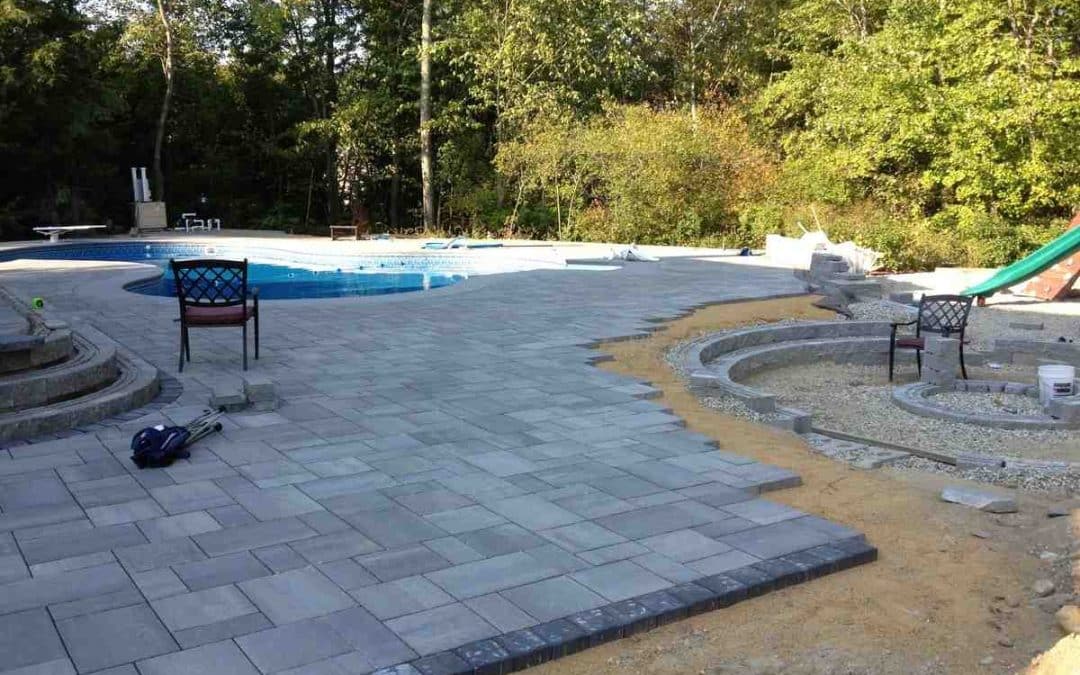
Finding Quality Patio Installation Near Me
If you’re searching for patio installation near me, here’s a quick guide to finding the right local contractor:
- Check credentials – Verify licensing, insurance, and local experience
- Review portfolios – Examine past patio projects and client testimonials
- Get multiple quotes – Compare at least 3 estimates using the same specifications
- Ask key questions – Installation timeline, materials used, and warranty coverage
- Verify local knowledge – Ensure familiarity with local building codes and climate considerations
A well-installed patio transforms your outdoor space into an extension of your home, providing a perfect area for relaxation, entertainment, and family gatherings. Whether you’re looking to increase your property value, create an outdoor dining area, or simply improve your backyard’s appeal, finding the right patio installation professional is crucial to bringing your vision to life.
Professional patio installation offers numerous advantages over DIY approaches. With proper installation, high-quality paver patios can last between 50 to 100 years, making them a worthwhile long-term investment. While costs vary depending on materials and design complexity, professional installation ensures proper site preparation, drainage, and structural integrity that DIY methods often miss.
I’m Tommy Randall, owner of Randall Landscaping, with over 18 years of experience providing expert patio installation near me throughout Massachusetts and New Hampshire, specializing in custom designs that perfectly complement your home’s architecture and your lifestyle needs.
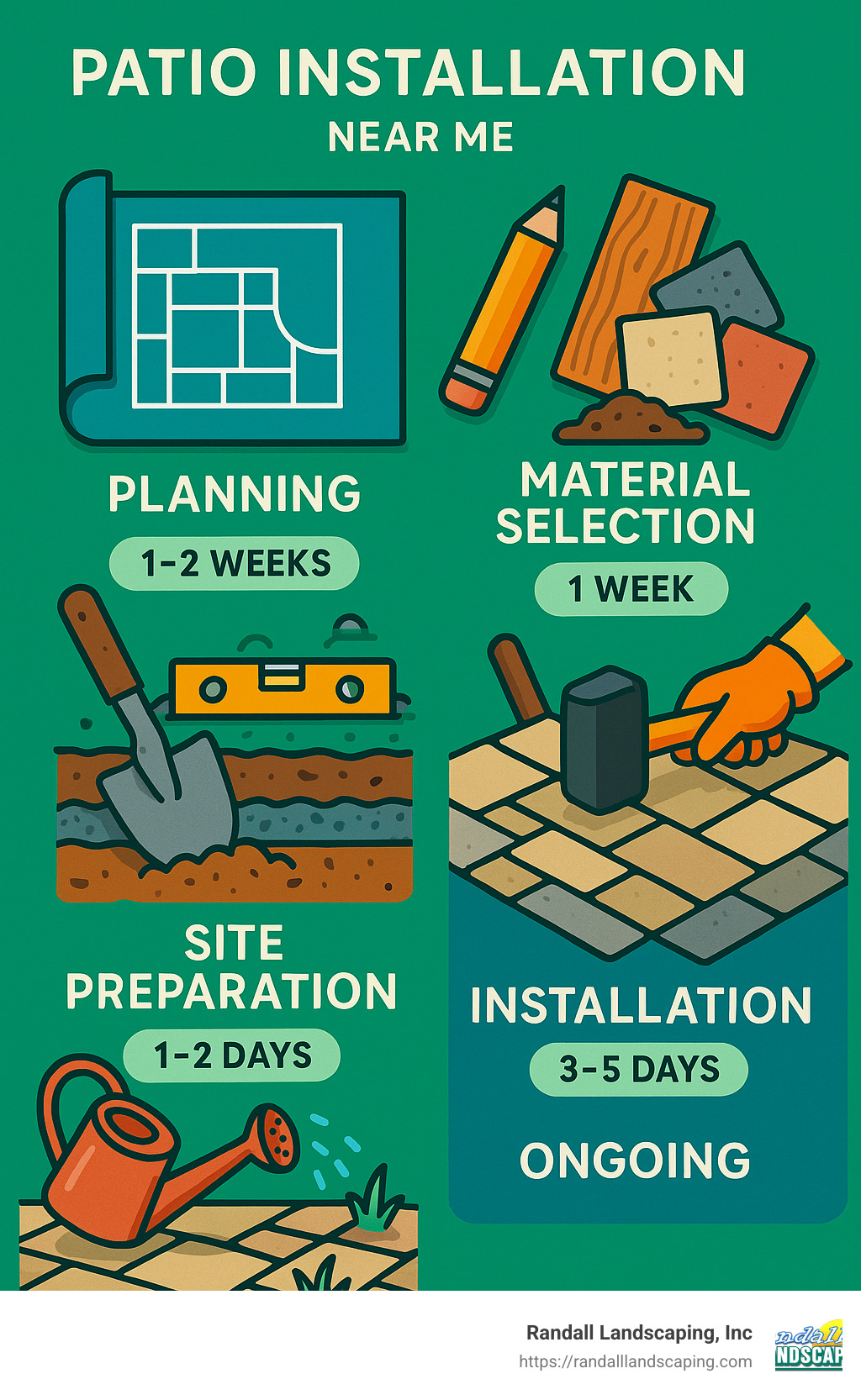
Patio installation near me terms explained:
– patio contractor
– outdoor patio design
– paver patio install and design
The Benefits of Installing a Patio
When homeowners in Merrimack Valley and Southern New Hampshire think about upgrading their outdoor spaces, a patio installation often jumps right to the top of the list—and for good reason! Patios aren’t just pretty; they’re practical, versatile areas that truly change how you live in and enjoy your home.
Extended Living Space
Think of a patio as adding an extra room—without walls. It expands your home’s living area right into the great outdoors. As one of our happy North Andover clients put it, “Our patio has become our second living room from spring through fall. It’s where we sip morning coffee, where the kids sometimes do homework (on nice days, of course!), and where we love to host weekend gatherings.”
In places like New England, where every bit of nice weather counts, patios help homeowners make the most out of their properties. With thoughtful design, a patio extends your usable space, letting your family live larger and more comfortably during warmer months.
Outdoor Entertainment Hub
A well-designed patio quickly becomes the heart of outdoor entertaining. Whether you’re planning summer barbecues, graduation parties, or just relaxing evenings with friends and neighbors, a patio sets the perfect scene. Add some comfy furniture, your favorite grill, maybe even a fire pit—and suddenly your backyard is the place everyone wants to be.
At Randall Landscaping, we’ve created custom patios across Andover, Boxford, and surrounding areas, each custom specifically to match the homeowner’s style, preferred activities, and entertainment needs.
Increased Home Value
Patios don’t just improve your family’s enjoyment; they also boost your home’s market value. According to real estate industry data, homeowners can recoup around 80% of their investment on a professionally installed patio. This makes installing a patio one of the smarter home improvement decisions you can make.
Real estate agents from communities such as Windham and Salem consistently report that homes with beautifully designed outdoor spaces attract buyers more quickly—and often at better prices—compared to similar homes lacking these features.
Low Maintenance Requirements
Here’s great news for anyone tired of constant outdoor chores: patios require very little upkeep compared to wooden decks. Forget about annual staining, sealing, or replacing warped boards. Patios made from concrete pavers, brick, or natural stone typically only need occasional cleaning, maybe some fresh joint sand every few years, and they’re good to go.
For busy homeowners in Methuen, Lawrence, and neighboring communities, this is especially appealing. Your weekends are better spent relaxing on your patio rather than constantly maintaining it.
Whether you’re looking for extra living space, an inviting entertainment spot, a boost in your home’s value, or just less yard-work hassle, a professionally installed patio checks all the boxes. If you’re searching online for patio installation near me, Randall Landscaping is here to help you achieve your outdoor dreams!
Patio vs. Deck: Understanding the Differences
When you’re exploring ways to improve your outdoor living space, one common question pops up—should you install a patio or a deck? While both options create great outdoor hangouts, each one comes with unique characteristics in terms of construction, materials, costs, and maintenance needs.
Construction and Materials
Foundation Requirements
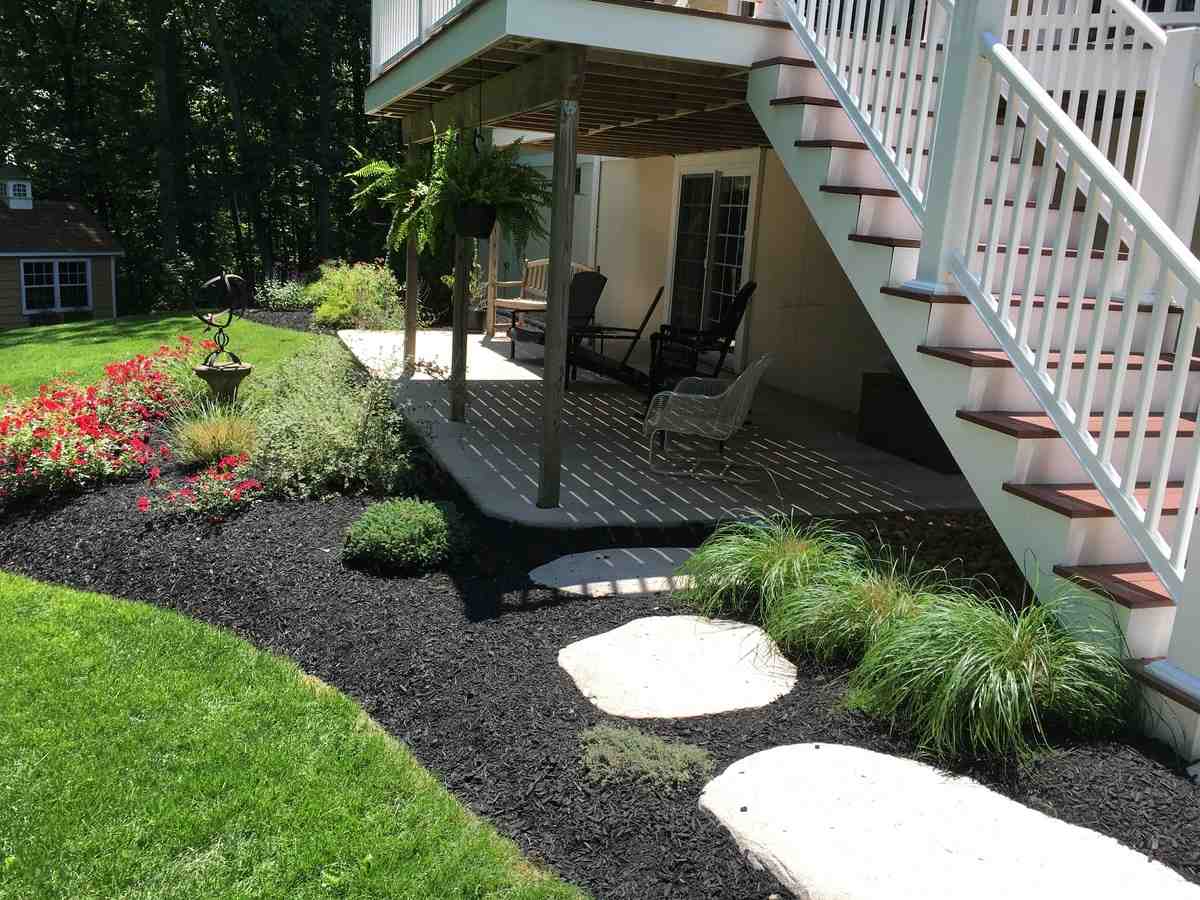
One of the most noticeable differences between a patio and a deck is how they’re built. Patios are ground-level structures installed directly onto the earth. First, the area is excavated, then a sturdy, compacted gravel base is laid, followed by your chosen surface—whether it’s pavers, stone, concrete, or brick. Due to their simple, ground-level construction, patios often don’t require permits in the Merrimack Valley and Southern New Hampshire, though it’s always advisable to check specifics with your local zoning office.
On the other hand, decks are liftd platforms typically built with a wood or composite surface supported by posts and footings. Since decks are raised, they require proper footings that extend below the local frost line (which, as we know here in New England, can go pretty deep!). Because of their complexity and structural requirements, decks usually require permits and inspections from your local building authority.
Materials Used
When it comes to choosing materials, patios and decks differ quite a bit. Patios often feature materials like concrete, paving stones, natural stone, or brick—materials known for durability, weather resistance, and low maintenance. In fact, properly installed patio materials can last anywhere from 25 to 100 years depending on your choice—pretty impressive, right?
For decks, common materials include pressure-treated lumber, cedar, composite, or PVC. While composite decking holds up better against the elements, traditional wooden decks tend to require more frequent upkeep. On average, wooden decks last around 15-30 years, depending on the quality of materials and maintenance routine. Decks typically need regular cleaning and staining or sealing every few years to prevent rot, warping, and discoloration.
Here’s a quick table to recap the differences clearly:
| Feature | Patios | Decks |
|---|---|---|
| Common Materials | Concrete, pavers, natural stone, brick | Pressure-treated lumber, cedar, composite, PVC |
| Durability | 25-100 years depending on material | 15-30 years depending on material |
| Maintenance | Low—occasional cleaning, possible resealing | Moderate to high—regular cleaning, staining/sealing every 2-3 years |
| Weather Resistance | Excellent—won’t rot or warp | Varies—wood can deteriorate; composites perform better |
| Installation Complexity | Moderate—proper base preparation is crucial | High—requires structural knowledge and permits |
At Randall Landscaping, we’ve noticed local terrain often influences preferences. For example, homeowners in flatter areas like parts of Dracut and Pelham usually lean toward patios, while families in sloped locations like Georgetown or Atkinson might find decks more practical.
Cost Comparison
Regarding costs, both patios and decks represent significant investments, but prices vary widely depending on materials, complexity, and site preparation. Based on average internet pricing data (please note these are general averages and not Randall Landscaping’s specific pricing):
For patios, typical average costs per square foot range as follows:
- Basic concrete patios: $5-$15 per square foot
- Paver patios: $10-$30 per square foot
- Natural stone patios: $15-$50 per square foot
Deck installation tends to have wider pricing ranges, often costing more, especially for high-quality materials:
- Pressure-treated wood: $15-$45 per square foot
- Cedar or hardwood: $25-$75 per square foot
- Composite decking: $30-$90 per square foot
While initial installation costs can be similar between decks and patios, long-term expenses often differ significantly. Decks generally require more ongoing maintenance, adding extra costs over time. Patios, on the other hand, typically demand far less upkeep, making them a cost-effective choice for homeowners looking for a simpler, worry-free solution.
We recently installed a beautiful paver patio for a family in Windham. They mentioned they’d initially debated between a deck and a patio. Three years later, their patio still looks fantastic with minimal upkeep, while their neighbors with decks are already facing re-staining and repairs. Talk about peace of mind!
The patio vs. deck decision comes down to your personal preferences, property’s layout, budget, and lifestyle needs. If you’re leaning toward a patio and searching for professional patio installation near me, Randall Landscaping is here to guide you through each step of the process, ensuring you make an informed and confident choice.
Choosing the Right Patio Material
One of the most important decisions you’ll make for your patio installation near me project is choosing the right material. The material you select impacts the look, durability, maintenance requirements, and overall cost of your patio. At Randall Landscaping, we regularly help homeowners throughout the Merrimack Valley and Southern New Hampshire pick the patio materials that perfectly match their home’s style and their outdoor living goals.
Here’s a friendly breakdown of three popular patio material choices—concrete, pavers, and natural stone—to help you decide what’s best for your backyard sanctuary.
Concrete Patios
Concrete patios have come a long way from the boring gray slabs most of us remember from childhood. Today, concrete patios offer fantastic versatility and affordability, making them an appealing choice for many homeowners.
When properly installed, concrete patios are incredibly durable, lasting 25-30 years or even longer. In our freeze-thaw New England climate, proper base preparation and careful placement of control joints help ensure your concrete patio stays crack-free and stable for years.
Cost-wise, concrete offers a budget-friendly option. Average costs for basic poured concrete range from roughly $5-$15 per square foot according to internet data (not specific pricing from Randall Landscaping). If you decide on decorative concrete options such as stamped or stained finishes, costs can range from about $12-$45 per square foot.
Design-wise, concrete patios have become surprisingly stylish. You can choose from a wide variety of stamped patterns that mimic natural stone, brick, or tile. Integral coloring provides consistent shades throughout the concrete, while acid staining delivers a natural, variegated look. Another appealing option is exposed aggregate, which adds texture and visual interest.
A Methuen homeowner recently told us, “When we finded how beautiful stamped concrete could be, we were sold. It looks just like natural slate, but we saved on budget and ended up with minimal maintenance.”
Paver Patios
Concrete pavers have surged in popularity recently—and with good reason. They’re tough, beautiful, and incredibly versatile for creating eye-catching patio designs.
One of the best features about pavers is their longevity. With proper installation and minimal maintenance, quality concrete pavers can last an impressive 50 to 100 years or more. This makes paver patios an outstanding long-term investment for homeowners.
Aesthetically, concrete pavers give you endless possibilities. They come in a vast array of shapes, sizes, colors, and textures, allowing intricate patterns like classic herringbone, basketweave, or custom layouts that uniquely reflect your style and home’s architecture.
At Randall Landscaping, we’ve helped homeowners from North Reading to Boxford create stunning patios—from classic colonial properties to sleek modern homes—by tapping into the design versatility of concrete pavers.
Proper installation is key for paver patios, especially here in New England. Installation involves thorough excavation, proper grading, and creating a solid compacted gravel base to handle the frost cycle. Sand bedding, precise paver placement, strong edge restraints, and polymeric joint sand all ensure long-lasting performance.
According to internet averages (not Randall Landscaping’s specific prices), a typical paver patio installation ranges from $10-$30 per square foot. Premium pavers or intricate designs can raise this cost to between $15-$45 per square foot.
Natural Stone Patios
If your backyard dreams involve a touch of timeless elegance and natural beauty, natural stone patios offer an best charm. Each stone is unique, naturally varied, and brings character and warmth to your outdoor space.
Common natural stone options popular among homeowners in our region include bluestone (beloved for its blue-gray hues), flagstone (with earthy, irregular shapes), granite (known for strength and speckled appearance), limestone (smooth and neutral), and travertine (with its distinctively warm and textured surface).
Because of its inherent beauty and premium quality, natural stone typically comes with a higher price tag. According to internet data (not specific to Randall Landscaping pricing), natural stone patios can range from around $15-$50 per square foot. Specialty stones or intricate installations might push this cost further, reaching $30-$90 per square foot or more.
An Andover client summed up the appeal beautifully: “We knew natural stone would be an investment—but five years later, every time I step outside, I’m still amazed by how gorgeous it looks. It’s developed a lovely patina that makes it feel like it’s always belonged here.”
Whichever patio material you choose, the right one will improve your enjoyment, add lasting value to your home, and create the perfect outdoor retreat for many seasons to come. If you’re still uncertain, reach out to our team at Randall Landscaping—we’d be delighted to help you find the perfect patio match.
Do You Need a Permit for Patio Installation Near Me?
Before you dive into your next outdoor home improvement trip, it’s smart to pause and ask, “Hey, do I actually need a permit for this?” While ground-level patios typically don’t need a formal building permit, it’s always wise to double-check your local guidelines—especially here in the Merrimack Valley and Southern New Hampshire, where rules can vary quite a bit from one town to another.
Generally speaking, many towns don’t require permits for basic patios since they’re built directly on the ground without structural supports. But don’t celebrate just yet; local regulations can still throw a few curveballs your way. For example, most municipalities have setback requirements—rules that say your patio needs to be a certain distance from property lines, sidewalks, or roads. And your town may also have lot coverage restrictions limiting how much of your property can be covered by patios, walkways, and other hard surfaces.
If you live in a historic district—like certain neighborhoods in Andover or North Andover—you could face special approval processes. The same goes for properties close to wetlands in communities like Boxford or Georgetown. These areas often need an extra thumbs-up from the local conservation commission to protect natural resources.
So when does your patio installation near me project typically require a permit? Usually, permits become a must-have when you add features like built-in fire pits, outdoor kitchens, or electrical components for lighting and outlets. Planning an impressive pergola or roof structure on top of your patio? Yep, that’ll likely trigger the permit process too. And if your patio needs significant retaining walls (usually 3-4 feet or taller), or if it changes how rainwater drains off your property, you’re probably looking at some paperwork.
At Randall Landscaping, we always recommend giving your local zoning office a quick call or visit before you start digging. It might not sound fun, but trust us—it’s way easier to clarify any potential permit needs upfront than it is to deal with headaches later. After nearly two decades installing patios in towns like Amesbury, Methuen, Salem, Windham, and everywhere in between, we’ve learned it’s always better to ask first rather than apologize later.
The Better Business Bureau backs us up on this one too. Their advice is clear: “Always check with your local building department to determine if your project requires a permit. Unpermitted work can lead to complications when selling your home and may not be covered by insurance if problems arise.”
Bottom line? Checking permits beforehand helps ensure your new patio is worry-free, compliant, and ready for years of relaxing backyard barbecues and memorable summer nights.
Factors Affecting the Cost of Patio Installation Near Me
When homeowners around the Merrimack Valley and Southern New Hampshire start their search for patio installation near me, one of the first considerations is usually, “What’s this going to cost?” Understanding the different elements that impact patio installation costs helps you plan your budget more accurately—and avoid those dreaded financial surprises down the road.
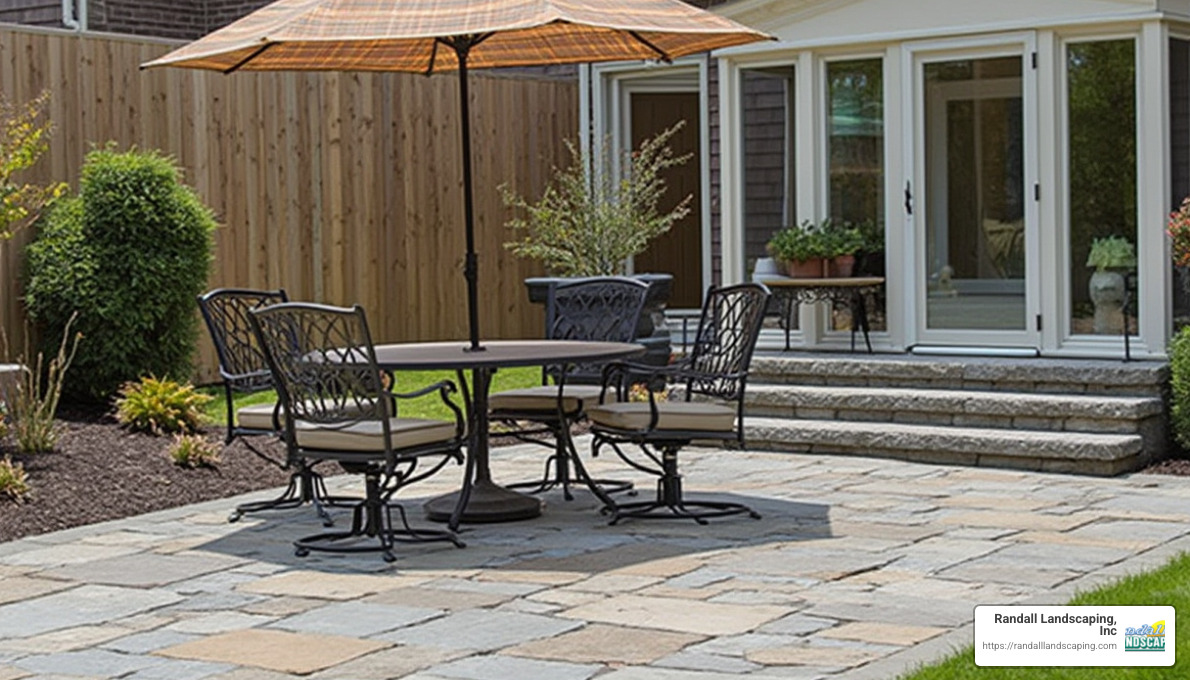
Size and Complexity
It’s no surprise that the size of your patio is one of the biggest drivers of total cost. But here’s something you might not know: complexity matters just as much.
For example, a simple rectangular patio offers straightforward installation and fewer labor hours—making it budget-friendly. But what if you envision neat curves, intricate patterns, or a multi-level design? Those creative touches add charm and personality, but they also require significantly more labor and time, increasing your overall cost.
We recently worked with a homeowner in Windham who initially planned a basic patio. But after seeing some design possibilities, they opted for curves and a circular fire pit—a decision that boosted the labor portion of their project by roughly 30%. (They’ll tell you it was worth every penny, though!)
Material Choice
Another substantial factor affecting patio installation pricing is the type of materials you choose. There’s a wide pricing spectrum, so keep material impacts in mind.
Based on average internet data (not Randall Landscaping’s exact pricing), here’s a quick overview of typical patio material costs per square foot:
- Concrete: $5–$15 for basic poured concrete, or $12–$45 if you’re considering decorative concrete options like stamped or colored designs.
- Pavers: Usually run $10–$30 per square foot, with more premium styles edging into the $15–$45 range.
- Natural Stone: Known for its premium look and best beauty, natural stone typically ranges from $15–$50 per square foot. If your heart is set on something rare or exotic, those costs can climb to $30–$90.
So while concrete might be budget-friendly, natural stone offers that luxury aesthetic—at a premium price. Your choice ultimately depends on your style and budget priorities.
Site Preparation Requirements
It’s easy to underestimate just how much your property’s layout can influence patio installation costs. Site preparation needs can drastically affect project timelines and labor.
For example, if your yard has significant slopes, excavation and grading will be needed to ensure a stable, flat surface. Poor drainage or clay-heavy soils (common in areas like Methuen and Lawrence) typically require extra work to guarantee proper drainage.
Other factors like limited accessibility (making it challenging to get materials and machinery in and out), removing existing structures (old patios, stumps), or challenging soil conditions can further increase costs. A thorough site evaluation ensures no surprises pop up mid-project.
Labor Costs
Labor typically accounts for 40–60% of the total patio installation budget. Regional labor rates vary throughout Massachusetts and New Hampshire and can also depend heavily on the complexity and accessibility of your project.
For example, if your patio design involves intricate curves or complex patterns, it naturally requires more labor hours. Likewise, if your property access is limited or inconvenient, workers may need extra time to move materials by hand.
Timing also matters: peak seasons—like early spring and summer—often see higher labor demand, potentially affecting the cost. Planning your project during slower months might provide some cost savings (plus, it can help you beat the rush!).
Additional Features
The beauty of building an outdoor living space is that you can truly customize it. But keep in mind, each additional feature adds to the overall expense. Popular upgrades and their typical internet-based cost estimates (not Randall Landscaping’s specific pricing) include:
- Built-in seating walls: around $100–$300 per linear foot
- Fire pits: usually between $1,000–$5,000, depending on fuel source and style
- Outdoor kitchens: start around $5,000 and can exceed $30,000, depending on appliances and complexity
- Pergolas: often range from $2,500–$10,000, based on materials and size
- Lighting: adding outdoor lighting typically costs between $1,000–$5,000, depending on the complexity and type of fixtures chosen
One of our North Reading clients perfectly summed it up: “We planned just a simple patio at first—but as the project unfolded, we fell in love with the idea of built-in seating and lighting. It bumped our budget about 30%, but now we have an inviting outdoor space that’s usable well into the evening. Totally worth it.”
By having a clear understanding of these cost factors, you’ll be better prepared and more confident moving forward with your patio installation near me project.
How to Choose the Right Patio Installer Near Me
Finding the perfect professional for your patio installation near me project is likely the most important choice you’ll make in the entire process. The quality of your installer directly influences the look, longevity, and functionality of your outdoor living space, so choose carefully.
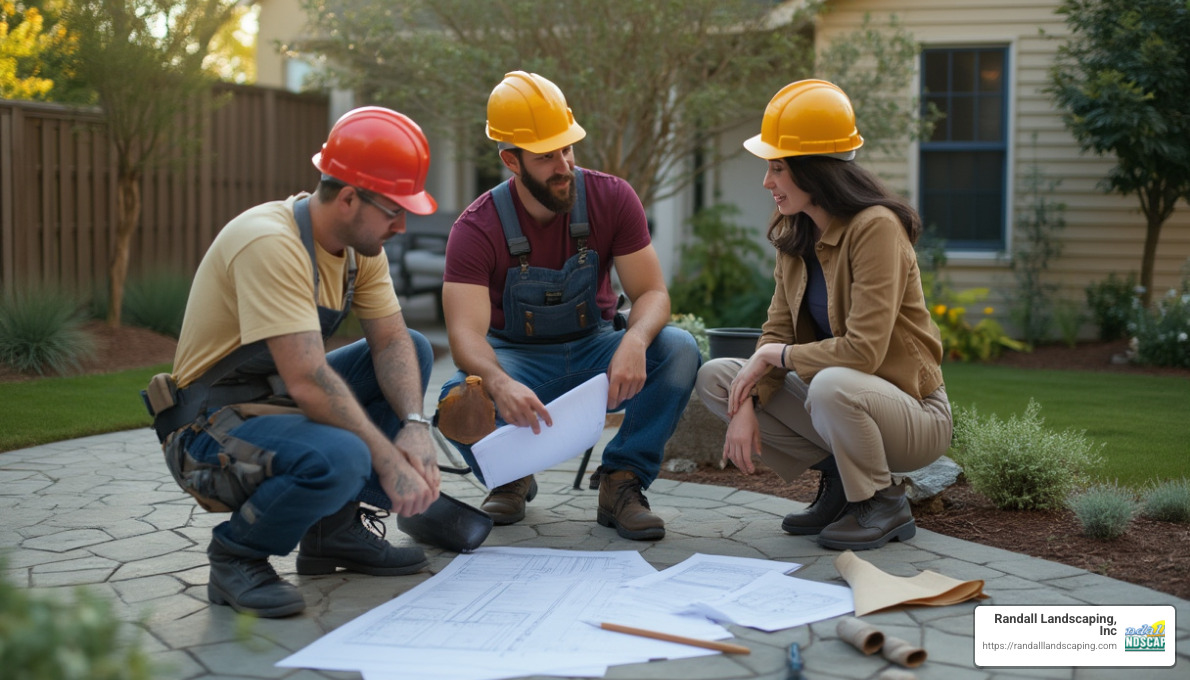
Evaluating Installer Credentials
When searching for qualified professionals, start by confirming their licensing and insurance. Requirements vary between Massachusetts and New Hampshire towns, but a reputable installer will always carry general liability insurance (which protects your property) and workers’ compensation insurance (which protects their employees). Of course, they should also possess any local business licenses required by your city or town.
At Randall Landscaping, we maintain comprehensive insurance and proper licensing to give our clients total peace of mind throughout every project.
Don’t hesitate to request references and examples of past projects. Top installers should be able—and proud—to provide references from previous customers. They should also happily show you a portfolio of their completed work, including before-and-after photos and addresses of local installations you could view in person (with permission, of course!).
A homeowner in Boxford once shared a clever tip with us: “When we were choosing a patio installer, we asked to see projects completed at least five years earlier. That way we got a sense of how well their installations stood the test of time—especially against our rough New England winters!”
Another essential factor to consider is your chosen installer’s specific experience with your desired patio material—whether concrete, pavers, or natural stone. Each material has unique installation requirements, and a contractor skilled in concrete installations might not have the same expertise with natural stone patios.
If your project is complex or involves premium materials, ask directly about similar projects they’ve successfully completed. Find out if their team has received specialized training or certification for certain products. Knowing how they manage challenging or unusual projects will help ensure they’re fully prepared to handle your unique installation needs.
Importance of Local Experience
Choosing a patio installer with solid local experience isn’t just nice—it’s critical. For one thing, local professionals will fully understand municipal regulations and permitting requirements across the Merrimack Valley and Southern New Hampshire. Those regulations can vary widely between towns like Andover, Amesbury, Pelham, or Methuen. Experienced local installers can smoothly steer the process for you, ensuring your new patio meets setbacks, conservation rules, historic district guidelines, and more.
Local experience also matters greatly when considering climate factors. New England weather presents real challenges for patios, especially with our notorious freeze-thaw cycles. A seasoned local installer knows exactly what depth and type of sub-base your patio needs, the proper grading for effective drainage, and the materials best suited to withstand our harsh winters.
At Randall Landscaping, we’ve spent over 18 years designing and installing patios throughout towns like North Andover, Dracut, Windham, Salem, and surrounding communities. We’ve learned how to install patios that truly last in our unique climate conditions.
Finally, get a feel for your potential installer’s reputation by reading their customer reviews online. Look beyond just star ratings. See if customers repeatedly mention qualities like reliable communication, on-schedule completion, and high-quality workmanship. Pay attention to how the company responds to negative feedback—do they handle issues professionally and promptly?
And don’t forget to look for testimonials from homeowners in your own neighborhood or town. These reviews can give you that extra bit of confidence you’re choosing someone trusted nearby.
Selecting the right contractor for your patio installation near me project means finding a professional who combines genuine craftsmanship, proven local experience, detailed knowledge of your chosen material, and solid, verifiable credentials.
At Randall Landscaping, we’re proud to offer exactly that—quality work, reliability, and an exceptional customer experience that transforms your backyard dreams into lasting reality.
Questions to Ask Potential Patio Installers Near Me
Choosing the right contractor is critical when you’re planning your dream patio. When searching for patio installation near me, it’s important to know exactly what questions to ask to find the perfect professional. So grab your notebook (and maybe a cup of coffee), and let’s dive into how you can confidently interview your potential patio installers!
First things first—credentials matter. Ask outright if your contractor is licensed and insured. Any reputable installer will gladly show you proof of both general liability and workers’ compensation insurance. They’ll also provide details on any state or local licenses required in the Merrimack Valley or Southern New Hampshire.
Next up, experience counts! Find out how long they’ve been installing patios and specifically ask about projects similar to yours. Have they recently completed patios using your preferred materials like concrete, natural stone, or pavers? Ask about their training, background, and any special certifications they might hold.
Don’t be shy about requesting references from similar projects completed within the last couple of years. Even better—take a drive around Andover, Boxford, North Reading or your local neighborhood to see their past work firsthand. A well-installed patio should look great for years, so viewing older installations in person can reassure you about durability and workmanship.
A truly professional contractor should easily describe their installation process. Listen carefully for details about excavation, proper base preparation (especially critical in our freeze-thaw climate), and how they address drainage. The more specifics they provide, the more confident you can feel about the quality of their work.
Another great question to ask is, “Who will actually manage my patio installation?” Will the owner or project estimator be on-site regularly, or do they have a dedicated team leader? Knowing who is overseeing your job ensures clear communication and accountability throughout the process.
It’s also essential to hear how they’ll handle the unique challenges of your property. Ask directly about the recommended base preparation for your specific soil conditions. In areas like Methuen or Lawrence, where clay soils and slopes are common, proper installation can make or break your patio’s longevity.
Speaking of longevity, don’t skip the important question of drainage! Directly ask, “How do you typically handle drainage issues on patios similar to mine?” A knowledgeable installer won’t hesitate—they’ll offer clear, concrete solutions to ensure water runs safely away from your home’s foundation.
When choosing materials, it’s good to ask your contractor, “What materials do you recommend and why?” A seasoned professional will discuss the pros and cons based on aesthetics, budget, and practicality. They’ll also understand local climate considerations and recommend materials that thrive in our Merrimack Valley and Southern New Hampshire weather.
Now, let’s talk timeline—one of the most crucial aspects of your patio project. Clear communication about scheduling can save you headaches later. Make sure you ask about their project timeline:
– How long will your installation realistically take, from start to finish?
– Are there factors (like weather or delays with materials) that could impact the schedule?
– Will the work be completed continuously once it starts, or might there be gaps between phases?
Understanding these details upfront helps you plan your life around the project, and it keeps expectations clear on both sides.
Then, of course, there’s payment. Find out exactly how their payment structure works. A reputable patio installer usually requires a deposit upfront, followed by progress payments, with a final payment upon successful completion. Be cautious if a contractor asks for the entire payment upfront—this could be a red flag.
Warranty Coverage
Warranty details aren’t always exciting, but trust us—you’ll be glad you covered them early! Confirm the specifics by asking things like:
- “What does your warranty cover?” Is it just materials, installation workmanship, or both?
- “How long is the warranty valid?” Typically, reputable patio installers offer 1-3 years’ coverage on workmanship.
- “Are there situations that void the warranty?” For example, improper maintenance or alterations made after installation.
- “Is the warranty transferable if we sell our home?” This can be a great selling point if you decide to move in the future.
Here at Randall Landscaping, we always include comprehensive warranty coverage on our workmanship—because your satisfaction is our top priority.
Project Timeline
Understanding your project’s timeline is crucial to planning life around your new patio. Most residential patios take anywhere from 3 to 10 days, depending on their size and complexity. Your installer should clearly explain the stages you’ll see—excavation, base preparation, material installation, and finishing touches.
Weather can occasionally throw a wrench in timelines, especially in our unpredictable New England climate. A trustworthy professional won’t shy away from discussing how weather could impact your schedule. The important thing is they communicate clearly along the way, keeping you updated if delays do occur.
One homeowner in Salem, NH recently told us, “What impressed me most was how clearly the timeline was communicated. I knew exactly when each phase would happen, and when weather caused a delay, they kept me informed every step of the way.” That’s exactly the level of service and communication we strive to deliver on every job.
Bottom line—asking these questions will ensure your patio installation near me project runs smoothly from start to finish. And, if you ever have additional questions, the experienced team at Randall Landscaping is just a phone call away.
Long-Term Benefits of Investing in a Professionally Installed Patio
When exploring patio installation near me, homeowners often focus on immediate benefits—like having a new place to grill burgers or sip lemonade on a sunny afternoon. But it’s also important to consider the long-term rewards. A professionally installed patio isn’t just about today’s enjoyment; it’s an investment that pays off year after year.
Increased Property Value
First off, let’s talk dollars and cents. Did you know a professionally installed patio typically recoups around 80% of its cost when it’s time to sell your home? That’s a pretty impressive return on investment for something you’ll already be enjoying every day.
Real estate agents from Andover to Windham consistently tell us that homes featuring beautiful outdoor living spaces attract more attention from buyers. These properties tend to sell faster and often fetch higher offers compared to similar homes without patios. A local realtor shared with us recently, “People aren’t just buying four walls and a roof—they’re buying a lifestyle. A patio helps buyers picture themselves enjoying life outdoors, hosting barbecues, or unwinding after a long day.”
Simply put, a professionally designed patio isn’t just a pretty space. It’s a smart financial move that can significantly boost your home’s appeal and market value.
Durability and Longevity
Here’s another great reason why investing in professional patio installation near me makes sense: durability. A DIY approach or hiring someone inexperienced might save money upfront—but could lead to costly repairs in just a few years.
Professionally installed patios are built to last, particularly important here in the Merrimack Valley and Southern New Hampshire, where winter’s freeze-thaw cycles can wreak havoc on poorly constructed outdoor spaces. The secret is in the details: proper site preparation, well-planned drainage, choosing the right materials for our climate, and expert installation techniques. With careful attention to these factors, concrete patios commonly last 25 to 30 years, while paver patios can reach 50 to 100 years, and natural stone patios can surpass a century!
Think about it: your patio installation could easily last as long as—or longer than—your house’s roof or siding. It’s definitely an investment that pays dividends in the long run.
ROI of Patio Installations
Beyond financial value and durability, a professionally installed patio delivers a return on investment in countless other ways—ways you might not have considered at first glance. For example, a patio expands your home’s living space without the expense of adding an indoor room. Think of it as gaining extra square footage at a fraction of the cost.
Then there’s the enjoyment factor. Imagine spending warm evenings with family and friends, grilling burgers, roasting marshmallows, or relaxing by an outdoor fireplace. One homeowner in Georgetown recently told us, “Before installing our patio, we hardly ever used our backyard. Now it’s our favorite place to hang out from the first warm day of spring through the fall. When we look at it that way, our patio is one of the best investments we’ve ever made.”
Your new patio can also cut down the amount of lawn maintenance required—less mowing, watering, and fertilizing means more downtime to simply relax and enjoy your backyard oasis. Many homeowners even love using their patio as an outdoor workspace, providing a refreshing break from the home office during warmer months.
In short, a professionally installed patio transforms your property in lasting, meaningful ways. It’s more than just an improvement—it’s an investment in quality of life that you’ll appreciate for decades to come.
Maintenance Tips to Keep Your Patio in Good Condition
Once you’ve invested in a beautiful patio installation near me, it’s natural to want to keep it looking fantastic for years to come. Thankfully, patios are pretty low-maintenance compared to decks, but they do benefit greatly from a little TLC. Here’s how homeowners throughout the Merrimack Valley and Southern New Hampshire can ensure their patio stays in top shape season after season.
Regular Cleaning
First things first—regular cleaning is your patio’s best friend. In spring, give your patio a thorough cleaning to clear away winter debris, salt residue, and any moss or algae that took hold during the colder months. Summertime patio cleaning is usually pretty simple—just rinse occasionally, especially if spills happen during backyard barbecues or family gatherings (we’ve all had that unfortunate ketchup disaster). By fall, it’s important to regularly clear away fallen leaves to prevent staining and keep moss from growing in damp spots.
Winter maintenance needs extra care. Instead of metal shovels, which can chip or scratch your patio’s surface, opt for a plastic shovel. To melt ice safely, use calcium chloride rather than rock salt, which can damage certain patio materials.
Different patio materials respond best to specific cleaning methods. Concrete patios stay fresh with regular sweeping and an occasional wash-down using a mild detergent solution. For tough stains, a diluted chlorine solution (10% chlorine and 90% water) can help—just rinse it thoroughly afterward.
Paver patios typically require minimal effort: just sweep regularly and rinse now and then. If you’re tackling deeper dirt, a mild detergent or specialized paver cleaner works well. For natural stone patios, stick to pH-neutral cleaners, as acidic or harsh solutions could damage sensitive stones like limestone. Always test cleaners on a small, hidden area first to avoid unwelcome surprises.
One Windham homeowner shared her simple routine: “Honestly, I just hose down my paver patio monthly, and it keeps looking great! Once a year, I do a gentle power washing and then refill the joints with fresh polymeric sand. Easy peasy.”
Sealing Considerations
Sealing isn’t required for every patio, but it can boost beauty and durability. Concrete patios benefit from sealing every two to three years, providing extra protection from stains and moisture. Paver patios don’t absolutely need it but sealing every three to five years helps protect porous pavers and maintain vibrant colors. Natural stone varies depending on type, but many stones look best when sealed every one to three years.
Sealers come in different types. Film-forming sealers create a glossy finish and boost color richness, but they may need more frequent reapplication. Penetrating sealers absorb into the stone or concrete, offering invisible protection that lasts a bit longer. Joint-stabilizing sealers are a favorite for paver patios because they strengthen joints, reduce weed growth, and keep pesky ants from setting up shop.
Common Repairs
Even professionally installed patios may eventually need minor repairs—nature can be pretty tough here in New England. The most common issue for paver patios is joint sand wearing away. Keep an eye on your joints and, if the sand level drops noticeably (more than 1/8″ below the paver surface), top it off with fresh sand. Polymeric sand is a smart choice because it lasts longer and resists weeds.
Settlement, or slight sinking and unevenness, might happen over time. For paver patios, this usually means carefully removing the pavers in the affected area, adding a bit more base material, and reinstalling the pavers. Concrete patios experiencing minor sinking can often be “lifted” through mudjacking or polyurethane foam injection. If your patio is settling a lot, it’s a sign you might have a drainage issue—so address that quickly to avoid bigger repairs down the road.
Weed prevention is key. It’s much easier to stop weeds from invading in the first place than pull them out later. Proper installation (including landscape fabric under the base) and polymeric sand in joints go a long way toward keeping weeds away. If weeds do pop up, a quick, eco-friendly spray of vinegar mixed with dish soap and salt usually does the trick without harming your patio.
With just a little regular care, your patio can stay beautiful and functional for decades, becoming your family’s go-to spot to relax and enjoy the great outdoors.
Frequently Asked Questions about Patio Installation Near Me
How much does patio installation near me cost?
When researching patio installation near me, one of the first questions homeowners in the Merrimack Valley and Southern New Hampshire area typically ask is about cost. It’s no surprise—budget plays a big role in any home improvement decision!
Patio installation costs vary widely based on several key factors, especially your choice of materials. According to average industry pricing (note: these aren’t Randall Landscaping’s specific prices), you can expect these approximate ranges:
-
Concrete patios are generally the most budget-friendly, with basic poured concrete patios averaging between $5 and $15 per square foot. If you prefer stamped or decorative concrete, expect to pay anywhere from around $12 up to $45 per square foot, depending on patterns and finishes.
-
Paver patios are a popular choice, offering beauty and durability. Standard pavers typically range from $10 to $30 per square foot. Premium or specialty styles can run higher, around $15 to $45 per square foot, depending on complexity and design details.
-
Natural stone patios are the premium option, providing best uniqueness and elegance. Common stones average between $15 and $50 per square foot, while rare or exotic stones and intricate installations can soar to $30–$90 per square foot.
Of course, size and complexity also affect your patio installation budget. A straightforward 300-square-foot patio with basic materials might range from around $1,500 to $4,500. Mid-range options with standard design complexities typically run $3,000 to $9,000. And if you opt for premium materials or more complex designs—think curves, intricate patterns, or multi-level spaces—costs can rise significantly, from $4,500 to upwards of $27,000 or more.
These figures give you a good ballpark, but exact costs vary greatly based on your specific site, preparation needs, and chosen features. For the most accurate estimate, we recommend scheduling an on-site consultation with a reputable local installer, like our experts at Randall Landscaping.
How long does patio installation near me take?
Once homeowners have an idea of costs, the next logical question they ask is, “How long will it take to install my patio?” While each project is unique, here’s what you can typically expect when planning your patio installation timeline.
Concrete patios are often the quickest to install. A basic concrete patio usually takes just 2–3 days for preparation and pouring. Concrete needs to cure for about 7–10 days before it’s ready for regular use.
Paver patios typically require a bit more time—usually around 3–5 days for standard installations. This includes excavation, base preparation, precise paver placement, and final finishing touches.
Natural stone patios are the most custom, which translates to a bit more time involved. You can expect about 5–7 days of skilled fitting and placement to achieve those beautifully natural looks.
Several other factors could affect your project timeline, too. Larger or more intricate designs naturally take longer, as does extensive site preparation work like grading, drainage solutions, or removing existing structures. Weather plays a role—especially here in New England—rainy conditions can delay certain phases. If special materials need to be ordered, there may be additional lead times. And if permits are required by your local municipality, that could push back your project’s start date.
For instance, we recently completed a paver patio installation near Pelham, NH, that initially would have taken about four days. However, we encountered challenging soil conditions requiring extensive drainage work, extending the total installation time to seven working days. At Randall Landscaping, we always prioritize doing the job right—taking a little extra time upfront ensures your patio lasts for decades without issues.
How can a patio increase the value of my home?
A professionally installed patio isn’t just enjoyable—it’s also an excellent investment in your home’s long-term value. Here’s how a patio adds tangible value to your home:
According to industry data, a well-designed patio can typically recoup around 80% of its installation cost in terms of property value. In other words, if you invest in a beautiful patio now, you can expect it to pay off significantly when it’s time to sell your home.
Moreover, patios significantly improve a home’s appeal to potential buyers. While patios may not technically boost your home’s “curb appeal” from the street, they certainly make a huge impact once buyers visit. Quality outdoor living spaces help buyers picture themselves entertaining friends, relaxing outdoors, and enjoying their new lifestyle—which often seals the deal!
Real estate professionals throughout our Merrimack Valley and Southern New Hampshire communities frequently tell us that homes with professionally installed patios tend to sell faster and for higher prices than comparable homes without these outdoor amenities. A local real estate agent recently shared, “Today’s buyers prioritize outdoor living almost as highly as updated kitchens and bathrooms. If the work is already professionally completed, they’re willing to pay more and make offers sooner.”
Investing in professional patio installation near you adds lasting value to your home, improves your family’s enjoyment, and makes your property more marketable down the line. It’s truly a win-win situation!
Conclusion
Finding the right professional for patio installation near me isn’t just about getting the job done—it’s about changing your outdoor space into something truly special. After helping hundreds of homeowners throughout the Merrimack Valley and Southern New Hampshire create their dream patios, I’ve seen how the right installation makes all the difference in both appearance and longevity.
A well-installed patio becomes the heart of your outdoor living—the place where summer barbecues happen, where kids play, where you enjoy your morning coffee, and where memories are made year after year. It’s not just a construction project; it’s an investment in your daily happiness and your home’s future value.
At Randall Landscaping, our 18+ years of experience has taught us that the most successful patio projects combine three essential elements: thoughtful design that complements your home’s architecture, quality materials suited to our New England climate, and meticulous installation techniques that ensure durability through our harsh winters and hot summers.
I’ve noticed that many homeowners begin their patio journey focused primarily on aesthetics—the colors, patterns, and overall look they want to achieve. While appearance is certainly important, I always encourage clients to give equal consideration to functionality. How will you use the space? Do you need room for dining, lounging, or both? Would built-in features like seating walls or a fire pit improve your enjoyment? These practical considerations often make the difference between a patio that looks nice and one that becomes your favorite “room” in the house.
The material you choose plays a huge role in both appearance and performance. Whether you select the timeless elegance of natural stone, the versatility of concrete pavers, or the cost-effectiveness of poured concrete, each option offers unique benefits. What matters most is that the installation is done properly, with attention to proper base preparation, drainage, and finishing details that ensure decades of enjoyment.
“A professionally installed patio not only improves your outdoor living space but also adds lasting value to your home.” This isn’t just a saying—it’s something I’ve witnessed time and again as homeowners throughout Andover, North Reading, Windham, and beyond find how their new patio transforms not just their backyard, but their entire home experience.
For more inspiration and to see examples of our custom patio designs, visit our Patio Design services page. Whether you’re dreaming of a cozy corner patio or an expansive outdoor entertainment area, we’d love to help bring your vision to life with the craftsmanship and attention to detail that have become our hallmark throughout the Merrimack Valley and Southern New Hampshire.